According to some theories, our universe originated from a “singularity” about 13.7 billion years ago, and yet, scientists are not even sure what a singularity is. Our eye is fooled when we look at converging lines that come to a point, which like the singularity, could extend infinitesimally small. We know the lines do not meet, and yet it looks that way. So we are left in wonderment about what is really there. Convergence offers the conundrum of converging lines to a conclusion that may not end.
These minimalist photographs seem to tell a story of a philosophical extension beyond what we actually see. We wonder, what is over the horizon or after the last step on a staircase. The tattered phone booth reminds us that we can ignore the rustic housing and pick up a phone and dial anywhere in world. The macro lens extends our eye in to the world of the ladybug, as her tiny feet step into the crevices of her journey.
In Art Imitating Life, I posted a photograph in which workers were unloading a truck and, by coincidence, that scene was depicted exactly in the mural right above their heads. It’s delightful to catch those moments, but photographers can set up similar interactions with art, creating an entire new pictorial presentation, while sometimes adding a bit of whimsy. Another blog post, Mea Culpa: Breaking the Rules at the Art Museum, has an example of creating a new vignette from an old painting.
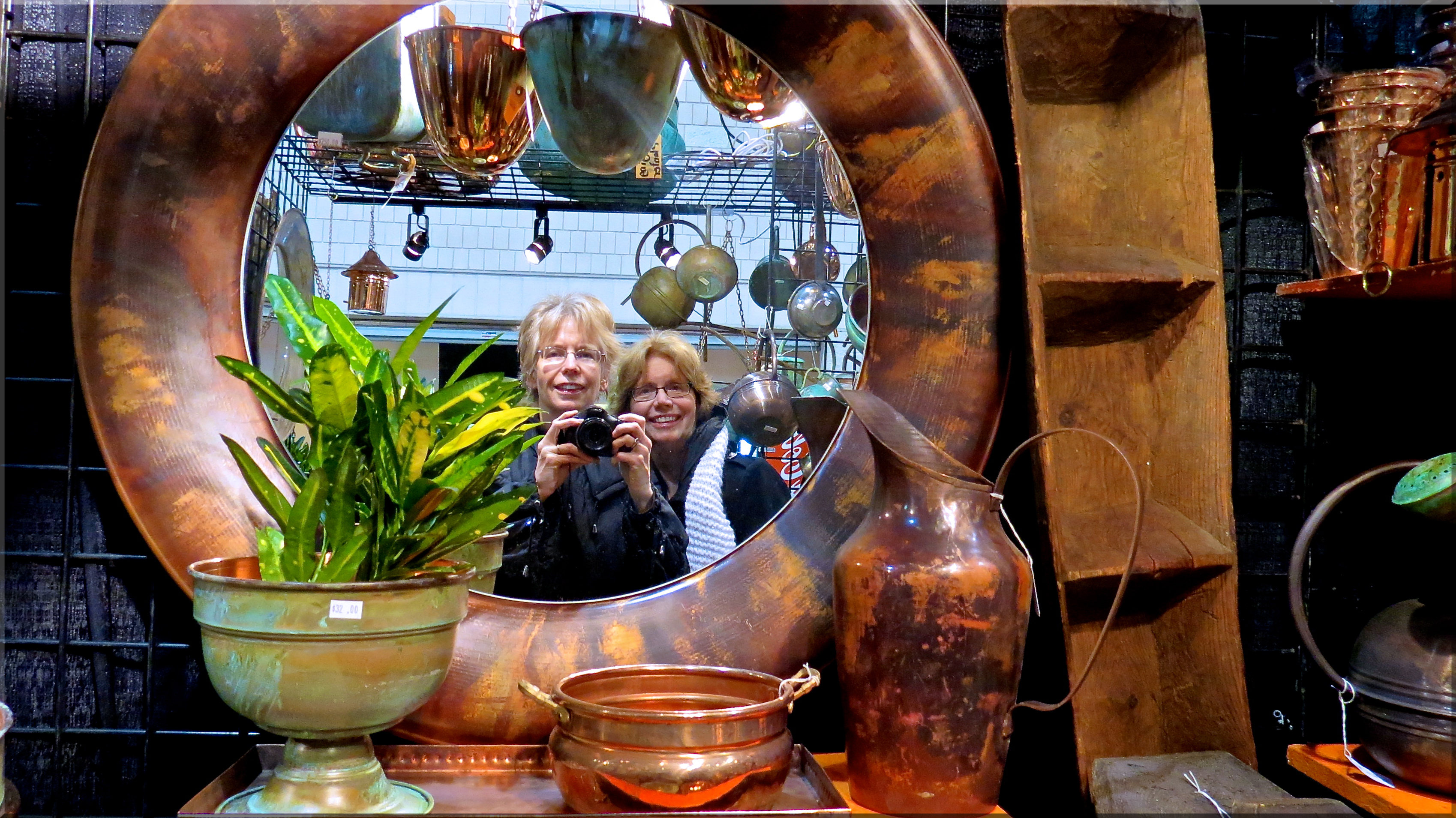
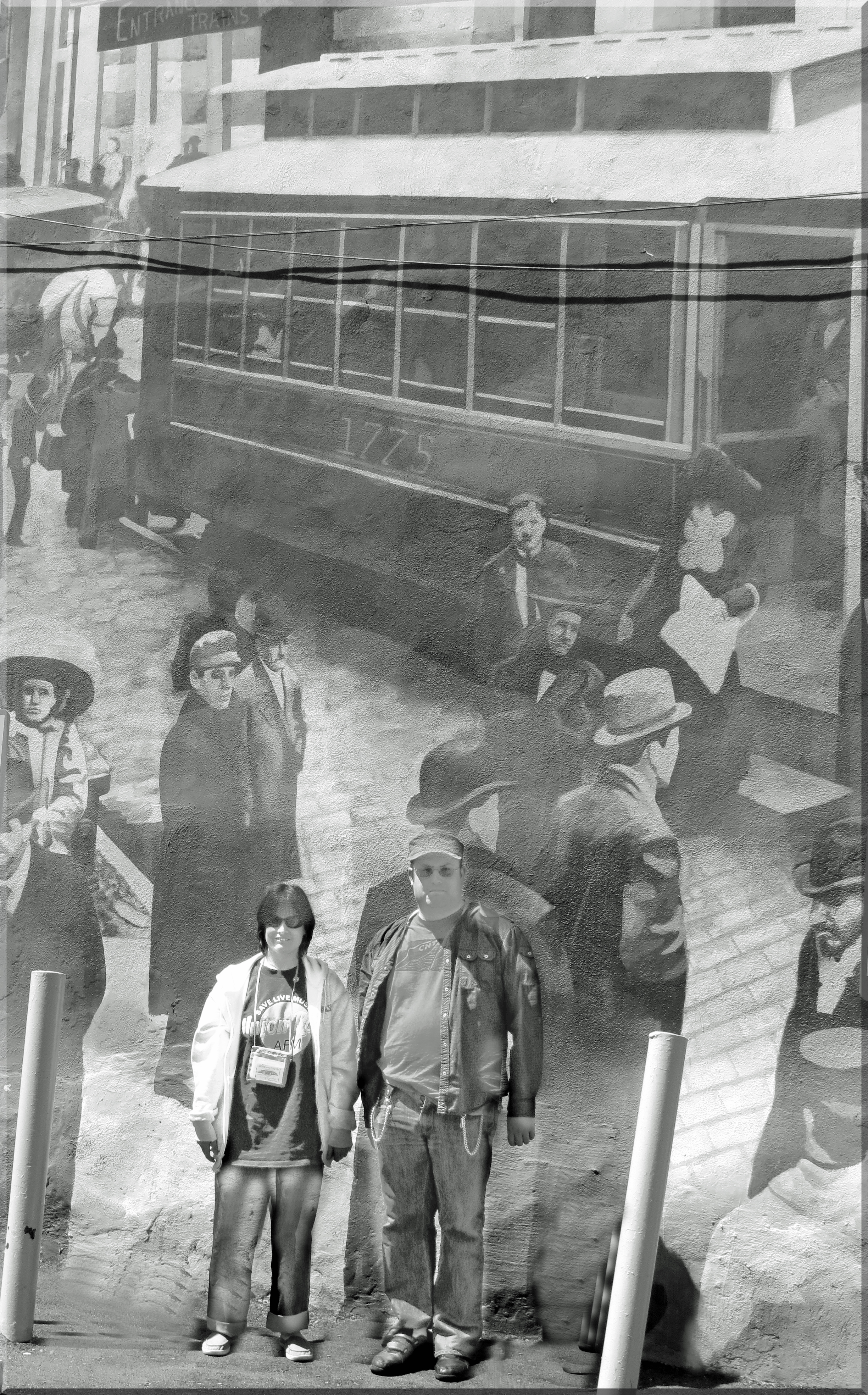
Here’s a series of photographs that incorporates a new portrayal of a work of art. The photographer doesn’t just take a picture of art, but rather creates a new interpretation from the surrounds or by including their own additions to the scene.
The escalator provides the conduit for real-life subway patrons to become part of a scene of a train station mural.
Message on the wall replicates the sign the men are holding, reinforcing the theme.
Using a mirror in a still life display to insert a selfie.
A couple stands in front of a mural in West Philadelphia. Since the mural is painted in black and white, I changed the color in the photograph to match the background.
When traveling through France we were often lost, and to tell that story, I am asking directions to unresponsive statuary.
Have you incorporated an interesting art piece into any of your photographs to create a new vision? Leave a link in the comments!
Longwood Gardens, one of the most beautiful botanical gardens in the United States, is a popular destination for visitors in the spring and winter holidays. One of my favorite memories is the skating performances, set in a snow-covered backdrop with colored lights reflecting on the ice.
I couldn’t imagine how the autumn season could complete with the holiday display, but every path through the garden offered beautiful vistas and colorful flowers. On this clear October afternoon, I walked by two lakes, through the meadows, into the woods, over to the train display and inside the conservatory. Even though the parking lot was filled with cars, over 1,000 acres allows visitors to explore the many sites without crowds.
Several months ago I visited Morris Arboretum in Chestnut Hill, Philadelphia, where G-scale model trains and trolley cars ran along a quarter-mile of track through a magical garden setting. Longwood Gardens has built a similar display incorporating colorful plants and water features into their train layout.
Given the number of bulbs and gardeners working on the plantings, that display should be spectacular come spring time.
The legend that Blackbeard, the notorious pirate of the 18th Century, once walked the streets of Marcus Hook, a town nestled on the Delaware River just below Philadelphia, provided the justification for a lively festival and an opportunity for the Marcus Hook Preservation Society to raise booty for the restoration of the Plank House, where rumor has it, that Blackbeard and his crew spliced the mainbrace!
Marucs Hook isn’t the only town to celebrate their pirate heritage. At the Beaufort Annual Pirate Invasion: It Takes a Village to Pillage, the town recreates actual pirate invasion in 1747. Blackbeard also made several appearances in Beaufort until the governor of Virginia tracked him down. The seaport festival in Philadelphia is the backdrop for a pirate battle on the Delaware River, as tall ships blast their cannons in mock high seas battles.
The pirates at Markus Hook opened their encampment to visitors, their period tents offering vignettes of camp life, with open fires providing the aroma of burning wood. Firearm displays, cooking demonstrations and craft tables gave the landlubber much to gaze at and appreciate. Pirate garb is particularly fanciful, with feathered hats, long waistcoats, billowy blouses and gold jewelry. Most events didn’t cost a single dabloom, if you can just resist spending your last farthing on pirate wares at the vendor booths.
The entertainment on stage included enthusiastic performances of pirate music and sea shanties, from groups such as the Brigands. Pirates brandished their swords during the lively swashbuckling contests.
Canon firing complements of Archangel, TheVigilant Crew and the Crew of the Mermayde.
For over a year, I’d been planning an outing to the Morris Arboretum, and finally after a late start, drove down PA 476 to the northwest corner of Philadelphia to the Chestnut Hill neighborhood of the 92-acre garden. Ignoring the heat at around 90 degrees, the high humidity and thunder clouds threatening in the distance, I considered these positive circumstances–no crowds!
The gardens were set high on a hilltop, providing lovely views of the surrounding forest landscape. The gardens, modeled after the English park style, featured wide paths that wound past a swan pond, rustic cabin, stone buildings and sculpture exhibit. Sounds of water trickling along the creek offered a soothing and cooling atmosphere in the summer heat.
Much of the park is shaded, and I kept to those paths that offered relief from the direct sun. I strolled along the 450-foot raised walkway, built from recycled metal and wood, and which soars to 50 feet at the highest point through the treetops. Rope netting hung like hammocks where visitors could just lay back and gaze at canopy overhead. A gigantic bird nest made from tree branches provided benches to sit and ponder the three large blue “eggs” resting in the center.
The Garden Railway
My fascination with trains is what really brought me to this garden. G-scale trains and trolley cars run along a quarter-mile of track through a magical garden setting. The entire display, including all the buildings, are constructed from natural materials, everything from bark to seeds. Rivers and waterfalls flow through the miniature town, which includes replicas of famous Philadelphia landmarks such as Independence Hall and the Betsy Ross House. Each building was a masterpiece, with intricate detailing in the doors and windows. The whimsical chicken train glided along to accompanying music, what else but the chicken song, and the Oscar Mayer Wienermobile even carried a bottle of mustard. I lingered for quite a while in the railroad garden, as the miniature recreation offered so much to enjoy.
A thunder-storm rumbled through the hills, driving me back to my car. With many other gardens to visit–the rock wall, rose and water gardens and Japanese Overlook–I know I will return, perhaps during the holidays, when evergreens, holly boughs and twinkle lights decorate the train scape.
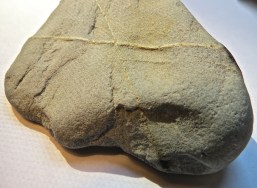
While beachcombing on an island off the coast of Maine, I came across a rock, just one of thousands piled along the shoreline. What struck me about this rock was the straight planes and angles, as if a human had cut the rock rather than being shaped by natural forces. The rock fit nicely in the palm of my hand. Black deposits appeared on three sides, the fourth side, none at all. Shaped like a wedge, etchings marked the narrow edge. New Englanders told me that some folks collect these rocks, as they are considered lucky because two straight white lines cross each.
When I returned home, I scanned the Internet looking for any evidence that the shape might reveal its history. I studied images of Native American tools, but I could not find anything like it. I checked with the folks at rockpiles.blogspot,com, where Peter suggested that the rock might be a hoe,
You can see the “edge” as a worked sequence on the upper edge, and you can see how the hoe was was attached to a handle – the dark staining is from organic material like leather that was used to tie the hoe to the handle.
Corn Festival and Artifact Appraisal
I still wanted to learn more about the rock and came across the Roasting Ears of Corn Festival, Eastern Pennsylvania’s oldest Native American Festival, held at the Museum of Indian Culture in Allentown. One of their many events included a chance for an appraisal of an Indian artifact.
As I pulled into the parking lot, I could hear the drums in the distance and joined folks streaming into the staging area. Children were taking turns at the tomahawk and spear throw, and dancers filled the central arena. Before looking for the appraisal tent, I headed first for the line for the roasted corn. Buffalo burgers and Indian tacos were also on the menu. The blueberry frybread sounded good, so I ordered that, too, and found a seat at the picnic tables in front of the dancing circle. Later, I read about frybread in a Smithsonian article on the subject:
Navajo frybread originated 144 years ago, when the United States forced Indians living in Arizona to make the 300-mile journey known as the “Long Walk” and relocate to New Mexico, onto land that couldn’t easily support their traditional staples of vegetables and beans. To prevent the indigenous populations from starving, the government gave them canned goods as well as white flour, processed sugar and lard—the makings of frybread.
It seems that frybread has become a favorite at pow-wows and fairs, varying in the way it is prepared in each area of the country. Native American dancing, although energetic, is meditative with the rhythmic drumming accompanying the movements, and I fell under the spell in the soft summer air as I savored the blueberry frybread. Glad I didn’t know at the time could be as much as 700 calories!
American Indian Cooking Demonstration
I have some familiarity with Indian history, having taken a course in Native American autobiography. In a post, My Favorite Book: Condemned by both the Left and Right, I write about the controversies surrounding the novel, Education of Little Tree. Alexie Sherman signed another one of my favorite books, Reservation Blues.
Valuable Find
I found the Museum of Indian Cultures head curator, Lee Hallman, sitting behind his many collections of arrowheads, displayed in glass cases. Lee examined the rock and stated that it was definitely a tool, possibly a scrapping implement, and that it was Native American but not valuable. I had thought that if was important I would give it to a museum in Maine. Lee said it might be worth a dollar, at the most. Well, regardless of the monetary value, looking at the rock, I think about the hands that crafted it.
Lee Hallman & arrow display
Now that I had identified my rock, time to stroll along the many tents and exhibits. At one of the tents, a musician played a large wooden flute, and the melody was so enchanting, that I purchased the CD, Meditation, with the melody, “Love Mountain.” Several vendors were selling CDS so visitors had many choices of Native American music, current and traditional.
Lord of the Strings, Arvel Bird
The featured performer, Arvel Bird, played a magical combination of Native American and Celtic music, and I couldn’t image how I had the fortune to hear live someone who brought two of my favorite music genres together. Arvel’s biography on his website provides this description:
“Braveheart Meets Last of the Mohicans . . . at Woodstock” is a colorful description of this award-winning Celtic Fusion recording artist and his live performances. Arvel Bird, a violinist and Native American flutist, is known around the world for his dramatic connection between Celtic and Native American traditions, stirring up scenes that echo from North American memory. Dubbed “Lord of the Strings” by fans and music critics, his music evokes the soul of North American history and is thoroughly entertaining, but also enlightening and humanizing. In a language and experience that captures the hearts of all audiences, he’s emotional without being condescending, intellectual without being pretentious.
Given my Scotch-Irish heritage, I felt an immediate connection to his music. A skillful musician, Arvel gifted us with a joyful performance that reflected his passion for the violin. Celtic and Native American ancestral spirits would be deeply moved by his presentation of stories and songs. I especially enjoyed his classical piece, Tribal Music Suite: Journey of a Paiute, a Celtic and Native American Concerto for Violin and Native American Flute, which earned Arvel Best Instrumental Album.
I don’t usually believe in lucky charms, but somehow the rock brought me to this inspiring performance.
Longing for a seafaring adventure? I’ve just returned from a six-day sailing experience on a schooner through the islands and back bays of central Maine. I prefer to write travel journals as pages, which can be found here: Sailing the Coast of Maine on a Windjammer.
A sampling of some of the photographs by primary colors.
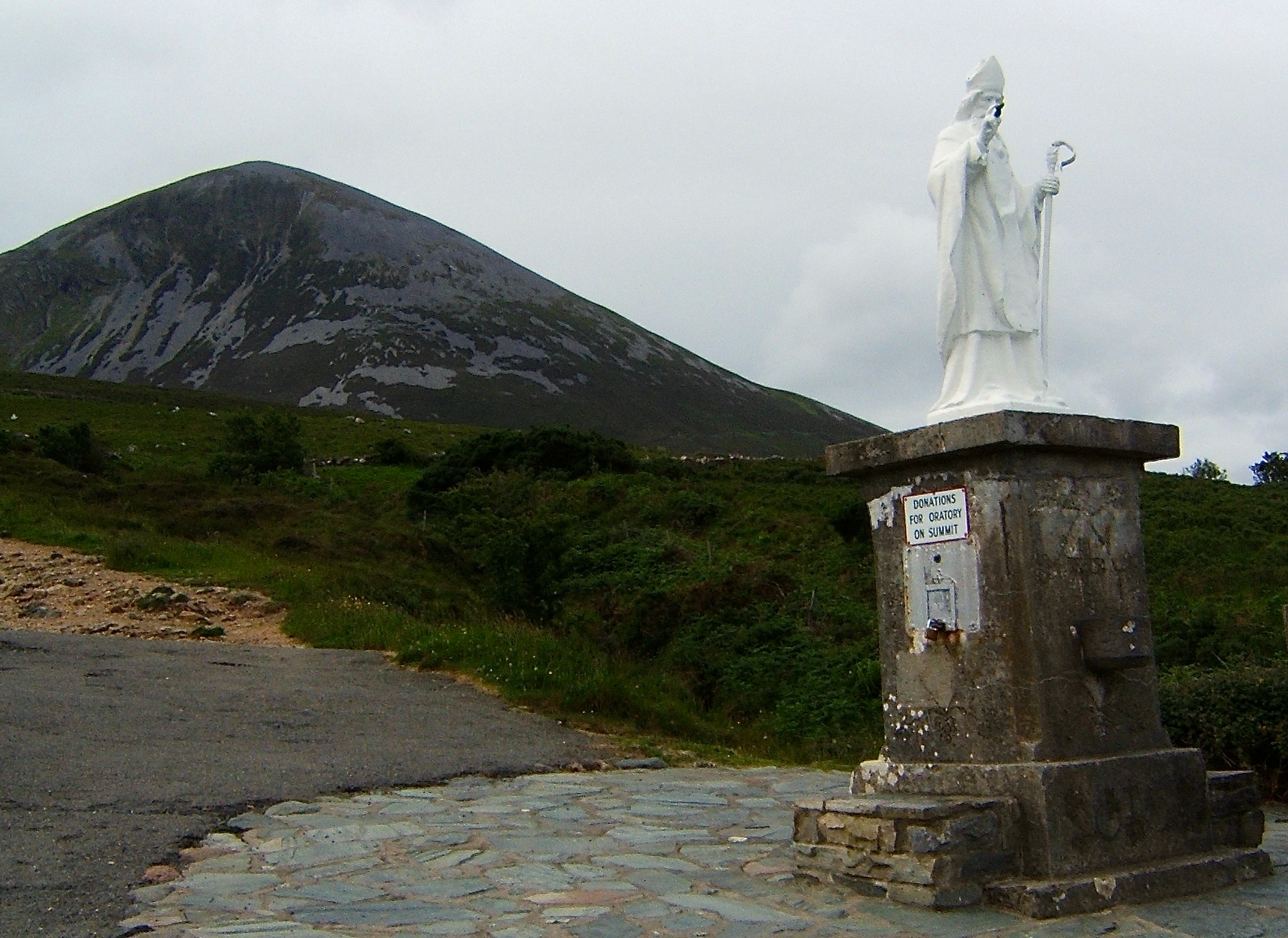
As the view of the Croagh Patrick came into sight, I could hardly believe that we were going to climb on what looked like a very steep, narrow ridge.
Before I could ponder the climb ahead any further, I saw the ghost ship with sails of human skeletons that haunted the base of the mountain. A famine memorial, the iron ship reminded pilgrims of the tragic stories that unfolded during the years that the potato crops failed and so many were left to starve.
While trekking across Ireland’s mountains, I gained an appreciation and understanding of elevations. Elevation was just a number on a map with no context. Yesterday our climb was 1,000, today, 2,700! I also noted that the weather changes drastically at different elevations, even in the summer time. We started the day with dry conditions, but I could see that mist and clouds covered the summit.
Loose stones of different sizes littered the gullied trail, and every step became a challenge to find secure footings. Some of our group turned back with the warning that the trail would become increasingly more difficult and precariously steep. We tightened our hoods and jackets against the wind, and we had to stop to become fully geared up for the rain to come. As I continued upward, I stopped often to catch my breath. The treacherous climb made me question, “Why am I doing this?” I could be sitting warm and comfortable in the coffee shop below. Yet, the spirit of the mountain kept me going–I would stay on the path that perhaps my ancestors once climbed.
The wind and rain became increasingly intense as we headed up the rocky slope. We couldn’t see anything beyond 20 yards as the summit was completely shrouded in clouds. Maneuvering on the rocks became increasingly painful as my boots would slip on the uneven terrain. I concentrated on the trail, searching for secure footing–only the brown rocks before me were important.
A feeling of relief came over me as the faint outline of the little white chapel at the summit came into view, and I stepped up the pace to secure the protection its walls might offer, only to find the building locked tight. Food and rest, however, offered comfort against the relentless rain, and we ate our sandwiches leaning against the chapel built on a foundation that dates back to St. Patrick’s time.
We packed up for our trip down the other side of the mountain. When I turned the corner away from the church, the wind hit me with such force, it almost knocked me over. The rain and wind tore at my coat as I headed down. Craggy outcroppings of rock distracted me from the storm, as again, I focused on my footing. The clouds embraced our group, and my fellow hikers disappeared from sight.
Now I’d heard that Ireland is a magical place, and on this trip a number of coincidences and unusual experiences came our way, and this was one of those times. As I walked in the fog, I heard an Irish flute playing a whistling melody. I stopped and scanned the landscape. Where was the music coming from? Did such a clear melody arise from the rocks–those crevices of torment serving as apertures for the wind–or was it a leprechaun? With music filtering from the clouds, Irish mythology became reality as the sacred mountain shared its magic with another pilgrim.
Awhile back I wrote a post on steampunk and the 1987 television program, Beauty and the Beast, which carried many of the steampunk themes. The costumes, setting and the intersection of fantasy with reality connected the program to the steampunk genre, combining science fiction and fantasy, with overlaying elements of the Victorian era and industrialization, especially the influence of steam power.
In this post I add a bit more to the discussion on steampunk with reflections on a graphic novel, pottery and photography.
Steampunk Graphic Novel: Battle of Blood and Ink
Jared Axelrod and Steve Walker have written and illustrated a cleaver graphic novel with a steampunk setting: The Battle of Blood and Ink. An entire city flies through the sky, which is not an unusual scenario in steampunk literature, where often castles travel through the universe. Ashe, the courageous heroine, sets out on an adventure to discover the secret of how their government officials capture the energy to fly the city. Ashe publishes a newspaper, The Lurcker’s Guide to Amperstam, proving that the pen is mightier than the sword.
Ashe wears an outfit that includes steampunk fashion elements: a corset, bustle and amulet. Steampunk breaks from the Victorian aesthetic allowing creative takeoffs to flourish. Her skirt is short for Victorian standards, and the boots are substantial, appropriate for a high-flying crusading reporter. Ashe is a woman who embarks on a journey into a world unlike anything we’ve ever seen and is dressed for the part.
This photograph recreates Ashe’s steampunk dress and backdrop with a remarkable likeness to the graphics in the book.
Photo Credit: J. R. Blackwell
Ashe and her pilot, speed through the clouds on an airship that models steampunk apparatus, replete with propellers and mechanical engine. Steampunk’s approach to technology combines futurist possibilities with 19th century machines. Flying contraptions have a long history in the pre- and post-Victorian era, representing the possibilities of new adventures through technological innovations, and in this case, with Victorian flourishes etched on the sides.
Steampunk Pottery
Today artists capture the visual aspects of steampunk ideas in pottery and sculpture. These industrial-inspired ceramics can be adorned with gears, keys, chains, pipes, clocks and a variety of industrial antique components. In most of these pieces I used metallic black glaze, which leaves a golden metallic sheen. By adding the elements of steampunk, the pieces become lively and interactive. Displayed on Victorian needlework, the industrial pottery juxtaposes the softness of delicate fabric.
This slideshow requires JavaScript.
Steampunk Images
Steampunk images are easy to find, but capturing them in an artistic view proves to be more challenging. Here are several photographs that capture some aspect of steampunk, whether it is the nuts and bolts on the Eiffel Tower or a battered industrial machine left in the ruins of an old mill.
This slideshow requires JavaScript.
Have you been inspired in some way by the steampunk themes?




 While beachcombing on an island off the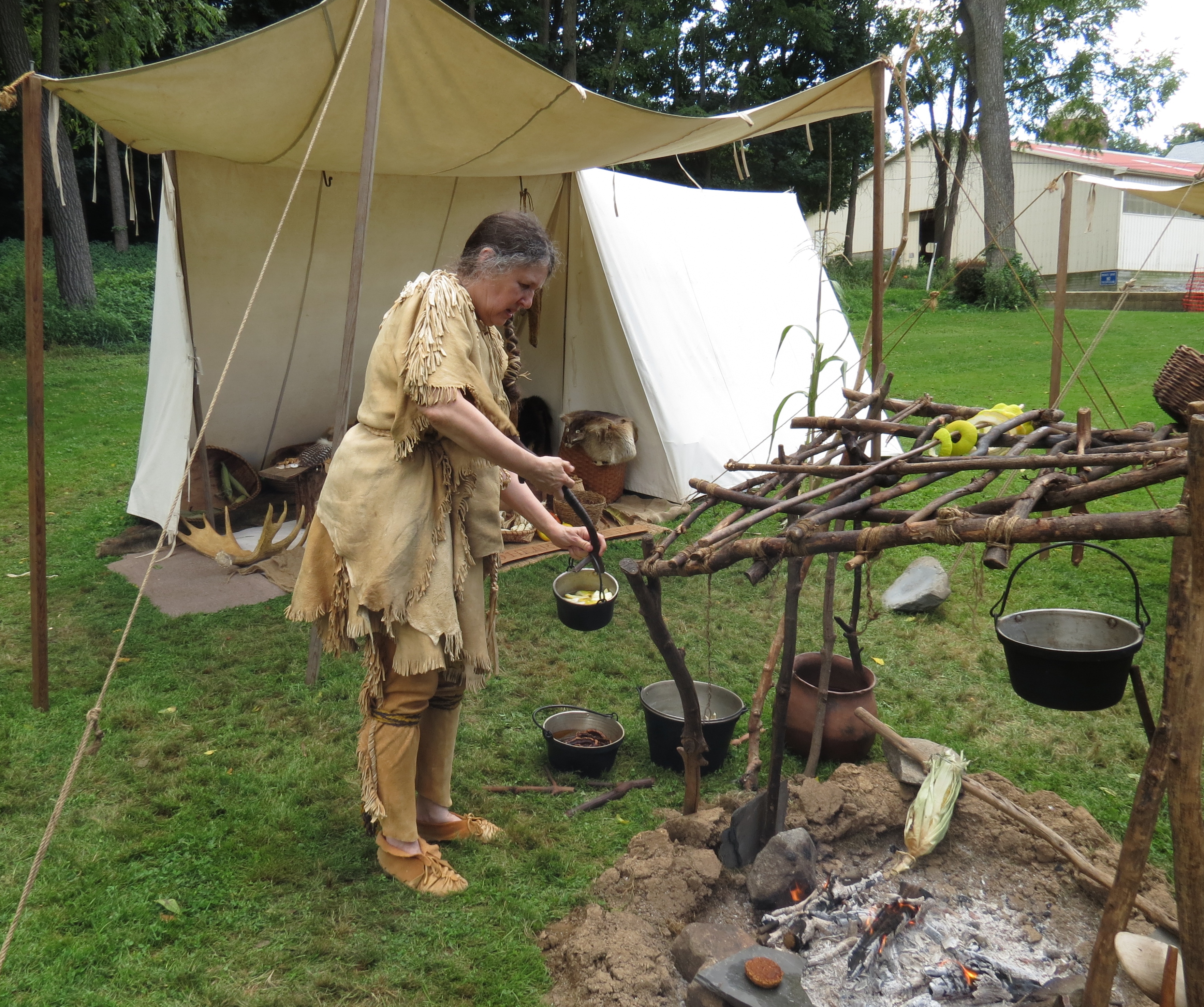






 Psalmboxkey's Blog