Advocate for Medicare for All in your district by adding your name to this survey that you support that Mary Gay Scanlon, Congressional Representative from the Pennsylvania 5th Congressional, elects to become a Co-Sponsor for Medicare for All.
Join over 1,000 constituents of Mary Gay Scanlon who have affirmed that our representative must co-sponsor Medicare for All. The Congressional Budget Office estimated that Medicare for All would save our health care system $650 billion annually. Researchers at Yale University have estimated that Medicare for All would save 68,000 lives a year. No one should die because they cannot afford health care in the richest country on earth.
Your name will be added to the list of 1,000+ names collected in person. When we meet with Representative Scanlon, we will present a typed list of supporters. If you wish, write in the message below that you would like to be on a list of supporters who will contact Representative Scanlon at the time that we are making our formal request. Thank you!
A Story for My Granddaughter from Grandmama, Christmas 2024
Many cultures have attributed magical powers and mythical characteristics to the unicorn. Nowhere is the unicorn more celebrated than in Scotland, where the Scots awarded the unicorn to stand as their national animal. Your great-great-grandmother, Catherine Kelly, was born in Scotland, and she must have witnessed the depictions of the unicorn in the country’s towns and cities. Celtic mythology has produced many enchanting stories about this creature with a horn. This story is based on actual events, a retelling of your Grandmama’s recollection of a mystifying encounter with a unicorn.
The tiny village hugged Old Limestone Road, once a busy thoroughfare for wagons and trucks transporting sedimentary rock across the county. Most homes were built over a hundred years ago in this farming community. Some houses were residences for farm workers, and others were Victorian-styled residences, with gingerbread-trimmed porches. Years ago, one of these houses served as the village post office, and behind that structure, tucked among a few trees, an old clapboard house, worn and in disrepair, stood in an overgrown field. Several windows were cracked, and paint peeled away from the door. Tree branches hung low over the roof, where some of the missing shingles had fallen to the ground. Cast-off possessions peaked through the weeds, littering the yard. Inside the house, a clutter of objects, surrounded by well-worn furniture and faded rugs, covered the floors. Resting in a wooden cupboard among a small collection of figurines, a white porcelain unicorn stood upright on the top of a bell. One could imagine that the bell would have been rung occasionally, perhaps bringing a moment of happiness.
One night, the usual quiet scene erupted into chaos. An uncontrolled fire began to engulf the house. The woman who lived there fled from the flames barefoot, dressed only in her nightgown. She pounded on her neighbor’s back door for help, but the intensity of the fire was too great for them to do anything. Together, they could only watch in disbelief while the orange glow of the flames lit the darkness as the suffocating smoke blew into their faces. They heard the crackling of the structure as the house began to disintegrate while glowing embers fell into the weeds, igniting patches of the earth. The fire department finally arrived in a cacophony of sirens and flashing red lights, and the house was doused with water. To extinguish the flames, the firefighters tore down what the fire had left. By morning’s light, the smoldering remains revealed the blackened shell of the house, the smell of acrid smoke still in the air. The firefighters had carelessly tossed a few chairs, tables, and dishes into the surrounding weeds. The unicorn bell fell into the ashes.
The woman had no choice but to start a new life somewhere else, leaving behind the scattered remains of her possessions. The cement walls of the basement were all that remained. Over the years, brambles, vines, and nettles covered the landscape. Decades passed as snowstorms, rain, and summer heat pummeled the unicorn bell. Season after season, the unicorn, covered in black soot, rested in muddy soil, surrounded by burned timbers and broken glass.
On one warm day in late spring, I visited a friend who lived in the Old Limestone Road neighborhood and passed through the abandoned property where the house once stood. Catching my clothes with their thorns, the prickly blackberry bushes stretched over the yard. Butterflies danced among the spiky lavender thistles, standing tall in the overgrown grasses. As I looked at the ground, broken pieces of colorful plates lay in a little pile. I paused when I noticed a glimmer of white on the ground. As I pushed the moist dirt away, I uncovered a delicate figurine. While lifting the object from the soil, the little bell jingled its note into the wind. To my amazement, the unicorn, still covered in black-speckled soot, remained in near-perfect condition.
I brought the unicorn home and cleaned off the sticky ash, revealing a shiny porcelain finish. During the cleaning process, I had time to think about unicorns, prompting me to research the subject. I learned that a bond exists between the Scottish people and the mythical unicorn, considered a symbol of strength and power.
Grandmother Catherine raised seven children in a small apartment in a brownstone tenement building in a working-class neighborhood of Clyde Bank. Sometimes their family had to beg for food, and at Christmastime, the children received one orange in their stocking. One child became blinded in one eye, another suffered a leg injury from being hit by a cart, and another came down with rickets from lack of sunlight caused by pollution. Undeterred by these hardships, Catherine persevered, saving her pennies to bring her children to America to lift them out of their dark and impoverished surroundings.
I wondered if the unicorn magically survived adverse circumstances to become a symbol of the family connection that we share with our Scottish Great-grandmother and the value of resilience. With the sound of the bell, we can imagine the impossible.
The chairs and table sat on the patio in a state of disrepair for several years until I could no longer ignore that they were falling apart. The seats had deteriorated as water had seeped into the cushions and disintegrated the wood bases. However, the metal foundations were intact with only a few rust spots. After pricing several similar sets on the Internet, the decision became obvious: restore. Here’s the breakdown of expenses and effort (other materials on hand):
Plywood for bases: $5.97
Fabric (on sale): $14.95
Spray cans: $11.16
Total: $32.08
Swirls characterized the paisley fabric so I decided to emphasize the metal scrollwork on the chairs and tables by painting them white. This step involved more work in masking and repainting by hand and not spray painting the entire set. Total hours in restoration: 4.5.
While my granddaughter was running through the sprinkler yesterday, a juvenile robin balanced on the wire above the kiddie pool waiting for his mama bird to deliver something to eat. Every once in a while he would let out a squeak of attention to note his location.
Adjacent to the lawn is a pathway leading down to a woodland area where our family has been digging up ivy and planting native trees. On my way down the path this afternoon, the little robin was laying on his side. He was gone and recently so. His feathers were perfectly smooth on his speckled breast. I gently picked him up and moved him to a side corner of the pathway and then sat down nearby.
I’m familiar with the tweets of robins, especially, their warning chirps, which are strong steady beacons that warn of danger nearby. What I heard in the forest was a quieter version of that warning sound but still steady. A robin flew on a log just a short distance to where I placed the little one. The robin continued her vigil with her mournful single note, flying over her baby from one side to the other.
I stayed there for a while and hummed a song for her,
Sorry mama robin, you did your best.
Soon it will be time to rest
For the sun is setting in the west
Maybe tomorrow, you’ll make a nest.
I left then returned hours later and could still hear the robin in the woods.
When I saw the wonder in Alex’s eyes as she gazed at the floating jellyfish, I missed something, that only revealed itself on looking at the photograph: the luminescence in the jellyfish and also captured in the hair ribbon.
Life is a beautiful, magnificent thing, even to a jellyfish. Charlie Chaplin
Across the American landscape, the tire swing stands as the ultimate repurpose. No longer able to withstand the rigors of road raging, the still very sturdy but flexible sphere becomes a vehicle of movement again, but this time in the gentle sway of back and forth from ground to sky to the laughter of children. Here’s the swing, twice.
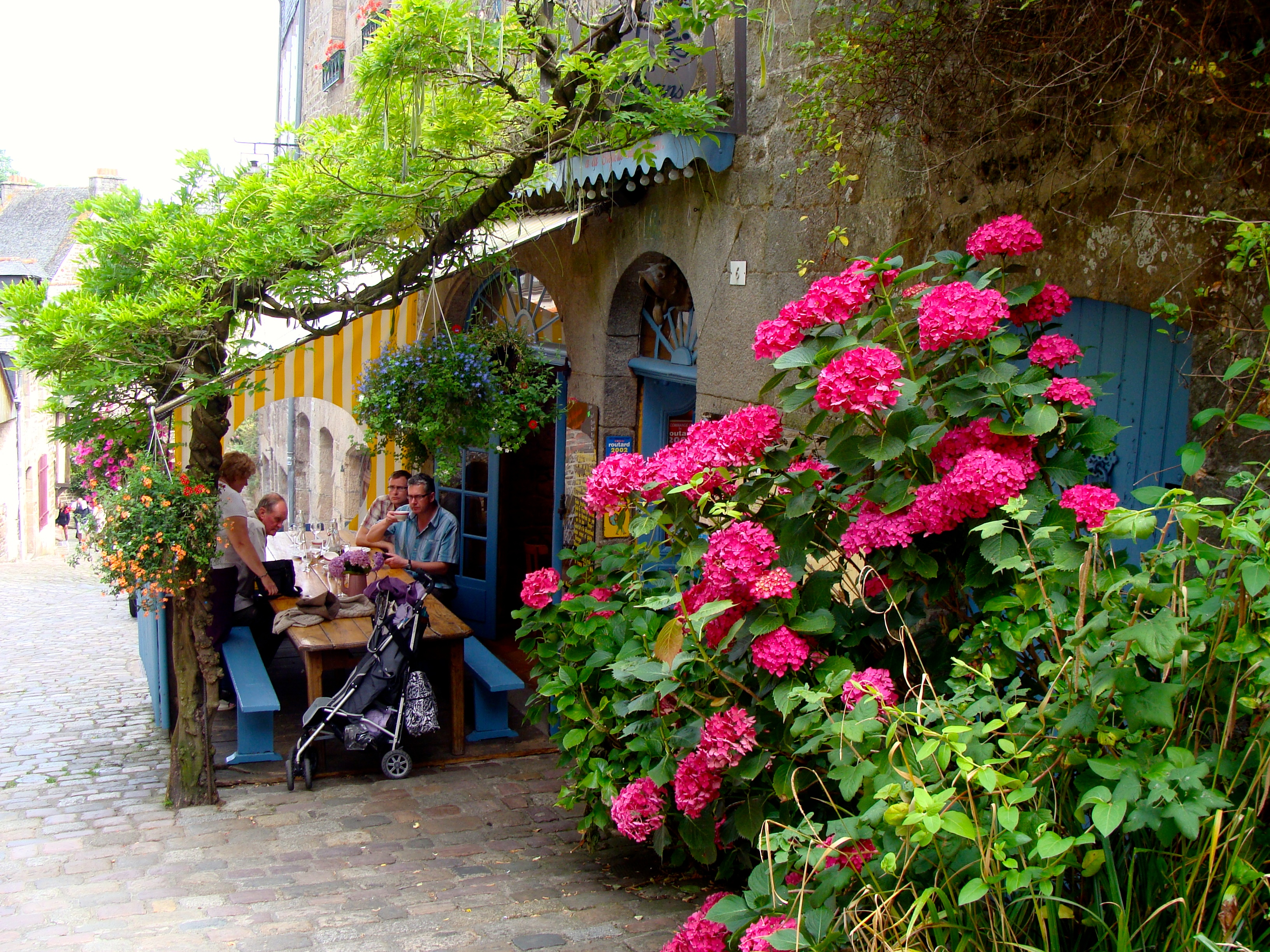
Dinan, France, a well preserved, walled medieval town, with ramparts, towers and a castle resembles a storybook village, full of half-timbered buildings, some dating as far back to the 13th century. We came upon his café along one of the hilly cobblestone avenues, offering an invitation to come in and sit awhile.
The Island of Skye, off the Western coast of Scotland, had an otherworldly spirit and became even more so upon discovering the Faerie Glen, just east of Uig. We passed through the gate, hidden from the main road, and followed a single-track car path through conical-shaped hillocks. Sheep dotted the landscape, their soft baaing breaking the silence of the hillsides. Further down the way, a narrow stream flowed into a pond where dancing sounds of water trickled through the deep green. Ferns and foxglove covered the lower elevations, and higher deep ridges encircled the mounds. We peeked behind rocks and into crevices created by gnarled tree roots.






 Psalmboxkey's Blog