Humble Contributions to the Peoples' History

Archive for the ‘Social Justice’ Category

Philadelphia’s May Day Celebration 2013

Honoring Workers Who Fought and Won the 8-Hour Work Day
images Many people believe that May Day is a socialist or communist celebration, when in fact the May Day holiday grew out of  the eight-hour working day movement in the United States in 1884. The struggle for a shorter workday began in the factories as the unions pressed their employers for shorter hours and higher wages. At that time, millions of people were out of work. During the convention of the Federation of Organized Trades and Labor Unions announced that eight hours “shall constitute a day’s work from and after May 1, 1886.” Honoring May Day is an important part of our American heritage, and in Philadelphia Elmwood Park provided the perfect place for a rally and celebration in front of the monument by Irish artist, John Kindness, which stands as a tribute to the American worker.

IMG_2515

Alexandria with John Jerzak, member of Friends of Elmwood Park who advocated for the labor memorial.

Jim Moran, Committee Chair of the May Day Committee introduced Alexandria Knox, proudly representing her union, the American Federation of Musicians, Local 349, Manchester, New Hampshire. Alexandria played a rousing version of Scotland the Brave on the bagpipes, beginning the afternoon’s entertainment. We were extremely fortunate that Alexandria, who is dedicated to the cause of unionization and solidarity, had agreed to play for the event as she is one of a very small number of totally visually impaired Highland bagpipers throughout the world. Next up Mike Stout & The Human Union Band  filled the air with energetic rock music with a worker message.  I was moved by their first song, The Triangle Shirtwaist Fire Song, especially in light of the recent tragedy in Bangladesh, where over 1,000 workers were killed in a building collapse. I immediately bought three of their CDs. Mike describes himself as

a socially conscious singer song-writer and community leader who leads crusades against local and global economic injustice, rallying people with his music, and he organizes them to take action.He tells his stories from the heart about people who are affected by unemployment, or social injustice or war.

IMG_2485

Mike Stout and the Human Union Band

Other musicians performed including K&A Mob, Tha Truth, Dina Yarmus and Maryta Fields, who sang the National Anthem. IMG_2489Pete Matthews-AFSCME DC 33, Gwen Ivey-APWU 89, Cathy Scott-AFSCME DC 47, John Johnson-TWU 234, Helen Gym-Parents United for Public Education, Philadelphia Student Union, Chicago Teachers Union 1, Cathy Brady-Friends of Elmwood Park & SEIU HCPA were some of the scheduled speakers. A member of the Chicago Teachers Union, Andrew Heiserman, shared stories of  their courageous battle against the city’s austerity measures against the schools. . Sonia Sanchez, Philadelphia’s Poet Laureate, spoke about peace benches. Jim Moran presented the Aggie Moran Human Rights Awards to Sonia as well as to labor historian, Alice Hoffman, labor rights campaigner, Barbara Rahke, and the Restaurant Opportunities Center. The “SRC 19,”  the activists arrested at the last School Reform Commission meeting in Philadelphia when the SRC voted to close 23 Philadelphia Public Schools, were also honored. Occupy Philly Food Committee provided a great selection of food: sandwiches, bbq, salads, cake and beverages.

Selected video highlights from the event:

May Day Celebrations around the World 2013

A Moment in Democracy’s History: Bob Edgar Elected to Congress 1974

B Edgar Button

When grew up in Springfield, Pennsylvania, in the 195os and 60s, I was very much aware that the Republican machine ran the politics of the town, as well as the county, going back to the Civil War. My parents were Democrats, and I remember my father remarking how a Democrat didn’t have a chance of being elected to any office in the county. As a teenager, I became interested in supporting the Democratic underdogs, and I attended several events for John J. Logue of Swarthmore, who tried to unseat the entrenched Republican congressman in the 7th district. Young and idealistic, I felt betrayed by the democratic process and wondered how the voices of the people could be drowned out by the powerful Delaware County Board of Republican Supervisors, nicknamed the “War Board.”

In 1974 the Republican machine still controlled Delaware County, and the War Board monopolized local politics. The break came when the public became outraged over the Watergate scandal. What fired me up was when President Nixon demanded the resignations of Attorney General Richardson and his deputy William Ruckelshaus. Bob Edgar, a Methodist minister, decided to run for the 7th Congressional seat, and I signed up to join his campaign.

I canvassed with Bob and stood at train stations and malls, handing out flyers. His parents lived a few blocks away, and his Dad and I would walk through the neighborhoods of Springfield talking up the cause. I attended strategy meetings with his dedicated campaign staff and spoke to union representatives. Bob had a platform we could believe in:

Bob Edgar Platform

Bob Edgar Platform 2

I wrote several letters to the local newspapers. The first letter was published in The Evening Bulletin, on June 15, 1974, Saturday Forum: Bulletin Readers Speak Out. The subject was Church and State: Clergy in politics, in favor and against.

Church and State Letter

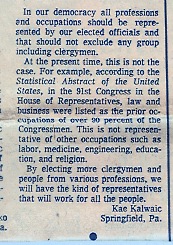
The second letter appeared in the Delaware County Daily Times, on Friday, July 5, 1974.

Select Man, Not Party

As election night approached, we were still very much uncertain of the outcome. We faced a voter registration of 3:1 in favor of Republicans. The Republican party ran a new candidate, county district attorney Stephen J. McEwen. The G.O.P. had plenty of monetary resources while Bob’s campaign spent only $3,000 on his primary. Even the Associate Director of the Democratic National Committee stated that “the national party does not rate the chances of winning the 7th district seat as high as other districts.”

Edgar Campaign Literature

Undaunted, the campaign soldiers solicited friends, neighbors, and family members to help Bob’s campaign. We were determined to keep the momentum going. I signed up to distribute campaign literature outside the polls at the old Central School in Springfield on Election Day. After the polls closed, my job was to call in the voting tallies to the Edgar headquarters.

Bob Edgar Post Card

That evening after the voting was complete, I held my breath as they opened the voting machine and read the numbers. Bob had won with a clear majority. I called in the tallies and headed over to the headquarters. We were still waiting for the final results to come in from the other precincts when Stephen McEwen entered the room with his entourage. I could hardly believe Steve was conceding as we expected a long night of vote counting. The joy of the victory spread through the crowd as we shared that moment of celebration with each other.

Bob passed away on April 23, and his contributions to Common Cause, as well as his accomplishments when serving six terms as a progressive congressman, are being remembered in The New York Times, the Nation, and Huffington Post. For me, Bob’s greatest legacy is when he stood with the people of the 7th Congressional District to restore democracy from control of one-party rule.

B Edgar Thank You

Thank you, Bob.

Chinese Workers Resist Exploitation in Production of our Electronics

For many years now, a social justice movement has been underway to create awareness the working conditions and wages of  farm and migrant workers who pick the fruits and vegetables that we eat. According to the report, “Toward Social Justice and Economic Equity in the Food System,” the public is increasingly attracted to goods produced under socially just conditions.” Fair trade and sweatshop-free products have become popular with consumers.

iPhone_5_34L_Black_120910_THUMBNAILS

But what are the conditions that workers face in the manufacture of our electronic devices, and what is our responsibility as conscientious consumers to support fair workplace practices for these workers?  Do we think the skill levels required to work in this field would offer fair pay and good working conditions? I believed that the stunning success of the iPad, which Apple sold over three million in three days back in November 2012, would benefit their employees, as well as their stockholders. What I learned was that Apple uses an intermediary company, Foxconn, to manufacture their products. While Apple has a positive image as an employer, Foxconn employment practices have come into question.

Ironically, Apple reported that, “we’re working hard to build more quickly to meet the incredible demand,” but the question raised here is exactly who is working hard and are these workers pushed to the extreme to meet the marketing demand?

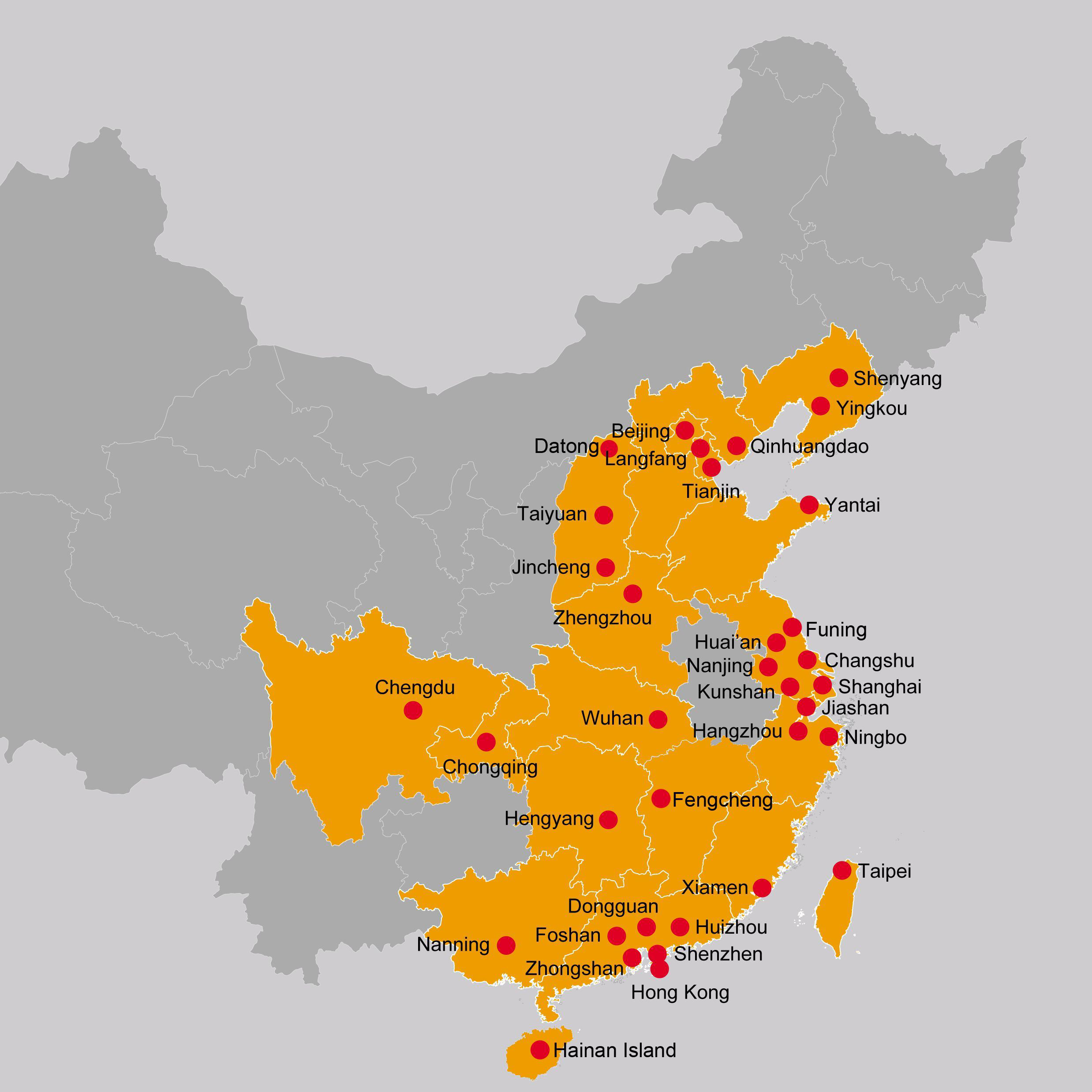
foxconn-factories-in-china-2012

Foxconn Factories in China

iPad_mini_PF_PB_PS_Wht_iOS6_121021_THUMBNAILSUnfortunately, conditions in many of these plants operated by Foxconn in China, as well as in other countries, reveal that many workers are subject to exploitive practices.  In April 2011 the story broke that seven Chinese workers had committed suicide. The Guardian reported that Chinese sociologists condemned workplace practices that served as a “model where fundamental human dignity is sacrificed for development.” The article continued . . .

In Shenzhen and Chengdu a joint Foxconn workforce of 500,000 is providing the labour that, in the first quarter of 2011, contributed to Apple Inc net profit of $6 billion (£3.6bn). Interviews with mainly migrant employees and managers have laid bare the dark side of those profits: a Dickensian world of work that would be considered shocking in the west.

intern-worker-at-foxconnTo bring attention to the problem of worker exploitation in these factories,  on April 21, 2013, The Wooden Shoe,  IWW and Solidarity sponsored an activist from Germany, Ralf, to speak in Philadelphia.

logo4

Ralf’s talk was based on gongchao.org’s collective research and activity around the struggles of migrant workers, and he presented photos and films to explain the situation at Foxconn. Ralf focused the discussion on ways to support the iSlaves, relating their struggles to our own labor issues. Formed in September 2008, gongchao researches and documents labor unrest and social movements in China from the perspective of class struggle, migration, and gender. The website offers both analytical texts and workers’ stories.

While the web has a number of resources and webpages on working conditions in China, hearing the stories first hand from Ralf brought the reality closer to home. In the coming weeks, Ralf will be in Washington, Detroit, Chicago, Madison, Saint Paul, Minneapolis, Seattle, Bay Area and Los Angeles. You can click on this link for the details of his schedule.

foxconn-workers-on-strike-wuhan-2012

Foxconn Workers on Strike

rb-star The Wooden Shoe: A Philadelphia collectively-run, anarchist book store and educational space supported by volunteers.

Anarchism: Political philosophy advocating that people are better served if they make decisions for themselves and communities rather than from any form of centralized power structure.

IWW: Industrial Workers of the World, member-run union for all workers.

Links:

iSlave: Work Struggle at Foxconn in China.

Gongchao

Gethin Chamberlain, “Apple Factories Accused of Exploiting Chinese Workers,” The Guardian, April 30, 2011.

Jemima Kiss, “The Real Prices of an iPhone 5: Life in the Foxconn Factory,” September 13, 2012. Apple and Foxcoon: Work Conditions, Problems and Changes.

Mystique of the Ole Fashioned General Store

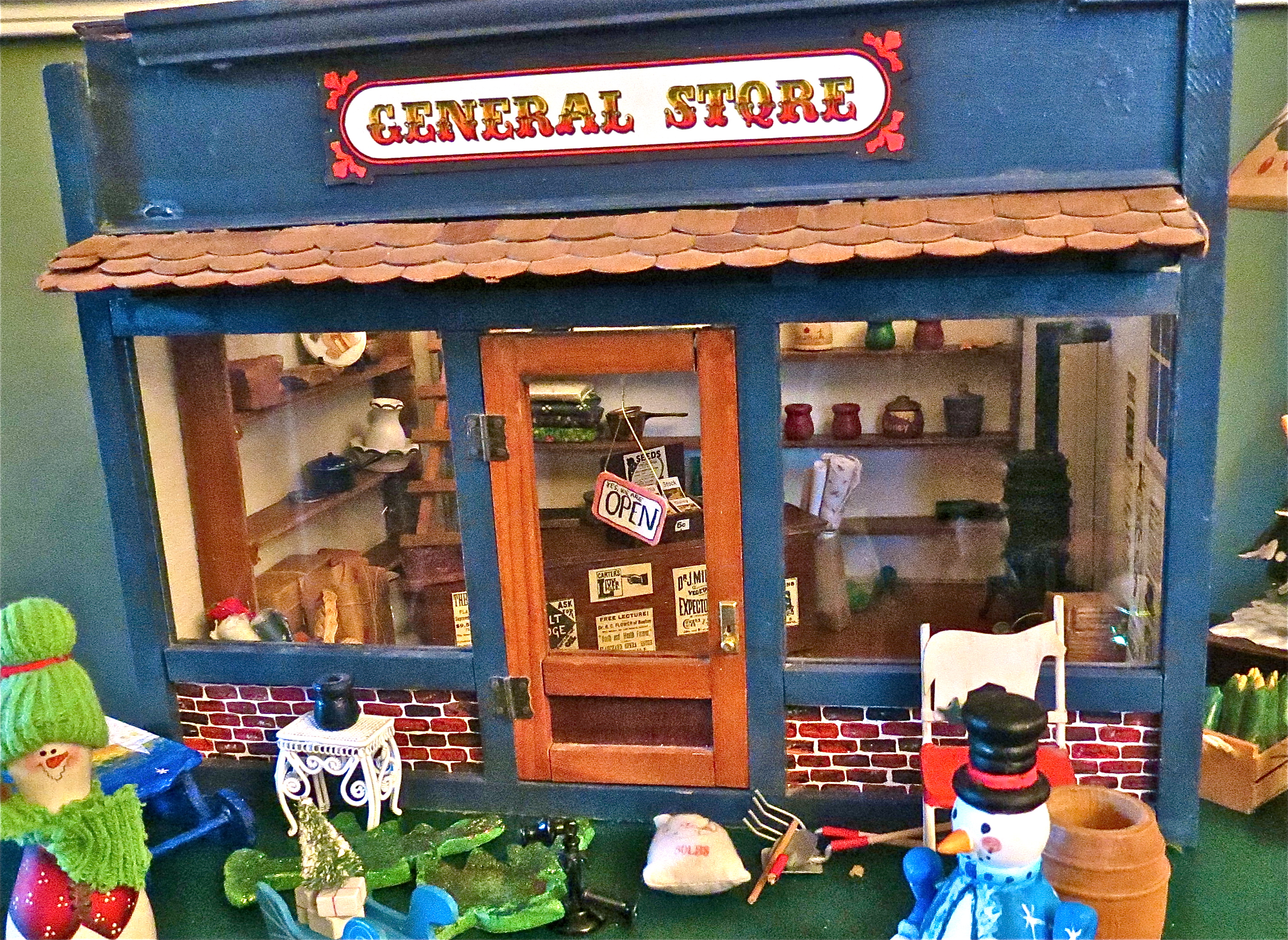
My attempt at a replica.

The old-fashioned general store has always been intriguing to me. As a child, one of my favorite shopping places was a building called “the Casino,” a large round wooden structure in Cape May, New Jersey. Every summer I looked forward to traveling to Cape May to just walk through the isles of the Casino to glance at the imports lining the shelves from around the world. I especially liked the little colorful cloth dolls holding baskets and brooms. The store offered a wide selection of  souvenirs, including metal buckets and shovels for playing in the sand.

Store Door

W.H. Snowden General Merchandise – Currituck, North Carolina
1895

Today a few general stores remain in operation. The aesthetic appeal begins right at the front door with a lightweight screen door, allowing fresh air into the space. Frequently merchandise spills out from the building, decorated with moldings even if the paint is peeling. Creaky wood floors and long wooden counters represent typical interiors. Wooden shelves and bins built into the walls extend from the floor to ceiling.

While general stores hold an abundance of merchandise, I don’t believe this is about conspicuous consumption, as an overwhelming number of goods are essential to the home and farm with elements of industry and efficiency . . . potato peelers, bolts of cloth, coffee grinders, iron skillets and lanterns.

Stove

Mitchell Hardware, New Burn, North Carolina

In the 19th and early 20th centuries general stores were central to small town communities. Selling everything from groceries, hardware items, shoes, pots and pans and other necessities, the store often anchored other small businesses that would line the town’s main street. That town center provided a community-oriented amenities such as sidewalks, parks and theaters. Within a short walk, shoppers could stop in at the library, bank and post office. Upon entering the store, the proprietor, sporting a long white apron, would stand behind a wooden counter and would greet you. Storekeepers had to keep informed on the pulse of the community so that they could order the right materials. Neighbors would meet up at the store and share news as they shopped. Many stores keep a pot belly stove going, and customers played bottle cap checkers near the warmth of the stove.

The Peck Basket General Store
Moyock, North Carolina

The store owner maximized the floor utilizing boxes and barrels to support merchandise. Generally, the proprietor purchased in bulk quantities. Then he would weigh the purchases on a large scale. Few items were pre-packaged, but canned goods occupied much of the grocery shelf space. Speciality items could be ordered, such as furniture, farm equipment and sewing machines. Deliveries arrived by horse-drawn wagon and later by train.

IMG_0963

Bins for nails; no pre-packaging
Mitchell Hardware, New Burn, North Carolina

Something from my childhood must have endeared me to the general store that still resonates with me today. Viewing little pieces of this former way of life, is tantalizing enough to make me wonder about what has been lost.

Post Ofice

Often times General Stores housed the Post Office.

Do the consequences of losing the small-town general store move beyond aesthetics?

Seeds

How do our shopping experiences around malls, big-box and strip stores compare with the country store of yore?  Today massive shiny lettering in bold colors shouts the store’s name. These industrial style buildings sit at the back of expansive concrete parking lots without hardly a tree or blade of grass in sight. Bland building facades are identical to every other strip mall. Steel doors, cavernous spaces, utilitarian shelving and harsh lighting all contribute to the lack of aesthetic appeal and warmth. With their stark interiors, they are but warehouses for merchandise.

Big-box retailers have reaped economic benefits from their bland design that demands little in aesthetic investment, and consumers may have found these businesses offer the best prices. But what have we lost in the conversion to bear-bones consumerism?  Some claim that these retailers boost city revenues, but have we sacrified small businesses at the altar of increased tax revenue and cheaper prices? Small business owners, often members of the community, support local enterprises and charities. Huge corporations have no loyalty to any one town or city.  Some research shows that it doesn’t always play out that this increased tax revenue brings in development.

How does the big-box store influence our social relationships? Do you run into your neighbors at the box store? Is there a place to stop and converse with friends? Does anyone smile at you?  Wal-Mart has even phased out the paid greeter, not that a paid employee saying “hi” necessarily made any difference. According to an article in Jezebel,

Because big box store are so anonymous and huge, there’s a sense that no one is watching. Social bonds are strongest when people feel like they’re being closely watched, so if the opposite is true, it might make people feel like they could do whatever they like without consequence.

As weird as this might sound, these big-box stores coincide with hate groups, according to a study conduced by faculty at Penn State and other universities. The number of Wal-Mart stores in an area correlated with the number of hate groups in that same area and more statistically significant than other factors, such as unemployment and crime.

What runs side by side of hate group? Gun sales. Approximately a third of all Wal-Mart store sell fire arms, including the “modern sporting rifles” or the type of semiautomatic rifle used in the killing of 26 adults and children at Sandy Hook Elementary School. Wal-Mart is the largest seller of firearms in the US. The Christian Science Monitor features an excellent article on the subject.

My original intention of writing this blog post was to describe the pleasing aesthetics of the old-fashioned country store. Analyzing the larger picture of what the demise of country store has meant for America reveals how their absence uncovers much more than just a change in aesthetics.

Checkers anyone?

DSC03540 - Version 2

Greek Antifascists bring their Message to Philadelphians

Was only 70 Years Ago . . .

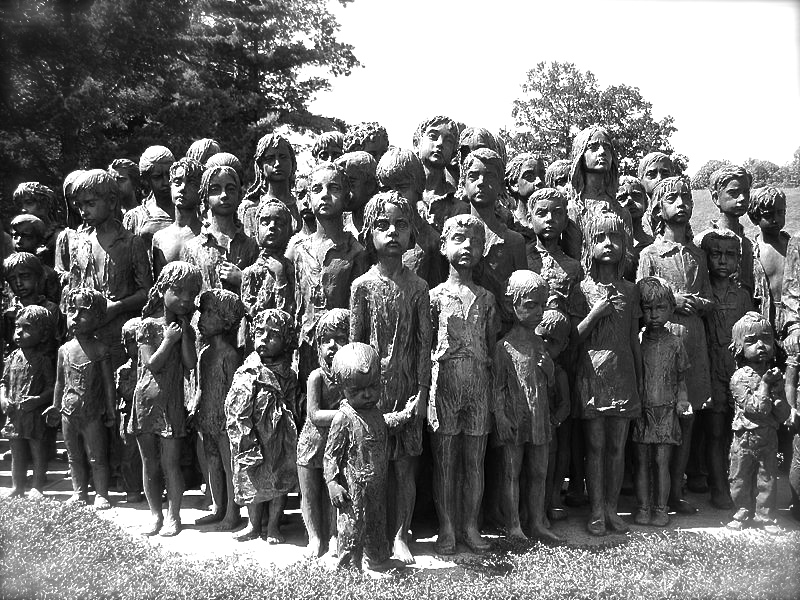
Memorial_lidice_children_(2007)-commons

Wiki Commons

My son, John, and his housemate, Jim, hosted two Antifascist activists from Greece, who were giving a presentation at the Lava Space in Philadelphia on Monday, March 11. John and Jim attend many activist events, and they always invite me to come. I decided to attend this event mostly because of an email I received just a few days ago from a member of my photography class who traveled to the Czech Republic on a family heritage trip. In that email he wrote that he had visited the town of Vrbove and walked the along the streets that were so familiar to his grandmother. He also made a pilgrimage to the town on Lidice, on the outskirts of Prague, to view the memorial there. I hadn’t heard of this town or the Lidice Memorial site so I checked out the details on the web. In 1942 the Nazis marched into Lidice and killed every male over the age of twelve and deported the women and children to the camps. They burned and leveled the village. The Nazis brought on further horrors which I cannot even bear to write about. The Nazis carried out this atrocity as revenge for the assassination of General Heydrich by unknown assailants. This chance intersection with the Lidice Memorial underscored the heroic efforts of the Greek Antifascists.

The Dysfunction of  Scapegoating

When elements of fascism raise the specter of blatant racism, blaming targets of their hate for the economic failures while undermining democracy through brute force and suppression, citizens must take note. The Antifascists remind us that we must be aware of fascist propaganda, which scapegoats on immigrants and multiculturalism, taking advantage of economic crises to fuel the fires of discontent in times of austerity. Without vigilance to these seeds of discontent, the horrors of Lidice could revisit the human race again.

Greece: A Case Study of an Economic Meltdown

Austerity measures in Greece, with the goal of  paying off astronomical debt, have created nationwide protests. Greece is suffering with unemployment at 27%. The Golden Dawn, described by both the media and scholars as fascist and neo-Nazi, won 7% of the seats in parliament and colluded with police to initiate violence against progressive activists and immigrants.

According to a 2012 article in The Guardian,

Golden Dawn is opening branches in towns all over Greece and regularly coming third in national opinion polls. Its black-shirted vigilantes have been beating up immigrants for more than three years, unmolested by the police; lately they’ve taken to attacking Greeks they suspect of being gay or on the left. MPs participate proudly in the violence.

IMG_2336

Introductions by Chris

The Greek Antifascist City Tour 2013

Philadelphia was one stop on their scheduled visits to over 25 cities in the US to increase awareness and to raise funds for legal help. Greek activists, Thanasis Xirotsopanos and Vangelis Nanos, spoke to folks at the Lava Space about fascism and resistance in their country. Sofia Papagiannak gave her presentation via the computer as she had to return to Greece. Video footage provided documentation of the Antifascist resistance to the Golden Dawn.

IMG_2339

Models of protest activism  ~ Thanasis and Vangelis ~ against the most heinous of political movements

Gun Control, A Citizen Speaks Up, Part 8

Christmas Day 2012

The National Rifle Association’s 4 million mothers, fathers, sons and daughters join the nation in horror, outrage, grief and earnest prayer for the families of Newtown, Connecticut . . .

Wayne Lapierre, NRA Press Conference, December 21, 2012

Outrage?, grief? Really?

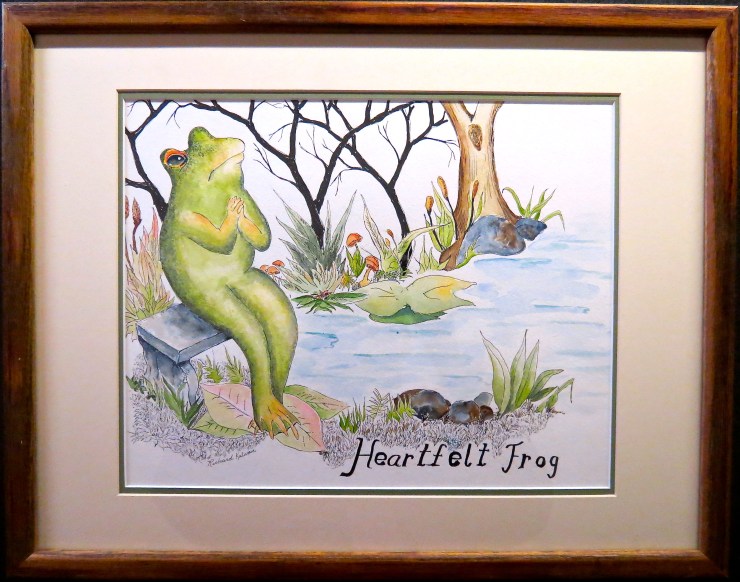
Last summer my great niece, Valeta, aged 4, and I had a conversation about sincerity and what that means. Seems like a complicated subject for a four-year old, but she listened intently to my explanation of what it meant to be sincere. I told her about the frog I have in my garden. He is called the “Heartfelt Frog” for he holds his hands to his heart and looks up toward the sky. I explained to Valeta that sincerity means honestly saying how you actually feel and how the frog earned “heartfelt” because his sentiments came from his heart. I demonstrated by placing my hands on my heart. Valeta immediately shadowed my actions and held her hands to her heart.

Five months went by, and one day Valeta asked my sister, her grandmother, if she could visit the heartfelt frog in my garden. We live a long distance from each other so this Christmas I painted her a picture for her room.

IMG_1557

Does the spokespearson for the NRA feel a sense of true loss for these families? These losses are tragically painful. And if the NRA’s response was truly heartfelt, they would assume responsibility to correct the injustice of these deaths. Does the NRA understand that their actions in support of all weapons is responsible for the deaths of 30,000 people in the United State every year? Being heartfelt means that an utterance of expression of grief and outrange translates to acts that promises reconciliation and correction.

A four-year old can understand this; for the the NRA, they are forever locked in their selfish pursuit of pleasure at the expense of the on-going tragedies of gun deaths for the rest of us.

Gun Control, A Citizen Speaks Up, Part 7

Christmas Eve 2012

Although I’m not a religious person, still, I enjoy all the carols of season. I’m very familiar with first two versus of Away in the Manger, but when I heard the third verse on the radio today, my mind turned to the children of the Sandy Hook School.

Be near me, Lord Jesus, I ask Thee to stay
Close by me forever, and love me, I pray;
Bless all the dear children in Thy tender care,
And take us to Heaven to live with Thee there.


Gun Control, A Citizen Speaks Up, Part 6

Dear Mike,

Appreciate your responding to my blog post Part 5. I found it difficult to write that last post against hunting. I have a serious disconnect between how much I loved and admired your father and attempting to understand his enthusiasm for hunting when my passion has been as an advocate against hunting and guns. As a child, I wrote letters to newspapers against hunting; my mother instilled a respect for animals and a deep commitment to relieve their suffering. We would take in birds that were injured or orphaned. Yet, I was touched by Joe’s yard . . . his bird feeders and the statue of the fawn. I remain open to exploring and listening to what you have to say on the subject. The idea now is to have a conversation about the 30,000 Americans killed by gun fire every year. Both my children live in West Philly, where shooting deaths happen frequently.

I wish we could come up with a kinder and gentler solution to the deer overpopulation problem. You make a good point about the issue of starvation or coyote attacks. While I make the case for animals being close to us in nature, for wildlife selecting other alternatives for predation is not an option, of course! I wish the lion and lamb could lie down next to each other. In the natural world, we would have to leave that relationship alone. For humans, we do have other choices, and compassion for our fellow creatures is something that will benefit us both.

We must rely on automobiles, and animals on the road do pose a hazard. Contraception technologies are available, however; the one-shot/multi-year techniques can achieve a zero reproductive rate for about three years.

About fifteen years ago, I became a vegetarian. Initially, I found it difficult to give up meat­–hamburgers, especially. Gradually, I got used to not eating meat and our diet changed considerably for the family. We began to get out of our rut of standard meals and began experimenting with vegetable dishes. A completely new world of flavors opened to the family. Many health benefits arise from lower intakes of saturated fat and cholesterol from animal protein. Studies have shown that vegetarian diets are beneficial in the prevention and treatment of diabetes, cancer, hypertension and dementia, to name a few. When we use soy crumbles instead of meat, in most dishes, you can’t tell the difference! Cutting down on meat has a positive effect on the environment, negatively affected by the global meat industrial complex and the lead from bullets that pollute soil and water. Sounds as if Gay is a good cook; I’m sure she could make very tasty meatless dishes.

Deer2

Gun Control, A Citizen Speaks Up, Part 5

Hunting is a cruel sport. Hunters maim and orphan animals; many injured animals slowly stave to death. One moment an animal is living and breathing on this earth, and in the next minute they are lying cold on the ground. Recreational hunting is unethical for it is taking a life for personal pleasure. I would also argue that for the hunter, this is not a socially redeeming activity.

When I observe other mammals and their behavior, it is obvious that we are very closely related to them. Mothers nurse their young. Animal parents fiercely protect their offspring and teach them skills for their survival. Animals seem to grieve. Animals cry out in pain and comfort each other.

We would not kill our pets. Laws protect pets from abuse. Then why would we kill animals of similar intelligence and sentience?

Leg hold traps, a form of hunting, are still in use today.  The poor animal suffers for days at the trap.  Many animal rights activists have succeeded in banning such torture machines because we have become more compassionate toward our fellow creatures. Just take one quick peak at this video of a mother otter with her baby, and yet no so long ago she would be trapped or shot. Can we really look at this video and think that was ever ok?

My hope is that someday all hunting will be viewed as cruel, and laws that protect our pets will also protect our wildlife.

Gun Control: A Citizen Speaks Up, Part 4

Clip

over 500 children a year will walk into oblivion from gun fire

The Ethics of Gun Control: Answering to a Higher Calling

The Dalai Lama equates ethical behavior and non-harming. Ethical conduct avoids suffering. We will achieve true happiness when our actions reflect compassion and do not hurt others.

How do we think about situations in which our happiness conflicts with the happiness of others? Does our happiness cause others hurt or anxiety, and in turn does that hurt to others come to haunt us? We must come face to face with how our actions and desires affect our fellow human beings. We must remain compassionate and carefully consider how even sacred traditions and long-held beliefs may be detrimental to others. This rethinking takes time and calls for the rejection of many thoughts and understandings that we might hold dear to us. We might consider how our past entitlements have caused injury or hurt to others or to ourselves.

Tag Cloud