Humble Contributions to the Peoples' History

Archive for the ‘Social Justice’ Category

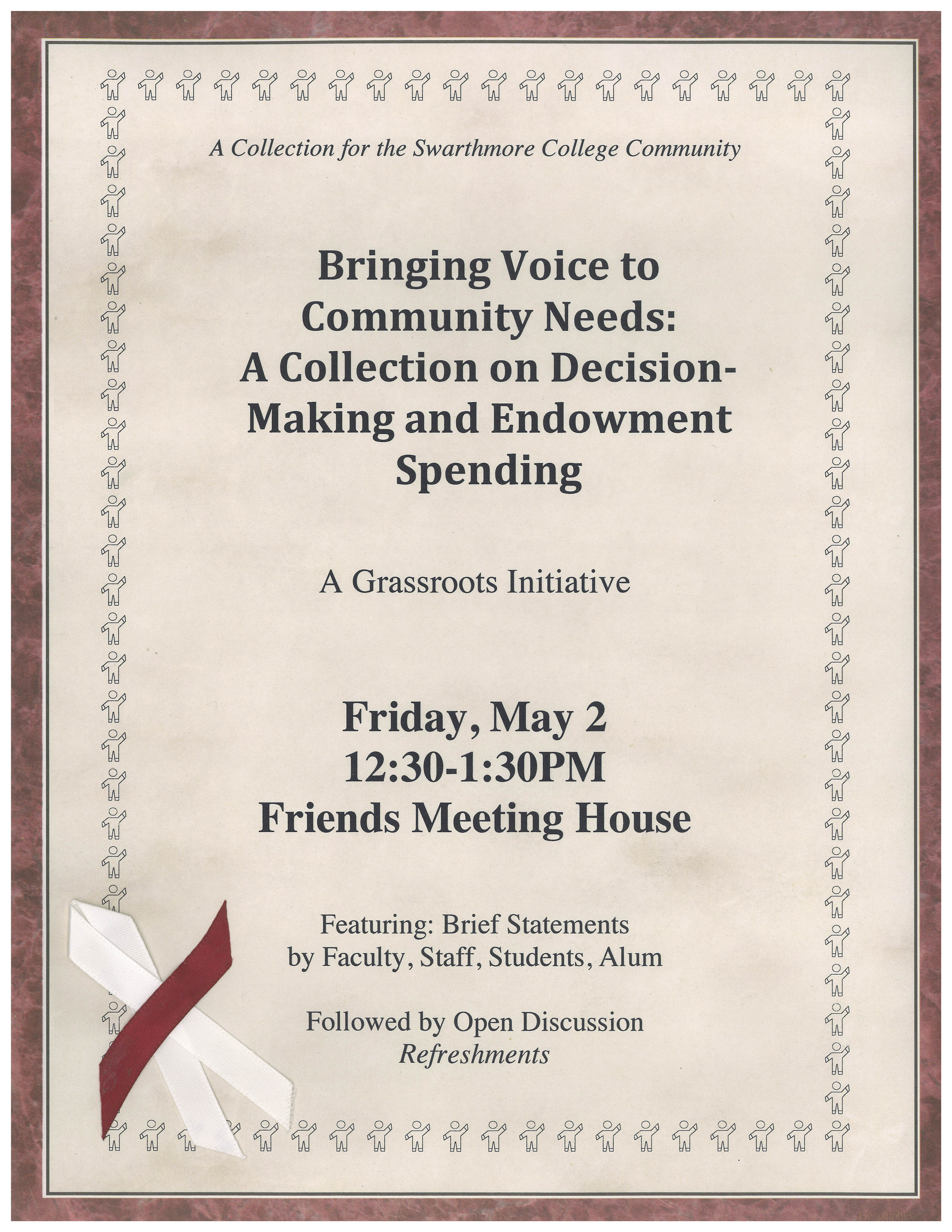
Bringing Voice to Community Needs: A Collection at Swarthmore College

Collection 5.2.14This Collection was unique: a grassroots initiative with staff, faculty and students working together to offer all community members an opportunity to speak on decision-making and governance at the College.

Organized by the Student Labor Action Project (SLAP), the idea for the Collection grew from their advocacy for a child care benefit. In the previous week, SLAP and Human Resources released survey data from the dependent care survey of faculty and staff at the College. Of the 28% who responded that they used childcare, 41% of that number claimed that they were unhappy with their current child care arrangements. More than half of the respondents preferred an on-campus child care placement. In 1991 the Women’s Concerns Committee submitted a survey, and spent the next 14 years advocating for child care for faculty and staff. The question SLAP and the community had to consider: if the community supported a child care benefit, why hadn’t that benefit been implemented, especially since funding had been provided?

The Collection, facilitated Joyce Tompkins, Religious and Spiritual Life Advisor, brought together a panel to begin the discussion on decision-making processes and endowment spending at the College.

Gathering

Joyce Tompkins introducing Panelists

IMG_6278

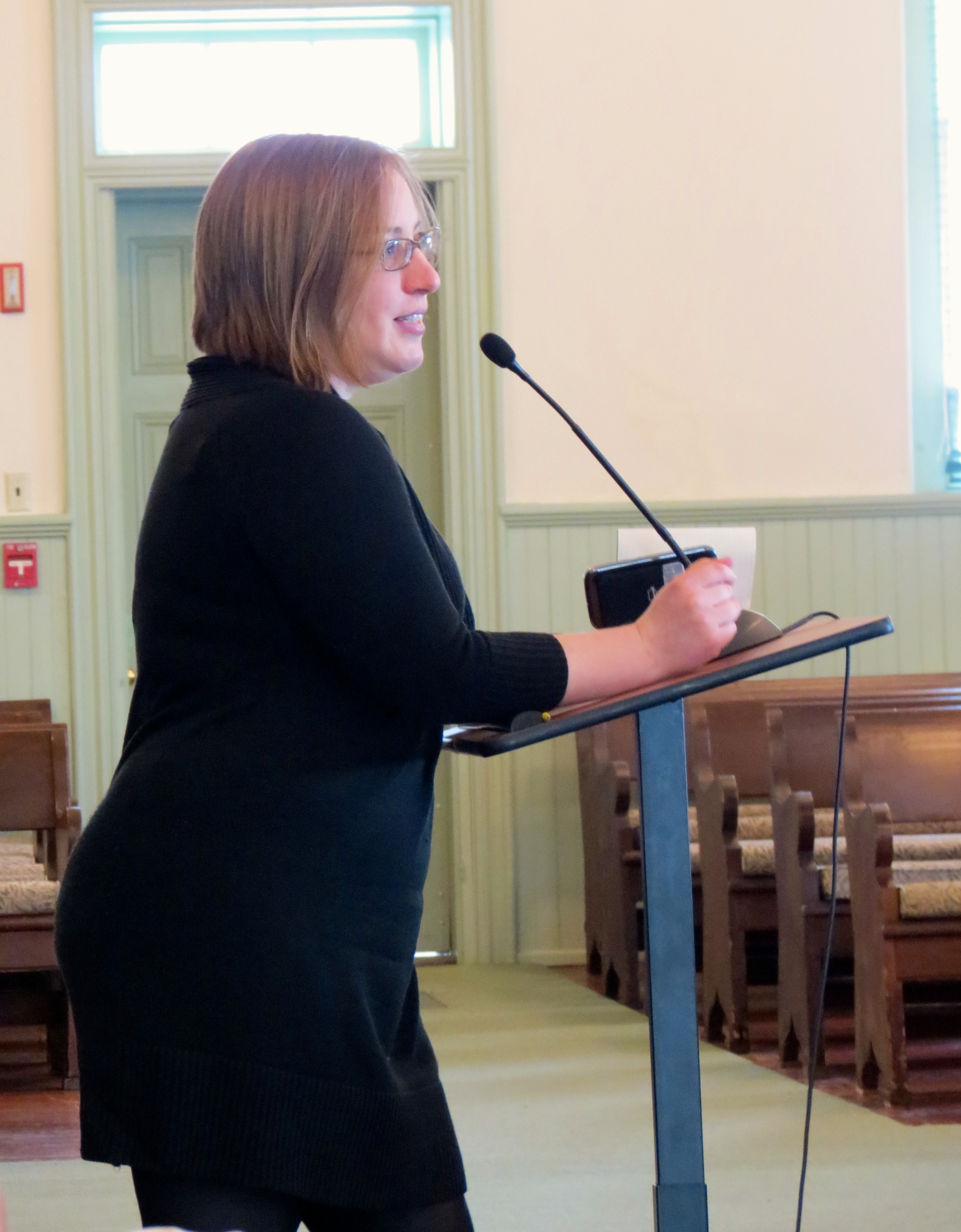
Donna Jo Napoli, Linguistics Professor, advocate for child care

IMG_6283

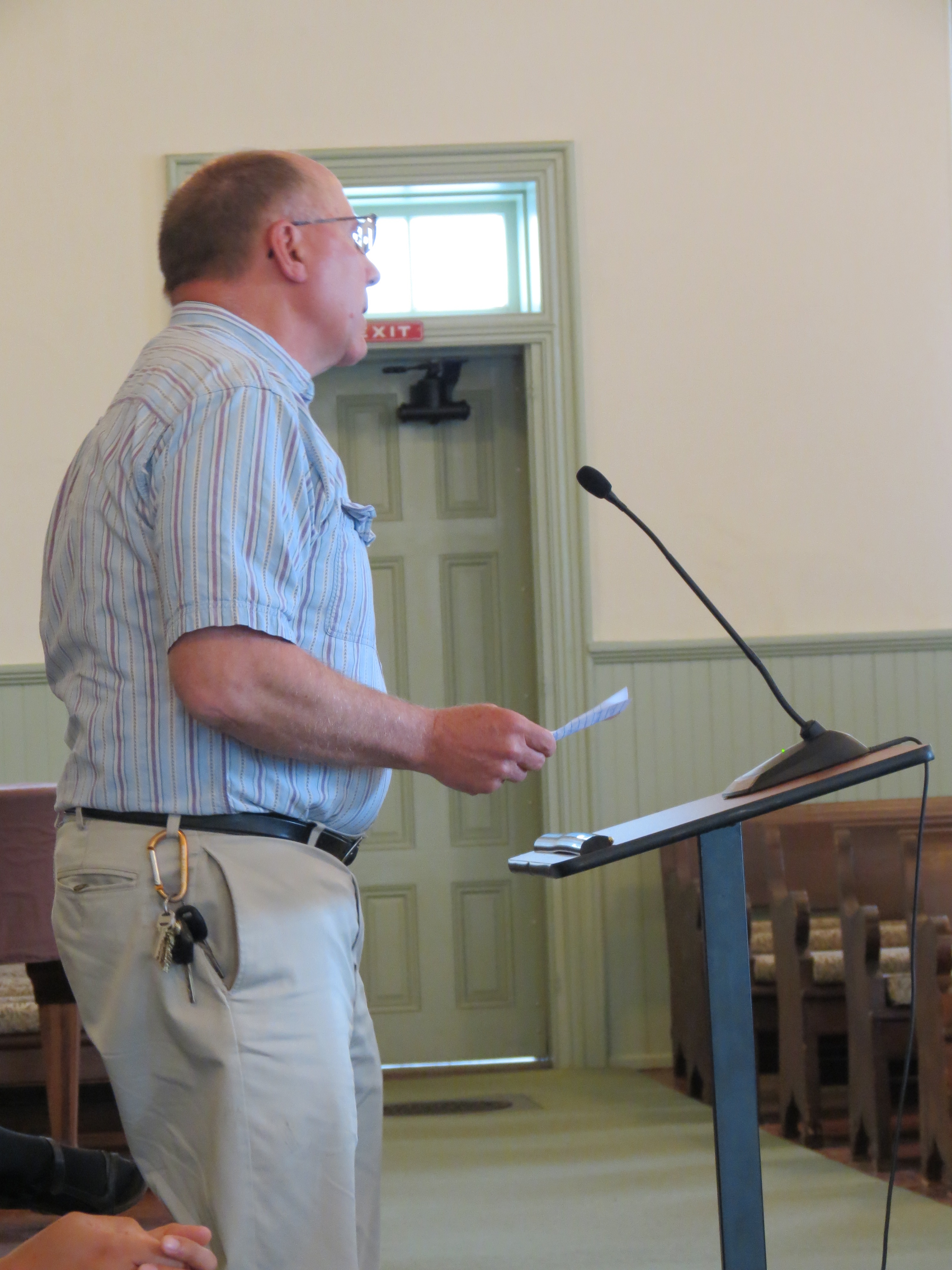
Peter Collings, Physics Professor

Peter recently wrote a series of articles on the endowment in The Phoenix:
The inequity of Swarthmore’s endowment: An open letter to the Swarthmore College community
The inequity of Swarthmore’s endowment, revisited
Why endowment policy needs community input

IMG_6286

Gwen Synder, Class of 2008

Gwen Synder is Director at the Philadelphia branch of Jobs with Justice.

IMG_6280

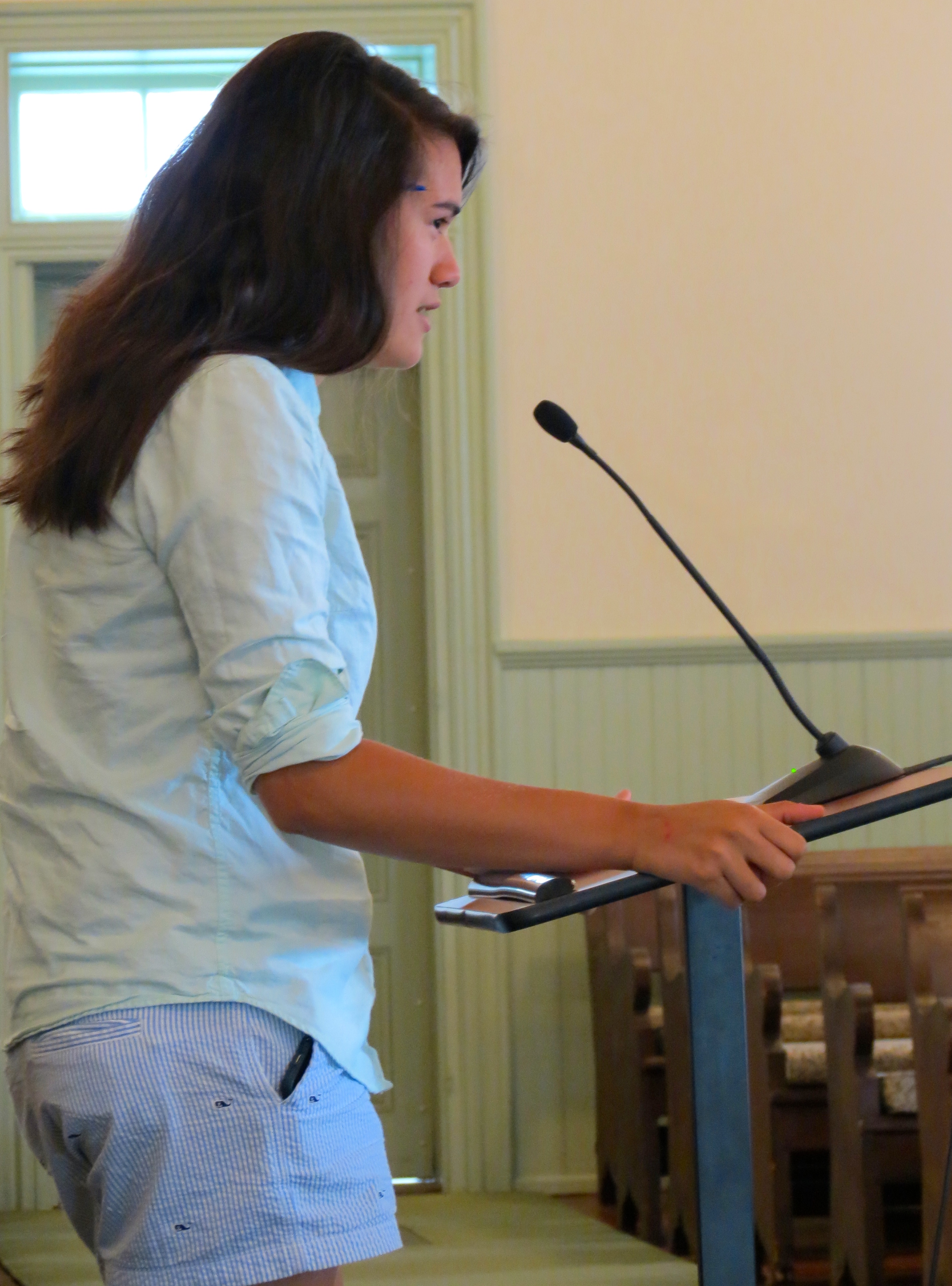
Anna Gonzales, Editor in Chief, The Phoenix

Brett Day, Staff from Dining Services (unfortunately Brett could not make it because of difficulty arranging for child care).

It is the hope that this Collection will be a catalyst for the College community to work toward participation and transparency, as now neither faculty, staff or students have voice when it comes to financial decision-making. Truly enlightened institutions will foster coöperation that can only come by encouraging participation in decision-making as an inclusive practice that educates students in the process of genuine democracy and brings community members together to work in partnership with each other.

This slideshow requires JavaScript.

More photographs at the Daily Gazette.

Proposal to Meet Staff and Faculty’s Child Care Needs at Swarthmore College sent to the College administration in May 2014.

Sister Teresa Forcades at Red Emma’s in Baltimore

I follow Facebook pages for Red Emma’s and Sister Teresa Forcades and was so excited to read their recent joint posting:

Just announced!
Teresa Forcades, radical feminist nun, anti-austerity organizer, and advocate for an autonomous Catalonia

speaking at Red Emma’s the very next day. While I was in Barcelona, Spain, I attended an event, Women, Spirituality and Social Change, and met Sister Teresa (see post here), so to have an opportunity to see her again right in our neighborhood of the world, I wasted no time getting train tickets my son John, who writes for The Industrial Worker, and me to travel to Baltimore.

Red Emmas

Emma Goldman: Courageous Advocate for Worker Rights

Emma Goldman 1886  *Wikipedia

Emma Goldman 1886 *Wikipedia

Red Emma’s, a worker cooperative started in 2004, supports a bookstore, restaurant and community space and is “dedicated to putting principles of solidarity and sustainability into practice in a democratic workplace.” The namesake of the cooperative, Emma Goldman, a political activist known for her promotion of anarchism, is another woman I admire for her progressive views on women’s rights, prison reform, racial equality and right to organize our workplaces. Anarcho-syndicalism best explains my political philosophy where worker solidarity, direct action and worker self-management form the basis for encouraging workers to free themselves from the hierarchical systems of bosses and managers.

Several years ago, John, along with fellow members of the I.W.W.,  paid a pilgrimage to Emma’s final resting place, Forest Home Cemetery, in Forest Park, a suburb of Chicago. Emma had been deported years before her passing, but officials of the immigration office allowed her burial on U.S. soil. Other activists are buried nearby, so she’s in good company. 

kalwaic-R1-030-13A

Teresa Forcades: A Crusader against Austerity and Leader of Protest Movements in Spain

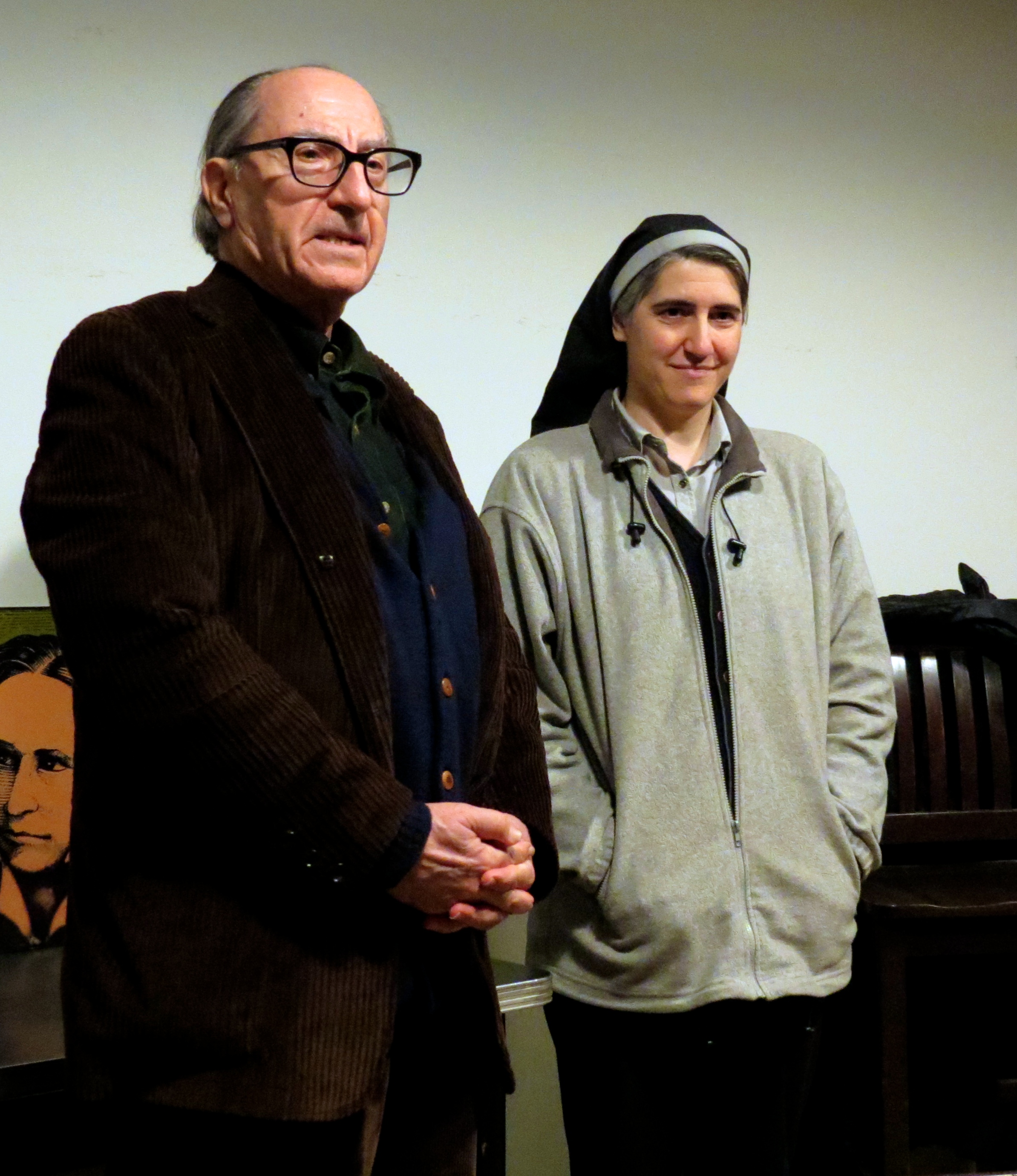
Teresa Forcades at Red Emmas

Teresa Forcades launched a political manifesto to counter austerity measures by the Spanish government. The document calls for an independent Catalonia to carry out a more democratic and progressive agenda, including nationalizing banks and energy corporations and advocating for participatory democracy, ecological restructuring, and decent wages and pensions. Any progressive could support the reforms in this remarkable document. Manifesto

The program began when Professor Navarro from Johns Hopkins University introduced Teresa to the gathering. Teresa discussed many of the points in the Manifesto and the “Indignados” movement in Catalonia and Europe.

Introduction: Prof. Navarro

Introduction: Prof. Navarro

Teresa emphasized four principles necessary for success in making social change.

1. Reactivation from below. Change has to be brought about from the bottom up.

2. Avoid centralized leadership and control. People should not look for a savior. They must work together to foster diversity and unity without uniformity.

3. Stress the urgency. A large percentage of the populations lives in poverty (30% in Catalonia) and a significant number are living at the misery line (12% in Catalonia). The misery line represents the threshold of not even enough money to buy food and shelter.

4. Engage in revolution and do it again. The revolution is not over with a few reforms. Citizens must take part in decision-making. The constitution should be an evolving document as changes are needed for social reform.

discussion

Conversation

After the question and answer discussion, I talked with Teresa and introduced John. I invited her to come to Swarthmore College as I know the students would be inspired by her dedication to social justice. I never expected that Teresa would be visiting in our area, so I have great hopes that we will see each other again in the future.

International Women’s Day: A Rally for $15/hr Minimum Wage

Philadelphia, 10th and Market Streets

Activists teamed up with retail and fast food workers to campaign for a $15 minimum wage by standing together at a rally on Market Street. I came into Philly to support this initiative because I participated in the Swarthmore College Living Wage and Democracy’s campaign to raise the base wage, and documented that effort here.  That campaign resulted in a wage increase for the lowest-paid employees at the College.

Many corporations that pay poverty wages compensate their CEO’s hundreds of times larger than their workers. For more information, check out this article, “466 Hours of Worker Overtime Equals One Hour of CEO Pay.”

Rally participants broke into groups to distribute red flowers to female workers at four different locations including McDonalds, Starbucks, Burger King and CVS.  Most folks who passed by the demonstration responded positively, and drivers honked their horns in support.

This slideshow requires JavaScript.

Links:

15 Now.org

Activists in Philadelphia Join Nationwide Protest of Low Minimum Wage

On International Women’s Day, Street Actions in Philly for Living Wage


Living Wage Lament

Rich folks have the money,
they also have control
poor folks have no money
we’re even in the hole.

We represent diversity
but we are not you’re cream
cause your diversity comes packaged
in a sales pitch lean and mean.

You keep you billon dollars
safely in the bank
no way in hell can touch it
for us who have no rank.

The future is what you talk ’bout
as if that’s all that matters,
you forget the present d’termines
who’ll remain in tatters.

We try and try to tell you
but you got blinders on.
for you can’t see or hear us
‘fraid you’re sense’s gone.

Those who toil and work
are different kind of folks
and never in a billion years
will you remove our yokes.

So it’s up to us to do it
for we must seek the prize
to get equal pay and benefits
and open people’ s eyes.

Save the Environment: 5 Easy Steps We Can do Now to Help Out

I’ve thought of several ideas on helping the environment and finally inspired to carry through and write down suggestions after reading a Daily Kos article, Two Small Changes in the Bathroom Could Improve the Environment and Your Health by Laura Clawson.

1. Add water to just about everything, especially when soaps and cleaners have a small amount left. Yes, probably shouldn’t add water in some cases, but if you can think about diluting where might be proper, do so. Detergents get thick at the bottom and adding water and shaking vigorously stirs up a lot of extra product.

2. Cut toothpaste and other tubes in half. I’ve managed to get two extra weeks out of a cut tube of toothpaste.

3. While making purchases, don’t use plastic bags for anything you can put in your pocket or purse. Have large reusable bags handy in the car and use for all of your shopping trips, not just to the grocery store. As our family was driving through the Delaware countryside, I noticed plastic bags stuck in the fields, ditches, trees and streams. We could organize crews to clean up, but far better that as consumers, we decide not to use plastic bags.

4. Think about the right measure to use for each product. Corporations may promote bigger portions to sell more. I realized that I don’t need to take a big swig of mouth wash. A little bit does the same job. A judicial amount of shampoo gets the job done and less soap goes down the drain.

5. No recyclable trash cans nearby? Carry home bottles and recycle.

You’ve probably figured a few things to do that help the environment. Please contribute to the list, as these serve as reminders or new approaches to consider.

Every bit helps and a few steps we take together mount up to big savings for humanity and our planet.

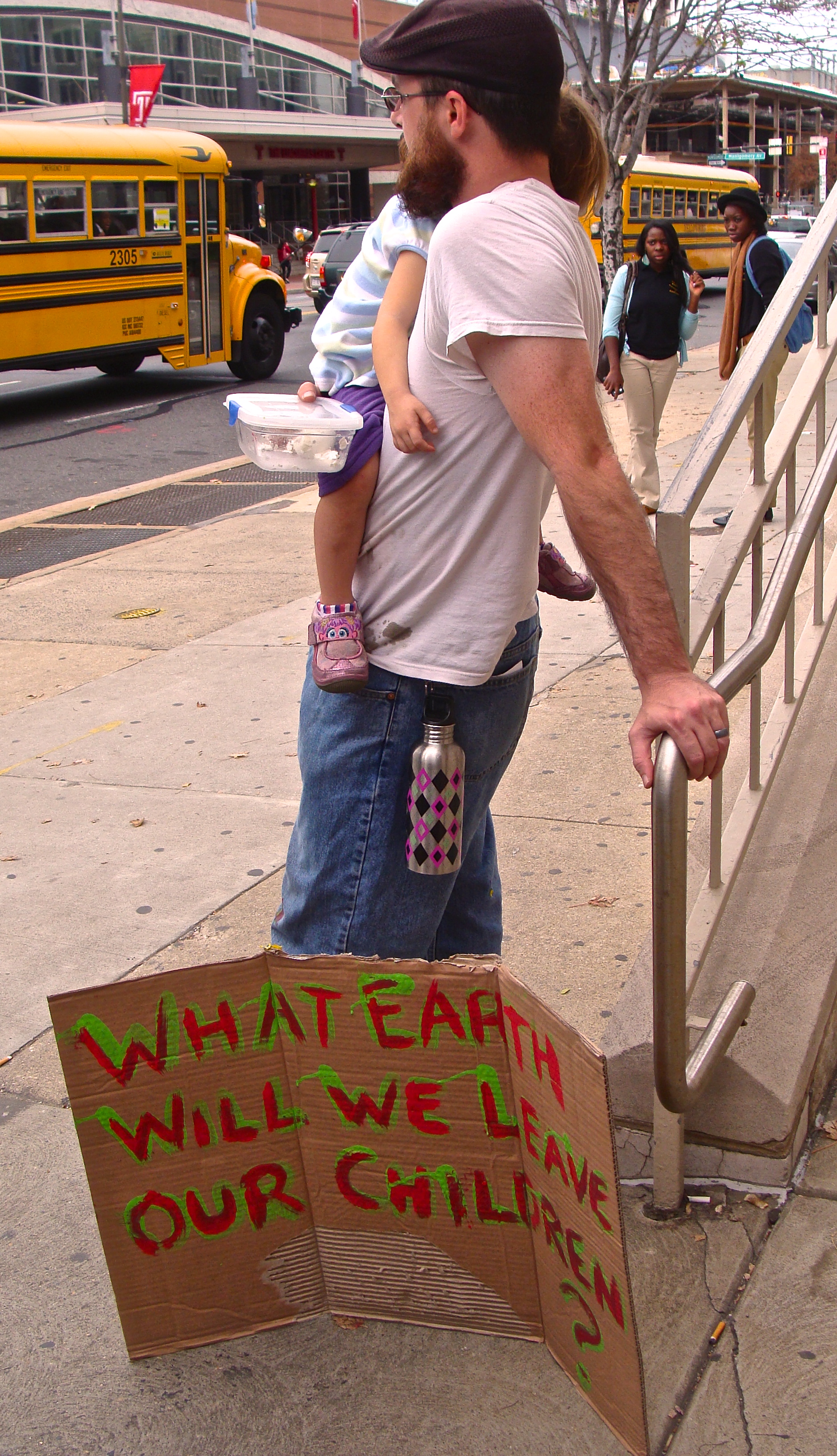
Protester, Philadelphia 2013

Protester, Philadelphia, 2013

Disastrous Financial Priorities and a Community Mourns

School Nurses Forewarn the District

Outside the Philadelphia School headquarters, on a cold January day in 2012, a gathering of school nurses, bundled up against the chilling wind, protested the district’s laying off nurses. The nurses, calling themselves the Occupy 440 movement, continued the protest for five months, assembling every Wednesday at 440 Board Street. The district cut over 100 school nurse jobs in the 2011-12 school year, and other staff reductions left schools at the state minimum of one nurse per 1,500 students. According to The Notebook, “Nurses warned that the District was potentially endangering children by failing to have trained medical staff in buildings most of the time.”

Betsey Piette carries poster Picture of Laporshia.

Betsey Piette carries picture of Laporshia.

Vigil for Laporshia

Samir Robinson from Musicopia plays for the Vigil

Samir Robinson from Musicopia plays through the Mist

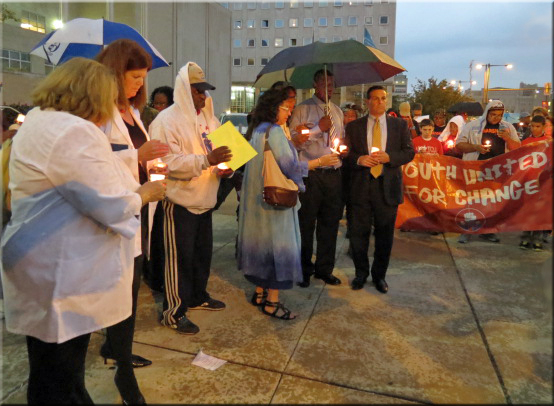
Just 17 months later, the nurses organized a candlelight vigil for Laporshia Massey, who arrived home from her school, Bryant Elementary, suffering from an asthma attack and dying later that evening at Children’s Hospital. Laporshia fell ill during school the day, reportedly complaining of difficulty breathing. At that time, no nurse had been on duty at the school.

Father, Nurses, Youth

Laporshia’s father, Daniel Burch (holding umbrella) stands with school nurses, who organized the vigil.

Austerity Cuts Deep

Pennsylvania Governor Corbett and the Republican-controlled legislature have imposed substantial education cuts throughout the state, causing the School District of Philadelphia to fall into a deep financial crisis. The Governor failed to release $45 million of federal funding earmarked for Philadelphia schools. While evoking the concept of “shared sacrifice” to justify cuts in education, in contrast, the legislature passed a corporate tax cut that would cost the state $600-800 million per year, more than double Philadelphia schools’ deficit for the next fiscal year. In addition, the district carries an enormous debt. According to City Paper,

The district spends more than ten times the national average serving its debt, with an astonishing $280 million—12 percent of its entire budget—going to interest payments and $161 million going to Wall Street firms in what have been called “toxic” interest rate swaps, under criticism in other cities for unjustly robbing schools of resources.

Girl With Candle CRChildren’s Health at Risk

When authorities cut school nurses from budgets, children who have health problems may not receive proper treatment while at school. Children on medications may have to rely on untrained staff to assist them. Children with epilepsy, ADHD, diabetes, food allergies and asthma are particularly at risk. The question arises is who is responsible for schools’ record keeping on each child’s health concerns if no nurse is present to evaluate a student who becomes ill during the school day. AFT President Randi Weingarten wrote in an open letter to Pennsylvania Governor Corbett that one in five students in Philadelphia have asthma, and that “parents and educators—would sleep easier knowing their children’s schools had enough school nurses, guidance counselors, safety personnel and support staff so that a tragedy like this would not befall another child.”

Ironically, a day before the candlelight vigil for Laporshia, the district learned that Philadelphia will receive the $45 million in federal funds that Corbett had been withholding. A spokesman for Corbett stated that the release of the funds and Laporshia’s death were not connected. Philadelphia school superintendent, William Hite, stated he did not plan to rehire any nurses because the district has “met the state’s caseload standard.” Are parents left wondering whether there will be another time the school nurses will be holding candles outside the 440 Building?

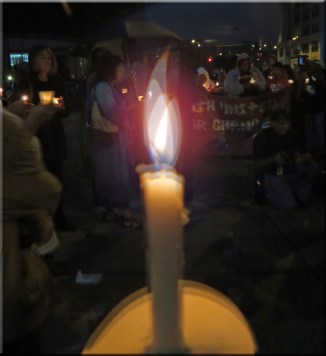
Candle

An Empty Desk

Bryand ES Final

Bryant Elementary School is located at the corners of Cedar Avenue and 60th Street in West Philadelphia. Playground equipment stands securely on one corner of the school lot, and along the walls of the brick building, colorful murals illustrate scenes of children swinging, dancing and jumping rope.

While economists, bureaucrats and government officials argue the merits austerity measures, one mural might be different now.

Links

Her Name is Laporshia Massey and Our Hearts are Breaking

Justice for Laporshia Massey Update

Vigil for Laporshia Massey – Victim of Philly Schools Budget Cuts

The Great Austerity Shell Game

Sick Days: The Philadelphia School Nurse Shortage

Doomsday Plan Could Wreck the Regional Rail Lines in SE PA

Update: November 20, 2013, Pennsylvania House voted 104-95 to give key preliminary approval to the $2.4 billion transportation funding program.

Passengers on

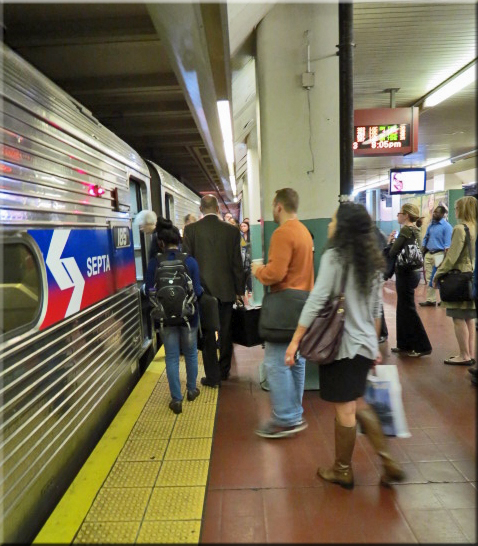
A Ticket to Ride

Last evening as I was boarding the Media-Elwin Regional Rail at the 15th Street Station, I watched as passengers streamed onto the train filling up the seats and then standing in the aisles. It seemed incredulous to me that considering both the crisis of global warming and the thousands of riders who depend on public transportation, that SEPTA (Southeastern Pennsylvania Transportation Authority) has presented a “doomsday” proposal to shut down the Elwin-Media line, as well as closing eight other regional rail lines.

Market St Station

Will deserted stations become the norm?

During the Pennsylvania State Transportation Committee hearing held at Temple University on September 12, 2013, SEPTA General Manager Joseph M. Casey stated that these changes would affect 89,000 daily transportation users. Yet, just two months ago, SEPTA announced an all-time high in regional rail ridership. Passengers made over 36 million trips in a year’s time, including 2.9 million on the Media-Elwyn line.

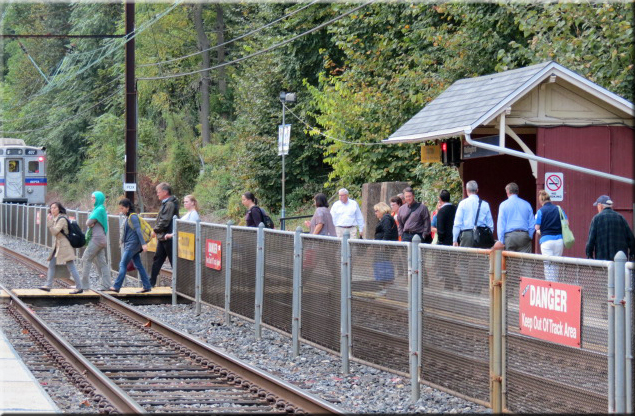
Leaving Staton

Leaving the Wallingford Station

Commuter Nightmare

The hardships created by such a shutdown are almost immeasurable. People with disabilities, senior citizens, and those unable to afford an automobile would be prevented from getting to their jobs and medical appointments. Paratransit service for the handicapped would be reduced. Students requiring transportation into the city from the Western suburbs would find it difficult to get to Penn, Temple and Drexel, and the 31 other universities in the city and surrounds. The young man sitting next to me was studying a medical textbook. Trains allow time for people to study, read, socialize or just relax, which is totally unavailable to automobile commuters. Increased car traffic would add to the congestion on our already crowded highways. Economic losses would befall Philadelphia as suburbanites rely on public transportation to bring them into the city for volunteer work, cultural activities and special events. Philadelphia could lose 60,000 jobs. According to a study released by SEPTA, home values would drop if Regional Rail service would be cancelled.

The average property value premium for houses located in counties is $7,900. Homes in communities with higher levels of Regional Rail service and parking capacity, the property value premium averages between $31,000 and $37,000 per house.

Ticket Office Closed

Closed Ticket Windows . . . the future for Delaware County Riders?

Funding Held Up in State House

Without funding from the state for SEPTA’s backlog of critical repair work to the tune of $6.5 billion, the Authority will have to significantly shrink the transit system over the next 10 years, SEPTA General Manager Joseph M. Casey reported during his testimony at the hearing. Four trestles, which are over 100 years old, need significant repairs. Unless Pennsylvania legislators approve this funding, commuter citizens will be held hostage by the politics of the State. A small minority of state legislators are set against it as lawmakers wrangle over funding allowances and tax increases. Currently, the bill is held up in the Republican-led house.

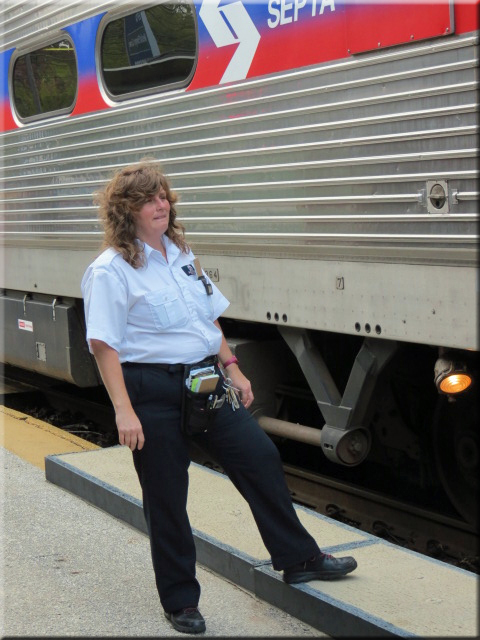
Conductor

Cuts will cause layoff of hundreds of SEPTA employees.

Citizens Rally for Transportation

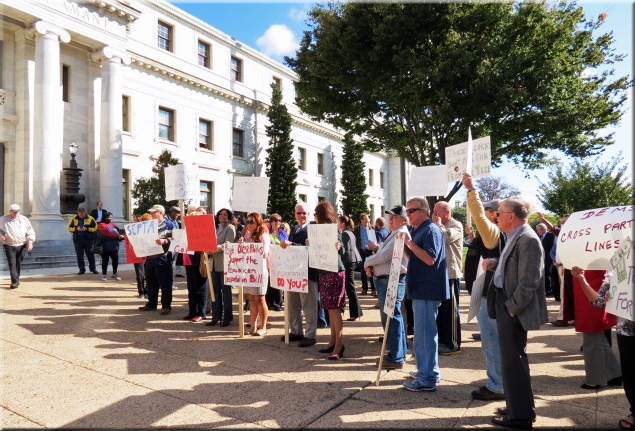
Delaware County citizens have been rallying support for SEPTA funding. A Swarthmore college student started an on-line petition and has collected over 3,200 signatures so far. At a press conference on October 18 at the Media Courthouse, (Former) Governor Rendell, standing with local Democrats as well as a few Republicans, expressed his objections to the possible closure of the Media-Elwyn line. Rendell encouraged supporters to support the passage of SB-1, the transportation bill that’s been proposed to fund SEPTA.

Protest at Media Courthouse

Protest at Media Courthouse

Rendell addressed the crowd stating,

There are 37 counties with transportation systems in Pennsylvania and all of them would benefit, in my opinion by the bill. The bill would have produced $400 million dollars a year annually for public transportation . . . something that is desperately needed, something in the past we wouldn’t be talking about closing the Media-Elwin line, we wouldn’t be talking about cutbacks not here in Delaware County . . . we should actually be talking about improving public transit.

Rendell

Former Governor Rendell speaks to demonstrators.

End of the Line?

Later that week, after returning from Philadelphia on the Media-Elwin line, I watched as our train left the Wallingford station, fading into the darkness. I wondered if concerned citizens can rally lawmakers so that our public transportation does not disappear from sight.

Shakey Train

Lone Ranger on Television: Reflections on My Childhood

Over a year ago I wrote a blog post, Lone Ranger and Tonto: A Nostalgic View and Modern Critique, in which I relate my childhood experiences of growing up watching westerns on television, and in particular, The Lone Ranger, and how those programs influenced the way children of my era interpreted that violence. In that post, I also wrote how as an adult, my perceptions of the program changed, understanding the issues of Manifest Destiny and the complexities of the relationship between Tonto and the Lone Ranger. This post is a reflection on my experiences on how that show might have influenced the way we played as children.

To us kids, the Lone Ranger and Tonto were heroes, unselfishly searching out the “bad guys” and bringing them to justice during the Old West. It would be only natural that we would want to emulate these two heroes. For girls, it may have been less about guns and more about that there could be someone out there who could look after people who were under the thumb of the bad guy and make things right. The Long Ranger knew how to make a plan and carry it out with the help of his trusted friend, Tonto.

As I mentioned in the earlier post, although girls wore toy guns in holsters, usually as part of a costume, we never aimed our guns at each other or played mock shoot-outs.  For the boys, it was different.

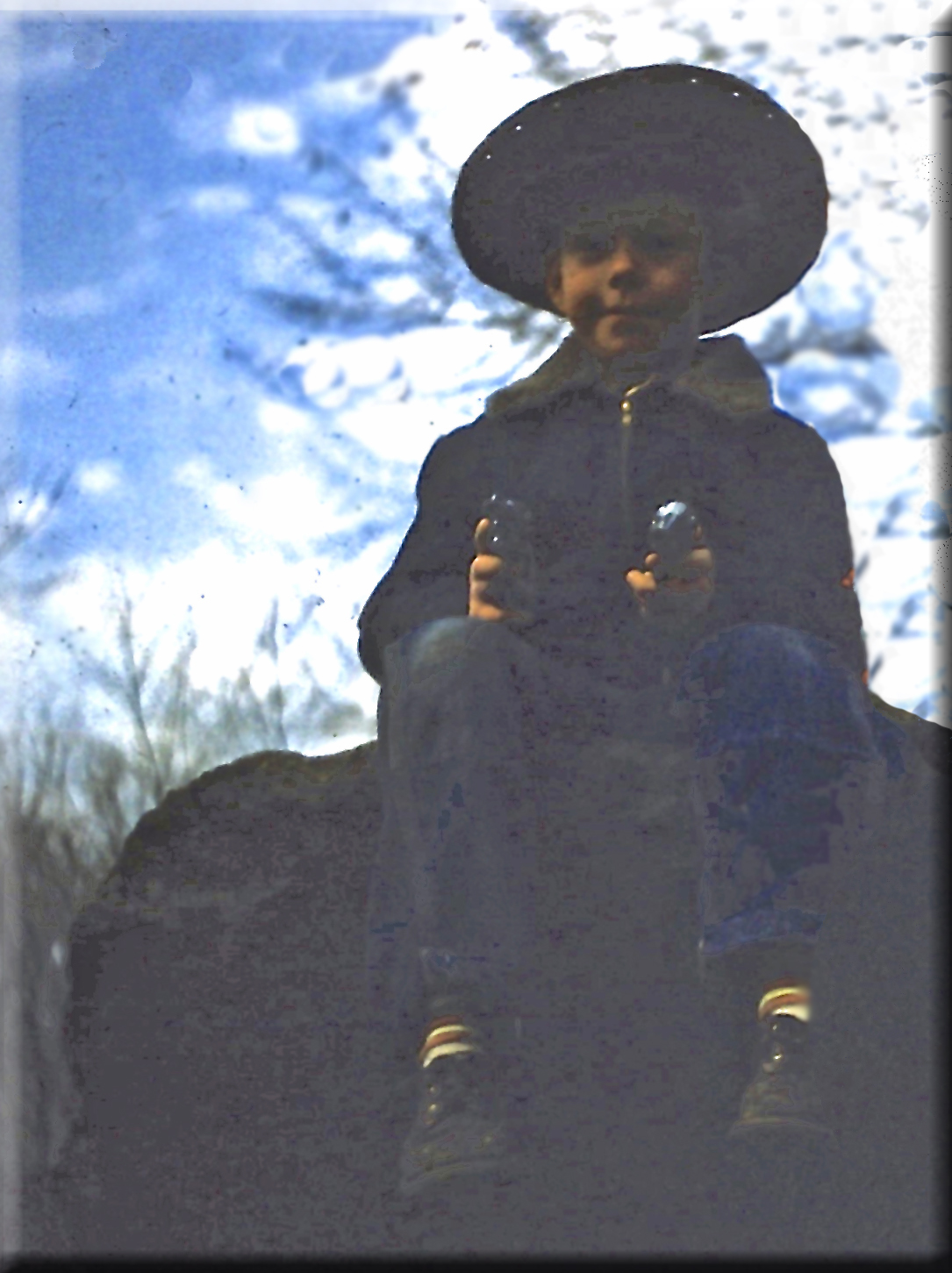
On the Rock with Guns

Photo: Circa 1954

Boys played the games of bad guys versus the good guys, and this play usually involved some degree of aggression, usually in the form of rough housing. If I complained to my mom that the boys were playing too rough, she would say, “Well, it’s time to come in then.” It wasn’t a girl’s place to get involved in fights and tussles. At some level, I thought that boys seemed less civilized than my girl friends because of their aggressive play and coarse language, which sometimes morphed into cursing.  Sometimes they could be outright bullies. If they were playing shoot ‘m up with each other, and if we wandered into the action, we’d be shot!

Occasionally, a story in The  Lone Ranger would include a woman. I remember secretly hoping that maybe the Lone Ranger or Tonto might find a girlfriend, and always somewhat disappointed, when they would ride off into the sunset again without a storyline that included a woman. Even at age 8, I realized something was amiss.

loneranger-guns

Got the guns, but where’s the girl friend?

The stories of the Lone Ranger became implanted in our consciousness, and Tonto and the Lone Ranger survive as mythic folk heroes for a generation of television viewers.  Children could not grasp the idea that the Ranger was a vigilante who had no authority to enforce the law and who used guns to impose his will. Instead what we seem to remember is that the masked man and his partner played respectful characters who courageously stepped into dangerous situations with the unselfish goal to stand with those who faced injustice.  As a young child, I guess I might have thought that any man who was that mannerly and courageous would wind up with a girlfriend . . . eventually.

A Corner in West Mount Airy, Philadelphia

IMG_2295

Greene Street and Carpenter Lane

Taking a writing course offered at the Big Blue Marble Bookstore led me into a community in West Mount Airy at the corners of Greene and Carpenter Lane. Despite the bleak winter afternoon, the community offered a warm atmosphere as the little shops that lined the streets invited me to stop in to visit. In addition to taking a writing course, I had also enrolled in a photography class at an art center in my community, so I had brought my camera along, as our assignment was to look for new shapes and textures as subjects.

IMG_2275With a fondness for restoration, I couldn’t believe my luck stumbling onto the Philadelphia Salvage Company. Suitcases and trunks piled on what looked like an old railroad cart, and metal cans spilled into the sidewalk. But I didn’t linger too long in cold. Upon entering the building, I noticed  a cast iron stove, pumping warm air through the building, as a tea kettle spewed steam from its spout. I warmed my hands and looked around, mesmerized by the array of architectural salvage, from stained glass, plumbing and electrical fixtures, antique doors and windows. In a second life, I could be a picker, as I love all the old stuff in need of a fix-up.

The Salvage Company celebrates a doggie visitor as their “mascot of the day,”  and I understand that a sleepy cat sometimes occupies the front bench.

Tea Pot Frame

I found lots of subjects for my photography assignment.

This slideshow requires JavaScript.

One subject seemed to deserve special attention: a shelf of different sized gears.  The photograph of those gears inspired this blog post, and three months later the photo won first place at the Community Arts Center!

Across the street from the Salvage Company, dogs waited patiently for their owners grabbing a bite to eat at the High Point Cafe. Chilled by the damp air, I stopped in for a cup of coffee. I was not disappointed as the coffee was excellent, in addition to their selection of pastries. The Cafe refers to their corner as a village and “are proud to be part of one.”

IMG_2289

One store down from the Cafe, the Nesting House specializes in selling new and used baby items “with an aim to uphold a mission of social and environmental stewardship.” They sell cloth diapers and used clothing. I found a little pair of shiny dress shoes for my great-niece.

IMG_1943

Crossing over to the corner, I opened the door to the Weavers Way Co-Op, and met with crowds waiting in line to make their purchases. Deli aroma filled the air, and signs advertised hot soup for sale by the cup. According to co-ops website, they sell products that are “local, sustainable, organic, fairly traded and healthful.” It’s a small, two-story compact space, and yet they had annual sales up to $14 million.

IMG_1945

A Huge Assortment of Bulk Items

I picked up some fresh vegetables and loaf of bread and headed to my destination, Big Blue Marble Bookstore. This store reminded me of the book shop restoration I had been part of years ago at Bindlestiff Books in West Philly. An independent book seller, the shop displayed a fantastic collection of children’s books and places for kids to sit and consider what they might buy. Toys and stuffed animals filled every corner. A cozy space, I lingered in the travel section before heading upstairs to my writing course. The store sponsors events including book clubs that can use their community space.

IMG_2171

The progressive leanings of this corner village come from a long history of neighborhood harmony. According to Wikipedia,

The area is recognized by many civil rights groups as one of the first successfully integrated neighborhoods in America. Mount Airy residents organized to resist blockbustingpanic selling, and redlining, especially during the period from the late 1950s to the early 1970s when those practices were prevalent. It continues to be a well-blended neighborhood and was recently cited in Oprah Winfrey’s O magazine for its racial diversity and neighborhood appeal. The community has also been recognized by US News & World Report for racial harmony and balance.

The harmony in their neighborhood stands in contrast to what the big-box stores offer. In this post, Mystique of the Ole Fashioned General Store I compare the general store of years gone by, which served as a community anchor, with the big-box store of today, which, in contrast, offers little neighborhood involvement or esthetic appeal.  According to a study conducted by faculty at Penn State, big-box stores coincide with hate groups. Mount Airy demonstrates that progressive values provide the small-town American atmosphere we long for in this country. It’s as simple as having a welcoming street corner in your neighborhood.

Meeting Teresa Forcades, Revolutionary Nun, Barcelona, June 13

As a supporter of anarcho-syndicalist movements, which advocate for democracy for the working classes in politics as well as the workplace, I’ve been following the news about the strikes against the Spanish government’s spending cuts, which create severe consequences for workers and their families. Following these events, I came across one of their leaders, Sister Teresa Forcades.

Teresa ForcadesSister Teresa, who confirms that her Church is misogynistic and patriarchal, has a Facebook page here: https://www.facebook.com/Forcades?hc_location=stream if you don’t mind using Google translator for Catalonia into English.

For folks who have their doubts about capitalism, Teresa has launched a political manifesto to counter austerity measures by the Spanish government. The document calls for an independent Catalonia to carry out a more democratic and progressive agenda, including nationalizing banks and energy corporations.

On my first evening in Barcelona, I’m going to an event, Women, Spirituality and Social Change, a dialogue between Teresa and Lekshe Karma Tsomo, a California Tibetan nun, who share the same commitment: to promote social change based on inner transformation.

Travel Log to Northern Provinces of Spain

If you might travel to Spain or if you have been there and would like to compare notes, please check out my page here where I have pictures and video of Sister Teresa at the event I attended.  I also chronicle a trip to the Northern provinces, which will include commentary on politics, cuisine, language and art.

I will occasionally do a post, but for the most part I’ll be updating the web page. Thanks for checking it out!

Social Justice Dilemma: The Unsettling Nature of Activism

“The hottest places in hell are reserved for those who in times of great moral crises maintain their neutrality.”          Dante

As social justice activists, we often identify with Dante in his frustration with those who either criticize the most nobel of justice campaigns or refuse to become involved.

What I’ve learned from doing activist work is that some folks just don’t like being bothered by our latest efforts to bring light on various social justice issues, and it almost doesn’t matter what the cause is: environment, poverty, corporate power, or gun control. The issue is not just about people’s indifference but also that some people actually become irritated by activists who generate discomfort with the status quo. It’s a universal problem that faces organizers but infrequently identified as a problem in solving the issue of understanding reactions to our most reasonable requests for social change in response to oppression. I would like to offer some thoughts on how we might consider what making change means to those who stand on the sidelines.

Protest Picture

1. I’m frazzled. Facts, figures, charts, graphs are logical approaches to making our case, but what we sometimes don’t address are the emotional responses to change, which makes some folks get out of sorts when they feel change is thrust upon them. Often first responses are instinctively negative.  

It’s important for activists to be aware of this problem before beginning to strategize solutions. Figuring out what emotional responses might surface assists in anticipating reactions from the community. In this way the organizers will have fewer surprises or objections when their campaign begins.

2. Don’t bother me in my bubble. People get comfortable with familiar routines, while thinking differently takes a great deal of energy. Folks may not want to hear that their water is dirty, their neighbor doesn’t have health care or that the schools are short on funding. If we examine even superficial social changes, like in the 1960s when guys began to grow their hair long or when mini skirts came into the fashion scene, there was a huge backlash against even these relatively minor cultural changes. 

Don’t be surprised that your cause, no matter how compelling, has brought on criticism and resistance. Expect it and prepare for it. Look for possible scapegoats, either persons or ideas. It is important to help the community think rationally and critically. Hold educational events on neutral subjects such as researching and critical thinking. Later, you may become involved in panel discussions and open forums; be ready to clarify  your reasonings, demystify assumptions, consider points of view, and support your data by evidence.

3. I’ll follow the pack. Since we are social creatures, we are part of a pack of similarly thinking people, which encourages a group think mentality.

Sometimes people have difficulty making decisions because they lack the information to make an informed decision. This is where the reports and data that are easily understood are important. Answer specific questions that arise. In some cases, experts can offer clarity to the community.

4. Don’t Tell Me What to Do. When change is imposed by others, people naturally resist, which seems especially true when this happens with peer groups. People sometimes accept authority from those with status, wealth or power. People feel they have to acquiesce to these authority figures, who get a pass because they are seen in status positions. Authorities also command the comfortable status quo and can use the comfort of the old familiar routines to sway opinion to their side when controversy strikes. When peers bring change, there is a vulnerability, as they may have little power or position, from which many view as legitimacy to make change.

Identify groups, people and organizations that may command attention because of the hierarchical position, and break down the power structures by giving people a voice to their concerns. Create venues in which people can participate.

5. I’ve got my own problems. And who’s paying attention to those, they may ask. People see the world from their own view and cannot face another distraction about other people’s’ problems. Facing up to social justice issues brings the next logical step: solving the problem and that puts folks on the spot. Then they may feel compelled to do something about it.  But they don’t really want to solve the problem so they often find a convenient scapegoat.

Identify ways in which your cause may create difficulties for others, whether real or imagined. Listen carefully to those who express concerns and address those concerns. Invite them to be part of the process of change. You may have to alter your focus to include larger groups. 

6. I’m  above the fray. Some folks have privileges that allows them the luxury to ignore the problem. For example, they have enough money to get by or they are wealthy and can afford to fix problems for themselves.

Most people experience some form of discrimination because others have privileges. Find ways in which people experience oppression. One common form of almost universal oppression is lack of voice in the work place. Most employers do not operate in a democratic fashion, and workers resent injustices they have experienced in their place of employment. Point out the advantages of everyone contributing and how that helps the organization and democratic practice. Don’t make people feel guilty about their privilege. Talk about how liberation benefits everyone.

7. I’m scared. Perhaps they are a gun owner and fear that the privilege they have had with unfettered regulation will in some way be restricted. Others fear that what little they have will be taken away. If you advocate to pay a living wage to lowest paid workers, the middle-rung workers may feel neglected. They might wonder, where’s my pay increase?  Institutions perpetuate this way of thinking. I was at a meeting recently where activists were pressing the administration to provide a day care center. An administration minion said, “What will employees be willing to give up for a day care center?”

Activists and social justice organizations must look at the bigger picture and listen to as many different constituencies as possible. It may be difficult, but try to involve them in the process or at least invite them. Create specific steps and supporting documentation for each step. Try to dispel rumors and myths. Look for ways in which your message might be undermined by fear messages from the opposition.

Organizations and activists will not be able to bring everyone on the side of their cause. However, it is possible to bring along folks who stand at the fringe or even the center who might consider what you have to say. Don’t be discouraged as staying strong in the face unrelenting criticism is part of our responsibility and not to be taken personally. Changing a culture is a long process and takes careful attention to detail while remaining compassionate to all involved. Integrity should always be the cornerstone of your campaign. People respect that even if they disagree with your mission. You might just might cancel a few of those reservations to the inferno.


Tag Cloud