Humble Contributions to the Peoples' History

Posts tagged ‘Photography’

1950s Retrospective on Children’s Fashions: Petticoats and Mary Janes

To Write or Not to Write about Fashion?

Two years ago I started writing this post but then stopped, thinking that perhaps no one would be interested in reading about children’s clothes sixty years ago. So I just left this post sitting in the draft box. It wasn’t until I started to read Flora Thompson’s memoir of her life during the 1880s in a small hamlet in Oxfordshire that I began to think again about vintage clothing. In my previous post, I described Lark Rise to Candleford, which the BBC broadcast as a series. An excerpt from Flora’s book tells us about what children wore back then:

. . . but it was difficult to keep decently covered, and that was a pity because they did dearly love what they called ‘anything a bit dressy’. This taste was not encouraged by the garments made by the girls in school from material given by the Rectory people—roomy chemises and wide-legged drawers made of unbleached calico, beautifully sewn, but without an inch of trimming; harsh, but strong flannel petticoats and worsted stockings that would almost stand up with no legs in them—although these were gratefully received and had their merits, for they wore for years and the calico improved with washing. Chapter 1

Inspired by Flora’s descriptions, I returned to compiling pictures and content for this post.

Fashionably Dressed, Yet Unaware 

By looking at the way children dressed, we can discover a few clues about life in the 1950s. When I was a little girl, growing up in a working-class suburb of Philadelphia, I remember my mother dressing my sister and me in matching outfits. I couldn’t find any history about this custom, but I remembered that in the movie, The Sound of Music, Maria dressed the children in matching play clothes. Dressing children alike may be a way of cementing family kinship. My mother fostered a close relationship between my sister and me, and dressing us alike may have been part of that plan. I never minded dressing the same as my sister, but I didn’t know there was an option.

Mom selected all of our clothes, and we wore whatever she purchased for us. With play clothes, we had some degree of flexibility in picking out what we wore for the day, but for school or dress up, Mom was fully in charge. I don’t remember rebelling against her choices because clothes were not that important to me.

In our school and neighborhood, the children were clean and neatly dressed. Because we came from a fairly homogenous community, there seemed to be little emphasis on clothing as fashion statements. No one dressed better than anyone else, as I recall, and we didn’t talk about clothes. I can remember only one exception. In third grade, a girl joined our classroom in the middle of the year, and I noticed she looked disheveled. At first, I thought perhaps that just moving in created a lapse in hair and clothing care, but her appearance never improved. That one example stood out because uniformity in neatness prevailed.

This slideshow requires JavaScript.

Three Basic Outfits. We wore three basic outfits, always starting with white cotton underwear, including an undershirt, with short sleeves for winter and sleeveless for summer.

Play Clothes: A Hodge-Podge but Sometimes Matching. Pants, peddle pushers (pants that ended between the knee and the ankle so material would not get caught in bicycle parts), shorts, shirt or blouse, light canvas sneakers, and socks. In the summer, we would wear rompers, tied with a bow at each shoulder, or one-piece zippered shorts and shirt set. A “skort,” a very short pleated skirt with attached matching bloomers underneath was another option when the weather was warm. This was the age before the t-shirt, which we never wore. In winter, corduroy pants lined in flannel would keep us warm while sledding. As older children, we transitioned from long coats to the more practical “car coat”, which came to just below the waist, square-cut in shape, and usually with an attached hood.

This slideshow requires JavaScript.

School Clothes: Keeping Order with Flouncy Attire. Dress or skirt, slip, socks, and sturdy shoes (white and black saddlebacks) or shoes with straps or laces or Mary Janes, which was a slip-on dress shoe made of black patent leather, usually with a strap that buckled on the side. Girls’ clothes mimicked women’s fashion trends at the time: a full-circle skirt and a cinched waist. Full skirts were always worn with a petticoat or slip. Hemlines remained above the knee, at varying lengths.

Almost every public school in the U.S. required that girls wear dresses or skirts. I didn’t like wearing dresses because keeping modest while on the playground was a continual nuisance. Every girl knew the one rule of wearing a dress: keep it down. Also, there was a rule that your petticoat should not hang below the dress, requiring some effort yanking on straps to make the necessary adjustments. Sometimes I would slip slacks on under my dress, which was strictly against school rules and almost immediately the teacher would ask me to remove them. Girls could change into shorts or pants for gym class.

First day of school

School Girls J and K

Pastels and Plaid

Dress Clothes: Petticoats and Mary Janes. Church, visiting, or special occasions meant a complete outfit including a fancy dress, petticoat, Mary Janes, socks, coat, hat, and sometimes purse and gloves. Crinoline petticoats made the dresses flair out. In the winter, wool coats and matching leggings, usually with side zippers, would keep us warm. Coat collars were sometimes trimmed in velvet. Sunday School always required a fancy dress. Our family was not religious, but my parents must have felt that we should be exposed to some religious training and also dress the part. Easter brought out the best finery, including an Easter bonnet, trimmed with ribbons and silk flowers. When we were older, we wore suits for Easter.

This slideshow requires JavaScript.

Hair Styles

Mom fixed our hair every morning, usually in a ponytail or left down, supported by four colored barrettes. Most nights, Mom would roll our hair in soft curlers before we went to bed. She didn’t like hair too much longer than shoulder length. For some reason, I hated having my hair cut, which resulted in a confrontation with Mom. I still have that vision of Mom coming toward me with the scissors, and no amount of tears would prevent the inevitable chopping off of a couple of inches. I always wanted long braids, but Mom disliked braids.

Girls had all ranges of haircuts from short bobs to long hair down the back. However, we didn’t seem to care about each other’s style. In the early ’60s, we stepped into another time when hairstyles became more important.  My sister went for her first hairdresser appointment when she was in 5th grade and had her hair cut in the famous “page-boy fluff”.

Parenting Styles Have Changed

When I became a parent, I read many texts on parenting techniques, and most of the advice suggested allowing children to select their own clothes, both to purchase and to wear. That was surprising to me given that my own childhood experiences put Mom in charge. I would agree that it is probably best to allow children to make their own choices. Perhaps, however, allowing those choices might direct the child’s concern about outward appearance, which may not be the place that we want children to focus most of their attention.  

Daily Post: New Sensation

Mea Culpa: Breaking the Rules at the Art Museum

Once I thought about what I had inadvertently done, I stewed for days trying to decide whether I should write this particular blog post, admitting my mistake. I’m somewhat of a perfectionist. Something internal drives the compulsion that I should never make a mistake, including following rules that benefit us all. I know, that’s sounds a bit obsessive, but telling of the level of my concern.

Back Story

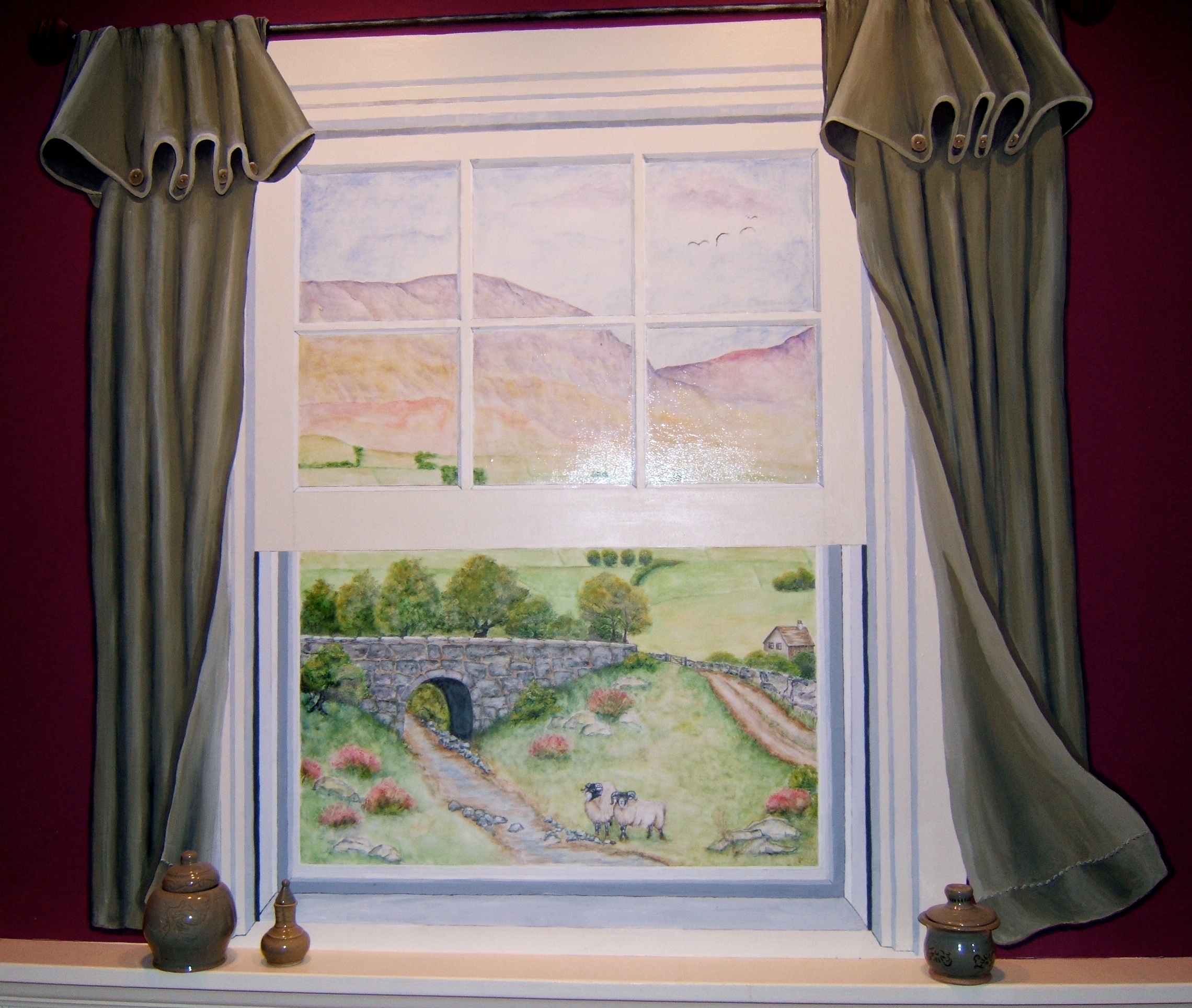
One of my favorite artistic devices is the tromp-l’oeil, which is a French word meaning fooling of the eye. My introduction to this device came when I was a child and visited the Philadelphia Museum of Art and gazed upon The Staircase Group by Charles Wilson Peale. As kids we always referred to it as the “painting with the step” and immediately knew the reference. Wooden colonial molding frames the painting; and an oak step, matching the color and textures of the painted steps, protrudes from the staircase at the bottom.

The painting must have made an impression as I’ve used trompe-l’oeil technique myself in some of my artwork.

Seed packets

Seed packets on a garden bench

Window Treatment

Adding a window without construction

You may have seen this device used by artists, such as Julian Beever, whose anamorphic illusions are created by a distortion that enhances a three-dimensional effect. When I read over his web page, he wrote that he worked as a street busker in various busy thoroughfares throughout Europe, practicing his 2-D techniques using pastels on sidewalks. When visiting Venice in 2008, I took this photograph. Now I wonder if this art was his.

Venice Painting

In another example, Eric Johnson, a Swedish photographer, installed a 3-D photograph in one of the main squares in Stockholm with his Mind the Step creation, which is a perfect lead-in to my misstep at the museum. On New Year’s Day I returned to the art museum, accompanying the Philadelphia Chorus, to take photographs and videos of their holiday concert. Between concerts, my son and I wandered through the galleries and came across the Staircase Group painting. Without thinking, I asked John to place his foot on the step with the idea that I would carry the illusion further in a photograph. Earlier I had asked a guard if the museum allowed non-flash photography, which is permitted.

Staircase Group2j

Reflection brings Anxiety and some Relief

When I returned home and began researching the painting, I then realized we had touched the piece, breaking the rule about refraining from touching artwork! I was horrified. What if everyone put their foot on the step? It would be ruined in no time at all. I sat in front of the computer, reading more about the painting. Had the illusion distracted me from the fact the step was actually part of the painting? According to several accounts of when the painting was first displayed, George Washington supposed tipped his hat to the boys on the staircase thinking they were really there. I read in Marcel Duchamp in Perspective by Joseph Masheck,

The main feature of Charles Wilson Peale’s Staircase Group . . . is the extreme, quasi-Dadaistic, illusionism by which the imaginative space of the picture invades the real space of the gallery: a real wooden step (now reconstructed, but originally planned) extends out from the bottom of the canvas . . . (p. 7)

Ah, was I saved by the fact that the step was reconstructed? Given that the museum places ribbons across chairs to remind visitor not to sit in the displays, I asked myself why they didn’t place a reminder note at the the step. In the book, Citizen Spectator: Art, Illusion, and Visual Perception in Early National  America, Wendy Bellion quotes a catalogue published in 1854 that recounted how viewers of the Staircase Group would place a foot on the first step. (p. 92). Well, that somewhat relieved my conscience that the urge to step was just about irresistible.

One of the web pages of the Philadelphia Museum of Art states, “let your creativity soar” but from now on, I will watch my step.

Walking the Benjamin Franklin Bridge: Uncovering a Bit of History

What is it that makes it so hard sometimes to determine whither we will walk? Thoreau

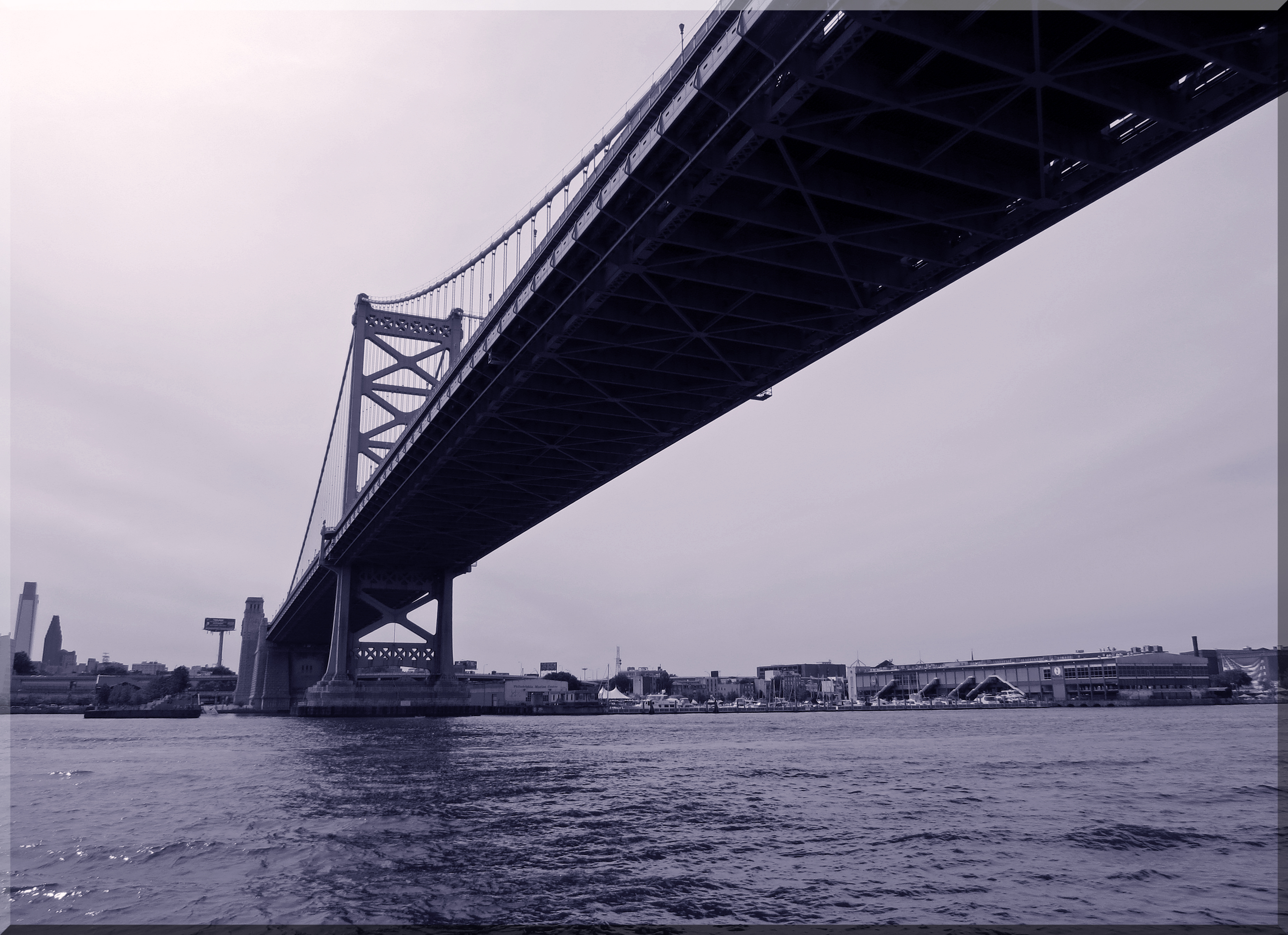
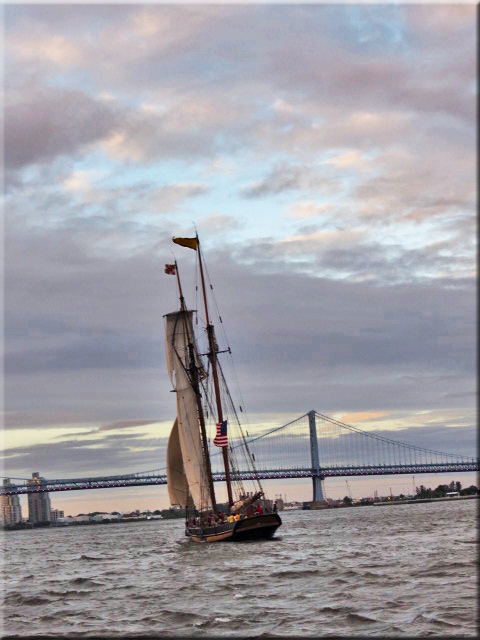
When the Amistad schooner sailed into Philadelphia in May of 2012, I signed up for one of their voyages on the Delaware River. The Amistad glided under the Benjamin Franklin Bridge, and from that perspective, I could view the massive steel superstructure and study the span across the river, stretching from Philadelphia to Camden. When workmen finished building the structure back in the 1920s, it was the longest suspension bridge in the world. 

With the bridge’s magnificent arch across the river still fresh in my memory, I now had the chance to walk up and over the bridge on the Architectural Walking Tour sponsored by the Preservation Alliance for Greater Philadelphia. What drew me to cross the bridge was more than a curiosity about the structure, but I didn’t realize my motive until I had finished the walk to the other side.

Under BFB

Stopping by the Constitution Center

Watercolor BF BridgeOn a bright September day, my sister and I walked down Market Street in Philadelphia toward the bridge, passing the Constitution Center. Having a few minutes, we stopped in at the Museum Shop. We browsed through the various sections, especially admiring their collection of t-shirts. In the book section, I found a diary book with a watercolor of the bridge on the cover. After our brief visit to the shop, we headed back on Market Street and made our way to 4th Street.

Bridge’s History Retold

Our tour began in the Philly Olde City neighborhood, in front of two historic churches, St. George, the oldest Methodist Church in the US and St Augustine, a Catholic Church once burned to the ground to punish the immigrant Irish for having the audacity to settle in the area. In 1922 the first draft of the construction suggested that the bridge go right through St. George; but the congregation protested, and architects made an adjustment, with a 14-foot leeway that preserved St. George. Each church had to accommodate to the bridge by constructing walls, one floor below the original structure, lowering their doors, so that 4th Street could go under the bridge.

BFB Garden View

Garden at St. Augustine, looking across to St. George Church and the Bridge to the right.

Walkway along the Sky

Our guide led us up a side street to the pedestrian walkway that runs along the East side of the bridge. As the tour group started to walk up the inclined sidewalk, we could see the hubbub of activity on the side streets below and point out landmarks, such as the steeple of Christ Church. Art deco lanterns lined up on the railings that followed the sidewalk.

Granite Station

Bridge Station Never Used

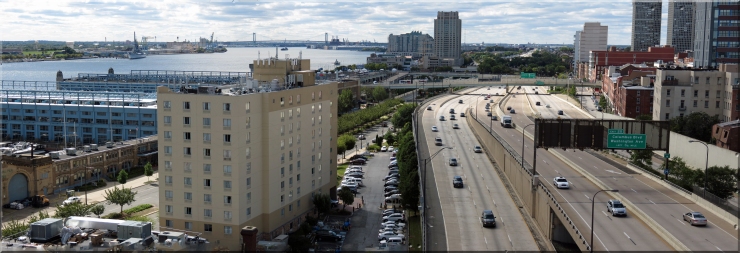
As we approached the first granite anchorage, originally constructed as a trolley station, cars along Route 95 sped by underneath. The highway ribbons along the Delaware and stands as a central feature in the landscape from that view-point. Christopher Columbus Boulevard shadows the superhighway, and one lone building, municipal Pier Number 9, is reminiscent of the days when the Philadelphia port had been a major thoroughfare of commerce, with wharfs and docks lining the Delaware port. The twentieth century saw much of the historic riverfront razed. Condominiums now occupy spaces along the river as well as Penn’s Landing, Seaport Museum and The Olympia, the world‘s oldest steel ship still afloat. 

Panorama BFB road river

A grand landscape stretched before us. I looked back on the city, and noticed how the steel cables, extending up the 380 foot towers, framed the walkway. Even though built 80 years ago, the bridge is a marvel of invention and esthetic wonder.

BFB Looking Down City

Study in Blue

From the top of the bridge, we gazed down the river on the New Jersey side to the Adventure Aquarium and Penn Treaty Park and then more distant landmarks, the Battleship New Jersey and the Betsy Ross Bridge. We watched the boat traffic, everything from a schooner, passenger ferry, container ship, motorboats and tugs.

BFB River Boat

A schooner sailed alongside the working boats of the river.

BFB Sailboat

Walking toward Camden, we focused on the city’s waterfront where neat-looking parking lots were surrounded by green spaces with trees and landscaping. The baseball field and stadium, home of the Camden Riversharks minor league baseball team, sported an attractive brick exterior and the look of yesteryear with peaked roof lines. A game was just getting underway as we walked by.

Campbell's Field

Campbell’s Field

Looking for the Dog on Top of the Building

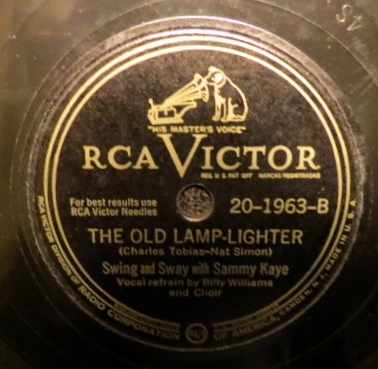
IMG_4579When we were children, our family would drive over the Ben Franklin Bridge to vacation at the Jersey Shore, and I remember we would look out the car window searching for the dog on top of “Dad’s building” where he worked. The puppy sitting in front of the gramophone was the famous RCA, or Radio Corporation of America, trademark, and the image appeared on all of their records. The Nipper Building, the nickname for what was once labeled as Building 17 of RCA’s Camden Plant, was built during the second decade of the twentieth century to house the Victrola cabinet factory. In 1916 the company installed on the tower four stained glass windows depicting the dog and gramophone. The RCA Corporation bought the building in 1929, using the Victrola names and logos on their own line of products into the 1970s.

My Father’s Commute

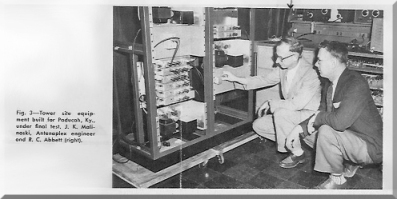
For over 25 years my father commuted from the Western suburbs of Philadelphia by way the Media trolley, the Market Street El, and the PATCO High-speed Line, which crosses the bridge, to his workplace at the Camden plant, just a few blocks from the bridge exit. RCA was an electronics company and one of the leaders of television technology from the 1930s and right into the next three decades. The plant manufactured broadcast equipment as well as television sets. The engineers at the Camden plant were responsible for building the first radio transmission from the moon of Neil Armstrong’s famous line, “One small step.”

John Malinoski RCA

I wished that I could go back in time and ask Dad to take pictures of the bridge, plant and river because the area looked entirely different back then as factories, smokestacks, utility buildings and railroad lines occupied the landscape. For over two decades Dad worked for RCA as an electronic engineer, and I have only one picture that documents his work at the plant.

Our family didn’t realize the larger implications of my father’s transfer from Camden to Massachusetts in 1968. RCA began to reduce and sell off most of their broadcast products, finally going out of business in 1986. Buildings along the waterfront area were torn down as the area became abandoned and neglected. Building 17 also fell into disrepair and almost met with the wrecking ball, saved in 2001, when the New Jersey Economic Authority awarded a grant to preserve the structure.

RCA Building

The Nipper Building is now listed on the National Register of Historic Places. I don’t believe my father ever suspected that someday, the well-worn factory where he worked, would be considered a national treasure, but my sister and I always thought there was something special about that dog atop the tower. Forty years later, the iconic image guards the memory of my father and thousands other workers, whose electronic inventions pioneered broadcasting technologies.

The bridge had guided me back through our family history that I had almost forgot.

Nipper

Links of Interest

Historic Camden County
RCA TV Equipment Section of the Broadcast Archive
Eyes of a Generation
Eight Blocks in Camden that Made History

Transformation of Clay

How a Heap of Mud Becomes Something

I’ve been away from sculpting for a while, but now with a few new ideas, its time to get back to carving clay. I enrolled in a class at the Community Arts Center with Bob Deane, potter extraordinaire.

Down the Rabbit Hole

White Rabbit, Wikipedia

White Rabbit, Wikipedia

A tree in my front yard became the inspiration for a whimsical addition: the door to the rabbit hole in Alice in Wonderland, the novel written by Lewis Carroll in 1865. In Chapter One of the book, the story introduces us to the rabbit wearing the iconic waistcoat and carrying a pocket watch. The rabbit’s classic line, “Oh dear! Oh dear! I shall be too late!” reminds us of the ever-present passing of time and the immediate responsibilities we carry.

The project began with buying a 25-pound bag of sculpting clay. The clay is soft and malleable, perfect for making objects; but for creating walls for the rabbit hole and door, I needed to create slabs that would harden so that they could stand and then be attached together. That process included rolling the clay into flat pieces and allowing them to dry either by putting them under a heat lamp or letting them dry out over time. Once the slabs were solid but not completely dry, I could attach the pieces by using a paste of clay and water after roughing up the surfaces. Before attaching the pieces, I carved out the door so that it would lay flat allowing me to add the details including the hinges and door handle.

The rabbit began as a two wads of clay, one for the body and the other the head. Once I figured the right sizes, I roughly hollowed out the two, and adding feet and arms. I attached the two pieces, and added extra clay to form the waistcoat. Creating a chain for the watch is almost impossible in clay, so I’m going to use a metal chain, which I will attach when the rabbit is finished. I made openings for the chain, making sure that with a 23% shrinkage, the chain would still fit through the opening. With the clay at the right consistency, I carved out the details. I used three or four pictures as guides.

Slides reveal the transformation from slabs of clay to whimsical art for the yard . . .  with help a little help from my friends, with Jean, assisting with the painting, and Bob, who advised on the glazing technique.

This slideshow requires JavaScript.

Terrarium Centerpiece

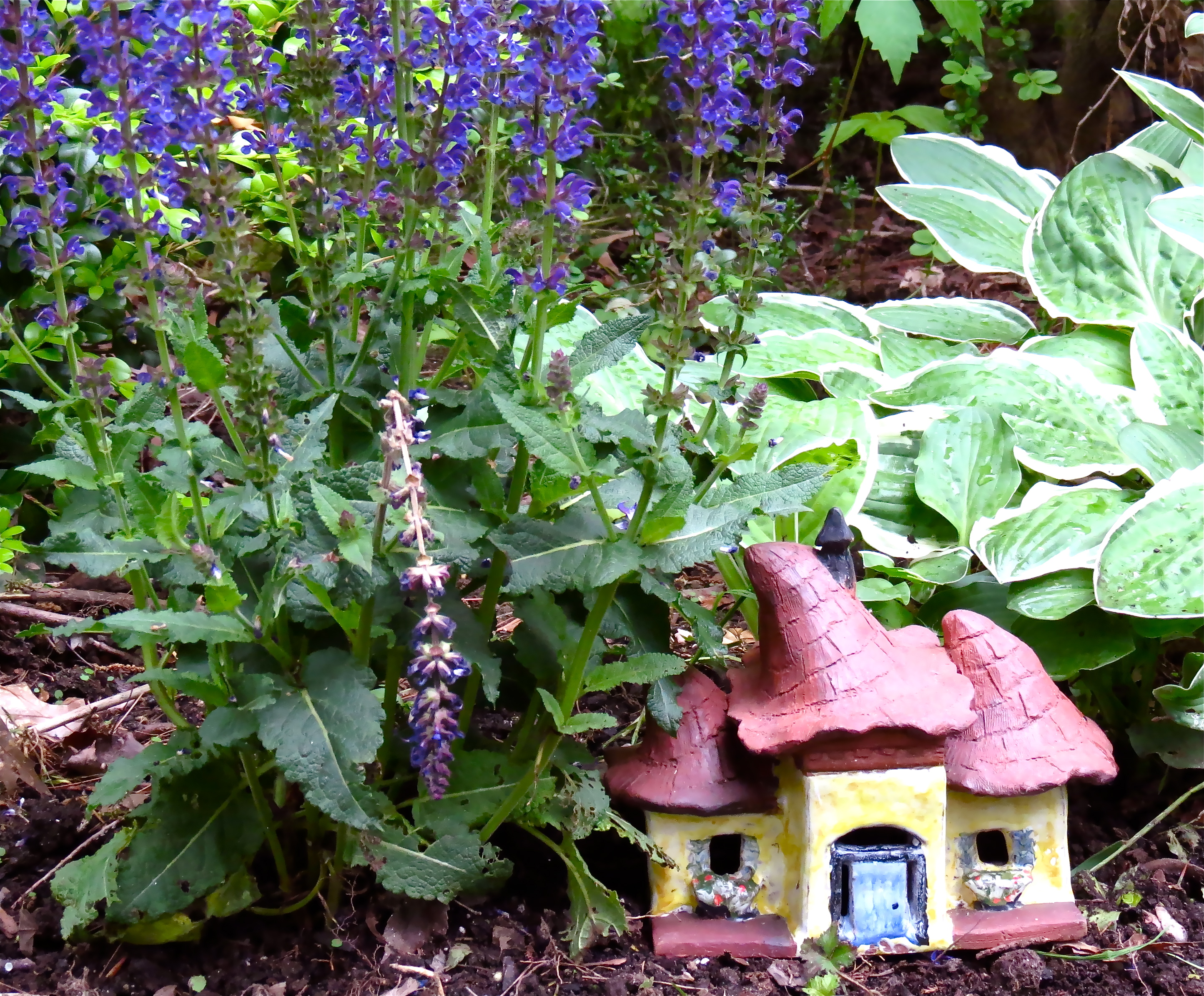
Fairy House in GardenFor the next project, I carved a “wee house,” inspiration coming from Pinterest, pages which display every kind of fairy house imaginable. Years ago, I had  carved a few houses for my garden and enjoyed the project.

This house required a great deal of measuring for all the pieces to come together. Not all parts, especially the windows, are perfectly square. With clay, it is easy to add a bit here and there to make the pieces line up. I gained a new-found respect for carpenters, knowing that they could not do as much fudging with wood as I did with clay. The most difficult part was getting the roof to align with each side, especially the tall center window. Eventually, I would like to create a terrarium around the house.

This slideshow requires JavaScript.

Imagine, Make It So: Following my Own Advice

My last project was more abstract and larger than the other two. At one point attempting to close it up at the top, I thought I might have inadvertently caused the entire piece of fall to pieces. I quickly added extra clay on the inside to support the structure. I applied Bobby’s white glaze and sent it to the gas kiln. A little Jon Luke Pickard and a little John Lennon were the inspiring forces to this project, which will find its way into the garden.

This slideshow requires JavaScript.

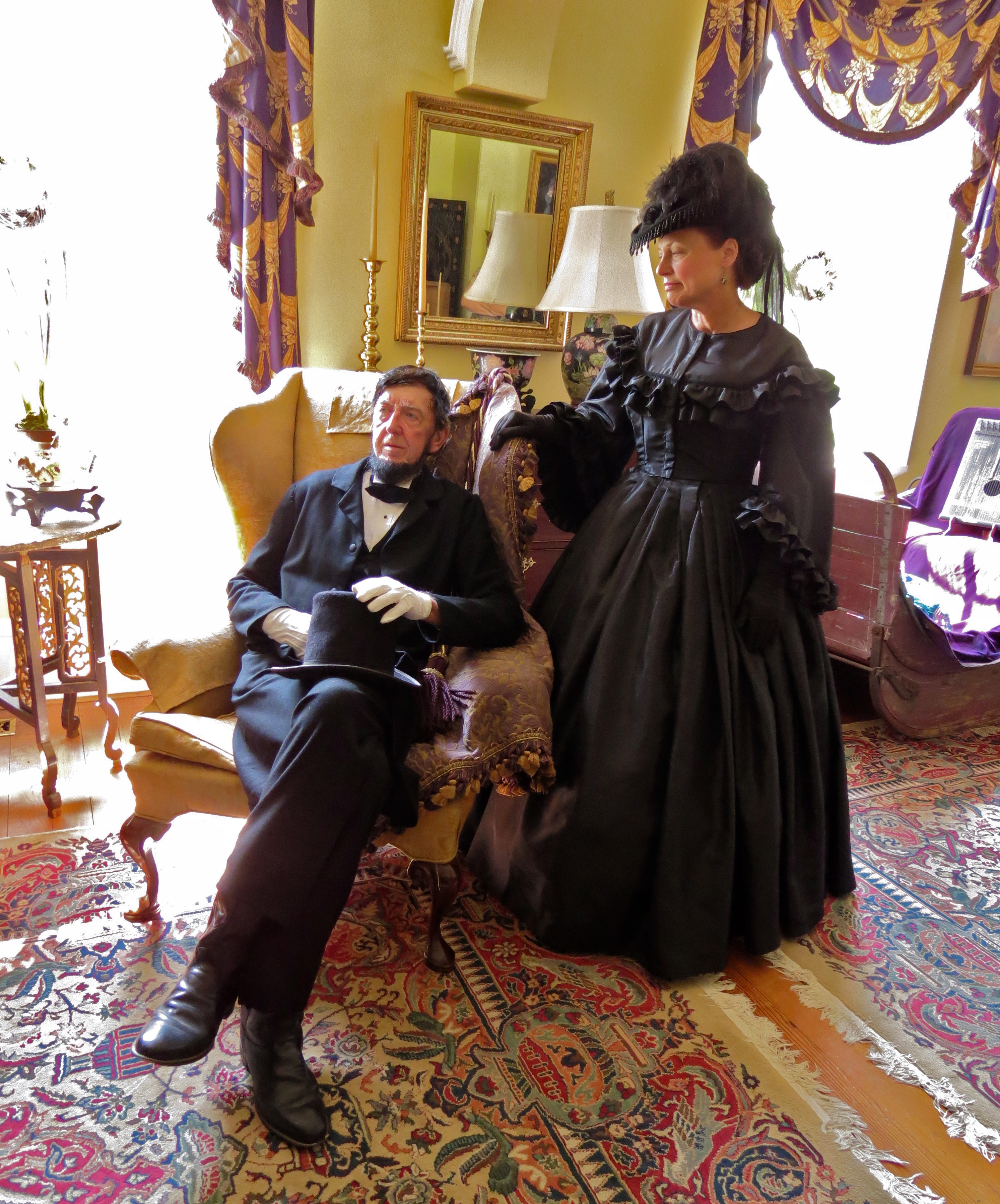
Living History: Day in the Life of the Soldiers of the Civil War

On a visit to Wilmington  & Western Line, a steam train that runs through the Red Clay Valley in Delaware, I just happened to have the good luck that Civil War living history reenactors were staging a battle and takeover of the train on that day. I recorded the dramatic action of the battle in video in this post: Steam Train Journeys into History: Civil War Skirmish at Red Clay Creek.

CW Cannon L Antique

This video highlights Living History: Day in the Life of the Soldiers of the Civil War, when Company A, 37th Regiment, North Carolina Volunteer Troops, C.S.A., 1st North Carolina Artillery, Battery C, C.S.A., and the Town of Rising Sun, Maryland, hosted the 21st Annual Reenactment.

I strolled by the rows of canvas tents, the Union on one side of the creek and Confederates on the other, as wood crackled in the campfires and coffee brewed in tall metal pots. Reenactors portrayed surgeons, tradesmen, as well as soldiers. Even children dressed up in period clothing. The sound of a blacksmith hammering echoed through the park. I spoke with reenactors, who shared their knowledge on weapons, lanterns, desks and tent contents, everything authentic to the time period.

At midday the gray and blue soldiers faced off in a skirmish. The Union held the high ground while the Confederate soldiers crossed the bridge and positioned their cannon on the field. Soldiers on both sides fired their cannons as thunderous blasts echoed through the landscape, smoke drifting over the hills. As men fell, a field doctor bandaged up the wounded. A crowd of spectators sitting on the hill watched intently as the action unfolded just yards away.

LanternLate in the evening, as music of Kadence spilled into the cool night air, I wandered around the grounds in the light of the campfires and lanterns, softly illuminating the tents. Reflecting on the gentleness of the night and the harshness of the daytime battle, I considered the issues of preserving the Union, regional loyalty, justification for war and the abolition of slavery, which remains the greatest arbitrator in the ethical debate. Has the country evolved into a compassionate and empathetic to the plight of both sides?  I see these reenactments as an opportunity to ponder these issues.


Participants:

Confederate
1st Regiment, Maryland Infantry, Company 1
5th Regiment, Virginia Volunteer Infantry
Union
42nd Regiment, Pennsylvania Volunteer Infantry, Company B
*   *  *   *   *   *   *   *
Square Frame John
Many thanks to John and all the Reenactors.

*   *  *   *   *   *   *   *

Other links to Civil War posts:

Video

Old City Seaport Festival and Pirate Battle on the Delaware

Harking Back

IMG_4130The last time my sister, Jean, and I met pirates, we had just happened upon the Beaufort Pirate Invasion, taking place as we stepped into the battle scene a summer ago in the seaside village in North Carolina. We promised we would not let too much time go by before finding another similar event. The opportunity came along when the Independence Seaport Museum hosted its 2nd Annual Old City Seaport Festival, in a weekend-long celebration with music, crafts and Tall Ships, with a smattering of pirates. On the first evening, the festival began with the Parade of Boats as they came to port just below the Ben Franklin Bridge.

On the next evening, the AJ MeerwaldGazela Primiero Pride of Baltimore IIMystic Whaler Kalmar NyckelVirginia and Hindu were destined to clash in a pirate battle. We signed up to be aboard the Kalmar Nyckel. Built by the Dutch, the original ship dated back to around 1625. This flagship of Governor Minuit brought settlers to the New World, establishing the colony of New Sweden on the banks of the Christina River in 1638. An informative and lovely guidebook on the ship’s history is available on the web. The ship was rebuilt in Wilmington, Delaware, and commissioned in 1998. The Kalmar Nyckel is an example of a full-rigged type of pinnance, which is a kind of boat, generally modest in size, that was used either as a merchant vessel or small warship. Pirates prized these ships because they had maneuverability through rugged coastlines and good speed to outrun any vessel that might be in pursuit.

200px-Treasure_Island-Scribner's-1911

Cover illustration by N.C. Wyeth from 1911, Wikipedia

There is a degree of authenticity to a pirate battle. Mostly what we learn about pirates is from movies and television, while authentic history has been sorely neglected. My first introduction to pirates came through Treasure Island, a novel by Robert Lewis Stevenson, which popularized many of the associations with pirates, such as treasure maps, parrots, and the familiar ballad,

“Fifteen men on the dead man’s chest— Yo-ho-ho, and a bottle of rum! Drink and the devil had done for the rest— Yo-ho-ho, and a bottle of rum!”

A quick search into a few authoritative sources reveals the extent that colonial villages were affected by the onslaught and fear of attack from both foreign pirates, truly a multi-national representation including the French, Spanish, Dutch and English, as well as the local variety, with the first raid recorded in Lewes, Delaware, back in 1672. Seems that Blackbeard also frequented the Delaware, as he supposedly stopped into the many taverns along the waterway.

Wench Wear?

Jean had this idea that since we were going to be onboard during a pirate battle, we should dress the part. We cobbled together costumes from outfits in our closets (wardrobes should always include a few whimsical pieces when transformations are called for), and we were ll set to go with Jean’s orange and black-stripped socks and my hat, replete with feathers. Did we look like real pirates? . . . oh, not a chance, but maybe we could have fit in with Pirates of the Caribbean crew.

We took the train into center city and headed down toward Penn’s Landing. We shook our heads as we passed the closed and shuttered Constitution Center, thanks to those idiots in Congress, the scourges of the seven seas, who shut down the government. By chance, we happened to run into my son, John, who was participating in a demonstration against Monsanto, taking place just across from the Constitution Center. Activists had designated October 12 as International Day of Protest against the company because of questions around food safety. Fellow WordPress blogger, Jeff Nguyen, has written an excellent post on Agent Orange and Monsanto.

IMG_4780

After bidding John adieu, we continued walking to the Seaport Museum. The wind whipped around the buildings as we approached the Delaware River, were we could see white caps on the churning waters. I thought back to a sail on the Amistad, which had to be postponed because of high winds and wondered if the battle would take place. We walked along the pier where vendors were selling everything from jewelry to “wench wear.” Several organizations had also set up information booths, and we spoke with members of the Steamship Historical Society of America.

IMG_4842

Shiver Me Timbers! Striped Socks Spikes a Spirited Sentiment!

A green tug boat had been tied to the pier, and visitors were encouraged to tour the tug. Once powered by steam, the boat now runs on diesel fuel. We checked out the kitchen, boiler room, living quarters and bridge, and rang the brass bell. We were welcomed us onboard, with one of the crew distracted by Jean’s footwear, declaring, “I’m turned on by those socks!  I’m old, I’m not dead!”

High Winds Scuttle the Voyage of the Kalmar Nyckel

The tall ships lined against the pier, but we were most excited to see the colorful Kalmar Nyckel. Parts of the boat had just been freshly painted, and we admired the detail work.

Kalmar Nickel

On either side of the ship, a carving of a dog rested on the railing, one eye open to the sea and closed to the inside.

Dog Kalmar Nickel

The winds were blowing wildly by this time, so we were not surprised when the crew told us there was little chance the ship would be part of the pirate battle as they could not negotiate the vessel away from the dock. Our plans were not cancelled, however, as the smaller boats were still scheduled to sail. The crew reassigned us to the Mystic Whaler, a late 19th century coastal cargo schooner, for our pirate adventure.

IMG_4850

A Bit of Shantying

Geoff Kaufman welcomed us onboard with songs of the sea. Accompanied by his concertina, an instrument made in England in the 1920s, Geoff offered a song for every activity on the schooner. He played songs that encouraged the crew to work in rhythm, and sang ballads for returning to port after the voyage. Geoff also sang old favorites, like “What to do with a Drunken Sailor,” with passengers joining in the song fest. Geoff’s music added to the rollicking motion of the ship. I wish I could have captured more music, but even my wind filter on the camera could not remove the sound the pounding gusts.

Ahoy, Me Hearties–the Battle Begins!

We buttoned our coats and secured our scarves as the schooner weighed anchor, sailing from the dock to face our opponents in battle. With the thunderous blasts of the cannon, the engagement was underway. The smaller schooners whipped through the water, cutting in front and back of the larger vessels. With Jolly Rogers fluttering, insults were hurled across the water. “You scurvy scallyways! Arrgh! We’ll have ye walking the plank! Someone on the A. J. Meerwald had the audacity to call us, “Dirty dogs!” Passengers joined the crew in hoisting the sails with a heave ho to Geoff’s rhythmic sea shanty. The battleship New Jersey and the Olympia, war ships from other eras, contributed their big guns to the melee.

Windblown, but throughly enraptured by the experience, we disembarked from the Mystic Whaler to the strains of “Leave Her.” We returned to our landlubber status, looking for a tavern to splice the main brace.

Ship and Sky


Links of Interest

Gentlemen of Fortune
The Tall Ships 
Tall Ships and Pirates (On Pinterest)
No Quarter Given
Ron Ossian’s Pirate Cove!
Schooner Wolf

A Corner in West Mount Airy, Philadelphia

IMG_2295

Greene Street and Carpenter Lane

Taking a writing course offered at the Big Blue Marble Bookstore led me into a community in West Mount Airy at the corners of Greene and Carpenter Lane. Despite the bleak winter afternoon, the community offered a warm atmosphere as the little shops that lined the streets invited me to stop in to visit. In addition to taking a writing course, I had also enrolled in a photography class at an art center in my community, so I had brought my camera along, as our assignment was to look for new shapes and textures as subjects.

IMG_2275With a fondness for restoration, I couldn’t believe my luck stumbling onto the Philadelphia Salvage Company. Suitcases and trunks piled on what looked like an old railroad cart, and metal cans spilled into the sidewalk. But I didn’t linger too long in cold. Upon entering the building, I noticed  a cast iron stove, pumping warm air through the building, as a tea kettle spewed steam from its spout. I warmed my hands and looked around, mesmerized by the array of architectural salvage, from stained glass, plumbing and electrical fixtures, antique doors and windows. In a second life, I could be a picker, as I love all the old stuff in need of a fix-up.

The Salvage Company celebrates a doggie visitor as their “mascot of the day,”  and I understand that a sleepy cat sometimes occupies the front bench.

Tea Pot Frame

I found lots of subjects for my photography assignment.

This slideshow requires JavaScript.

One subject seemed to deserve special attention: a shelf of different sized gears.  The photograph of those gears inspired this blog post, and three months later the photo won first place at the Community Arts Center!

Across the street from the Salvage Company, dogs waited patiently for their owners grabbing a bite to eat at the High Point Cafe. Chilled by the damp air, I stopped in for a cup of coffee. I was not disappointed as the coffee was excellent, in addition to their selection of pastries. The Cafe refers to their corner as a village and “are proud to be part of one.”

IMG_2289

One store down from the Cafe, the Nesting House specializes in selling new and used baby items “with an aim to uphold a mission of social and environmental stewardship.” They sell cloth diapers and used clothing. I found a little pair of shiny dress shoes for my great-niece.

IMG_1943

Crossing over to the corner, I opened the door to the Weavers Way Co-Op, and met with crowds waiting in line to make their purchases. Deli aroma filled the air, and signs advertised hot soup for sale by the cup. According to co-ops website, they sell products that are “local, sustainable, organic, fairly traded and healthful.” It’s a small, two-story compact space, and yet they had annual sales up to $14 million.

IMG_1945

A Huge Assortment of Bulk Items

I picked up some fresh vegetables and loaf of bread and headed to my destination, Big Blue Marble Bookstore. This store reminded me of the book shop restoration I had been part of years ago at Bindlestiff Books in West Philly. An independent book seller, the shop displayed a fantastic collection of children’s books and places for kids to sit and consider what they might buy. Toys and stuffed animals filled every corner. A cozy space, I lingered in the travel section before heading upstairs to my writing course. The store sponsors events including book clubs that can use their community space.

IMG_2171

The progressive leanings of this corner village come from a long history of neighborhood harmony. According to Wikipedia,

The area is recognized by many civil rights groups as one of the first successfully integrated neighborhoods in America. Mount Airy residents organized to resist blockbustingpanic selling, and redlining, especially during the period from the late 1950s to the early 1970s when those practices were prevalent. It continues to be a well-blended neighborhood and was recently cited in Oprah Winfrey’s O magazine for its racial diversity and neighborhood appeal. The community has also been recognized by US News & World Report for racial harmony and balance.

The harmony in their neighborhood stands in contrast to what the big-box stores offer. In this post, Mystique of the Ole Fashioned General Store I compare the general store of years gone by, which served as a community anchor, with the big-box store of today, which, in contrast, offers little neighborhood involvement or esthetic appeal.  According to a study conducted by faculty at Penn State, big-box stores coincide with hate groups. Mount Airy demonstrates that progressive values provide the small-town American atmosphere we long for in this country. It’s as simple as having a welcoming street corner in your neighborhood.

Road Trip: DelMarVa Peninsula to the Outer Banks

I’ve made this trip often, so I thought that it might be time to journal the drive. We’ve changed our route over the years, as new highways now bypass some of the little towns. The new routes take less time with the elimination of traffic lights but have lost the chance to view the environs of these towns. Along the way, many interesting places beckon us to explore rather than stay on course for our destination.

We start our journey on my least-favorite highway, the congested Route 95, which is a direct route, if nothing else. At Delaware, the highway splits and Route 495 provides a pass around Wilmington. For a few miles, we see expansive views of the Delaware River, bridges, factories, ship yards, refineries and a big hill where trucks haul trash to the top. With major construction on-going, we navigate through the cattle shoots, jostling for a place on the highway with 18-wheelers.

Chesapeake & Delaware Canal Bridge

Opened in 1995, this bridge is one of the first of its kind in the area. A concrete and steel cable-stayed bridge, it spans the Delaware Canal, which connects the Chesapeake Bay to the Delaware River.

IMG_4158

Just off the bridge, fields of corn alternate with suburban sprawl, box-like newer construction–single family and apartment complexes.  Scrub forests and mixed pine and deciduous woods fill much of the landscape.

The Chesapeake Peninsula is coastal plain, which is a sandy, flat area, and the view from the car are fields of crops and outcroppings of forests in unpopulated areas.  Small and large stands selling fruits and vegetables regularly appear along the highways. Along Route 13, shopping districts and homes have sprawled over some the farmlands in the last twenty-five years.

 Ocean City, Maryland

Ocean City is a popular seaside resort for folks who live in the Mid-Atlantic region. Even though I have lived just three hours from this town, this will be my first visit. Our family vacationed at the Jersey Shore, specifically, Cape May. On this trip I thought it was time to stop at Ocean City, lured by the chance to walk along the lively 3-mile long boardwalk. After sitting in the car, will be good to get out and smell the sea air.

This slideshow requires JavaScript.

The Ocean City website listed a variety of events in the city: fireworks, concerts, movies and laser light shows.

Berlin, Maryland

A short drive from Ocean City, we stopped for lunch in the historic town of Berlin. The residents have restored the buildings along the main streets, where eclectic gift and antique stores feature displays in their windows. The tree-lined streets, Victorian lanterns and planters filled with flowers made this town an inviting stay. Several restaurants, such as the Drummer’s Cafe, Rayne’s Reef Luncheonette and SiCuli Rustic Italian offered a variety of choices for lunch. We ate at The Globe, once the neighborhood movie theatre and enjoyed a tasty lunch while watching an old-time flick.

This slideshow requires JavaScript.

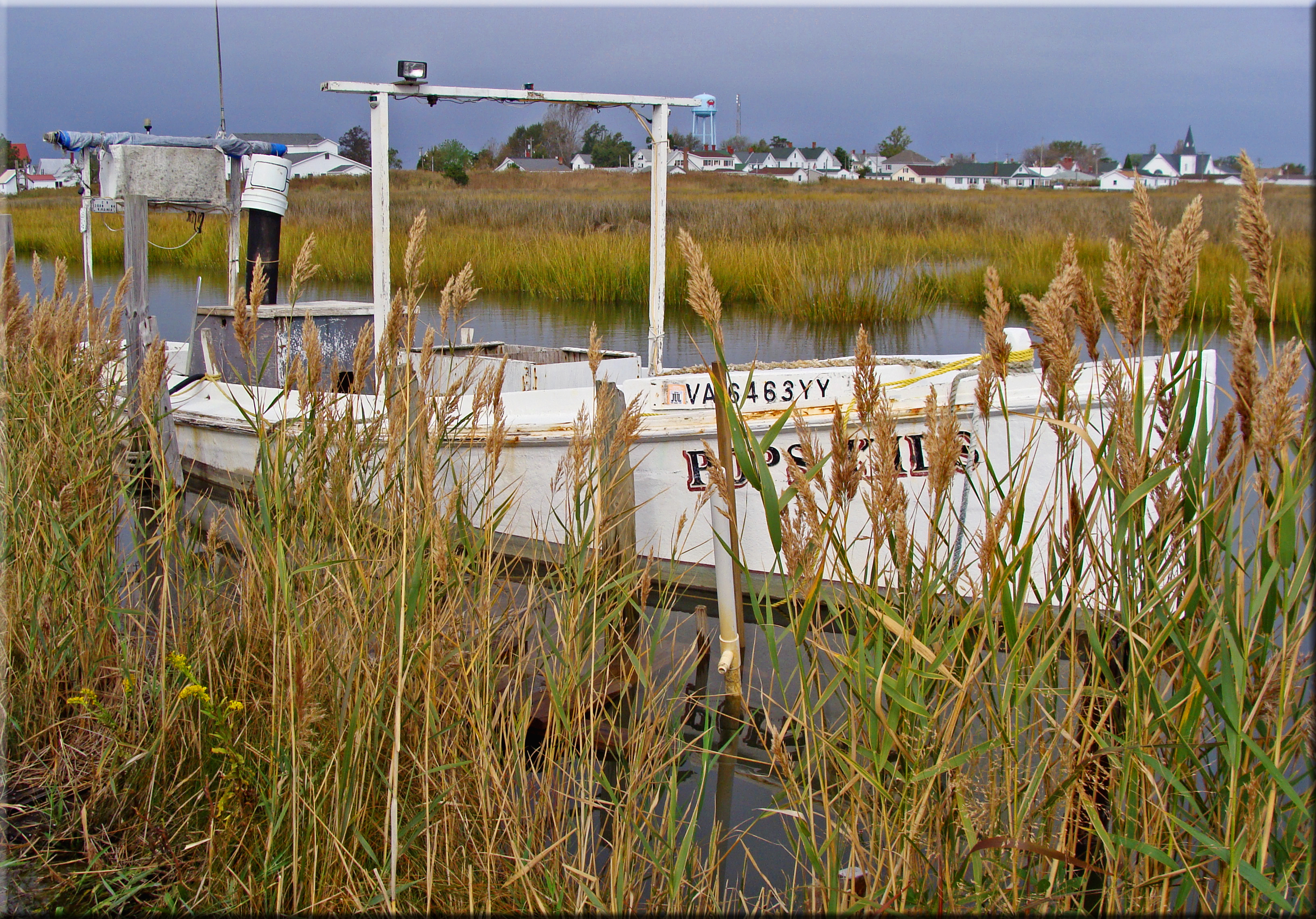
Crisfield, Maryland and Tangier Island

Blog post, Tangier–Virginia’s Island Lost in Time, describes our visit to Tangier Island in 2011.

Tangier

Parksley, Virginia

Parksley Train Station

Parksley was a planned community as a result of the railroad constructions on the Eastern Shore and is representative of the small town atmosphere of that era.  The commercial district in the center of town has a number of shops and restaurants.  Victorian houses stand along the shaded streets.

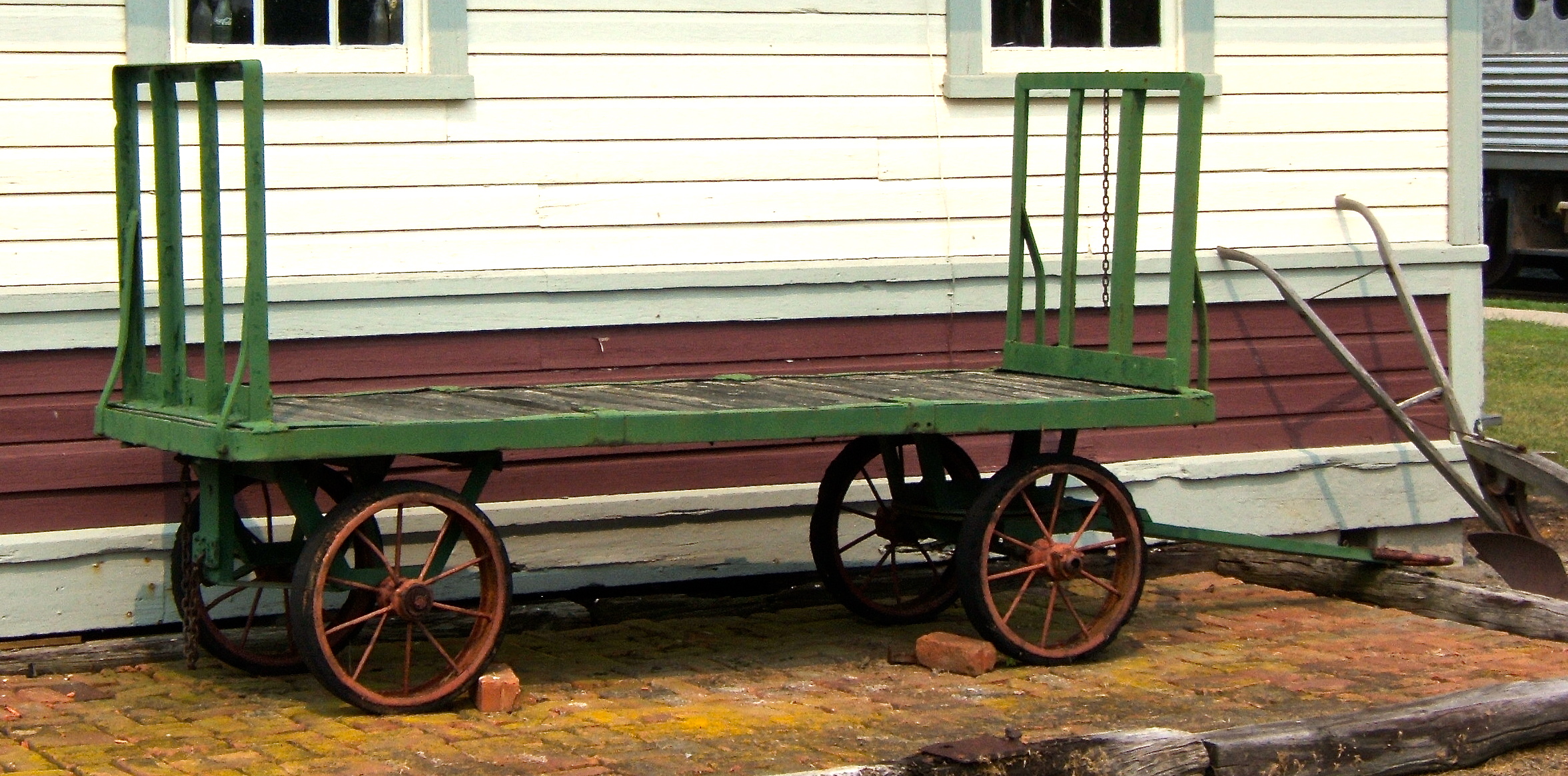
Founded in 1988, the Eastern Shore Railroad Museum is housed in a restored train station.  Around the station, railway cars, such as the Fredericksburg and Richmond Post Office Car and the Wabash Caboose rest on tracks.

Train Cart

Onancock, Virginia

Onancock comes from the Indian word “auwannaku” meaning foggy place, but it was a bright sunny day when we arrived. This town offers much to see with self-guiding walking tours past historic homes and lovely gardens and places to rent boats and kayaks. A ferry operates out of Onancock Creek to Tangier Island. For over a century, the Hopkins and Brothers operated a mercantile store, as Onancock had been a busy center for trade. Renovated and moved, the interior of the building still maintains the look of a country store. A number of old-fashioned general stores still remain in operation along our route, which inspired this post on the political and social aspects of losing the general store in the American small town.

This slideshow requires JavaScript.

Chicotegue Island, Virginia

Spending just a day on Chincoteague Island, we were rewarded with a serendipitous experience. Chincoteague, on the eastern shore of the Del Mar Peninsula, is best known for the wild ponies, whose ancestors survived a wreck of a Spanish Galleon, or one of the legends would have us believe. Turned out the egrets carried the day.

Cape Charles, Virginia

Turning off 168, about twenty miles from the Chesapeake Bay Bridge, we found this attractive little gas station. Read more about this station and others like it at: Nostalgic Memorabilia: Filling Stations of the 1920s.

Gas Station

Gas Station on Route 184

We explored the bay-side town of Cape Charles. For many years the town had been the terminal of the Little Creek Cape Charles Ferry, which provided car ferry service to Norfolk and Hampton. Now an expansive beach runs the length of the village. Many of the homes date back to the early 1900s, and the town center has a distinctly small town main street.

Chesapeake Bay Bridge

Across the mouth of the Chesapeake Bay the bridge meets the Atlantic Ocean and opening of the Chesapeake Bay. About 17 miles long, the bridge connects Cape Charles with Norfolk.

IMG_4013

The Bridge-Tunnel, opened in 1964 and considered the largest bridge-tunnel complex in the world, consists of low trestle bridges, two suspension bridges and two tunnels, each a mile long under the shipping channels.

Currituck, North Carolina

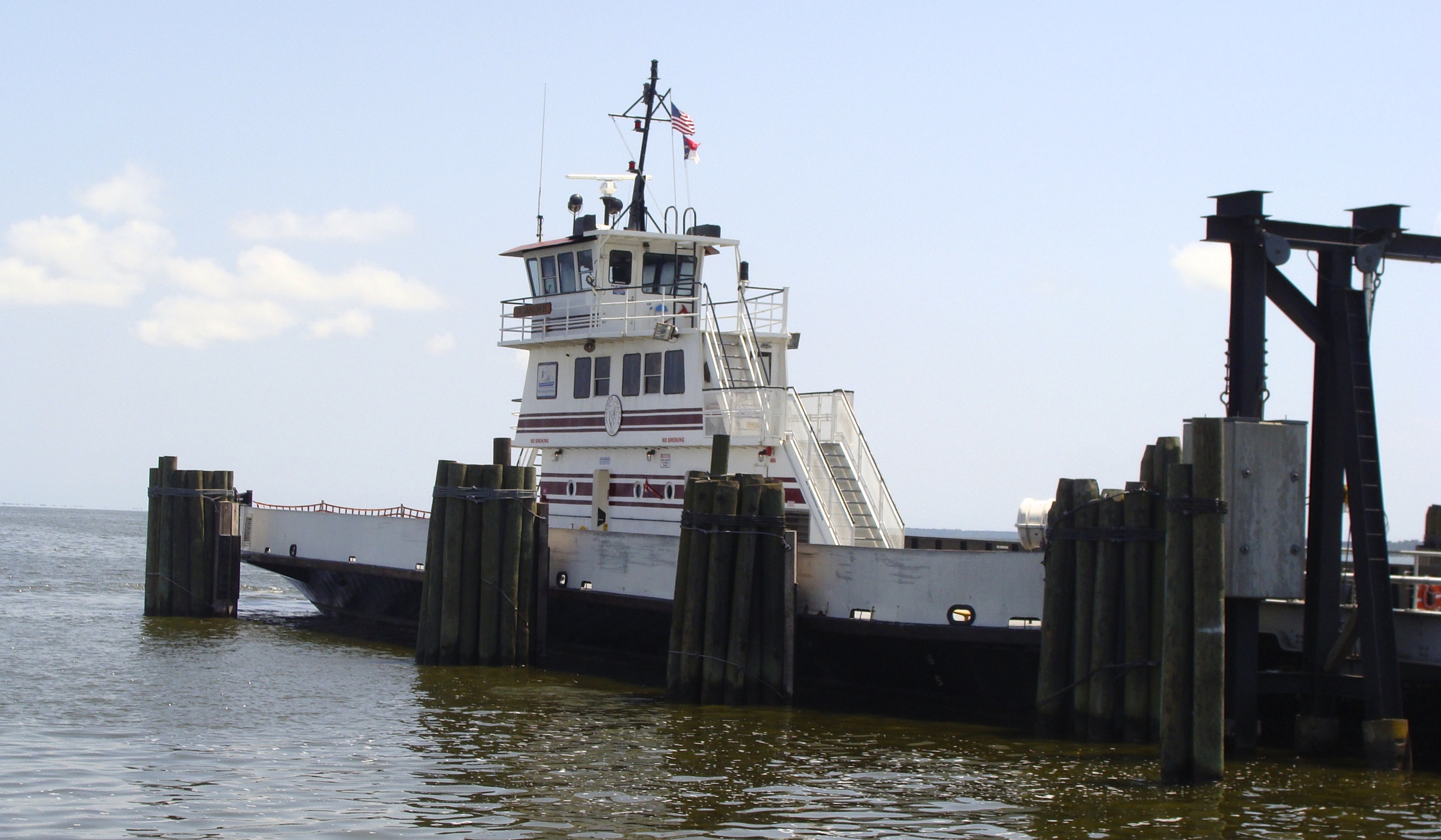
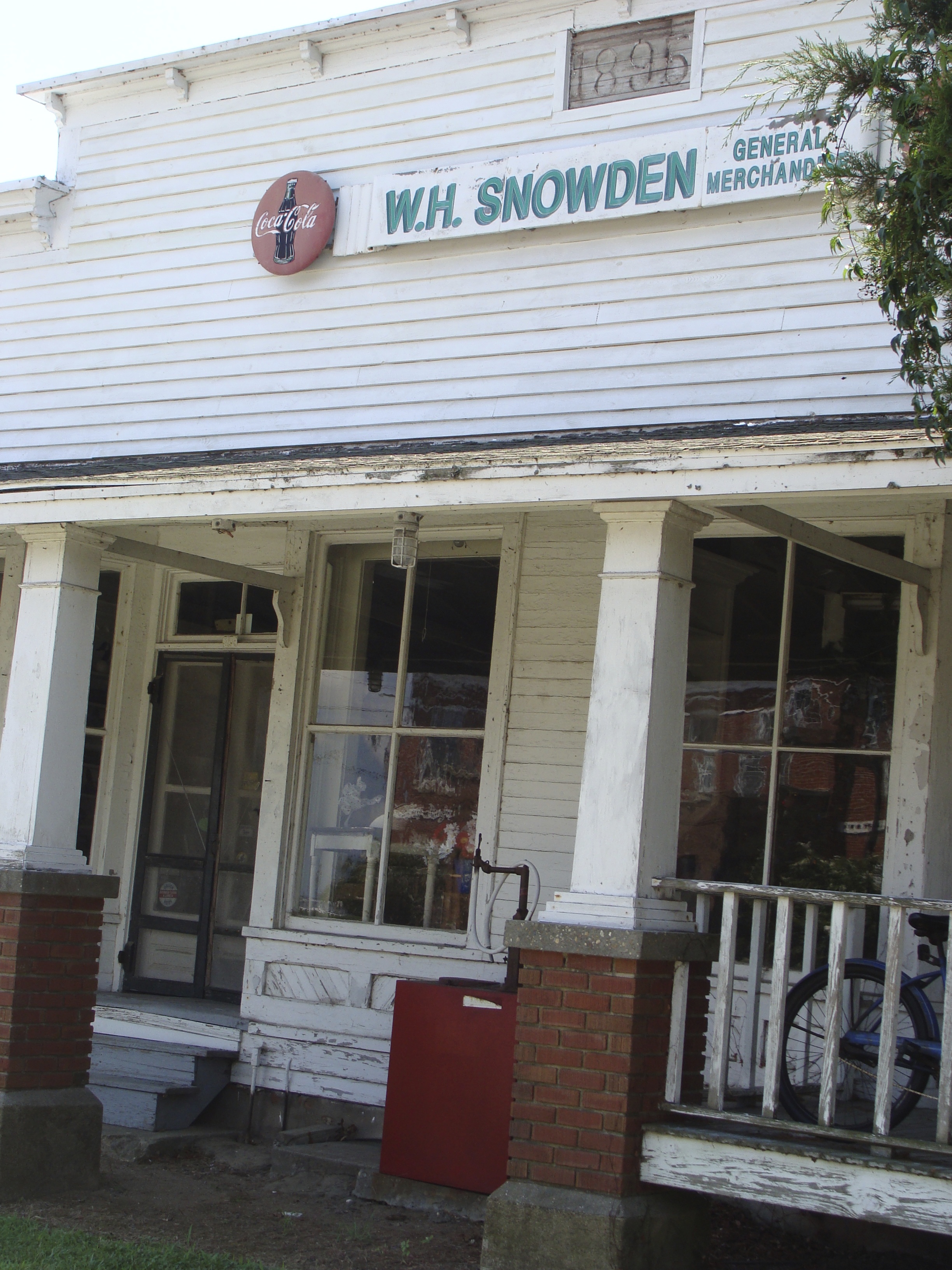
Just off of Route 168 and situated on the Currituck Sound, the town is the landing for the Knotts Island Ferry, which offers a free shuttle to Knotts Island.  The town has a few brick buildings including the Courthouse and Jail house, dating back to 1820. W. H. Snowden’s General Merchandising  Store was closed but I could peek in the windows and see that it still retains the look of a country store.

Ferry

Knotts Island Ferry

Snowden General Store

Peck Basket, Moyock, North Carolina

One of our favorite stops along Route 168 is the Peck Basket. Years ago the little store was not more than a shack but always had an eclectic array of items to gaze at or to buy. In its new site, has taken on the ambiance of a general store, replete with pot belly stove and old-time counters and open shelves.

This slideshow requires JavaScript.

Wright Memorial Bridge, North Carolina

Built in 1966 and over a mile long, this bridge connects the Outer Banks to the mainland. Getting over the bridge on a Saturday is an exercise in patience as traffic backs up along 168 all the way to the Cotton Gin. The backup continues along Route 12, the only highway to the upper end of the island.

Duck, North Carolina

Beach and bay scenes in Duck.

This slideshow requires JavaScript.

Elizabethan Gardens, Manteo

Best described on their website:

Fanciful and elaborate gardens were kept to entertain Queen Elizabeth I during her reign. Our garden was created for your enjoyment, and as a living memorial to the time when Sir Walter Raleigh’s lost colonists lived in this very place over 400 years ago. Inside our brick-walled gate you’ll find a wonderful collection of Renaissance statues, a sound-front Elizabethan-gazebo, a sunken Elizabethan knot garden – all adorned by an ever-changing palette of year-round color from hydrangeas to native plants, perennials and  camellias on ten sound-side acres.

This slideshow requires JavaScript.

The Lost Colony, Manteo

One evening we attended The Lost Colony, the longest-running outdoor theater. I especially enjoyed the 16th century choir music and the Native American dancers, who flung the sand in arches over their heads. Special effects, fire torches and guns blasting, added unexpected excitement and action. The story, an historical drama rather than a recreation of actual events, piqued my interest and I followed up with some research on my own. Our family members were friends with the “Queen,” played by Diana Cameron McQueen, so we stayed after the performance to meet and talk with the cast members.

This slideshow requires JavaScript.

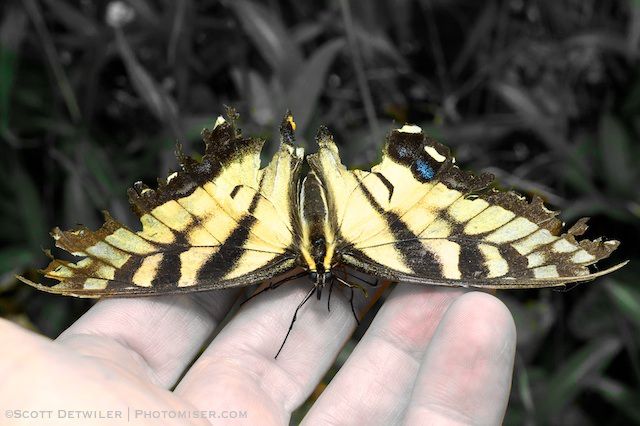
Named Dagger for a Reason

After photographing this little critter, I scanned the Internet to find out more about the caterpillar. What was not surprising to learn: their spiked hairs carry a skin irritant, and if one puts hands in mouth after touching, will be subjected to much pain and swelling. It seems, however, that despite the yellow and black coloring and spiked hairs, some humans cannot resist picking them up.

Related Article: Our Insect Friends and Random Acts of Kindness

As happens on the Internet, stories of cute animals being saved by someone spreads through social media like a a wildfire. Seldom do we here of an assist to our insect neighbors.  In this touching vignette, Scott offers a battered Swallowtail a last sip of nectar.

Tides of Freedom: Amistad’s Visit to Philadelphia, May 2013

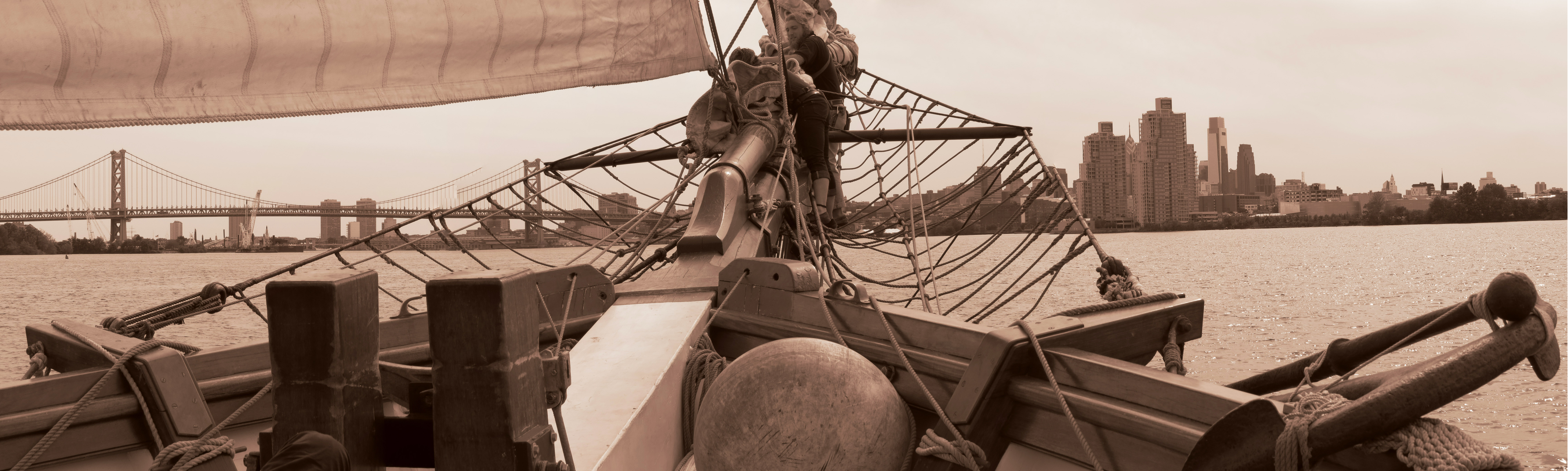
Bridge, Boat, Philly Panorama1

The chance to experience a voyage on a schooner while reflecting on the circumstances that brought free people into the imprisonment of slavery was an opportunity I could not miss. On Saturday and Sunday high winds cancelled the river tours aboard the Freedom Schooner Amistad, but by Monday the breezes died down, and we were good for a launch from the Independence Seaport Museum’s dock. The Freedom Schooner Amistad, a replica of the original La Amistad, has collaborated with international organizations throughout the Americas, Europe and Africa to commemorate the 200th anniversary of the former British empire and the United States abolishing the slave trade in the first decade of the 1800s.

Before starting the sail on the Delaware River, I had to get “onboard” with some research on the history of the La Amistad.

Brief History 

300px-Amistad_revolt

1840 engraving depicting the Amistad revolt. Wikipedia.

In 1839, Portuguese slave hunters kidnapped Africans from Sierra Leone and sent them to Cuba, a center for the slave trade. Treaties at that time banned the practice; nevertheless, Spanish planters purchased 53 Africans, including four children, who were shipped toward a plantation in the Caribbean aboard the schooner La Amistad. The Africans seized the ship, killing the captain and ordering the planters to sail to Africa. On August 24, 1839, the La Amistad was seized off the coast of New York, and the Africans were imprisoned on charges of murder. Despite having the charges eventually dismissed, the Africans were held in prison because of the issue of property rights. The case went to the Supreme Court; the justices ruled in favor of the Africans, and 35 survivors were returned to Sierra Leone. The Amistad case advanced the abolitionist movement, which eventually led to the abolition of slavery.

Julia Weathers related the story in her own words . . .

Films and Books

Steven Spielberg’s 1997 film, Amistad, popularized the story and received mostly positive reviews. Roger Ebert wrote,

What is most valuable about Amistad is the way it provides faces and names for its African characters, whom the movies so often make into faceless victims. 

The Amistad Rebellion: An Atlantic Odyssey of Slavery and Freedom  by Marcus Rediker, published in 2012, retells the story from the point of view of the slaves. An article in the Philadelphia Tribune offers a detailed description of this book. Previous films and books centered on the legal battle and interplay of the politicians, abolitionists and judges rather than on the rebellion and the experience of the Africans. By taking this short voyage on the Amistad, I could imagine how the first sparks of rebellion were ignited against those who had the audacity to believe they could enslave another human being.

The Crew

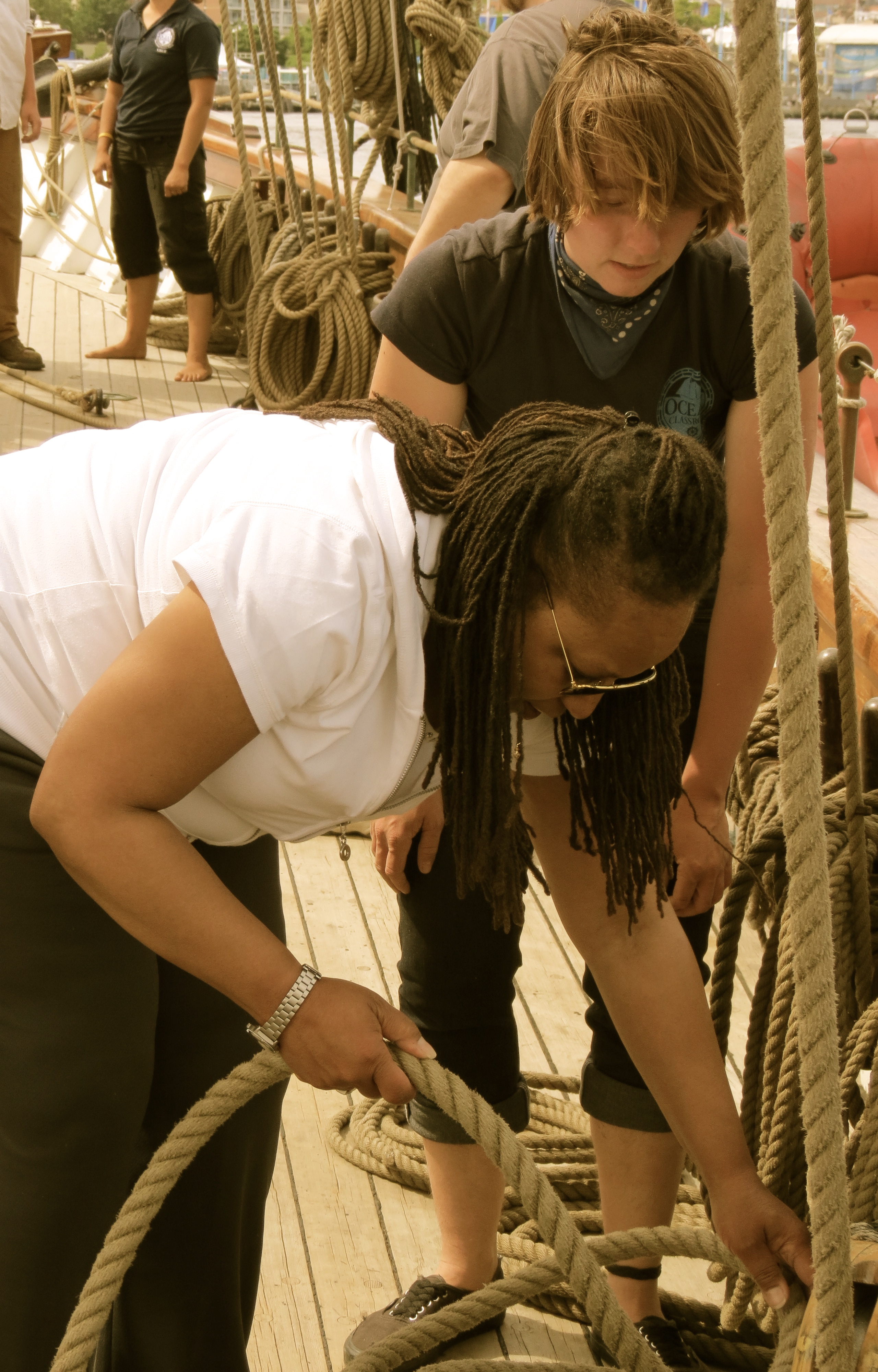
IMG_2589Twelve members of the crew are part of the Ocean Classroom Foundation, an organization that offers programs of sea education to students. Watching the students do their tasks was amazing as they climbed the rigging and hoisted the sails. What was great about the experience was the crew encouraged passengers to take part in helping out with some of these chores. Passengers pulled the ropes in unison to bring the sails into the wind. A student assisted my friend, Frances, in stacking the rope in a pattern of thirds.  It then occurred to me that this is where the expression “learning the ropes” came from.

The Schooner

The Amistad, built in 2000, is a 129-foot Baltimore Clipper and a replica of the original vessel. Classified as a Sailing School Vessel, the schooner is equipped with modern navigation equipment and is certified to make international voyages.

IMG_2632 - Version 2

The rig and construction are authentic; and as I walked the deck, I admired the wooden pulleys, steering wheel and mast, which retained that old-world feel of craftsmanship, the wood shining with the richness of spar varnish.

The original ship has been long-lost somewhere in the Caribbean, but the Freedom Schooner Amistad will not let the story of 53 determined freedom fighters be forgotten.

Music Video

“Dry Your Tears Afrika,” written by John Williams, is from the movie, Amistad.

Thanks to Abi Iverson for rearranging our tickets and providing additional information for the blog.

Tag Cloud