Humble Contributions to the Peoples' History

Posts tagged ‘Photography’

My Favorite Book: Condemned by both the Left and Right

Perhaps the only thing the Left and Right might agree on is that the author pokes fun at politicians . . . “of any stripe, who had no regard for how folks had to live and get by.”

If you think that you might have any interest in reading Education of Little Tree, I’d suggest doing that before reading further in this blog post. I was glad I had read the book before knowing the back story on this novel.

Everyone Banned this Book!

I seem to have found myself embroiled in plenty of controversies and heated debates in my life, even down to my favorite book: Education of Little Tree. For me this touching story spoke to a longing for loving and enduring relationships in childhood, while offering the wisdom to live a thoughtful life through deep insights into human psychology. The name of my blog derives from a story in Little Tree, explained on the Welcome Page.

This book appears on the banned book lists on the Right because of profanity, references to sex and negative portrayals of charity organizations and Christians. Critics on the Left condemn the author, Forrest Carter, a.k.a Asa Carter, who as a white supremacist and one-time member of the Ku Klux Klan, wrote hate speeches for George Wallace. Critics became infuriated at the first categorization of the book as an autobiography. Some in the Native American community labeled the book a hoax. “Why do they [white people] prefer fake to real, when it’s about Indian people/history/phony mysticism?” (Guise).

Upon learning about the controversy around the author, I felt that becoming familiar with Native American literature might offer other perspectives. I enrolled in Native American Autobiography, taught by a professor from the Seneca tribe. As part of the requirements of the course, I wrote a research paper on Little Tree.

Appalachian Mountains

Controversy Surrounding the Author’s Identity

There’s no denying that Forrest Carter was a speechwriter for George Wallace, penning the words, “Segregation, Now. Segregation Forever.” Carter’s life was peppered with most despicable incidents of racial hatred.

One wonders how Carter could write articles for The Southerner, a white-supremacist publication, within a few years of writing Little Tree? Carter’s own family provides contradictory testimonials as to his motivation in writing this book. Talking to a reporter in 1984, Carter’s brother, Doug, said that Asa’s writing was a scheme to raise money for a political comeback in the ’80s. Carter’s widow, India Walker Carter, faxed a letter to Carter’s original editor and agent saying that “the philosophy in Little Tree was so much of part of Forrest’s being . . . he did not write Little Tree to make a fool of anyone . . . he didn’t have to change, to write this book” (McWhorter). In an interview India said that Little Tree was a “pastiche of family legends” that Forrest used to tell his children (McWhorter).

Did Carter remake himself or does it matter?

In order to answer this question, consider two issues:

1.  Do we assess only the merit of the art, or are we obligated to also investigate and analyze the motives of the writer/artist? Consider . . .

  • Should we discount the Constitution because one of the primary contributors, Thomas Jefferson, owned slaves?
  • Beethoven beat his musicians; should we refuse to listen to the 9th Symphony?
  • Uncle Tom’s Cabin is credited with helping to fuel the abolitionist cause before the Civil War, but the book also created and spread common stereotypes about African-Americans. Should the book be discredited?

I’m sure we could add many other examples.

2. How do we decide “authenticity” of a book? Critics claimed that the book was not autobiographical because some major factual elements of the story were not true.* In authenticity, the facts may not add up to historical truths (although in researching the Trail of Tears and Indian schools, I found Carter was reasonably close to the facts) but a novel can capture the essence of humanity that cannot always be revealed in language of factual discourse. Perhaps Carter should not have claimed originally “an autobiography” . . . but maybe he wanted the story to be his autobiography.

Summary and History

Set in the Smoky Mountains of Tennessee during the Depression era, the story begins when the orphaned five-year-old Indian boy, Little Tree, ascends the mountain that will be his new home with his grandparents. His “full-blood Cherokee grandmother and his “half Scot but thought like an Indian” grandfather educate Little Tree by reading to him and encouraging him to see “the way” of nature including the nature of humankind. He learns the history of the Cherokee nation, hardships of the post-Civil War era, and the injustices suffered by sharecroppers. Little Tree experiences the forced separation from his grandparents by the government, whose agents send him to one of the notorious Indian boarding schools.

Upon publication by the University of New Mexico Press, the book was widely reviewed, almost universally acclaimed and was number one on the New York Times nonfiction paperback bestseller list.  Earning the 1991 Abby Award, Little Tree has now sold almost a million copies.

Smokey Mountains in the Morning

Understanding Asa Carter through his Own Words

Forrest Carter and Asa Earl Carter were the same man. In the first chapter in the book, Asa was both the Indians getting on the bus and the people sitting in the seats. He understood hatred from both views and portrayed that hatred, not in bitter remembrances but rather as a view of human nature that sometimes humans are “sick” or unwell (mentally or physically) and that requires the understanding of that pain. Part of Carter was revealed in the character of Wilber, the boy who stood in the lineup for adoptions, secretly hopping someone would adopt him but never being chosen. “His anger showed in that he said he would kill everybody that run banks and orphanages . . . Wilber cried at night . . I never let on I knew, for he stuck his blanket in his mouth, which I figured he didn’t want anybody to know” (F. Carter, 189).

Is Little Tree a mischievous deception? I would suggest that Carter’s agonies, forged during his boyhood in rural Alabama—a hotbed of racist bigotry—and his probable alcohol addiction, followed him to the grave. Carter knew injustice even if he could not wrestle the demons of hatred from his own mind. Whetted by alcohol, Carter never escaped verbal or physical violence. His life ended in a drunken brawl with his own son (Bowlings). His death certificate stated, “aspiration of food and clotted blood due to a history of fist fight” (Rubin). Forrest Carter’s wrote his last novel, Watch for Me on the Mountain, just a year before he died; but unlike Little Tree this novel describes in horrific detail scenes of violence and death. Perhaps the following passage from that novel best captures Carter’s impasse that seems to have followed him to the very last moments of his life,

Geronimo! Trying to say the name, coughing great gushes of blood from his mouth, he fell against the wall.  It was a trick? He felt hurt at the unfairness of it all (156).

Waterfall in the Blue Ridge Mountains

How do you look at art . . . just on its own merits or do you consider the creator? Should any publication ever be banned?



Salvia: A Surprising Micro View

As a gardener, I sometimes difficult to resist purchasing something new for the landscape especially with the vast array of colorful plants on display at the big box stores. This time I caved to a Salvia plant, its aromatic fragrance wafting in the breeze, beckoning me to buy the bluish-purple blooms.

Salvia is the largest genus in the mint family, its name comes from a Latin word meaning to feel healthy. The tiny flowers line up and down tall stalks making a subtle contribution to the color in the garden, as shown in this photograph, just right of the flagstone path.

The micro level, however, reveals a complex and multi-colored flower. The tiny hairs secrete oils that fill the air with the plant’s distinct scent.

April’s Pink Moon

FULL MOON ON THE RISE!


Friday, April 6, 2012, at approximately 09:18:42 pm.

The April full moon is also known as the Full Pink Moon, which was named for the herb moss pink, or wild ground phlox, one of the earliest flowers of the spring. Many other pink flowers bloom in April as well as blossoms on the trees. In just a short walk around the neighborhood,  I was able to photograph nature’s many variations of pink.

The moon, like a flower
In heaven’s high bower
With silent delight
Sits and smiles on the night.
                     ~ William Blake

Flowers in the video, in order of appearance: Lilac, Crab Apple, Redbud, Pink Dogwood, Tulip, Cherry, Crab Apple with Chickadee, Rhododendron

Philadelphia Flower Show: I Can Do That in my Garden, Really?

The Philadelphia Flower Show offers inspirational ideas to gardeners. The beautiful displays and the wares sold in the marketplace offer many possibilities to the gardener who would like to enhance the landscape. My sister and I kidded each other saying, “I can do that!” as we passed by the 25-foot waterfall or the deck with an elaborate display of cascading flowers lining the steps. Is there hope to achieve any degree of innovation from the ideas presented at the show? Below are four inspirations I found useful.

1. Colored blue lights against white orchids

This display could be achieved on a smaller scale. For example, a centerpiece with one orchid and a colored light would work. Several vendors were selling submersible LCD lights at $5 each, which we purchased, with the idea of adding light to a vase.

2. Stream of water

While for most of us adding a stream to our backyard would be an impossible undertaking, what is important is the idea of using a water feature. A small fountain adds the ambiance of running water creating a calming effect, transforming any space.

3. Colored tires

This exhibit deserves a prize for the most creative recycling: painting automobile tires and placing them vertically in the garden.  Shouldn’t be difficult to find a few used tires someplace.

4. Accessories: whimsical and otherwise

With statue and decorative planter in hand we’re all set to accessorize our garden.

Vendors displayed a wonderland of accessories, everything from planters and watering cans to expensive brass sculptures.

Attend the flower show and you’re sure to come away with ideas that will make gardening fun this spring. Don’t be intimidated by the elaborate and over the top displays, and you’ll be able to take away inspirational ideas for your garden, if only to add a dragon.

Five Ways to Uncover Nature’s Treasures in the Ordinary

Whether a photographer, artist or observer of nature consider these few suggestions for discovering ways to capture, as well as learn about, nature that is in front of us everyday. While travel often heightens our senses to novel experiences and new worlds, what we have before us offers just as many serendipities.  Exciting discoveries await us in our everyday experiences.

1. Explore your own back yard.

Typically when traveling, there’s little time for photographing complex eco-systems and micro-worlds. Grand landscapes understandably command most of the photographer’s or artist’s attention. Our local neighborhoods, however, offer opportunities to study over time the many niches that nature fills in our back yards or community parks.

Caved out of farm land during the early 1950’s building boom, my neighborhood retains a small wooded area in the back yards. Most of the land surrounding the neighborhood has been developed, but a number of parks and preserved lands nestle between the housing developments, strip malls, office buildings and roadways. Despite the suburban encroachment, a number of animal species live here or visit from time to time. White-tailed deer graze through the forest and sometimes come near the house to find salad fixings in the hostas. Occasionally, a red fox trots through and groundhogs appear once in a while. Regular visitors include chipmunks, mice, voles, moles, squirrels, toads and rabbit. Bird species observed are wrens, chickadees, woodpeckers, humming birds, robins, crows, starlings, grackle, nuthatch, titmouse, chickadee, blue jay, cowbird, cardinal, morning dove, house sparrows and goldfinch, catbird, mockingbird, junko, and red-tailed hawk.

2. Look on the upside to Invasive Species: The Holly and the Ivy

The natural ecology of our yard falls apart at the ground level where English Ivy has taken over and blocked the natural succession of indigenous plants. Someday I would like to pull it out and allow the woodland flowers to come back. Another invasive species that has been successful is the Holly, as seedlings often find homes in the soil in the woods and cultivated gardens. Finding any redeeming qualities in these is difficult, but it is possible to glean a few advantages from their presence. These plants are great subjects for art projects, even if  just a simple water-color painting. In addition, instead of purchasing greens, the holly and ivy provide greenery for wreaths and garlands.

And Sweet Pea

Another plants that sometimes overtakes the garden is the Sweet Pea. The delicate pink flowers and fine little threads make a great subject for a pen and ink. Enjoy the fragrance but be advised to not eat the little peas that it produces.

3. Check the debris piles after a rain.

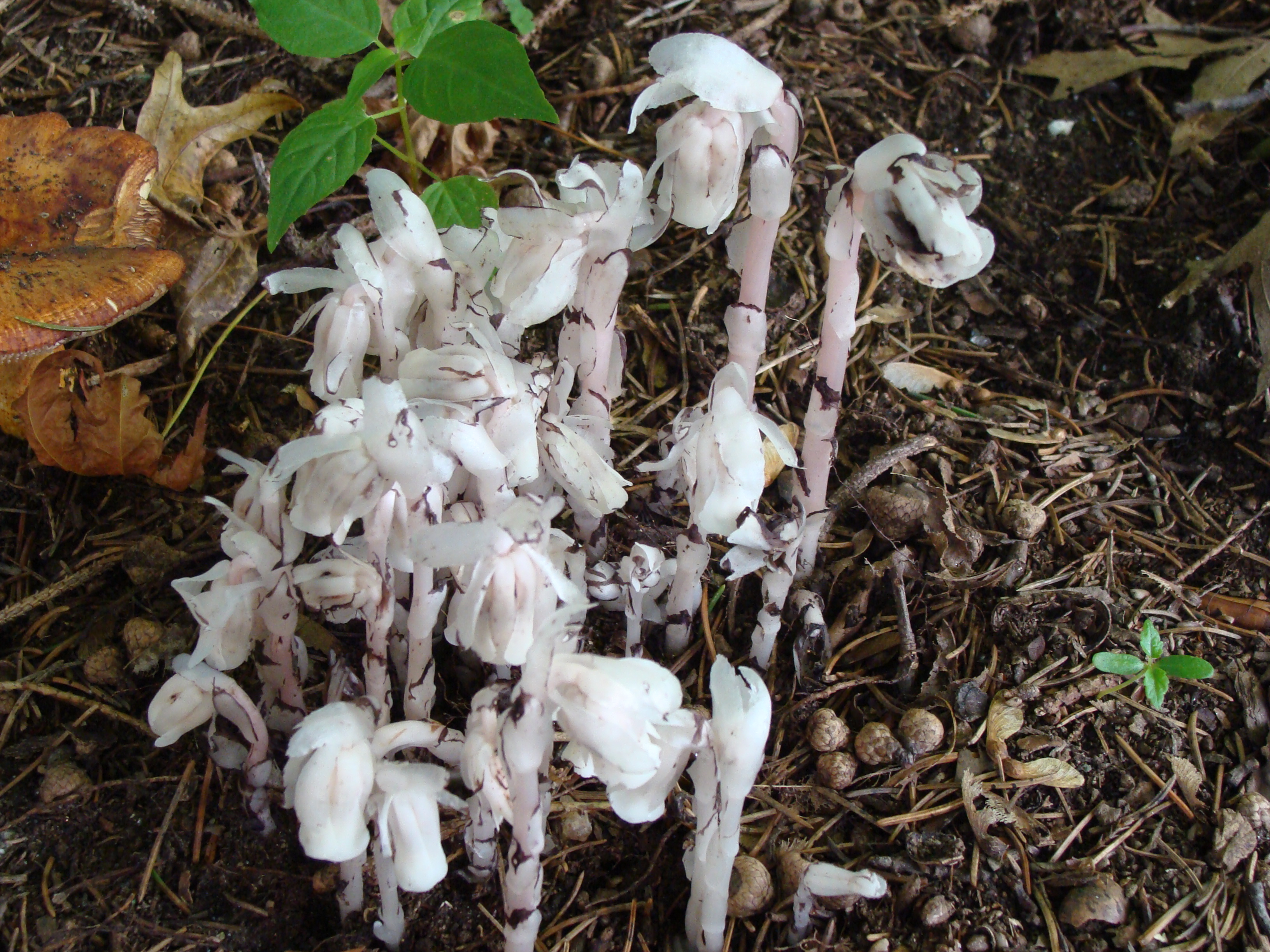
When the ground is damp and boggy, that’s a good time to check for unusual species of mushroom that grow from the forest debris. On a particularly humid day, these two mushrooms grew from the dampened soil.

Indian Pipe

Mystery Mushroom

Indian Pipe, also known as the “Corpse Plant,” grows in rich soil often under pines. Indian Pipe attracts bees providing a food source for them. I could not definitively identify the orange mushrooms. Let me know if you know the name.

4. Spend time observing a small environmental niche.

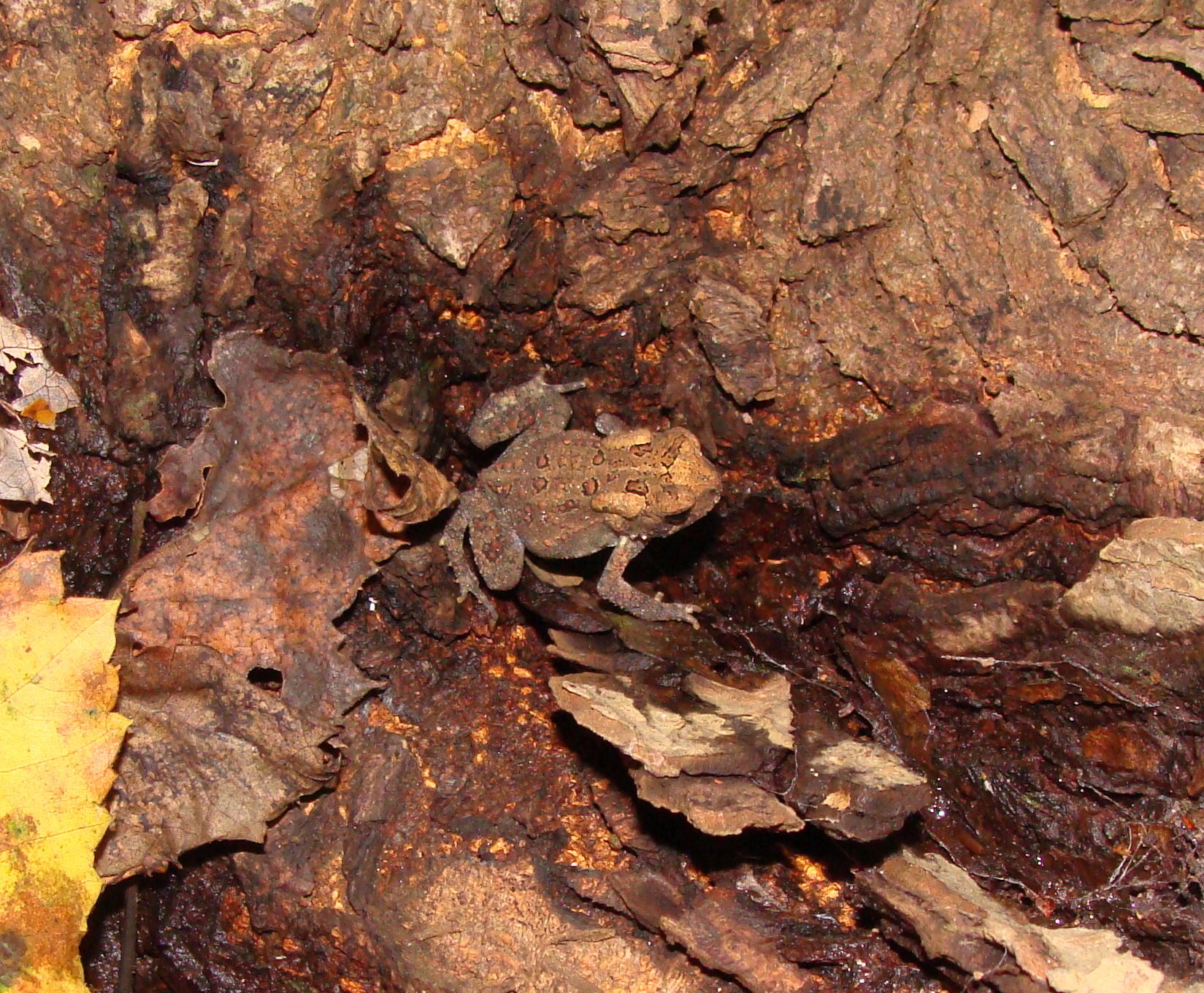
I almost missed this little guy hiding in a tree nook. He seems to understand camouflage pretty well and found some moisture there, as well. The American toad is common, but only two species of toads live in Pennsylvania.

American Toad

After taking some time to photograph hosta leaves, this little spider popped out from behind a stem. I couldn’t figure out why the spider appeared carrying a soccer ball until I did some research. Turns out she is a Nursery Web Spider, appropriately named, who carries her egg case wherever she goes. I had to admire her facility moving through the leaves with no trouble. I imagined myself trying to carry an object half my size over hill and dale. Eventually mommy spider builds a nursery tent for her egg sac when hatching time arrives and guards it protectively.

Nursery Web Spider

5. Study the frequent visitors to the yard. Often we look for the exotic, but even common species offers spectacular results and opportunities for experimentation. The Eastern Swallowtail is one of the most common butterflies in this part of the country. The bit of blue on her wings identifies her as a female.  According to Wikipedia, the species prefers red or pink flowers. Really. Photographing common species provides the opportunity for practice when that exotic comes along.

Eastern Tiger Swallowtail

5. Remember that late fall also provides artistic opportunities. 

Sure “all the leaves are brown and sky is gray” but late autumn offers a unique view of patterns and textures. The Chinese Lantern, a weed that often crops up in the yard, displays charming lantern-like seed pods. A member of the potato family, the Chinese Lantern supposedly has herbal uses, although requires some care and knowledge to use properly. In the fall the lantern transforms to lace revealing a golden seed tucked inside.

Chinese Lantern

By the Fall the hydrangea flowers have dried, and although I like to bring the puffy floral balls inside, our cats find them tasty but later regret the urge. Like the lacy lantern, by late November the tiny flowers keep only their veins displaying their infrastructure pattern. Free of their covering and color, the design of their pedal foundation becomes clear.

Hydrangea

Observing nature in our neighborhood provides the opportunity for reflection and revelation. On this backyard exploratory a revelation came to me about perseverance. Whether plants or animals, all have found a way to survive and preserver. The ivy doesn’t know it’s an invasive. Weeds come back despite efforts to eradicate them. Creatures find places to live in nature’s crevices. The spider will carry that egg sack everywhere in her garden home, and the Swallowtail will find that pink flower. Maybe what amazes us is that we share that quality with all life.

Summer’s Day 1987: Reflections on Parenting 25 Years Later

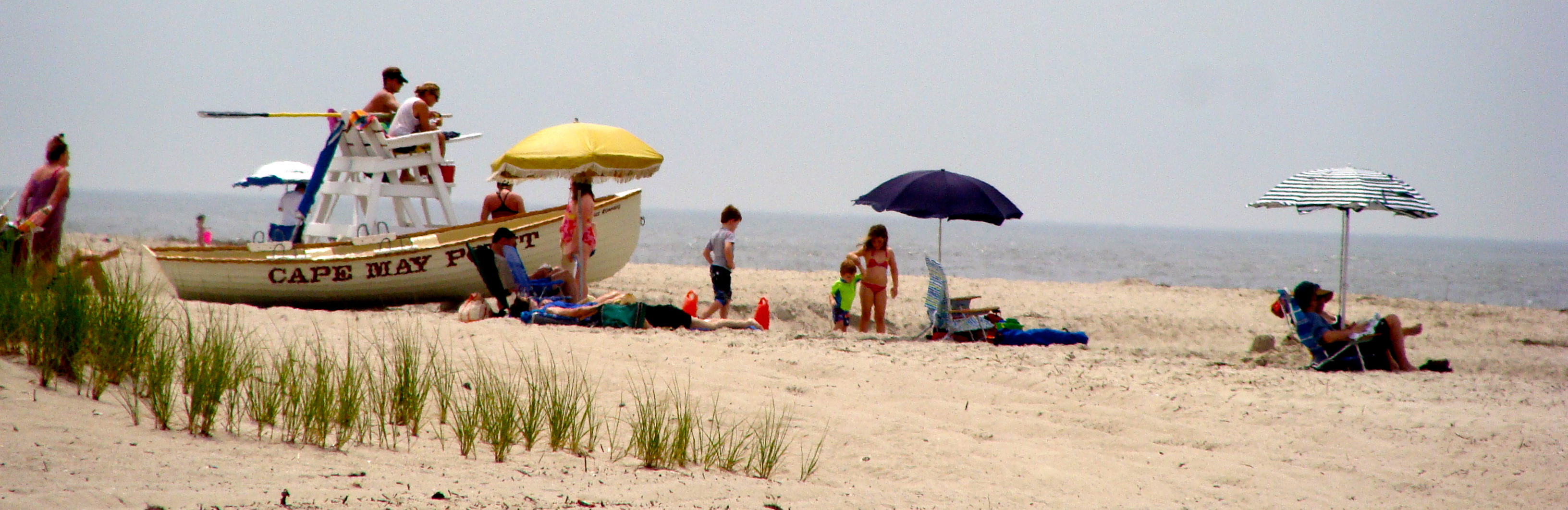
After twenty-five years, we have finally started to digitalized our home movies. Watching one of these videos of our children playing with their cousins on a vacation at Cape May Point, New Jersey, has left me reflecting on unconscious imprinting on our children.

Our children saw us with our cameras almost everyplace we went. As the video shows, we even took pictures of us taking pictures! I didn’t realize the impact all that photography might have had on the children until I viewed these home movies. In the last clip in the video above our daughter says, “I want to do what you’re doing, Daddy.” At six she knew that her parents liked their cameras. Is it just a coincidence she became a professional photographer?

What about her cousin, James who became cinematographer by profession? The videos on the beach show that his Daddy had a telephoto lens for his camera.

Now as adults all the children use photography in one way or another.

Parents model many things, but what seems to stay with kids are those activities which they see as bringing their parents the most joy.

Top Ten Snow Scenes

By Photographers, J. R. Blackwell, Jean Kerr Strosahl and Yours Truly

Nostalgic Memoribilia: Filling Stations of the 1920s

About twenty miles from the Chesapeake Bay Bridge Tunnel, we turned right from Route 13 to Route 184 to explore the bay side town of Cape Charles on Virginia’s Eastern Shore. For many years the town had been the terminal of the Little Creek Cape Charles Ferry, which provided car ferry service to Norfolk and Hampton. Now an expansive beach runs the length of the village. Many of the homes date back to the early 1900s, and the town center has a distinctly small town main street.

Upon leaving the town, we drove by the filling station pictured above. A sale sign poked out of the tall grass. Even in the state of disrepair, the little building conveyed a charming ambiance so we stopped to take a picture as it seemed that its future was somewhat precarious.

After some research, I learned that during the 1910s filling stations were fairly standardized, but beginning in the 1920s oil companies began pushing to make their product easily identifiable, leading to a variety of architectural styles for their stations. In 1926 the English cottage design became the trademark of the Pure Oil Company. These quaint cottage buildings were intended to appease neighbors, as unsightly gas stations were considered an undesirable addition to communities.

The Pure Oil Company painted their stations white and topped their steeply pitched roofs with characteristic blue enameled terra-cotta. Arched entrances, bay windows, ironwork and sometimes flower boxes gave these structures a Tutor look. Only the pumps out front identified the building as a service station. Carl A. Peterson, responsible for the design of these stations, became head of the Design and Production Department for Pure Oil in the mid-1920s.   The company continued to use his design until just after the Second World War. Some of these stations have received historical designations, such as Freitag’s Pure Oil Service Station; but unfortunately, most have been torn down. In Wilmington, Delaware, a monument to Peterson’s work stands at Market and Seventeenth Streets, on the edge of the historic district.

Phillips 66 and Cities Service stations adopted variations of Peterson’ popular style. Standing by itself, one of these stations still remains on Route 30 in Devon here. I’ve seen two others in the Philadelphia area, one in West Philly on the corner of Whitby and 52nd Street and another, converted to selling Italian ice, located in Upper Darby on Garret Road.

The Pure Oil Company has another local connection. Securing its name in 1895, the company finished its crude-oil pipeline from the Pennsylvania oil fields to deepwater terminals across Pennsylvania. In 1901 before the pipeline was completed, the company built a refinery at Marcus Hook, PA, to process the company’s crude.

What triggered my nostalgia for this filling station is that my mother worked for a time in an office in a gas station that had similar architecture. Located near the corner of City Line and Lansdown Avenues, we would often drive by the station; and my parents would remind us of Mom’s time there. I always admired the structure with its rust-colored tiled roof and rounded door. The station has long since disappeared from the landscape, but when we drive pass that corner, the ghost of the building still stands in my mind.

Tangier, Virginia’s Island Lost in Time

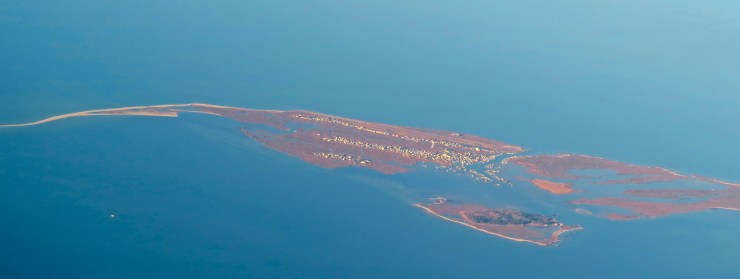
Island in the Middle of the Chesapeake Bay

From the Air 2014

IMG_8851.jpg

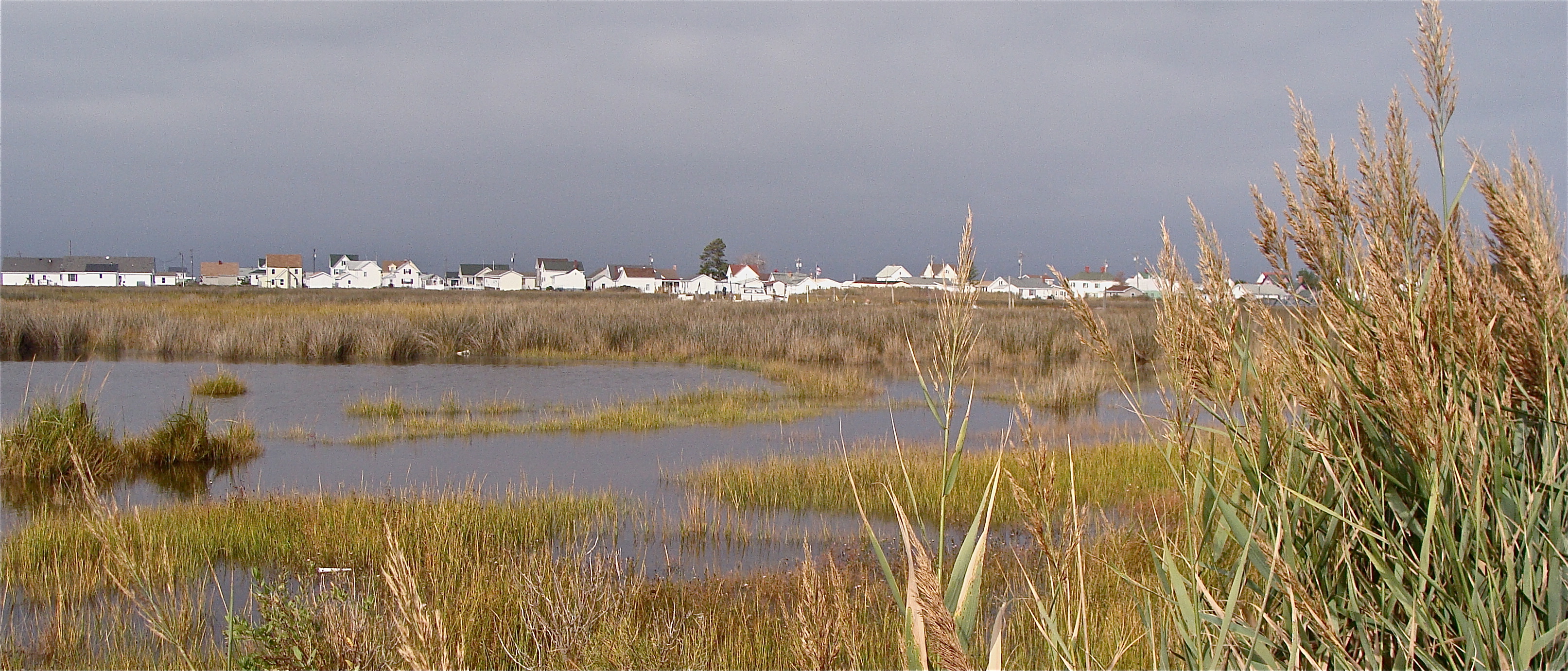
Houses atop the marshlands

Why an overnight on this tiny windswept island?

At the last minute, we thought we might have to cancel our trip. We had been on the road for only 15 minutes when we received a call from our motel proprietor on Tangier calling to warn us that the rain was coming down fierce creating turbulent water for the boat ride over to the island. Although we were driving through the middle of a downpour ourselves, we decided that we would make the trip anyway. We did pull off at the nearest drugstore to buy more seasick medication. By the time entered Crisfield, our docking town, the sun rays streamed through the clouds, but the influence of the weather continued to follow us during our stay on the island.

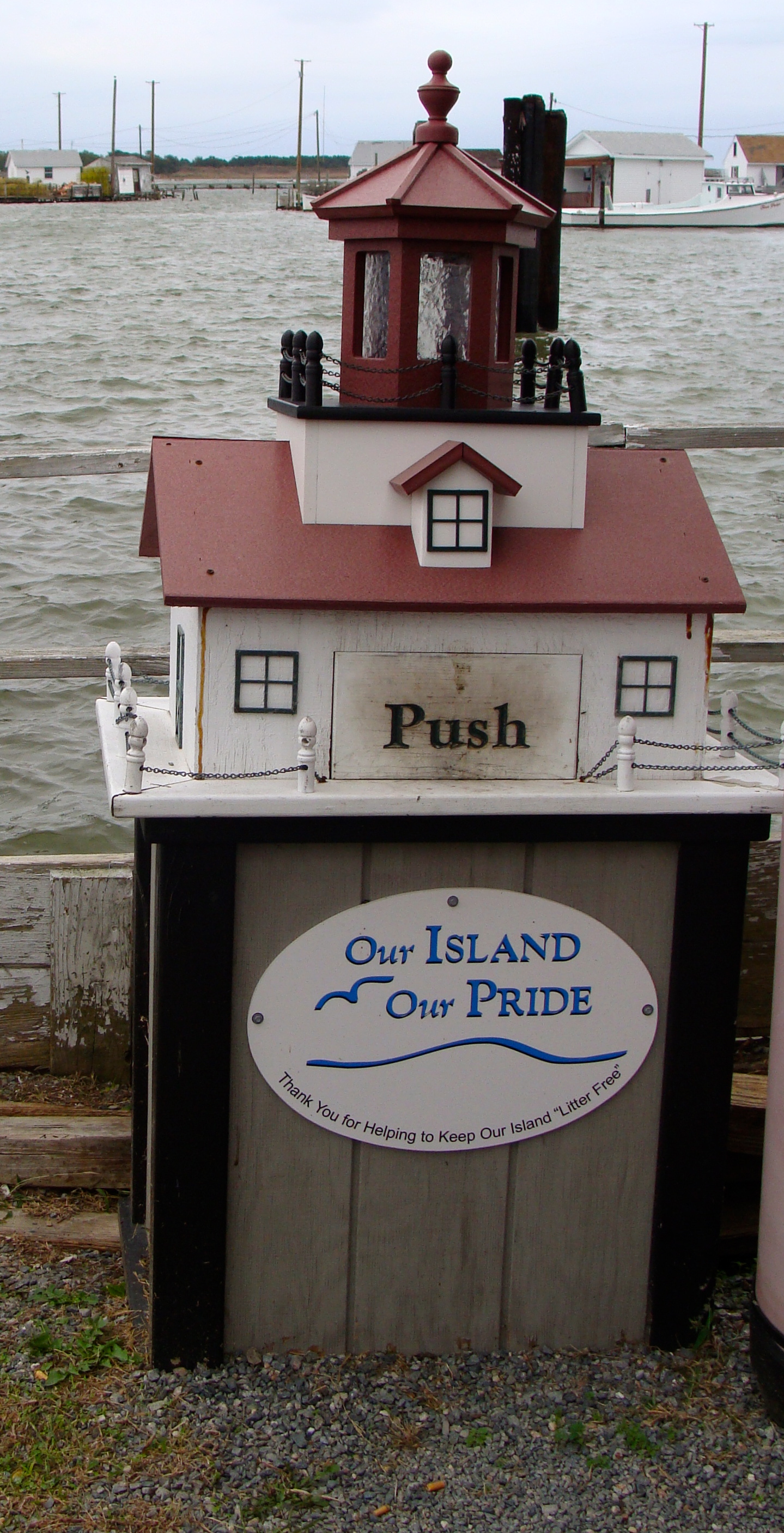
Trash containers modeled after the lighthouse that once stood on the island

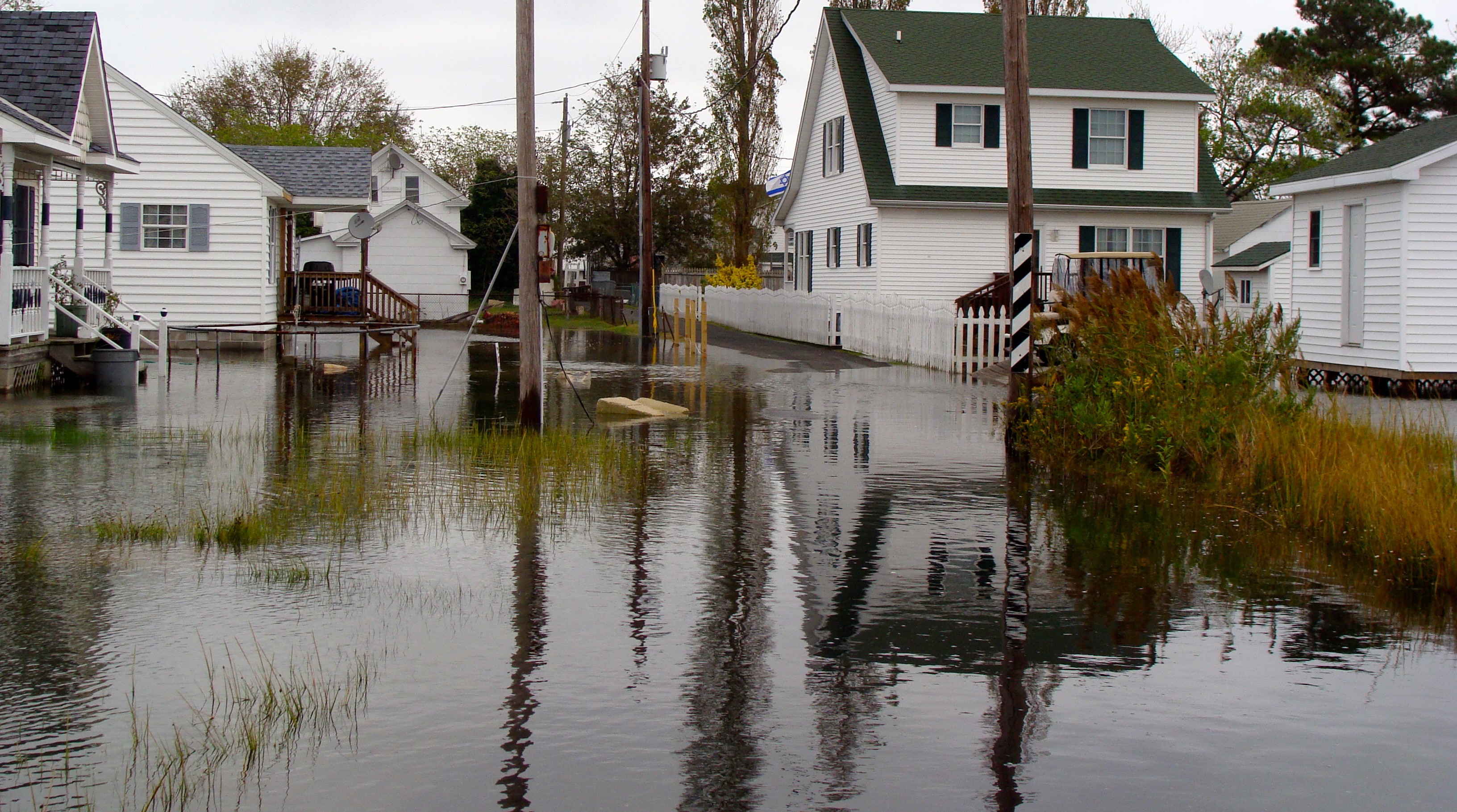
Remote island societies slow the cultural clock, as happens on Tangier where everything from their language, occupations and way of life varies from the mainstream. Linguists have studied their speech, as the islanders speak a unique restoration era dialect of American English with language roots in Scotland and Cornwall. We noticed that when native residents spoke to one another, we could barely understand the conversation, with varied intonations and a unique linguistic cadence.  Without fast food restaurants, chain motels, traffic and cinemas this tiny community contrasted dramatically from our suburban bubble. But outward appearances can be deceiving; what the “soft shell crab capital of the world” shares with its mainland neighbors are economic and environmental problems. Hard-working watermen continue to eek out a living from the increasingly polluted waters of the Chesapeake Bay. According to Wikipedia, the per capita income for the town was $24,042. About 22.6% of families of the population live below the poverty line. The watermen resent government regulations and question whether they are being the scapegoat to all the Bay’s environmental problems. If regulations restricted fertilizer runoff, for example, crabs might flourish. Tangier barely rises above sea level and water floods the entire island during storms or high tides. We ignored the phases of the moon, which also came into play during our visit.

Passenger Ferry to Tangier

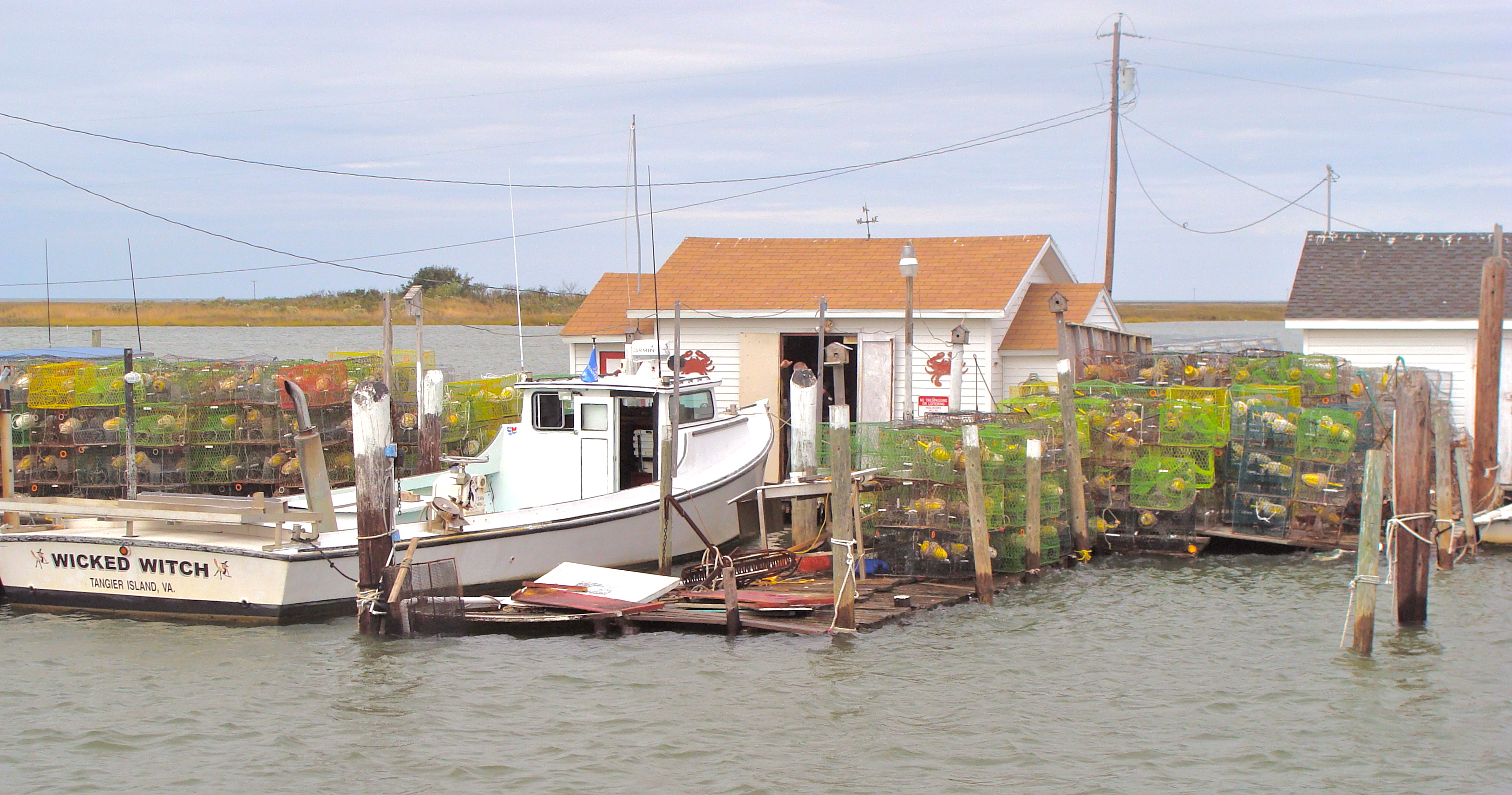
At the marina at Cristfield, a working fishing village on the Western Shore of Maryland, we boarded the ferry for the 75-minute ride to the island. With predictions of stormy seas and given my weak stomach for drastic up and down undulations on the waves, I became somewhat hesitant to step on board. Over an hour on the water seemed like a long ride especially in rough seas, but the process of a journey begins to set my mind apart from where I’ve been to where I’m going. The seas rocked the boat from side to side, but thanks to medication, we made the trip fine. Before reaching the dock, the ferry passed through the crab shacks, traps piled high on their piers.

Water Level brings Change in Plans

On arrival, we began to walk to our motel, The Sunset Inn, when we were offered a ride in the back of a pickup truck. Our driver told us we probably couldn’t traverse the water-covered roads with suitcases, and he was right! The road disappeared under eight inches of water, and tidal waters surrounded the most of the houses. Higher ridges separate the homes from the marshes and tidal canals. Wooden arched bridges connect the two main streets that run parallel the length the island. We read that the island was sinking, and it seemed as if it was sinking as we rode along!

The nice folks who offered us a ride left us off near our motel only a short walk away. We settled in becoming immediately acquainted with seven of the island’s friendly cats. One snuck into our room, and immediately being purring upon being picked up and carried out. We learned from our motel manager that an animal organization fixed all the cats on the island to control the population.

We decided the golf cart transportation would be essential to get around the island, even if it was just three miles by one mile. We returned to the dock area where we could rent a cart. Our motel manager’s husband gave us a ride into town. He proudly said that he was a waterman, born and bred. For all their hard work, watermen receive only $14.99 for a bushel basket of crabs.

Touring the Island

Since the island’s primary business is crabs, we ordered crab cakes for our dinner and were not disappointed. By the time we finished, the tidal waters had receded, and we made our way back to the motel.  The beach was just at the end of our road so we followed the path through the high reeds. A deserted sandy beach stretched before us, but we did not linger as mosquitoes began to hum around us.

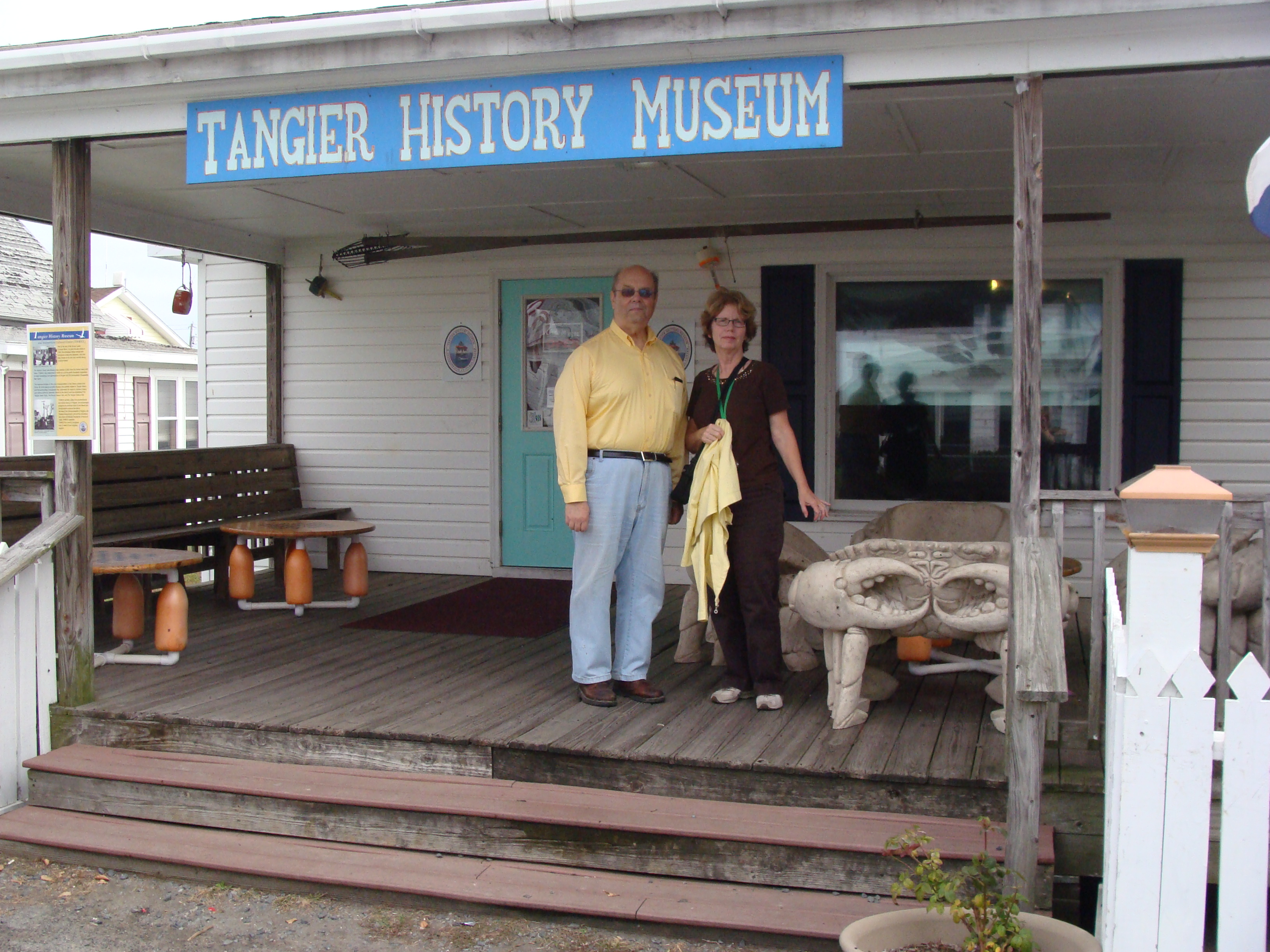
The next morning we set out to explore the island. We rode to the airport area and through the streets of the main village. We paused to watch the snowy egrets fishing in the marshes. We stopped for supper at Hilda Crockett’s Chesapeake House.  A family-style meal, we had plenty to eat with homemade hot bread, corn pudding, crab cakes and oyster fritters, just to name a few of the total nine dishes served. Afterward, we stopped at the Tangier History Museum, viewed the exhibits and saw a short movie.

Richard, Jean and the iconic crab

Full Moon Rising

We were watching the clock for our 4pm departure as we had left our suitcases at the motel on the other side of the island. What we failed to watch was the tide schedule; and the tide was unusually high, like the evening before. We headed down one alleyway after another only to be blocked by rising water. With only little more than an hour before our ferry would be leaving, we unwisely decided just to plow through the rising water.  Of course, our cart stalled. We had no choice but to jump into the water and wade back to the motel to pick up our gear. When we returned to the cart, we piled our luggage on the seats and began to push it back to the depot. Some folks, seeing our predicament, suggested that we leave it and walk back.  One last time, we tried to start the motor when lo and behold, the engine turned over. Quickly we hopped back in the cart and made our way to the ferry in enough time.

Halloween?

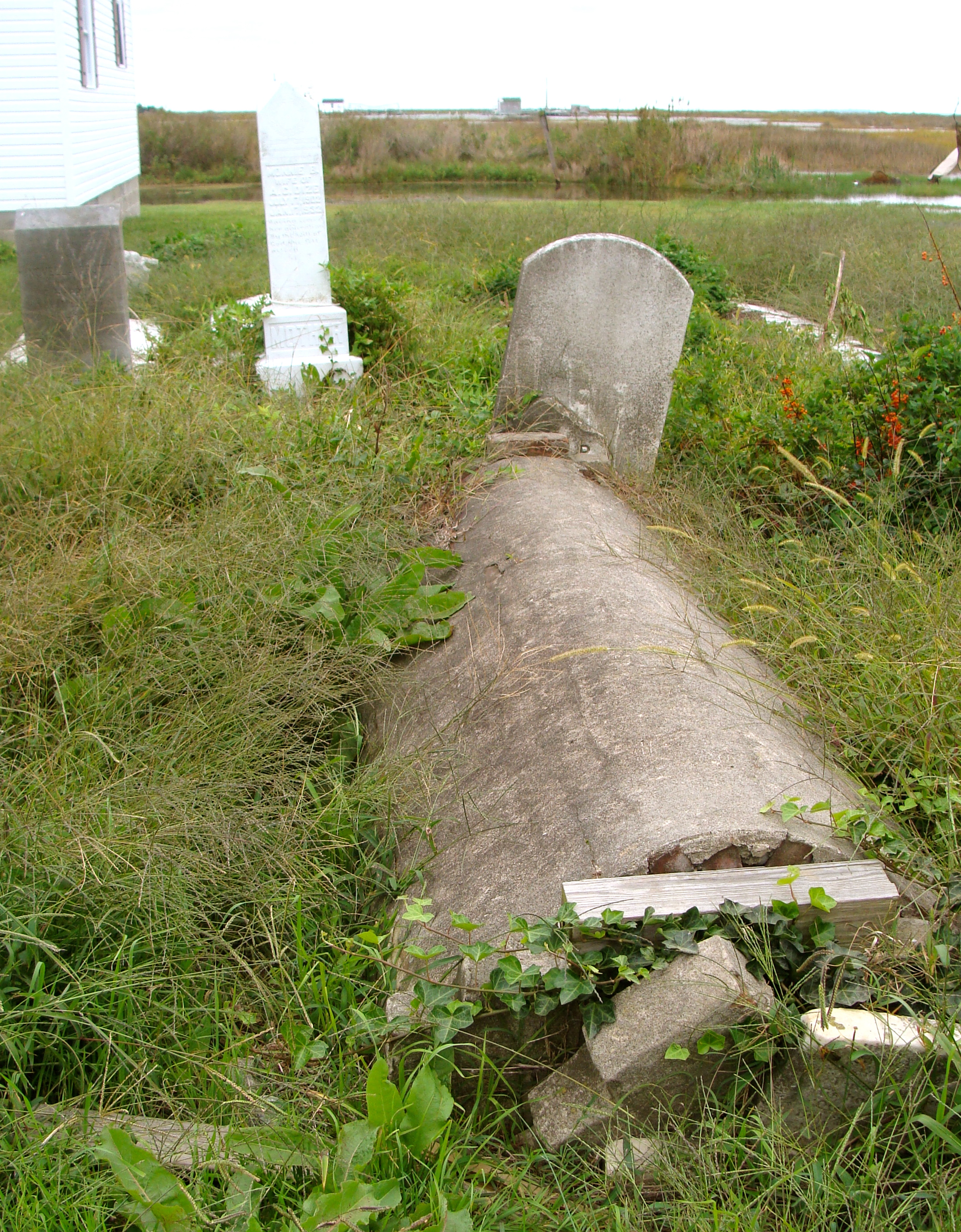
October is the time of year when folks decorate for Halloween and some will include graveyards and other scary displays in their yards.  On Tangier gravestones in the front or back yards are not unusual, and these are real! Several explanations offer reasons for the custom. The island experienced four epidemics, beginning in 1866 with Asian cholera. Because the death rate was so high, bodies had to be buried quickly. The residents were hardest hit in the early 1870’s when tuberculosis, measles, and smallpox epidemics hit the island. Also, centuries ago American and Britain families often buried deceased relatives in their yards and the custom persisted. Several recent graves we observed still had funeral flowers atop the mounds.

Reflecting Tidal Flooding

Returning to the Mainland

We were treated to another history lesson on our voyage from Tangier back to Cristfield when by coincidence we sat across from Dewey Crockett, a native islander who served as mayor, undertaker, medic, teacher, church music director and assistant principal. We learned that residents have to wear many hats in a small community.  The Islanders have resisted changes that have altered the mainland, such as alcohol, lotteries and even a movie deal. Dewey said that because everyone knows each other it is easier to keep an eye on the children, who still find the enjoyment of playing sports or running skiffs across the marshes.

Endangered Culture

The watermen support Tangier Island’s population of 525, but according to Dewey, fewer young people are choosing a career as a waterman. The graduating classes have become smaller, and the State has not replaced retired teachers. Some illegal drugs have worked their way to the island. The tourist industry has helped the economy a bit, but it remains a question whether the island can continue to exist with the dual pressures of modernization and global climate change.

Generally, the social hierarchical structure is fairly flat. The houses are small, and structures, while preserved, are not modernized, with the exception of the community health center. For children, the island would seem like a paradise with the freedom to run through the allies and gravestones and to venture out in the marshes in small boats. The Islanders seem to love their island and their life there. I can feel invigorated by the salt air and stormy skies but almost impossible to capture what these folks experience in their close-knit community. If global climate change destroys this culture, the loss will never be recovered.

Creating a Zombie Apocalypse Video for Shelter in Place: Behind the Scenes

Making a fun day in the park into . . .

a Zombie apocalypse?

After creating short videos for a few years now, enjoying the process of arranging music against photographs and videos with no other goal other than to fill my blog, I was able to use those skills recently for a practical purpose: to create a video of J. R. Blackwell’s kickstarter for Shelter in Place, a role-playing game.

Luckily, iMovie provides a series of project templates, including movie trailers. One of these trailers fits perfectly with the theme of Zombies, with proper music and title display. What I didn’t realize before about these templates is that they can be imported into a project so the producer is not confined to the established time formats.

On one of the hottest days in August, we drove down to Clark Park in Philadelphia where “J.R.” and her friends were set to create film footage on the Zombie experience. Dressed in costumes and in full makeup, the Zombie characters chased the “victim” up and down the field. Photographers lined up at different locations.  Given that the park was fully occupied with vendors and picnickers, taking pictures without those folks was tricky. Hip-hop music played in the background of all the footage.

The video came together using a variety of sources. J.R.’s photographer friends took at least a hundred pictures, so the large selection provided a variety of choices. Several days before we stopped off at a country graveyard and filmed the cemetery at various angles.  In June I attempted to take a video of the rising moon, which turned out wobbly, and thought the video would be totally unusable footage. However, a few seconds of the moon rolling around in the sky had a spooky effect in this movie, so I added a few of those frames. I blued all the films, and photos, changing a bright summer day into night.  J. R. and I edited the content of the titles.  We added a commercial at the end. Altogether, we edited the video at least 25 times before being satisfied with the final production.

The happy ending: Shelter in Place reached its kickstarter goal in just two days!

Tag Cloud