Humble Contributions to the Peoples' History

Archive for the ‘Travel Journal’ Category

Biking Along Kelly Drive, Philadelphia

Fairmount Water Works and Boat House Row

IMG_6457

On a glorious afternoon in May, my sister and I hopped on the train into center city for a visit the Philadelphia Museum of Art. We had no specific plans, but the beautiful day beckoned us to stay outdoors. We walked the perimeter of the museum, pausing along the pathways to view the city and scenes along the river. The famous boathouse row, housing social and rowing clubs, has stood on this site for over a century. Each building has its own unique character, with different architectural styles and colors.

IMG_6459

We strolled down to the buildings that make up the Fairmount Water Works. Just weeks before, the Schuylkill River flooded the area leaving the buildings and furnishings waterlogged. Officials had the spaces cleaned, but more work had to be done before visitors could come through again. Philadelphia built the Fairmount Water Works between 1812 and 1872, and finally ceased operation in 1909. The Classical Revival exterior, which hides the industrial inter-workings, has made this site a tourist attraction, added to the National Register of Historic Places in 1976.

Schuylkill River Trail

As we walked along the river, we came across Wheel Fun Rentals, which had a good choice of bikes, including cruisers, city and road bikes. Being the perfect day for a bike ride, we picked up a map and headed north on the River Trail that runs parallel to the Schuylkill River. The entire trail, about 10 miles in length, follows Kelly drive for about four miles. Kelly Drive was named for John B. Kelly, Jr., a triple Olympic Gold Medal winner in rowing; he was the father of Grace Kelly.  The bike path then loops with the MLK Drive bike path, crossing over the Falls Bridge. Bikers can also ride all the way to the Manayunk tow path and to Valley Forge.

IMG_6463

Biking along the river was exhilarating as every scene that unfolded in front of us presented a view that I had not appreciated when driving past the river. We stopped and admired the gardens and statues. Just beyond the West Girard Bridge, a brown stone railroad bridge stretched across the river, its arches framing the distant landscape.

IMG_6465

A bit of irony about the statue of John Kelly resting on a bed of bricks in the photograph above: in 1920 Kelly applied to race in the prestigious Diamond Sculls at the Henley Royal Regatta but authorities rejected his application because he was a bricklayer by trade, and the regulations at that time deemed that anyone who had been employed as laborer, artisan or mechanic could not be considered “amateur.”

The trail was well-maintained and flat, but we had to be careful negotiating around others on the path, which was busy with strolling families, runners and other bikers. The river supported traffic from the rowers and a few motor boats. Maps located the many sculptures in Fairmount Park. We stopped often along the way to take pictures or reflect on the view.

We hope to return to the trail to bike the entire loop and perhaps kayak to Bartram Gardens.

IMG_6464

St. Patrick’s Day: Croagh Patrick & the Mysterious Music

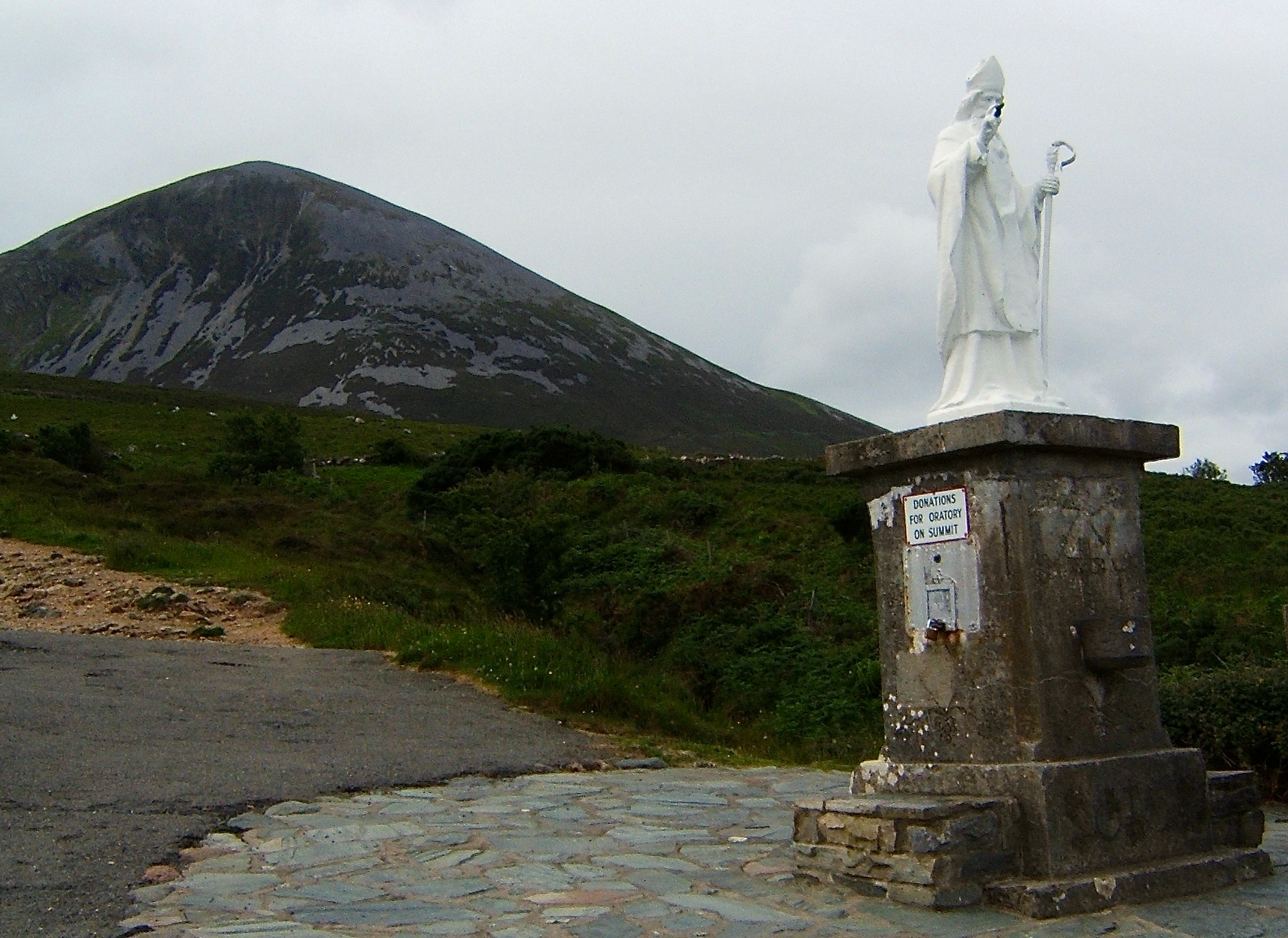
As the view of the Croagh Patrick came into sight, I could hardly believe that we were going to climb on what looked like a very steep, narrow ridge.

Before I could ponder the climb ahead any further, I saw the ghost ship with sails of human skeletons that haunted the base of the mountain. A famine memorial, the iron ship reminded pilgrims of the tragic stories that unfolded during the years that the potato crops failed and so many were left to starve.

While trekking across Ireland’s mountains, I gained an appreciation and understanding of elevations. Elevation was just a number on a map with no context. Yesterday our climb was 1,000, today, 2,700! I also noted that the weather changes drastically at different elevations, even in the summer time. We started the day with dry conditions, but I could see that mist and clouds covered the summit.

Loose stones of different sizes littered the gullied trail, and every step became a challenge to find secure footings. Some of our group turned back with the warning that the trail would become increasingly more difficult and precariously steep. We tightened our hoods and jackets against the wind, and we had to stop to become fully geared up for the rain to come. As I continued upward, I stopped often to catch my breath. The treacherous climb made me question, “Why am I doing this?” I could be sitting warm and comfortable in the coffee shop below. Yet, the spirit of the mountain kept me going–I would stay on the path that perhaps my ancestors once climbed.

The wind and rain became increasingly intense as we headed up the rocky slope. We couldn’t see anything beyond 20 yards as the summit was completely shrouded in clouds. Maneuvering on the rocks became increasingly painful as my boots would slip on the uneven terrain. I concentrated on the trail, searching for secure footing–only the brown rocks before me were important.

A feeling of relief came over me as the faint outline of the little white chapel at the summit came into view, and I stepped up the pace to secure the protection its walls might offer, only to find the building locked tight. Food and rest, however, offered comfort against the relentless rain, and we ate our sandwiches leaning against the chapel built on a foundation that dates back to St. Patrick’s time.

Chapel at C. Patrick

We packed up for our trip down the other side of the mountain. When I turned the corner away from the church, the wind hit me with such force, it almost knocked me over. The rain and wind tore at my coat as I headed down. Craggy outcroppings of rock distracted me from the storm, as again, I focused on my footing. The clouds embraced our group, and my fellow hikers disappeared from sight.

Now I’d heard that Ireland is a magical place, and on this trip a number of coincidences and unusual experiences came our way, and this was one of those times. As I walked in the fog, I heard an Irish flute playing a whistling melody. I stopped and scanned the landscape. Where was the music coming from? Did such a clear melody arise from the rocks­–those crevices of torment serving as apertures for the wind–or was it a leprechaun? With music filtering from the clouds, Irish mythology became reality as the sacred mountain shared its magic with another pilgrim.

St. Patrick

Quaint Towns along North Neck, Virginia, Chesapeake Bay

Road Trip begins at Newport News, Virginia

Newport News is one of the cities that makes up the metropolitan region in Southeastern Virginia and the starting place for our trip. We’re skipping the popular vacation spots in the area, such as Williamsburg, Jamestown, and the adventure parks, and instead opting to visit the lesser known regions further north along the Chesapeake Bay.

We’ve visited other small towns in the South,

Berlin, Maryland
Tangier Island, Virginia
Beaufort, North Carolina
Charles City, Virginia

in past journeys and have not been disappointed. Small towns retain the flavor of a bygone era, as visitors experience an authentic working community. Most of the towns have historic main street districts with parks and libraries within easy walking distance of the shopping districts. You might find a gazebo, an old-time movie theater or general store along their business thoroughfares. Restaurants and coffee shops have their own unique personalities, offering dishes with a local flavor. Residents own many of the smaller shops, where you can find one-of-kind objects. Rehabbed buildings and warehouses sometimes house art and craft galleries, and often communities establish an art center near the center of town.

What I’ve Noticed about Main Street, America          
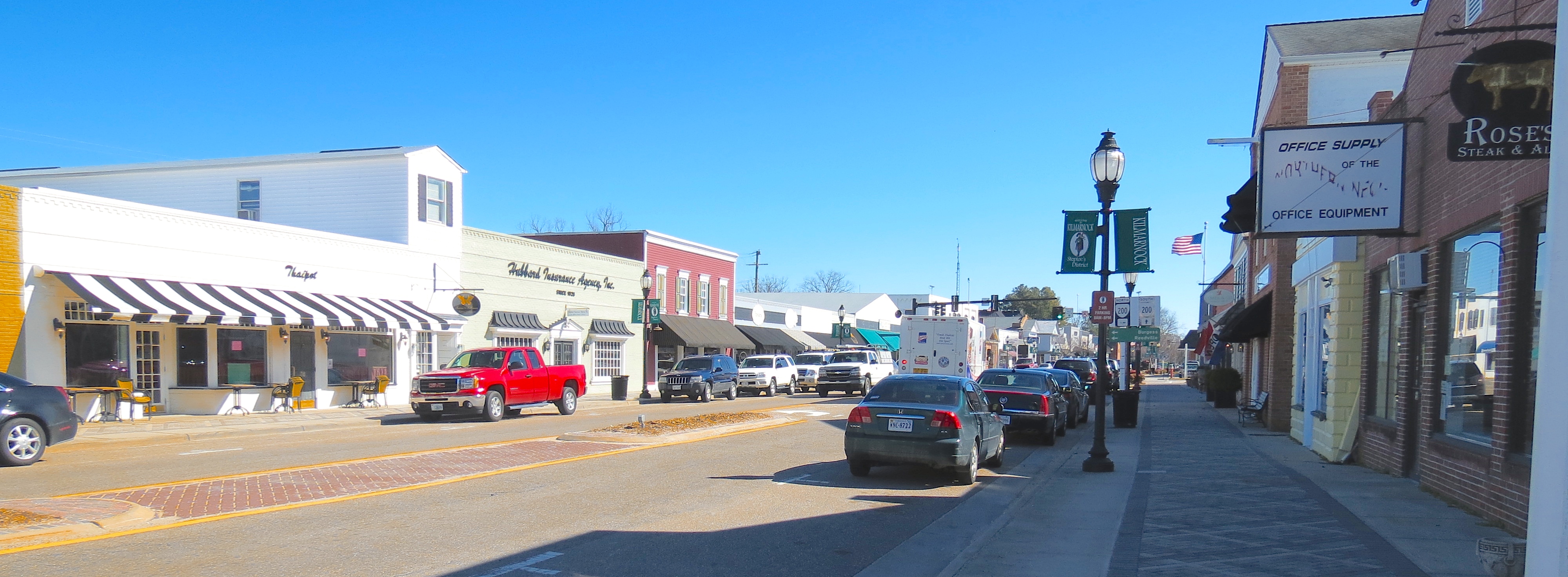
IMG_5990In the smaller towns across America, Main Street is surprisingly similar, with even the name “Main Street” being the same in many communities. Other common names for streets are Second, Third and so on. Often the names of trees serve as street names, such as Oak, Pine or Maple.

The street itself serves as an anchor to the sidewalk and then the buildings, which line up next to each other and on either side of the street. Usually the smaller store fronts are not as wide as they are deep. Sometimes you can find an old railroad station, the tracks and engines now gone, and the building converted into a museum, shop or visitor center.

In the play Our Town, the author, Thornton Wilder, describes in the opening scene what could be almost any town in America in the 1920s:

Well, I’d better show you how our town lies. Up here-is Main Street. Way back there is the railway station; tracks go that way. Polish Town’s across the tracks, and some Canuck families. Over there is the Congregational Church; across the street’s the Presbyterian. Methodist and Unitarian are over there. Baptist is down in the holla’ by the river. Catholic Church is over beyond the tracks. Here’s the Town Hall and Post Office combined; jail’s in the basement. Along here’s a row of stores. Hitching posts and horse blocks in front of them. First automobile’s going to come along in about five years-belonged to Banker Cartwright, our richest citizen . . . lives in the big white house up on the hill. Here’s the grocery store and here’s Mr. Morgan’s drugstore.

Jail at Mathews

Jail at Mathews

Elements of Main Street stand as symbols of American values and a sentimental view on the way of life from the past. Main Street, U.S.A., is Disney’s recreation of small town America. Walt Disney summarized his vision with this nostalgic view,

For those of us who remember the carefree time it recreates, Main Street will bring back happy memories. For younger visitors, it is an adventure in turning back the calendar to the days of their grandfather’s youth.

Dark Side of Main Street

In literature authors have written about small-town America and often criticizing their social and political mores. Sinclair Lewis published a satirical novel, Main Street, in 1921, dismantling the myth of small-town wholesomeness while mocking traditional values.

Main Street was not an inclusive space for African-Americans during the Jim Crow era. The website, The Myths of Main Street, reminded me of the bleak and oppressive atmosphere that anyone of color endured during that time.

Main Street Today

For now, my sister Jean and I are just tourists winding our way through these southern towns. Reading about the history of main street has certainly given me material to think about as we travel. Main streets have made somewhat of a comeback since the 1960s when malls began to take over the commercial enterprise of these towns, while main streets deteriorated and, sometimes, disappeared. Hopefully, these historic downtowns will win out against the larger corporations, which engulf so many of our small businesses. Locally run businesses ensure that community members make the decisions that will influence their lives in their towns.

Yorktown

Our first stop on this road trip was the hamlet of Yorktown, famous for the battle that brought the American Revolutionary War to end when the British commander, Cornwallis, surrendered to George Washington on October 19, 1781. The Yorktown Battlefield Visitor Center is just off of Highway 17. Visitors can drive through the battlefields, watch a film and tour historic houses. We could have spent an entire day there.
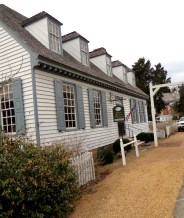
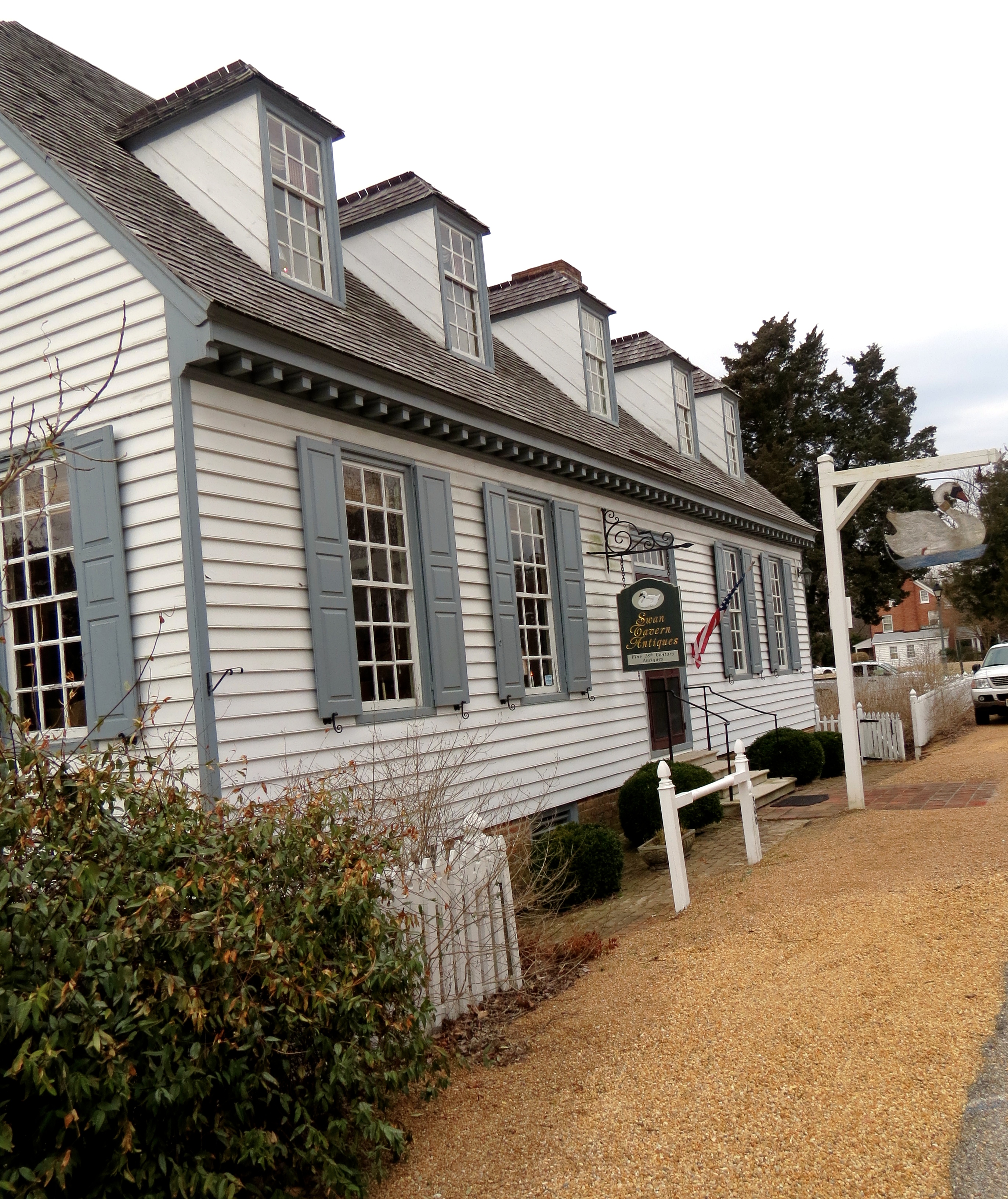
Swan Tavern Antiques

Swan Tavern Antiques

The revolutionary war battles took a toll on Yorktown, leaving all but 70 buildings standing. In 1814 a fire swept through Main Street and the waterfront area. Union forces added to the destruction during the Civil War. Today the population stands at about 200. We wandered down Main Street and into an 18th century building, Swan Tavern Antiques, where ten rooms were decorated with furniture and accessories from that era.

Churches have an important place in small towns, and no better example the Grace Church, which has been used by worshipers for over 300 years. Originally an Anglican church, the building survived the Revolutionary War, Civil War and that 1814 fire. After the walls were rebuilt in 1848, the congregation renamed the church.

Grace Church

Grace Church

We strolled along the Waterfront Landing, which followed the York River. In late April, pirate reenactors, representing seafaring life in the late 17th and 18th centuries, invade Yorktown and set up an encampment. Might be worth returning to sing with the pirates.

Gloucester County

We returned to Route 17, crossing over the George P. Coleman Memorial Bridge toward Gloucester County, which is important for its farm and fishing industries. The county is nicknamed the “Daffodil Capital of the World” and holds a festival in April with parades and shows. Gloucester has a visitor center on Main Street and has a self-guided tour of important buildings.

Mathews County

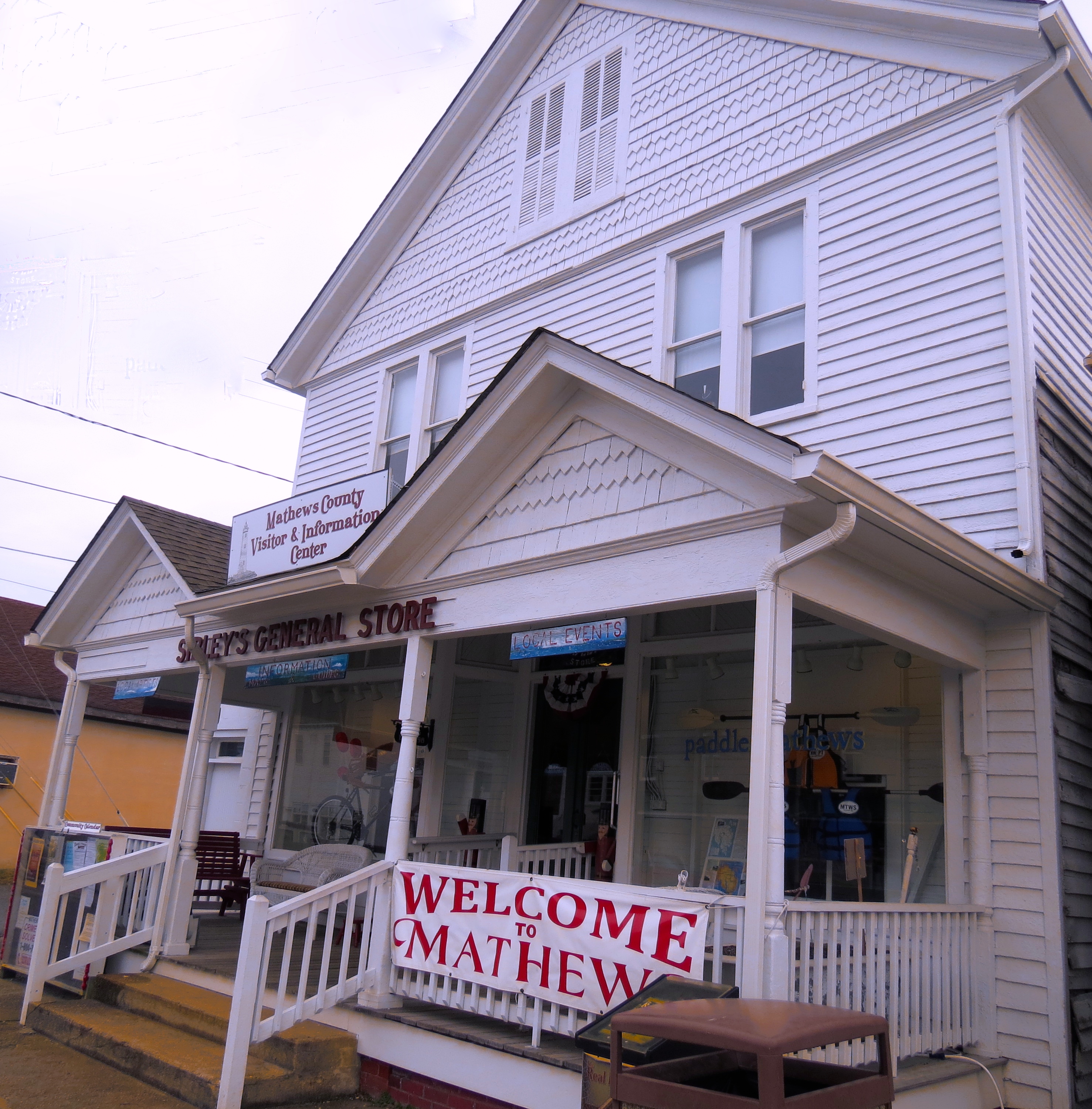
Mathews Visitor Center

Mathews Visitor Center

From Gloucester, we drove north on John Clayton Memorial Highway into Mathews County. Intersected by three tidal rivers, the county has over 200 miles of shoreline. Route 14 goes through downtown Mathews, where we found the Mathews County Visitor and Information Center, once Sibley’s General Store, and now selling guide books, maps, and local crafts. A small museum in the back of the store holds historical memorabilia of the county.

Mathews Visitor Center Inside

The Inn at Tabbs Creek

Post Office at Susan, VA

Post Office at Susan, VA

Heading south from Mathews on New Point Comfort Road, we continued down the peninsula, missing our turnoff but finding this example of one of the small post offices that dot the landscape of the area. We missed the turn because we were not expecting that Turpine Lane was a dirt road, which we now observed were indicated with blue signs and not the usual green street signs.

Inn

I selected the Inn at Tabbs Creek as our accommodations for the night because of their ecological sensitivity, excellent breakfast choices and amenities, including bicycles and kayaks. Their description of their freshly brewed organic coffee, eggs and vegetables had me looking forward to breakfast there for days ahead of time. The inn stood at the end of a row of tall cedars that flanked the driveway. After settling into our cozy room, we strolled around the main house, investigating the outbuildings and enjoying the views of the bay.

We returned to Mathews for dinner at Southwind Pizza, which came highly recommend by the locals and lived up to its claim, “casual dining at its best.” Their squash soup was the best we’ve ever tasted. Jean’s scallops were excellent, and I thoroughly enjoyed the Mediterranean platter.

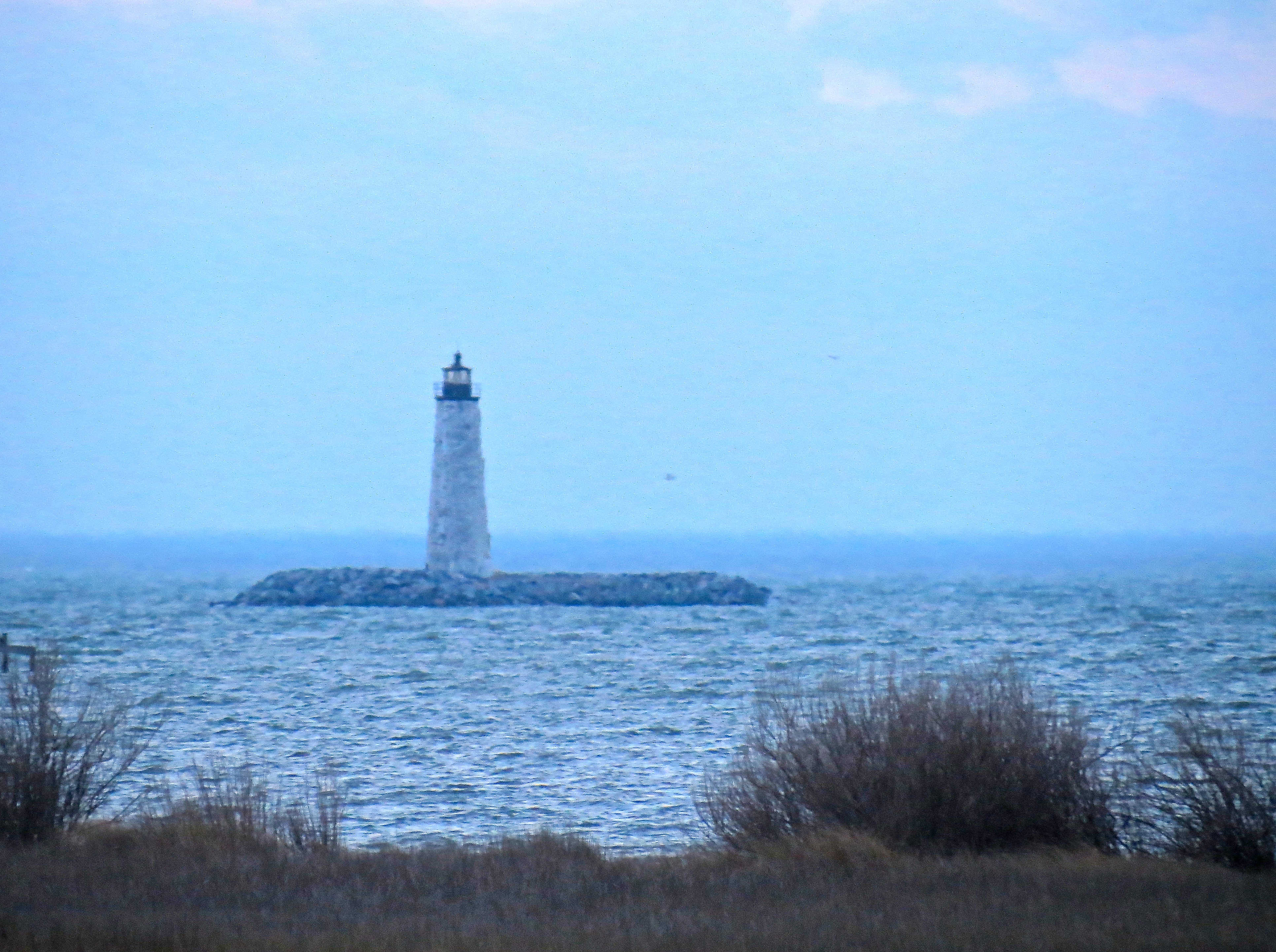
With just a little daylight left we drove down to New Point Comfort Lighthouse, the third oldest on the bay and commissioned by Thomas Jefferson in 1804. A hurricane in the 1930s separated the lighthouse from the mainland. Even from a walkway, which was the only structure in this remote location, the lighthouse was still a good distance away. I took the photograph below with the maximum setting on my zoom lens.
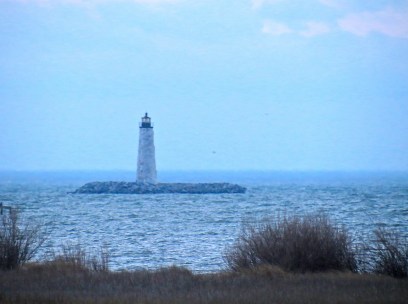
IMG_6018

Back at the inn, the wind howled throughout the night, and we woke up to a 20 degree temperature drop. Bundling up with hats and scarves, we rushed over to the main house for a delicious breakfast: french toast with strawberries casserole and an egg and cheese strata, biscuit, fresh fruit and French-pressed coffee.

After packing up, we drove north to Gwynn’s Island, a small triangle of land on the mouth of the Pianktank River. A marina sat on the other side of the bridge, and we followed the road that ran along the bay, offering wide views of the water. The island was quiet as the summer tourist season was still months away and most of the cottages were empty. We stopped at a beach near the end of the road to take a look around. An abandoned shack faced the bay, and we wondered about the story of this little house. Towering pines in the distance swayed in the wind.

IMG_6045

Shack on Gwynn’s Island

As I was researching the history of the island, I found a newspaper article that recounted a story about an African-American woman’s experience of moving to this community in 2009. She did not stay long because of harassment that both she and her children experienced in their short time there. The Gwynn Island Museum, housed in the former school building, holds the history of the island, including pictures of African-American families who worked on the island in the fishing industries. Between 1910-1920 all the families left the island, most likely because they feared for their safety. Difficult to believe that only several years ago, that a similar history would repeat itself in the land of the free.

The Northern Neck . . .

“a place heaven and earth never agreed better to frame man’s habitation.”
                                                                               Captain John Smith, 1608 

From Mathews, we headed north along Route 3, crossing over the Rappahannock River. Virginia’s rivers, such as the Rappahannock, used to freeze over entirely during winters of the late 1800s and early 1900s. The Chesapeake Bay would also have ice floes that were a hazard to navigation. If global warming has been happening slowly, generations are gone now to tell us what the weather was like a hundred years ago.

This area is well-known for its water views of the Chesapeake Bay, creeks and rivers. Making a left turn at the town of White Stone, we drove only a few miles before arriving in Irvington. A thriving town at the turn of the 20th Century, Irvington served as a port for steamboats. About 600 steamboats worked the waters along the Chesapeake Bay. In the summer of 1917, a fire destroyed many of the buildings, and the Steamboat Era came to an end. The Steamboat Museum houses memories and memorabilia from that time, but it was closed when we arrived.

Kilmarnock

Named for a Scottish town in East Ayrshire, Kilmarnock was once called “The Crossroads.” Towns often sprung up at intersections of transportation routes and grew according to the level of commerce that supported the community.
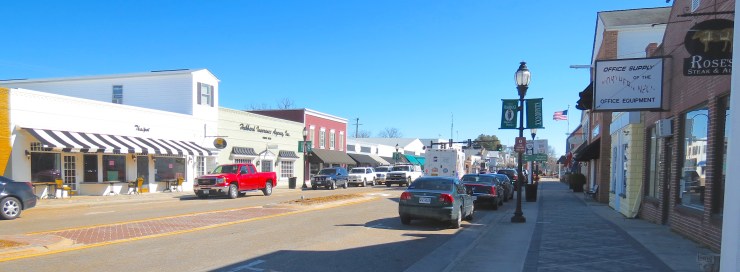
Downtown Kilmarnock

Downtown Kilmarnock

Before exploring the downtown, we stepped into then Kilmarnock Antique Gallery holding 22,000 square feet of antiques and deserving of its honor: voted number one by Pleasant Living Magazine. Most of the structures on Main Street were brick, and housed a variety of boutiques, galleries and restaurants. 

Leaving Main Street

The story of small towns in America is still unfolding as townsfolk adapt to changes, both economic and social. Community members continue to work together to preserve the architecture and ambiance of a former time while struggling with the prejudices that, even to this day, rain on the American parade down Main Street.

main street 3

Video

Manayunk’s First Annual Winter Solstice

Celtic Connection

Years ago I happened to be in Ireland during the celebration of the Summer Solstice, which was truly a magical experienceWinter_solstice as folks lit bonfires on beaches and hillsides in every town in the countryside. This year, just a day after my birthday on Saturday, December 21, the first day of winter, was time to reconnect to my Celtic roots. This event in Manayunk would be my first celebration of the Winter Solstice and held in a nearby neighborhood in Philadelphia. Fire plays an important role in the Winter Solstice, too. The Druids believed that at this time of year the sun stood still for twelve days, starting the tradition of burning the Yule log to banish evil spirits and preserve light during the darkest days of the year.

Manayunk (pronouced man-ee-yunk)

The Lenape Indians, the first settlers in the Philadelphia region, named the area, translated means “place to drink.” Located in the northwestern section of Philadelphia, the town lies on the banks of the Schuylkill River. Canal View Park on Main Street stands in recognition of the first canal started in the United States and was the scene for the solstice celebration. A tow path follows the canal. Victorian storefronts and mill buildings line Main Street where eclectic shops and a variety of restaurants offer many opportunities to enjoy holiday shopping and eating. Santa made several appearances, extending greetings to all who strolled along the Main Street. The Mummers added to the merry mood playing holiday favorites.

Birds of Prey

Before the winter solstice events, Damien Ruffner from the Schuylkill Center gave an informative lecture and presentation on local birds of prey, including a Red-Tailed Hawk, Peregrine Falcon, Great Horned Owl, Eastern Screech Owl, and Barn Owl. Having the chance to view and photograph each raptor up close was amazing.

Why does it seem as if the birds are actually listening to the lecturer?

Drums, Torches and Fires Celebrate the Return of Light 

As the torches along the canal were lit and the wood pilings on the oil drum set ablaze, the ceremonious drum circle, a Native American tradition, began the rhythmic pounding. The audience was encouraged to make affirmations on wishing sticks, which were added to the bonfires. For 6,000 years our ancestors have celebrated the return of lighter days with friends and family to honor earth’s seasonal rhythm. Feeling connected to family and community, including all the creatures that share our planet, I thoroughly enjoyed the Winter Solstice celebration of harmony with nature and the ancients.

Video

Winterfest Snowstorm at Penn’s Landing

Undaunted by a forecast of fog, snow and icy rain, hopped a train into Philadelphia for a visit to Waterfront Winterfest held at Penn’s Landing during the holiday season. The blowing snow whipped around the bus as I caught a glimpse of the Benjamin Franklin Bridge from the last stop on the route. Despite the snowy weather, the Blue Cross RiverRink was filled with skaters, including Santa. A forest of trees and shrubs, lit with twinkly white lights, surrounded the ice rink. A warming tent held a village of restaurants and small shops. Skaters huddled around fire pits with the aroma of burning wood scenting the air. Blue lights outlined the trees along the Delaware River. As difficult as holding the camera was while trying to get videos, the snow enhanced the site making the seaport truly a winter festival.

A short walk, while holding an umbrella that billowed up and down in the driving wind, brought us to the Independence Seaport Museum, which was hosting its 4th annual Seaport Parade of Lights. The Jupiter, a vintage tub from 1902 and maintained by the Philadelphia Ship Preservation Guild, led the parade of decorated boats, including both working vessels and pleasure craft. The crowd, having a great time watching the boats glide out of the blizzard, applauded the floating light displays as each passed by.

Video

Zip-Lining at Lums Pond State Park

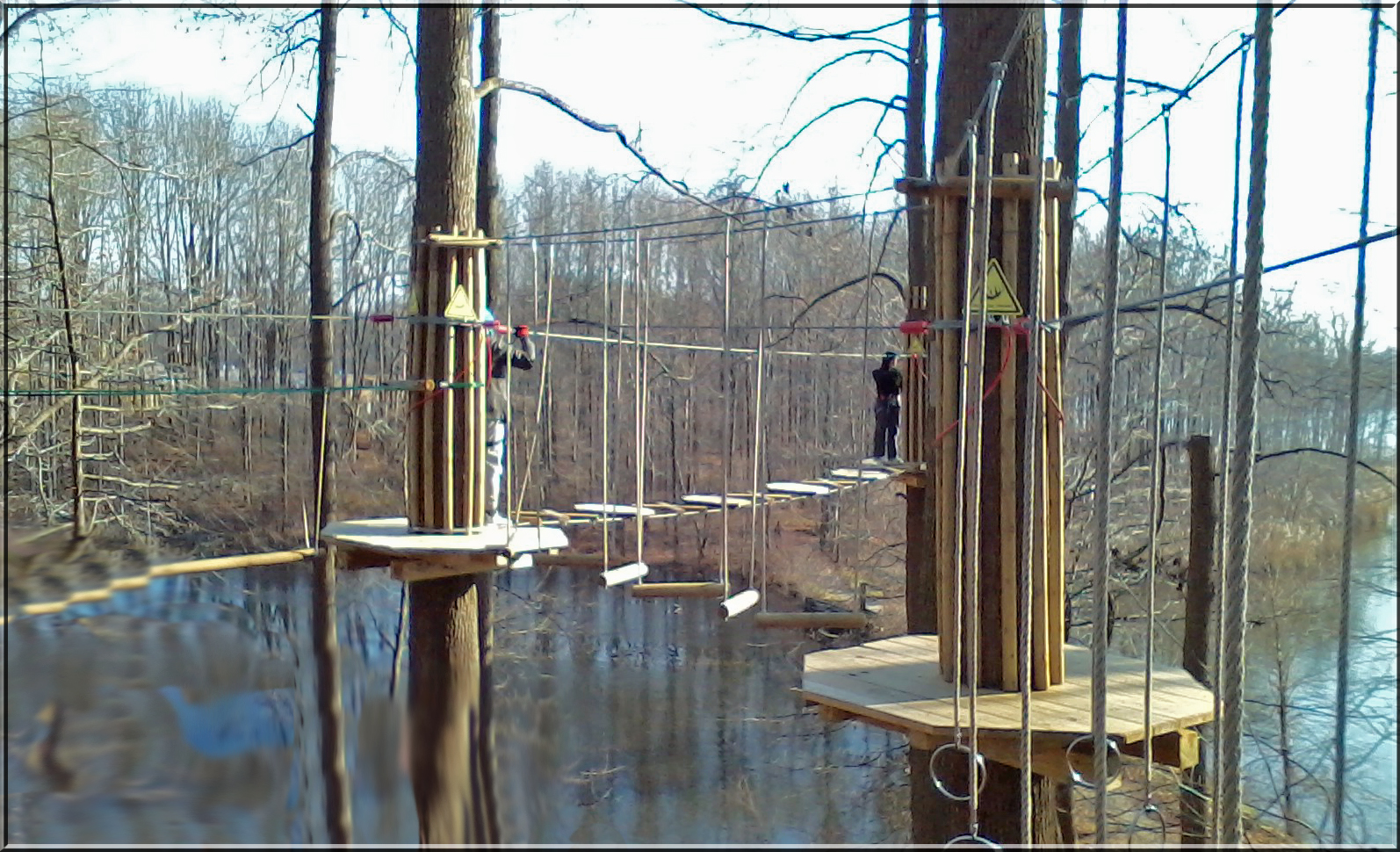
In the Trees

Way Up in the Trees

An Activity for Twenty to over Sixty+?

The thought occurred to me that an activity following Thanksgiving Day might be an opportunity for some more family bonding. After scanning the Internet and casting away ideas that probably would not appeal to our 20+ something kids, I found a zip-line and obstacle course adventure at Lums Pond State Park, in north-central Delaware. According to the GoApe website,

The course is made up of numerous rope ladders, 42 exciting crossings to include the Double Stirrups, Zigzag Trapeze, Flying Carpet and Canyon Crossing, 2 Tarzan swings and 5 zip lines.  Overall, there are 5 individual sections within the course, each section taking you higher into the forest canopy and finishing with a zip line longer and with more expansive views of the pond than the previous one!  Zip Line #4 and #5 are both well over 650 feet and the entire course consists of over 2,191 feet worth of zip lines, providing some of the longest zip-lining experiences in the state and region!

I know that our young-uns would be excited for the experience, but what about us “mature folks” . . . would we survive over 2,000 feet of zip lines? These zip lines, an aerial runway consisting of a pulley on a cable, work on gravity pulling the passenger down to the end of an incline, with zip very much the appropriate word.
The Adventure Begins

After an hour’s drive from Philadelphia, we arrived at the park, which is centered around the largest pond in the state of Delaware. The pond was man-made in the early 1800’s when the C & D canal was built, the water used to fill the locks. I didn’t have much time to admire the picturesque scenery, however, as we soon started our training for the course. At first, it seemed a bit complicated as our trainer instructed us to hook and unhook two or three lines every time we changed position, but the color-coding helped, and we eventually mastered moving the hooks quickly as we went through the course. After the training, the guide left us to continue on our own. We were provided with an emergency whistle, where five blasts would bring immediate assistance. Our guide’s parting words, “Don’t wind up upside down.”

The Course

Our physically fit youngsters had no trouble with any of the challenges and even selected the more difficult options, such as walking on rings hanging from ropes. For me, the hardest part was climbing up the rope ladder, which required strong arms and upper body strength. The rest of the course, high in the trees, presented a variety of moveable walkways. Sometimes I decided not to look down. After getting over the initial fear of stepping off the platform for the ride on the zip-line, the trip down over the pond was thrilling! On the last zip line, I held my cell phone, video taping while gripping the cable with two hands. So if you want to see if the zip line experience is for you, that video is at the end of the movie.

Everyone had a great time and even making plans for when to return.  Maybe we’ll make this a family tradition!

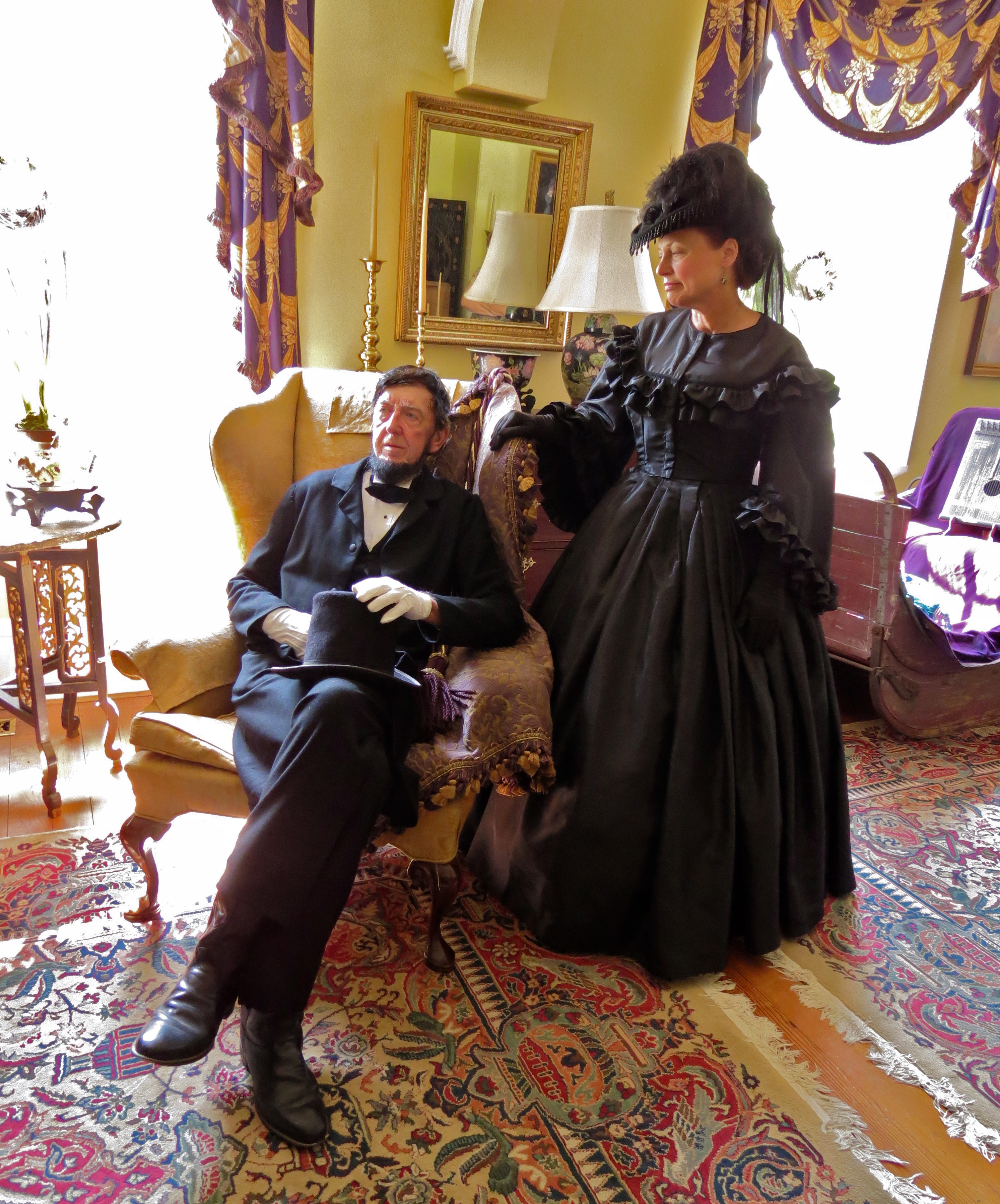
Living History: Day in the Life of the Soldiers of the Civil War

On a visit to Wilmington  & Western Line, a steam train that runs through the Red Clay Valley in Delaware, I just happened to have the good luck that Civil War living history reenactors were staging a battle and takeover of the train on that day. I recorded the dramatic action of the battle in video in this post: Steam Train Journeys into History: Civil War Skirmish at Red Clay Creek.

CW Cannon L Antique

This video highlights Living History: Day in the Life of the Soldiers of the Civil War, when Company A, 37th Regiment, North Carolina Volunteer Troops, C.S.A., 1st North Carolina Artillery, Battery C, C.S.A., and the Town of Rising Sun, Maryland, hosted the 21st Annual Reenactment.

I strolled by the rows of canvas tents, the Union on one side of the creek and Confederates on the other, as wood crackled in the campfires and coffee brewed in tall metal pots. Reenactors portrayed surgeons, tradesmen, as well as soldiers. Even children dressed up in period clothing. The sound of a blacksmith hammering echoed through the park. I spoke with reenactors, who shared their knowledge on weapons, lanterns, desks and tent contents, everything authentic to the time period.

At midday the gray and blue soldiers faced off in a skirmish. The Union held the high ground while the Confederate soldiers crossed the bridge and positioned their cannon on the field. Soldiers on both sides fired their cannons as thunderous blasts echoed through the landscape, smoke drifting over the hills. As men fell, a field doctor bandaged up the wounded. A crowd of spectators sitting on the hill watched intently as the action unfolded just yards away.

LanternLate in the evening, as music of Kadence spilled into the cool night air, I wandered around the grounds in the light of the campfires and lanterns, softly illuminating the tents. Reflecting on the gentleness of the night and the harshness of the daytime battle, I considered the issues of preserving the Union, regional loyalty, justification for war and the abolition of slavery, which remains the greatest arbitrator in the ethical debate. Has the country evolved into a compassionate and empathetic to the plight of both sides?  I see these reenactments as an opportunity to ponder these issues.


Participants:

Confederate
1st Regiment, Maryland Infantry, Company 1
5th Regiment, Virginia Volunteer Infantry
Union
42nd Regiment, Pennsylvania Volunteer Infantry, Company B
*   *  *   *   *   *   *   *
Square Frame John
Many thanks to John and all the Reenactors.

*   *  *   *   *   *   *   *

Other links to Civil War posts:

Video

Old City Seaport Festival and Pirate Battle on the Delaware

Harking Back

IMG_4130The last time my sister, Jean, and I met pirates, we had just happened upon the Beaufort Pirate Invasion, taking place as we stepped into the battle scene a summer ago in the seaside village in North Carolina. We promised we would not let too much time go by before finding another similar event. The opportunity came along when the Independence Seaport Museum hosted its 2nd Annual Old City Seaport Festival, in a weekend-long celebration with music, crafts and Tall Ships, with a smattering of pirates. On the first evening, the festival began with the Parade of Boats as they came to port just below the Ben Franklin Bridge.

On the next evening, the AJ MeerwaldGazela Primiero Pride of Baltimore IIMystic Whaler Kalmar NyckelVirginia and Hindu were destined to clash in a pirate battle. We signed up to be aboard the Kalmar Nyckel. Built by the Dutch, the original ship dated back to around 1625. This flagship of Governor Minuit brought settlers to the New World, establishing the colony of New Sweden on the banks of the Christina River in 1638. An informative and lovely guidebook on the ship’s history is available on the web. The ship was rebuilt in Wilmington, Delaware, and commissioned in 1998. The Kalmar Nyckel is an example of a full-rigged type of pinnance, which is a kind of boat, generally modest in size, that was used either as a merchant vessel or small warship. Pirates prized these ships because they had maneuverability through rugged coastlines and good speed to outrun any vessel that might be in pursuit.

200px-Treasure_Island-Scribner's-1911

Cover illustration by N.C. Wyeth from 1911, Wikipedia

There is a degree of authenticity to a pirate battle. Mostly what we learn about pirates is from movies and television, while authentic history has been sorely neglected. My first introduction to pirates came through Treasure Island, a novel by Robert Lewis Stevenson, which popularized many of the associations with pirates, such as treasure maps, parrots, and the familiar ballad,

“Fifteen men on the dead man’s chest— Yo-ho-ho, and a bottle of rum! Drink and the devil had done for the rest— Yo-ho-ho, and a bottle of rum!”

A quick search into a few authoritative sources reveals the extent that colonial villages were affected by the onslaught and fear of attack from both foreign pirates, truly a multi-national representation including the French, Spanish, Dutch and English, as well as the local variety, with the first raid recorded in Lewes, Delaware, back in 1672. Seems that Blackbeard also frequented the Delaware, as he supposedly stopped into the many taverns along the waterway.

Wench Wear?

Jean had this idea that since we were going to be onboard during a pirate battle, we should dress the part. We cobbled together costumes from outfits in our closets (wardrobes should always include a few whimsical pieces when transformations are called for), and we were ll set to go with Jean’s orange and black-stripped socks and my hat, replete with feathers. Did we look like real pirates? . . . oh, not a chance, but maybe we could have fit in with Pirates of the Caribbean crew.

We took the train into center city and headed down toward Penn’s Landing. We shook our heads as we passed the closed and shuttered Constitution Center, thanks to those idiots in Congress, the scourges of the seven seas, who shut down the government. By chance, we happened to run into my son, John, who was participating in a demonstration against Monsanto, taking place just across from the Constitution Center. Activists had designated October 12 as International Day of Protest against the company because of questions around food safety. Fellow WordPress blogger, Jeff Nguyen, has written an excellent post on Agent Orange and Monsanto.

IMG_4780

After bidding John adieu, we continued walking to the Seaport Museum. The wind whipped around the buildings as we approached the Delaware River, were we could see white caps on the churning waters. I thought back to a sail on the Amistad, which had to be postponed because of high winds and wondered if the battle would take place. We walked along the pier where vendors were selling everything from jewelry to “wench wear.” Several organizations had also set up information booths, and we spoke with members of the Steamship Historical Society of America.

IMG_4842

Shiver Me Timbers! Striped Socks Spikes a Spirited Sentiment!

A green tug boat had been tied to the pier, and visitors were encouraged to tour the tug. Once powered by steam, the boat now runs on diesel fuel. We checked out the kitchen, boiler room, living quarters and bridge, and rang the brass bell. We were welcomed us onboard, with one of the crew distracted by Jean’s footwear, declaring, “I’m turned on by those socks!  I’m old, I’m not dead!”

High Winds Scuttle the Voyage of the Kalmar Nyckel

The tall ships lined against the pier, but we were most excited to see the colorful Kalmar Nyckel. Parts of the boat had just been freshly painted, and we admired the detail work.

Kalmar Nickel

On either side of the ship, a carving of a dog rested on the railing, one eye open to the sea and closed to the inside.

Dog Kalmar Nickel

The winds were blowing wildly by this time, so we were not surprised when the crew told us there was little chance the ship would be part of the pirate battle as they could not negotiate the vessel away from the dock. Our plans were not cancelled, however, as the smaller boats were still scheduled to sail. The crew reassigned us to the Mystic Whaler, a late 19th century coastal cargo schooner, for our pirate adventure.

IMG_4850

A Bit of Shantying

Geoff Kaufman welcomed us onboard with songs of the sea. Accompanied by his concertina, an instrument made in England in the 1920s, Geoff offered a song for every activity on the schooner. He played songs that encouraged the crew to work in rhythm, and sang ballads for returning to port after the voyage. Geoff also sang old favorites, like “What to do with a Drunken Sailor,” with passengers joining in the song fest. Geoff’s music added to the rollicking motion of the ship. I wish I could have captured more music, but even my wind filter on the camera could not remove the sound the pounding gusts.

Ahoy, Me Hearties–the Battle Begins!

We buttoned our coats and secured our scarves as the schooner weighed anchor, sailing from the dock to face our opponents in battle. With the thunderous blasts of the cannon, the engagement was underway. The smaller schooners whipped through the water, cutting in front and back of the larger vessels. With Jolly Rogers fluttering, insults were hurled across the water. “You scurvy scallyways! Arrgh! We’ll have ye walking the plank! Someone on the A. J. Meerwald had the audacity to call us, “Dirty dogs!” Passengers joined the crew in hoisting the sails with a heave ho to Geoff’s rhythmic sea shanty. The battleship New Jersey and the Olympia, war ships from other eras, contributed their big guns to the melee.

Windblown, but throughly enraptured by the experience, we disembarked from the Mystic Whaler to the strains of “Leave Her.” We returned to our landlubber status, looking for a tavern to splice the main brace.

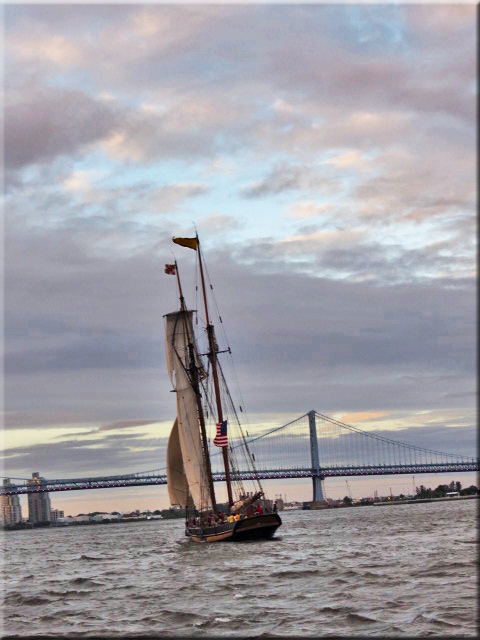
Ship and Sky


Links of Interest

Gentlemen of Fortune
The Tall Ships 
Tall Ships and Pirates (On Pinterest)
No Quarter Given
Ron Ossian’s Pirate Cove!
Schooner Wolf

Steam Train Journeys into History: Civil War Skirmish at Red Clay Creek

tower

A beautiful Fall day provided the backdrop for a journey into history on the Wilmington  & Western Line, which runs through the Red Clay Valley, a watershed area that includes just over fifty square miles from New Castle County, Delaware, to Chester County, Pennsylvania.  “Candy cane” lamps lined up along the platform of the historic Greenbank Station, painted in traditional cream and burgundy colors. A museum near the water tower displayed a model of an amusement park that brought visitors to the area back at the turn of the 20th Century and featured a collection of antique photographs and books of the railroad’s history.

Climbing the steps to board steam train, felt like stepping back in time. The wooden cars, painted royal blue with gold trim, each has its own unique history.  We sat on the benches of the converted open air coach, built in 1912 in Altoona and once part of the Pennsylvania commuter rail network. The train hissed and creaked as the locomotive chugged out of the station, the plaintive whistle sounding at the first crossing. The Baldwin Locomotive Works of Philadelphia built the steam engine Number 58 in 1907 and in 1998 the engine was restored. The original route through the valley was laid out in the 1870s. We passed rolling hills, farms and woodlands, following the Red Clay Creek. We arrived at a waterfall and picnic grove where the Union solders and their families, dressed in period dress, strolled along the water’s edge.

Railroads played a significant role during the Civil War. The Jones-Imboden Raid against the B&O Railroad represented one of the largest movements of soldiers to a battlefront by way of the railroad. In June of 1861, Union Forces advanced by train from Falls Church, Virginia; Confederates fired artillery at the train near Vienna, making this the first time a train was engaged in warfare in American history.

The drama at Red Clay Creek unfolded as the Rebels, hiding in the woodlands, attacked the train with cannon and rifle fire. The Union forces poured out of the train, holding positions near the tracks.  At the outset the action seemed almost in slow motion because reloading rifles required that they insert each bullet one at time. While the Union held their line for a short time, Confederate reinforcements emerged from the forest, decimating the Union troops attempting to save the train. Passengers, becoming part of the play, fell under the command of the Confederates who boarded the train and occupied the coaches.


In Appreciation:
Confederate 
9th Virginia Cavalry, Company B
37th Regiment, North Carolina Troops, Company A
1st Regiment, North Carolina Artillery, Battery C

Union
2nd Delaware Volunteer Infantry, Company G
71st Pennsylvania Volunteer Infantry Regiment, Company K

Special thanks to John Houck.

A Corner in West Mount Airy, Philadelphia

IMG_2295

Greene Street and Carpenter Lane

Taking a writing course offered at the Big Blue Marble Bookstore led me into a community in West Mount Airy at the corners of Greene and Carpenter Lane. Despite the bleak winter afternoon, the community offered a warm atmosphere as the little shops that lined the streets invited me to stop in to visit. In addition to taking a writing course, I had also enrolled in a photography class at an art center in my community, so I had brought my camera along, as our assignment was to look for new shapes and textures as subjects.

IMG_2275With a fondness for restoration, I couldn’t believe my luck stumbling onto the Philadelphia Salvage Company. Suitcases and trunks piled on what looked like an old railroad cart, and metal cans spilled into the sidewalk. But I didn’t linger too long in cold. Upon entering the building, I noticed  a cast iron stove, pumping warm air through the building, as a tea kettle spewed steam from its spout. I warmed my hands and looked around, mesmerized by the array of architectural salvage, from stained glass, plumbing and electrical fixtures, antique doors and windows. In a second life, I could be a picker, as I love all the old stuff in need of a fix-up.

The Salvage Company celebrates a doggie visitor as their “mascot of the day,”  and I understand that a sleepy cat sometimes occupies the front bench.

Tea Pot Frame

I found lots of subjects for my photography assignment.

This slideshow requires JavaScript.

One subject seemed to deserve special attention: a shelf of different sized gears.  The photograph of those gears inspired this blog post, and three months later the photo won first place at the Community Arts Center!

Across the street from the Salvage Company, dogs waited patiently for their owners grabbing a bite to eat at the High Point Cafe. Chilled by the damp air, I stopped in for a cup of coffee. I was not disappointed as the coffee was excellent, in addition to their selection of pastries. The Cafe refers to their corner as a village and “are proud to be part of one.”

IMG_2289

One store down from the Cafe, the Nesting House specializes in selling new and used baby items “with an aim to uphold a mission of social and environmental stewardship.” They sell cloth diapers and used clothing. I found a little pair of shiny dress shoes for my great-niece.

IMG_1943

Crossing over to the corner, I opened the door to the Weavers Way Co-Op, and met with crowds waiting in line to make their purchases. Deli aroma filled the air, and signs advertised hot soup for sale by the cup. According to co-ops website, they sell products that are “local, sustainable, organic, fairly traded and healthful.” It’s a small, two-story compact space, and yet they had annual sales up to $14 million.

IMG_1945

A Huge Assortment of Bulk Items

I picked up some fresh vegetables and loaf of bread and headed to my destination, Big Blue Marble Bookstore. This store reminded me of the book shop restoration I had been part of years ago at Bindlestiff Books in West Philly. An independent book seller, the shop displayed a fantastic collection of children’s books and places for kids to sit and consider what they might buy. Toys and stuffed animals filled every corner. A cozy space, I lingered in the travel section before heading upstairs to my writing course. The store sponsors events including book clubs that can use their community space.

IMG_2171

The progressive leanings of this corner village come from a long history of neighborhood harmony. According to Wikipedia,

The area is recognized by many civil rights groups as one of the first successfully integrated neighborhoods in America. Mount Airy residents organized to resist blockbustingpanic selling, and redlining, especially during the period from the late 1950s to the early 1970s when those practices were prevalent. It continues to be a well-blended neighborhood and was recently cited in Oprah Winfrey’s O magazine for its racial diversity and neighborhood appeal. The community has also been recognized by US News & World Report for racial harmony and balance.

The harmony in their neighborhood stands in contrast to what the big-box stores offer. In this post, Mystique of the Ole Fashioned General Store I compare the general store of years gone by, which served as a community anchor, with the big-box store of today, which, in contrast, offers little neighborhood involvement or esthetic appeal.  According to a study conducted by faculty at Penn State, big-box stores coincide with hate groups. Mount Airy demonstrates that progressive values provide the small-town American atmosphere we long for in this country. It’s as simple as having a welcoming street corner in your neighborhood.

Tag Cloud