Undaunted by a forecast of fog, snow and icy rain, hopped a train into Philadelphia for a visit to Waterfront Winterfest held at Penn’s Landing during the holiday season. The blowing snow whipped around the bus as I caught a glimpse of the Benjamin Franklin Bridge from the last stop on the route. Despite the snowy weather, the Blue Cross RiverRink was filled with skaters, including Santa. A forest of trees and shrubs, lit with twinkly white lights, surrounded the ice rink. A warming tent held a village of restaurants and small shops. Skaters huddled around fire pits with the aroma of burning wood scenting the air. Blue lights outlined the trees along the Delaware River. As difficult as holding the camera was while trying to get videos, the snow enhanced the site making the seaport truly a winter festival.
A short walk, while holding an umbrella that billowed up and down in the driving wind, brought us to the Independence Seaport Museum, which was hosting its 4th annual Seaport Parade of Lights. The Jupiter, a vintage tub from 1902 and maintained by the Philadelphia Ship Preservation Guild, led the parade of decorated boats, including both working vessels and pleasure craft. The crowd, having a great time watching the boats glide out of the blizzard, applauded the floating light displays as each passed by.
What is it that makes it so hard sometimes to determine whither we will walk? Thoreau
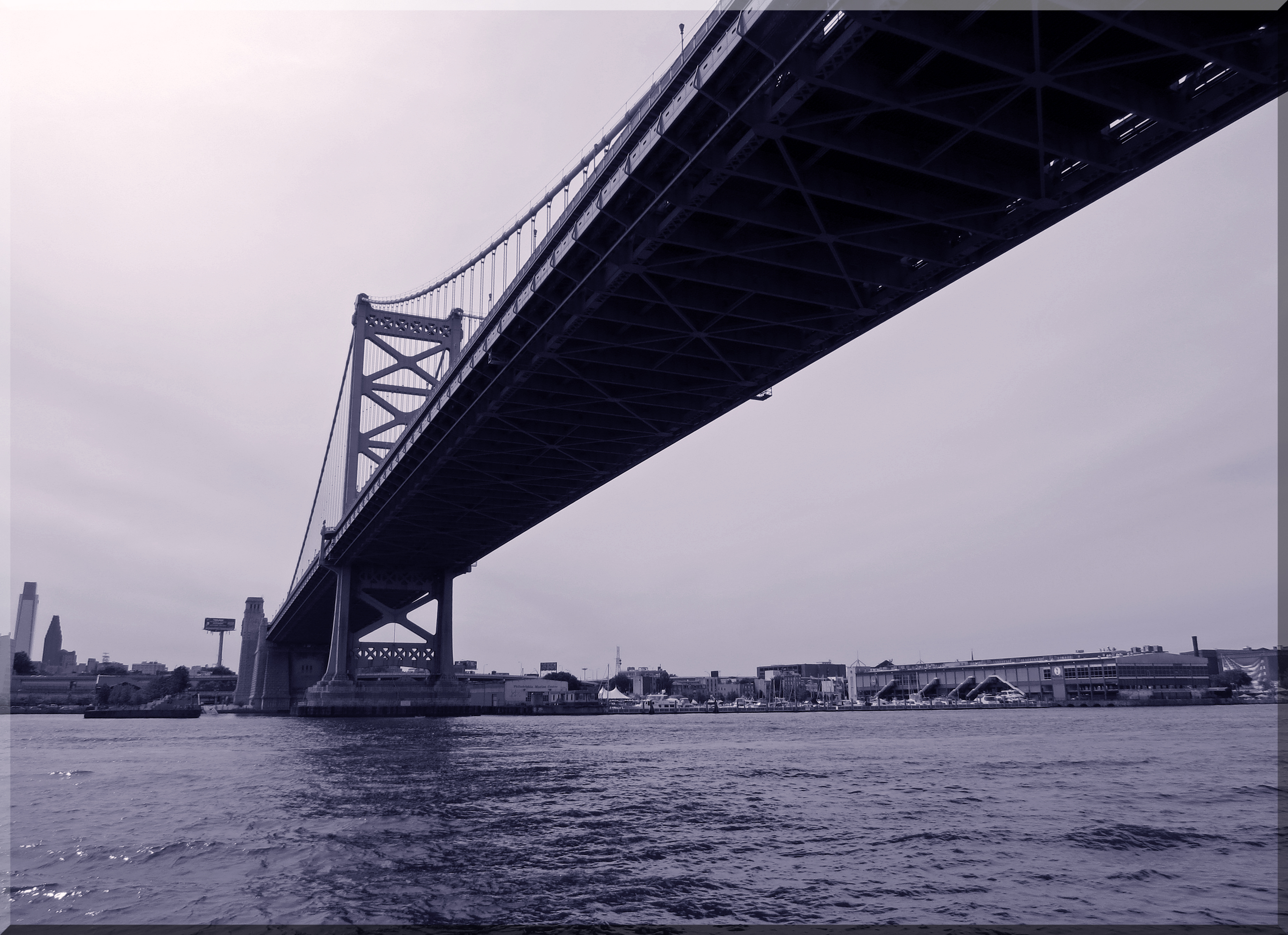
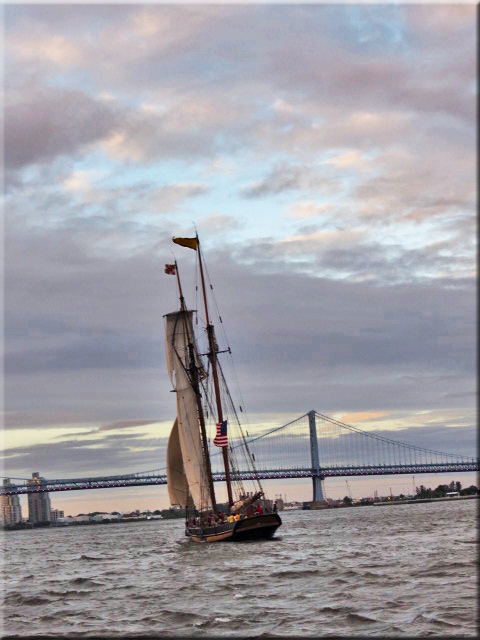
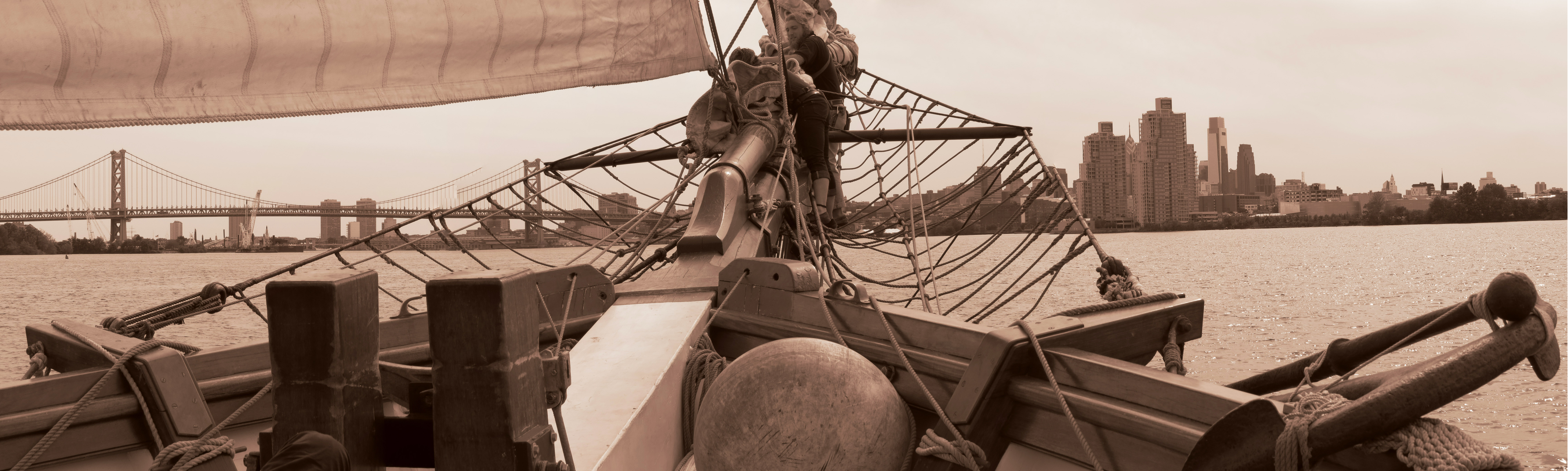
When the Amistad schooner sailed into Philadelphia in May of 2012, I signed up for one of their voyages on the Delaware River. The Amistad glided under the Benjamin Franklin Bridge, and from that perspective, I could view the massive steel superstructure and study the span across the river, stretching from Philadelphia to Camden. When workmen finished building the structure back in the 1920s, it was the longest suspension bridge in the world.
With the bridge’s magnificent arch across the river still fresh in my memory, I now had the chance to walk up and over the bridge on the Architectural Walking Tour sponsored by the Preservation Alliance for Greater Philadelphia. What drew me to cross the bridge was more than a curiosity about the structure, but I didn’t realize my motive until I had finished the walk to the other side.
Stopping by the Constitution Center
On a bright September day, my sister and I walked down Market Street in Philadelphia toward the bridge, passing the Constitution Center. Having a few minutes, we stopped in at the Museum Shop. We browsed through the various sections, especially admiring their collection of t-shirts. In the book section, I found a diary book with a watercolor of the bridge on the cover. After our brief visit to the shop, we headed back on Market Street and made our way to 4th Street.
Bridge’s History Retold
Our tour began in the Philly Olde City neighborhood, in front of two historic churches, St. George, the oldest Methodist Church in the US and St Augustine, a Catholic Church once burned to the ground to punish the immigrant Irish for having the audacity to settle in the area. In 1922 the first draft of the construction suggested that the bridge go right through St. George; but the congregation protested, and architects made an adjustment, with a 14-foot leeway that preserved St. George. Each church had to accommodate to the bridge by constructing walls, one floor below the original structure, lowering their doors, so that 4th Street could go under the bridge.
Garden at St. Augustine, looking across to St. George Church and the Bridge to the right.
Walkway along the Sky
Our guide led us up a side street to the pedestrian walkway that runs along the East side of the bridge. As the tour group started to walk up the inclined sidewalk, we could see the hubbub of activity on the side streets below and point out landmarks, such as the steeple of Christ Church. Art deco lanterns lined up on the railings that followed the sidewalk.
Bridge Station Never Used
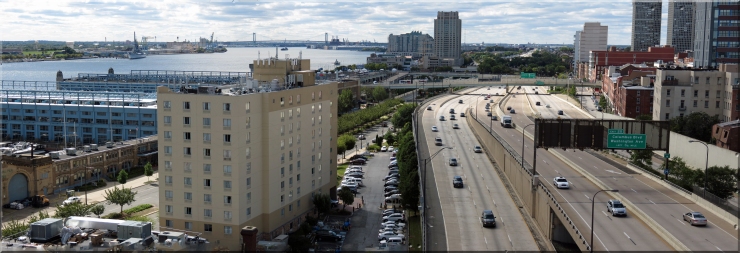
As we approached the first granite anchorage, originally constructed as a trolley station, cars along Route 95 sped by underneath. The highway ribbons along the Delaware and stands as a central feature in the landscape from that view-point. Christopher Columbus Boulevard shadows the superhighway, and one lone building, municipal Pier Number 9, is reminiscent of the days when the Philadelphia port had been a major thoroughfare of commerce, with wharfs and docks lining the Delaware port. The twentieth century saw much of the historic riverfront razed. Condominiums now occupy spaces along the river as well as Penn’s Landing, Seaport Museum and The Olympia, the world‘s oldest steel ship still afloat.
A grand landscape stretched before us. I looked back on the city, and noticed how the steel cables, extending up the 380 foot towers, framed the walkway. Even though built 80 years ago, the bridge is a marvel of invention and esthetic wonder.
Study in Blue
From the top of the bridge, we gazed down the river on the New Jersey side to the Adventure Aquarium and Penn Treaty Park and then more distant landmarks, the Battleship New Jersey and the Betsy Ross Bridge. We watched the boat traffic, everything from a schooner, passenger ferry, container ship, motorboats and tugs.
A schooner sailed alongside the working boats of the river.
Walking toward Camden, we focused on the city’s waterfront where neat-looking parking lots were surrounded by green spaces with trees and landscaping. The baseball field and stadium, home of the Camden Riversharks minor league baseball team, sported an attractive brick exterior and the look of yesteryear with peaked roof lines. A game was just getting underway as we walked by.
Campbell’s Field
Looking for the Dog on Top of the Building
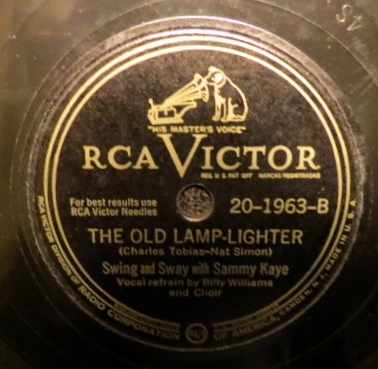
When we were children, our family would drive over the Ben Franklin Bridge to vacation at the Jersey Shore, and I remember we would look out the car window searching for the dog on top of “Dad’s building” where he worked. The puppy sitting in front of the gramophone was the famous RCA, or Radio Corporation of America, trademark, and the image appeared on all of their records. The Nipper Building, the nickname for what was once labeled as Building 17 of RCA’s Camden Plant, was built during the second decade of the twentieth century to house the Victrola cabinet factory. In 1916 the company installed on the tower four stained glass windows depicting the dog and gramophone. The RCA Corporation bought the building in 1929, using the Victrola names and logos on their own line of products into the 1970s.
My Father’s Commute
For over 25 years my father commuted from the Western suburbs of Philadelphia by way the Media trolley, the Market Street El, and the PATCO High-speed Line, which crosses the bridge, to his workplace at the Camden plant, just a few blocks from the bridge exit. RCA was an electronics company and one of the leaders of television technology from the 1930s and right into the next three decades. The plant manufactured broadcast equipment as well as television sets. The engineers at the Camden plant were responsible for building the first radio transmission from the moon of Neil Armstrong’s famous line, “One small step.”
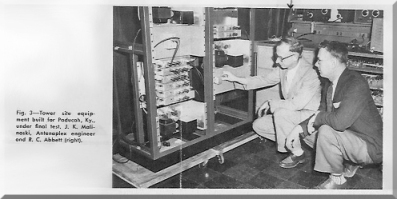
I wished that I could go back in time and ask Dad to take pictures of the bridge, plant and river because the area looked entirely different back then as factories, smokestacks, utility buildings and railroad lines occupied the landscape. For over two decades Dad worked for RCA as an electronic engineer, and I have only one picture that documents his work at the plant.
Our family didn’t realize the larger implications of my father’s transfer from Camden to Massachusetts in 1968. RCA began to reduce and sell off most of their broadcast products, finally going out of business in 1986. Buildings along the waterfront area were torn down as the area became abandoned and neglected. Building 17 also fell into disrepair and almost met with the wrecking ball, saved in 2001, when the New Jersey Economic Authority awarded a grant to preserve the structure.
The Nipper Building is now listed on the National Register of Historic Places. I don’t believe my father ever suspected that someday, the well-worn factory where he worked, would be considered a national treasure, but my sister and I always thought there was something special about that dog atop the tower. Forty years later, the iconic image guards the memory of my father and thousands other workers, whose electronic inventions pioneered broadcasting technologies.
The bridge had guided me back through our family history that I had almost forgot.
Update: November 20, 2013, Pennsylvania House voted 104-95 to give key preliminary approval to the $2.4 billion transportation funding program.
A Ticket to Ride
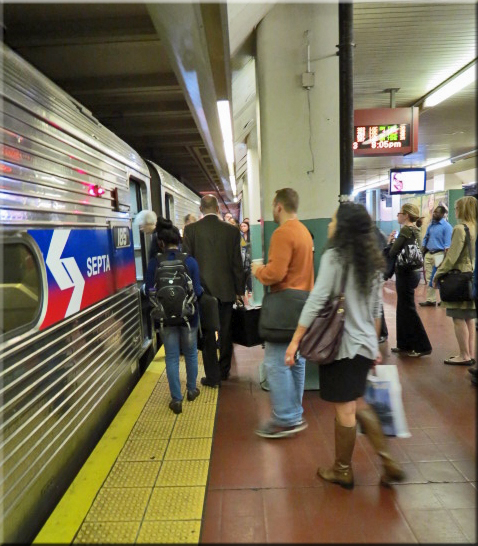
Last evening as I was boarding the Media-Elwin Regional Rail at the 15th Street Station, I watched as passengers streamed onto the train filling up the seats and then standing in the aisles. It seemed incredulous to me that considering both the crisis of global warming and the thousands of riders who depend on public transportation, that SEPTA (Southeastern Pennsylvania Transportation Authority) has presented a “doomsday” proposal to shut down the Elwin-Media line, as well as closing eight other regional rail lines.
Will deserted stations become the norm?
During the Pennsylvania State Transportation Committee hearing held at Temple University on September 12, 2013, SEPTA General Manager Joseph M. Casey stated that these changes would affect 89,000 daily transportation users. Yet, just two months ago, SEPTA announced an all-time high in regional rail ridership. Passengers made over 36 million trips in a year’s time, including 2.9 million on the Media-Elwyn line.
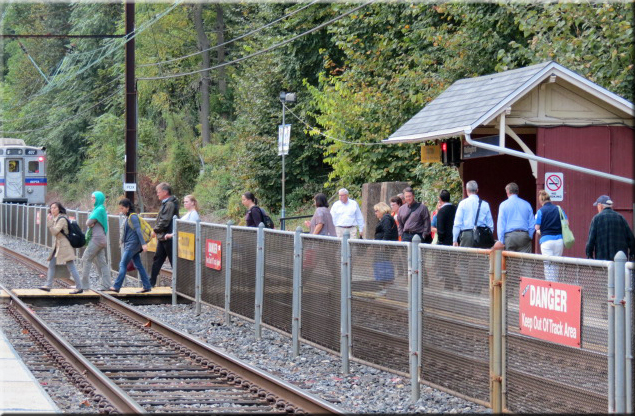
Leaving the Wallingford Station
Commuter Nightmare
The hardships created by such a shutdown are almost immeasurable. People with disabilities, senior citizens, and those unable to afford an automobile would be prevented from getting to their jobs and medical appointments. Paratransit service for the handicapped would be reduced. Students requiring transportation into the city from the Western suburbs would find it difficult to get to Penn, Temple and Drexel, and the 31 other universities in the city and surrounds. The young man sitting next to me was studying a medical textbook. Trains allow time for people to study, read, socialize or just relax, which is totally unavailable to automobile commuters. Increased car traffic would add to the congestion on our already crowded highways. Economic losses would befall Philadelphia as suburbanites rely on public transportation to bring them into the city for volunteer work, cultural activities and special events. Philadelphia could lose 60,000 jobs. According to a study released by SEPTA, home values would drop if Regional Rail service would be cancelled.
The average property value premium for houses located in counties is $7,900. Homes in communities with higher levels of Regional Rail service and parking capacity, the property value premium averages between $31,000 and $37,000 per house.
Closed Ticket Windows . . . the future for Delaware County Riders?
Funding Held Up in State House
Without funding from the state for SEPTA’s backlog of critical repair work to the tune of $6.5 billion, the Authority will have to significantly shrink the transit system over the next 10 years, SEPTA General Manager Joseph M. Casey reported during his testimony at the hearing. Four trestles, which are over 100 years old, need significant repairs. Unless Pennsylvania legislators approve this funding, commuter citizens will be held hostage by the politics of the State. A small minority of state legislators are set against it as lawmakers wrangle over funding allowances and tax increases. Currently, the bill is held up in the Republican-led house.
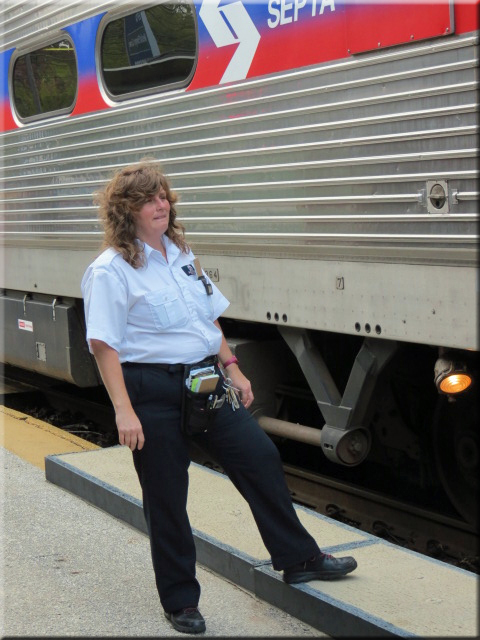
Cuts will cause layoff of hundreds of SEPTA employees.
Citizens Rally for Transportation
Delaware County citizens have been rallying support for SEPTA funding. A Swarthmore college student started an on-line petition and has collected over 3,200 signatures so far. At a press conference on October 18 at the Media Courthouse, (Former) Governor Rendell, standing with local Democrats as well as a few Republicans, expressed his objections to the possible closure of the Media-Elwyn line. Rendell encouraged supporters to support the passage of SB-1, the transportation bill that’s been proposed to fund SEPTA.
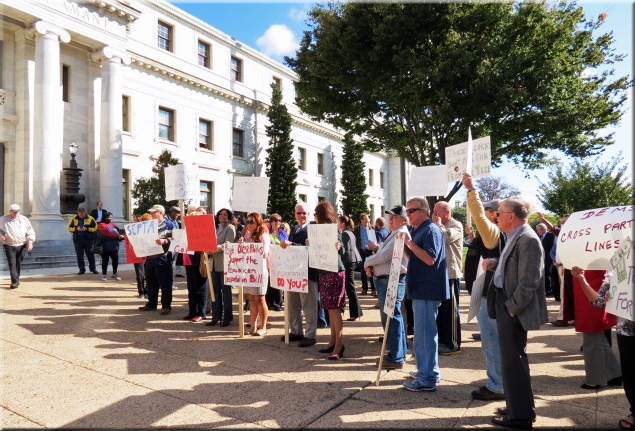
Protest at Media Courthouse
Rendell addressed the crowd stating,
There are 37 counties with transportation systems in Pennsylvania and all of them would benefit, in my opinion by the bill. The bill would have produced $400 million dollars a year annually for public transportation . . . something that is desperately needed, something in the past we wouldn’t be talking about closing the Media-Elwin line, we wouldn’t be talking about cutbacks not here in Delaware County . . . we should actually be talking about improving public transit.
Former Governor Rendell speaks to demonstrators.
End of the Line?
Later that week, after returning from Philadelphia on the Media-Elwin line, I watched as our train left the Wallingford station, fading into the darkness. I wondered if concerned citizens can rally lawmakers so that our public transportation does not disappear from sight.
The last time my sister, Jean, and I met pirates, we had just happened upon the Beaufort Pirate Invasion, taking place as we stepped into the battle scene a summer ago in the seaside village in North Carolina. We promised we would not let too much time go by before finding another similar event. The opportunity came along when the Independence Seaport Museum hosted its 2nd Annual Old City Seaport Festival, in a weekend-long celebration with music, crafts and Tall Ships, with a smattering of pirates. On the first evening, the festival began with the Parade of Boats as they came to port just below the Ben Franklin Bridge.
On the next evening, the AJ Meerwald, Gazela PrimieroPride of Baltimore II, Mystic WhalerKalmar Nyckel, Virginia and Hinduwere destined to clash in a pirate battle.We signed up to be aboard the Kalmar Nyckel. Built by the Dutch, the original ship dated back to around 1625. This flagship of Governor Minuit brought settlers to the New World, establishing the colony of New Sweden on the banks of the Christina River in 1638. An informative and lovely guidebook on the ship’s history is available on the web. The ship was rebuilt in Wilmington, Delaware, and commissioned in 1998. The Kalmar Nyckel is an example of a full-rigged type of pinnance, which is a kind of boat, generally modest in size, that was used either as a merchant vessel or small warship. Pirates prized these ships because they had maneuverability through rugged coastlines and good speed to outrun any vessel that might be in pursuit.
Cover illustration by N.C. Wyeth from 1911, Wikipedia
There is a degree of authenticity to a pirate battle. Mostly what we learn about pirates is from movies and television, while authentic history has been sorely neglected. My first introduction to pirates came through Treasure Island, a novel by Robert Lewis Stevenson, which popularized many of the associations with pirates, such as treasure maps, parrots, and the familiar ballad,
“Fifteen men on the dead man’s chest— Yo-ho-ho, and a bottle of rum! Drink and the devil had done for the rest— Yo-ho-ho, and a bottle of rum!”
A quick search into a few authoritative sources reveals the extent that colonial villages were affected by the onslaught and fear of attack from both foreign pirates, truly a multi-national representation including the French, Spanish, Dutch and English, as well as the local variety, with the first raid recorded in Lewes, Delaware, back in 1672. Seems that Blackbeard also frequented the Delaware, as he supposedly stopped into the many taverns along the waterway.
Wench Wear?
Jean had this idea that since we were going to be onboard during a pirate battle, we should dress the part. We cobbled together costumes from outfits in our closets (wardrobes should always include a few whimsical pieces when transformations are called for), and we were ll set to go with Jean’s orange and black-stripped socks and my hat, replete with feathers. Did we look like real pirates? . . . oh, not a chance, but maybe we could have fit in with Pirates of the Caribbean crew.
We took the train into center city and headed down toward Penn’s Landing. We shook our heads as we passed the closed and shuttered Constitution Center, thanks to those idiots in Congress, the scourges of the seven seas, who shut down the government. By chance, we happened to run into my son, John, who was participating in a demonstration against Monsanto, taking place just across from the Constitution Center. Activists had designated October 12 as International Day of Protest against the company because of questions around food safety. Fellow WordPress blogger, Jeff Nguyen, has written an excellent post on Agent Orange and Monsanto.
After bidding John adieu, we continued walking to the Seaport Museum. The wind whipped around the buildings as we approached the Delaware River, were we could see white caps on the churning waters. I thought back to a sail on the Amistad, which had to be postponed because of high winds and wondered if the battle would take place. We walked along the pier where vendors were selling everything from jewelry to “wench wear.” Several organizations had also set up information booths, and we spoke with members of the Steamship Historical Society of America.
Shiver Me Timbers! Striped Socks Spikes a Spirited Sentiment!
A green tug boat had been tied to the pier, and visitors were encouraged to tour the tug. Once powered by steam, the boat now runs on diesel fuel. We checked out the kitchen, boiler room, living quarters and bridge, and rang the brass bell. We were welcomed us onboard, with one of the crew distracted by Jean’s footwear, declaring, “I’m turned on by those socks! I’m old, I’m not dead!”
High Winds Scuttle the Voyage of the Kalmar Nyckel
The tall ships lined against the pier, but we were most excited to see the colorful Kalmar Nyckel. Parts of the boat had just been freshly painted, and we admired the detail work.
On either side of the ship, a carving of a dog rested on the railing, one eye open to the sea and closed to the inside.
The winds were blowing wildly by this time, so we were not surprised when the crew told us there was little chance the ship would be part of the pirate battle as they could not negotiate the vessel away from the dock. Our plans were not cancelled, however, as the smaller boats were still scheduled to sail. The crew reassigned us to the Mystic Whaler, a late 19th century coastal cargo schooner, for our pirate adventure.
A Bit of Shantying
Geoff Kaufman welcomed us onboard with songs of the sea. Accompanied by his concertina, an instrument made in England in the 1920s, Geoff offered a song for every activity on the schooner. He played songs that encouraged the crew to work in rhythm, and sang ballads for returning to port after the voyage. Geoff also sang old favorites, like “What to do with a Drunken Sailor,” with passengers joining in the song fest. Geoff’s music added to the rollicking motion of the ship. I wish I could have captured more music, but even my wind filter on the camera could not remove the sound the pounding gusts.
Ahoy, Me Hearties–the Battle Begins!
We buttoned our coats and secured our scarves as the schooner weighed anchor, sailing from the dock to face our opponents in battle. With the thunderous blasts of the cannon, the engagement was underway. The smaller schooners whipped through the water, cutting in front and back of the larger vessels. With Jolly Rogers fluttering, insults were hurled across the water. “You scurvy scallyways! Arrgh! We’ll have ye walking the plank! Someone on the A. J. Meerwald had the audacity to call us, “Dirty dogs!” Passengers joined the crew in hoisting the sails with a heave ho to Geoff’s rhythmic sea shanty. The battleship New Jersey and the Olympia, war ships from other eras, contributed their big guns to the melee.
Windblown, but throughly enraptured by the experience, we disembarked from the Mystic Whaler to the strains of “Leave Her.” We returned to our landlubber status, looking for a tavern to splice the main brace.
The chance to experience a voyage on a schooner while reflecting on the circumstances that brought free people into the imprisonment of slavery was an opportunity I could not miss. On Saturday and Sunday high winds cancelled the river tours aboard the Freedom Schooner Amistad, but by Monday the breezes died down, and we were good for a launch from the Independence Seaport Museum’s dock. The Freedom Schooner Amistad, a replica of the original La Amistad, has collaborated with international organizations throughout the Americas, Europe and Africa to commemorate the 200th anniversary of the former British empire and the United States abolishing the slave trade in the first decade of the 1800s.
Before starting the sail on the Delaware River, I had to get “onboard” with some research on the history of the La Amistad.
Brief History
1840 engraving depicting the Amistad revolt. Wikipedia.
In 1839, Portuguese slave hunters kidnapped Africans from Sierra Leone and sent them to Cuba, a center for the slave trade. Treaties at that time banned the practice; nevertheless, Spanish planters purchased 53 Africans, including four children, who were shipped toward a plantation in the Caribbean aboard the schooner La Amistad. The Africans seized the ship, killing the captain and ordering the planters to sail to Africa. On August 24, 1839, the La Amistad was seized off the coast of New York, and the Africans were imprisoned on charges of murder. Despite having the charges eventually dismissed, the Africans were held in prison because of the issue of property rights. The case went to the Supreme Court; the justices ruled in favor of the Africans, and 35 survivors were returned to Sierra Leone. The Amistad case advanced the abolitionist movement, which eventually led to the abolition of slavery.
Julia Weathers related the story in her own words . . .
Films and Books
Steven Spielberg’s 1997 film, Amistad, popularized the story and received mostly positive reviews. Roger Ebert wrote,
What is most valuable about Amistad is the way it provides faces and names for its African characters, whom the movies so often make into faceless victims.
The Amistad Rebellion: An Atlantic Odyssey of Slavery and Freedom by Marcus Rediker, published in 2012, retells the story from the point of view of the slaves. An article in the Philadelphia Tribune offers a detailed description of this book. Previous films and books centered on the legal battle and interplay of the politicians, abolitionists and judges rather than on the rebellion and the experience of the Africans. By taking this short voyage on the Amistad, I could imagine how the first sparks of rebellion were ignited against those who had the audacity to believe they could enslave another human being.
The Crew
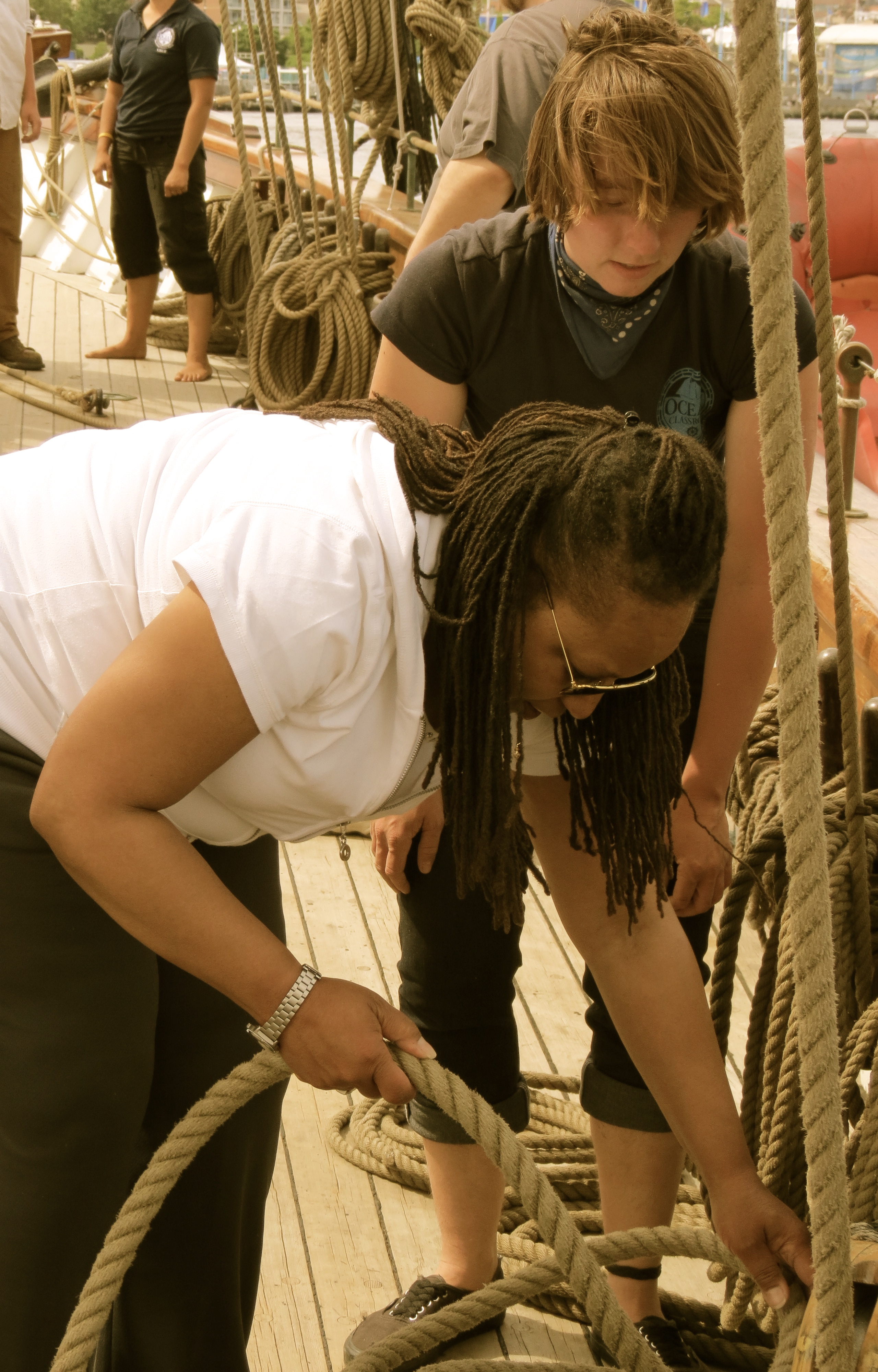
Twelve members of the crew are part of the Ocean Classroom Foundation, an organization that offers programs of sea education to students. Watching the students do their tasks was amazing as they climbed the rigging and hoisted the sails. What was great about the experience was the crew encouraged passengers to take part in helping out with some of these chores. Passengers pulled the ropes in unison to bring the sails into the wind. A student assisted my friend, Frances, in stacking the rope in a pattern of thirds. It then occurred to me that this is where the expression “learning the ropes” came from.
The Schooner
The Amistad, built in 2000, is a 129-foot Baltimore Clipper and a replica of the original vessel. Classified as a Sailing School Vessel, the schooner is equipped with modern navigation equipment and is certified to make international voyages.
The rig and construction are authentic; and as I walked the deck, I admired the wooden pulleys, steering wheel and mast, which retained that old-world feel of craftsmanship, the wood shining with the richness of spar varnish.
The original ship has been long-lost somewhere in the Caribbean, but the Freedom Schooner Amistad will not let the story of 53 determined freedom fighters be forgotten.
Music Video
“Dry Your Tears Afrika,” written by John Williams, is from the movie, Amistad.
Thanks to Abi Iverson for rearranging our tickets and providing additional information for the blog.
Honoring Workers Who Fought and Won the 8-Hour Work Day
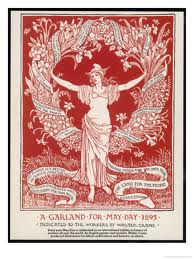
Many people believe that May Day is a socialist or communist celebration, when in fact the May Day holiday grew out of the eight-hour working day movement in the United States in 1884. The struggle for a shorter workday began in the factories as the unions pressed their employers for shorter hours and higher wages. At that time, millions of people were out of work. During the convention of the Federation of Organized Trades and Labor Unions announced that eight hours “shall constitute a day’s work from and after May 1, 1886.” Honoring May Day is an important part of our American heritage, and in Philadelphia Elmwood Park provided the perfect place for a rally and celebration in front of the monument by Irish artist, John Kindness, which stands as a tribute to the American worker.
Alexandria with John Jerzak, member of Friends of Elmwood Park who advocated for the labor memorial.
Jim Moran, Committee Chair of the May Day Committee introduced Alexandria Knox, proudly representing her union, the American Federation of Musicians, Local 349, Manchester, New Hampshire. Alexandria played a rousing version of Scotland the Brave on the bagpipes, beginning the afternoon’s entertainment. We were extremely fortunate that Alexandria, who is dedicated to the cause of unionization and solidarity, had agreed to play for the event as she is one of a very small number of totally visually impaired Highland bagpipers throughout the world. Next up Mike Stout & The Human Union Band filled the air with energetic rock music with a worker message. I was moved by their first song, The Triangle Shirtwaist Fire Song, especially in light of the recent tragedy in Bangladesh, where over 1,000 workers were killed in a building collapse. I immediately bought three of their CDs. Mike describes himself as
a socially conscious singer song-writer and community leader who leads crusades against local and global economic injustice, rallying people with his music, and he organizes them to take action.He tells his stories from the heart about people who are affected by unemployment, or social injustice or war.
Mike Stout and the Human Union Band
Other musicians performed including K&A Mob, Tha Truth, Dina Yarmus and Maryta Fields, who sang the National Anthem. Pete Matthews-AFSCME DC 33, Gwen Ivey-APWU 89, Cathy Scott-AFSCME DC 47, John Johnson-TWU 234, Helen Gym-Parents United for Public Education, Philadelphia Student Union, Chicago Teachers Union 1, Cathy Brady-Friends of Elmwood Park & SEIU HCPA were some of the scheduled speakers. A member of the Chicago Teachers Union, Andrew Heiserman, shared stories of their courageous battle against the city’s austerity measures against the schools. . Sonia Sanchez, Philadelphia’s Poet Laureate, spoke about peace benches. Jim Moran presented the Aggie Moran Human Rights Awards to Sonia as well as to labor historian, Alice Hoffman, labor rights campaigner, Barbara Rahke, and the Restaurant Opportunities Center. The “SRC 19,” the activists arrested at the last School Reform Commission meeting in Philadelphia when the SRC voted to close 23 Philadelphia Public Schools, were also honored. Occupy Philly Food Committee provided a great selection of food: sandwiches, bbq, salads, cake and beverages.
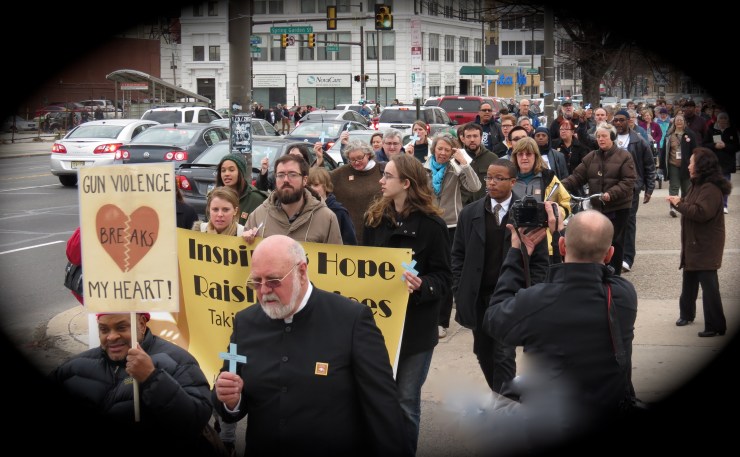
On March 29, Heeding God’s Call, held their Fifth Annual Good Friday Procession and Vigil to protest the continued gun violence in the city. Nearly 200 worshippers gathered late in the afternoon at St. Paul’s Baptist Church, where worship services began, and then “en masse” marched to Benjamin Franklin High School on North Broad Street for the vigil.
The Tabernacle United Choir and Arch Street Methodist Choir joined the Healing Presence Singers under the backdrop of the Common Threads Mural, which is representative of hope for the future. Holly Phares directed the choirs during the ecumenical service that included guest speakers from several faith-based organizations and families who have lost children to gun violence. By joining together, the worshipers affirmed that it is possible for citizens to fight for legislation and social policies that would help bring peace to our streets and homes.
According to CNN, Philadelphia has one of the worst homicide rates in the country, with more than 80% of these crimes committed with a gun.
A young, black man, has a greater chance of being shot and killed in Philadelphia than he would have if he were a soldier serving in the conflicts in Afghanistan or Iraq,
An average day in US has 30 gun-related murders with another 162 wounded based on the most recent figures from the Centers for Disease Control and Prevention. In addition, 53 people kill themselves with a gun each day. Our homicide rate of 4.7 murders per 100,000 people is one of the highest of all developed countries. Unfortunately, statistics of these daily tragedies mean little in the public consciousness and only when mass shootings occur, do citizens begin to take notice. This outrage that follows these shootings is followed by frustration as law-makers, indebted to the gun lobby, block even the most sensible gun restrictions, such as high-capacity magazines. If the Tucson shooter had only ten bullets, Christina Taylor Green would be with her family today.
At the rally in Philadelphia, parents of children who were killed by guns spoke of their loss.
While this was a peaceful demonstration, just a day before mothers in Indiana had to stand in defiance in front of a line of armed men carrying AR-15 semi-automatic weapons. The moms, advocating for restrictions on purchases of high-capacity magazines and legislation requiring background checks on gun sales, were protesting in front of the Indiana statehouse. An armed opponent admitted that his rifle was loaded. Some might argue that the Indiana protest was also peaceful, but the potential for violence, either because of accident, mental instability or provocation, undermines the tenants of democracy to live free from the threat of gun violence.
On Saturday, November 17, representatives of the Chicago Teachers Union, Michael Brunson, Debby Pope, and Rolando Vasquez, spoke to an enthusiastic crowd in Philadelphia about their strike in September 2012.
According to the mission statement of the union, which represents nearly 30,000 teachers and support staff, they by extension also represent students and families they serve. This is truly the goal of unionism: to consider the big picture in advocating for better working conditions and pay, progressive reforms in society and democracy the work place.
The union has addressed issues on charters, privatization and standardized tests. The union has also confronted the demonization of teachers and organized labor. In the past corporate-model school reformers dominated the discussion around issues of accountability and standardized testing; Chicago teachers have focused on funding, poverty and inequality.
Chicago teachers were successful because militant grassroots leadership from the Caucus of Rank and File Educators (CORE), guided the union membership in 2010 to build unprecedented community and parent support for educational reform.
Philadelphia schools have suffered drastic cuts under Gov. Tom Corbett and the confrontation continues over a radical restructuring and privatization plan advanced by the state-controlled School Reform Commission and backed by the powerful William Penn Foundation. In response, this past September hundreds gathered to found the Philadelphia Coalition for Advocating for Public Schools (PCAPS), a broad union-community coalition set to counter the Boston Consulting Group-drafted restructuring plan. PCAPS asks for your advice by completing a public education survey to aid in developing a plan in which the citizens can contribute their ideas.
Video below features selected comments from the panel.
Social justice unionism, democracy in the workplace, shared leadership and responsibility are ideals shared by the Industrial Workers of the World. As the labor movement embraces these principles, mobilization will continue to grow and resist monied interests that obstruct educational reform.












 Many people believe that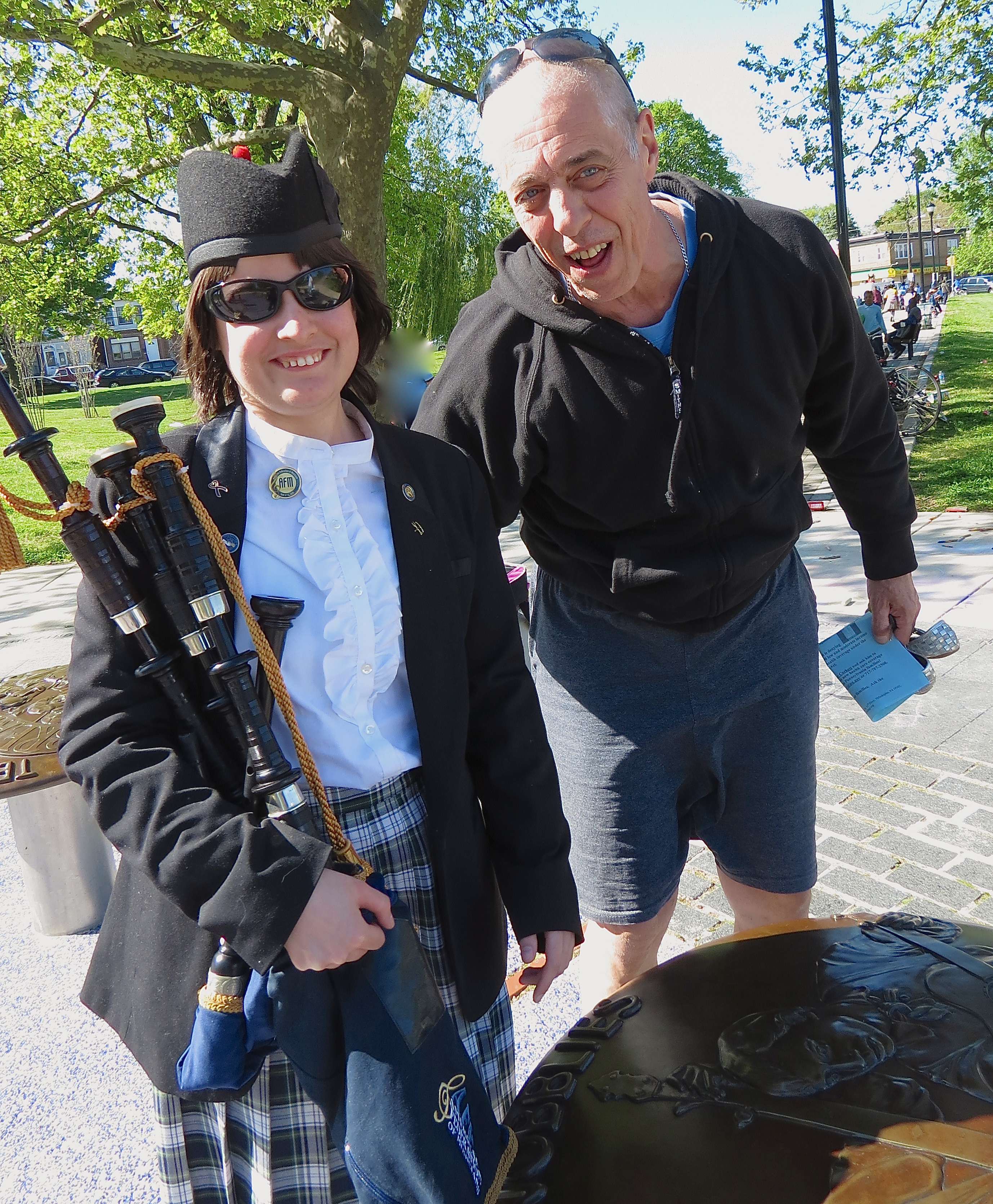

 Pete Matthews-AFSCME DC 33, Gwen Ivey-APWU 89, Cathy Scott-AFSCME DC 47, John Johnson-TWU 234, Helen Gym-Parents United for Public Education, Philadelphia Student Union,


 Psalmboxkey's Blog
Written
on 12/15/2013