Humble Contributions to the Peoples' History

The Magic of Faeries: Isle of Skye 

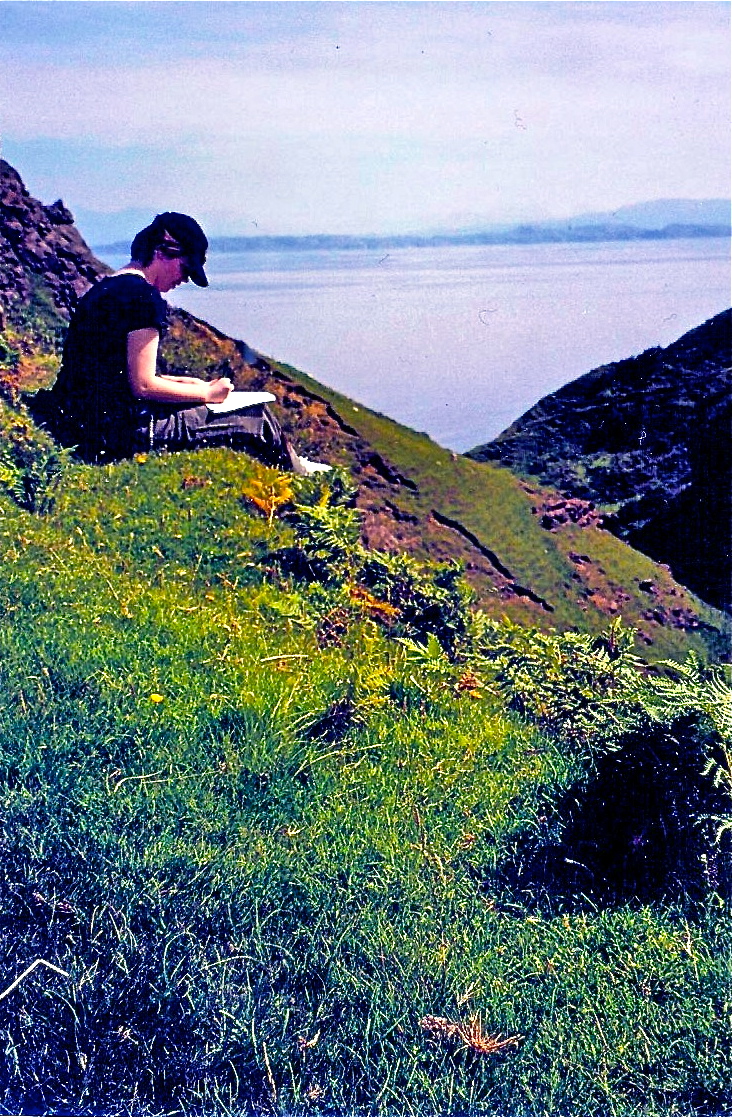
Mae journals on the hillside

Heaven and earth are only three feet apart, but in the thin places that distance is even smaller.  Celtic Saying

Years ago, before I had much travel experience, I journeyed to Scotland, with my teenaged daughter, unsure what such an adventure would bring–especially since we would be traveling without the support of an escorted tour. We ventured across Scotland on the Haggis Bus, a bright yellow mini-bus driven by young Scotsmen, all of whom could tell humorous and fantastic stories of their homeland while negotiating the winding roadways with the confidence and vigor that youth brings.  As we left Edinburgh, the bus followed a narrow highway far into the emerald countryside, passing wee villages lined with stoned walls and whitewashed houses topped with brick chimneys.  The bus rolled along on the “wrong side” –my attention riveted to the road ahead.

Our bus stopped just outside the Isle of  Skye, so we were on our own to navigate the remote sections of the island by rental car. We planned our adventure to include Skye because the descriptions from the Whitewave Outdoor Center offered spectacular views of coastline via kayak.

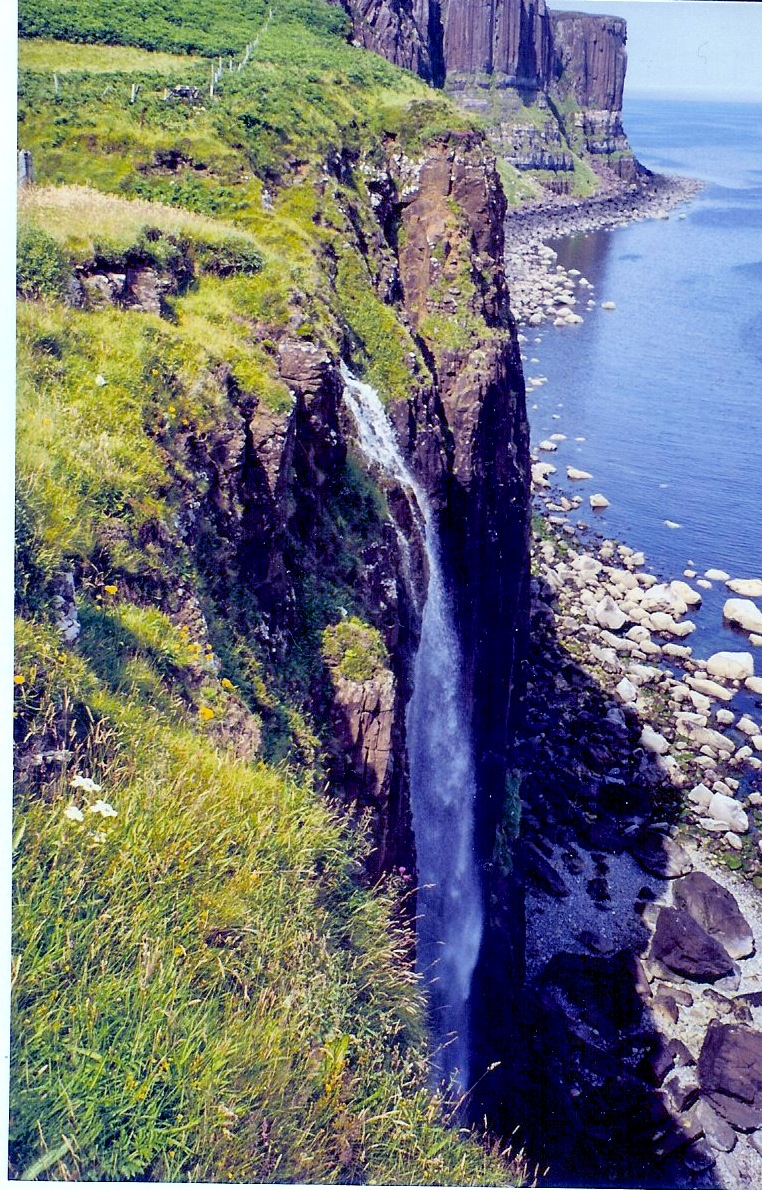
The narrow road ribboned its way along the coastline from Portee to Uig. The ocean stretched against the sky and hills, the wind scattering the clouds across the sea. Villages nestled on inlets, the island’s geological formations creating ragged edges around the island. Drawn into the landscape, we stopped often along the way to take short walks or to sit in green pastures that fell to jagged ridges and rocky shores below us.

Faerie Glen 

Skye, which already had an otherworldly spirit, became even more so upon discovering the Faerie Glen, just east of Uig. We passed through the gate, hidden from the main road, and followed a single-track car path through conical-shaped hillocks. Sheep dotted the landscape, their soft baaing breaking the silence of the hillsides. Further down the way, a narrow stream flowed into a pond where dancing sounds of water trickled through the deep green. Ferns and foxglove covered the lower elevations, and higher up deep ridges encircled the mounds.

We peeked behind rocks and into crevices created by gnarled tree roots. If faeries ever existed, this would be the place.

Bovine observer: we were not alone.

Faerie Bridge 

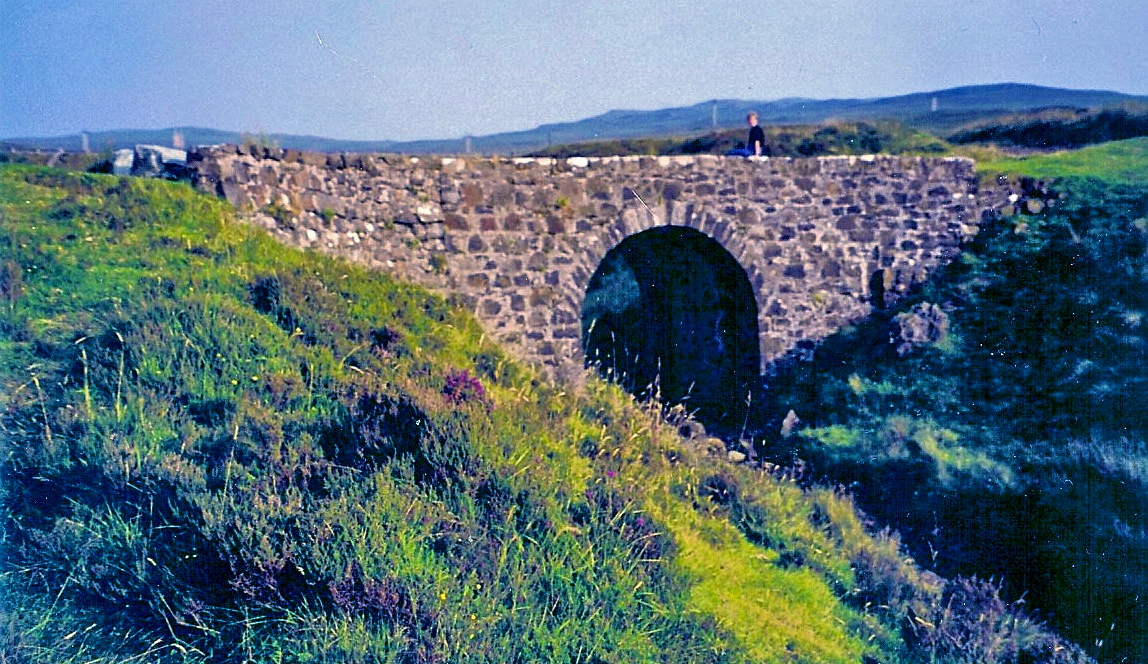
We found the Faerie Bridge traversing a small stream on the road to Dunvegan. We waded through the mounds of colored brush surrounding the stone archway to explore all views of the bridge.

As we leaned on the arch to view the other side, we wondered if we had arrived at a portal to another world, the cool dampness on this side, the warm sunlight on the other. According to legend, the chief of the MacLeod Clan married a faerie, but alas, after twenty years, she had to return to her fairyland. On this bridge the fairy bade farewell to her husband.

In the photograph below a misty light cloud appears left of center. I’m not sure why.

Memories Linger

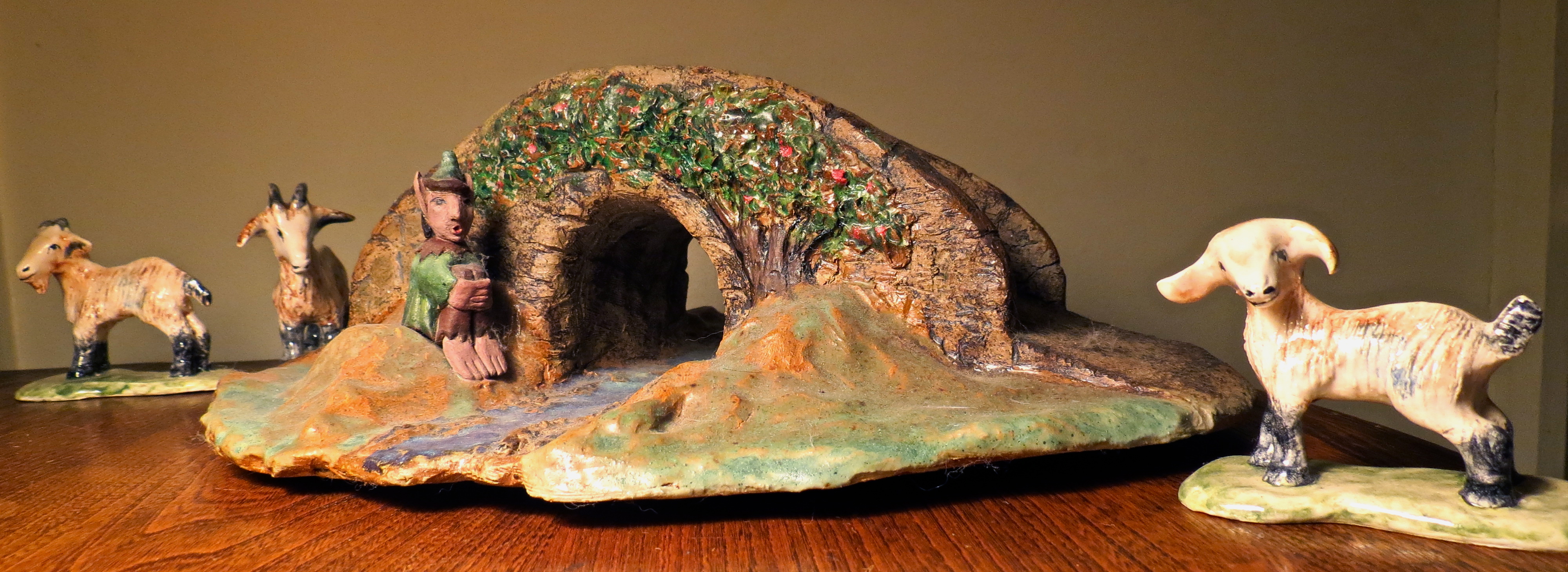
Upon returning home, the magic of Skye stayed with me and inspired a flurry of artistic creations: a mural on a wall, a majolica tile and a wee bridge from clay.

One more project remained: recreating a magical place in the garden. Part II coming next.

My sister and I have been on a pilgrimage, searching for clues about our ancestors who homesteaded on the Upper Peninsula of Michigan just before the turn of the century. Jozefa and Herman, who emigrated from Warsaw and settled in a small Polish community, grew potatoes in the swampy, sandy soil. They experienced long and cold winters, where they measured snowfalls in feet and temperatures hovered well below zero. My grandfather, George, left the farm to work in the automobile industry in Detroit.

Although the farm has been abandoned for over 70 years, town folk still refer to the homestead under our family name and directed us to drive down a dirt road to find their house. We scanned the forest on either side of the road until we spy a rooftop peeking out above the tree line. I grabbed my backpack and camera, and we began pushing through the tangled underbrush. Thorny bushes and trees with low branches poked at us as we make our way toward the house. Thin trees encapsulate the home, but we climb through a space where the back door remains slightly ajar.

Paint peels away from the walls, but the floors remain intact. I can see the opening to the loft where my father told me he slept when he came to visit. Solid walls stand erect, the tin roof protecting the wooden interior. We explored all corners of the empty two rooms, and then just sit quietly on the hollow window frames.

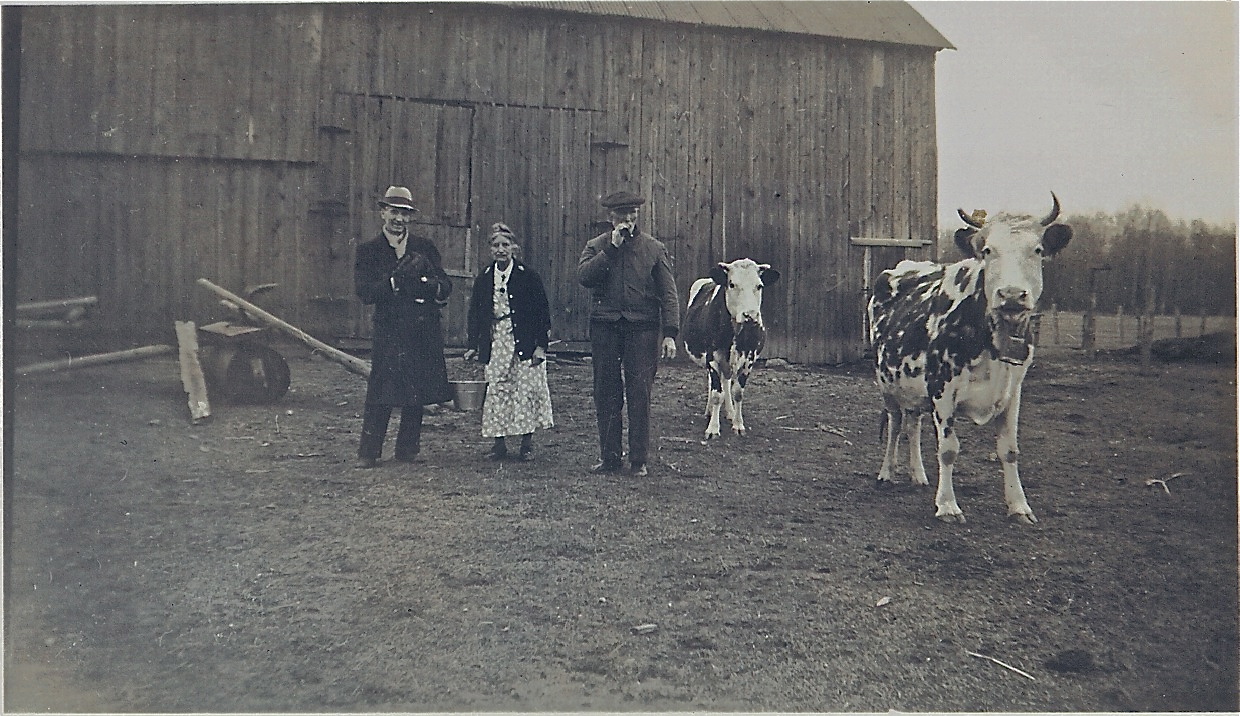
We leave the house to explore the surrounding fields and come across a pile of old timbers and cast-off pieces of metal, all that was left of the barn. Under the brush, we pulled out the pieces of a rusted bucket. As I look at the bucket, I remembered one of the undated photographs taken of our great-grandparents’ barn. My laptop, which I carry in my backpack, holds the archives of our family history, so I begin searching for the photograph. Time evaporates as I gaze at the rusted bucket and then at the photograph of  Jozefa holding the pail.

~ ~ ~ ~ ~ ~ ~ ~

Grandfather, standing to Jozefa’s left in the picture, traveled almost 400 miles to visit his folks on this day. I questioned why did he make such a long trip at this time? George appeared quite dapper in his fedora and long black coat, and I noticed that he was smiling coyly at the camera. I searched back in family records again and found that my grandmother, Catherine, had died in 1936. Several years later George remarried. Was that his new bride taking the picture?

This was the beginning of a new life for my grandfather, but Jozefa would have only a few years left to care for her animals and farm. I thought about her small hand holding the handle of the bucket.

Perhaps the only thing the Left and Right might agree on is that the author pokes fun at politicians . . . “of any stripe, who had no regard for how folks had to live and get by.”

If you think that you might have any interest in reading Education of Little Tree, I’d suggest doing that before reading further in this blog post. I was glad I had read the book before knowing the back story on this novel.

Everyone Banned this Book!

I seem to have found myself embroiled in plenty of controversies and heated debates in my life, even down to my favorite book: Education of Little Tree. For me this touching story spoke to a longing for loving and enduring relationships in childhood, while offering the wisdom to live a thoughtful life through deep insights into human psychology. The name of my blog derives from a story in Little Tree, explained on the Welcome Page.

This book appears on the banned book lists on the Right because of profanity, references to sex and negative portrayals of charity organizations and Christians. Critics on the Left condemn the author, Forrest Carter, a.k.a Asa Carter, who as a white supremacist and one-time member of the Ku Klux Klan, wrote hate speeches for George Wallace. Critics became infuriated at the first categorization of the book as an autobiography. Some in the Native American community labeled the book a hoax. “Why do they [white people] prefer fake to real, when it’s about Indian people/history/phony mysticism?” (Guise).

Upon learning about the controversy around the author, I felt that becoming familiar with Native American literature might offer other perspectives. I enrolled in Native American Autobiography, taught by a professor from the Seneca tribe. As part of the requirements of the course, I wrote a research paper on Little Tree.

Appalachian Mountains

Controversy Surrounding the Author’s Identity

There’s no denying that Forrest Carter was a speechwriter for George Wallace, penning the words, “Segregation, Now. Segregation Forever.” Carter’s life was peppered with most despicable incidents of racial hatred.

One wonders how Carter could write articles for The Southerner, a white-supremacist publication, within a few years of writing Little Tree? Carter’s own family provides contradictory testimonials as to his motivation in writing this book. Talking to a reporter in 1984, Carter’s brother, Doug, said that Asa’s writing was a scheme to raise money for a political comeback in the ’80s. Carter’s widow, India Walker Carter, faxed a letter to Carter’s original editor and agent saying that “the philosophy in Little Tree was so much of part of Forrest’s being . . . he did not write Little Tree to make a fool of anyone . . . he didn’t have to change, to write this book” (McWhorter). In an interview India said that Little Tree was a “pastiche of family legends” that Forrest used to tell his children (McWhorter).

Did Carter remake himself or does it matter?

In order to answer this question, consider two issues:

1.  Do we assess only the merit of the art, or are we obligated to also investigate and analyze the motives of the writer/artist? Consider . . .

  • Should we discount the Constitution because one of the primary contributors, Thomas Jefferson, owned slaves?
  • Beethoven beat his musicians; should we refuse to listen to the 9th Symphony?
  • Uncle Tom’s Cabin is credited with helping to fuel the abolitionist cause before the Civil War, but the book also created and spread common stereotypes about African-Americans. Should the book be discredited?

I’m sure we could add many other examples.

2. How do we decide “authenticity” of a book? Critics claimed that the book was not autobiographical because some major factual elements of the story were not true.* In authenticity, the facts may not add up to historical truths (although in researching the Trail of Tears and Indian schools, I found Carter was reasonably close to the facts) but a novel can capture the essence of humanity that cannot always be revealed in language of factual discourse. Perhaps Carter should not have claimed originally “an autobiography” . . . but maybe he wanted the story to be his autobiography.

Summary and History

Set in the Smoky Mountains of Tennessee during the Depression era, the story begins when the orphaned five-year-old Indian boy, Little Tree, ascends the mountain that will be his new home with his grandparents. His “full-blood Cherokee grandmother and his “half Scot but thought like an Indian” grandfather educate Little Tree by reading to him and encouraging him to see “the way” of nature including the nature of humankind. He learns the history of the Cherokee nation, hardships of the post-Civil War era, and the injustices suffered by sharecroppers. Little Tree experiences the forced separation from his grandparents by the government, whose agents send him to one of the notorious Indian boarding schools.

Upon publication by the University of New Mexico Press, the book was widely reviewed, almost universally acclaimed and was number one on the New York Times nonfiction paperback bestseller list.  Earning the 1991 Abby Award, Little Tree has now sold almost a million copies.
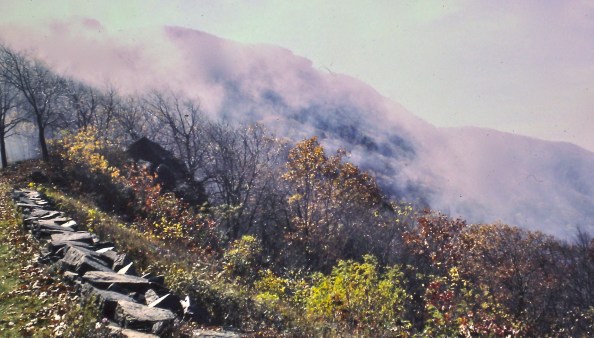
Smokey Mountains in the Morning

Understanding Asa Carter through his Own Words

Forrest Carter and Asa Earl Carter were the same man. In the first chapter in the book, Asa was both the Indians getting on the bus and the people sitting in the seats. He understood hatred from both views and portrayed that hatred, not in bitter remembrances but rather as a view of human nature that sometimes humans are “sick” or unwell (mentally or physically) and that requires the understanding of that pain. Part of Carter was revealed in the character of Wilber, the boy who stood in the lineup for adoptions, secretly hopping someone would adopt him but never being chosen. “His anger showed in that he said he would kill everybody that run banks and orphanages . . . Wilber cried at night . . I never let on I knew, for he stuck his blanket in his mouth, which I figured he didn’t want anybody to know” (F. Carter, 189).

Is Little Tree a mischievous deception? I would suggest that Carter’s agonies, forged during his boyhood in rural Alabama—a hotbed of racist bigotry—and his probable alcohol addiction, followed him to the grave. Carter knew injustice even if he could not wrestle the demons of hatred from his own mind. Whetted by alcohol, Carter never escaped verbal or physical violence. His life ended in a drunken brawl with his own son (Bowlings). His death certificate stated, “aspiration of food and clotted blood due to a history of fist fight” (Rubin). Forrest Carter’s wrote his last novel, Watch for Me on the Mountain, just a year before he died; but unlike Little Tree this novel describes in horrific detail scenes of violence and death. Perhaps the following passage from that novel best captures Carter’s impasse that seems to have followed him to the very last moments of his life,

Geronimo! Trying to say the name, coughing great gushes of blood from his mouth, he fell against the wall.  It was a trick? He felt hurt at the unfairness of it all (156).

Waterfall in the Blue Ridge Mountains

How do you look at art . . . just on its own merits or do you consider the creator? Should any publication ever be banned?
As a gardener, I sometimes difficult to resist purchasing something new for the landscape especially with the vast array of colorful plants on display at the big box stores. This time I caved to a Salvia plant, its aromatic fragrance wafting in the breeze, beckoning me to buy the bluish-purple blooms.

Salvia is the largest genus in the mint family, its name comes from a Latin word meaning to feel healthy. The tiny flowers line up and down tall stalks making a subtle contribution to the color in the garden, as shown in this photograph, just right of the flagstone path.

The micro level, however, reveals a complex and multi-colored flower. The tiny hairs secrete oils that fill the air with the plant’s distinct scent.

The working conditions at the turn of the century placed workers under incredible hardships as they faced both health and safety risks on the job. At that time, half of all worker deaths occurred in two industries—coal mining and railroading. Around 1900 between 25-35,000 deaths and one million injuries per year occurred on industrial jobs. In the Pacific states a lumberyard or camp worker earned on the average 14 cents an hour with working hours averaging 61 per week. Employees had to sign a contract to waive all rights to damages in case of injury or death. Migratory workers depended on hopping on freight cars to follow employment opportunities across. Railroads estimated that 500,000 hoboes at any given time were attempting to board the trains. Migrant workers made up a large percentage of the 24,000 trespassers who were killed and 25,00 injured on the railway lines just from 1901 to 1904.

Understanding that the root of this misery rested in the capitalist system, workers established a new kind of labor union.  The Industrial Workers of the World (IWW) believed in organizing all workers. Ahead of their time, the Wobblies refused to accept the society’s racial, ethnic and class prejudices and welcomed the most dispossessed into their ranks. They possessed a revolutionary spirit which provided the catalyst to create greater democracy through worker participation.

The I.W.W. organized the free speech initiatives to prove that direct action was the mechanism to stand up to the Establishment on labor rights. The system threw every weapon at the I.W.W., and the courts, police, newspapers, even encouraging mob rule. The politicians and industrialists formed alliances to protect their business interests and profits.

The public sometimes becomes confused with the rhetoric and propaganda of I.W.W. opponents who claimed that the organization despised the Constitution and rejected traditional American values and ideals. To understand this criticism it is important to differentiate between economic and political systems. Capitalism is an economic system, and the U.S. Constitution provides no support for any economic system. The I.W.W. rejected the elitist business interests of the capitalistic class in favor of workers. Elites labeled the I.W.W. unpatriotic because the membership refused to fight against their fellow workers in other countries. Translated: the I.W.W. is a bastion of democratic principles and follows an ethical philosophy of the highest calling: to join in solidarity with all workers and put an end to war.


What’s the cure for becoming stiff sitting in a chair all day?  How about a Zumba class during the lunch hour! Where else can you shake the shoulders, rotate the wrists, twist the torso, bend the back and  lunge the legs during the work day? For about eight weeks now I’ve participated in a Zumba class at work. I’ve joined 10 million around the world who are now taking classes every week!

Our instructor, Nicole, whose enthusiasm and encouragement drives the energy for the class, leads us through all the moves. Despite my slight dyslexic tendencies, I still can follow Nicole fairly well and don’t have to worry about the right or left foot. I had a hip replacement several years ago, but that didn’t interfere either with following the moves despite the hip rotations. In fact, the entire class keeps up in a unison which is amazing given that  most of us are doing Zumba for the first time and with no common background in dancing. We keep moving during the entire class except for a quick water break. It’s fun to dance in unison, with different ages and backgrounds represented, following routines together.

Zumba, a Latin dance with a fitness component, incorporates many dance elements including salsa, mambo and hip hop.  Some of the moves have a martial arts influence. Zumba, which is not a delicate dance, includes punching, squatting and jumping. I like those elements as they convey power and strength. The high energy level of the music encourages active participation, both mentally and physically. Keeping up with the moves, ques, and anticipating what’s next makes the exercise time go fast.

Here’s a short video with some clips from the class. An hour of dance breaks up the routine . . . . like a party in the middle of the day.  We could use a class every day.

!

Everyone who has cats as pets knows about their kitty’s natural curiosity and attention to detail. In the picture below, I had placed a Christmas bear on the floor, and it wasn’t long before Sweetie Bumpkins found it and made the bear her head rest.

It’s seems as though even the smallest detail is not overlooked by our feline friends.

My computer area is fairly cluttered now as I’m working on several projects and have notebooks, papers, scissors and other miscellaneous items strewn about the desk. I added one small cloth-covered button to the confusion and placed it on the side of my keyboard.  The button had fallen off my blouse, which is one of my favorites, made of soft cotton in a shade of pastel pink.  The blouse has to be over ten years old, and a couple of buttons have already been lost so I saved this last button to fall victim to thinning threads.

So our kitty, Sylvia, jumps on the desk top, looks around, and almost immediately reaches for the button on the keyboard and begins to play with it. I rescue the button and put it aside. Later in the afternoon, Sweety Bumpkins, moves through the clutter, and she finds the button next to the keyboard and begins to toss it around. Familiar with my clutter, they immediately identified the button as new.

Now I heard somewhere that cats know the inside of  the house better than we do. I guess it’s true . . . they always find whatever is out of place. Right?

Over the years I’ve added accessories to the garden, which cost just a few dollars . . . either because of having some luck, making it myself or fixing up a cast-off.   Sometimes I had some mini disasters along the way, but in the end these whimsical additions enhanced the garden.

Gazing Ball Pedestal: When enrolled in a pottery course, I hand-built this stand for a gazing globe.  The globe cost about $20 but unfortunately, I dropped the first one which fell into dozens of pieces. I guess it really cost me $40 as I had to buy a second one. The globe is supposed to give off a solar light, but because our lot is too shady for absorbing sunlight, it doesn’t really work. For all of its faults, I still like it.  Sometimes I put colored lights inside the cylinder.

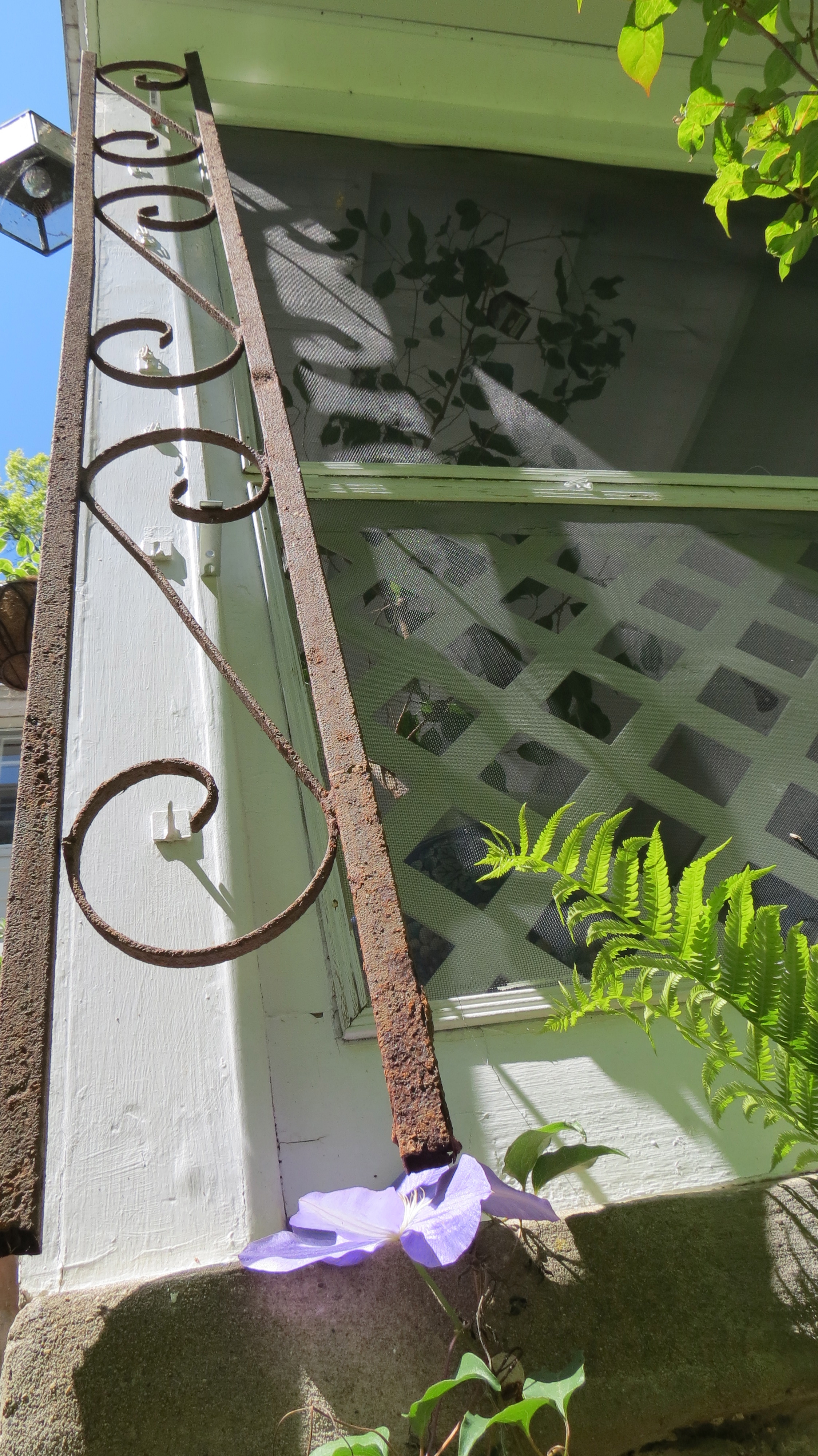
Trellis: I found this trellis while hiking along a back road and saw a small part of it sticking out from under a pile of leaves.  It took me a few minutes to pull it out from under the debris. Unfortunately, I didn’t realize that an ant colony had taken up residence inside the hollow metal, and the trunk of my car was swarming with the little guys by the time I arrived home. After shaking them out, I let it sit for a while before deciding where it should go. Purchased a clematis and attached the trellis to the side of the porch.

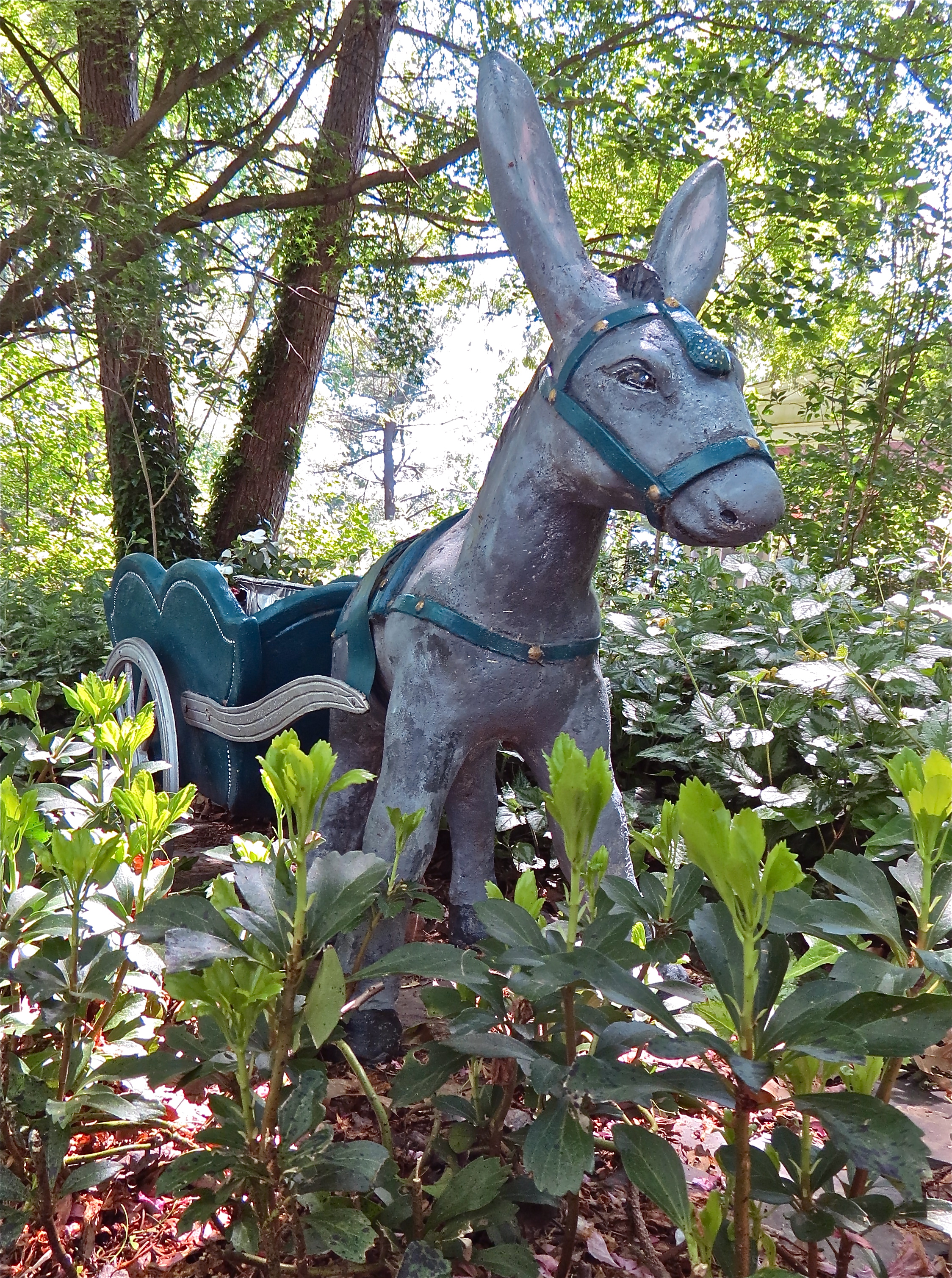
Donkey and Cart: This piece traveled through four states and found a new home when my parents moved to Pennsylvania. When they sold their house, we debated whether this kitschy and very heavy lawn ornament should just stay behind. The cement on the legs had totally deteriorated, and the paint was pealing off. I decided to keep it, and began the restoration including cementing the pieces back together even though I had no experience with cement. At first, the cement just oozed into pile instead of sticking to the iron core posts but eventually it dried out and began staying in place.

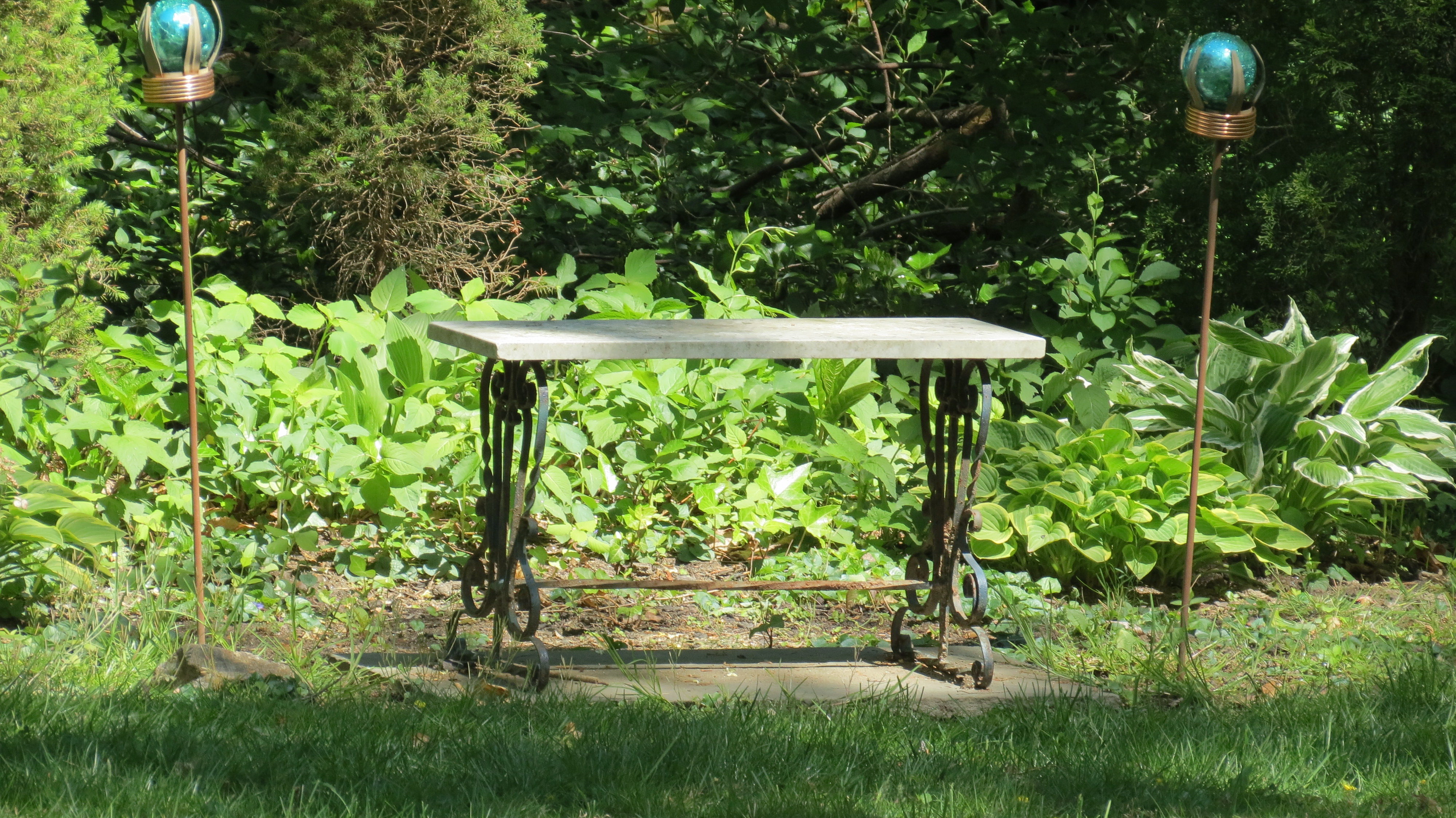
Bench: This was another rescue from a family move. Rust covered the metal, and the top covered with mildew. After scrapping the rust off, painting the stand and cleaning up the marble, the bench found a place in the side garden. I added a couple small ornaments and planted hostas on either side.

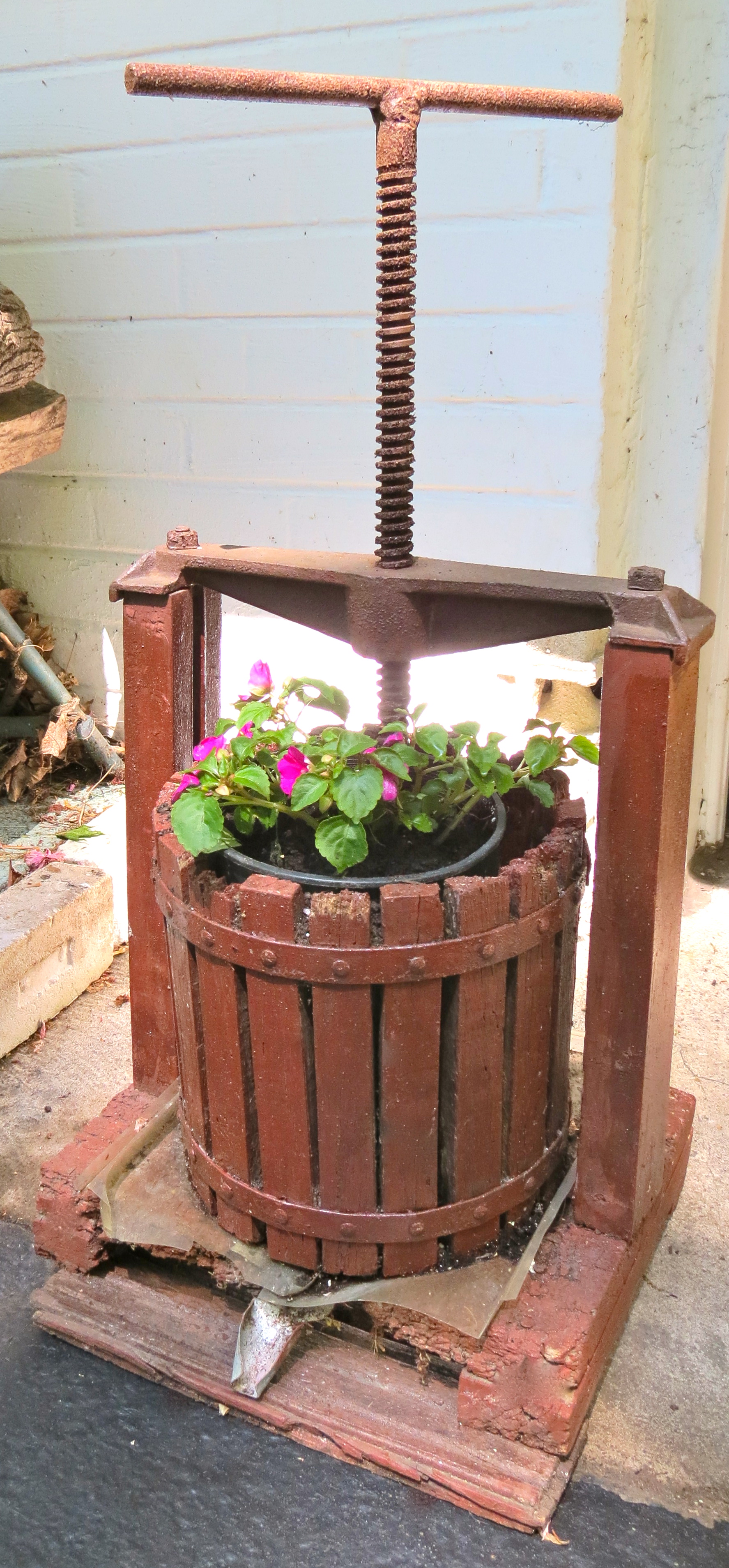
Cider Press: Found this piece at a yard sale. After giving it a quick coat of stain and inserting a plant, it was ready for display. The press was not in the best condition to start with and the water flowing on the wood contributed to some decay, so I added a piece of clear plastic at the bottom, which has kept it intact now for ten years.

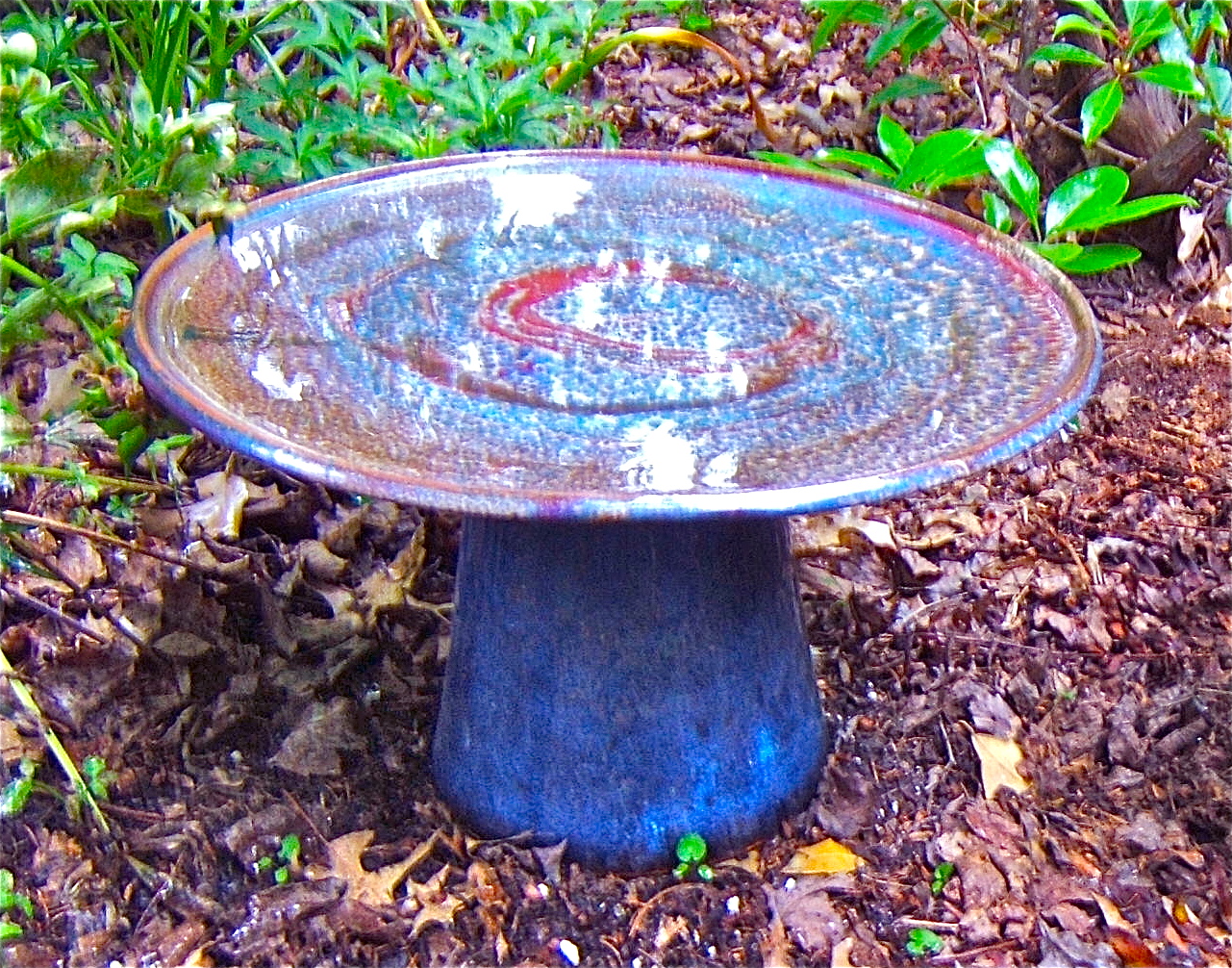
Bird bath: My pottery instructor was ready to throw this dish away because of a serious crack that ran along the bottom rim. The patterns in the glaze were beautiful, so I took it home to see what I might do with it. I used clear caulking to patch the crack and placed the plate on top of a pot. The caulk has held up well for several years now.

Watering Can with Floating Spigot:  Ok, this one cost me a few dollars, but I splurged for no other reason except the floating spigot looked cool.  I once put it in one of the window display for Bindlestiff Books, and children would stare into the window wondering how the magic happened.  Kitty knows the magic of getting a drink of water from anything but her water bowl.

April 5, 2012
Swarthmore College

The Struggle for a Living Wage and Workplace Justice at the University of Virginia

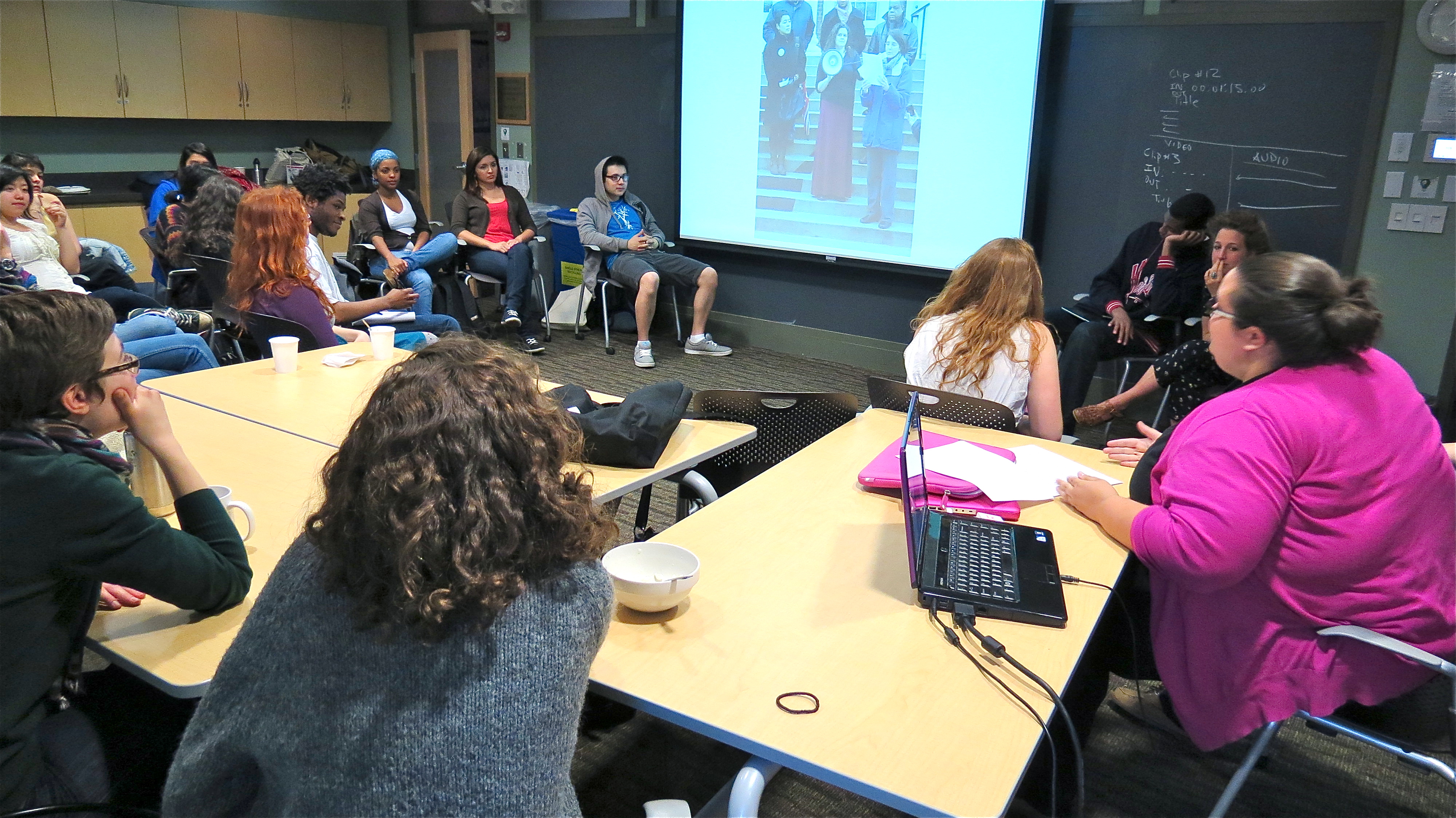
Cecilia Marquez ’11, PhD candidate in History at the University of Virginia and a key student leader in the struggle for a living wage for UVA employees, engaged students in an interactive discussion about the history and context of the campaign at UVA, strategies and tactics employed (including a historic hunger strike, which received widespread media attention), and the successes and shortcomings of the campaign thus far. She contextualized the struggle at UVA within a larger climate of living wage and union recognition campaigns happening at universities all over the country.

Cecilia covered specific topics in campus organizing, such as how to effectively organize with campus staff and foster student-staff solidarity, how to run an effective media campaign, how to make decisions about tactics in a campaign, and how to negotiate with college administrators.

For more information, check out the Living Wage at UVW webpage here. Swarthmore Labor Action Project (SLAP!), which monitors wages since the College implemented increases since the Swarthmore College living wage campaign in 2005, sponsored the event.

“Ain’t no power like the power of the people, ’cause the power of the people don’t stop. Say what?!?!” 

Thanks to Danielle Noble for written content.

Some pictures and video from the evening’s discussion.

FULL MOON ON THE RISE!


Friday, April 6, 2012, at approximately 09:18:42 pm.

The April full moon is also known as the Full Pink Moon, which was named for the herb moss pink, or wild ground phlox, one of the earliest flowers of the spring. Many other pink flowers bloom in April as well as blossoms on the trees. In just a short walk around the neighborhood,  I was able to photograph nature’s many variations of pink.

The moon, like a flower
In heaven’s high bower
With silent delight
Sits and smiles on the night.
                     ~ William Blake

Flowers in the video, in order of appearance: Lilac, Crab Apple, Redbud, Pink Dogwood, Tulip, Cherry, Crab Apple with Chickadee, Rhododendron

Tag Cloud