Humble Contributions to the Peoples' History

Archive for the ‘Travel Journal’ Category

Moments from the Voyage of the Star Clipper, Lisbon to Athens, 2015

Description of this adventure at: Lisbon to Athens: Grand Voyage of the Star Clipper, 2015

Enchanted with the splendor and grace of the sailing ship, a masterful creation of those who designed and constructed this work of art, I fell for the romance of sailing the frothy seas that inspired waves of passion for life as the salt air wind blew away doubts and dreams unfurled.

Trailer

This slideshow requires JavaScript.

Daily Prompt Journey

 
Image

Afloat

A wind carves concave sails against the sky
Above I see clouds and sun alternating
in revealing themselves. I hear new waves
being born in the ship’s rushing wake.
And I feel the bow undulating
into the sun’s reflection of a churning sea.
All this, and beneath me a silent life
streams on into eternity.
Written to Captain Bruno and his Crew, Revised

IMG_9819

Word Press Photo Challenge Afloat

Lisbon on a Tram

Lisbon’s Tram 28 Tour

Red arrow Trolley

Hometown Trolley: Red Arrow

A photograph of a little yellow tram-car against the backdrop of a twisted alley way on a cobblestone street, enticed me to visit Lisbon. National Geographic lists the Lisbon trams in their top ten list of trolley rides. I have an affinity for trolleys because I grew up next to a the Red Arrow Trolley Line that ran in the back of my childhood neighborhood; we always looked forward to riding the trolley.

So when public transportation takes on a mystic quality, I know a ride is not to be missed. My experience with the hair-raising Amalfi Coast bus ride comes to mind. I always prepare references of places I plan to see and “visit” locations on Google maps still I didn’t find the right place to pick up the tram in the historic Amalfa section of Lisbon. I was proud of myself for negotiating a metro transfer and arrived at the Martim Moniz Plaza only to stand a station for 20-minutes, wondering if I was lost. A man wearing a transport vest looked like a good candidate to set me straight, and he affirmed I was in the right place, but the next tram that stopped was the Number 12 not 28! I decided to explore around the plaza, turned the corner . . .

Tram 28 Line

Ah, yes, I should have scouted out the stop with the long queue. I thought a rainy day in April would be safe bet against hoards of tourists. As rain intensified, everyone, including myself, stood our ground as we waited patiently for the trams to arrive until we, too, could be squeezed into the trolley car. Many of the guidebooks warned against pickpockets, but with cacophony of foreign languages and folks holding city maps while taking cell phone photos, there was no room for pickpockets . . . just hawkers selling umbrellas at inflated prices.

The Lisbon trams, once drawn by horses, have a steampunk quality, with their 20th century fittings and polished wood. The vintage cars, built over seventy years ago, sport bright yellow paint. The narrow cars jounce (made up word) through cobbled streets and narrow alleys, like Mr. Toad’s Wild Ride from Disneyland–with sudden turns, avoiding what would seem to result in an inevitable crash. The tram wheels, positioned at the center of the car and not at the ends, make the trolley seem to float over the tracks.

Tram 28 in Alley

Dark Tourism at its Best

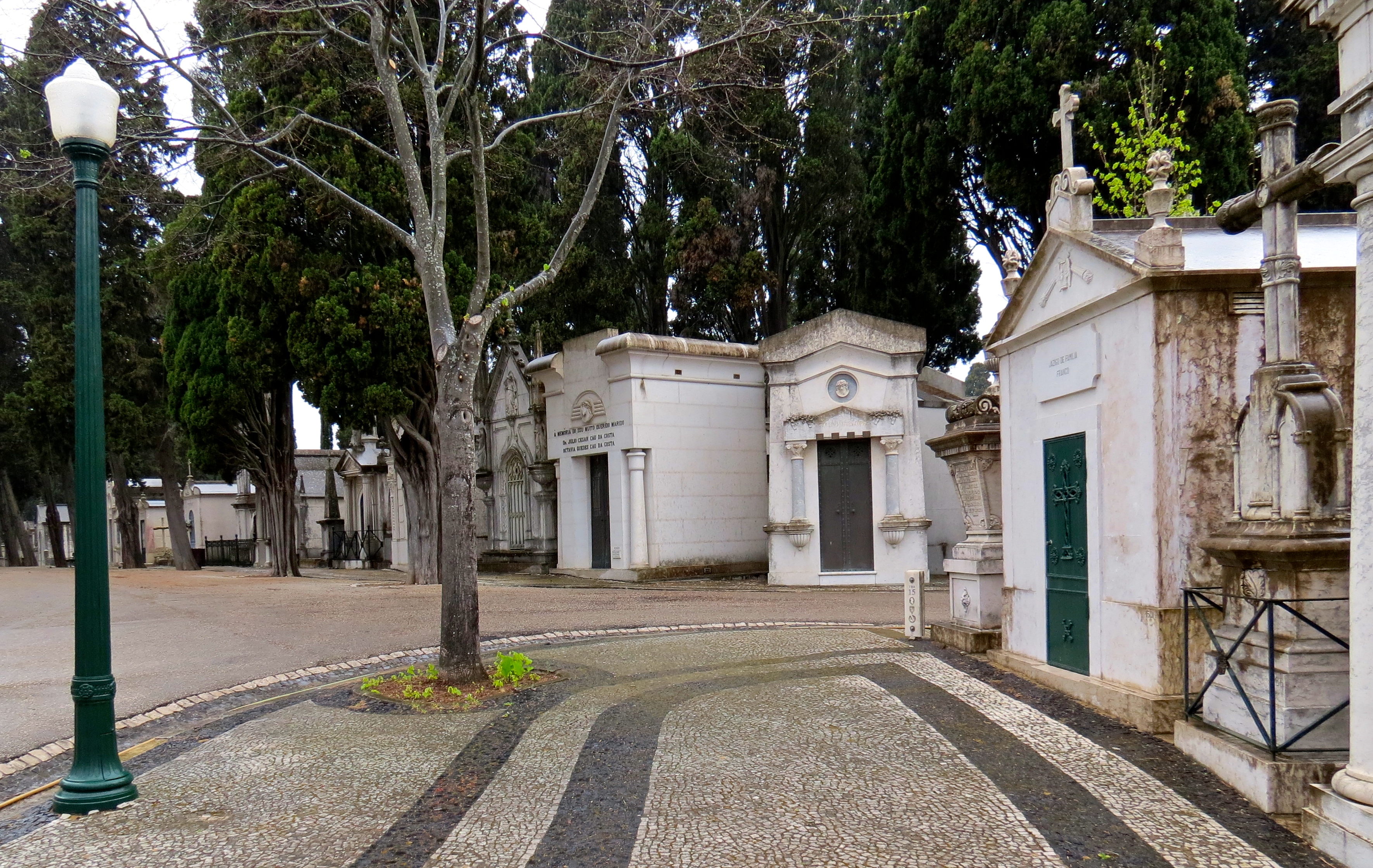
Mausoleum DoorI stayed on the trolley, with a mysterious transfer to another, to the end of the line. I never did quite figure out their system, but did reach the last stop, the Prazeres, for my verified “Dark Tourism” experience. Ironically named “Cemetery of Pleasures,” the spot has an otherworldly feel, the rainy day contributing to the misty atmosphere. Lines of cyprus trees stretched toward the sky, breaking up the line of marble buildings. This cemetery reminded me of our visit to the Cimetiere Du Pere-Lachaise in Paris, where many of the rich and famous found their last resting place. Seems like Europeans like to create stone villages to the dead, perhaps trying to create immortality in stone. Each mausoleum is characterized by its own personality, with a variety of sculptures decorating the façade. Elaborate doors served as the entrance, either painted or with intricate ironwork in front of a window. Each building has a strange quality of enticing visitors to look into the little houses while still conveying an eerie caution. I couldn’t help but peek through the windows to see alters with pictures, as well as the coffins. I would have lingered longer, but as the rain spilled over my umbrella, the bone chilling dampness, no pun intended, drove me back to find the trolley.

Prazeres Cemetery

 Tram Stop: Castelo de S. Jorge

The trolleys stop at over thirty locations, and I found it challenging, if not impossible, to figure out exactly where we were at any one time. I did have a list of stops, but small print named the stations names and the conductor did not make announcements. In any case, every stop along the way seemed like a great place to get out and explore so it didn’t matter about missing the stop for Castelo de S. Jorge. The massively huge castle, which dates back to the 11th Century, sits atop the tallest of Lisbon’s seven hills. A shaded courtyard spread out toward expansive views of the city and surrounds, providing a great perspective of the area. The Tagus River, sparkling in the sun, surrounded the landscape.

IMG_9184

The massively huge castle, which dates back to the 11th Century, sat atop the tallest of Lisbon’s seven hills. A shaded courtyard spread out toward expansive views of the city and surrounds with the Tagus River, sparkling in the sun, surrounding the landscape. Viewing from the ramparts, I looked down into the neighborhoods of Alfama. Cottages and castle stand together as extreme contrasts in size and style.

I walked up and down the steps of the ramparts, being careful not to lean too far over the short walls. Steep steps provided a workout, but with so many interesting places around every corner, I wanted to see all of it. At the archaeological site, I viewed the ruins of the Moorish quarter. Before the Moor invasion, other civilizations occupied the site dating back to the Iron Age.

Lunch with a Peahen

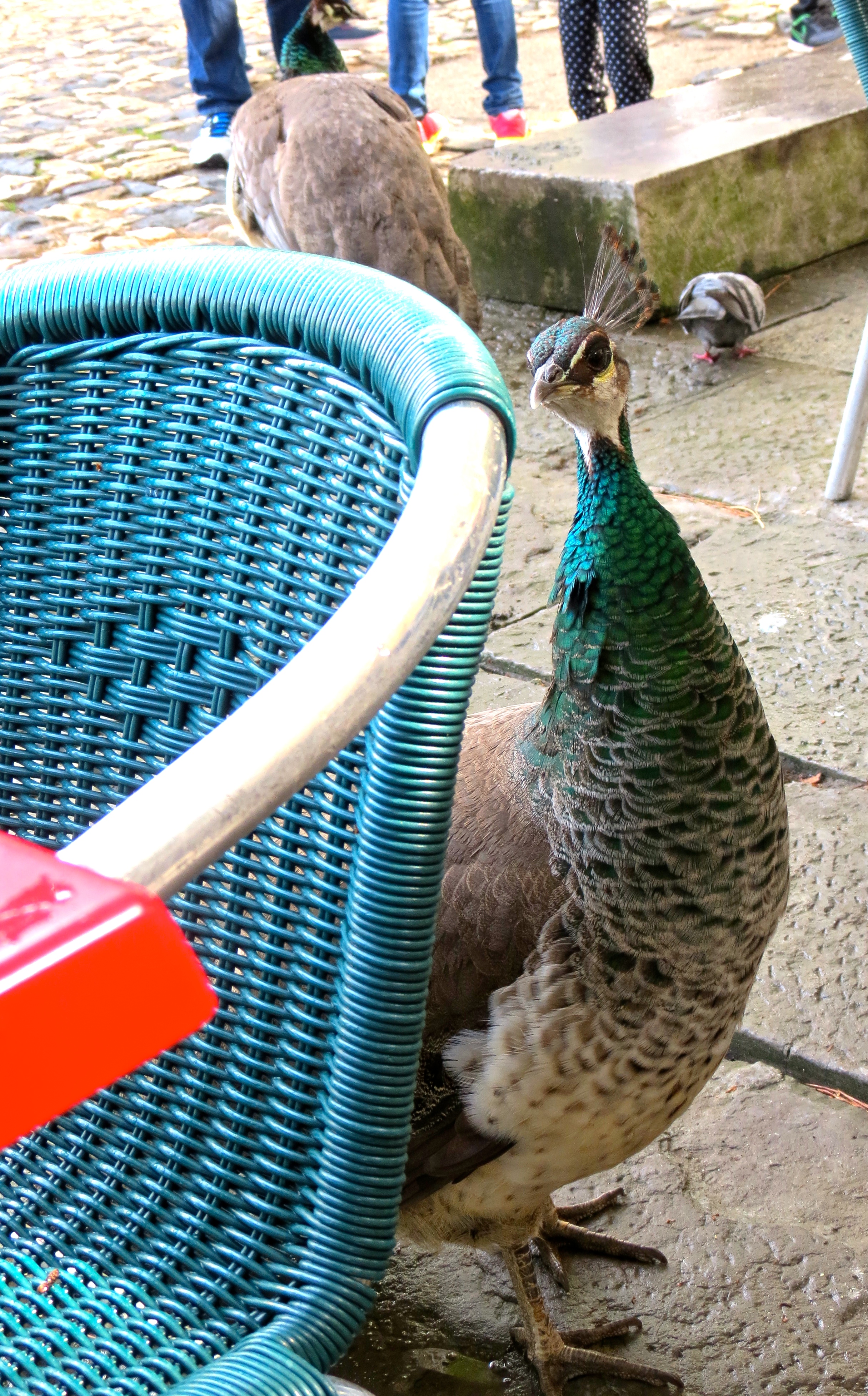
Peahen at LunchPeacocks and pea hens sat in the trees and on the walls and paraded around the café. I don’t believe I’ve ever seen peacocks of such size. When the male spread his feathers, he needed at lease ten feet. I bought a baguette for lunch and settled down at an outside table. Can you enjoy a meal while being watched? A peahen took an interest in my sandwich, cocking her little head as I tried to dissuade her with a conversation littered with, “no, no.” Being a Portugese bird, my words did not translate, but being a persistent creature, she was eventually rewarded with a handout, which worked for her and provided me with the knowledge of why these birds were so large.

I hopped back on the trolley and then the Metro to my hotel. Lisbon’s Metro had been easy to negotiate and surprisingly spiffy and clean. Shiny blue tiles lined the walls along the series of escalators that carried passengers to lower levels. Not a single piece of paper littered the floors. Crowds jammed into the cars at rush hour. A fist fight broke out right in front of me, the result of pushing and shoving that jostled the passengers caught in the crush. A women on the platform broke the fight up, leaving the two agitators apart as the doors shut on the car and separated the two.

Lisbon Metro Station

Metro Platform

With four fitful hours of sleep on the plane the previous evening and a full day of exploring, I fell into bed exhausted, as the “Trolley Song” came into my head,

Clang, clang, clang went the trolley
Ding, ding, ding went the bell

Chug, chug, chug went the motor
Bump, bump, bump went the brake

Lisbon to Athens: Grand Voyage of the Star Clipper, 2015

An Exploration of Dark Tourism

I thought I would sail about a little and see the watery part of the world. –Herman Melville, Moby Dick

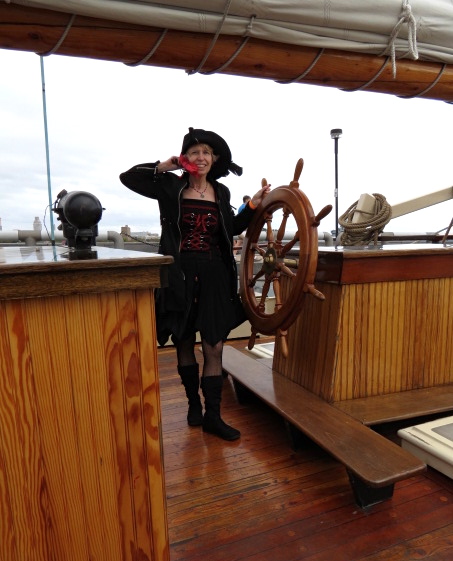
Kae Pirate

In a earlier post, Paranoid Traveler or Conscious Consumer? I questioned whether I should even make this trip. Attempting to weigh the prospect of ISIS lurking off the coast of Libya against the probability of all going well, I decided to go ahead with my travel plans. Therefore, I’m returning to the sea once again, inspired by my recent sailing adventure off the coast of Maine on a windjammer, the Mary Day. On this trip, the Star Clipper, tallest sailing ship ever built, will carry passengers and crew across the Mediterranean, starting in Lisbon, Portugal, 17 days at sea with stops along the way and finally ending in Athens.

Because of the recent terrorist attack at the Bardo Museum in Tunis, the ship will not be stopping at Tunis, as previously planned. The Bardo Museum had been selected as one of our excursions, and that knowledge make the tragedy of lives lost even greater for me. Cruise management also removed Pantelleria, an Italian island off the coast of Tunisia, from the ports of call. The Tunisian people transitioned to a democracy after the Arab Spring and installed a secularist-led government. Extremists target such initiatives. On March 29, 10,000 Tunisians marched through Tunis in solidarity against those who would threaten their democracy.

Before the March 18 attack on the museum, I was already feeling I might be taking on an adventure that might be more than I could handle. Some friends questioned whether it was safe for a woman traveling by herself and on a sailing vessel, which is far removed from the typical cruise ship experience. The ship rocks in the waves and tilts at an angle on the downwind side. I’m excited about taking photographs of the sea and landscapes. One of the best observation points will be from the crow’s nest, climbing up the rigging for 360-degree views from the top of the mast. I can cry, “Land A-Hoy!” and point to the horizon . . . aways wanted to do that.

I searched for blogs recording a similar sailing adventure. The closest journal I found was Mark Twain’s, Innocents Aboard, his humorous account of his travels on the Mediterranean onboard a side-wheel steamer in 1897. As I do my version of what Twain subtitled his journal, The New Pilgrims Progress. I hope that you’ll join me by participating in the comment’s section.

Dark Sides of Tourism

Three continents border the Mediterranean, creating the cradle of world civilization connecting people from different cultures. I’ve read an overview of historical accounts of aggression, invasion and conquest. Any territory bordering the Mediterranean or island surrounded by that sea has been repeatedly screwed over, yes, I’ve said it, screwed over–for the word conquest sounds sanitized, and the second definition: winning of favor or affection, softens the horror that followed invaders. Many civilizations carry the blame: Egyptians, Phoenicians, Romans, Greeks, Ottoman Turks, Normans and throw in the Crusaders and the Barbary pirates, and it seems likes Mediterranean people have never had a moment’s peace, even up to the present moment with ISIS controlling territory in Syria and threatening attacks on Italy, putting that country on high alert. Little more than one hundred miles separates the Sicily from the Libyan coast.

Why are conquering civilizations called “great” or “golden”? What mechanisms spawned those grand titles, achieved through madness and mayhem, causing endless personal tragedies, rarely recorded in history books or on tours? Dark Tourism, defined narrowly as travel to any sites associated with death, more broadly can apply to visiting almost any place on earth! Making pilgrimages to graveyards or catacombs fits the obvious definition, but if we scratch below the façade of any place, we experience Dark Tourism.

Long before the attacks on Tunisia, I had researched one of planned tours to the ancient city of Carthage, a UNESCO World Heritage Site. One tour describes Carthage as “perpetuating values of openness and exchange.” The ancient city stands in ruins today, scattered stones and standing columns representing architecture that once housed the civilization. Archaeologists who study the evidence, uncover other layers of culture. I read in horror that Carthaginians sacrificed their own infant children, and the civilization relied on slave labor. It is extremely difficult to feel impressed with their architectural prowess given that the Carthaginians conscripted prisoners of war into the service of backbreaking stone masonry. If these people killed their own children, one can only imagine how they treated their slaves.

I am not planning a gloomy travel experience; I do want to learn history and appreciate art and geography of these countries. I’m in the last quarter of my life and time is short! I want to climb the ship’s mast, hike rolling hills, explore castle passages, find spring wild flowers poking out from the rocks or photograph children playing in the village alleyways. Like Mark Twain, who writes in the Preface of Innocent Aboard, this is a journal of a “pleasure trip” and not an effort at historical documentation. The discerning traveler/blogger might still be able to share some degree of insight of a culture based on their experience. Right? Or not so much? Will I be wondering, I am safe?

A Traveler or Tourist?

How does one evolve from a tourist to a traveler or is that even possible? Is a tourist a passive observer where travel becomes a commodity rather than an experience? Is searching for places that are “less touristy” a desirable goal or is almost any form of travel superficial? What if the tours present a “Disneyization” of a place, the stripping away the culture and presenting either sanitized interpretations or theater that presents tourists with big doses of what the tourists think represents a culture.

For example, I found a tour in Tangier that included riding a camel, seeing a snake charmer, watching “local” entertainment and visiting a market. I could argue that tour is the reality for all of those folks who are entertaining the tourists, but do these tours reinforce our stereotypes? Tourism is big business, and the economy of Tangier relies on tourism, so tours tend to recreate expectations. Is it possible to explore and discover less theatrical cultural practices?

Perhaps being aware of these questions is the first step in understanding these complex issues.

The Question of Sustainable Travel

Air travel, unfortunately, is responsible for between 2 and 3% of carbon emissions, ballooning my carbon imprint. Planes are inefficient and use toxic fuels. At present, few technological advances fix this situation. This ecological problem creates a question whether I should travel at all by air.

Link:

Grand Voyage of the Star Clipper, Lisbon to Athens, 2015

Paranoid Traveler or Conscious Consumer?

March 17, 2015

Should I go on this trip? Would you go?

For two years I planned this vacation: taking a smaller cruise ship to various ports across the Mediterranean Sea. I gathered over fifty pages of research on the trip locations, studied guidebooks and constructed a google map. I watched videos of each port. After I purchased the the trip tickets and packed my suitcase, current events left me in a quandary on whether I should take this vacation.

On February 15, ISIS beheaded 21 Coptic Christians from Egypt on the coast of Libya near Sirte, a port town. By Mid-March ISIS and the State-affiliated militants were engaging in violent clashes.

In October of 2014, ISIS began a propaganda campaign, threatening the Vatican, claiming to launch a war against the Catholic Church and invade Rome. On March 15, the Vatican, which in the previous months had downplayed the threats, its Geneva ambassador suggested that military force should be used against ISIS, if settlements could not be reached.

What I found alarming is that Cruise News.com reported:

But sailing into a port in Morocco or Egypt on a cruise ship? It’s not a matter of if. It’s just a matter of when.

Fisherman on Lampedusa, a small island halfway between Sicily and Libya, raised their concerns with the Italian government that they were fearful of being boarded by the terrorist group.

I called my cruise company. The representative reported that their insurers would not allow the ship to go anywhere near where they perceived danger. I guess protecting their investment will also protect me. It’s kinda funny that it comes down to money. He said they would change their itinerary if there were any threats. He also said the cruise line could not guarantee safety 100%, which I understand.

Statistically, I should be more concerned with these possibilities if I stayed home: about 40,000 automobile deaths and 32,000 firearm deaths occur in the United States each year. I’m in more danger driving on the 95 Interstate or catching a stray bullet from a crime or accident than anything happening on the high seas. So far, not one American tourist has been killed by ISIS.

Still, the situation in the Middle East does give one pause. Whereas I have a choice to go, I know that those folks caught in the middle of these conflicts have no choice.

The State Department has issued travel alerts and warnings for over 40 locations.

How does a traveler remain aware without being hyper vigilant?

As a traveler, have you faced a similar situation and what did you decide?

Would you stay home or go on this trip?

UPDATE:

The next day, after I composed a draft of this post, tragically militants killed 17 tourists as they stepped off buses to visit the National Bardo Museum in Tunis. My cruise line has listed the Bardo Museum as one of their excursions.

Someone wrote on Facebook that didn’t understand why anyone would travel to Tunis. Last year 6.2 million tourists visited that country without major incident. Tunisians have invested in the travel industry, as 20% of the population benefit from tourism. The people of Tunisia will suffer the long-term effects of reduced revenues if the tourist industry collapses, which would further weaken the country economically and perhaps give ISIS a further foothold in the ensuing chaos. Tunisia has taken positive steps toward democracy, a positive outcome of the Arab Spring. Let’s hope the militants have not derailed their democratic initiatives.

Link

Balkanalysis.com Special Report

Autumn Afternoon at Longwood Gardens

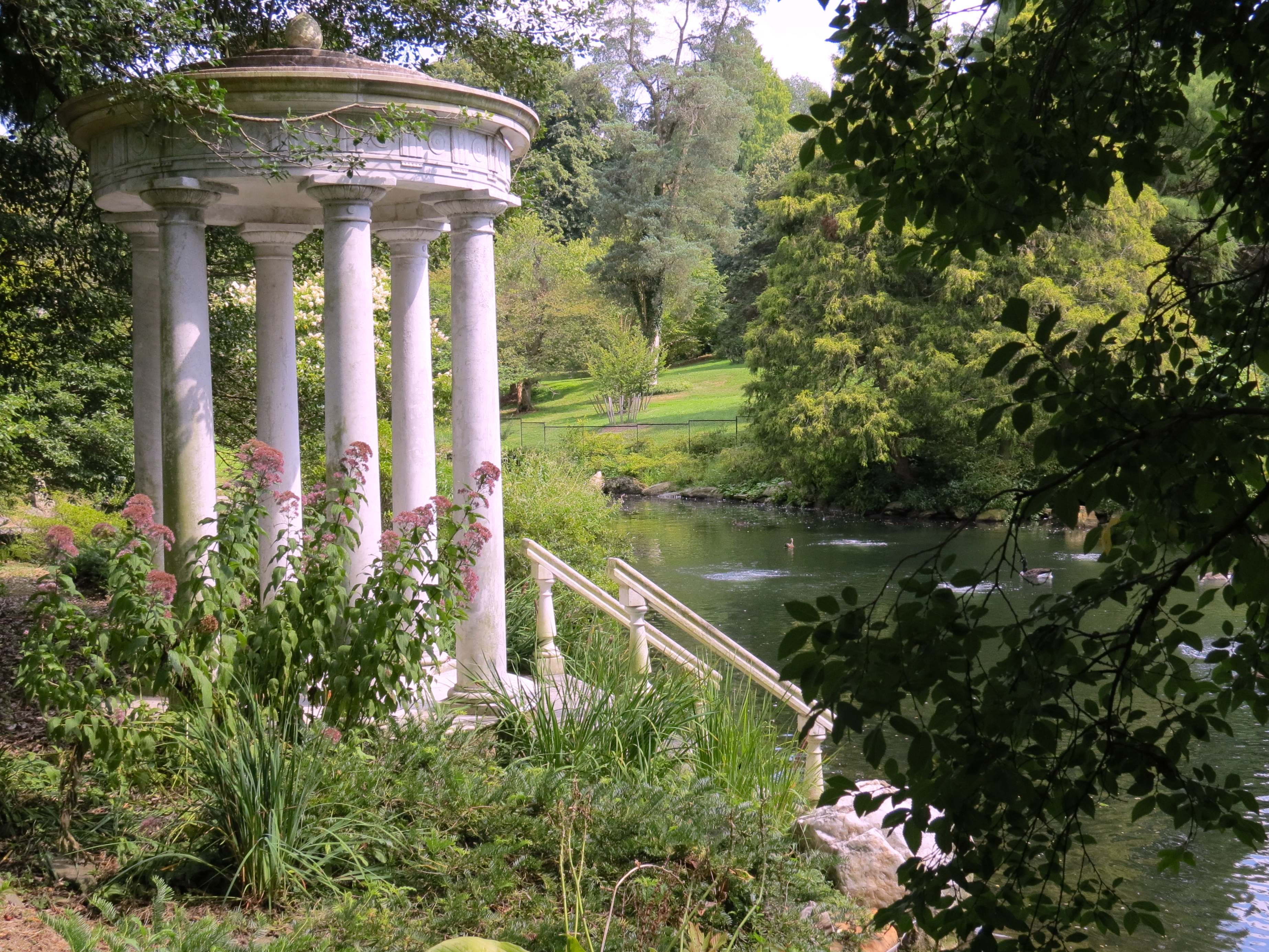
longwood-gardens-gazebo closeLongwood Gardens, one of the most beautiful botanical gardens in the United States, is a popular destination for visitors in the spring and winter holidays. One of my favorite memories is the skating performances, set in a snow-covered backdrop with colored lights reflecting on the ice.

I couldn’t imagine how the autumn season could complete with the holiday display, but every path through the garden offered beautiful vistas and colorful flowers. On this clear October afternoon, I walked by two lakes, through the meadows, into the woods, over to the train display and inside the conservatory. Even though the parking lot was filled with cars, over 1,000 acres allows visitors to explore the many sites without crowds.

Several months ago I visited Morris Arboretum in Chestnut Hill, Philadelphia, where G-scale model trains and trolley cars ran along a quarter-mile of track through a magical garden setting. Longwood Gardens has built a similar display incorporating colorful plants and water features into their train layout.

Given the number of bulbs and gardeners working on the plantings, that display should be spectacular come spring time.

Longwood Gardens bulbs

Summer Camp, Fifty Years Ago, and Almost Not Making it Back Home

Rite of Passage: the Summer Camp Experience 1957

For many children in the U.S., the summer camp experience has become a right of passage: separating from parents, friends and a familiar neighborhood to live in “the great outdoors” and learn life strategies of how to get along with adults and other children. According to the American Camp Association, nearly 11 million kids attend one of the 7,000 overnight camps each summer, with stays ranging from a week to two months. I had classmates whose parents sent them to camp for the entire summer. Research suggests that camp can build confidence, social skills, and independence. Probably for most kids, the experience is a mixed bag, like life.

Girl Scout camp Hidden Falls provided that experience for my sister, Jean, and her two friends. Jean wrote my parents the quintessential camp letter, “Please, please come get me! I hate it! . . . almost mimicking to a tea Allan Sherman’s hit single record years later, “Hello Muddah, Hello Fadduh,” a comic song in which a camper bemoans his experiences to the tune of Ponchielli‘s Dance of the Hours.

Take me home, oh Mudda Fadda
Take me home, I hate Granada
Don’t leave me out in the forest where
I might get eaten by a bear

Camp Nik-o-Mahs, in the Mountains of Central Pennsylvania 

I remember being intrigued by the Camp Nik-o-Mahs brochure. The camp was once a scout camp founded in the 1920 and named for the nearby town of Shamokin, spelled backwards, that is. The Hall family, who lived in my hometown of Springfield, operated the camp. The list of activities sounded exciting: archery, swimming in a creek, campfires, canoeing, all in a woodsy atmosphere. The cabins resembled little clapboard houses with porches. The camp sponsored overnight hikes and a trip through a water cave. In 1958 the brochure read that campers can “frolic to their heart’s content” in the creek. [1] An adventurous 11-year old, I loved all of that so I begged my parents to let me go. They were not so enthusiastic. My folks were protective and not convinced that the experience would be as joyful as I was imaging. The begging paid off, however, and they submitted the application what I think was about $35 for a week. What could happen in a week, after all?
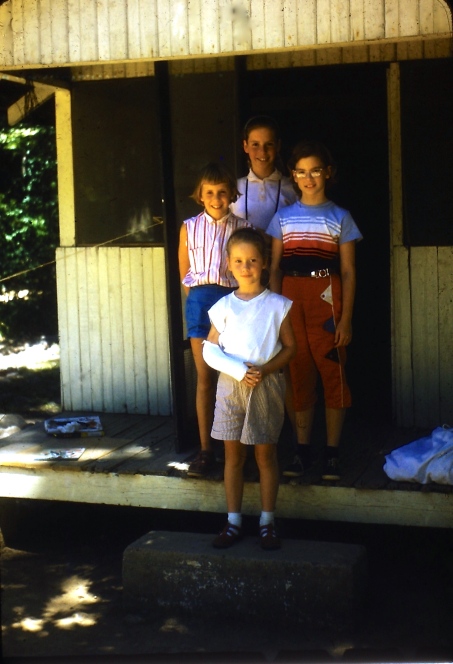
First Day of Camp (me in the back)

First Day of Camp (me in the back)

Introduction to Latrine Duty

After a four-hour drive, but which seemed endless–due to my excitement, we arrived at the camp. Each cabin had three sets of bunk beds, with four to six sharing girls the quarters. About nineteen cabins lined along a dirt path, the girls’ cabins grouped together, then the boys’ cabins further down. I think there was a rule about not being allowed on the boys’ side.

After saying good-bye to parents, counselors explained the rules and regulations and gave us a tour of the camp. They pointed out the shower room. You could take a bath, but you had to do something with water, like build a fire, to make it hot. I didn’t take any baths.

I was nervous about getting along with the counselor and other girls in the cabin. I recall that I thought the counselor was a bit bossy, but I soon became friends with the other campers and enjoyed their company.

The next morning we dutifully cleaned our cabin, as instructed, and awaited inspection. Beds had to be neat, clothes put away, and the floor clean. Counselors marched in with clipboards and pencils and snooped around the corners of the cabin and found two “dust bunnies” under my bed. For the offense, they assigned our cabin the dreaded latrine duty. Later I would tell my mom about what happened, and she was quite indignant that she was paying good money only to have her daughter clean toilets. The job wasn’t that bad, actually, it was more the idea of cleaning toilets. Our cabin passed all subsequent inspections.

Campfire Philosophy

At the first evening campfire, the camp director introduced us to the hierarchy of swimming privileges. The top place was reserved for the members of the Walrus Club, who carried a card with their special designation and were permitted to swim in the deep water. I made up my mind that night that I would take the swimming test the next day, as I wanted to enhance my status with a Walrus Club membership.

Campfires were held almost every evening, and we would sing the typical camp songs.  Looking back on these songs, I’ve realized that the theme of mortality ran through the lyrics of many of these songs.

Titanic
There was a ship Titanic that sailed the ocean blue,
And they thought they had a ship that the water wouldn’t go through,
It was sad when the great ship went down.
Husbands and wives, little children lost their lives (in a high voice)
It was sad when the great ship went down.

Can’t Get to Heaven
Can’t get to heaven on roller skates, you’ll roll right past those pearly gates.
I ain’t going to grieve my lord no more, no more.

Found a Peanut
Found a peanut, ate a peanut, got a stomach ache, called the doctor, died anyway, went to heaven, said go the other way.

Maybe these songs were trying to tell us we wouldn’t always be carefree kids and that we’d better wise up to the ways of the world.

Not sure if singing these other lines from the Titanic song also put a psychological bent into my head for class consciousness, which I’ve been confronting of late?

They were nearing to the shore, when the water began to pour.
And the rich refused to associate with the poor,
So they sent them down below
Where they’d be the first to go.
It was sad when the great ship went down.

Food, Glorious Food

Reveille played over the intercom to wake us in the morning, and we lined up at the mess hall for breakfast. We sat on benches in front of long tables, food served in large bowls. At home, we didn’t usually have bread with our dinner, but here everyone scoffed up the bread. Mom told me that after I returned from camp, I ate everything. The camp experience had expanded my palate!

The camp operated a little store, and parents left an allowance for incidentals. I became totally addicted to string, red liquorice, which I considered the yummiest of candies and spent just about all my allowance on the red stuff.

Jumping into Penn's Creek

Jumping into Penn’s Creek

Notoriety on My Second Day: “Can’t get to Heaven”

PICT0002

At the bottom of the slide

Standing on the pier over Penn’s Creek, I asked the adult counselor if I could take the swimming test for the Walrus Club. She said ok, and pointed to a wooden raft in the creek. Part of the problem may have been that I am nearsighted, and I wasn’t wearing my glasses and couldn’t see where she was pointing. Two rafts floated on the creek, one just beyond the sliding board and another way down the creek in the deep water. “Well,” I thought, “that raft beyond the slide couldn’t be the destination, it was far too close for any test for the Walrus Club.” I jumped into the water and swam toward the far raft. I was a good swimmer, I knew I could do the swim. On my return trip, I passed by the sliding board, and at that very moment, an inexperienced camper took off down the slide and panicked, grabbing me for support, pulling me under the water. I was tired by that point and could not cast him off. I told myself, “If I could just get one breath . . ..” Then realizing that was hopeless, I thought, “This is it.”

I blacked out. I came to as the lifeguard carried me to the shore. I was crying, but not sure why as I couldn’t remember deciding to start to cry. The waterfront came to a standstill as I sat sobbing on the sand. From that moment on, I was known as “the girl who almost drowned.”

By the next day, I had completely recovered from the ordeal. I wasn’t fussed over, not even sent to the infirmary. What occupied my thoughts now: did I pass the Walrus Club test? I was ready to retake the test. When I asked the swim counselor, she told me, yes, I had passed, and remarked, “It was a good thing I had been watching you.”

Summer Romance 

One serendipitous happening from the almost drowning incident: I met my first love. A seasoned camper at Nik-o-Mahs, “Plottsie,” as everyone called him, approached me on the path to the waterfront, “Are you the girl who almost drowned?,” he asked. Thus, began the romance. Plottise was a thin boy with glasses and usually wore a plaid shirt. We hung out and sat together, and of course, we were teased by the other campers for our attachment.

A special event on the night before we left marked the end of our stay. The counselors handed us candles on little cardboard floats, and we gently placed them on the creek, watching them glide downstream until they fell over the waterfall. The flickering lights in the dark forest reflected on the water, and Plottsie and I held hands as we walked along the path that followed the creek. All was perfect.

Then Plottsie popped a question, “Can I kiss you?” Thrown into confusion, I asked myself, “Was I old enough to kiss?” “Was I allowed to kiss?” “What did this mean?” I replied, “I don’t think right now,” and with that remark, coolness came over the night. The next day, I went looking for Plottsie as I wanted to take his photograph before I returned home. He stood at a distance as I snapped the photo and hurried off. When I returned home, I mistakenly opened the camera, exposing the picture to light. Plottsie had disappeared in a cloud of whiteness.

The Following Year

The next summer I returned to Camp Nik-o-Mahs. The red liquorice had lost its appeal, and the trips and hikes were no longer new experiences. The candle ritual on the last evening was still beautiful, but I stood alone looking through the silhouettes of the trees thinking I probably wouldn’t be back.

De Ja Vou, Returning to the Camp, 50 Years Gone By

For whatever reason, I decided that I wanted to return to Camp Nik-0-Mahs, which had been closed for years. I wasn’t sure what I’d find there, but a road had been named for the camp. I thought that I might be able to recognize the place along the creek, even if the buildings were no longer standing.

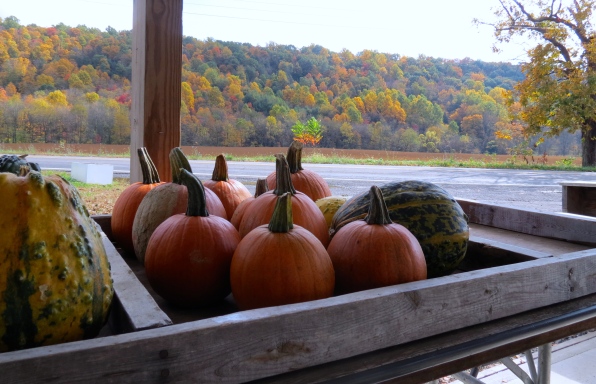
Returning to the camp meant a road trip through the Allegheny Mountains, part of the Appalachian Range that runs through the eastern United States. Traveling in mid-October the leaves were at their colorful best with reds, yellows and oranges between dark green trees not yet turned. The sun would occasionally peek out from behind heavy cloud cover, casting a glow on the landscape, highlighting nature’s pallet of colors. The road twisted around the mountains as we drove upward, only to come back down on the other side. Farmlands spread out in the valleys with fields of dried cornstalks and sunflowers against meadows of green clover. Barns, some unpainted and rustic, others vivid red, dotted the landscape. Little villages of clapboard houses clustered along crossroads.
IMG_8465

Penn’s Cave

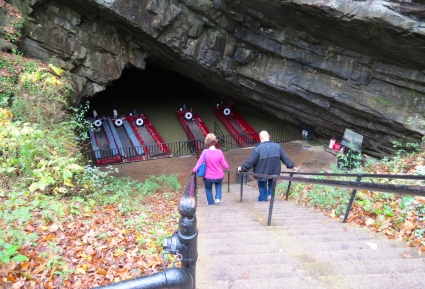
An outing to Penn’s Cave was one of the trips we made during our stay at camp, so on this trip, I planned a stop there. Penn’s Cave had been a popular tourist stop back when I was at camp and is still is today, as it is one of the few caves accessible only by boat. Since my camp days, the cave had been added to the National Register of Historic Places.
Entrance Penn's Cave

The area looked much the same, with the Penn’s Cave House, the three-story frame house built in 1885, standing near the entrance. Steep stairs still led down to the cave and the familiar flat-bottomed boats that took us through the watery cavern were the method of transport. After gliding through the cave, we came out on the other side to a large pond and then returned through the cave again. The tour was almost exactly as I had remembered it.

Finding The Camp

We followed Route 235 through the towns of Laurelton and Glen Iron, making a turn at Creek Road, near the end of which we found Nikomahs Drive paralleling Penn’s Creek. We drove until the road disappeared into the forest, so we got out of the car to look around for any sign of the camp. The house at the end of the road looked very much the era that I had remembered, painted cream with green trim. A sign confirmed the name of the house, Windy Inn, which the Mifflin Times reported was built sometime before 1920. [2] We found several stone structures, now abandoned and left to the elements. One lone building stood intact with a slab inscribed with the date, 1926. A stone sign above the door read: “Erected in Honor of our Mothers.” I guessed that the building may have been the old mess hall. I couldn’t find any trace of the cabins.

I walked to the edge of Penn’s Creek, which looked quite impressive as the current moved swiftly from the heavy rains on the previous day. I guess those many years ago I could have been lost in those waters, but the fates prescribed that my destiny would be to stand here on the bank of the creek decades later.

[1] “Camp . .  Nik-o-Mahs, In the Mountains of Central Pennsylvania,” Millmont Times, Vol 14, Issue 2, June 1, 2013, p. 1-12.

[2] Ibid.

<a href=”http://dailypost.wordpress.com/dp_prompt/finite-creatures/”>Finite Creatures</a>

Epilogue

Since writing this post, I’ve learned more about the history of the camp, from the comments here and on About Me.  Many thanks to everyone who shared their histories. Tom Hall, whose parents ran the camp, wrote me about some of the other camp traditions. The citing of the ghost of Penn’s Creek was always a favorite. Can never go wrong with ghost story. Besides the Walrus Club, campers could join the Old Timers Club. Another camp event was the funeral service for Jake Hopper (the outhouse that got too full). Tom relates about the “big time campfires where the fire would come out of the sky to light the main fire.”  I recall that we hiked somewhere out of the camp, maybe in was to to Tall Timbers. One of counselors took a wrong turn, and we wandered around a backroad until we were rescued.  Campers visited Rolling Green Amusement Park, which went out of operation in 1971. The camp closed its doors in 1966.

Morris Arboretum and the Summer Garden Railroad

Swan Pond

Swan Pond

For over a year, I’d been planning an outing to the Morris Arboretum, and finally after a late start, drove down PA 476 to the northwest corner of Philadelphia to the Chestnut Hill neighborhood of the 92-acre garden. Ignoring the heat at around 90 degrees, the high humidity and thunder clouds threatening in the distance, I considered these positive circumstances–no crowds!

The gardens were set high on a hilltop, providing lovely views of the surrounding forest landscape. The gardens, modeled after the English park style, featured wide paths that wound past a swan pond, rustic cabin, stone buildings and sculpture exhibit. Sounds of water trickling along the creek offered a soothing and cooling atmosphere in the summer heat.

Much of the park is shaded, and I kept to those paths that offered relief from the direct sun. I strolled along the 450-foot raised walkway, built from recycled metal and wood, and which soars to 50 feet at the highest point through the treetops. Rope netting hung like hammocks where visitors could just lay back and gaze at canopy overhead. A gigantic bird nest made from tree branches provided benches to sit and ponder the three large blue “eggs” resting in the center.

The Garden Railway

My fascination with trains is what really brought me to this garden. G-scale trains and trolley cars run along a quarter-mile of track through a magical garden setting. The entire display, including all the buildings, are constructed from natural materials, everything from bark to seeds. Rivers and waterfalls flow through the miniature town, which includes replicas of famous Philadelphia landmarks such as Independence Hall and the Betsy Ross House. Each building was a masterpiece, with intricate detailing in the doors and windows. The whimsical chicken train glided along to accompanying music, what else but the chicken song, and the Oscar Mayer Wienermobile even carried a bottle of mustard. I lingered for quite a while in the railroad garden, as the miniature recreation offered so much to enjoy.

A thunder-storm rumbled through the hills, driving me back to my car. With many other gardens to visit–the rock wall, rose and water gardens and Japanese Overlook–I know I will return, perhaps during the holidays, when evergreens, holly boughs and twinkle lights decorate the train scape.

Sailing Sojourn on the Maine Coast

Longing for a seafaring adventure? I’ve just returned from a six-day sailing experience on a schooner through the islands and back bays of central Maine. I prefer to write travel journals as pages, which can be found here: Sailing the Coast of Maine on a Windjammer.

A sampling of some of the photographs by primary colors.

Yellow

 Red

Blue


Civil War Reunion: Pennypacker Mills, Pennsylvania, May 2014


The farmland, forests and fields of the Pennypacker Mills County Park provided the setting for the Civil War Reunion. The park lies 15 miles north of Valley Forge National Park and just across the Perkiomen Creek from the town of Schwenksville. “Perkiomen” is a word from the Lenape, a tribe of Native Americans who settled in the area, that means “muddy waters” and “where the cranberries grow.” As I walked down to the creek, tall grasses waved in the gentle breeze casting an incense over the landscape. Purple, white and yellow wildflowers peeked out from under the canopy of grasses. I stood on the bank of the creek as the melody, “Wade in the Water,” a song associated with the Underground Railroad, played in my mind.

The Perkiomen Creek and Underground Railroad share a connection. In a famous case, a slave named Rachel had to flee from West Chester when her owner, who lived in Maryland, showed up in town with a warrant for her arrest. Fleeing from her pursuers, Rachel jumped a seven feet high fence, escaping once again. After hiding in an attic, her friends smuggled her out of town to Phoenixville, crossing the Schuylkill River and then the Perkiomen Creek at Tyson’s Mill in the middle of the night. (The Underground Railroad in our Area)

The centerpiece of the park is a colonial revival mansion built around 1720 and owned by the Pennypacker family for eight generations. Pennsylvania governor Samuel Pennypacker, who served the state between 1903 to 1907, lived in the house and collected many of the antiques that are displayed throughout the rooms of the mansion.

Mansion at PPM

Having filmed two other Civil War reenactments, skirmishes on the Wilmington Railroad and at Rising Sun, Maryland, I looked forward to a new adventure on the rolling hills of Montgomery County. Although no Civil War battles were fought here, in 1863 Samuel Pennypacker enlisted in the 26th Pennsylvania Volunteer Militia and confronted Confederate forces at a skirmish north of Gettysburg at Witmer Farm.

American Civil War: History and Recreation

Other than a few history classes in college, I hadn’t studied much about the Civil War. In order to learn more, I’ve watched the recent PBS series, Civil War: The Untold Story, the central theme, which some view as controversial, establishing that the Civil War was fought over slavery and not the issue of states’ rights. Producer-director Chris Wheeler stated that the film brought hate mail from groups on the radical right. The film also included the relatively unknown history of the contributions of African-Americans to the conflict. I admired the filming of the battle scenes. What Wheeler and I have in common is that we both photographed reenactors, who are dedicated to accurate portrayals of the Civil War.

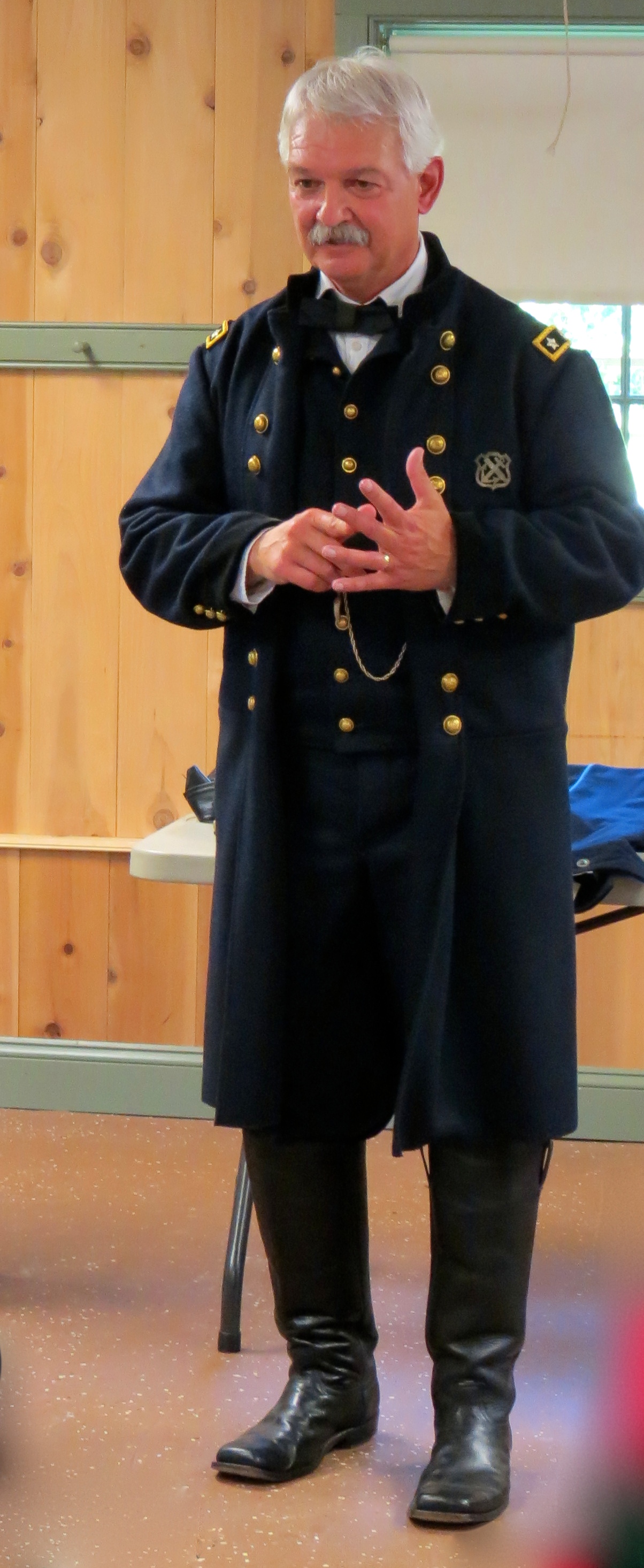
General John F. Hartranft

General John F. Hartranft

General John F. Hartranft (a.k.a, Mark D. Grim, Jr.), a native of Montgomery County who fought in both the Eastern and Western battles, presented a lecture on his experiences during the war and as provost-marshal during the trial of those accused of assassinating Abraham Lincoln. The General stated that when Lincoln announced the Emancipation Proclamation, Union soldiers became confused as to the reason they were fighting. They understood the cause as preservation of the union and not for the freedom of the slaves. General Hartranft reaffirmed to the soldiers that preserving the union was the purpose of their sacrifice. As strongly as I believe that the preservation of the union was important, seems like freeing an oppressed population would be a more compelling reason to take up arms.

The event planners filled the weekend with activities and demonstrations including musical performances, battle reenactments, children’s events, speakers and sutlers displaying their wares. I took advantage of an early start on the day and attended every event on their schedule.

Mansion Tours

Visitors could walk through the house, where guides in each area presented a history of the rooms. The house was not electrified until after the Pennypackers left, but in 1900 much of the building was updated and renovated. Many of the original furnishings, books and paintings remained with house and in remarkable condition.

Included in the slide show below, is a portrait of Governor Pennypacker, whose veto in 1906 blocked what would have been the first compulsory sterilization law in the United States. Pennypacker stated:

“It is plain that the safest and most effective method of preventing procreation would be to cut the heads off the inmates, and such authority is given by the bill to this staff of scientific experts…Scientists like all men whose experiences have been limited to one pursuit…sometimes need to be restrained. Men of high scientific attainments are prone…to lose sight of broad principles outside of their domain…To permit such an operation would be to inflict cruelty upon a helpless class…which the state has undertaken to protect…” Wikipedia

This slideshow requires JavaScript.

Songs & Stories of the Civil War

Dressed in a Confederate soldier’s uniform, Matthew Dodd played banjo and guitar, singing songs of the Civil War era, as well as telling stories. He plays “Dixie” in the video at the end of this post.

Matthew Dodd

Civilian Street Demonstrations and Families

Union Patriotic League, an organization that represents domestic life during the Civil War era, often accompanies the reenactors, displaying their specialized interests, whether basket weaving, cooking or sewing. They created charming vignettes inside their tents, with rugs, quilts, flowers and lamps.  In the real Civil War encampments, women and children rarely accompanied the soldiers, so these tents are representative of domestic life at that time and not actually recreating camp life. Photographs that follow are from the both the Union Patriotic League and Civil War reenactor camp sites.

This slideshow requires JavaScript.

 Confederate Artillery Demonstration

John Houch presented a history lesson to the gathered crowd, who came to watch the firing of the cannons. John mentioned that in the filming of Gettysburg, the director borrowed 50 cannons from reenactors. In addition to the seasoned adults, children and teens also took part in the demonstration. The Confederates represented the 37th Regiment, North Carolina Troops, Company A.

This slideshow requires JavaScript.

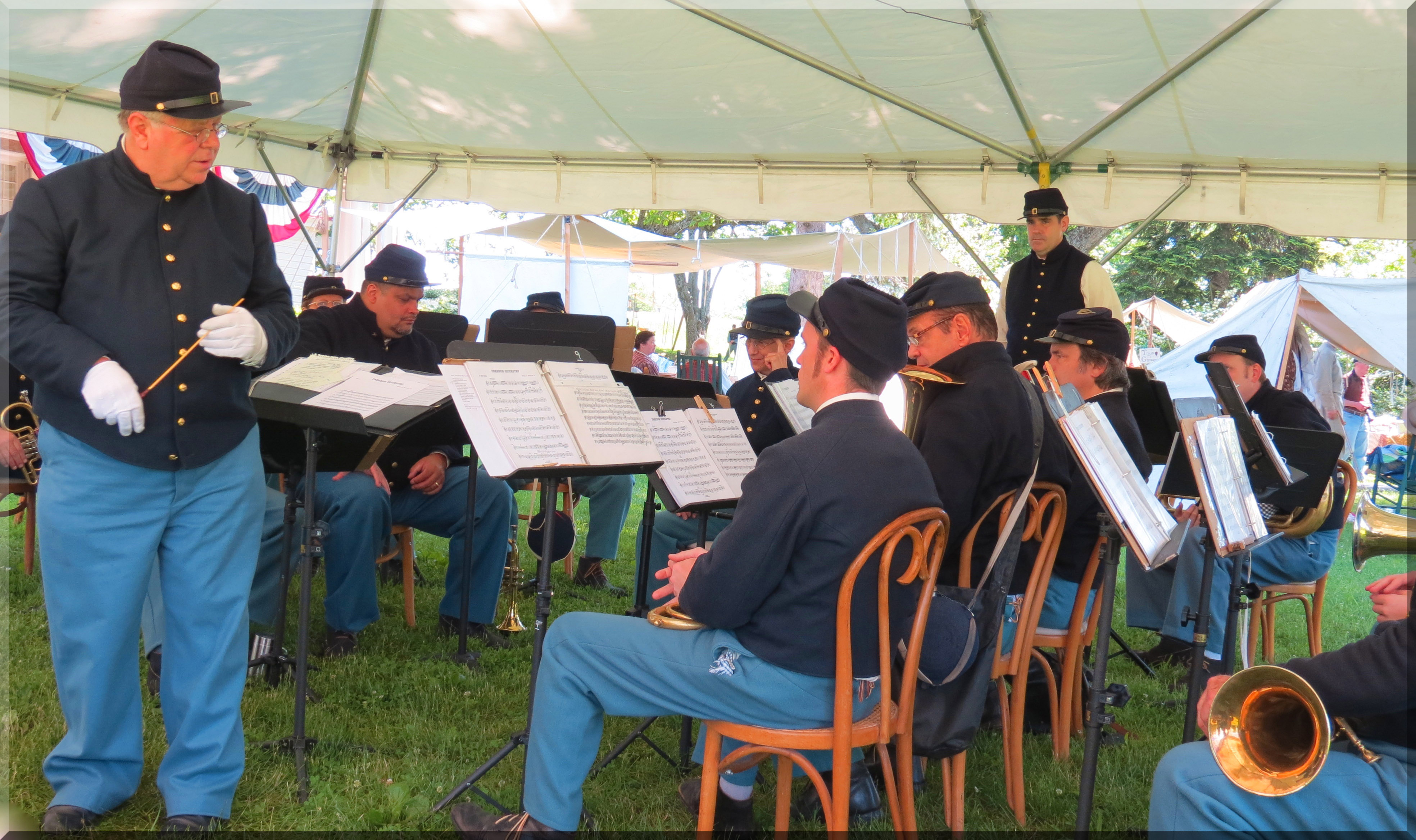
Becks Philadelphia Brass Band

Becks Brass Band

The Becks Philadelphia Brigade Band, a Civil War/Victorian-era brass band, performed military and social music of the Civil War period through the late 1800s. Authentically uniformed, the band played both reproduction and period instruments including a piccolo, Eb cornet, Bb cornet, Eb alto horn, tenor horn, baritone horn, bass and percussion. Today’s band serves as representatives of the brass band of the 2nd Division, 2nd Corps, 2nd Brigade of the Union Army of the Potomac in 1863.

Battlefield Enactment

Like the little girl whirling in circles, controversies swirl around the authenticity and ethical debates on battle enactments. For someone who would melt down every bullet and bomb ever produced, I have had to ask myself what is the attraction to watching battles, which in reality brought untold suffering and grief? Can someone so committed to peace derive an uplifting message from living history enactments?

My argument is in support of the reenactors. They have been extraordinarily kind in sharing information they have learned and generous with their time in making an honest effort at historical representation. Reenactors have every right to role play, as any movie director or documentarian has to present their view. These are regular folks who are portraying regular folks. Just like critics analyze films and television, visitors and observers may also critique these enactments. Just being present, reenactors encourage discussion, debate and further research. Historical reenacting, as well as for those of us making videos, carries the responsibility to authenticity and an understanding of the implications how the history of the Civil War might be presented.

Links

Friends of Pennypacker Mills Museum Facebook Page

Pennypacker Mills: Montgomery County, PA

Tag Cloud