Over a year ago I wrote a blog post, Lone Ranger and Tonto: A Nostalgic View and Modern Critique, in which I relate my childhood experiences of growing up watching westerns on television, and in particular, The Lone Ranger, and how those programs influenced the way children of my era interpreted that violence. In that post, I also wrote how as an adult, my perceptions of the program changed, understanding the issues of Manifest Destiny and the complexities of the relationship between Tonto and the Lone Ranger. This post is a reflection on my experiences on how that show might have influenced the way we played as children.
To us kids, the Lone Ranger and Tonto were heroes, unselfishly searching out the “bad guys” and bringing them to justice during the Old West. It would be only natural that we would want to emulate these two heroes. For girls, it may have been less about guns and more about that there could be someone out there who could look after people who were under the thumb of the bad guy and make things right. The Long Ranger knew how to make a plan and carry it out with the help of his trusted friend, Tonto.
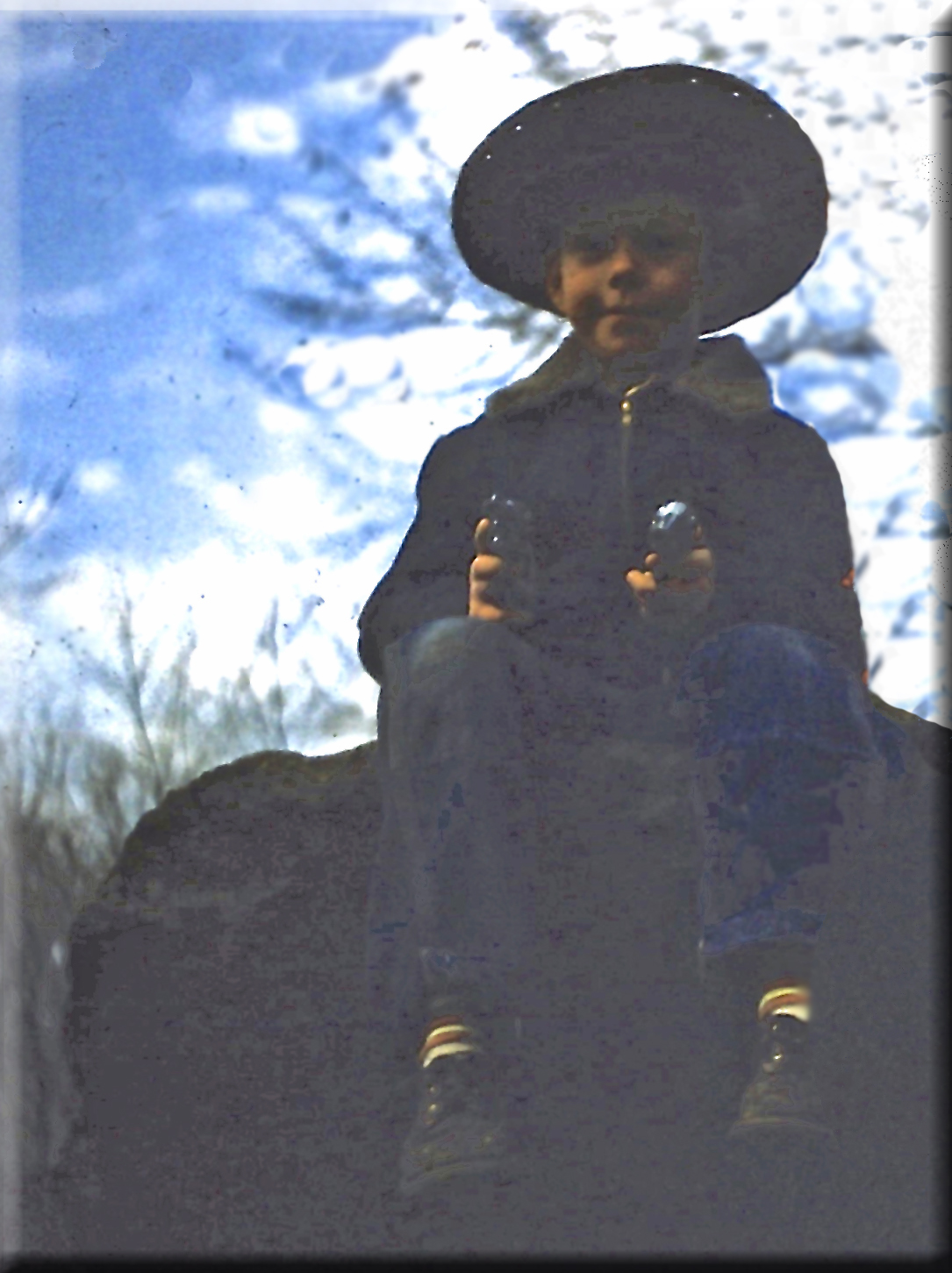
As I mentioned in the earlier post, although girls wore toy guns in holsters, usually as part of a costume, we never aimed our guns at each other or played mock shoot-outs. For the boys, it was different.
Photo: Circa 1954
Boys played the games of bad guys versus the good guys, and this play usually involved some degree of aggression, usually in the form of rough housing. If I complained to my mom that the boys were playing too rough, she would say, “Well, it’s time to come in then.” It wasn’t a girl’s place to get involved in fights and tussles. At some level, I thought that boys seemed less civilized than my girl friends because of their aggressive play and coarse language, which sometimes morphed into cursing. Sometimes they could be outright bullies. If they were playing shoot ‘m up with each other, and if we wandered into the action, we’d be shot!
Occasionally, a story in The Lone Ranger would include a woman. I remember secretly hoping that maybe the Lone Ranger or Tonto might find a girlfriend, and always somewhat disappointed, when they would ride off into the sunset again without a storyline that included a woman. Even at age 8, I realized something was amiss.
Got the guns, but where’s the girl friend?
The stories of the Lone Ranger became implanted in our consciousness, and Tonto and the Lone Ranger survive as mythic folk heroes for a generation of television viewers. Children could not grasp the idea that the Ranger was a vigilante who had no authority to enforce the law and who used guns to impose his will. Instead what we seem to remember is that the masked man and his partner played respectful characters who courageously stepped into dangerous situations with the unselfish goal to stand with those who faced injustice. As a young child, I guess I might have thought that any man who was that mannerly and courageous would wind up with a girlfriend . . . eventually.
Taking a writing course offered at the Big Blue Marble Bookstore led me into a community in West Mount Airy at the corners of Greene and Carpenter Lane. Despite the bleak winter afternoon, the community offered a warm atmosphere as the little shops that lined the streets invited me to stop in to visit. In addition to taking a writing course, I had also enrolled in a photography class at an art center in my community, so I had brought my camera along, as our assignment was to look for new shapes and textures as subjects.
With a fondness for restoration, I couldn’t believe my luck stumbling onto the Philadelphia Salvage Company. Suitcases and trunks piled on what looked like an old railroad cart, and metal cans spilled into the sidewalk. But I didn’t linger too long in cold. Upon entering the building, I noticed a cast iron stove, pumping warm air through the building, as a tea kettle spewed steam from its spout. I warmed my hands and looked around, mesmerized by the array of architectural salvage, from stained glass, plumbing and electrical fixtures, antique doors and windows. In a second life, I could be a picker, as I love all the old stuff in need of a fix-up.
The Salvage Company celebrates a doggie visitor as their “mascot of the day,” and I understand that a sleepy cat sometimes occupies the front bench.
I found lots of subjects for my photography assignment.
This slideshow requires JavaScript.
One subject seemed to deserve special attention: a shelf of different sized gears. The photograph of those gears inspired this blog post, and three months later the photo won first place at the Community Arts Center!
Across the street from the Salvage Company, dogs waited patiently for their owners grabbing a bite to eat at the High Point Cafe. Chilled by the damp air, I stopped in for a cup of coffee. I was not disappointed as the coffee was excellent, in addition to their selection of pastries. The Cafe refers to their corner as a village and “are proud to be part of one.”
One store down from the Cafe, the Nesting House specializes in selling new and used baby items “with an aim to uphold a mission of social and environmental stewardship.” They sell cloth diapers and used clothing. I found a little pair of shiny dress shoes for my great-niece.
Crossing over to the corner, I opened the door to the Weavers Way Co-Op, and met with crowds waiting in line to make their purchases. Deli aroma filled the air, and signs advertised hot soup for sale by the cup. According to co-ops website, they sell products that are “local, sustainable, organic, fairly traded and healthful.” It’s a small, two-story compact space, and yet they had annual sales up to $14 million.
A Huge Assortment of Bulk Items
I picked up some fresh vegetables and loaf of bread and headed to my destination, Big Blue Marble Bookstore. This store reminded me of the book shop restoration I had been part of years ago at Bindlestiff Books in West Philly. An independent book seller, the shop displayed a fantastic collection of children’s books and places for kids to sit and consider what they might buy. Toys and stuffed animals filled every corner. A cozy space, I lingered in the travel section before heading upstairs to my writing course. The store sponsors events including book clubs that can use their community space.
The progressive leanings of this corner village come from a long history of neighborhood harmony. According to Wikipedia,
The area is recognized by many civil rights groups as one of the first successfully integrated neighborhoods in America. Mount Airy residents organized to resist blockbusting, panic selling, and redlining, especially during the period from the late 1950s to the early 1970s when those practices were prevalent. It continues to be a well-blended neighborhood and was recently cited in Oprah Winfrey’sO magazine for its racial diversity and neighborhood appeal. The community has also been recognized by US News & World Report for racial harmony and balance.
The harmony in their neighborhood stands in contrast to what the big-box stores offer. In this post, Mystique of the Ole Fashioned General Store I compare the general store of years gone by, which served as a community anchor, with the big-box store of today, which, in contrast, offers little neighborhood involvement or esthetic appeal. According to a study conducted by faculty at Penn State, big-box stores coincide with hate groups. Mount Airy demonstrates that progressive values provide the small-town American atmosphere we long for in this country. It’s as simple as having a welcoming street corner in your neighborhood.
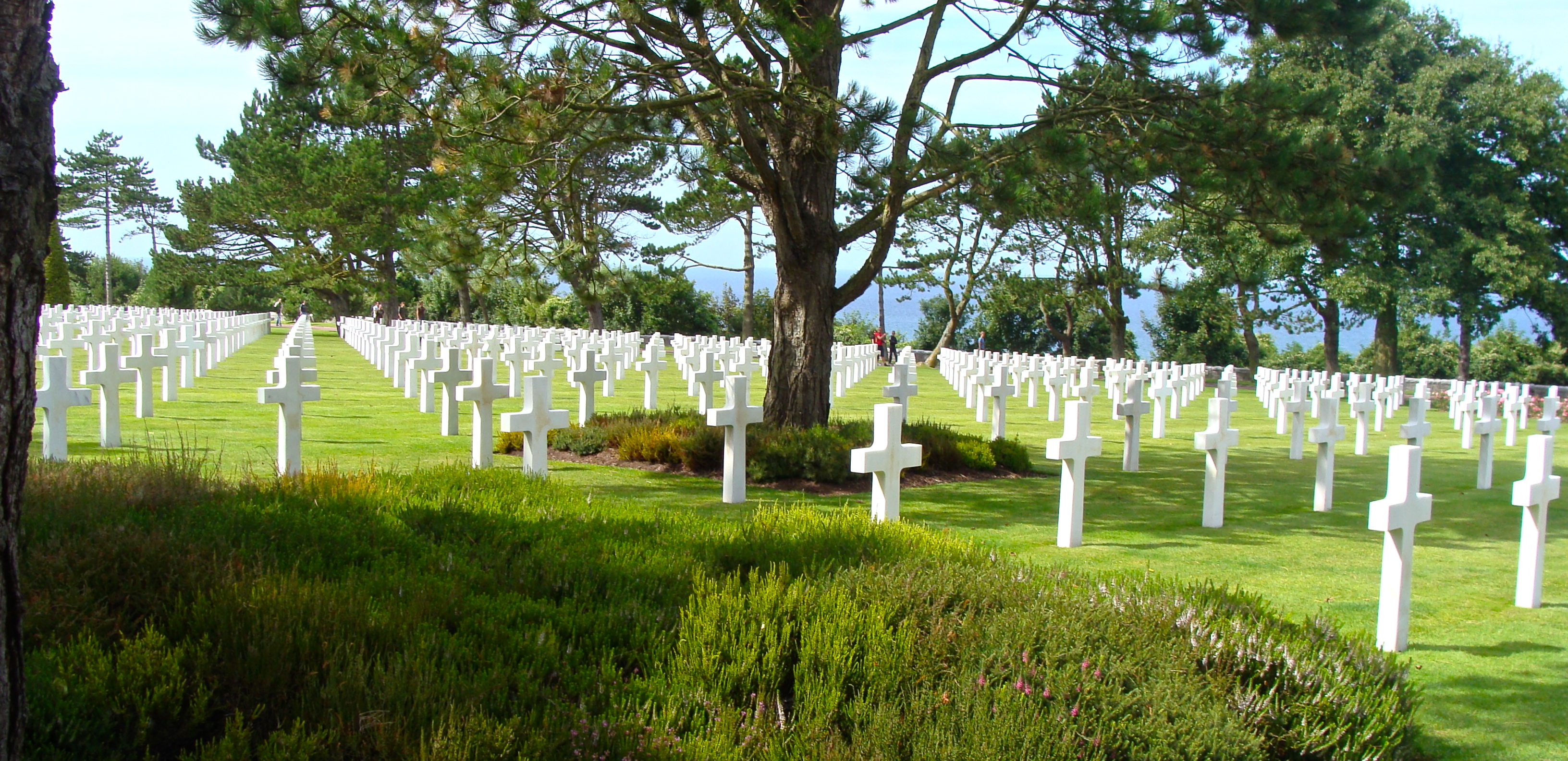
The American Cemetery was our final destination the day we visited Normandy. The grounds, landscaped with perfectly shaped trees and gardens, were well ordered. The blue waters of the English Channel framed the far side of the cemetery, and along the walk we could view cliffs in the distance. The beach, stretching for miles, vast and remote, rested against a scrub forest. On the carefully manicured lawn rows and rows of grave markers stood at attention facing the West. The trees swayed in a gentle breeze as the stillness of the markers remained ever-present.
Where have all the flowers gone?
On the dunes below the cemetery, we found these delicate pink blossoms entangled in barbed wire.
When I was a child, the book I treasured most was The Bumper Book: A Harvest of Stories and Verse. The condition of my book would not command the $350 that this vintage edition is selling for on eBay: the binding is gone, pages are torn and the cover is well-worn. Published in 1946, and given to me for my fourth birthday, these stories, fables and poems were my bedtime companions. “Wynken, Blynken and Nod” by Eugene Field, “Animal Crackers” by Christopher Morley and “The Swing” by Robert Louis Stevenson were some of my favorites. The colorful illustrations, printed on heavy glossy paper, fascinated me, drawing me into the stories because of the sweet depictions of the children in their vintage clothing.
Thoughts on Anachronisms
One particular poem featured vignettes of the days of the week, illustrated with a little girl doing chores for each day. Around the turn of the 20th century, women’s chores were assigned a day of the week, as described on the blog, A Hundred Years Ago. When I was a child, I loved play houses, and the settings in these illustrations seemed to take place in child-sized surroundings. I marveled that somewhere children played in these finely crafted miniature homes.
The Week’s Calendar
Monday, Watch the bubbles fly –
Tuesday, See the wash get dry –
Wednesday, Mend with all our might –
Thursday, Make things clean and bright –
Friday, Bad for dust and flies –
Saturday, Good for cakes and pies.
Sunday, From all tasks we’re free
After church we have our tea.
–Frances Heilprin
Because the little girl was cleaning and cooking in these picture frames, I wonder about the message that gave me about preparing for the eventual role of running a house. And then I wondered again, was that such an unfortunate model? Regardless of our path in life, we do have to take care of a home, either as a single person or with a partner and children. Of course, the drawings would have been more socially progressive if she had a boy to help out.
In our hierarchy of important jobs, our culture views work inside the home as a lower value. Yet today, with so many demands on our time, managing a home is a difficult responsibility. Cleanliness, orderliness, household finances and meal preparation offer considerable challenges. Work inside the home is the glue that keeps any society held together. This is honorable and necessary work that is best shared by all in the household.
My laundry circa 1949.
Question: Artistic Greatness
Eulalie Banks, a British/American illustrator, born in 1895 and who lived to be 102 years old, did all the artwork in the book. In her obituary, Nicholas Tucker wrote,
Eulalie Banks illustrated over 50 children’s books during her long lifetime. Never a great artist, she was always a popular one.
Interesting how the terms never a great artist, fill the second line. Really? I’ve seen many testimonials on the Internet to the Bumper Book, as adults reflect on how the stories and artwork became part of their childhood. Many, like myself, read the stories to their own children. The delightful illustrations offered a window into a rich fantasy world, enhancing the writing of the authors and poets. Conventional interpretations of greatness rarely include the breadth of experiences of children, which would lead to wider interpretations of artistic influence and “greatness”.
“The hottest places in hell are reserved for those who in times of great moral crises maintain their neutrality.” Dante
As social justice activists, we often identify with Dante in his frustration with those who either criticize the most nobel of justice campaigns or refuse to become involved.
What I’ve learned from doing activist work is that some folks just don’t like being bothered by our latest efforts to bring light on various social justice issues, and it almost doesn’t matter what the cause is: environment, poverty, corporate power, or gun control. The issue is not just about people’s indifference but also that some people actually become irritated by activists who generate discomfort with the status quo. It’s a universal problem that faces organizers but infrequently identified as a problem in solving the issue of understanding reactions to our most reasonable requests for social change in response to oppression. I would like to offer some thoughts on how we might consider what making change means to those who stand on the sidelines.
1. I’m frazzled. Facts, figures, charts, graphs are logical approaches to making our case, but what we sometimes don’t address are the emotional responses to change, which makes some folks get out of sorts when they feel change is thrust upon them. Often first responses are instinctively negative.
It’s important for activists to be aware of this problem before beginning to strategize solutions. Figuring out what emotional responses might surface assists in anticipating reactions from the community. In this way the organizers will have fewer surprises or objections when their campaign begins.
2. Don’t bother me in my bubble. People get comfortable with familiar routines, while thinking differently takes a great deal of energy. Folks may not want to hear that their water is dirty, their neighbor doesn’t have health care or that the schools are short on funding. If we examine even superficial social changes, like in the 1960s when guys began to grow their hair long or when mini skirts came into the fashion scene, there was a huge backlash against even these relatively minor cultural changes.
Don’t be surprised that your cause, no matter how compelling, has brought on criticism and resistance. Expect it and prepare for it. Look for possible scapegoats, either persons or ideas. It is important to help the community think rationally and critically. Hold educational events on neutral subjects such as researching and critical thinking. Later, you may become involved in panel discussions and open forums; be ready to clarify your reasonings, demystify assumptions, consider points of view, and support your data by evidence.
3. I’ll follow the pack.Since we are social creatures, we are part of a pack of similarly thinking people, which encourages a group think mentality.
Sometimes people have difficulty making decisions because they lack the information to make an informed decision. This is where the reports and data that are easily understood are important. Answer specific questions that arise. In some cases, experts can offer clarity to the community.
4. Don’t Tell Me What to Do.When change is imposed by others, people naturally resist, which seems especially true when this happens with peer groups. People sometimes accept authority from those with status, wealth or power. People feel they have to acquiesce to these authority figures, who get a pass because they are seen in status positions. Authorities also command the comfortable status quo and can use the comfort of the old familiar routines to sway opinion to their side when controversy strikes. When peers bring change, there is a vulnerability, as they may have little power or position, from which many view as legitimacy to make change.
Identify groups, people and organizations that may command attention because of the hierarchical position, and break down the power structures by giving people a voice to their concerns. Create venues in which people can participate.
5. I’ve got my own problems. And who’s paying attention to those, they may ask. People see the world from their own view and cannot face another distraction about other people’s’ problems. Facing up to social justice issues brings the next logical step: solving the problem and that puts folks on the spot. Then they may feel compelled to do something about it. But they don’t really want to solve the problem so they often find a convenient scapegoat.
Identify ways in which your cause may create difficulties for others, whether real or imagined. Listen carefully to those who express concerns and address those concerns. Invite them to be part of the process of change. You may have to alter your focus to include larger groups.
6. I’m above the fray.Some folks have privileges that allows them the luxury to ignore the problem. For example, they have enough money to get by or they are wealthy and can afford to fix problems for themselves.
Most people experience some form of discrimination because others have privileges. Find ways in which people experience oppression. One common form of almost universal oppression is lack of voice in the work place. Most employers do not operate in a democratic fashion, and workers resent injustices they have experienced in their place of employment. Point out the advantages of everyone contributing and how that helps the organization and democratic practice. Don’t make people feel guilty about their privilege. Talk about how liberation benefits everyone.
7. I’m scared.Perhaps they are a gun owner and fear that the privilege they have had with unfettered regulation will in some way be restricted. Others fear that what little they have will be taken away. If you advocate to pay a living wage to lowest paid workers, the middle-rung workers may feel neglected. They might wonder, where’s my pay increase? Institutions perpetuate this way of thinking. I was at a meeting recently where activists were pressing the administration to provide a day care center. An administration minion said, “What will employees be willing to give up for a day care center?”
Activists and social justice organizations must look at the bigger picture and listen to as many different constituencies as possible. It may be difficult, but try to involve them in the process or at least invite them. Create specific steps and supporting documentation for each step. Try to dispel rumors and myths. Look for ways in which your message might be undermined by fear messages from the opposition.
Organizations and activists will not be able to bring everyone on the side of their cause. However, it is possible to bring along folks who stand at the fringe or even the center who might consider what you have to say. Don’t be discouraged as staying strong in the face unrelenting criticism is part of our responsibility and not to be taken personally. Changing a culture is a long process and takes careful attention to detail while remaining compassionate to all involved. Integrity should always be the cornerstone of your campaign. People respect that even if they disagree with your mission. You might just might cancel a few of those reservations to the inferno.
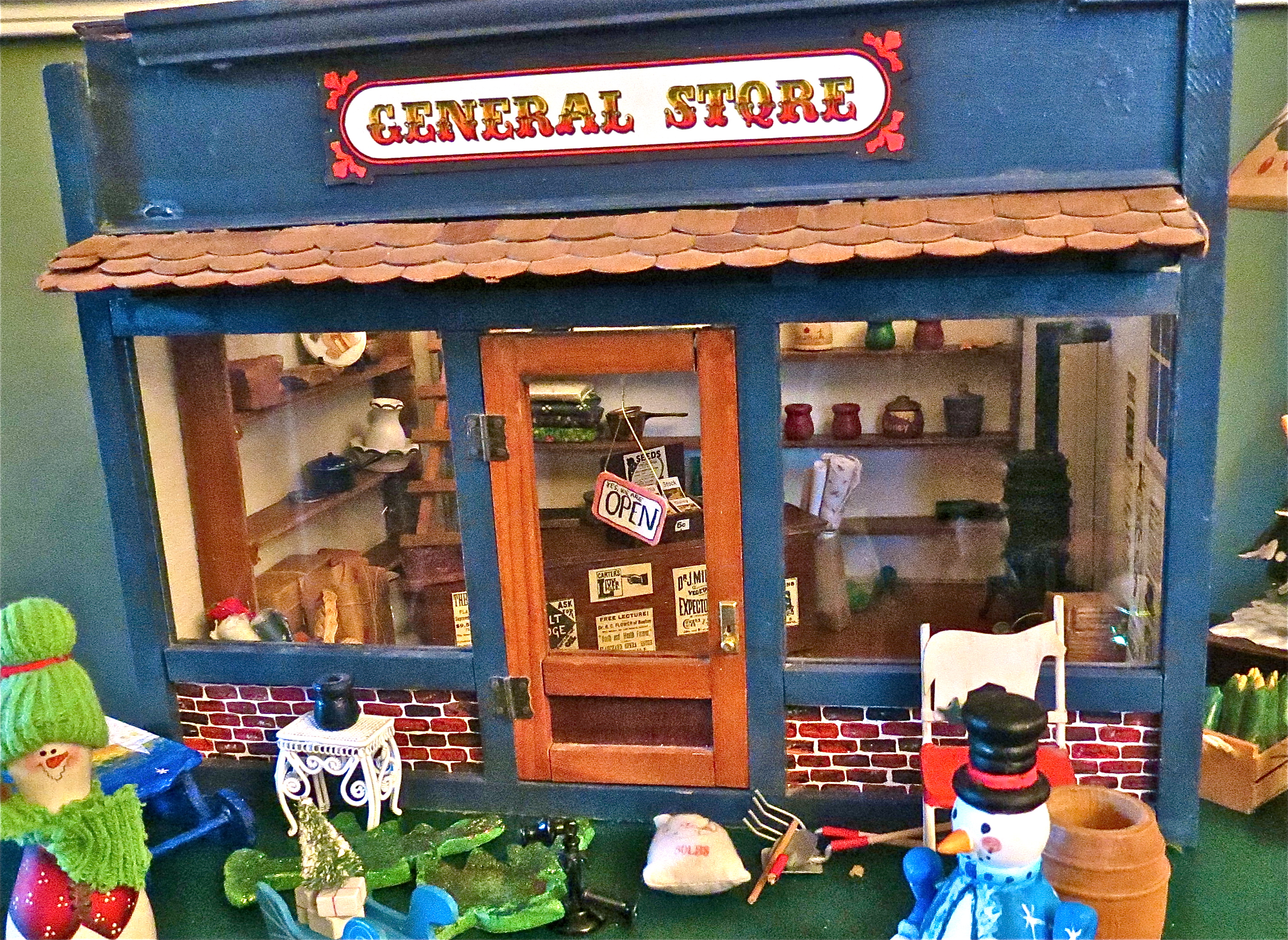
The old-fashioned general store has always been intriguing to me. As a child, one of my favorite shopping places was a building called “the Casino,” a large round wooden structure in Cape May, New Jersey. Every summer I looked forward to traveling to Cape May to just walk through the isles of the Casino to glance at the imports lining the shelves from around the world. I especially liked the little colorful cloth dolls holding baskets and brooms. The store offered a wide selection of souvenirs, including metal buckets and shovels for playing in the sand.
W.H. Snowden General Merchandise – Currituck, North Carolina 1895
Today a few general stores remain in operation. The aesthetic appeal begins right at the front door with a lightweight screen door, allowing fresh air into the space. Frequently merchandise spills out from the building, decorated with moldings even if the paint is peeling. Creaky wood floors and long wooden counters represent typical interiors. Wooden shelves and bins built into the walls extend from the floor to ceiling.
While general stores hold an abundance of merchandise, I don’t believe this is about conspicuous consumption, as an overwhelming number of goods are essential to the home and farm with elements of industry and efficiency . . . potato peelers, bolts of cloth, coffee grinders, iron skillets and lanterns.
Mitchell Hardware, New Burn, North Carolina
In the 19th and early 20th centuries general stores were central to small town communities. Selling everything from groceries, hardware items, shoes, pots and pans and other necessities, the store often anchored other small businesses that would line the town’s main street. That town center provided a community-oriented amenities such as sidewalks, parks and theaters. Within a short walk, shoppers could stop in at the library, bank and post office. Upon entering the store, the proprietor, sporting a long white apron, would stand behind a wooden counter and would greet you. Storekeepers had to keep informed on the pulse of the community so that they could order the right materials. Neighbors would meet up at the store and share news as they shopped. Many stores keep a pot belly stove going, and customers played bottle cap checkers near the warmth of the stove.
The Peck Basket General Store Moyock, North Carolina
The store owner maximized the floor utilizing boxes and barrels to support merchandise. Generally, the proprietor purchased in bulk quantities. Then he would weigh the purchases on a large scale. Few items were pre-packaged, but canned goods occupied much of the grocery shelf space. Speciality items could be ordered, such as furniture, farm equipment and sewing machines. Deliveries arrived by horse-drawn wagon and later by train.
Bins for nails; no pre-packaging Mitchell Hardware, New Burn, North Carolina
Something from my childhood must have endeared me to the general store that still resonates with me today. Viewing little pieces of this former way of life, is tantalizing enough to make me wonder about what has been lost.
Often times General Stores housed the Post Office.
Do the consequences of losing the small-town general store move beyond aesthetics?
How do our shopping experiences around malls, big-box and strip stores compare with the country store of yore? Today massive shiny lettering in bold colors shouts the store’s name. These industrial style buildings sit at the back of expansive concrete parking lots without hardly a tree or blade of grass in sight. Bland building facades are identical to every other strip mall. Steel doors, cavernous spaces, utilitarian shelving and harsh lighting all contribute to the lack of aesthetic appeal and warmth. With their stark interiors, they are but warehouses for merchandise.
Big-box retailers have reaped economic benefits from their bland design that demands little in aesthetic investment, and consumers may have found these businesses offer the best prices. But what have we lost in the conversion to bear-bones consumerism? Some claim that these retailers boost city revenues, but have we sacrified small businesses at the altar of increased tax revenue and cheaper prices? Small business owners, often members of the community, support local enterprises and charities. Huge corporations have no loyalty to any one town or city. Some research shows that it doesn’t always play out that this increased tax revenue brings in development.
How does the big-box store influence our social relationships? Do you run into your neighbors at the box store? Is there a place to stop and converse with friends? Does anyone smile at you? Wal-Mart has even phased out the paid greeter, not that a paid employee saying “hi” necessarily made any difference. According to an article in Jezebel,
Because big box store are so anonymous and huge, there’s a sense that no one is watching. Social bonds are strongest when people feel like they’re being closely watched, so if the opposite is true, it might make people feel like they could do whatever they like without consequence.
As weird as this might sound, these big-box stores coincide with hate groups, according to a study conduced by faculty at Penn State and other universities. The number of Wal-Mart stores in an area correlated with the number of hate groups in that same area and more statistically significant than other factors, such as unemployment and crime.
What runs side by side of hate group? Gun sales. Approximately a third of all Wal-Mart store sell fire arms, including the “modern sporting rifles” or the type of semiautomatic rifle used in the killing of 26 adults and children at Sandy Hook Elementary School. Wal-Mart is the largest seller of firearms in the US. The Christian Science Monitor features an excellent article on the subject.
My original intention of writing this blog post was to describe the pleasing aesthetics of the old-fashioned country store. Analyzing the larger picture of what the demise of country store has meant for America reveals how their absence uncovers much more than just a change in aesthetics.
Over the past couple months I’ve taken a photography course at the Community Arts Center with the hope that I could improve on my blog photos. Steven Miller, who has photographs in the permanent collection of the Smithsonian Museum, presented us with a series of assignments that emphasized various photographic techniques. Inspired to step out of my comfort zone, I experimented with photographing different subjects.
My travels during this time took me to a narrow backstreet in the Mount Airy section of Philadelphia. Near the corner of Carpenter and Greene, little stores nestled on either side of street. A cooperative grocery, an independent coffee shop, a second-hand store offered a bustling section to an otherwise quiet street. The Big Blue Marble Bookstore with its colorful façade and window dressing of books and toys offered a particularly bright spot. Just across from the bookstore, I discovered a honey hole of photographic opportunity, the Philadelphia Salvage Company. The shop, a wonderland of restoration projects, overflowed with antique doors and stained glass windows. Vintage boxes and light fixtures lined the aisles. Boxes of buttons, rows of tiles, planks of wood scattered about the warehouse. On one of the shelves someone had arranged a collection of gears, and that’s where I found my prize photo, the best of the 500 pictures I took during this time.
Click on the photo for a better view.
Freewheeling
Update: Photograph won first prize at the Community Arts Member Show, June 2013.
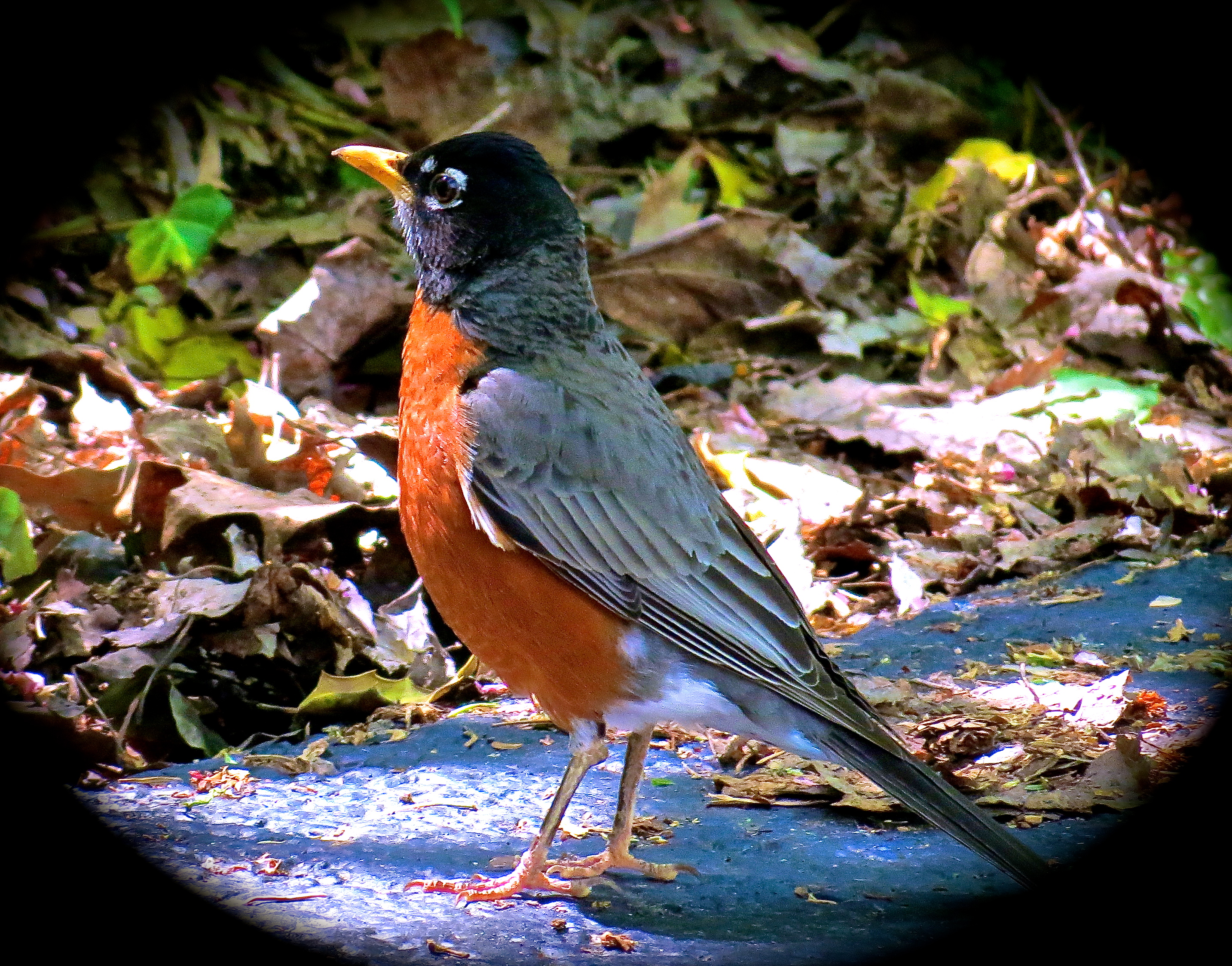
One afternoon many years ago I observed a robin in the garden behaving strangely, having what seemed to be seizures. Since he seemed so close to his last moment, I thought he would be better off in his own element than my taking him in. I looked on from a window to make sure that he would stay safe from predators. As I stood watching, a small flock of sparrows flew into the garden and formed a ring around the robin. A few other bird species joined the circle. The birds pecked at the ground and flitted about, tweeting. When the robin finally laid still, the birds of the circle flew away.
My sense of this phenomenon was that I was sure I had witnessed s a vigil of some kind. Yet, because I tend to think scientifically, I questioned whether this occurrence was either coincidence or was I anthropomorphizing.
In September 2012, an article in BBC Nature that reported that scientists had observed that birds hold “funerals.” If the western scrub jay encounters a dead bird, the jay will call out to the other birds. The jays will fly down and gather around the departed one. Another scientist noted that magpies placed pieces of grass by one of their fallen comrades. Now, I could rule out that my observation years ago was not a coincidental occurrence, but was it a vigil?
It seems that some have concluded, as published the findings in the journal Animal Behaviour, that “all organisms must contend with the risk of injury or death; many animals reduce this danger by assessing environmental cues to avoid areas of elevated risk.” If a bird was sick or subject to predation, why would other birds fly down to one that is dying? This made me wonder whether we can we in any way attribute this particular “funeral” behavior to any evaluation?
The sparrows’ vigil still holds an element of mystery. Maybe we have to admit we just don’t understand, and that recognition leaves space for openness and discovery.
Growing Up Viewing the “Wild West” while Living in the Philly Suburbs
“Return to the thrilling days of yesteryear”
Everything we knew about the West we learned from Hollywood’s recreation of the American frontier on television, and we thoroughly absorbed the historical misinformation of the people and culture of that time. By the late 1950s, over thirty westerns, such as Gunsmoke, Have Gun Will Travel, Wagon Train, Sugarfoot, and Maverick, blazed across the screen. The melodies of the theme songs still replay in my memories. Years later, we learned that what we thought was real about the West was, in fact, a myth. As children, we certainly didn’t recognize stereotyping, and we were pretty much oblivious to standardized characters and plot predictability. Looking back, I still reflect with a certain amount of nostalgia just because the television western was a part of my childhood experience.
The Lone Ranger became one of our favorite programs. The TV series began in 1949, and new episodes continued through 1957. I remember watching the introductory episode in reruns many times, which unfolded the story of Tonto finding the injured Texas lawman and his transformation into the Lone Ranger. I was not alone in this infatuation, as almost every child in America knew who Kemosobe was. The Lone Ranger and Tonto stood as heroic figures in the lawless frontier. Later I would learn that Jay Silverheels, who played Tonto, resented that he had to speak in a scripted pigeon. As a child, I thought of Tonto as an equal partner with the Lone Ranger, which is surprising given that the Lone Ranger possessed all the hero accouterments: mask, silver bullets, white hat, and horse. To me, Tonto acted as a trustworthy and resourceful partner with the Lone Ranger.
Hands Up!
Westerns influenced our childhood games and apparel. The boys in our neighborhood played with toy cap guns. Several regularly wore their cap pistols in holsters and donned cowboy hats. I didn’t like cap guns because my fingers usually got pinched when the hammer mechanism sprung closed to make the “pop” sound. While the boys aimed their guns at each other in mock battles, for us girls, the guns were merely a fashion accessory, part of our cowgirl outfits. I’ve seen many pictures of our friends and relatives from that era, and not many escaped without being photographed in cowboy-girl attire. Our Sally Star dolls even came with holsters and guns, but we never played “shootouts” with them.
How did I interpret gun violence on television as a child? Well, I don’t remember either relatives or teachers offering any analysis of the programs or discussions of Western history or violence. Adults purchased the cowboy attire and the toy guns, so I think we assumed these had some legitimacy. At least on the Lone Ranger show, most of the villains never seemed worse for wear for being shot; Hollywood sanitized the effects of gun wounds with an arm in a sling as the typical portrayal of an injury. I think even as a child I realized that TV westerns were pretend–just like our plastic guns.
The gun is just part of the outfit.
Retrospective: Forty Years Later
The Good
Revisiting some of the episodes offered insight into a comparison of what I remembered from my childhood and the real program content. Now the benefit of scholarly historical analysis uncovers the stereotypical Hollywood interpretation of the Old West and portrayal of Native Americans. In his essay, “I hated Tonto then and I hate him now,” Sherman Alexie writes his views from a Native American perspective about his complicated relationship with Indians in the media.
Upon viewing some of the episodes, what immediately struck me was the Lone Ranger’s diction and demeanor. Clayton Moore, the actor who played the Lone Ranger, practiced duplicating the radio voice of the Lone Ranger; his enunciation was impeccable but sometimes comical. “Howdy” came off as a pronouncement rather than a greeting. However, it seemed easy to forgive that overly formal manner as contrasted with so much of the gruff and coarse discourse we get today on television; the Lone Ranger was refreshingly polite and well-mannered. The program had several other redeeming qualities. This conversation in the first episode revealed an essential tenant of Long Ranger stories: he never shoots to kill but rather only to disarm his opponent, as painlessly as possible.
Tonto: Here gun to kill bad men.
LR: I’m not going to do any killing.
Tonto: You not defend yourself?
LR: I’ll shoot if I have to, but I’ll shoot to wound, not to kill. If a man must die, it is up to the law to decide that not the person behind the six-shooter.
Tonto: That right, Kemosabe.
The Lone Ranger decides to use only silver bullets as a reminder that life is precious. Along those lines, the Lone Ranger usually comes up with a thoughtful plan for dealing with the outlaws. He cautions against rash actions and his plans include deliberately reducing violence.
During the series, few story characters trusted the Lone Ranger, because he wore a mask, or Tonto, just because he was an Indian. The Lone Ranger said, “You’ll have to trust me.” That trust contrasted with some of those characters who held respectable positions but who were not always trustworthy, whether doctors, judges, or sheriffs. I’m not sure this is the result of watching the program, but I usually don’t ascribe trust to those in power just because of their position or status.
The Bad
The Lone Ranger stories could be characterized as light entertainment that often relied on clichés, such as manifest destiny, the 19th-century belief widely held by Americans that the United States, destined to expand across the continent, would bring democracy and rule of law to the world. Manifest destiny rationalized violence, as justifiable because of always being on the “right” side; the gun then became a primary symbol of moral violence. Unfortunately, the Lone Ranger was just another vigilante. Shooting to maim was legitimated because neither the legal process nor morality could prevent the violence. The superhero guaranteed and assured the audience that the outlaw would meet his deserved demise. Rather than the legal process, however, violence became the solution to the criminal problem.
And the Ugly
While representations of violence in the media offer many complexities not easily understood, my theory is that children take on the beliefs of their parents, who are the mediating factors, and why it is difficult to arrive at an overreaching theory on how the media influences each child. I wrote about this issue in this post. It seems that generations of young people have accepted the mandate to solve conflicts through defensive gun violence and ignore the concept of the rule of law and reason in their justification of violence. If parents promote vengeance philosophy or celebrate power through weapons, the impact of the media reinforces these views. Although I don’t recall my parents offering any commentary about the Westerns, they held firm beliefs against fighting and aggression, which I believe was the greatest influence on my thinking about gun violence. Most of what I watched on television years ago held little sway over my views today. One of my main arguments against the possession of guns is: how is justice served if the shooter is the jury, judge, and executioner? I guess that’s where the Lone Ranger and I would agree.
The National Rifle Association’s 4 million mothers, fathers, sons and daughters join the nation in horror, outrage, grief and earnest prayer for the families of Newtown, Connecticut . . .
Wayne Lapierre, NRA Press Conference, December 21, 2012
Outrage?, grief? Really?
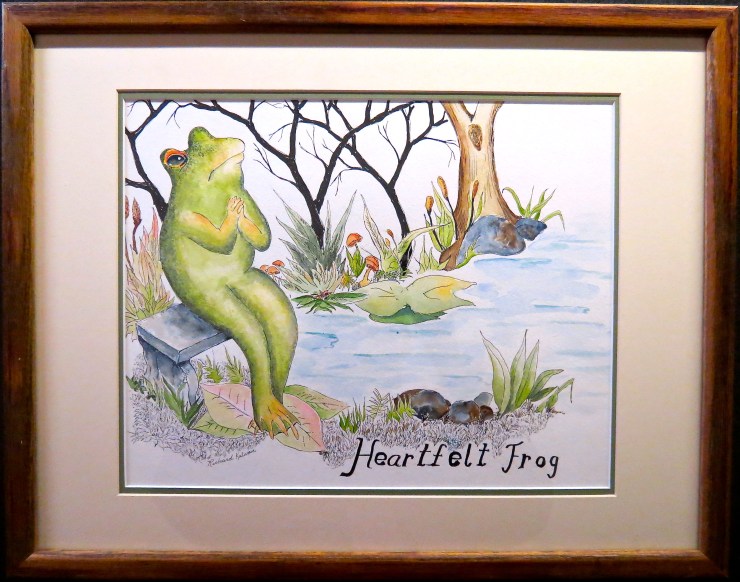
Last summer my great niece, Valeta, aged 4, and I had a conversation about sincerity and what that means. Seems like a complicated subject for a four-year old, but she listened intently to my explanation of what it meant to be sincere. I told her about the frog I have in my garden. He is called the “Heartfelt Frog” for he holds his hands to his heart and looks up toward the sky. I explained to Valeta that sincerity means honestly saying how you actually feel and how the frog earned “heartfelt” because his sentiments came from his heart. I demonstrated by placing my hands on my heart. Valeta immediately shadowed my actions and held her hands to her heart.
Five months went by, and one day Valeta asked my sister, her grandmother, if she could visit the heartfelt frog in my garden. We live a long distance from each other so this Christmas I painted her a picture for her room.
Does the spokespearson for the NRA feel a sense of true loss for these families? These losses are tragically painful. And if the NRA’s response was truly heartfelt, they would assume responsibility to correct the injustice of these deaths. Does the NRA understand that their actions in support of all weapons is responsible for the deaths of 30,000 people in the United State every year? Being heartfelt means that an utterance of expression of grief and outrange translates to acts that promises reconciliation and correction.
A four-year old can understand this; for the the NRA, they are forever locked in their selfish pursuit of pleasure at the expense of the on-going tragedies of gun deaths for the rest of us.










 Psalmboxkey's Blog