The Fascinating World of Telephone Pole Insulators: A Collectible Treasure
What is so interesting about telephone pole insulators?

Glass insulators still sit atop a telephone pole, in Richmond, VA
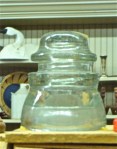
My curiosity about insulators started before I even knew what they were. A friend of my son’s stayed at his home for a few days and left a glass, lantern-like object in appreciation for his hospitality. A neat little piece, the glass cylinder found a permanent display place in John and Jim’s living room.
This summer, we drove down to the Outer Banks, and on the way, we stopped at one of my favorite antique shops, The Peck Basket, which resembles an old-fashioned general store.

On looking over one of the shelves, I came across a similar lantern and asked what it was. The proprietor informed me that the object was an insulator, one of those glassy objects that sit atop cross arms of telephone poles. Someone had given her an entire box of them. During slow periods in the store, she washes them up and then sells them on eBay, sometimes for $40 each.

I can’t ever remember paying any attention to telephone poles, but for some reason, I could recollect that there were glass cylinders that held the wires. Research informed me that without insulators, electricity could leak into the pole. I also discovered that these little class cylinders are collectible. During the 1960s, the electric companies began replacing the poles and moving wires underground, and the insulators were just thrown out. Folks realized these discarded objects were beautiful, ranging in various colors, shapes, and sizes. The colored glass sparkles when placed in a sunlit window.

If you look on the web, several insulator clubs share information and hold local and national shows. Books and magazines describe insulator history and their prices, which range from a few dollars to $20,000! If you get interested, find an informative web page such as Stories of a Northwest Insulator Nut, set up by a dedicated collector.
So if you are looking for a “Hemingray-9, CD 106”, used in rural telephone systems, you will find it.


 Psalmboxkey's Blog