Humble Contributions to the Peoples' History

Discussion and Presentations at International House Philadelphia

Carole Parker Introduces Program

Sami Krait, International House Resident

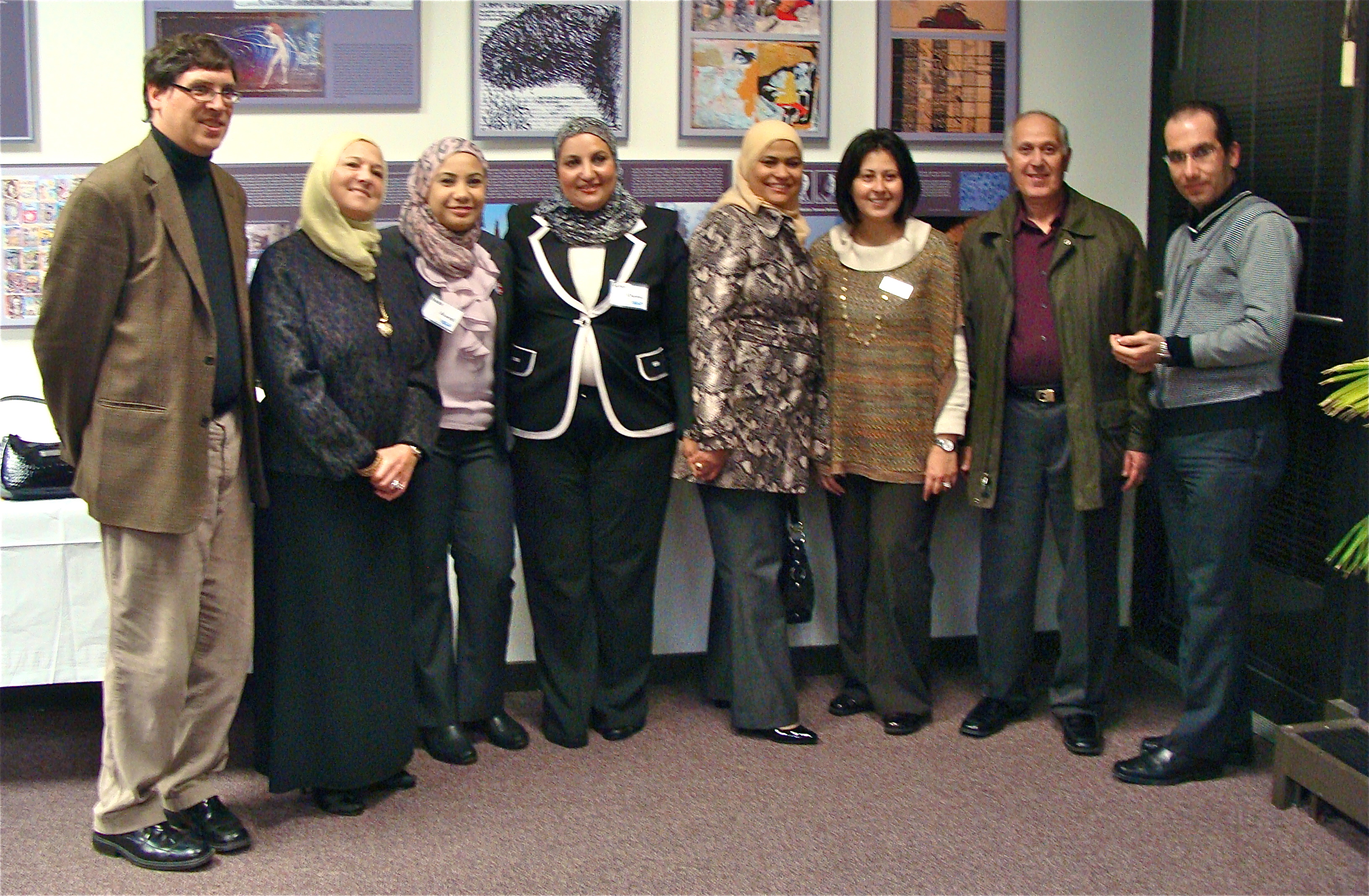
On November 11, 2011, The International House of Philadelphia, a residential community for international students and sponsor of multicultural programs, featured two guest lecturers who spoke on “Women and the Arab Spring.” In the Spring of 2011 the international community was spellbound by the courageous actions of the people of the Middle East and their determination to bring democratic reforms to their nations. On a personal note, I was so inspired that I made a video as a tribute to all people through human history who have fought for their freedom against oppression. Video is here under FREEDOM.

Sahar Khamis

In her presentation Sahar Khamis, professor of Communications at the University of Maryland, spoke about how the “Arab Spring” was actually an “Arab Awakening” and how women played a significant role in the Egyptian protests. While acknowledging the important role of social media as a tool that allowed the democracy movements to proceed more quickly, the success of the protests could be attributed to prior organization and to the people willing to come together to demonstrate in solidarity for democratic reforms.

Nada Alwadi

Nada Alwadi, independent journalist, writer and researcher, spoke on “Women in Bahrain.” Nada introduced the heroines of the Bahraini protests. Citizens of their country who were just doing their jobs were imprisoned and tortured.  The Bahraini authorities targeted two unionists, Jaleela Al Salman, Vice President of the Bahrain Society of Teachers and Rula AlSafar, President of the Bahrain Nursing Society, both of whom spent months in jail and are scheduled to go to trial. Authorities also arrested Ayat al_Qurmezi for reciting her poem about injustices in Bahrain at one of the protests. Nahad al-Shirawi treated injured protestors. A photograph in a hospital room showed Nahad grieving over the loss of a patient. She was later arrested for “grief without a permit.”

This site has more information about women’s role in the uprisings, which continue until this day.

L-R Marwan Kreidy, Mrs. Baraka, Nada Alwadi, Sahar Khamis,/ /,Sally Baraka, Nabil Baraka, Sami Krait

Nada Alwadi

Photo: J. R. Blackwell

John’s Thesis on Bahrain

Severals month ago my son, John, selected a topic for his master’s thesis, “Bahrain, Migrant Workers and the Popular Revolt for Democracy.”  As a world history major, John choose Bahrain, an island monarchy in the Persian Gulf, because of the intersection of  global and labor issues against the backdrop of an ongoing revolt on repression of democracy. So I couldn’t believe his good luck when Swarthmore College anounced that Nada Alwadi, Bahrainian journalist and founder of the Bahrain Press Association, was scheduled as a speaker on November 8. Nada Alwadi had been a reporter for Alwasat, the most popular newspaper in Bahrain. After contacting the Peace and Conflict Studies Department at Swarthmore, they told me there was an opening in her schedule for noon time. We made the arrangements to have Nada come to our home for lunch and an interview.

Recent History and Controversies in Bahrain

In the Spring of 2011 Nada reported on the pro-democracy protests that shook that nation. A land bridge between Saudi Arabia and Bahrain allowed the king of Saudi Arabia to march his troops into Bahrain to quell the uprising and bolster support for the monarchy of Al-Khalifi. Since that time, activists, journalists, doctors and nurses have been arrested by the authorities. One further complication is the issue of migrant workers in Bahrain, which make up 75 percent of the population. Some of these “workers” are from Pakistan and other countries, and they fill positions in the army and police force. In essence Bahrain is hiring mercenaries to keep the revolting citizenry in check. Despite the oppression that protestors face, the people of Bahrain continue to fight for democratic reforms.

Nada’s Story

In April of 2011 the authorities detained Nada, and she was forced to sign a statement saying that she would not write on or engage in any political activities. Then they fired from her job. Nada is currently living in Washington, D.C. and is on a speaking tour explaining how the on-going protests in her country help to build democratic process in the Middle East.

Nada wore a button expressing solidarity with all of her fellow Bahrainians, “No, Shia, no Sunni. Just Bahraini!” dispelling the myth that these sectarian camps are pitted against each other.

Photo: J. R. Blackwell

What We Can Do To Help

Due to the publicity from human rights organizations and several U.S. Senators, the sale of $53 million in arms sales to Bahrain has been blocked temporarily.  The approval of the arms sales depends on a review of the findings of the Bahrain Independent Commission of Inquiry, which is supposed to make its decision by November 23, 2011. The objectivity of this organization, given that it was established by King Hamad bin Isa Al Khalifa by his royal decree, is in serious question.

For me personally, I object to selling weapons to any country.  Why can’t the US sell materials and goods that would help the infrastructure of that nation? Please email the President and Hillary Clinton and ask them to block this sale.

John Finishes his Thesis, December 2012

John’s submitted his thesis, How Statescraft employed by the al-Khalifa Monarchy Obstructs Democratic Reform in order to Maintain Regime Stability in Bahrain: A Historical Review, in December of 2012.

John’s thesis examines how the monarchial regime of the al-Khalifa dynasty of Bahrain has skillfully tailored the tools of statecraft, both in international diplomacy and domestic policy, for one primary objective: to restrain attempts for democratic reform in order to sustain the regime’s wealth and power. The al-Khalifa regime has shaped statecraft policies into a unique set in order to limit democratic initiatives. The monarchy blurs the lines between at democratization as contrasted with taking a few steps toward liberalization in order to address the nation’s continuing unrest. The regime exacerbates the Sunni-Shi`a divide by hiring Sunni foreigners to serve in the security forces and deliberately stokes sectarian conflict by blaming Iran for inciting the Shi`i population. The regime encourages the hiring of migrant workers, which benefits the monarchy’s wealth and fosters competition for jobs between groups of workers; at the same time, the regime denies migrants steps toward citizenship. Through its foreign relations polices, the monarchy prudently balances its relationships with the United States and Saudi Arabia for the primary purpose of maintaining power. Unique circumstances, as revealed by Bahrain’s history, have influenced the al-Khalifa’s governance of the nation. These factors include: US military base on Bahrain’s land, a Sunni minority ruling a Shi`i majority, a well-educated citizenry willing to protest for democratization and labor rights, dwindling oil resources, and a geopolitical position between two rival regional powers, Saudi Arabia and Iran.

Snowy Egret w/ Showy Shoes

Spending just a day on Chincoteague Island, we were rewarded with a serendipitous experience. Chincoteague, on the eastern shore of the Del Mar Peninsula, is best known for the wild ponies, whose ancestors survived a wreck of a Spanish Galleon, or one of the legends would have us believe. Turned out the egrets carried the day.

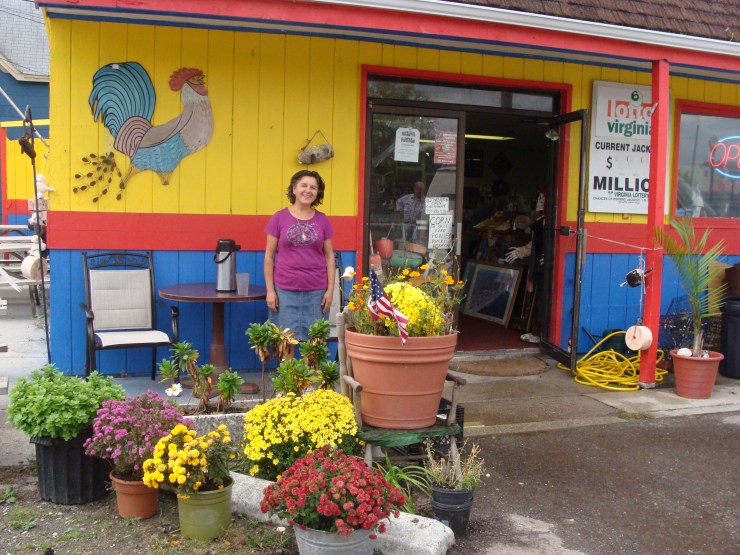
On turning down the historic Main Street, a large yellow and colorfully decorated building surrounded by flowers and artifacts, came into view, so we immediately turned into the parking lot. “Chincoteague Treasures” became the first stop on our island tour. Inside a variety of antiques and memorabilia filled the building. We compared the items with things that we owned, and stuff we regretting giving away upon discovering the prices on such items. Old toys, books, glassware, tools and clocks lined the shelves, and a good selection of chairs and other furniture occupied the center section. A vintage candy machine, harking back to a former area, stood next to the wall. A small mental stove reminded me of my childhood toys. We sifted through several boxes of record albums and found a John Lennon/Yoko Ono Double Fantasy cover that we liked.

On one the shelves, I came across three blue and green colored insulators with a tag of $35 on one of them. After writing a blog post here on the subject of insulators and becoming fascinated by their history and esthetic appeal, I knew it was time to get out my cash. My sister and I picked one of each, and we asked if all were $35 or just one. The proprietor, Harry Katsetos, replied they were $35 each but made us an offer of two for $25, which I immediately agreed on. We spoke with Maria, Harry’s wife, about their store and how much we liked it. I told her I was going to take a photograph of the storefront to include on my blog.  She agreed to pose out front, and Harry  joined us for more pictures and conversation. On the subject of computers, Maria said they were not yet connected to the Internet but had to plans to hire a student to help with a web page.

Then as a total surprise, Harry presented my sister and me with two of his creations, hand-made egrets mounted on cedar platforms.

We certainly discovered treasures at Chincoteague Island, and they didn’t fall off a Spanish Galleon.

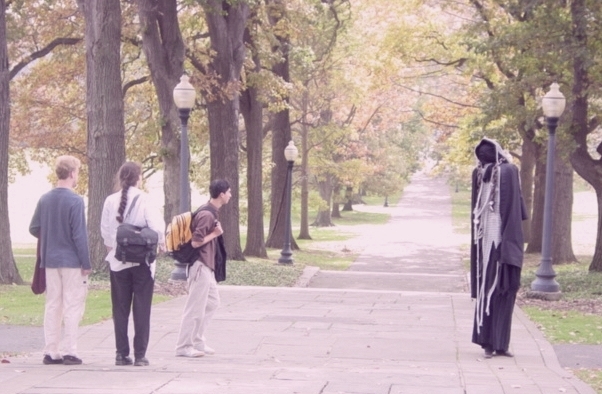
During our years working on the  Swarthmore College Living Wage and Democracy Campaign we used many venues, such as panels, rallies and lectures to advance the cause of a living wage for campus workers. For some of these events we incorporated street theater as one of the methods to bring attention to low wages at the College. Around Halloween in October of 2004 the Specter of Economic Injustice began wandering about the campus and town. Signs warned that the Specter was coming:

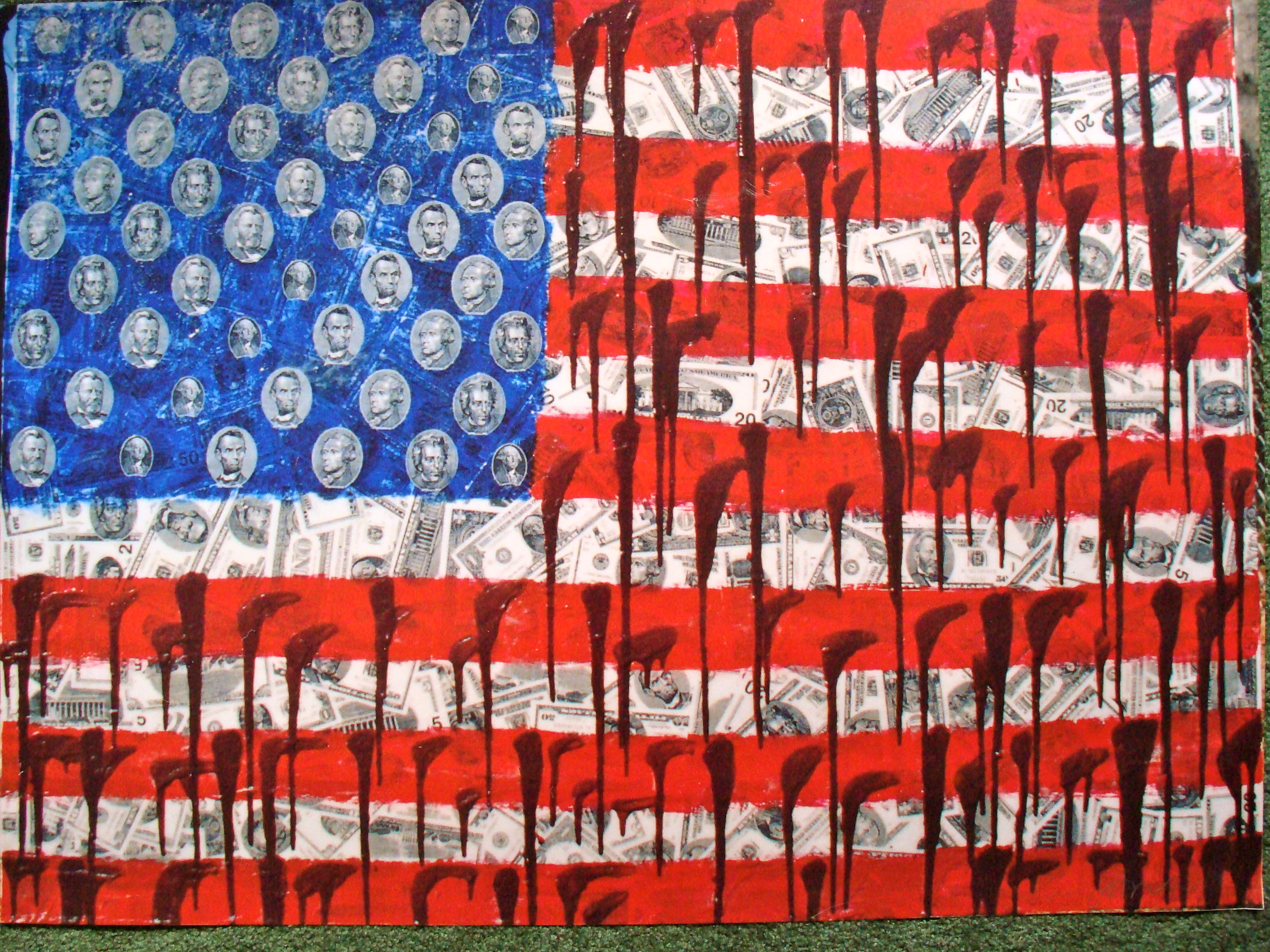
The Specter haunted the area for several weeks, sometimes showing up at events or just floating across the landscape. Over seven feet tall, the Specter, draped in black robes, carried chains intertwined with dollar bills. Piercing red eyes glowed in the night. Usually a sign carrier accompanied the Specter to clarify the message to those who were unaware.

We also distributed flyers stating . . .

Issues of unfair workers’ compensation have haunted the Philadelphia area. Many low-wage workers have difficulty putting food on the table, and food pantries have seen a huge increase in the number as working poor who seek their help. Swarthmore students have organized around this issue for years, citing their College’s commitment to Quaker values.  They believe Swarthmore College with its billion dollar endowment cannot teach students to improve the world while practicing social injustice toward campus workers.

This Halloween would be a good time for the Specter to appear again. I’m sure the Specter would be warmly welcomed  by  Philly Occupy. But just like the ghosts in Charles Dickens‘ Christmas Carol, the Specter would be visiting the Scrooges of the world.  So who are the Scrooges? The Specter might consider those who

  • block legislation for campaign finance reform
  • oppose universal health care
  • criticize workers for standing up for fair pay and benefits
  • support unregulated corporations
  • allow the public to suffer the consequences of pollution when companies make profits
  • thwart efforts to improve education
  • advocate for tax structures that give loopholes for the rich and hardships for the poor
  • profit from war

For us mortals we have to rely on other methods to further economic justice.  The Occupy folks have made the first successful steps. Now we must take up the banner and move forward. We can join with others who share our concerns to form a broader movement, run our own candidates, pressure the politicians with the vote, disengage from corporate control and encourage those who are making a difference.

Relying on the good will of the rich and powerful to relinquish influence and wealth will only result in the continued nightmare on Main Street.

About twenty miles from the Chesapeake Bay Bridge Tunnel, we turned right from Route 13 to Route 184 to explore the bay side town of Cape Charles on Virginia’s Eastern Shore. For many years the town had been the terminal of the Little Creek Cape Charles Ferry, which provided car ferry service to Norfolk and Hampton. Now an expansive beach runs the length of the village. Many of the homes date back to the early 1900s, and the town center has a distinctly small town main street.

Upon leaving the town, we drove by the filling station pictured above. A sale sign poked out of the tall grass. Even in the state of disrepair, the little building conveyed a charming ambiance so we stopped to take a picture as it seemed that its future was somewhat precarious.

After some research, I learned that during the 1910s filling stations were fairly standardized, but beginning in the 1920s oil companies began pushing to make their product easily identifiable, leading to a variety of architectural styles for their stations. In 1926 the English cottage design became the trademark of the Pure Oil Company. These quaint cottage buildings were intended to appease neighbors, as unsightly gas stations were considered an undesirable addition to communities.

The Pure Oil Company painted their stations white and topped their steeply pitched roofs with characteristic blue enameled terra-cotta. Arched entrances, bay windows, ironwork and sometimes flower boxes gave these structures a Tutor look. Only the pumps out front identified the building as a service station. Carl A. Peterson, responsible for the design of these stations, became head of the Design and Production Department for Pure Oil in the mid-1920s.   The company continued to use his design until just after the Second World War. Some of these stations have received historical designations, such as Freitag’s Pure Oil Service Station; but unfortunately, most have been torn down. In Wilmington, Delaware, a monument to Peterson’s work stands at Market and Seventeenth Streets, on the edge of the historic district.

Phillips 66 and Cities Service stations adopted variations of Peterson’ popular style. Standing by itself, one of these stations still remains on Route 30 in Devon here. I’ve seen two others in the Philadelphia area, one in West Philly on the corner of Whitby and 52nd Street and another, converted to selling Italian ice, located in Upper Darby on Garret Road.

The Pure Oil Company has another local connection. Securing its name in 1895, the company finished its crude-oil pipeline from the Pennsylvania oil fields to deepwater terminals across Pennsylvania. In 1901 before the pipeline was completed, the company built a refinery at Marcus Hook, PA, to process the company’s crude.

What triggered my nostalgia for this filling station is that my mother worked for a time in an office in a gas station that had similar architecture. Located near the corner of City Line and Lansdown Avenues, we would often drive by the station; and my parents would remind us of Mom’s time there. I always admired the structure with its rust-colored tiled roof and rounded door. The station has long since disappeared from the landscape, but when we drive pass that corner, the ghost of the building still stands in my mind.

Island in the Middle of the Chesapeake Bay

From the Air 2014
IMG_8851.jpg

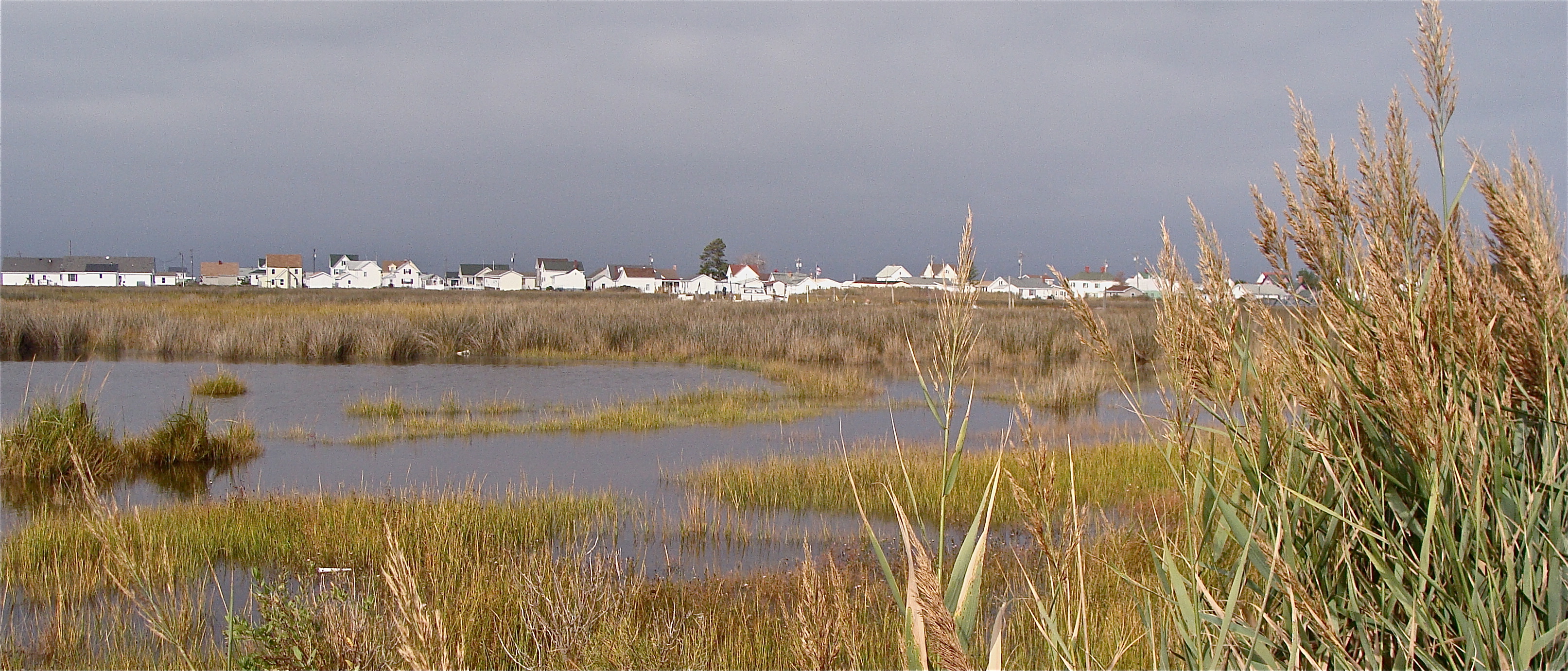
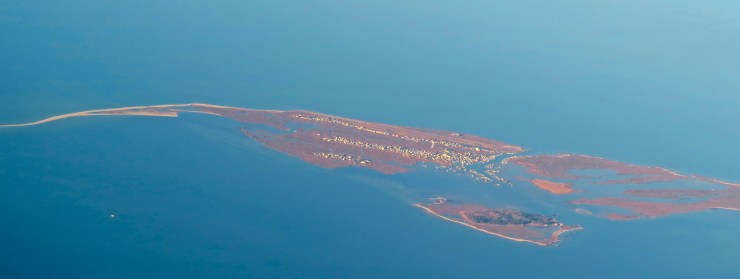
Houses atop the marshlands

Why an overnight on this tiny windswept island?

At the last minute, we thought we might have to cancel our trip. We had been on the road for only 15 minutes when we received a call from our motel proprietor on Tangier calling to warn us that the rain was coming down fierce creating turbulent water for the boat ride over to the island. Although we were driving through the middle of a downpour ourselves, we decided that we would make the trip anyway. We did pull off at the nearest drugstore to buy more seasick medication. By the time entered Crisfield, our docking town, the sun rays streamed through the clouds, but the influence of the weather continued to follow us during our stay on the island.

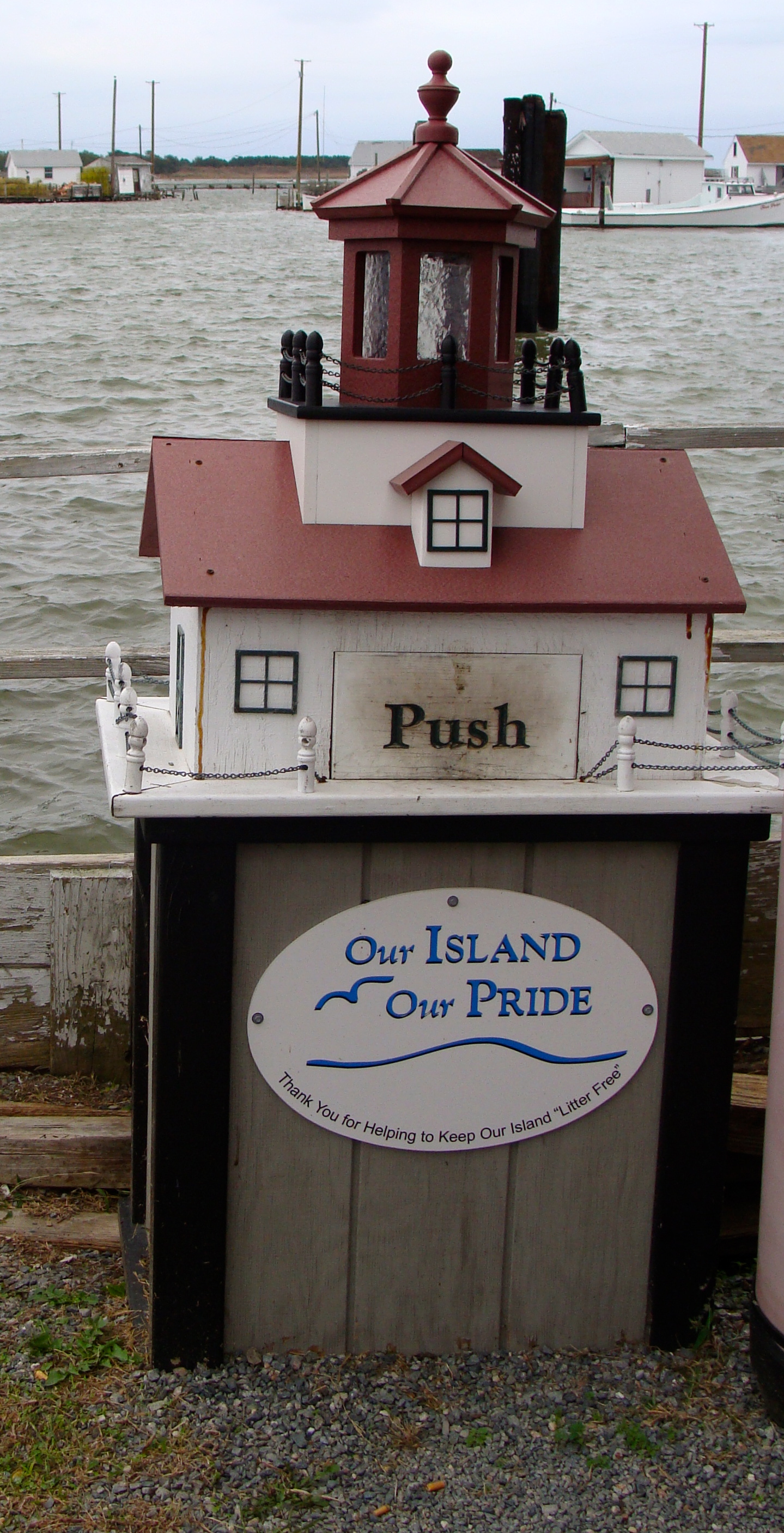
Trash containers modeled after the lighthouse that once stood on the island

Remote island societies slow the cultural clock, as happens on Tangier where everything from their language, occupations and way of life varies from the mainstream. Linguists have studied their speech, as the islanders speak a unique restoration era dialect of American English with language roots in Scotland and Cornwall. We noticed that when native residents spoke to one another, we could barely understand the conversation, with varied intonations and a unique linguistic cadence.  Without fast food restaurants, chain motels, traffic and cinemas this tiny community contrasted dramatically from our suburban bubble. But outward appearances can be deceiving; what the “soft shell crab capital of the world” shares with its mainland neighbors are economic and environmental problems. Hard-working watermen continue to eek out a living from the increasingly polluted waters of the Chesapeake Bay. According to Wikipedia, the per capita income for the town was $24,042. About 22.6% of families of the population live below the poverty line. The watermen resent government regulations and question whether they are being the scapegoat to all the Bay’s environmental problems. If regulations restricted fertilizer runoff, for example, crabs might flourish. Tangier barely rises above sea level and water floods the entire island during storms or high tides. We ignored the phases of the moon, which also came into play during our visit.

Passenger Ferry to Tangier

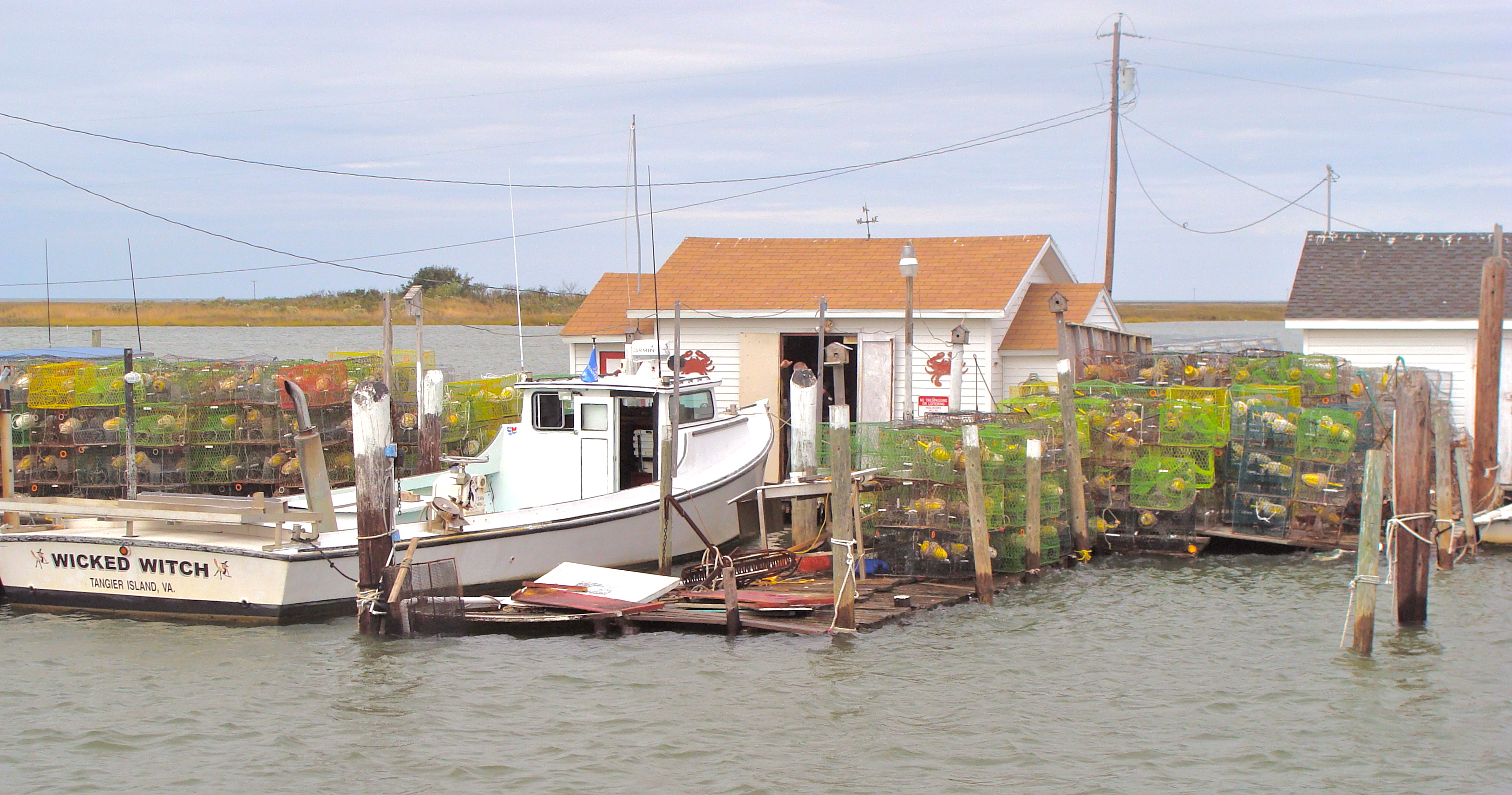
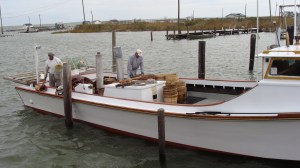
At the marina at Cristfield, a working fishing village on the Western Shore of Maryland, we boarded the ferry for the 75-minute ride to the island. With predictions of stormy seas and given my weak stomach for drastic up and down undulations on the waves, I became somewhat hesitant to step on board. Over an hour on the water seemed like a long ride especially in rough seas, but the process of a journey begins to set my mind apart from where I’ve been to where I’m going. The seas rocked the boat from side to side, but thanks to medication, we made the trip fine. Before reaching the dock, the ferry passed through the crab shacks, traps piled high on their piers.
Water Level brings Change in Plans

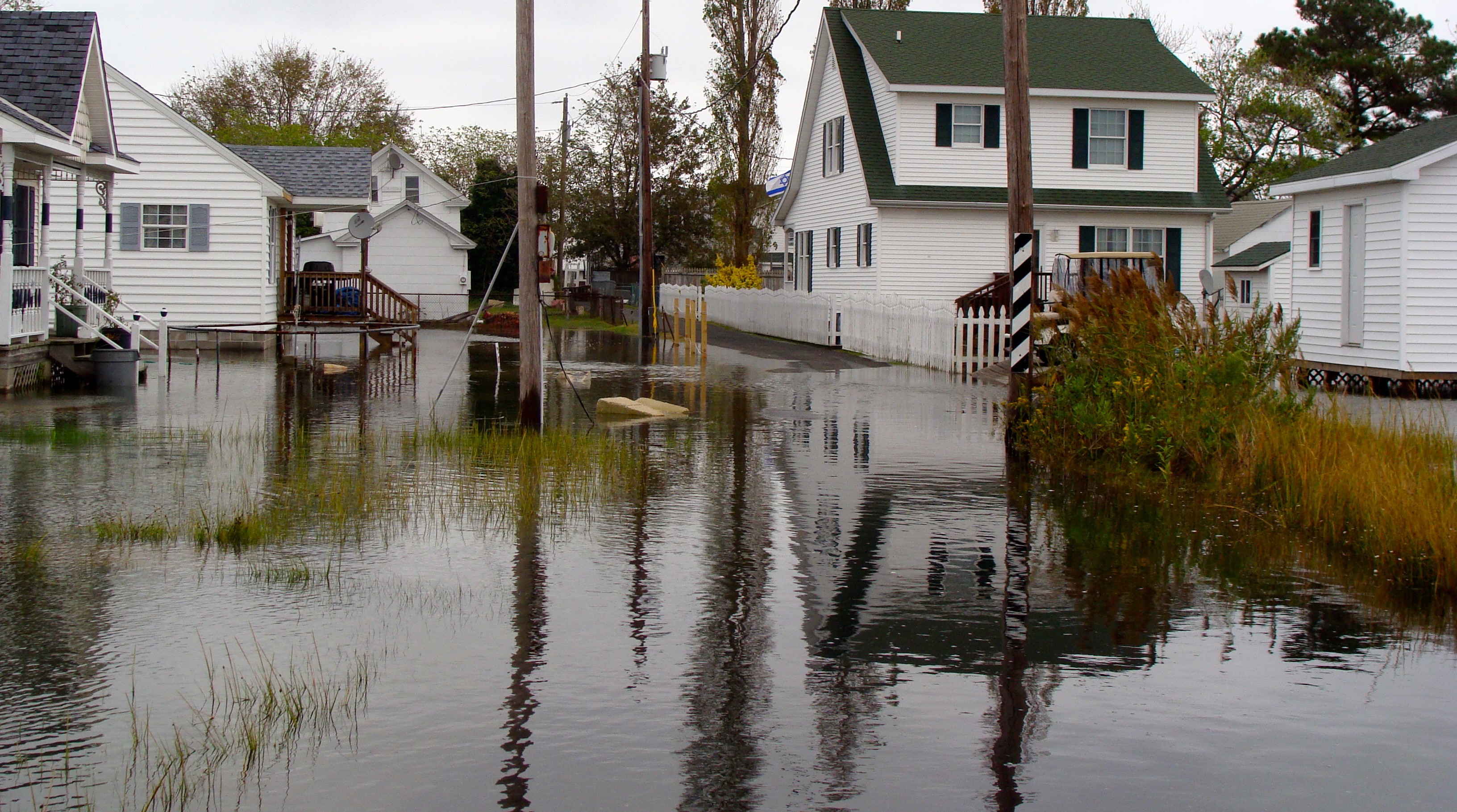
On arrival, we began to walk to our motel, The Sunset Inn, when we were offered a ride in the back of a pickup truck. Our driver told us we probably couldn’t traverse the water-covered roads with suitcases, and he was right! The road disappeared under eight inches of water, and tidal waters surrounded the most of the houses. Higher ridges separate the homes from the marshes and tidal canals. Wooden arched bridges connect the two main streets that run parallel the length the island. We read that the island was sinking, and it seemed as if it was sinking as we rode along!

The nice folks who offered us a ride left us off near our motel only a short walk away. We settled in becoming immediately acquainted with seven of the island’s friendly cats. One snuck into our room, and immediately being purring upon being picked up and carried out. We learned from our motel manager that an animal organization fixed all the cats on the island to control the population.

We decided the golf cart transportation would be essential to get around the island, even if it was just three miles by one mile. We returned to the dock area where we could rent a cart. Our motel manager’s husband gave us a ride into town. He proudly said that he was a waterman, born and bred. For all their hard work, watermen receive only $14.99 for a bushel basket of crabs.

Touring the Island

Since the island’s primary business is crabs, we ordered crab cakes for our dinner and were not disappointed. By the time we finished, the tidal waters had receded, and we made our way back to the motel.  The beach was just at the end of our road so we followed the path through the high reeds. A deserted sandy beach stretched before us, but we did not linger as mosquitoes began to hum around us.

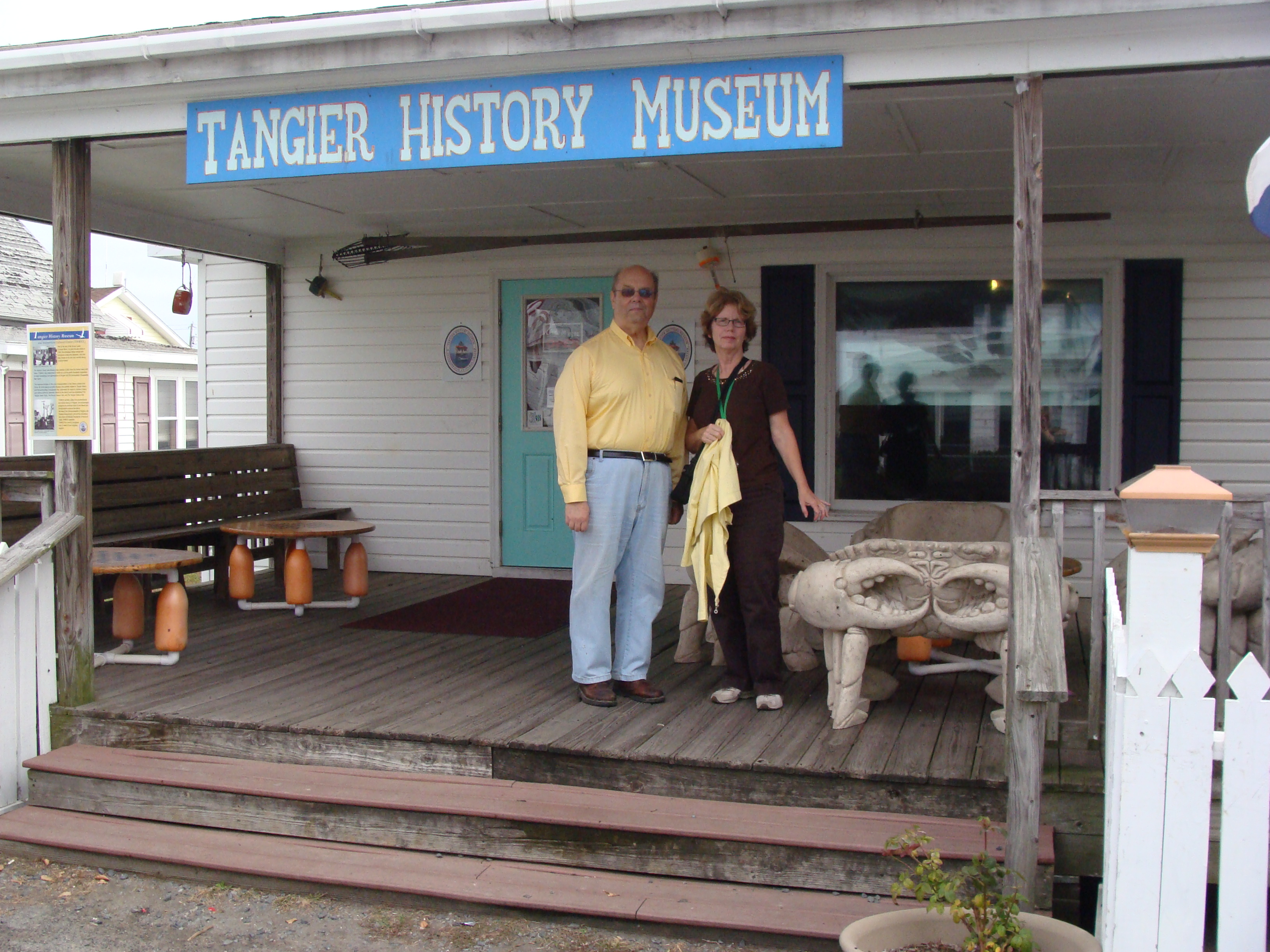
The next morning we set out to explore the island. We rode to the airport area and through the streets of the main village. We paused to watch the snowy egrets fishing in the marshes. We stopped for supper at Hilda Crockett’s Chesapeake House.  A family-style meal, we had plenty to eat with homemade hot bread, corn pudding, crab cakes and oyster fritters, just to name a few of the total nine dishes served. Afterward, we stopped at the Tangier History Museum, viewed the exhibits and saw a short movie.
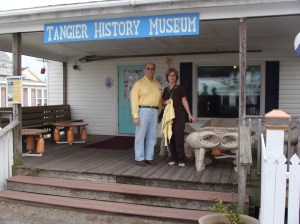
Richard, Jean and the iconic crab

Full Moon Rising

We were watching the clock for our 4pm departure as we had left our suitcases at the motel on the other side of the island. What we failed to watch was the tide schedule; and the tide was unusually high, like the evening before. We headed down one alleyway after another only to be blocked by rising water. With only little more than an hour before our ferry would be leaving, we unwisely decided just to plow through the rising water.  Of course, our cart stalled. We had no choice but to jump into the water and wade back to the motel to pick up our gear. When we returned to the cart, we piled our luggage on the seats and began to push it back to the depot. Some folks, seeing our predicament, suggested that we leave it and walk back.  One last time, we tried to start the motor when lo and behold, the engine turned over. Quickly we hopped back in the cart and made our way to the ferry in enough time.

Halloween?
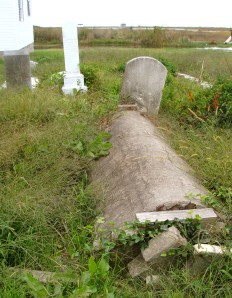
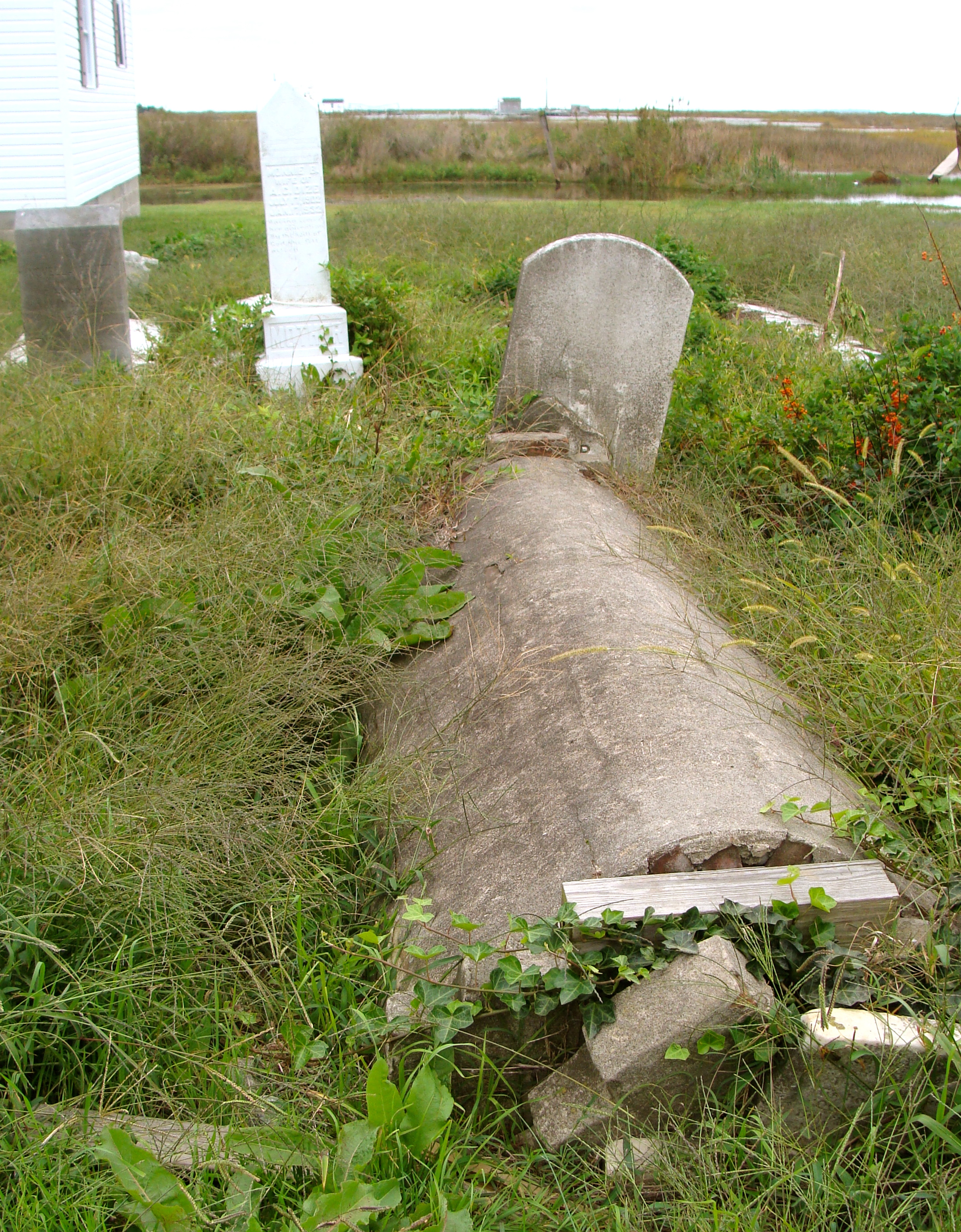
October is the time of year when folks decorate for Halloween and some will include graveyards and other scary displays in their yards.  On Tangier gravestones in the front or back yards are not unusual, and these are real! Several explanations offer reasons for the custom. The island experienced four epidemics, beginning in 1866 with Asian cholera. Because the death rate was so high, bodies had to be buried quickly. The residents were hardest hit in the early 1870’s when tuberculosis, measles, and smallpox epidemics hit the island. Also, centuries ago American and Britain families often buried deceased relatives in their yards and the custom persisted. Several recent graves we observed still had funeral flowers atop the mounds.

Reflecting Tidal Flooding

Returning to the Mainland

We were treated to another history lesson on our voyage from Tangier back to Cristfield when by coincidence we sat across from Dewey Crockett, a native islander who served as mayor, undertaker, medic, teacher, church music director and assistant principal. We learned that residents have to wear many hats in a small community.  The Islanders have resisted changes that have altered the mainland, such as alcohol, lotteries and even a movie deal. Dewey said that because everyone knows each other it is easier to keep an eye on the children, who still find the enjoyment of playing sports or running skiffs across the marshes.

Endangered Culture

The watermen support Tangier Island’s population of 525, but according to Dewey, fewer young people are choosing a career as a waterman. The graduating classes have become smaller, and the State has not replaced retired teachers. Some illegal drugs have worked their way to the island. The tourist industry has helped the economy a bit, but it remains a question whether the island can continue to exist with the dual pressures of modernization and global climate change.

Generally, the social hierarchical structure is fairly flat. The houses are small, and structures, while preserved, are not modernized, with the exception of the community health center. For children, the island would seem like a paradise with the freedom to run through the allies and gravestones and to venture out in the marshes in small boats. The Islanders seem to love their island and their life there. I can feel invigorated by the salt air and stormy skies but almost impossible to capture what these folks experience in their close-knit community. If global climate change destroys this culture, the loss will never be recovered.

I’ve checked the news reports, watched the videos, and read the Facebook posts, so it was time to head down to City Hall to see what was going on and lend support. Armed with two cameras and a protest sign I boarded the train, transporting me out of the suburban bubble to downtown Philadelphia.  My goal is to give balanced coverage for those watching on the sidelines who might be debating the merits of this protest. Now some might say how can you give balanced coverage if you are carrying a sign and participating in the demonstration? My question is: how can you give balanced coverage if you are not carrying a sign? Objectivity is a strange animal. When one remains neutral, that is a position.

Some news reports stated that this movement lacks a central theme, but their website states their mission clearly enough:  the one thing we all have in common is that We Are The 99% that will no longer tolerate the greed and corruption of the 1%.

So back to my protest sign.  The sign actually belongs to my son, given to him by my sister about seven years ago. A woman painted this poster after becoming severely disabled from an accident and then subsequently denied benefits from her insurance company.  Her fury resulted in this creation:

Into Philly

While riding on the train, someone had scrawled a prophetic message on the inside of one of the overpasses:

HOW CAN I MAKE A LIVING WHEN ALL I DO IS WORK?

I arrived at City Hall and found a rag-tag but well-organized occupation zone. News vans from ABC and CBS were parked along the street. Even with few economic resources to draw on, the protestors created a mini-town with an information booth, medical tent, security station, speaking platform, tent city, and a democracy resource center, to name a few. I didn’t have much time to visit each area as I joined a smaller group for a march to Temple University. Given that I’m an alum, I thought it only fitting that I should join that protest.

Before we headed down to Temple, the leaders led the group in recitation.  One person would shout a few words at a time and then the group would repeat the words. Surprisingly, this communication method was an effective way for everyone to hear the message. The leaders informed the group of their legal rights and gave them a number to call, which was a smart approach to protesting.

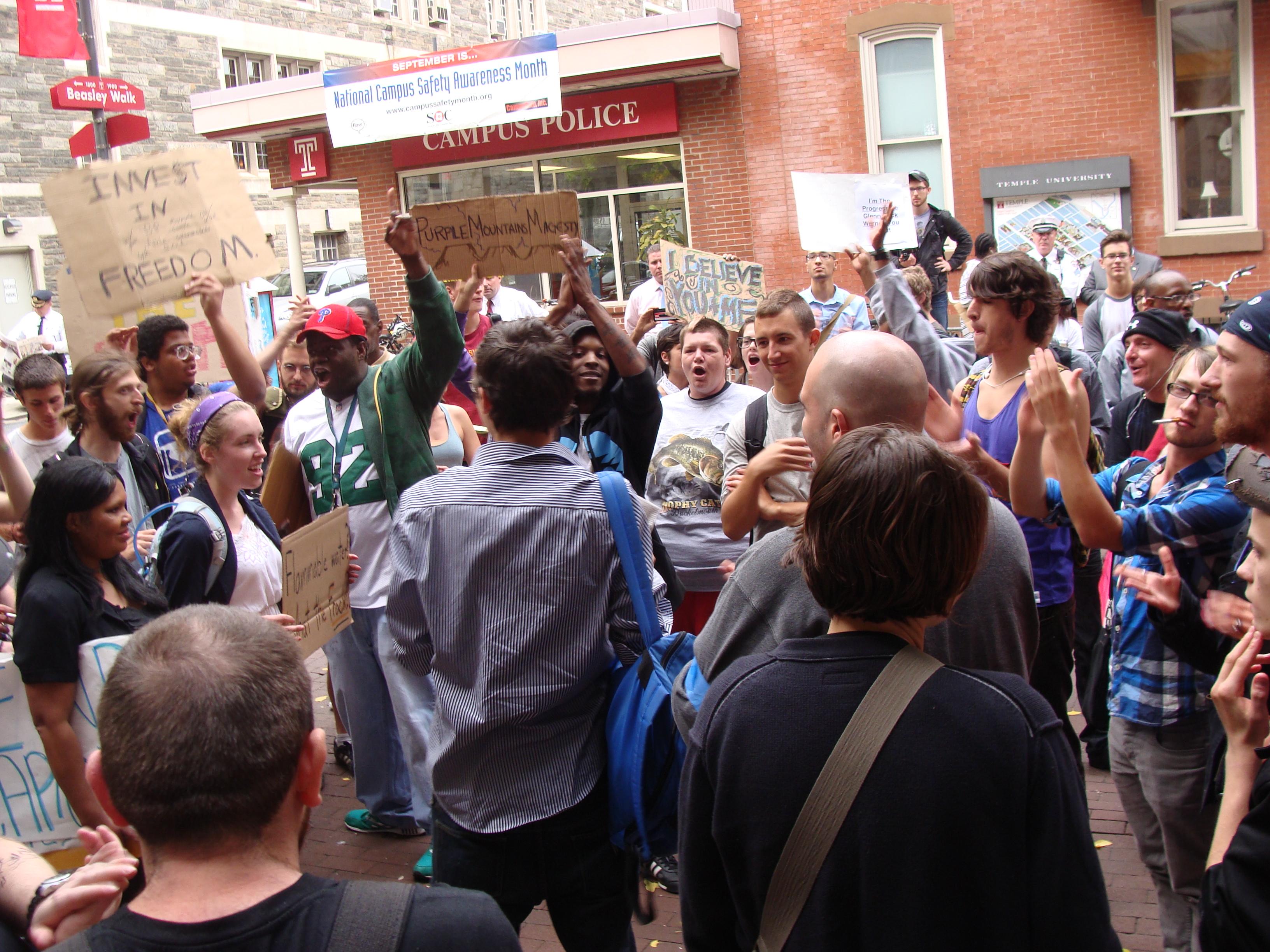
We “occupied” SEPTA, riding on the ell while chanting and singing. We joined with the Temple students who were holding a protest on mountaintop removal. Together we marched orderly and quietly into the Board of Trustee’s Meeting. Our instructions were just to be present. The Trustees had agreed to meet with Temple students after their meeting to discuss the demands. At the end, a student stood up and read their demands. At this point, the Occupy folks stood in support.

Civic Affairs and Police Presence

During the protest actions at Temple, a fairly large contingent of officers from Civic Affairs were present. These officers, dressed in shirts and ties, wore pink armbands. They didn’t seem to be armed. Civic Affairs is part of the police force that serves as an intermediary between protest groups and the police. Years ago ACT-UP sued the police for $8 million for brutality during a protest. The city then established the Civic Affairs Department to mediate these encounters.

Rally at Temple University

What Worked

A couple strategies made the protest a success:

  • working with the Temple students ahead of time to coördinate a joint protest
  • observing the letter of the law
  • commingling with crowds in such a way that it would be extremely difficult for authorities to differential between protestors and bystanders
  • energizing, yet reasoned and calm presence

Chants sometimes included, “We Are The 99% and so are you!”  The citizenry of this country is at the mercy of the corporate behemoths. I congratulate the Occupy protestors for confronting the power and greed of Wall Street.

Occupy Philadelphia.

What Cats Tell Us About Our Behavior

Transference is a phenomenon in psychoanalysis characterized by unconscious redirection of feelings from one person to another, according to Wikipedia. David W. Bernstein formulated one theory of transference identified as Abusive Multiple Transference, “in which abusers not only transfer negative feelings directed towards their former abusers to their own victims but also transfer the power and dominance of the former abusers to themselves.”

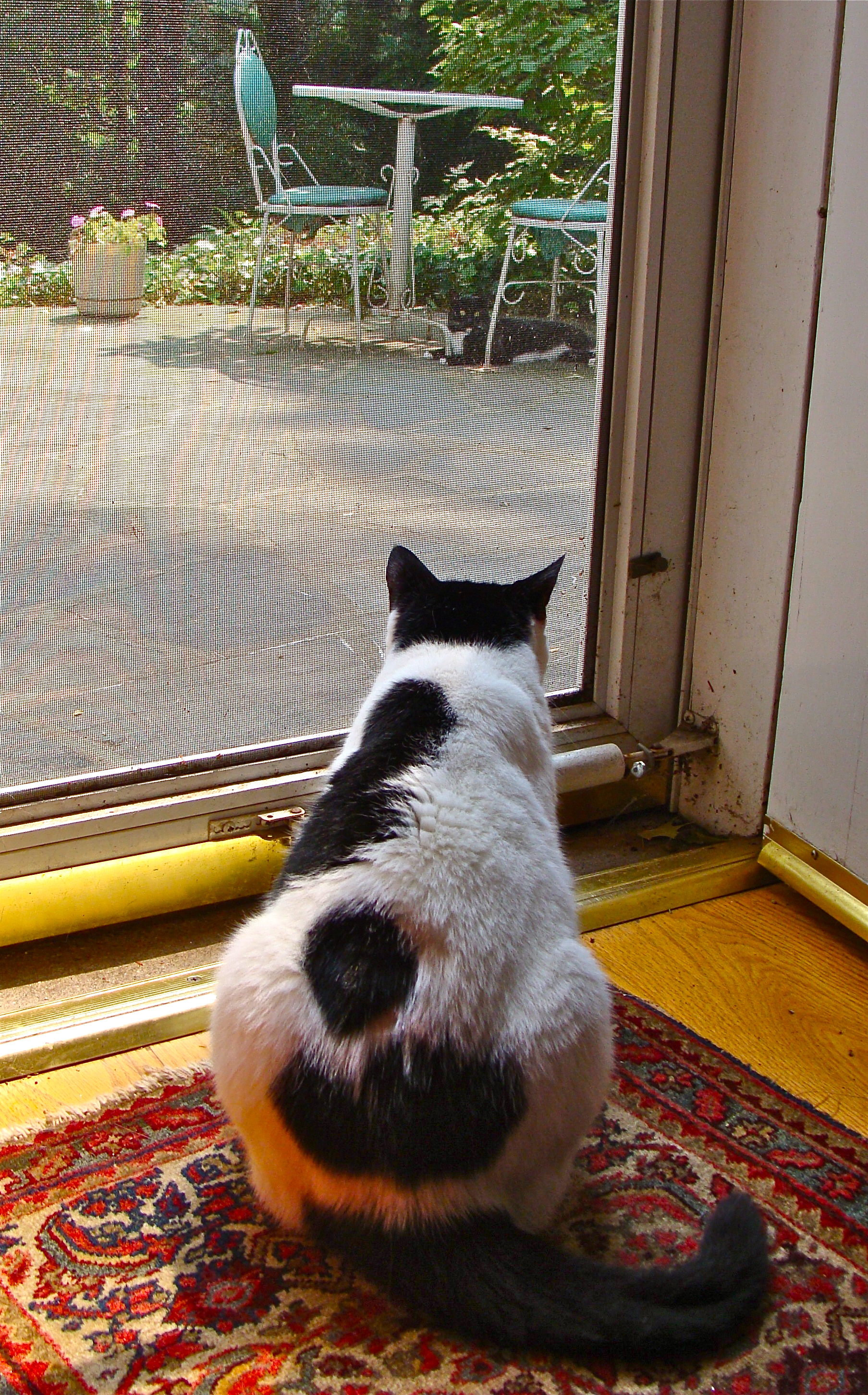
I always understood transference as a human emotion until I observed my cat’s behavior in response to a neighborhood feline who visits our house regularly. This friendly, cute kitty immediately causes an upheaval within our peaceful two-cat home. Sylvia is the mother cat to Sweetie Bumpkins, and they usually get along quite well, although Sylvia is the dominant cat. When, “Bad Kitty,”  the nickname we’ve given the outside cat, stops by, Sylvia begins hissing and meowing and races from window to window to follow Bad Kitty’s movements around the outside of the house. Frequently Bad Kitty just lays down on the patio, tail swishing back and forth as if to taunt Sylvia. These interactions come to a crisis when Sweetie Bumpkins walks into the altercation. Sylvia goes after her with a vengeance with accompanying yowls and growls and fur flying. Sweetie Bumpkins runs for her life upstairs, finding a hiding place safely under a bed.

Sanctuary Under the Mattress

What occurred to me is that we share some basic behavior with our cats. Cats and humans are very much separated on their evolutionary lines, and yet in this way, we share the same behavior pattern of taking out our negative emotions on some innocent party, even one who is close to us. Of course, humans can become aware of this behavior and change it. However, is transference so basic, so ingrained, so part of the wiring in our brain that most of the time, are we unaware of this mindset–say, road rage, corporal punishment, the Tea Party? Perhaps transference occurs at almost every level of our interactions with others.

The kitties have demonstrated that this response is an evolutionary device. My personal theory is that transference is a scapegoat mechanism that has evolved to create a release. Neither the kitties nor we can sustain the tension and emotional upheaval within, and nature has provided this release. The question remains whether humans can access these traumas and then change our behavior to relieve the pressures in a socially and ethnically responsible way. The answer is neither black nor white.

Making a fun day in the park into . . .

a Zombie apocalypse?

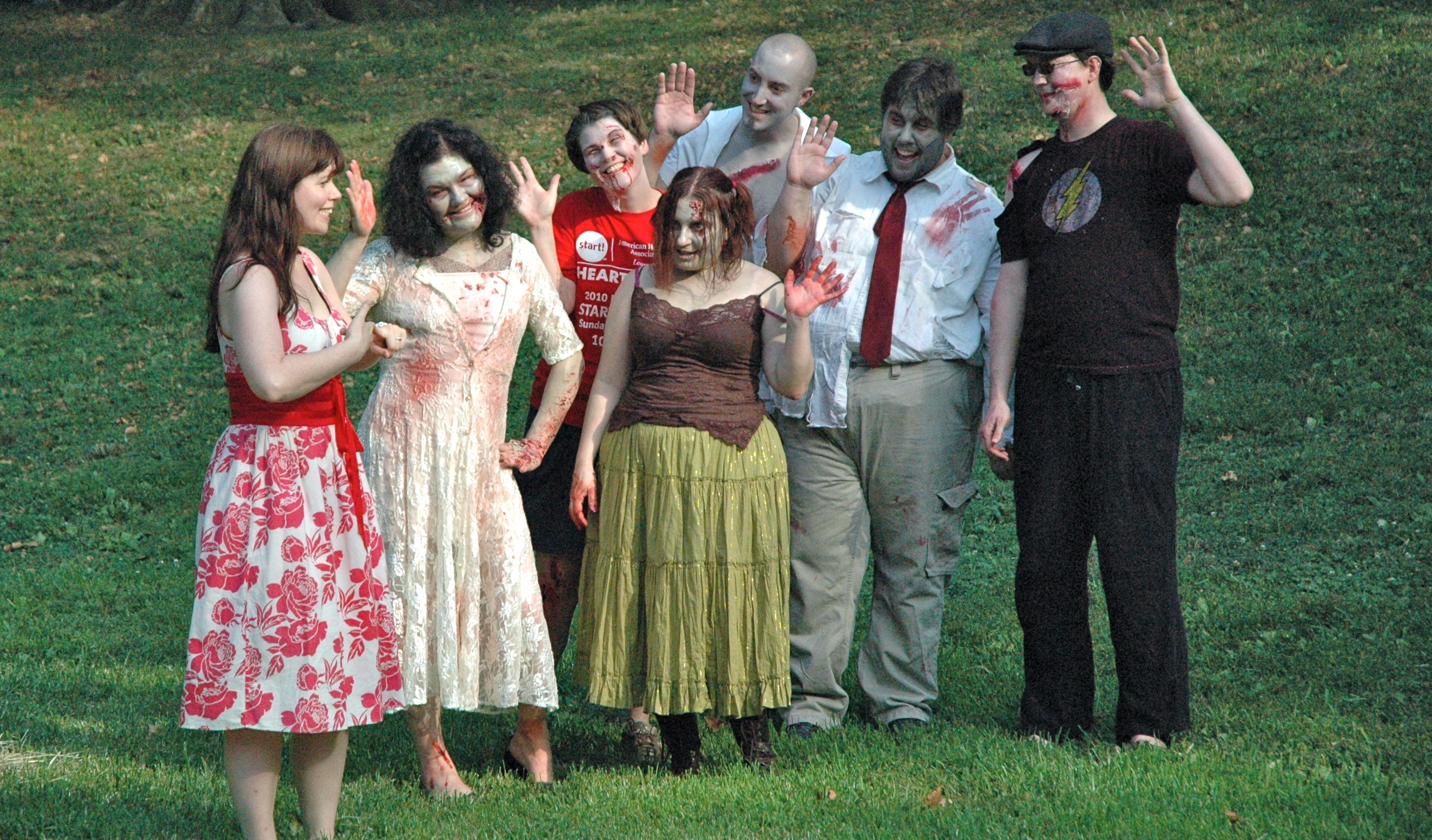
After creating short videos for a few years now, enjoying the process of arranging music against photographs and videos with no other goal other than to fill my blog, I was able to use those skills recently for a practical purpose: to create a video of J. R. Blackwell’s kickstarter for Shelter in Place, a role-playing game.

Luckily, iMovie provides a series of project templates, including movie trailers. One of these trailers fits perfectly with the theme of Zombies, with proper music and title display. What I didn’t realize before about these templates is that they can be imported into a project so the producer is not confined to the established time formats.

On one of the hottest days in August, we drove down to Clark Park in Philadelphia where “J.R.” and her friends were set to create film footage on the Zombie experience. Dressed in costumes and in full makeup, the Zombie characters chased the “victim” up and down the field. Photographers lined up at different locations.  Given that the park was fully occupied with vendors and picnickers, taking pictures without those folks was tricky. Hip-hop music played in the background of all the footage.

The video came together using a variety of sources. J.R.’s photographer friends took at least a hundred pictures, so the large selection provided a variety of choices. Several days before we stopped off at a country graveyard and filmed the cemetery at various angles.  In June I attempted to take a video of the rising moon, which turned out wobbly, and thought the video would be totally unusable footage. However, a few seconds of the moon rolling around in the sky had a spooky effect in this movie, so I added a few of those frames. I blued all the films, and photos, changing a bright summer day into night.  J. R. and I edited the content of the titles.  We added a commercial at the end. Altogether, we edited the video at least 25 times before being satisfied with the final production.

The happy ending: Shelter in Place reached its kickstarter goal in just two days!

What is so interesting about telephone pole insulators?

Glass insulators still sit atop a telephone pole, in Richmond, VA

My curiosity about insulators started before I even knew what they were. A friend of my son’s stayed at his home for a few days and left a glass, lantern-like object in appreciation for his hospitality. A neat little piece, the glass cylinder found a permanent display place in John and Jim’s living room.

This summer, we drove down to the Outer Banks, and on the way, we stopped at one of my favorite antique shops, The Peck Basket, which resembles an old-fashioned general store.

On looking over one of the shelves, I came across a similar lantern and asked what it was. The proprietor informed me that the object was an insulator, one of those glassy objects that sit atop cross arms of telephone poles. Someone had given her an entire box of them. During slow periods in the store, she washes them up and then sells them on eBay, sometimes for $40 each.

I can’t ever remember paying any attention to telephone poles, but for some reason, I could recollect that there were glass cylinders that held the wires. Research informed me that without insulators, electricity could leak into the pole. I also discovered that these little class cylinders are collectible. During the 1960s, the electric companies began replacing the poles and moving wires underground, and the insulators were just thrown out. Folks realized these discarded objects were beautiful, ranging in various colors, shapes, and sizes. The colored glass sparkles when placed in a sunlit window.

If you look on the web, several insulator clubs share information and hold local and national shows. Books and magazines describe insulator history and their prices, which range from a few dollars to $20,000! If you get interested, find an informative web page such as Stories of a Northwest Insulator Nut, set up by a dedicated collector.

So if you are looking for a “Hemingray-9, CD 106”, used in rural telephone systems, you will find it.

Tag Cloud