Humble Contributions to the Peoples' History

School Nurses Forewarn the District

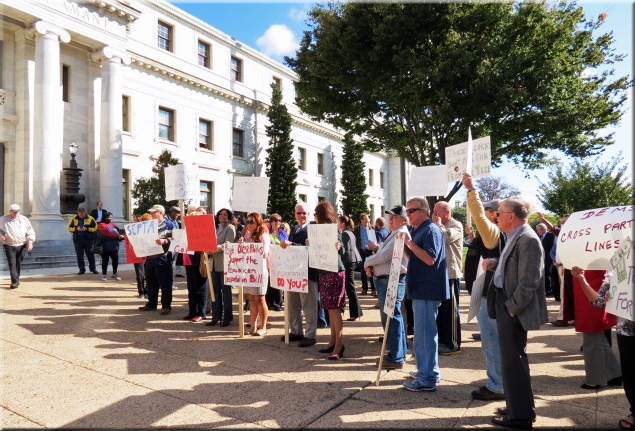
Outside the Philadelphia School headquarters, on a cold January day in 2012, a gathering of school nurses, bundled up against the chilling wind, protested the district’s laying off nurses. The nurses, calling themselves the Occupy 440 movement, continued the protest for five months, assembling every Wednesday at 440 Board Street. The district cut over 100 school nurse jobs in the 2011-12 school year, and other staff reductions left schools at the state minimum of one nurse per 1,500 students. According to The Notebook, “Nurses warned that the District was potentially endangering children by failing to have trained medical staff in buildings most of the time.”

Betsey Piette carries poster Picture of Laporshia.

Betsey Piette carries picture of Laporshia.

Vigil for Laporshia

Samir Robinson from Musicopia plays for the Vigil

Samir Robinson from Musicopia plays through the Mist

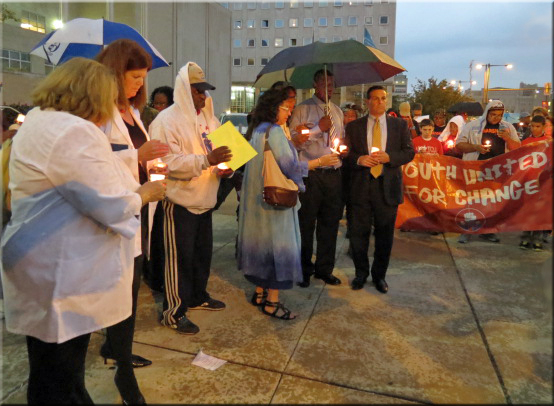
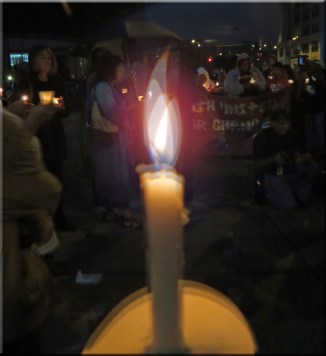
Just 17 months later, the nurses organized a candlelight vigil for Laporshia Massey, who arrived home from her school, Bryant Elementary, suffering from an asthma attack and dying later that evening at Children’s Hospital. Laporshia fell ill during school the day, reportedly complaining of difficulty breathing. At that time, no nurse had been on duty at the school.
Father, Nurses, Youth

Laporshia’s father, Daniel Burch (holding umbrella) stands with school nurses, who organized the vigil.

Austerity Cuts Deep

Pennsylvania Governor Corbett and the Republican-controlled legislature have imposed substantial education cuts throughout the state, causing the School District of Philadelphia to fall into a deep financial crisis. The Governor failed to release $45 million of federal funding earmarked for Philadelphia schools. While evoking the concept of “shared sacrifice” to justify cuts in education, in contrast, the legislature passed a corporate tax cut that would cost the state $600-800 million per year, more than double Philadelphia schools’ deficit for the next fiscal year. In addition, the district carries an enormous debt. According to City Paper,

The district spends more than ten times the national average serving its debt, with an astonishing $280 million—12 percent of its entire budget—going to interest payments and $161 million going to Wall Street firms in what have been called “toxic” interest rate swaps, under criticism in other cities for unjustly robbing schools of resources.

Girl With Candle CRChildren’s Health at Risk

When authorities cut school nurses from budgets, children who have health problems may not receive proper treatment while at school. Children on medications may have to rely on untrained staff to assist them. Children with epilepsy, ADHD, diabetes, food allergies and asthma are particularly at risk. The question arises is who is responsible for schools’ record keeping on each child’s health concerns if no nurse is present to evaluate a student who becomes ill during the school day. AFT President Randi Weingarten wrote in an open letter to Pennsylvania Governor Corbett that one in five students in Philadelphia have asthma, and that “parents and educators—would sleep easier knowing their children’s schools had enough school nurses, guidance counselors, safety personnel and support staff so that a tragedy like this would not befall another child.”

Ironically, a day before the candlelight vigil for Laporshia, the district learned that Philadelphia will receive the $45 million in federal funds that Corbett had been withholding. A spokesman for Corbett stated that the release of the funds and Laporshia’s death were not connected. Philadelphia school superintendent, William Hite, stated he did not plan to rehire any nurses because the district has “met the state’s caseload standard.” Are parents left wondering whether there will be another time the school nurses will be holding candles outside the 440 Building?
Candle

An Empty Desk

Bryand ES Final

Bryant Elementary School is located at the corners of Cedar Avenue and 60th Street in West Philadelphia. Playground equipment stands securely on one corner of the school lot, and along the walls of the brick building, colorful murals illustrate scenes of children swinging, dancing and jumping rope.

While economists, bureaucrats and government officials argue the merits austerity measures, one mural might be different now.

Links

Her Name is Laporshia Massey and Our Hearts are Breaking

Justice for Laporshia Massey Update

Vigil for Laporshia Massey – Victim of Philly Schools Budget Cuts

The Great Austerity Shell Game

Sick Days: The Philadelphia School Nurse Shortage

On a visit to Wilmington  & Western Line, a steam train that runs through the Red Clay Valley in Delaware, I just happened to have the good luck that Civil War living history reenactors were staging a battle and takeover of the train on that day. I recorded the dramatic action of the battle in video in this post: Steam Train Journeys into History: Civil War Skirmish at Red Clay Creek.

CW Cannon L Antique

This video highlights Living History: Day in the Life of the Soldiers of the Civil War, when Company A, 37th Regiment, North Carolina Volunteer Troops, C.S.A., 1st North Carolina Artillery, Battery C, C.S.A., and the Town of Rising Sun, Maryland, hosted the 21st Annual Reenactment.

I strolled by the rows of canvas tents, the Union on one side of the creek and Confederates on the other, as wood crackled in the campfires and coffee brewed in tall metal pots. Reenactors portrayed surgeons, tradesmen, as well as soldiers. Even children dressed up in period clothing. The sound of a blacksmith hammering echoed through the park. I spoke with reenactors, who shared their knowledge on weapons, lanterns, desks and tent contents, everything authentic to the time period.

At midday the gray and blue soldiers faced off in a skirmish. The Union held the high ground while the Confederate soldiers crossed the bridge and positioned their cannon on the field. Soldiers on both sides fired their cannons as thunderous blasts echoed through the landscape, smoke drifting over the hills. As men fell, a field doctor bandaged up the wounded. A crowd of spectators sitting on the hill watched intently as the action unfolded just yards away.

LanternLate in the evening, as music of Kadence spilled into the cool night air, I wandered around the grounds in the light of the campfires and lanterns, softly illuminating the tents. Reflecting on the gentleness of the night and the harshness of the daytime battle, I considered the issues of preserving the Union, regional loyalty, justification for war and the abolition of slavery, which remains the greatest arbitrator in the ethical debate. Has the country evolved into a compassionate and empathetic to the plight of both sides?  I see these reenactments as an opportunity to ponder these issues.


Participants:

Confederate
1st Regiment, Maryland Infantry, Company 1
5th Regiment, Virginia Volunteer Infantry
Union
42nd Regiment, Pennsylvania Volunteer Infantry, Company B
*   *  *   *   *   *   *   *
Square Frame John
Many thanks to John and all the Reenactors.

*   *  *   *   *   *   *   *

Other links to Civil War posts:

Update: November 20, 2013, Pennsylvania House voted 104-95 to give key preliminary approval to the $2.4 billion transportation funding program.

Passengers on

A Ticket to Ride

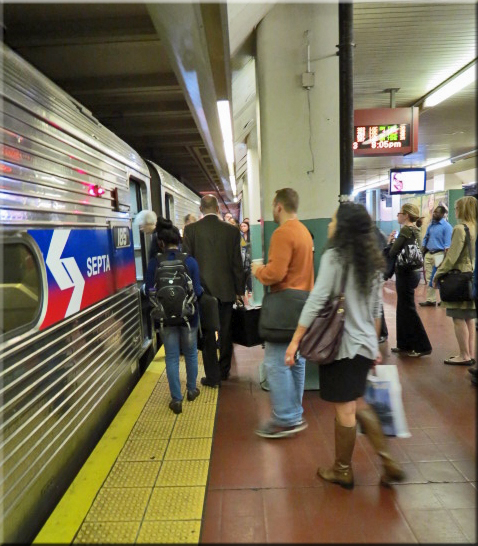
Last evening as I was boarding the Media-Elwin Regional Rail at the 15th Street Station, I watched as passengers streamed onto the train filling up the seats and then standing in the aisles. It seemed incredulous to me that considering both the crisis of global warming and the thousands of riders who depend on public transportation, that SEPTA (Southeastern Pennsylvania Transportation Authority) has presented a “doomsday” proposal to shut down the Elwin-Media line, as well as closing eight other regional rail lines.

Market St Station

Will deserted stations become the norm?

During the Pennsylvania State Transportation Committee hearing held at Temple University on September 12, 2013, SEPTA General Manager Joseph M. Casey stated that these changes would affect 89,000 daily transportation users. Yet, just two months ago, SEPTA announced an all-time high in regional rail ridership. Passengers made over 36 million trips in a year’s time, including 2.9 million on the Media-Elwyn line.

Leaving Staton

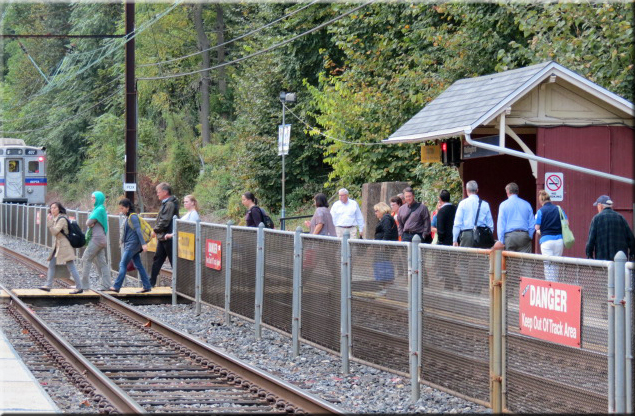
Leaving the Wallingford Station

Commuter Nightmare

The hardships created by such a shutdown are almost immeasurable. People with disabilities, senior citizens, and those unable to afford an automobile would be prevented from getting to their jobs and medical appointments. Paratransit service for the handicapped would be reduced. Students requiring transportation into the city from the Western suburbs would find it difficult to get to Penn, Temple and Drexel, and the 31 other universities in the city and surrounds. The young man sitting next to me was studying a medical textbook. Trains allow time for people to study, read, socialize or just relax, which is totally unavailable to automobile commuters. Increased car traffic would add to the congestion on our already crowded highways. Economic losses would befall Philadelphia as suburbanites rely on public transportation to bring them into the city for volunteer work, cultural activities and special events. Philadelphia could lose 60,000 jobs. According to a study released by SEPTA, home values would drop if Regional Rail service would be cancelled.

The average property value premium for houses located in counties is $7,900. Homes in communities with higher levels of Regional Rail service and parking capacity, the property value premium averages between $31,000 and $37,000 per house.

Ticket Office Closed

Closed Ticket Windows . . . the future for Delaware County Riders?

Funding Held Up in State House

Without funding from the state for SEPTA’s backlog of critical repair work to the tune of $6.5 billion, the Authority will have to significantly shrink the transit system over the next 10 years, SEPTA General Manager Joseph M. Casey reported during his testimony at the hearing. Four trestles, which are over 100 years old, need significant repairs. Unless Pennsylvania legislators approve this funding, commuter citizens will be held hostage by the politics of the State. A small minority of state legislators are set against it as lawmakers wrangle over funding allowances and tax increases. Currently, the bill is held up in the Republican-led house.

Conductor

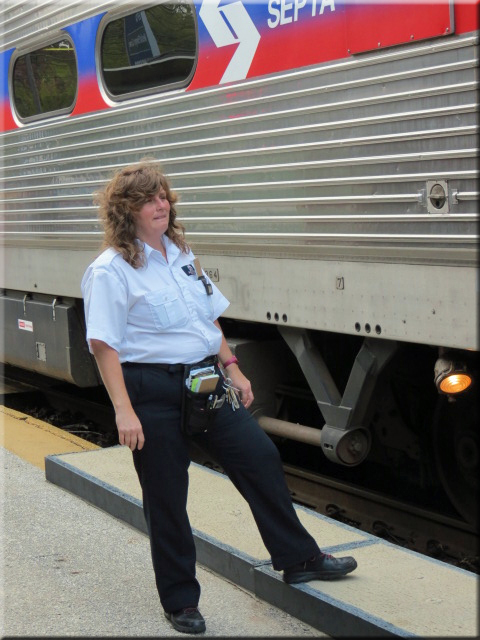
Cuts will cause layoff of hundreds of SEPTA employees.
Citizens Rally for Transportation

Delaware County citizens have been rallying support for SEPTA funding. A Swarthmore college student started an on-line petition and has collected over 3,200 signatures so far. At a press conference on October 18 at the Media Courthouse, (Former) Governor Rendell, standing with local Democrats as well as a few Republicans, expressed his objections to the possible closure of the Media-Elwyn line. Rendell encouraged supporters to support the passage of SB-1, the transportation bill that’s been proposed to fund SEPTA.
Protest at Media Courthouse

Protest at Media Courthouse

Rendell addressed the crowd stating,

There are 37 counties with transportation systems in Pennsylvania and all of them would benefit, in my opinion by the bill. The bill would have produced $400 million dollars a year annually for public transportation . . . something that is desperately needed, something in the past we wouldn’t be talking about closing the Media-Elwin line, we wouldn’t be talking about cutbacks not here in Delaware County . . . we should actually be talking about improving public transit.

Rendell

Former Governor Rendell speaks to demonstrators.

End of the Line?

Later that week, after returning from Philadelphia on the Media-Elwin line, I watched as our train left the Wallingford station, fading into the darkness. I wondered if concerned citizens can rally lawmakers so that our public transportation does not disappear from sight.

Shakey Train

Harking Back

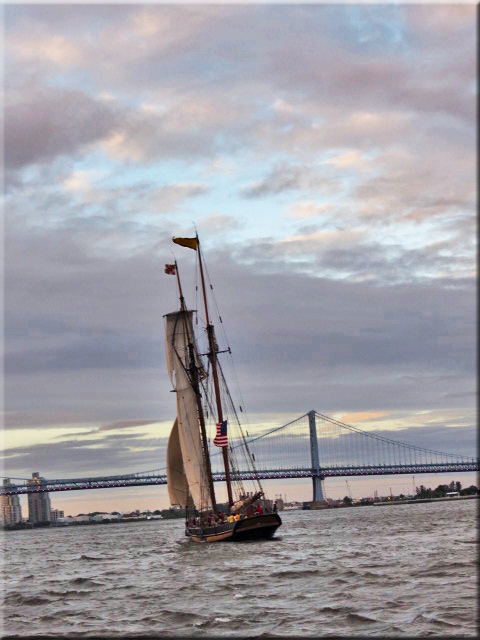
IMG_4130The last time my sister, Jean, and I met pirates, we had just happened upon the Beaufort Pirate Invasion, taking place as we stepped into the battle scene a summer ago in the seaside village in North Carolina. We promised we would not let too much time go by before finding another similar event. The opportunity came along when the Independence Seaport Museum hosted its 2nd Annual Old City Seaport Festival, in a weekend-long celebration with music, crafts and Tall Ships, with a smattering of pirates. On the first evening, the festival began with the Parade of Boats as they came to port just below the Ben Franklin Bridge.

On the next evening, the AJ MeerwaldGazela Primiero Pride of Baltimore IIMystic Whaler Kalmar NyckelVirginia and Hindu were destined to clash in a pirate battle. We signed up to be aboard the Kalmar Nyckel. Built by the Dutch, the original ship dated back to around 1625. This flagship of Governor Minuit brought settlers to the New World, establishing the colony of New Sweden on the banks of the Christina River in 1638. An informative and lovely guidebook on the ship’s history is available on the web. The ship was rebuilt in Wilmington, Delaware, and commissioned in 1998. The Kalmar Nyckel is an example of a full-rigged type of pinnance, which is a kind of boat, generally modest in size, that was used either as a merchant vessel or small warship. Pirates prized these ships because they had maneuverability through rugged coastlines and good speed to outrun any vessel that might be in pursuit.

200px-Treasure_Island-Scribner's-1911

Cover illustration by N.C. Wyeth from 1911, Wikipedia

There is a degree of authenticity to a pirate battle. Mostly what we learn about pirates is from movies and television, while authentic history has been sorely neglected. My first introduction to pirates came through Treasure Island, a novel by Robert Lewis Stevenson, which popularized many of the associations with pirates, such as treasure maps, parrots, and the familiar ballad,

“Fifteen men on the dead man’s chest— Yo-ho-ho, and a bottle of rum! Drink and the devil had done for the rest— Yo-ho-ho, and a bottle of rum!”

A quick search into a few authoritative sources reveals the extent that colonial villages were affected by the onslaught and fear of attack from both foreign pirates, truly a multi-national representation including the French, Spanish, Dutch and English, as well as the local variety, with the first raid recorded in Lewes, Delaware, back in 1672. Seems that Blackbeard also frequented the Delaware, as he supposedly stopped into the many taverns along the waterway.

Wench Wear?

Jean had this idea that since we were going to be onboard during a pirate battle, we should dress the part. We cobbled together costumes from outfits in our closets (wardrobes should always include a few whimsical pieces when transformations are called for), and we were ll set to go with Jean’s orange and black-stripped socks and my hat, replete with feathers. Did we look like real pirates? . . . oh, not a chance, but maybe we could have fit in with Pirates of the Caribbean crew.

We took the train into center city and headed down toward Penn’s Landing. We shook our heads as we passed the closed and shuttered Constitution Center, thanks to those idiots in Congress, the scourges of the seven seas, who shut down the government. By chance, we happened to run into my son, John, who was participating in a demonstration against Monsanto, taking place just across from the Constitution Center. Activists had designated October 12 as International Day of Protest against the company because of questions around food safety. Fellow WordPress blogger, Jeff Nguyen, has written an excellent post on Agent Orange and Monsanto.

IMG_4780

After bidding John adieu, we continued walking to the Seaport Museum. The wind whipped around the buildings as we approached the Delaware River, were we could see white caps on the churning waters. I thought back to a sail on the Amistad, which had to be postponed because of high winds and wondered if the battle would take place. We walked along the pier where vendors were selling everything from jewelry to “wench wear.” Several organizations had also set up information booths, and we spoke with members of the Steamship Historical Society of America.

IMG_4842

Shiver Me Timbers! Striped Socks Spikes a Spirited Sentiment!

A green tug boat had been tied to the pier, and visitors were encouraged to tour the tug. Once powered by steam, the boat now runs on diesel fuel. We checked out the kitchen, boiler room, living quarters and bridge, and rang the brass bell. We were welcomed us onboard, with one of the crew distracted by Jean’s footwear, declaring, “I’m turned on by those socks!  I’m old, I’m not dead!”

High Winds Scuttle the Voyage of the Kalmar Nyckel

The tall ships lined against the pier, but we were most excited to see the colorful Kalmar Nyckel. Parts of the boat had just been freshly painted, and we admired the detail work.

Kalmar Nickel

On either side of the ship, a carving of a dog rested on the railing, one eye open to the sea and closed to the inside.

Dog Kalmar Nickel

The winds were blowing wildly by this time, so we were not surprised when the crew told us there was little chance the ship would be part of the pirate battle as they could not negotiate the vessel away from the dock. Our plans were not cancelled, however, as the smaller boats were still scheduled to sail. The crew reassigned us to the Mystic Whaler, a late 19th century coastal cargo schooner, for our pirate adventure.

IMG_4850

A Bit of Shantying

Geoff Kaufman welcomed us onboard with songs of the sea. Accompanied by his concertina, an instrument made in England in the 1920s, Geoff offered a song for every activity on the schooner. He played songs that encouraged the crew to work in rhythm, and sang ballads for returning to port after the voyage. Geoff also sang old favorites, like “What to do with a Drunken Sailor,” with passengers joining in the song fest. Geoff’s music added to the rollicking motion of the ship. I wish I could have captured more music, but even my wind filter on the camera could not remove the sound the pounding gusts.

Ahoy, Me Hearties–the Battle Begins!

We buttoned our coats and secured our scarves as the schooner weighed anchor, sailing from the dock to face our opponents in battle. With the thunderous blasts of the cannon, the engagement was underway. The smaller schooners whipped through the water, cutting in front and back of the larger vessels. With Jolly Rogers fluttering, insults were hurled across the water. “You scurvy scallyways! Arrgh! We’ll have ye walking the plank! Someone on the A. J. Meerwald had the audacity to call us, “Dirty dogs!” Passengers joined the crew in hoisting the sails with a heave ho to Geoff’s rhythmic sea shanty. The battleship New Jersey and the Olympia, war ships from other eras, contributed their big guns to the melee.

Windblown, but throughly enraptured by the experience, we disembarked from the Mystic Whaler to the strains of “Leave Her.” We returned to our landlubber status, looking for a tavern to splice the main brace.

Ship and Sky


Links of Interest

Gentlemen of Fortune
The Tall Ships 
Tall Ships and Pirates (On Pinterest)
No Quarter Given
Ron Ossian’s Pirate Cove!
Schooner Wolf

tower

A beautiful Fall day provided the backdrop for a journey into history on the Wilmington  & Western Line, which runs through the Red Clay Valley, a watershed area that includes just over fifty square miles from New Castle County, Delaware, to Chester County, Pennsylvania.  “Candy cane” lamps lined up along the platform of the historic Greenbank Station, painted in traditional cream and burgundy colors. A museum near the water tower displayed a model of an amusement park that brought visitors to the area back at the turn of the 20th Century and featured a collection of antique photographs and books of the railroad’s history.

Climbing the steps to board steam train, felt like stepping back in time. The wooden cars, painted royal blue with gold trim, each has its own unique history.  We sat on the benches of the converted open air coach, built in 1912 in Altoona and once part of the Pennsylvania commuter rail network. The train hissed and creaked as the locomotive chugged out of the station, the plaintive whistle sounding at the first crossing. The Baldwin Locomotive Works of Philadelphia built the steam engine Number 58 in 1907 and in 1998 the engine was restored. The original route through the valley was laid out in the 1870s. We passed rolling hills, farms and woodlands, following the Red Clay Creek. We arrived at a waterfall and picnic grove where the Union solders and their families, dressed in period dress, strolled along the water’s edge.

Railroads played a significant role during the Civil War. The Jones-Imboden Raid against the B&O Railroad represented one of the largest movements of soldiers to a battlefront by way of the railroad. In June of 1861, Union Forces advanced by train from Falls Church, Virginia; Confederates fired artillery at the train near Vienna, making this the first time a train was engaged in warfare in American history.

The drama at Red Clay Creek unfolded as the Rebels, hiding in the woodlands, attacked the train with cannon and rifle fire. The Union forces poured out of the train, holding positions near the tracks.  At the outset the action seemed almost in slow motion because reloading rifles required that they insert each bullet one at time. While the Union held their line for a short time, Confederate reinforcements emerged from the forest, decimating the Union troops attempting to save the train. Passengers, becoming part of the play, fell under the command of the Confederates who boarded the train and occupied the coaches.


In Appreciation:
Confederate 
9th Virginia Cavalry, Company B
37th Regiment, North Carolina Troops, Company A
1st Regiment, North Carolina Artillery, Battery C

Union
2nd Delaware Volunteer Infantry, Company G
71st Pennsylvania Volunteer Infantry Regiment, Company K

Special thanks to John Houck.

Over a year ago I wrote a blog post, Lone Ranger and Tonto: A Nostalgic View and Modern Critique, in which I relate my childhood experiences of growing up watching westerns on television, and in particular, The Lone Ranger, and how those programs influenced the way children of my era interpreted that violence. In that post, I also wrote how as an adult, my perceptions of the program changed, understanding the issues of Manifest Destiny and the complexities of the relationship between Tonto and the Lone Ranger. This post is a reflection on my experiences on how that show might have influenced the way we played as children.

To us kids, the Lone Ranger and Tonto were heroes, unselfishly searching out the “bad guys” and bringing them to justice during the Old West. It would be only natural that we would want to emulate these two heroes. For girls, it may have been less about guns and more about that there could be someone out there who could look after people who were under the thumb of the bad guy and make things right. The Long Ranger knew how to make a plan and carry it out with the help of his trusted friend, Tonto.

As I mentioned in the earlier post, although girls wore toy guns in holsters, usually as part of a costume, we never aimed our guns at each other or played mock shoot-outs.  For the boys, it was different.

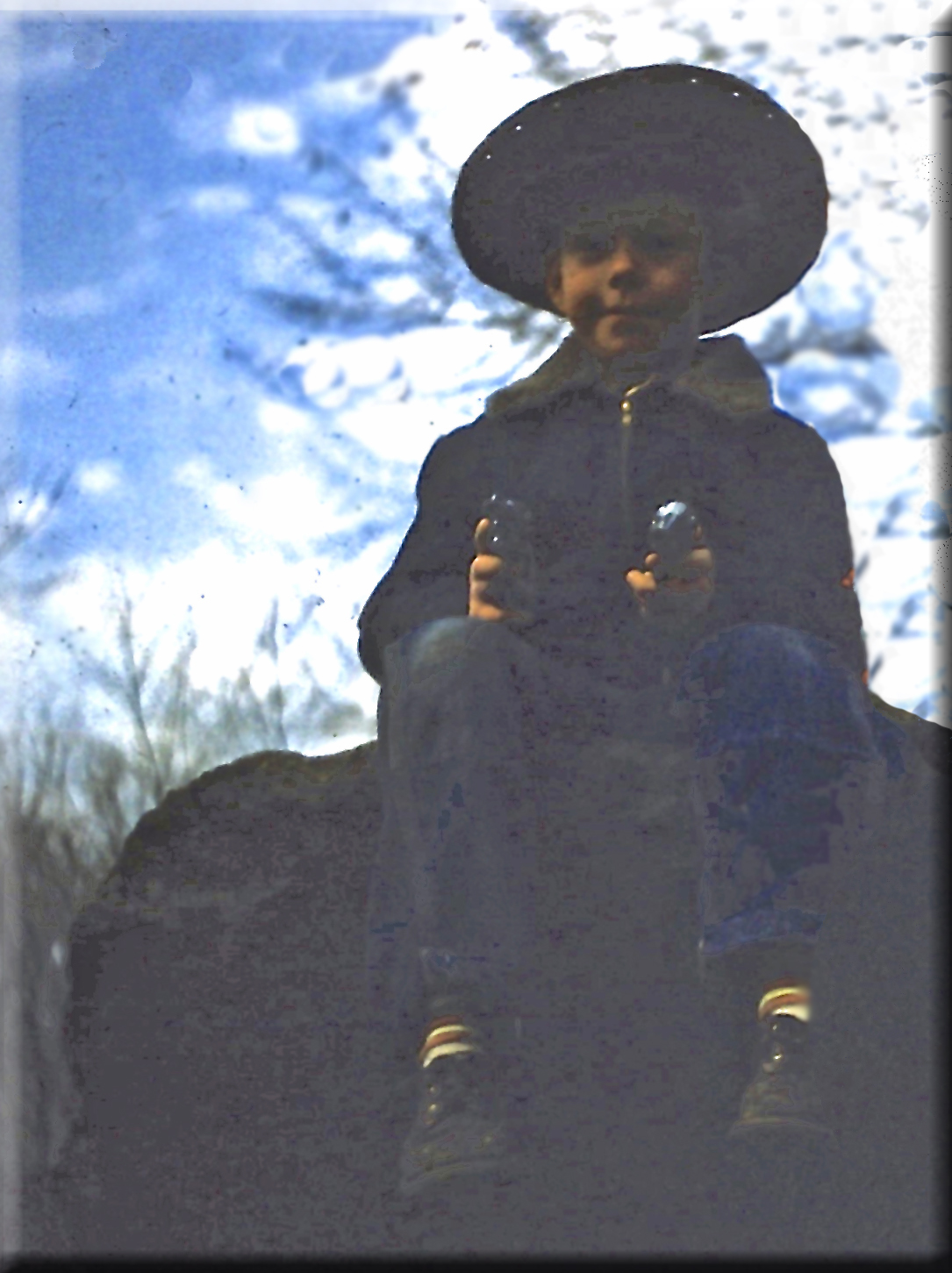
On the Rock with Guns

Photo: Circa 1954

Boys played the games of bad guys versus the good guys, and this play usually involved some degree of aggression, usually in the form of rough housing. If I complained to my mom that the boys were playing too rough, she would say, “Well, it’s time to come in then.” It wasn’t a girl’s place to get involved in fights and tussles. At some level, I thought that boys seemed less civilized than my girl friends because of their aggressive play and coarse language, which sometimes morphed into cursing.  Sometimes they could be outright bullies. If they were playing shoot ‘m up with each other, and if we wandered into the action, we’d be shot!

Occasionally, a story in The  Lone Ranger would include a woman. I remember secretly hoping that maybe the Lone Ranger or Tonto might find a girlfriend, and always somewhat disappointed, when they would ride off into the sunset again without a storyline that included a woman. Even at age 8, I realized something was amiss.

loneranger-guns

Got the guns, but where’s the girl friend?

The stories of the Lone Ranger became implanted in our consciousness, and Tonto and the Lone Ranger survive as mythic folk heroes for a generation of television viewers.  Children could not grasp the idea that the Ranger was a vigilante who had no authority to enforce the law and who used guns to impose his will. Instead what we seem to remember is that the masked man and his partner played respectful characters who courageously stepped into dangerous situations with the unselfish goal to stand with those who faced injustice.  As a young child, I guess I might have thought that any man who was that mannerly and courageous would wind up with a girlfriend . . . eventually.

IMG_4296

Growing up in the 1950s, our family always had a train under the Christmas tree. The train belonged to my father when he was a boy, purchased by my grandparents in the 1920s. Lionel #318 0040, manufactured in the years 1924-32, displayed realistic detail, including brass trim. Two sets of cars could be attached to the engine: a freight and a passenger set. The cars’ authenticity, including handles, lights, ornate railings and mock stained glass made them especially fun to play with as we would give our stuffed animals and dolls a ride in the cars. The little engine chugged along the tracks, making a kind of grinding sound, and a large-sized transformer provided the electric, occasionally sparking as we adjusted the switch.

The success of the Lionel Company making model trains for children mimicked the popularity of the railroads in the 1920s when train travel was central to transportation in America. Railroads carrying freight and people crisscrossed the United States. Train-hopping by hobos and migrants became a commonplace method for workers to move to new locations that promised jobs. This was the railroads’ Golden Era, and folks passed on myths and legends associated trains, such as Casey Jones and John Henry.  These folk songs became well-known in American culture, with the Wabash Cannonball one of favorites of country singers.

Now listen to the jingle, and the rumble, and the roar,
As she dashes thro’ the woodland, and speeds along the shore,
See the mighty rushing engine, hear her merry bell ring out,
As they speed along in safety, on  the “Great Rock-Island Route.”

Although rail travel is making somewhat of comeback today, folks think nostalgically about the old steam trains whistling across the landscape. So was our experience visiting the Strasburg Railroad and Museum in Lancaster, Pennsylvania. As we boarded the train, I noticed the striking interior of the car, with polished woodwork and decorative stained glass at the top of the windows.  As we rode along, the cadence of the wheels on the tracks produced a soothing rhythm as we watched the scenery glide by.

Maybe I’m a little sentimental cause I know that things have to change
But I’d still like to go for a train ride cause I’ve got a thing about trains.
Johnny Cash

IMG_2295

Greene Street and Carpenter Lane

Taking a writing course offered at the Big Blue Marble Bookstore led me into a community in West Mount Airy at the corners of Greene and Carpenter Lane. Despite the bleak winter afternoon, the community offered a warm atmosphere as the little shops that lined the streets invited me to stop in to visit. In addition to taking a writing course, I had also enrolled in a photography class at an art center in my community, so I had brought my camera along, as our assignment was to look for new shapes and textures as subjects.

IMG_2275With a fondness for restoration, I couldn’t believe my luck stumbling onto the Philadelphia Salvage Company. Suitcases and trunks piled on what looked like an old railroad cart, and metal cans spilled into the sidewalk. But I didn’t linger too long in cold. Upon entering the building, I noticed  a cast iron stove, pumping warm air through the building, as a tea kettle spewed steam from its spout. I warmed my hands and looked around, mesmerized by the array of architectural salvage, from stained glass, plumbing and electrical fixtures, antique doors and windows. In a second life, I could be a picker, as I love all the old stuff in need of a fix-up.

The Salvage Company celebrates a doggie visitor as their “mascot of the day,”  and I understand that a sleepy cat sometimes occupies the front bench.

Tea Pot Frame

I found lots of subjects for my photography assignment.

This slideshow requires JavaScript.

One subject seemed to deserve special attention: a shelf of different sized gears.  The photograph of those gears inspired this blog post, and three months later the photo won first place at the Community Arts Center!

Across the street from the Salvage Company, dogs waited patiently for their owners grabbing a bite to eat at the High Point Cafe. Chilled by the damp air, I stopped in for a cup of coffee. I was not disappointed as the coffee was excellent, in addition to their selection of pastries. The Cafe refers to their corner as a village and “are proud to be part of one.”

IMG_2289

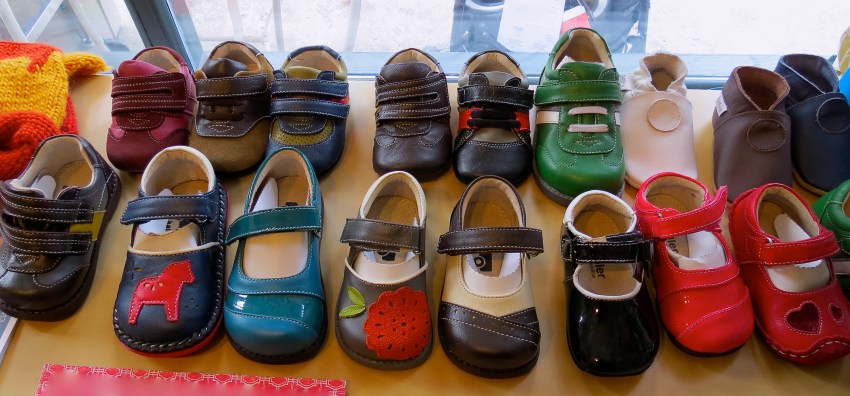
One store down from the Cafe, the Nesting House specializes in selling new and used baby items “with an aim to uphold a mission of social and environmental stewardship.” They sell cloth diapers and used clothing. I found a little pair of shiny dress shoes for my great-niece.

IMG_1943

Crossing over to the corner, I opened the door to the Weavers Way Co-Op, and met with crowds waiting in line to make their purchases. Deli aroma filled the air, and signs advertised hot soup for sale by the cup. According to co-ops website, they sell products that are “local, sustainable, organic, fairly traded and healthful.” It’s a small, two-story compact space, and yet they had annual sales up to $14 million.

IMG_1945

A Huge Assortment of Bulk Items

I picked up some fresh vegetables and loaf of bread and headed to my destination, Big Blue Marble Bookstore. This store reminded me of the book shop restoration I had been part of years ago at Bindlestiff Books in West Philly. An independent book seller, the shop displayed a fantastic collection of children’s books and places for kids to sit and consider what they might buy. Toys and stuffed animals filled every corner. A cozy space, I lingered in the travel section before heading upstairs to my writing course. The store sponsors events including book clubs that can use their community space.

IMG_2171

The progressive leanings of this corner village come from a long history of neighborhood harmony. According to Wikipedia,

The area is recognized by many civil rights groups as one of the first successfully integrated neighborhoods in America. Mount Airy residents organized to resist blockbustingpanic selling, and redlining, especially during the period from the late 1950s to the early 1970s when those practices were prevalent. It continues to be a well-blended neighborhood and was recently cited in Oprah Winfrey’s O magazine for its racial diversity and neighborhood appeal. The community has also been recognized by US News & World Report for racial harmony and balance.

The harmony in their neighborhood stands in contrast to what the big-box stores offer. In this post, Mystique of the Ole Fashioned General Store I compare the general store of years gone by, which served as a community anchor, with the big-box store of today, which, in contrast, offers little neighborhood involvement or esthetic appeal.  According to a study conducted by faculty at Penn State, big-box stores coincide with hate groups. Mount Airy demonstrates that progressive values provide the small-town American atmosphere we long for in this country. It’s as simple as having a welcoming street corner in your neighborhood.

I’ve made this trip often, so I thought that it might be time to journal the drive. We’ve changed our route over the years, as new highways now bypass some of the little towns. The new routes take less time with the elimination of traffic lights but have lost the chance to view the environs of these towns. Along the way, many interesting places beckon us to explore rather than stay on course for our destination.

We start our journey on my least-favorite highway, the congested Route 95, which is a direct route, if nothing else. At Delaware, the highway splits and Route 495 provides a pass around Wilmington. For a few miles, we see expansive views of the Delaware River, bridges, factories, ship yards, refineries and a big hill where trucks haul trash to the top. With major construction on-going, we navigate through the cattle shoots, jostling for a place on the highway with 18-wheelers.

Chesapeake & Delaware Canal Bridge

Opened in 1995, this bridge is one of the first of its kind in the area. A concrete and steel cable-stayed bridge, it spans the Delaware Canal, which connects the Chesapeake Bay to the Delaware River.

IMG_4158

Just off the bridge, fields of corn alternate with suburban sprawl, box-like newer construction–single family and apartment complexes.  Scrub forests and mixed pine and deciduous woods fill much of the landscape.

The Chesapeake Peninsula is coastal plain, which is a sandy, flat area, and the view from the car are fields of crops and outcroppings of forests in unpopulated areas.  Small and large stands selling fruits and vegetables regularly appear along the highways. Along Route 13, shopping districts and homes have sprawled over some the farmlands in the last twenty-five years.

 Ocean City, Maryland

Ocean City is a popular seaside resort for folks who live in the Mid-Atlantic region. Even though I have lived just three hours from this town, this will be my first visit. Our family vacationed at the Jersey Shore, specifically, Cape May. On this trip I thought it was time to stop at Ocean City, lured by the chance to walk along the lively 3-mile long boardwalk. After sitting in the car, will be good to get out and smell the sea air.

This slideshow requires JavaScript.

The Ocean City website listed a variety of events in the city: fireworks, concerts, movies and laser light shows.

Berlin, Maryland

A short drive from Ocean City, we stopped for lunch in the historic town of Berlin. The residents have restored the buildings along the main streets, where eclectic gift and antique stores feature displays in their windows. The tree-lined streets, Victorian lanterns and planters filled with flowers made this town an inviting stay. Several restaurants, such as the Drummer’s Cafe, Rayne’s Reef Luncheonette and SiCuli Rustic Italian offered a variety of choices for lunch. We ate at The Globe, once the neighborhood movie theatre and enjoyed a tasty lunch while watching an old-time flick.

This slideshow requires JavaScript.

Crisfield, Maryland and Tangier Island

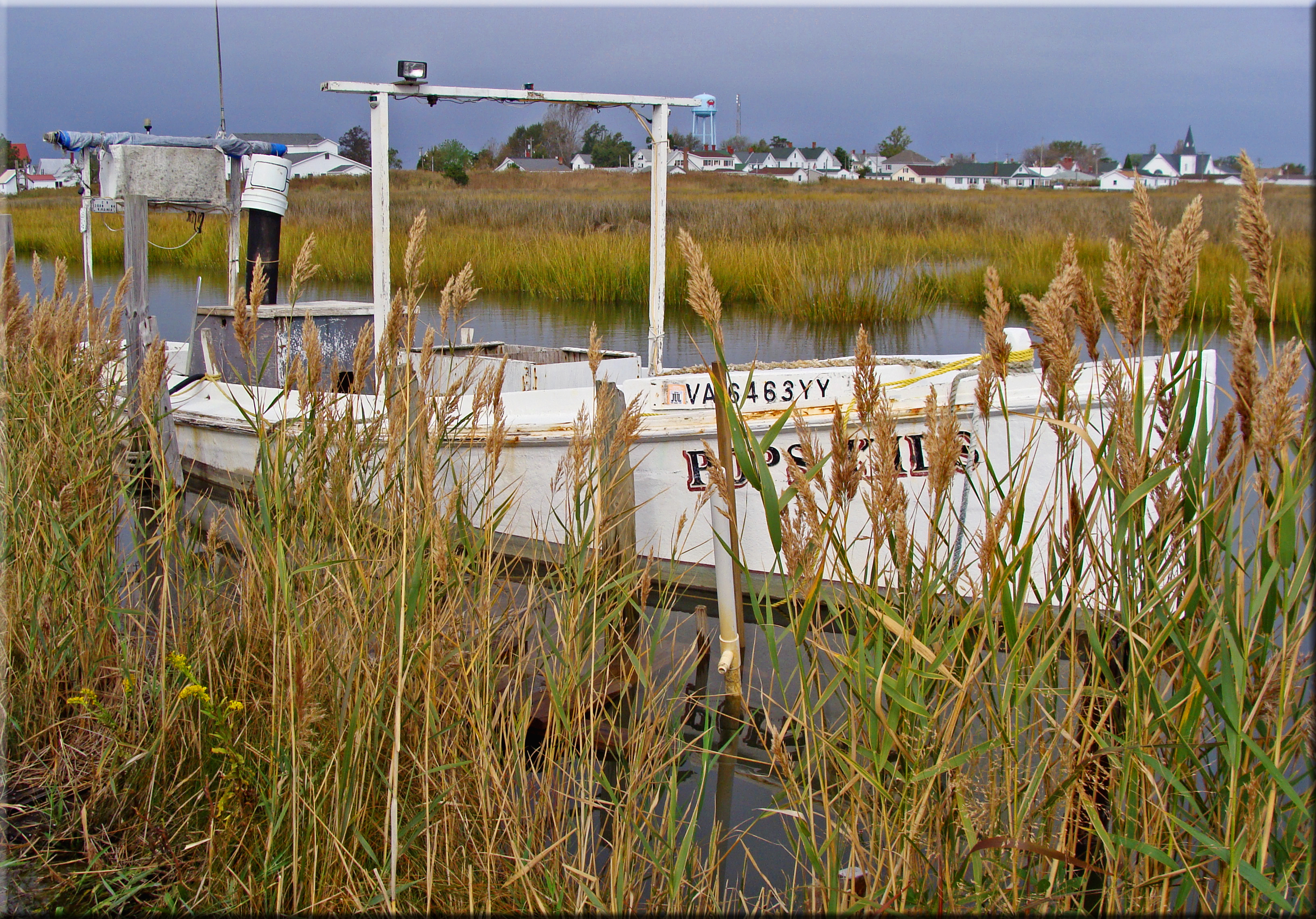
Blog post, Tangier–Virginia’s Island Lost in Time, describes our visit to Tangier Island in 2011.

Tangier

Parksley, Virginia

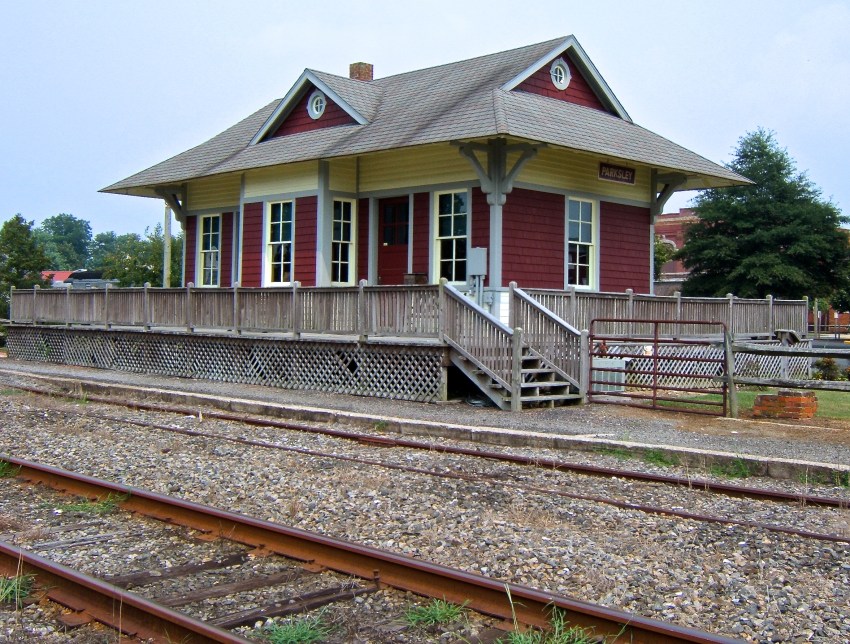
Parksley Train Station

Parksley was a planned community as a result of the railroad constructions on the Eastern Shore and is representative of the small town atmosphere of that era.  The commercial district in the center of town has a number of shops and restaurants.  Victorian houses stand along the shaded streets.

Founded in 1988, the Eastern Shore Railroad Museum is housed in a restored train station.  Around the station, railway cars, such as the Fredericksburg and Richmond Post Office Car and the Wabash Caboose rest on tracks.

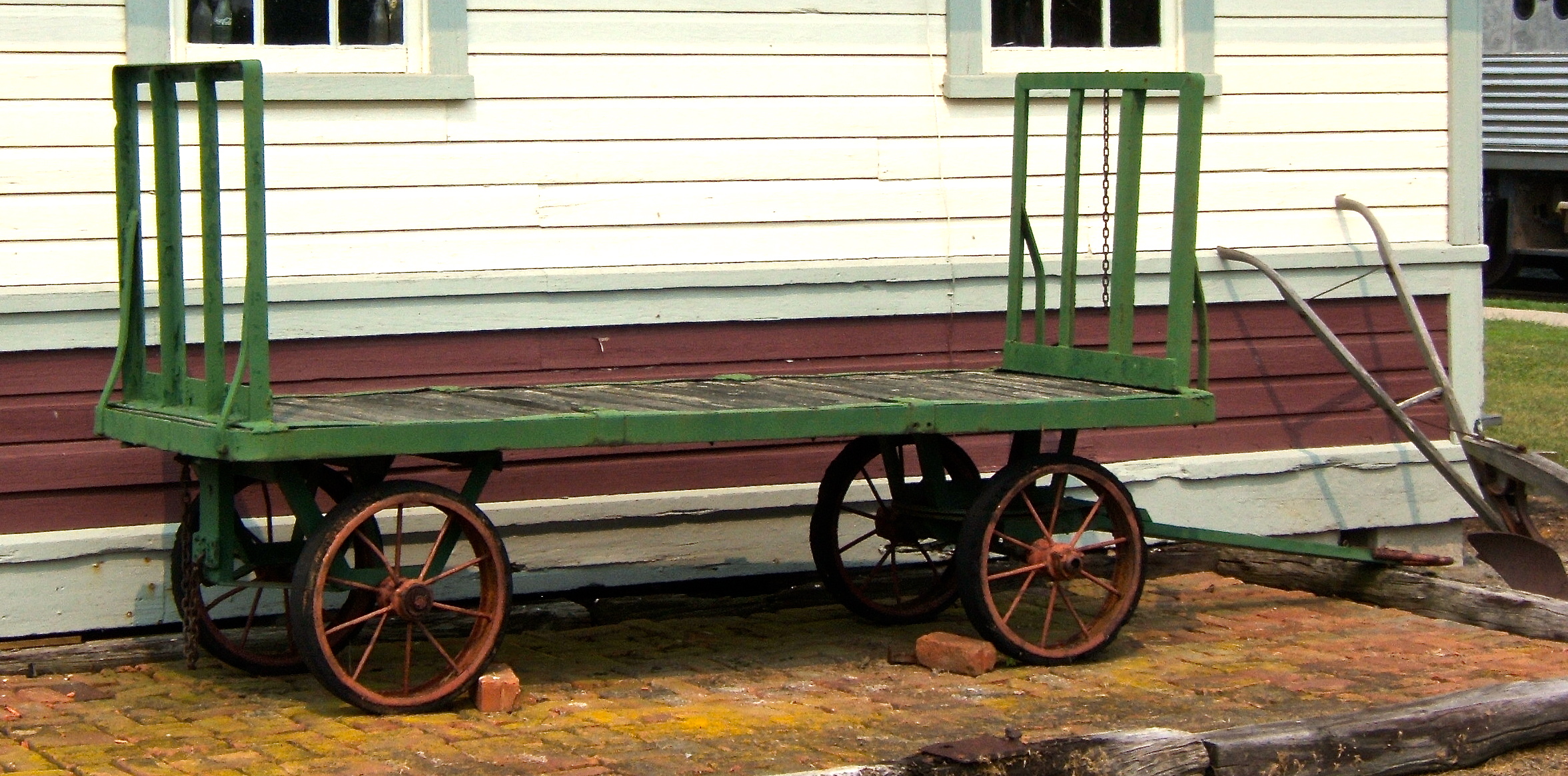
Train Cart

Onancock, Virginia

Onancock comes from the Indian word “auwannaku” meaning foggy place, but it was a bright sunny day when we arrived. This town offers much to see with self-guiding walking tours past historic homes and lovely gardens and places to rent boats and kayaks. A ferry operates out of Onancock Creek to Tangier Island. For over a century, the Hopkins and Brothers operated a mercantile store, as Onancock had been a busy center for trade. Renovated and moved, the interior of the building still maintains the look of a country store. A number of old-fashioned general stores still remain in operation along our route, which inspired this post on the political and social aspects of losing the general store in the American small town.

This slideshow requires JavaScript.

Chicotegue Island, Virginia

Spending just a day on Chincoteague Island, we were rewarded with a serendipitous experience. Chincoteague, on the eastern shore of the Del Mar Peninsula, is best known for the wild ponies, whose ancestors survived a wreck of a Spanish Galleon, or one of the legends would have us believe. Turned out the egrets carried the day.

Cape Charles, Virginia

Turning off 168, about twenty miles from the Chesapeake Bay Bridge, we found this attractive little gas station. Read more about this station and others like it at: Nostalgic Memorabilia: Filling Stations of the 1920s.

Gas Station

Gas Station on Route 184

We explored the bay-side town of Cape Charles. For many years the town had been the terminal of the Little Creek Cape Charles Ferry, which provided car ferry service to Norfolk and Hampton. Now an expansive beach runs the length of the village. Many of the homes date back to the early 1900s, and the town center has a distinctly small town main street.

Chesapeake Bay Bridge

Across the mouth of the Chesapeake Bay the bridge meets the Atlantic Ocean and opening of the Chesapeake Bay. About 17 miles long, the bridge connects Cape Charles with Norfolk.

IMG_4013

The Bridge-Tunnel, opened in 1964 and considered the largest bridge-tunnel complex in the world, consists of low trestle bridges, two suspension bridges and two tunnels, each a mile long under the shipping channels.

Currituck, North Carolina

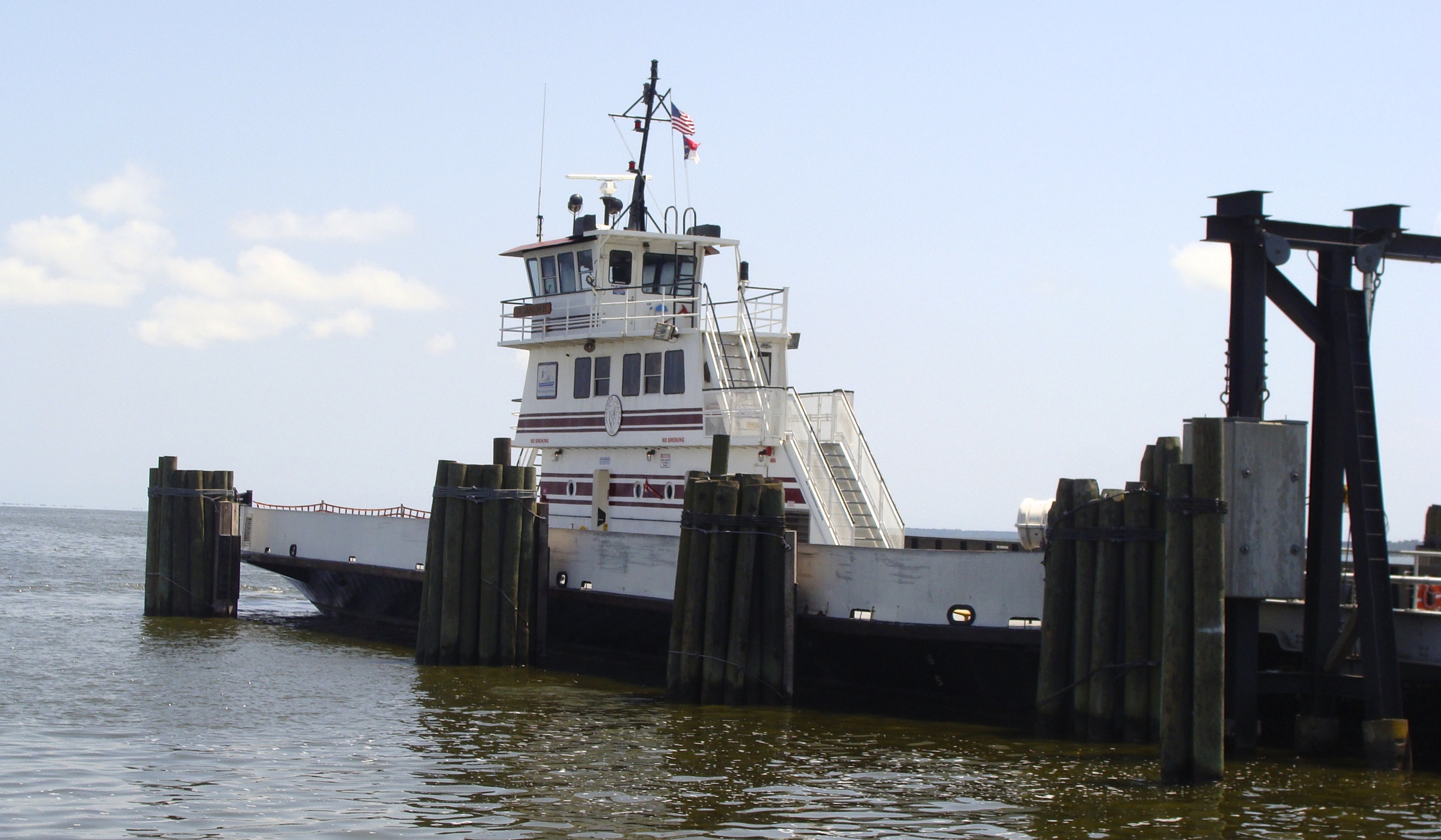
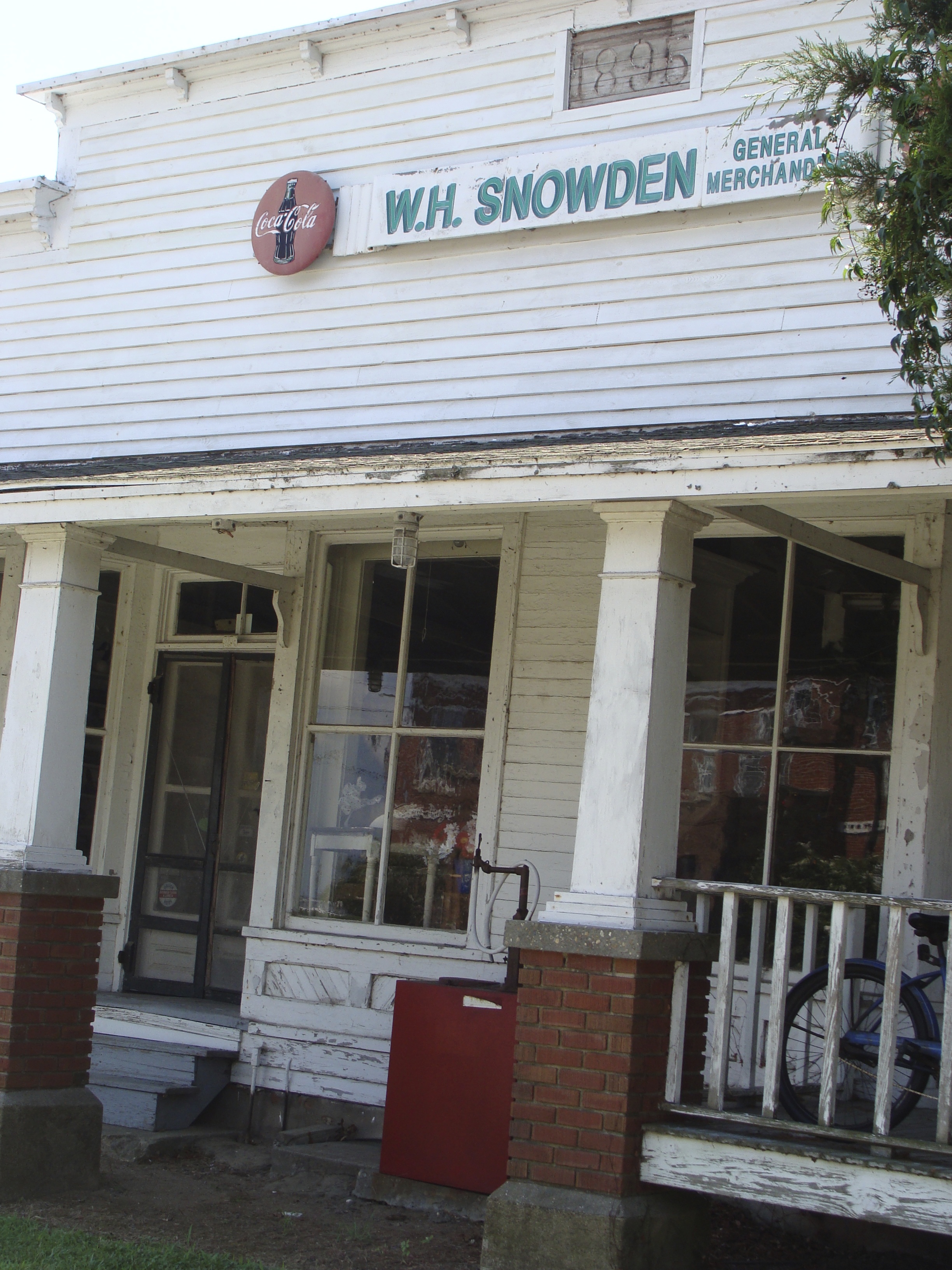
Just off of Route 168 and situated on the Currituck Sound, the town is the landing for the Knotts Island Ferry, which offers a free shuttle to Knotts Island.  The town has a few brick buildings including the Courthouse and Jail house, dating back to 1820. W. H. Snowden’s General Merchandising  Store was closed but I could peek in the windows and see that it still retains the look of a country store.

Ferry

Knotts Island Ferry

Snowden General Store

Peck Basket, Moyock, North Carolina

One of our favorite stops along Route 168 is the Peck Basket. Years ago the little store was not more than a shack but always had an eclectic array of items to gaze at or to buy. In its new site, has taken on the ambiance of a general store, replete with pot belly stove and old-time counters and open shelves.

This slideshow requires JavaScript.

Wright Memorial Bridge, North Carolina

Built in 1966 and over a mile long, this bridge connects the Outer Banks to the mainland. Getting over the bridge on a Saturday is an exercise in patience as traffic backs up along 168 all the way to the Cotton Gin. The backup continues along Route 12, the only highway to the upper end of the island.

Duck, North Carolina

Beach and bay scenes in Duck.

This slideshow requires JavaScript.

Elizabethan Gardens, Manteo

Best described on their website:

Fanciful and elaborate gardens were kept to entertain Queen Elizabeth I during her reign. Our garden was created for your enjoyment, and as a living memorial to the time when Sir Walter Raleigh’s lost colonists lived in this very place over 400 years ago. Inside our brick-walled gate you’ll find a wonderful collection of Renaissance statues, a sound-front Elizabethan-gazebo, a sunken Elizabethan knot garden – all adorned by an ever-changing palette of year-round color from hydrangeas to native plants, perennials and  camellias on ten sound-side acres.

This slideshow requires JavaScript.

The Lost Colony, Manteo

One evening we attended The Lost Colony, the longest-running outdoor theater. I especially enjoyed the 16th century choir music and the Native American dancers, who flung the sand in arches over their heads. Special effects, fire torches and guns blasting, added unexpected excitement and action. The story, an historical drama rather than a recreation of actual events, piqued my interest and I followed up with some research on my own. Our family members were friends with the “Queen,” played by Diana Cameron McQueen, so we stayed after the performance to meet and talk with the cast members.

This slideshow requires JavaScript.

The alley that runs in back of row houses can present aesthetic problems for homeowners, given that developers provided the space to handle utilitarian functions, such as car traffic into garages and trash pickup. However, the back door is still an entrance, and making it aesthetically pleasing does not have to compromise utility.

Rather than cement over the entire area in front of the garage, which was in disrepair at the time of purchasing the house, I opted to reserve a garden space at one side. For several years I let this garden alone except for planting a few borrowed cuttings from neighbors. For the most part I concentrated on landscaping the area in front of the house.  We dug up the grass, not an easy job, and planted a crêpe myrtle, two butterfly bushes, two hydrangea, lots of variegated hostas and other donated plants from friends. I requested a tree from the city for the curb. The slide show the transformation over three years.

This slideshow requires JavaScript.

Now I’ve turned my attention to the small back plot. What started this initiative was the realization that we had no house numbers back there. Inspiration came from Pinterest, which has a wonderful collection of trash to treasure ideas for the garden. I decided to look around the garage and attic to see what I might find. I discovered an old rusted sign that I thought might work for those numbers. I spray painted the sign, not worrying about the rust holes, and painted numbers on the sign. I also found a small garden hook and lantern that I recovered from the garage.

I purchased a couple of bags of soil and mulch, cone flowers and three small mums. Because I had already planted a crêpe myrtle, hostas, Pachysandra and few other varieties, these established plants made the project move along quickly. First, I cleaned out the overgrown weeds and added water-retaining soil. This spot is particularly dry and the surrounding white cement bakes in the summertime. Then I added the extra plantings and smoothed out the soil and added the mulch. After sweeping up, I used the hose to clean off the wood trim to ready for painting. Since many of the flowers were purple and pink, I decided to go bold and trim the wood around the garden in purple.  A pole going up the back also got painted in purple.  As the last step, I added the accessories, including a piece of driftwood. For a bit of whimsey, I hung three spinners off the deck, and painted a snake around the pole.

What was great about this project was that neighbors stopped by to talk about gardens and offer encouragement. This was a fun project with big returns in satisfaction.

This slideshow requires JavaScript.

Total time:
Installation of garden and painting the wood: four hours.
Preparing and painting the sign: two hours.
Trompe l’oeil: four hours.

Expenses:
Mulch and soil: $17.00
Plants: $21.00
Paint: $18.00

Tag Cloud