Humble Contributions to the Peoples' History

Archive for the ‘Travel Journal’ Category

Road Trip: DelMarVa Peninsula to the Outer Banks

I’ve made this trip often, so I thought that it might be time to journal the drive. We’ve changed our route over the years, as new highways now bypass some of the little towns. The new routes take less time with the elimination of traffic lights but have lost the chance to view the environs of these towns. Along the way, many interesting places beckon us to explore rather than stay on course for our destination.

We start our journey on my least-favorite highway, the congested Route 95, which is a direct route, if nothing else. At Delaware, the highway splits and Route 495 provides a pass around Wilmington. For a few miles, we see expansive views of the Delaware River, bridges, factories, ship yards, refineries and a big hill where trucks haul trash to the top. With major construction on-going, we navigate through the cattle shoots, jostling for a place on the highway with 18-wheelers.

Chesapeake & Delaware Canal Bridge

Opened in 1995, this bridge is one of the first of its kind in the area. A concrete and steel cable-stayed bridge, it spans the Delaware Canal, which connects the Chesapeake Bay to the Delaware River.

IMG_4158

Just off the bridge, fields of corn alternate with suburban sprawl, box-like newer construction–single family and apartment complexes.  Scrub forests and mixed pine and deciduous woods fill much of the landscape.

The Chesapeake Peninsula is coastal plain, which is a sandy, flat area, and the view from the car are fields of crops and outcroppings of forests in unpopulated areas.  Small and large stands selling fruits and vegetables regularly appear along the highways. Along Route 13, shopping districts and homes have sprawled over some the farmlands in the last twenty-five years.

 Ocean City, Maryland

Ocean City is a popular seaside resort for folks who live in the Mid-Atlantic region. Even though I have lived just three hours from this town, this will be my first visit. Our family vacationed at the Jersey Shore, specifically, Cape May. On this trip I thought it was time to stop at Ocean City, lured by the chance to walk along the lively 3-mile long boardwalk. After sitting in the car, will be good to get out and smell the sea air.

This slideshow requires JavaScript.

The Ocean City website listed a variety of events in the city: fireworks, concerts, movies and laser light shows.

Berlin, Maryland

A short drive from Ocean City, we stopped for lunch in the historic town of Berlin. The residents have restored the buildings along the main streets, where eclectic gift and antique stores feature displays in their windows. The tree-lined streets, Victorian lanterns and planters filled with flowers made this town an inviting stay. Several restaurants, such as the Drummer’s Cafe, Rayne’s Reef Luncheonette and SiCuli Rustic Italian offered a variety of choices for lunch. We ate at The Globe, once the neighborhood movie theatre and enjoyed a tasty lunch while watching an old-time flick.

This slideshow requires JavaScript.

Crisfield, Maryland and Tangier Island

Blog post, Tangier–Virginia’s Island Lost in Time, describes our visit to Tangier Island in 2011.
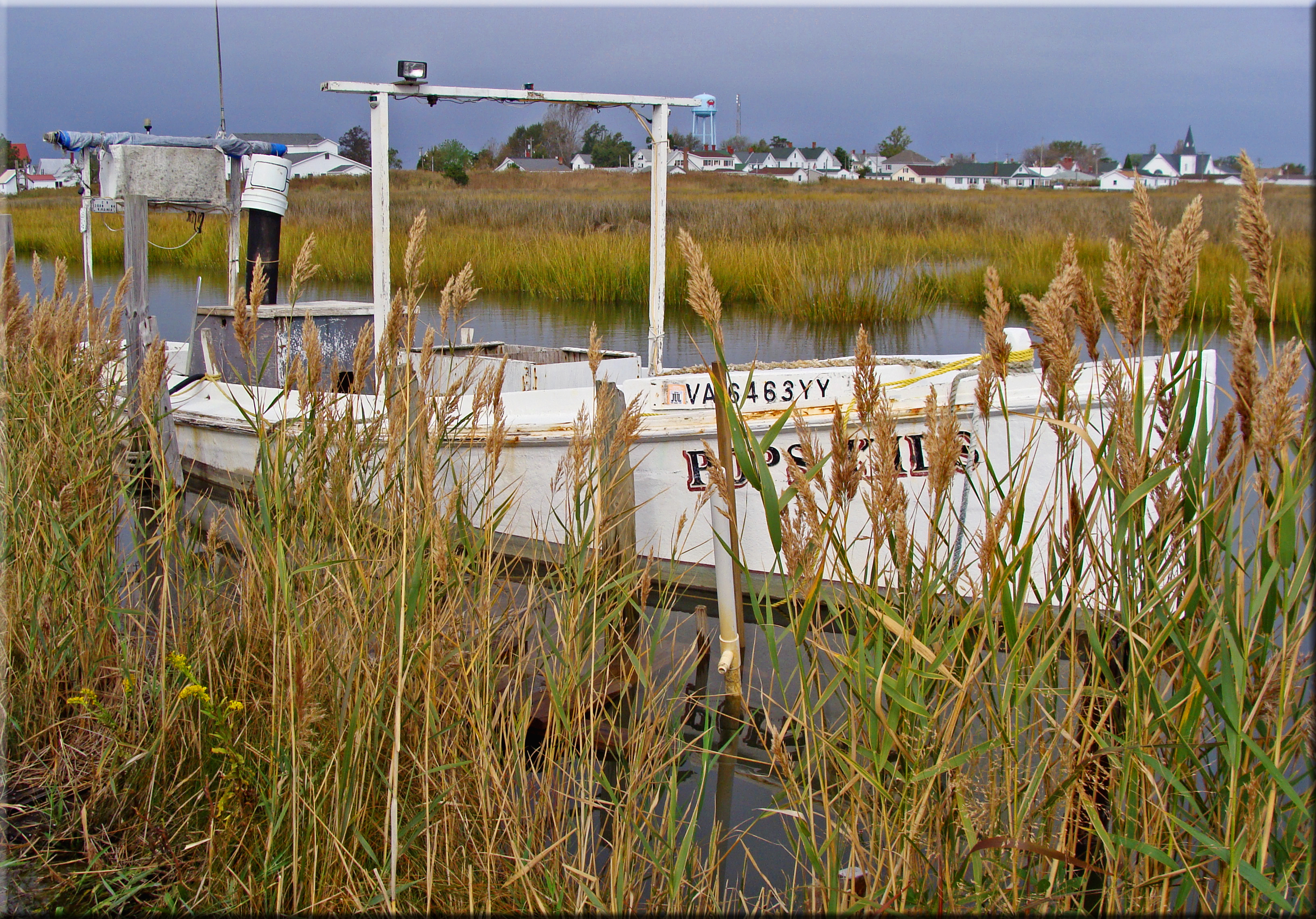
Tangier

Parksley, Virginia

Parksley Train Station

Parksley was a planned community as a result of the railroad constructions on the Eastern Shore and is representative of the small town atmosphere of that era.  The commercial district in the center of town has a number of shops and restaurants.  Victorian houses stand along the shaded streets.

Founded in 1988, the Eastern Shore Railroad Museum is housed in a restored train station.  Around the station, railway cars, such as the Fredericksburg and Richmond Post Office Car and the Wabash Caboose rest on tracks.
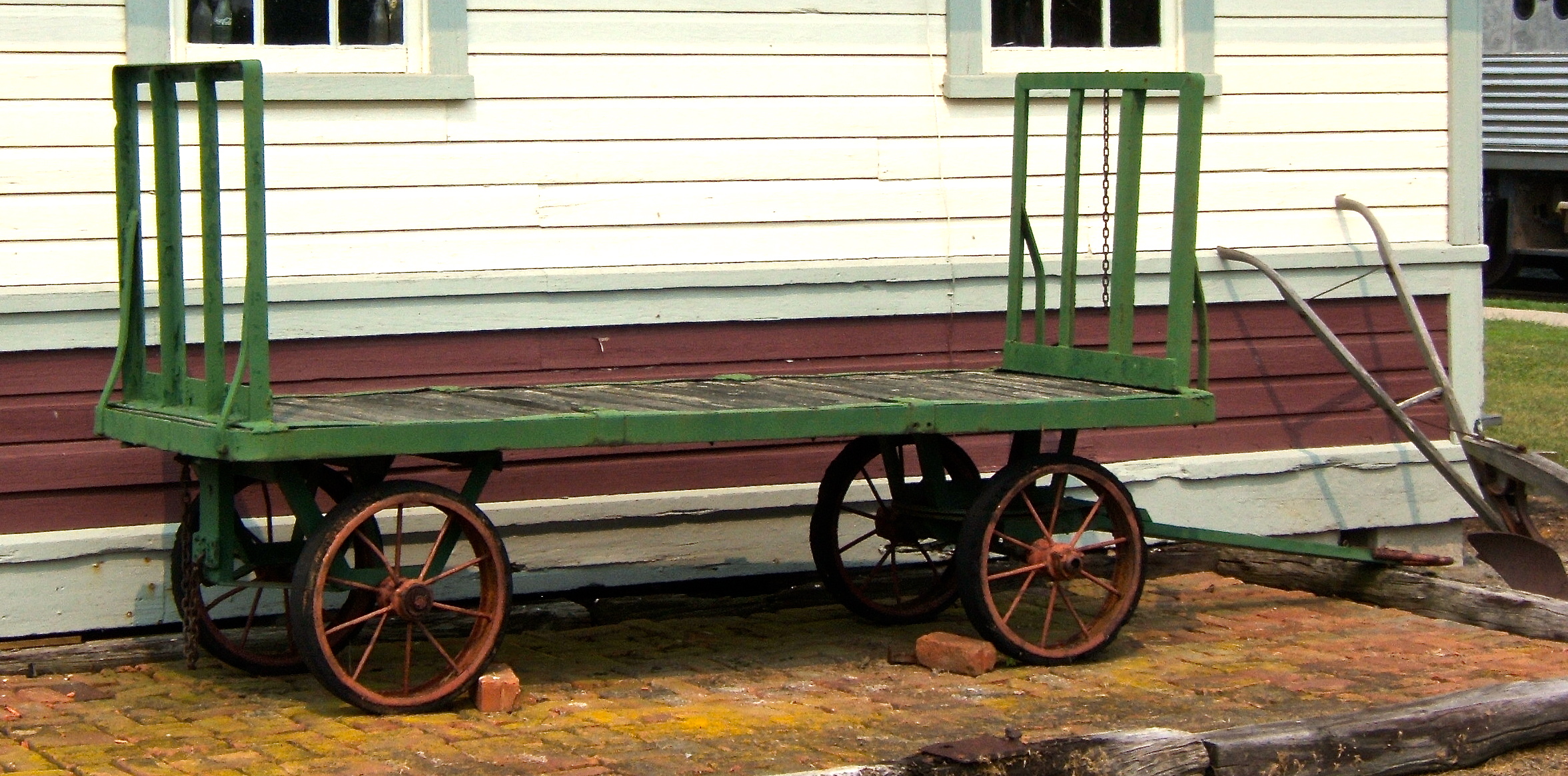
Train Cart

Onancock, Virginia

Onancock comes from the Indian word “auwannaku” meaning foggy place, but it was a bright sunny day when we arrived. This town offers much to see with self-guiding walking tours past historic homes and lovely gardens and places to rent boats and kayaks. A ferry operates out of Onancock Creek to Tangier Island. For over a century, the Hopkins and Brothers operated a mercantile store, as Onancock had been a busy center for trade. Renovated and moved, the interior of the building still maintains the look of a country store. A number of old-fashioned general stores still remain in operation along our route, which inspired this post on the political and social aspects of losing the general store in the American small town.

This slideshow requires JavaScript.

Chicotegue Island, Virginia

Spending just a day on Chincoteague Island, we were rewarded with a serendipitous experience. Chincoteague, on the eastern shore of the Del Mar Peninsula, is best known for the wild ponies, whose ancestors survived a wreck of a Spanish Galleon, or one of the legends would have us believe. Turned out the egrets carried the day.

Cape Charles, Virginia

Turning off 168, about twenty miles from the Chesapeake Bay Bridge, we found this attractive little gas station. Read more about this station and others like it at: Nostalgic Memorabilia: Filling Stations of the 1920s.

Gas Station

Gas Station on Route 184

We explored the bay-side town of Cape Charles. For many years the town had been the terminal of the Little Creek Cape Charles Ferry, which provided car ferry service to Norfolk and Hampton. Now an expansive beach runs the length of the village. Many of the homes date back to the early 1900s, and the town center has a distinctly small town main street.

Chesapeake Bay Bridge

Across the mouth of the Chesapeake Bay the bridge meets the Atlantic Ocean and opening of the Chesapeake Bay. About 17 miles long, the bridge connects Cape Charles with Norfolk.

IMG_4013

The Bridge-Tunnel, opened in 1964 and considered the largest bridge-tunnel complex in the world, consists of low trestle bridges, two suspension bridges and two tunnels, each a mile long under the shipping channels.

Currituck, North Carolina

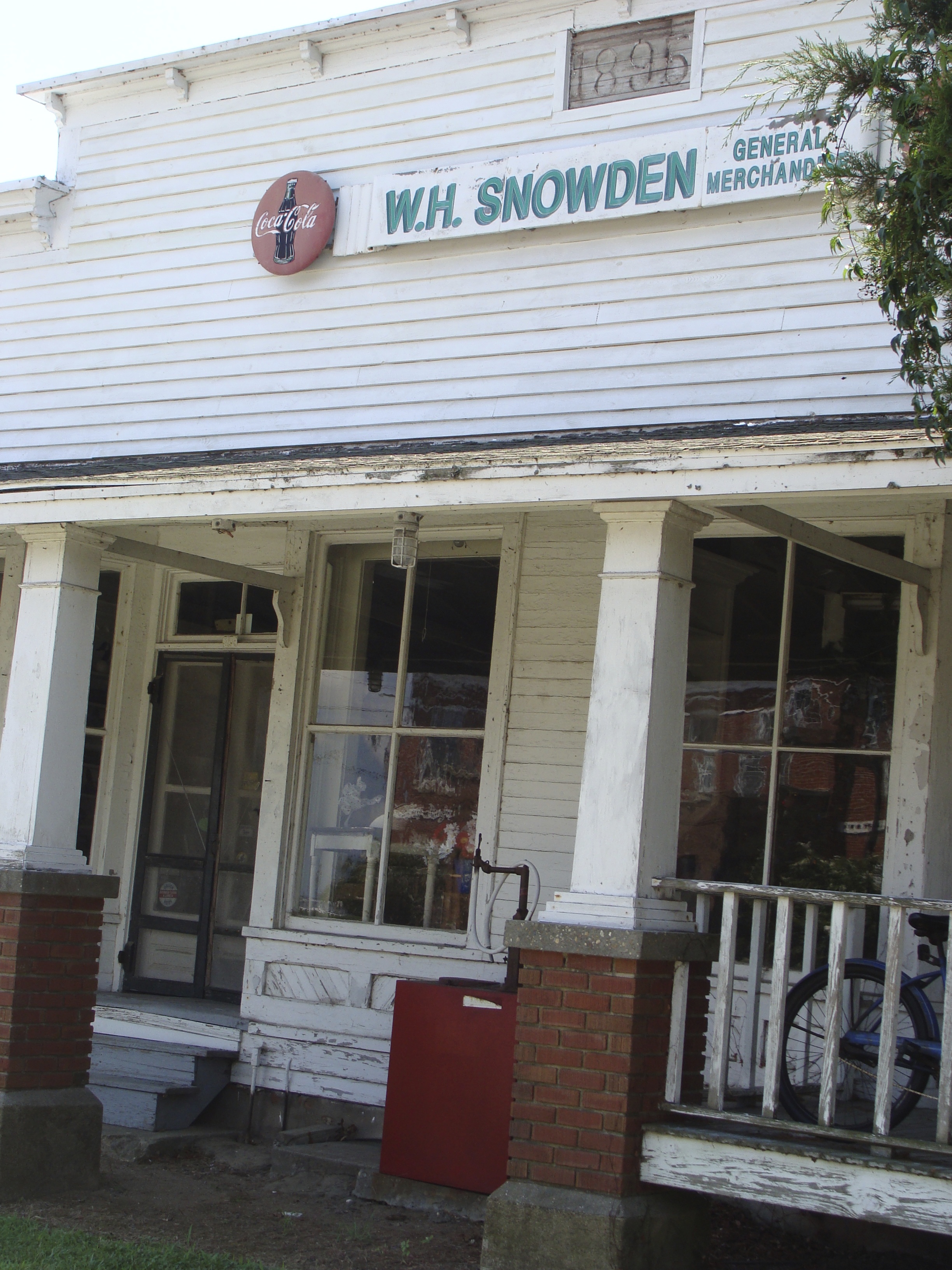
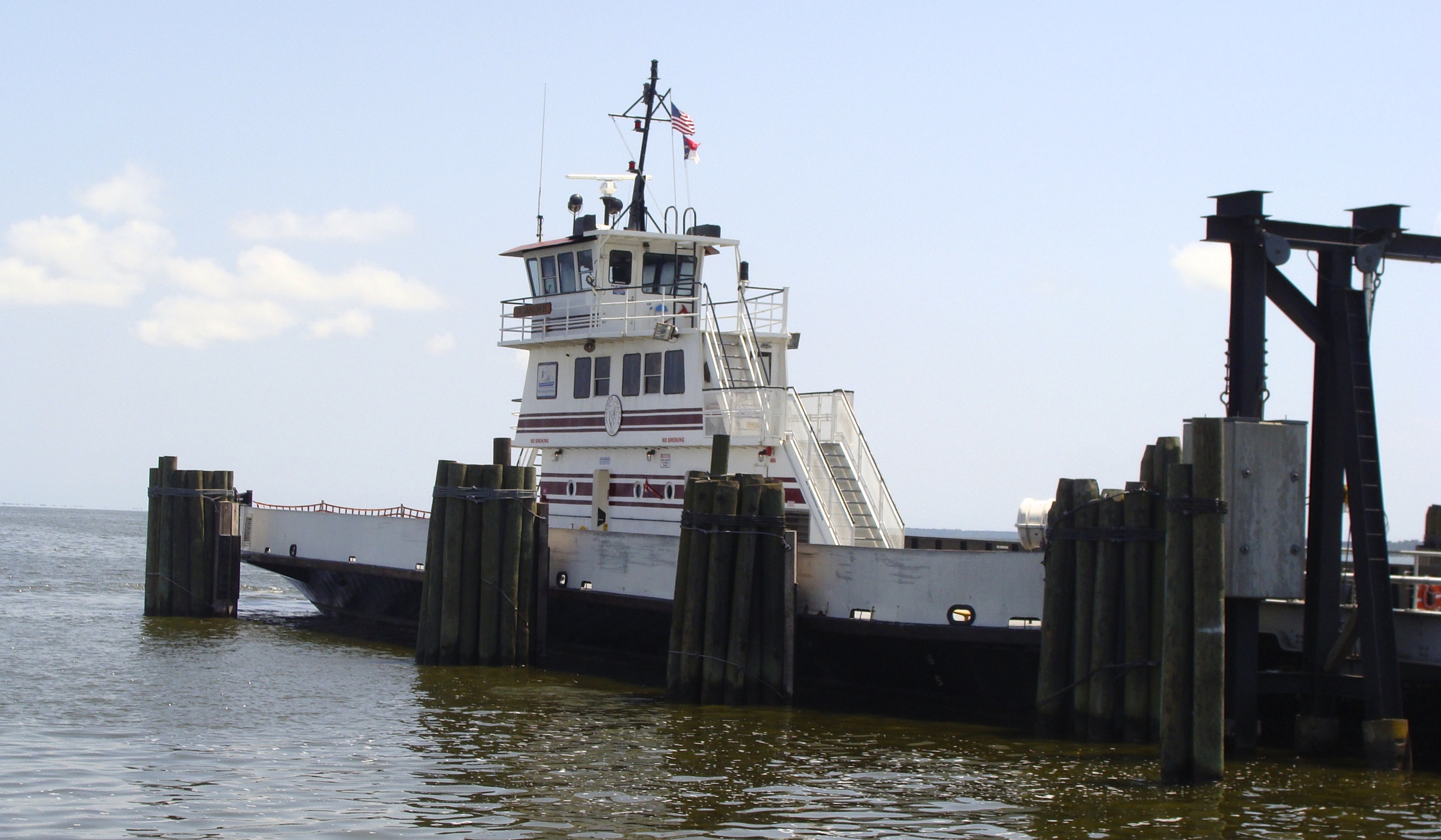
Just off of Route 168 and situated on the Currituck Sound, the town is the landing for the Knotts Island Ferry, which offers a free shuttle to Knotts Island.  The town has a few brick buildings including the Courthouse and Jail house, dating back to 1820. W. H. Snowden’s General Merchandising  Store was closed but I could peek in the windows and see that it still retains the look of a country store.
Ferry

Knotts Island Ferry

Snowden General Store

Peck Basket, Moyock, North Carolina

One of our favorite stops along Route 168 is the Peck Basket. Years ago the little store was not more than a shack but always had an eclectic array of items to gaze at or to buy. In its new site, has taken on the ambiance of a general store, replete with pot belly stove and old-time counters and open shelves.

This slideshow requires JavaScript.

Wright Memorial Bridge, North Carolina

Built in 1966 and over a mile long, this bridge connects the Outer Banks to the mainland. Getting over the bridge on a Saturday is an exercise in patience as traffic backs up along 168 all the way to the Cotton Gin. The backup continues along Route 12, the only highway to the upper end of the island.

Duck, North Carolina

Beach and bay scenes in Duck.

This slideshow requires JavaScript.

Elizabethan Gardens, Manteo

Best described on their website:

Fanciful and elaborate gardens were kept to entertain Queen Elizabeth I during her reign. Our garden was created for your enjoyment, and as a living memorial to the time when Sir Walter Raleigh’s lost colonists lived in this very place over 400 years ago. Inside our brick-walled gate you’ll find a wonderful collection of Renaissance statues, a sound-front Elizabethan-gazebo, a sunken Elizabethan knot garden – all adorned by an ever-changing palette of year-round color from hydrangeas to native plants, perennials and  camellias on ten sound-side acres.

This slideshow requires JavaScript.

The Lost Colony, Manteo

One evening we attended The Lost Colony, the longest-running outdoor theater. I especially enjoyed the 16th century choir music and the Native American dancers, who flung the sand in arches over their heads. Special effects, fire torches and guns blasting, added unexpected excitement and action. The story, an historical drama rather than a recreation of actual events, piqued my interest and I followed up with some research on my own. Our family members were friends with the “Queen,” played by Diana Cameron McQueen, so we stayed after the performance to meet and talk with the cast members.
This slideshow requires JavaScript.

“Got your Goat,” Street Performance, Plaza Mayor, Madrid

This slideshow requires JavaScript.

While in Spain, I enjoyed watching the many street performers and their interactions with visitors.

One of my favorites, took place at the Plaza Mayor, in Madrid, as two little girls interact with a “goat.”

From Autonomous Kingdom of Northern Spain, June 2013.

Meeting Teresa Forcades, Revolutionary Nun, Barcelona, June 13

As a supporter of anarcho-syndicalist movements, which advocate for democracy for the working classes in politics as well as the workplace, I’ve been following the news about the strikes against the Spanish government’s spending cuts, which create severe consequences for workers and their families. Following these events, I came across one of their leaders, Sister Teresa Forcades.

Teresa ForcadesSister Teresa, who confirms that her Church is misogynistic and patriarchal, has a Facebook page here: https://www.facebook.com/Forcades?hc_location=stream if you don’t mind using Google translator for Catalonia into English.

For folks who have their doubts about capitalism, Teresa has launched a political manifesto to counter austerity measures by the Spanish government. The document calls for an independent Catalonia to carry out a more democratic and progressive agenda, including nationalizing banks and energy corporations.

On my first evening in Barcelona, I’m going to an event, Women, Spirituality and Social Change, a dialogue between Teresa and Lekshe Karma Tsomo, a California Tibetan nun, who share the same commitment: to promote social change based on inner transformation.

Travel Log to Northern Provinces of Spain

If you might travel to Spain or if you have been there and would like to compare notes, please check out my page here where I have pictures and video of Sister Teresa at the event I attended.  I also chronicle a trip to the Northern provinces, which will include commentary on politics, cuisine, language and art.

I will occasionally do a post, but for the most part I’ll be updating the web page. Thanks for checking it out!

Coastal North Carolina: Witness to Pirate Invasion

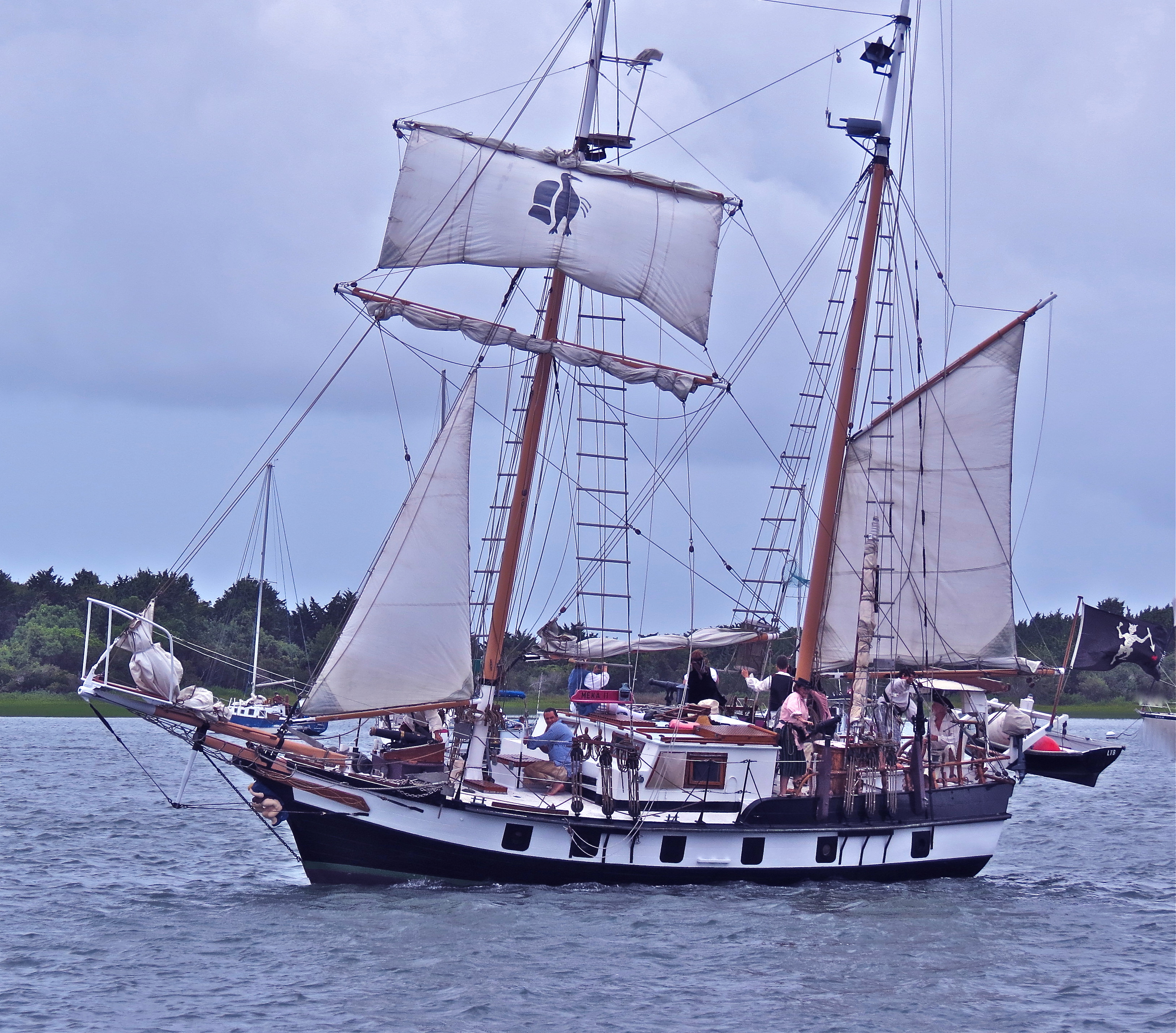
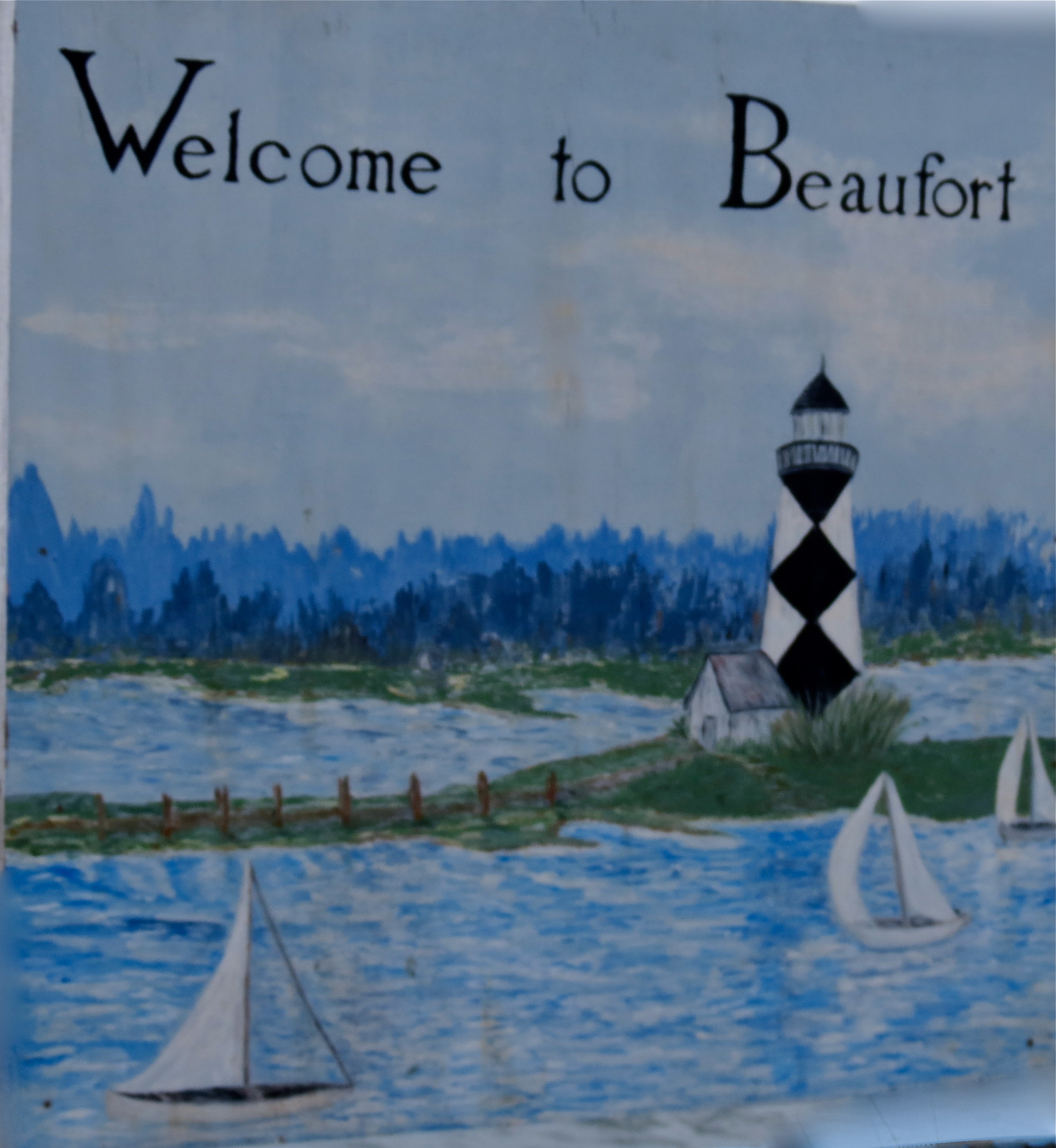
Beaufort: Legacy of Pirates along the North Carolina Coast

Schooner Wolf

Yo Ho Ho & a Bottle of Rum

As we arrived in Beaufort, we found the town overrun with people streaming down toward the wharf. After scouring the neighborhood streets for a parking place, we headed the way of the crowds toward the waterfront. Some were dressed in colonial costumes–this began to look like fun!

Turns out, we arrived just in time for a pirate invasion! Folks lined the piers and watched as the events unfolded on the river. A classic topsail schooner led the attack by sea, her pirate crew taking aim at the shoreline blasting her cannons. Muskets fired back in defense. Pirates in longboats plowed the water, and buccaneers on land brandished swords. Townsfolk cheered as the pirates clashed with the military guard.

We just happened on Beaufort’s Annual Pirate Invasion: It Takes a Village to Pillage event, the town’s recreating of an actual pirate invasion in 1747. The story goes that Spanish privateers sailed into the harbor and stole several ships, easy pickings when only a few men guarded the coast. Not satisfied, the pirates returned several months later to take the town! About fifty militiamen were not enough to protect the village, so citizens high-tailed it out of the area. After collecting more recruits, however, the militia counterattacked, driving the pirates out for good this time.

Blackbeard supposedly had been a frequent visitor to Beaufort around 1718. The governor of Virginia, tired of piracy along the coast, sent two sloops on a mission to capture Blackbeard; the governor’s ships eventually tracked down the pirate, and an intense sea battle followed in which Blackbeard was killed. Three hundred years later divers discovered the wreckage of his ship, Queen Anne’s Revenge, in Beaufort Inlet.

Capture of Blackbeard

The weekend featured all sorts of pirate activities from sword dancing, to pirate cruises, and costume contests.  The trial and supposed hanging of the pirates highlighted the afternoon. With so many events, I would come back and enjoy the entire weekend! 


More about our stay in Beaufort as well as our road trip through the towns of coastal North Carolina at the link.


Edgewood Plantation: Haunts of the Past

A bit of research, a bit of luck . . .

Brought us to the Edgewood Plantation in our search for a bed and breakfast in the area along the James River, which runs through Richmond to the Chesapeake Bay. The Edgewood website richly described the historic house and gardens quoting Country Collections magazine, “Have you ever dreamed of waking up to an antebellum room that would be the envy of Scarlett O’Hara?” A resident ghost, chased by the TV Ghost Hunters, reportedly resides in the upper story. Sounded like a perfect place to stay!

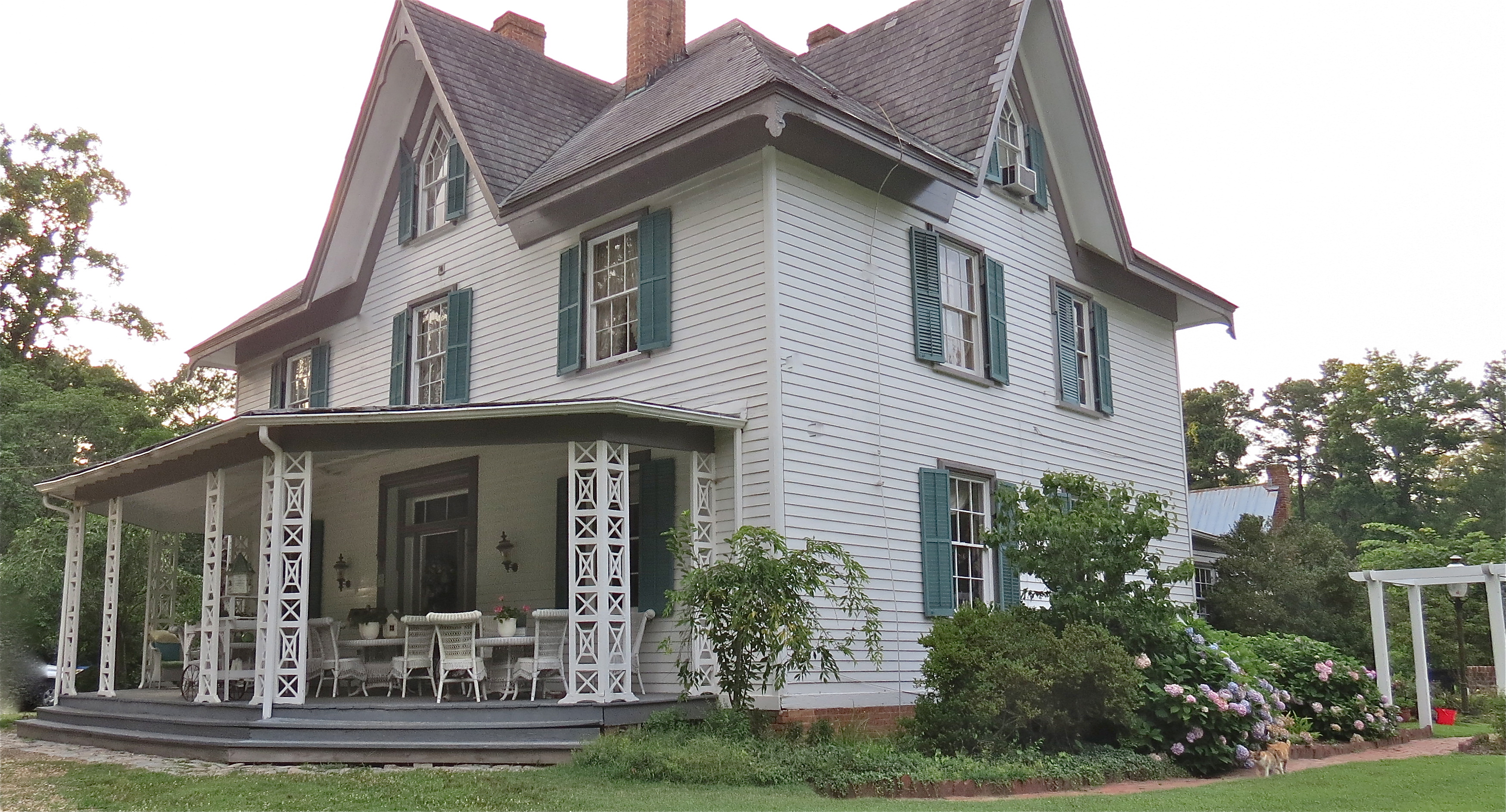
We drove from Petersburg crossing the Benjamin Harrison Memorial Bridge to the John Tyler Memorial Highway (Route 5), a scenic road lined with forests on either side. A bike path parallels the road in several sections. We drove up a circular driveway to the house, an example of Gothic Revival architecture with a fan-style front porch decorated with wicker seating and floral arrangements on the tables.

An orange cat greeted us in the parking lot and led the way to the porch steps where we met the proprietor, Dot, who warmly welcomed us, offering a glass of wine as we walked through the gardens.

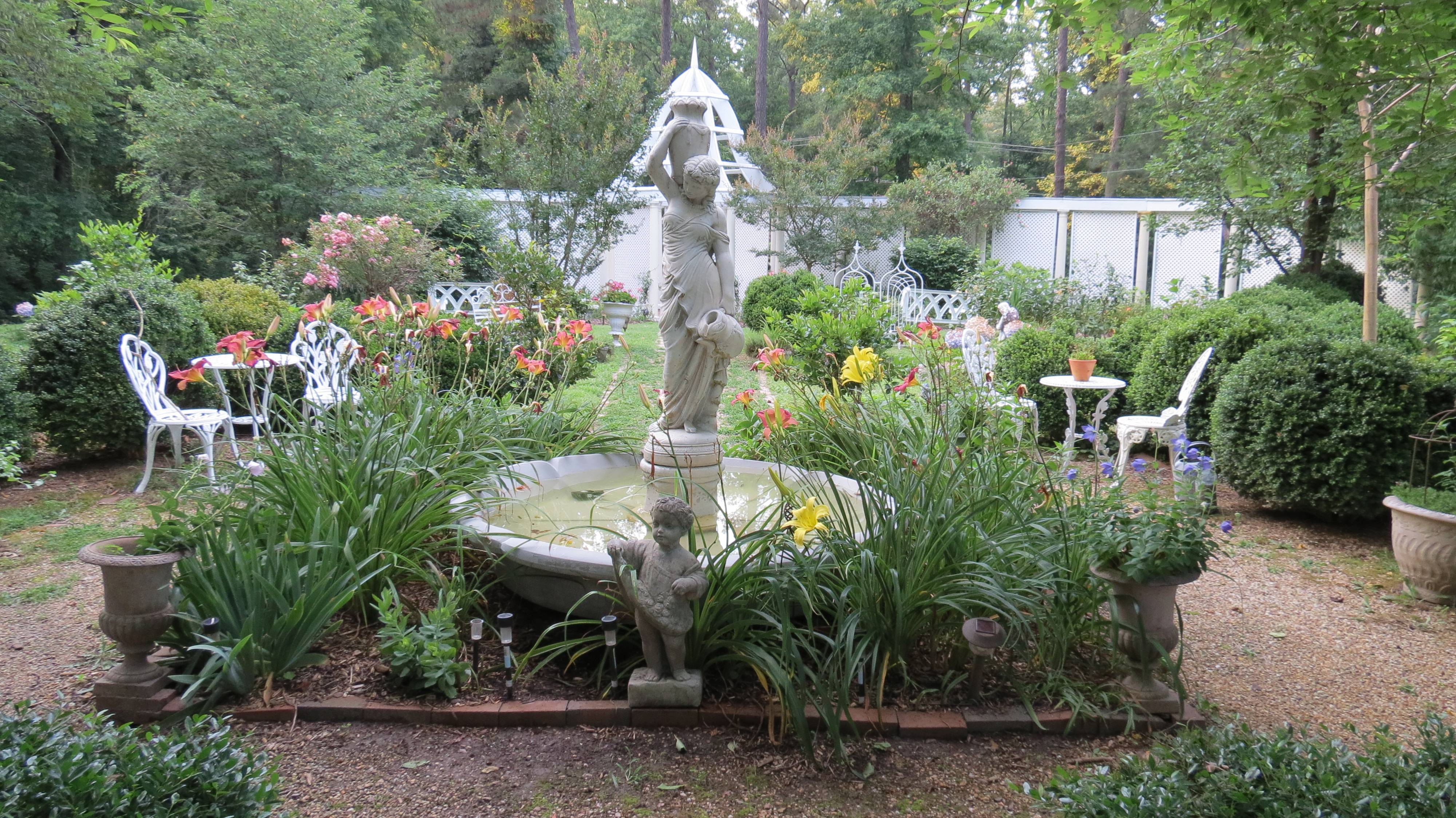
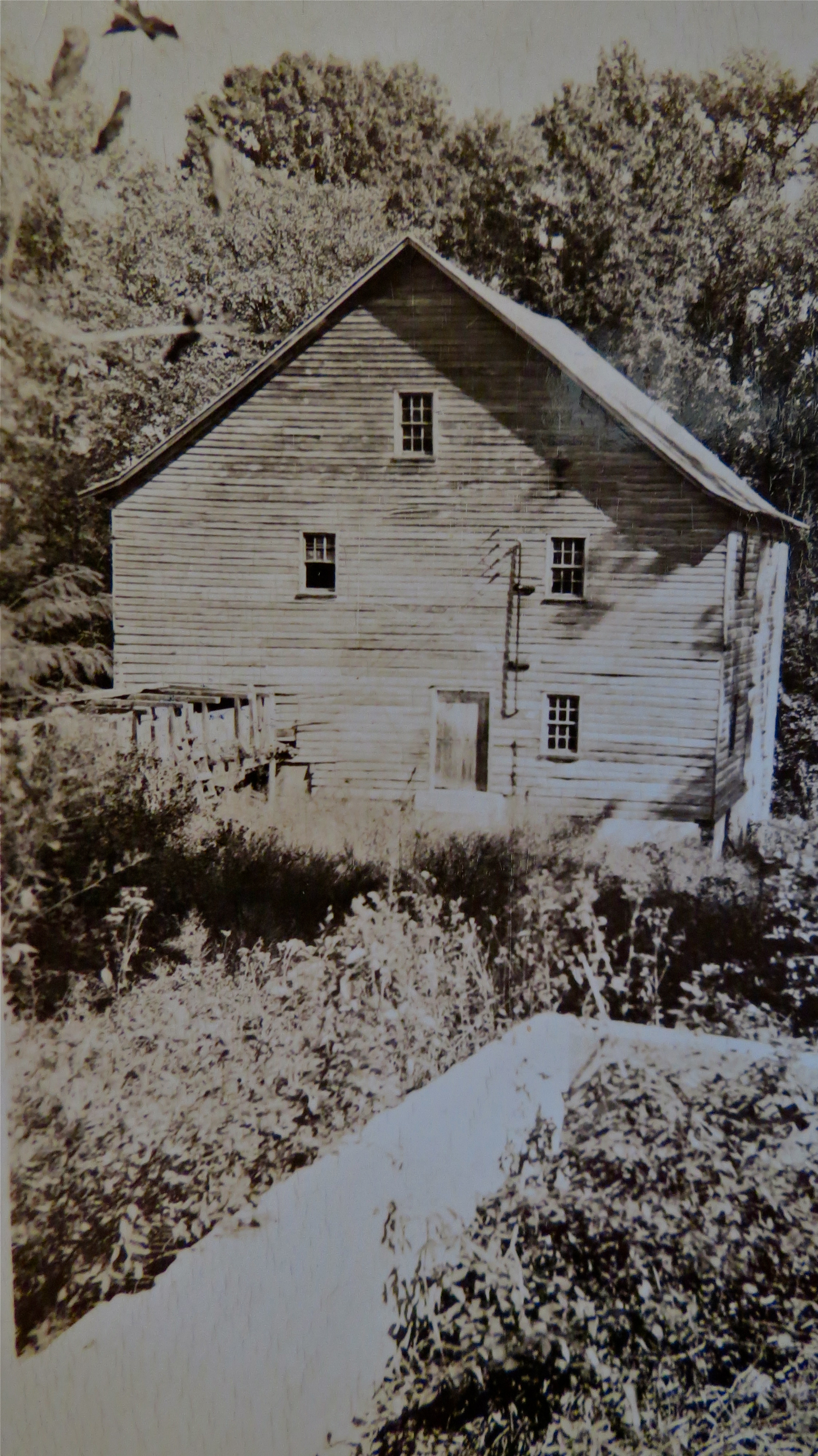
The Edgewood Estate had once been part of the Berkeley Plantation, the home of the ninth President of the United States, William Henry Benjamin Harrison, a signer of the Declaration of Independence. His grandson, Benjamin Harrison, became 23rd President. Harrison built a mill at this site in 1725 so that he could grind wheat and corn rather than having to export the crops elsewhere for processing. Water flowed from a pond down to the mill, creating a waterway, now arched by a white clapboard bridge.

Around 1854, Richard S. Rowland traveled from New Jersey to run the grist mill, moving into the house with his family. Harrison also owned large bake ovens for making sea bread, a food used by the sailors on voyages to England. The mill operated into the 1930s and was known for the excellent meal produced by the burr stones turned by a water wheel.

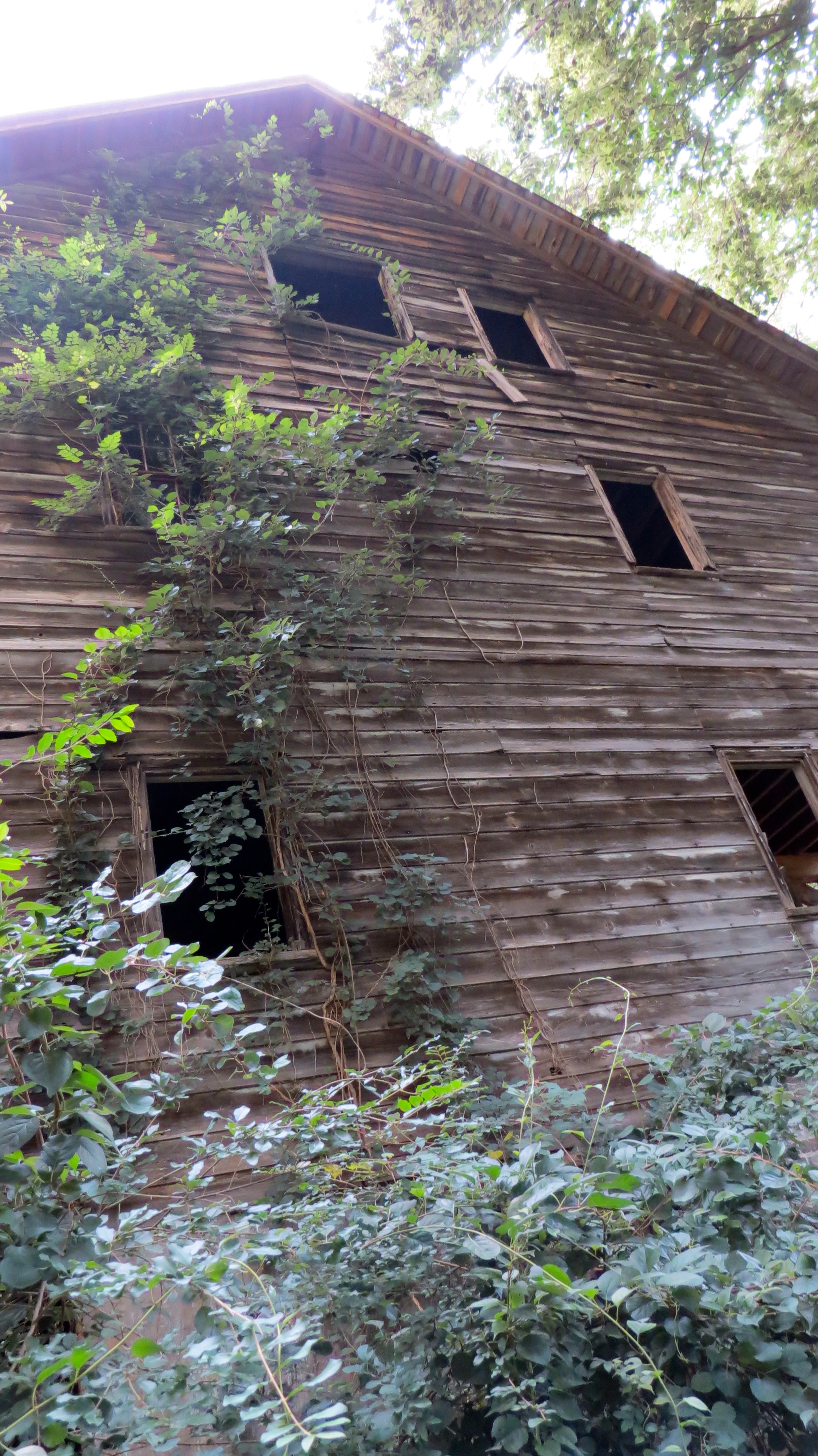
We explored around the mill peeking through an open door. Inside remnants of the mill remained including chains and hooks still hanging from the cross beams; the famous limestone grinding stones rested on the ground outside.

Older view of the mill; photo courtesy of Dot

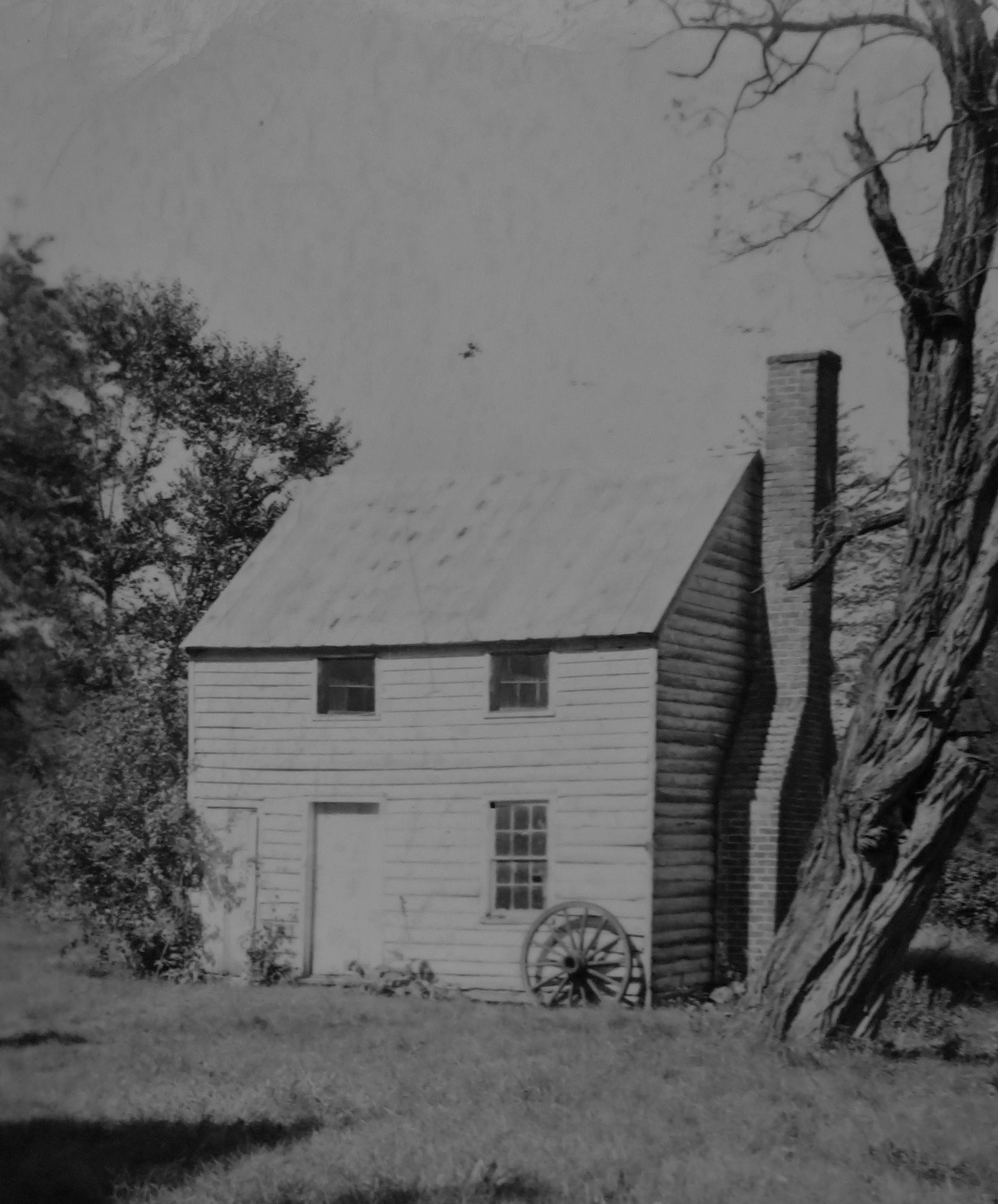
A  building that was once the slave quarters sits in back of the main house. Restored and now used as guest rooms, certainly would not resemble what once the slaves called home. According to the definition on Wikipedia, a plantation would have been supported by slave labor. Any romantic recounting of the period that only includes the view of grand mansions with elaborate furnishings and horse-drawn carriages quickly dissipates at the thought that the system of slavery that imprisoned people to a master. A first-hand account here describes the conditions the slaves endured.

Dot shared with me this photograph of the slave quarters.
Antiques of Every Kind

The rooms in the house provided a backdrop for an eclectic collection of antiques and artifacts. Dot restored the kitchen, taking down a plaster wall that hid the original fireplace.

Original Fireplace in the Kitchen

Other rooms in the home in the slide show:

Ties to the Civil War

During the Civil War the Confederate generals camped at the Berkeley Plantation and relied on their soldiers to climb to the third story of Roland’s house, which they used as a lookout post for union troops. On June 15, 1862, Confederate General J.E.B. Stuart stopped at Edgewood for coffee on his way to Richmond to warn General Robert E. Lee of the Union Army’s strength.  Two weeks later 100,000 Union troops spread over the lands along the James River and camped for six weeks. The owners have found shell casings on the property. The mill ground corn for both the Union and Confederate armies.

Rooming with a Ghost?

Lizzie’s Room was our accommodation for the night. Elizabeth Rowland, daughter of the original owner, carved her name on an upstairs window pane. Legend has it that she died of a broken heart when her lover never returned from the Civil War. Some say Lizzie still waits at the window on the third floor.

Ghosts Come to Life as We Breakfast with the President and Mrs. Lincoln
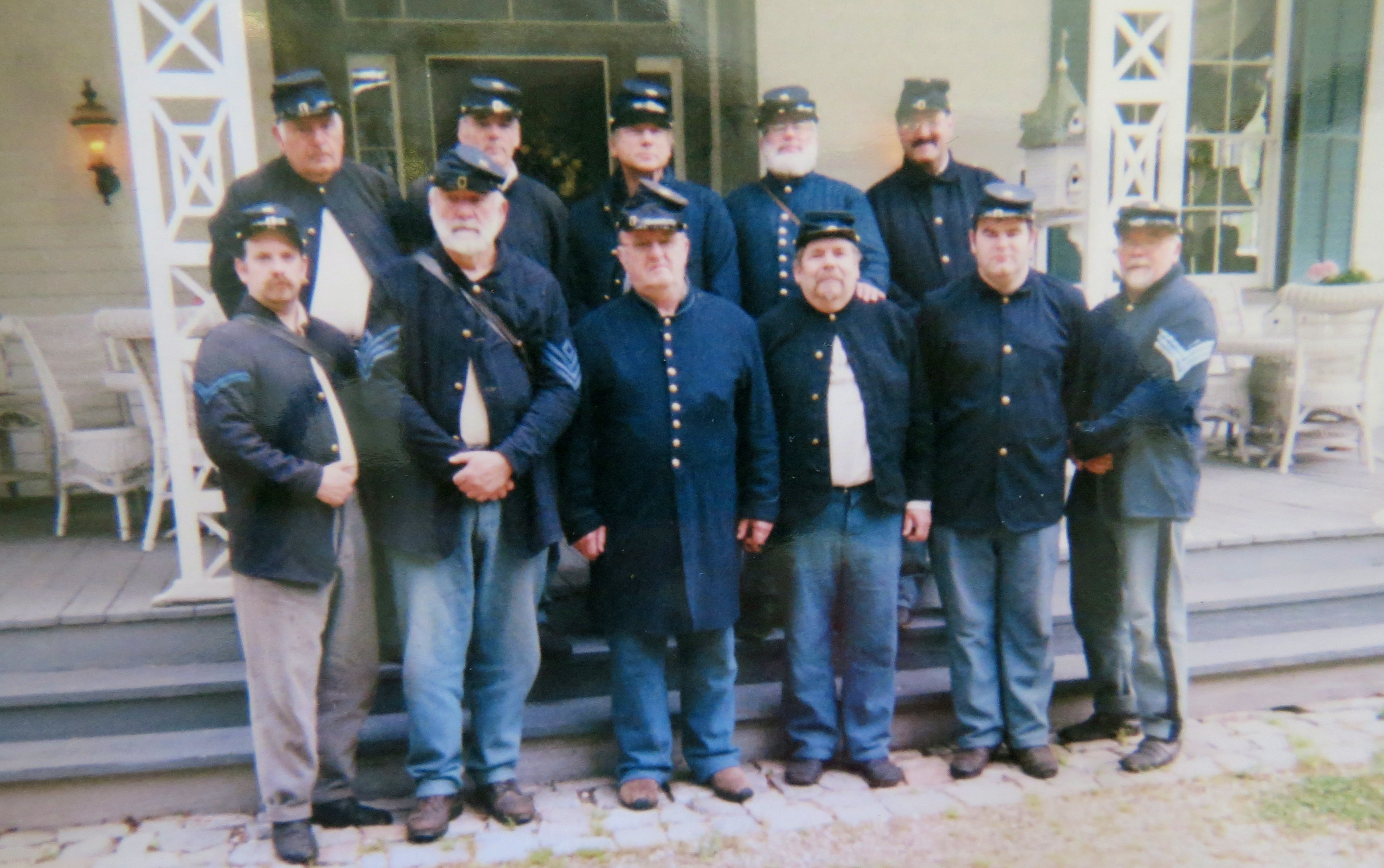
We were fortunate to have breakfast with folks who bring the era of the Civil War to life through reenactments. One of the guests, Gary, portrays a Private 3rd Class in the VT Hemlocks, who are “dedicated to proudly and accurately portraying the common Vermont infantry and artillery soldier during the War of the Rebellion, 1861 – 1865.”
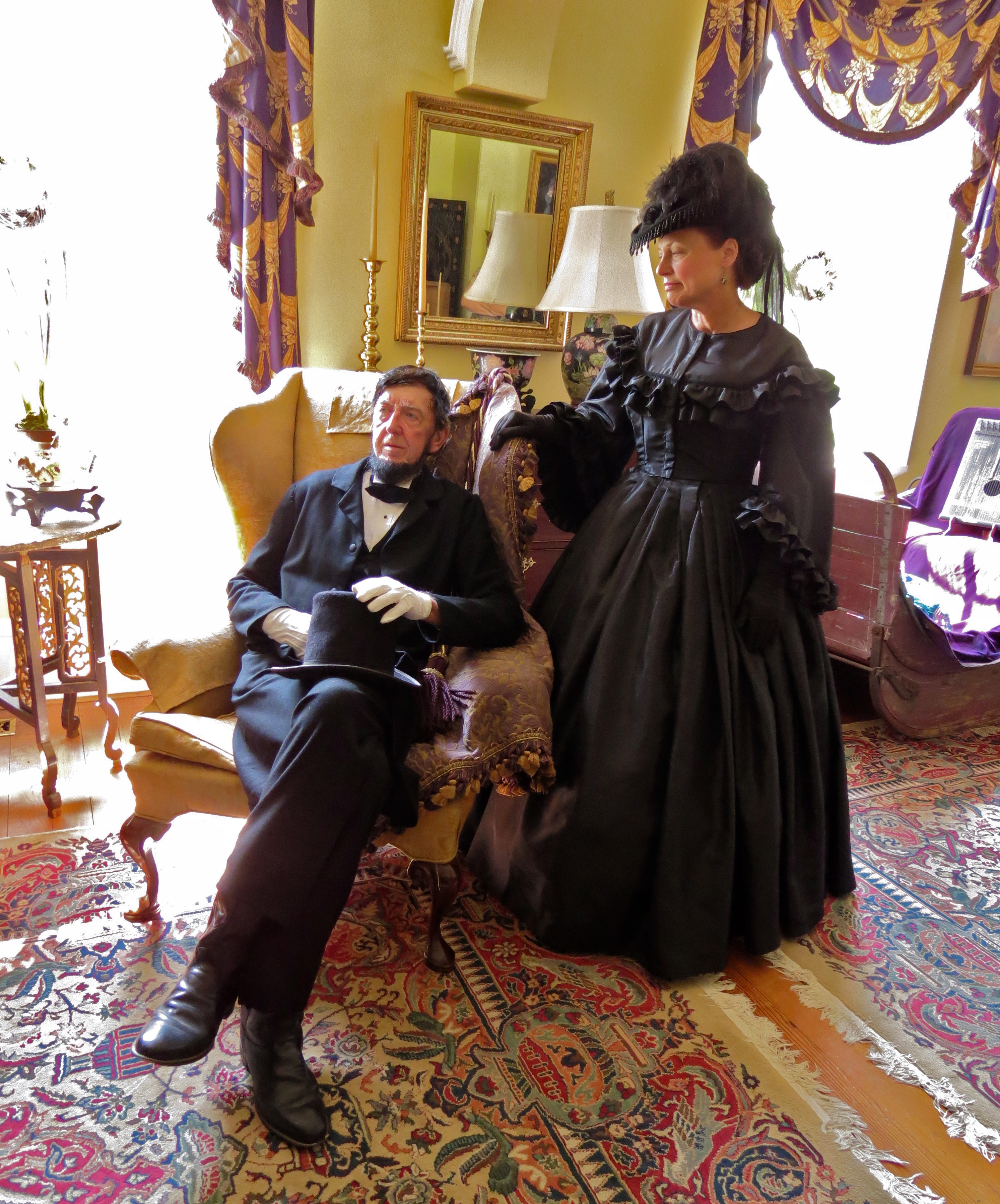
We also had the honor of breakfast with President Lincoln and his wife, Mary Todd Lincoln, a.k.a. Robert and Cheryl. The context of seeing Abe and Mary Lincoln within the Edgewood Plantation house was amazing. As they descended the staircase, we wondered, were we seeing ghosts?

President and Mrs. Lincoln . . .

Mrs. Lincoln with our Host, Dot

An evening spent at Edgewood carried us back to another time. These buildings were haunting in of themselves as they served as witnesses to history. Lizzie carved her name in the window, perhaps imaging that the house would hold her permanent legacy. We look forward to another visit to uncover more historical treasures. And maybe a President will join us for tea.

Links

James River Plantations, US Parks Service

Edgewood Plantation

Civil War Links

Rediscovering Train Travel

Plane or Train?

For a journey of 270 miles, which is the best way to travel? I decided not to drive so the other options were plane or train. I checked on the airfares and for nonstop flights–a cost over $1,000! Fares ran about $700 for one stop. I thought time to check with Amtrak fares: a one-way ticket with a discount costs $59.50.

Time is a consideration when planning a trip, and the train would take eight hours compared with one hour on a nonstop flight. Depending on the location of the stopovers, the airplane could take anywhere from four to five hours. Also, I would have to get to the airport an hour before the flight takes off. So now I’m down to just a couple hour difference and a savings of $600!

Blogging on the Train!

It’s been awhile since I’ve traveled by train in the US, and as I sit here typing away, I am really enjoying the trip. I did not know that the train had WiFi so wasted no time sending off a couple emails. The connection is a little slow but certainly not unreasonable for a moving vehicle. A receptacle is built into the wall and right by the tray table. The seat is certainly wide enough and room to keep my backpack at my feet to reach travel accessories. The train moves at a good clip . The views along the way make me think that I’m looking at America’s back yard: junk yards, refineries, abandoned factories, back doors of row homes. Expansive views of  waterways also pass by.

What would seem to be the train’s greatest disadvantage has become its greatest asset. The travel time provides the needed relaxation between two destinations: an opportunity to collect thoughts and enjoy the scenery. I’m thinking I don’t miss traffic congestion and cars jockeying for a place on busy highways.

Journey’s End

I’m almost at my destination. I have to say I’m pleasantly surprised with this trip and can recommend taking the train.

An Enchanting Isle off the West Coast of Scotland (Part 1)

The Magic of Faeries: Isle of Skye 

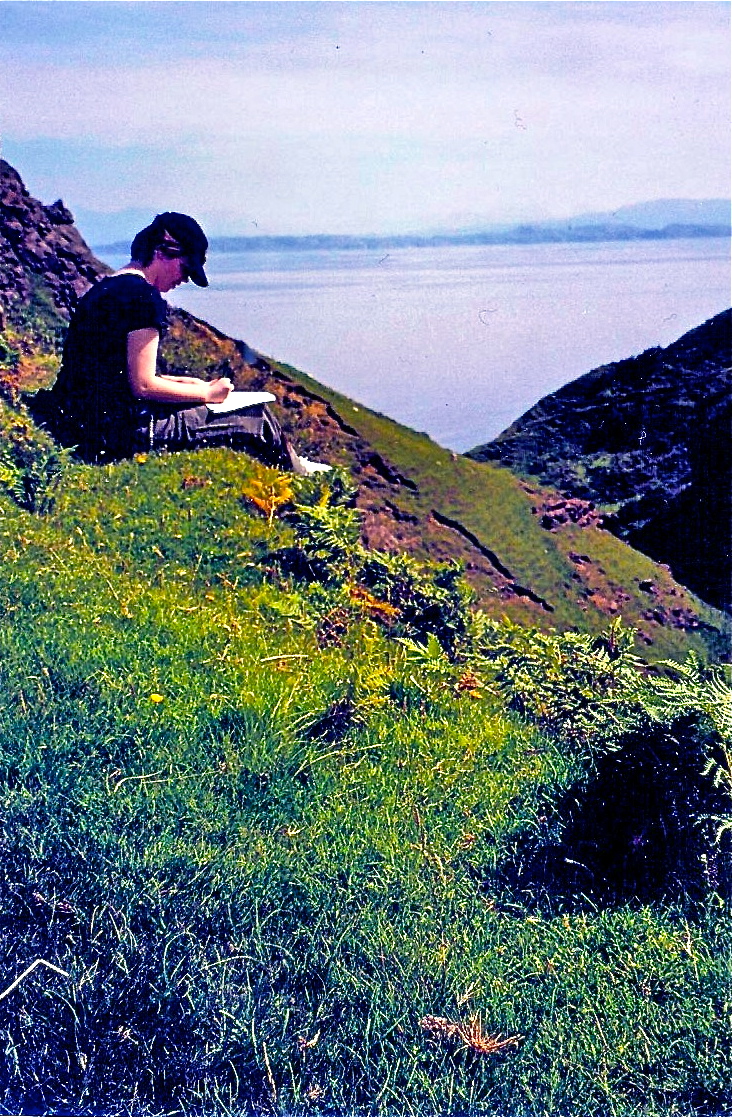
Mae journals on the hillside

Heaven and earth are only three feet apart, but in the thin places that distance is even smaller.  Celtic Saying

Years ago, before I had much travel experience, I journeyed to Scotland, with my teenaged daughter, unsure what such an adventure would bring–especially since we would be traveling without the support of an escorted tour. We ventured across Scotland on the Haggis Bus, a bright yellow mini-bus driven by young Scotsmen, all of whom could tell humorous and fantastic stories of their homeland while negotiating the winding roadways with the confidence and vigor that youth brings.  As we left Edinburgh, the bus followed a narrow highway far into the emerald countryside, passing wee villages lined with stoned walls and whitewashed houses topped with brick chimneys.  The bus rolled along on the “wrong side” –my attention riveted to the road ahead.

Our bus stopped just outside the Isle of  Skye, so we were on our own to navigate the remote sections of the island by rental car. We planned our adventure to include Skye because the descriptions from the Whitewave Outdoor Center offered spectacular views of coastline via kayak.

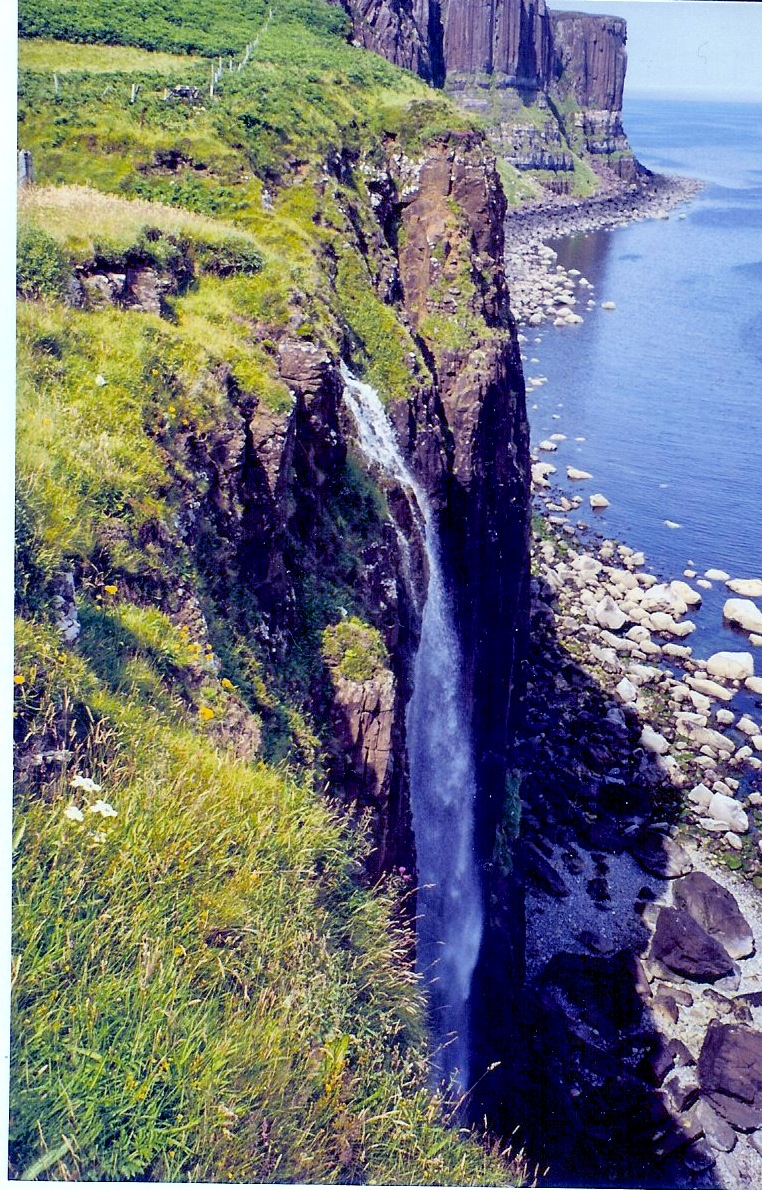
The narrow road ribboned its way along the coastline from Portee to Uig. The ocean stretched against the sky and hills, the wind scattering the clouds across the sea. Villages nestled on inlets, the island’s geological formations creating ragged edges around the island. Drawn into the landscape, we stopped often along the way to take short walks or to sit in green pastures that fell to jagged ridges and rocky shores below us.

Faerie Glen 

Skye, which already had an otherworldly spirit, became even more so upon discovering the Faerie Glen, just east of Uig. We passed through the gate, hidden from the main road, and followed a single-track car path through conical-shaped hillocks. Sheep dotted the landscape, their soft baaing breaking the silence of the hillsides. Further down the way, a narrow stream flowed into a pond where dancing sounds of water trickled through the deep green. Ferns and foxglove covered the lower elevations, and higher up deep ridges encircled the mounds.

We peeked behind rocks and into crevices created by gnarled tree roots. If faeries ever existed, this would be the place.

Bovine observer: we were not alone.

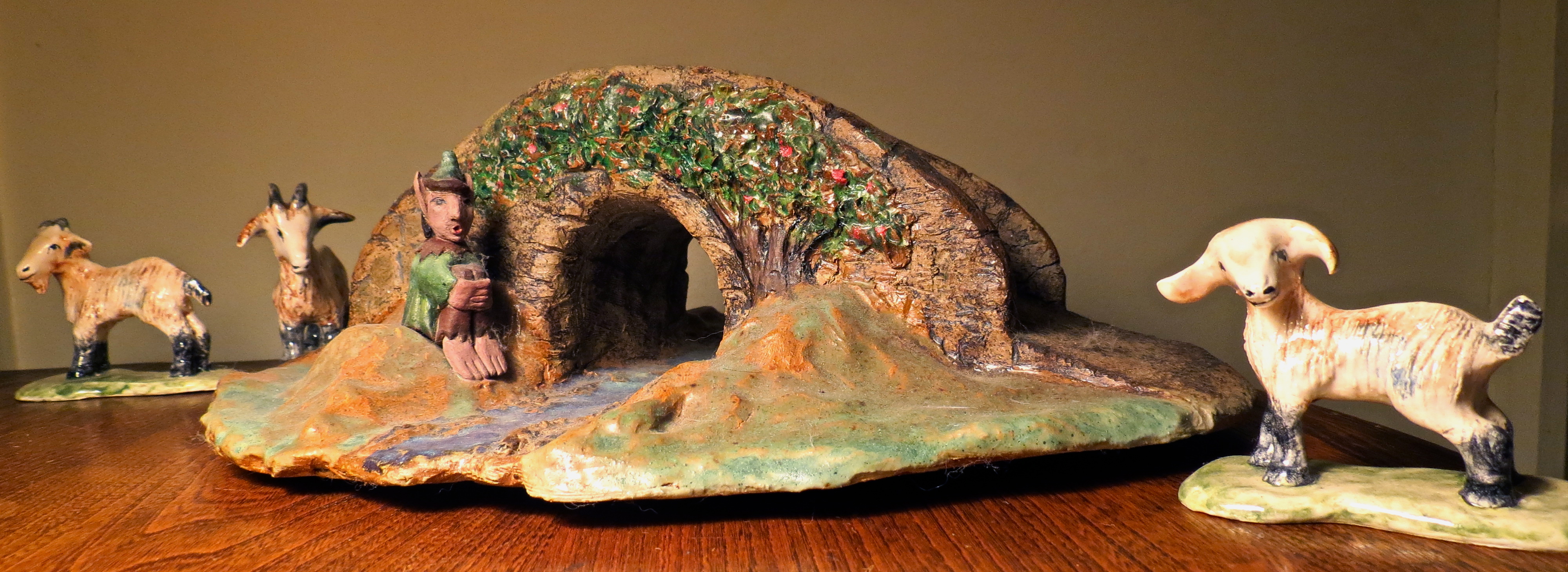
Faerie Bridge 

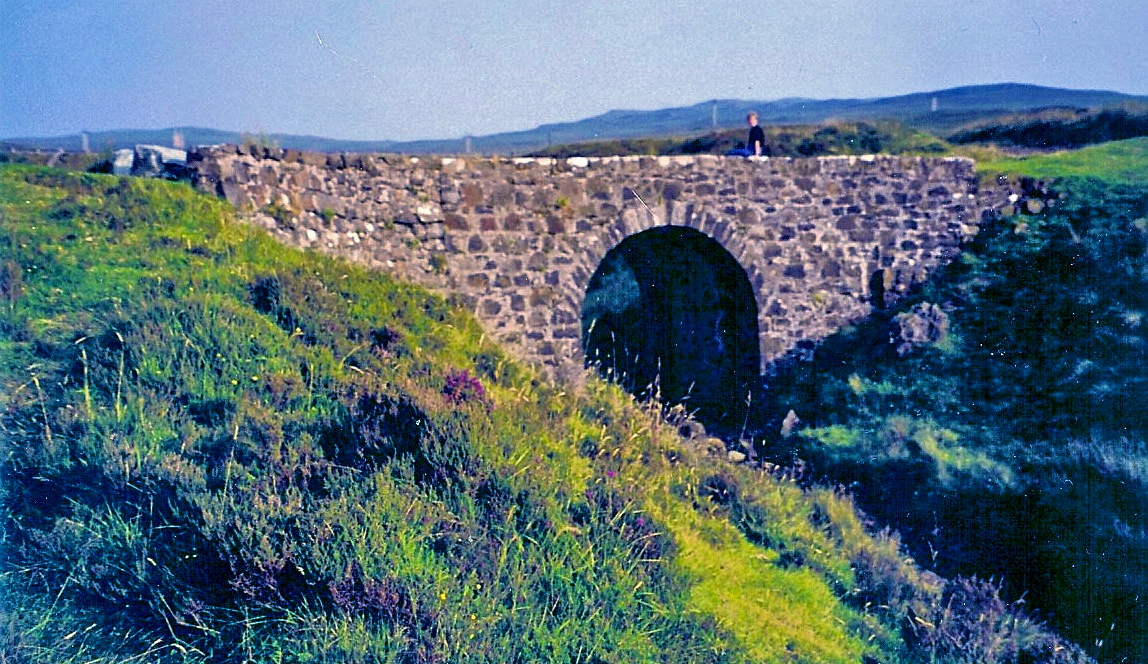
We found the Faerie Bridge traversing a small stream on the road to Dunvegan. We waded through the mounds of colored brush surrounding the stone archway to explore all views of the bridge.

As we leaned on the arch to view the other side, we wondered if we had arrived at a portal to another world, the cool dampness on this side, the warm sunlight on the other. According to legend, the chief of the MacLeod Clan married a faerie, but alas, after twenty years, she had to return to her fairyland. On this bridge the fairy bade farewell to her husband.

In the photograph below a misty light cloud appears left of center. I’m not sure why.

Memories Linger

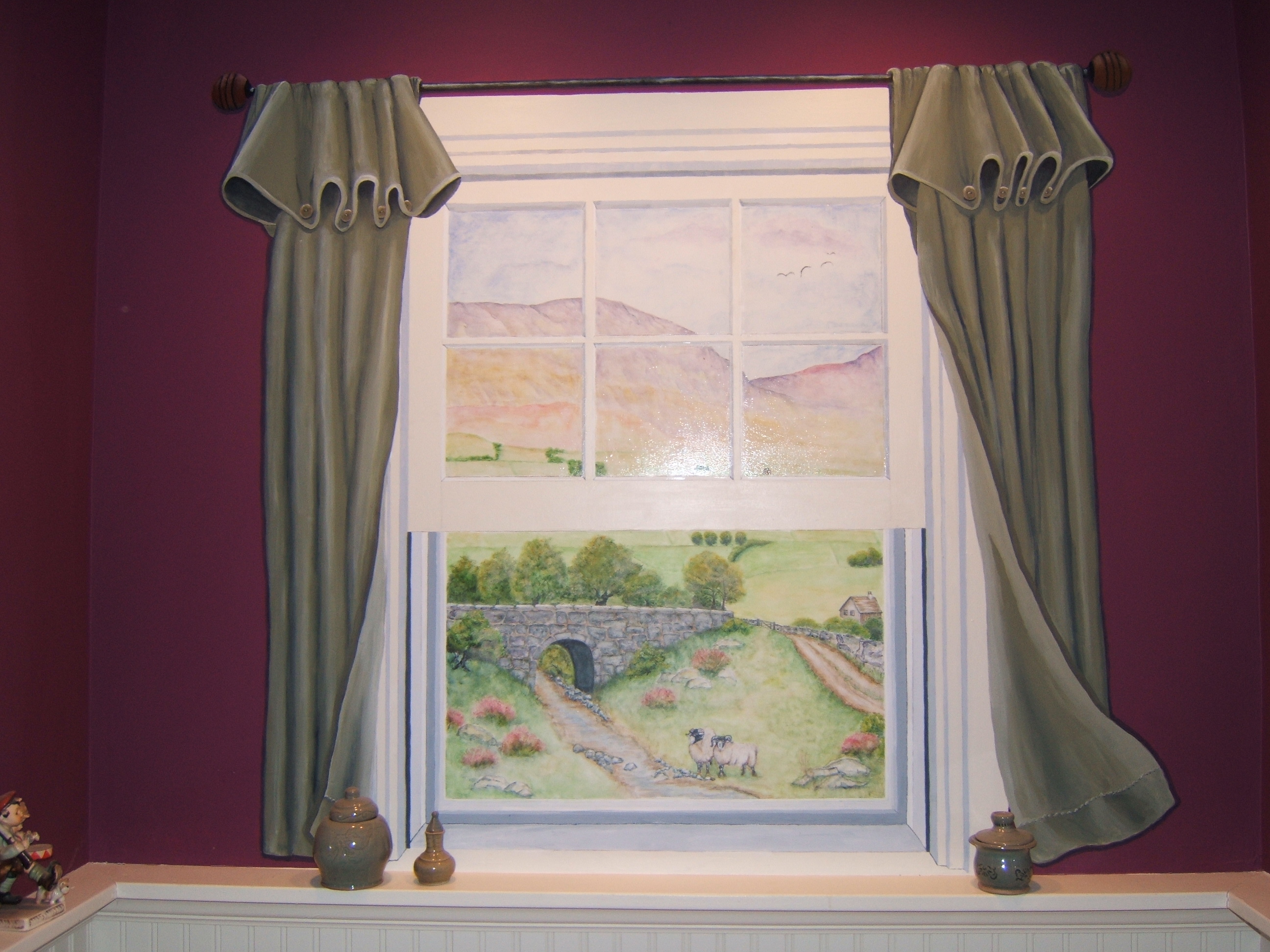
Upon returning home, the magic of Skye stayed with me and inspired a flurry of artistic creations: a mural on a wall, a majolica tile and a wee bridge from clay.

One more project remained: recreating a magical place in the garden. Part II coming next.

Chincoteague Treaures

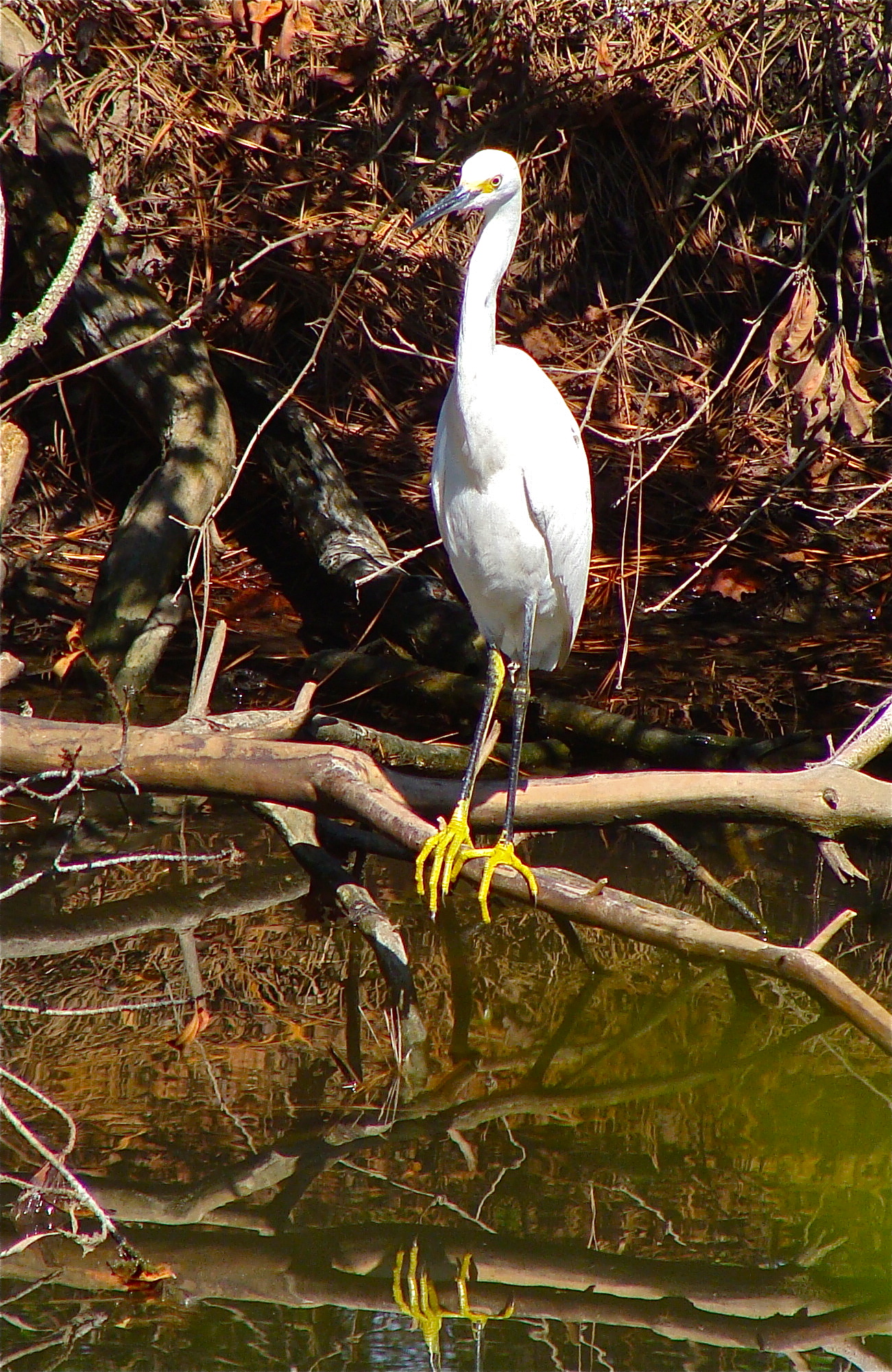
Snowy Egret w/ Showy Shoes

Spending just a day on Chincoteague Island, we were rewarded with a serendipitous experience. Chincoteague, on the eastern shore of the Del Mar Peninsula, is best known for the wild ponies, whose ancestors survived a wreck of a Spanish Galleon, or one of the legends would have us believe. Turned out the egrets carried the day.

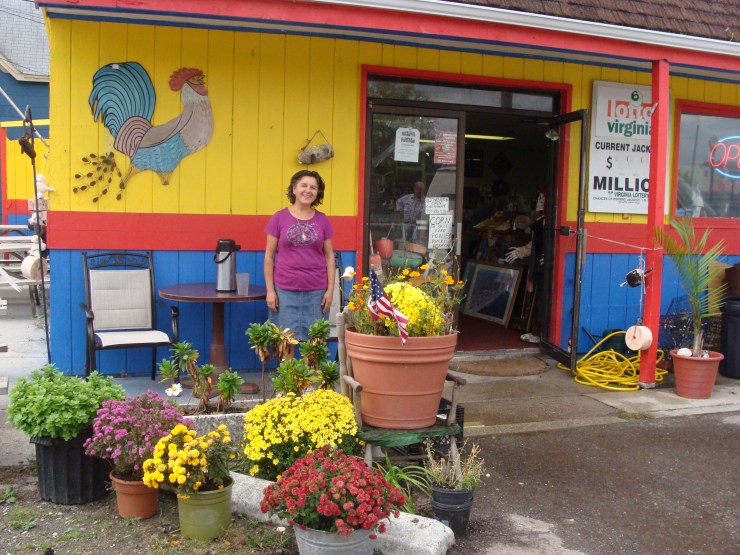
On turning down the historic Main Street, a large yellow and colorfully decorated building surrounded by flowers and artifacts, came into view, so we immediately turned into the parking lot. “Chincoteague Treasures” became the first stop on our island tour. Inside a variety of antiques and memorabilia filled the building. We compared the items with things that we owned, and stuff we regretting giving away upon discovering the prices on such items. Old toys, books, glassware, tools and clocks lined the shelves, and a good selection of chairs and other furniture occupied the center section. A vintage candy machine, harking back to a former area, stood next to the wall. A small mental stove reminded me of my childhood toys. We sifted through several boxes of record albums and found a John Lennon/Yoko Ono Double Fantasy cover that we liked.

On one the shelves, I came across three blue and green colored insulators with a tag of $35 on one of them. After writing a blog post here on the subject of insulators and becoming fascinated by their history and esthetic appeal, I knew it was time to get out my cash. My sister and I picked one of each, and we asked if all were $35 or just one. The proprietor, Harry Katsetos, replied they were $35 each but made us an offer of two for $25, which I immediately agreed on. We spoke with Maria, Harry’s wife, about their store and how much we liked it. I told her I was going to take a photograph of the storefront to include on my blog.  She agreed to pose out front, and Harry  joined us for more pictures and conversation. On the subject of computers, Maria said they were not yet connected to the Internet but had to plans to hire a student to help with a web page.

Then as a total surprise, Harry presented my sister and me with two of his creations, hand-made egrets mounted on cedar platforms.

We certainly discovered treasures at Chincoteague Island, and they didn’t fall off a Spanish Galleon.

Tangier, Virginia’s Island Lost in Time

Island in the Middle of the Chesapeake Bay

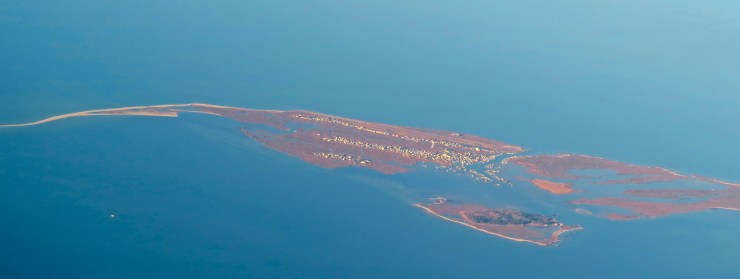
From the Air 2014

IMG_8851.jpg

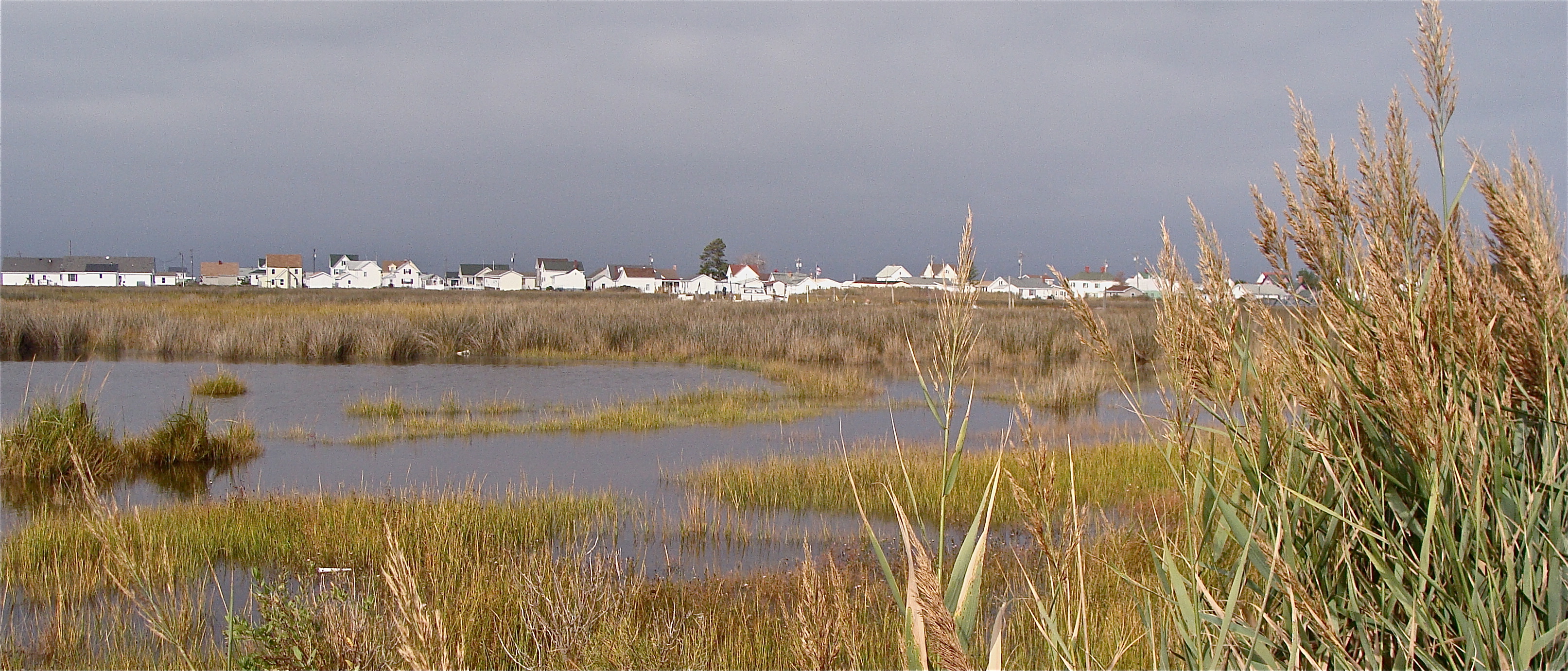
Houses atop the marshlands

Why an overnight on this tiny windswept island?

At the last minute, we thought we might have to cancel our trip. We had been on the road for only 15 minutes when we received a call from our motel proprietor on Tangier calling to warn us that the rain was coming down fierce creating turbulent water for the boat ride over to the island. Although we were driving through the middle of a downpour ourselves, we decided that we would make the trip anyway. We did pull off at the nearest drugstore to buy more seasick medication. By the time entered Crisfield, our docking town, the sun rays streamed through the clouds, but the influence of the weather continued to follow us during our stay on the island.

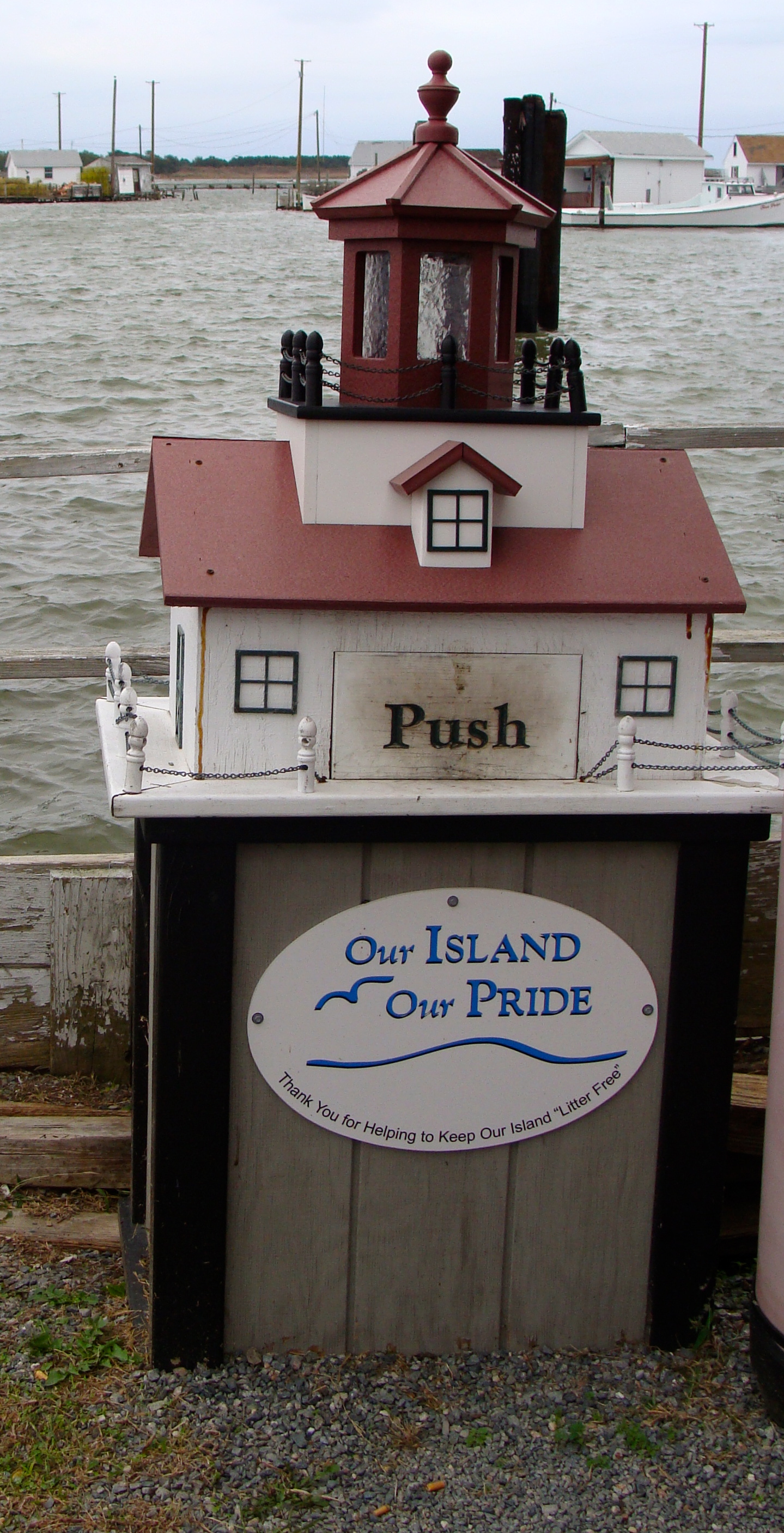
Trash containers modeled after the lighthouse that once stood on the island

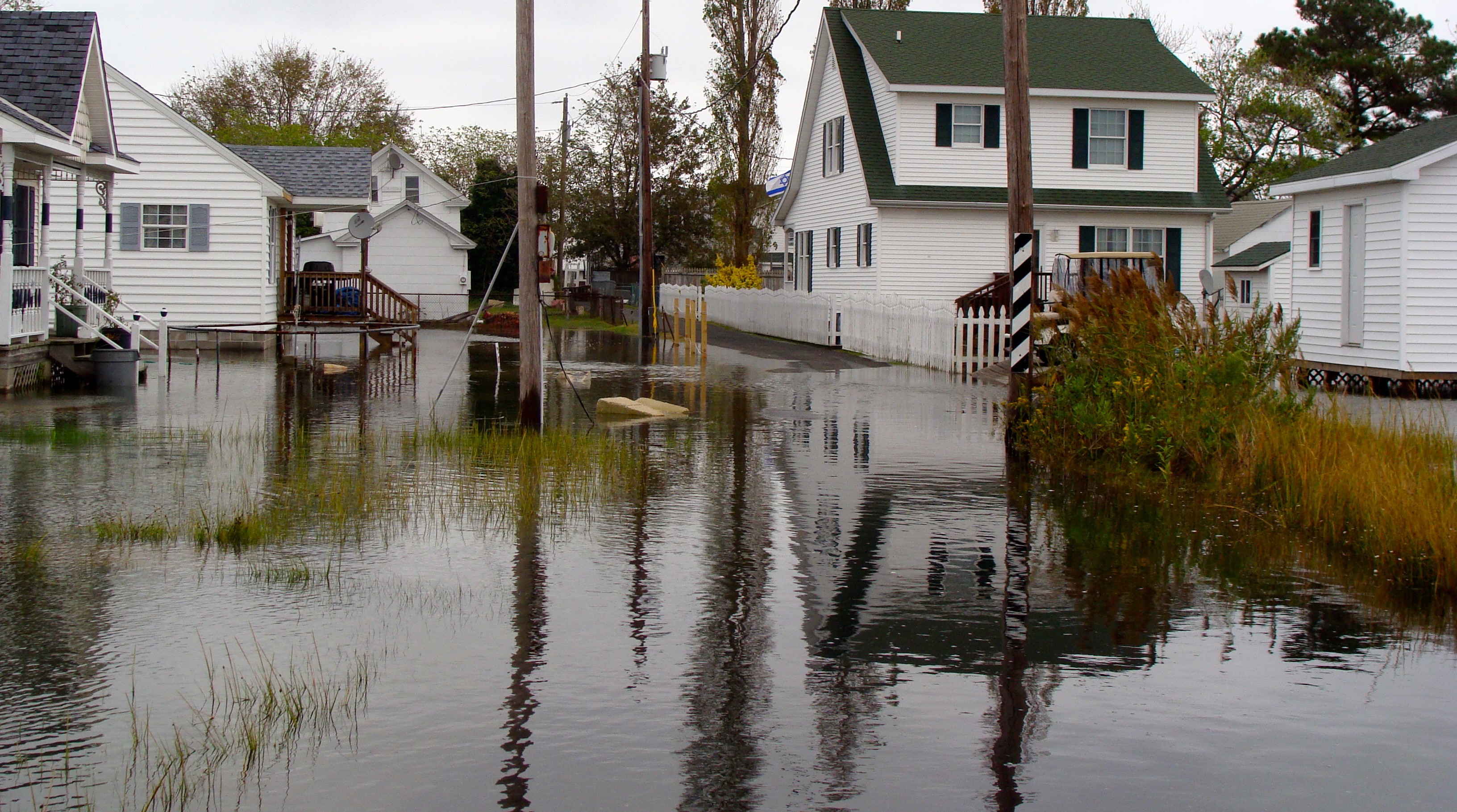
Remote island societies slow the cultural clock, as happens on Tangier where everything from their language, occupations and way of life varies from the mainstream. Linguists have studied their speech, as the islanders speak a unique restoration era dialect of American English with language roots in Scotland and Cornwall. We noticed that when native residents spoke to one another, we could barely understand the conversation, with varied intonations and a unique linguistic cadence.  Without fast food restaurants, chain motels, traffic and cinemas this tiny community contrasted dramatically from our suburban bubble. But outward appearances can be deceiving; what the “soft shell crab capital of the world” shares with its mainland neighbors are economic and environmental problems. Hard-working watermen continue to eek out a living from the increasingly polluted waters of the Chesapeake Bay. According to Wikipedia, the per capita income for the town was $24,042. About 22.6% of families of the population live below the poverty line. The watermen resent government regulations and question whether they are being the scapegoat to all the Bay’s environmental problems. If regulations restricted fertilizer runoff, for example, crabs might flourish. Tangier barely rises above sea level and water floods the entire island during storms or high tides. We ignored the phases of the moon, which also came into play during our visit.

Passenger Ferry to Tangier

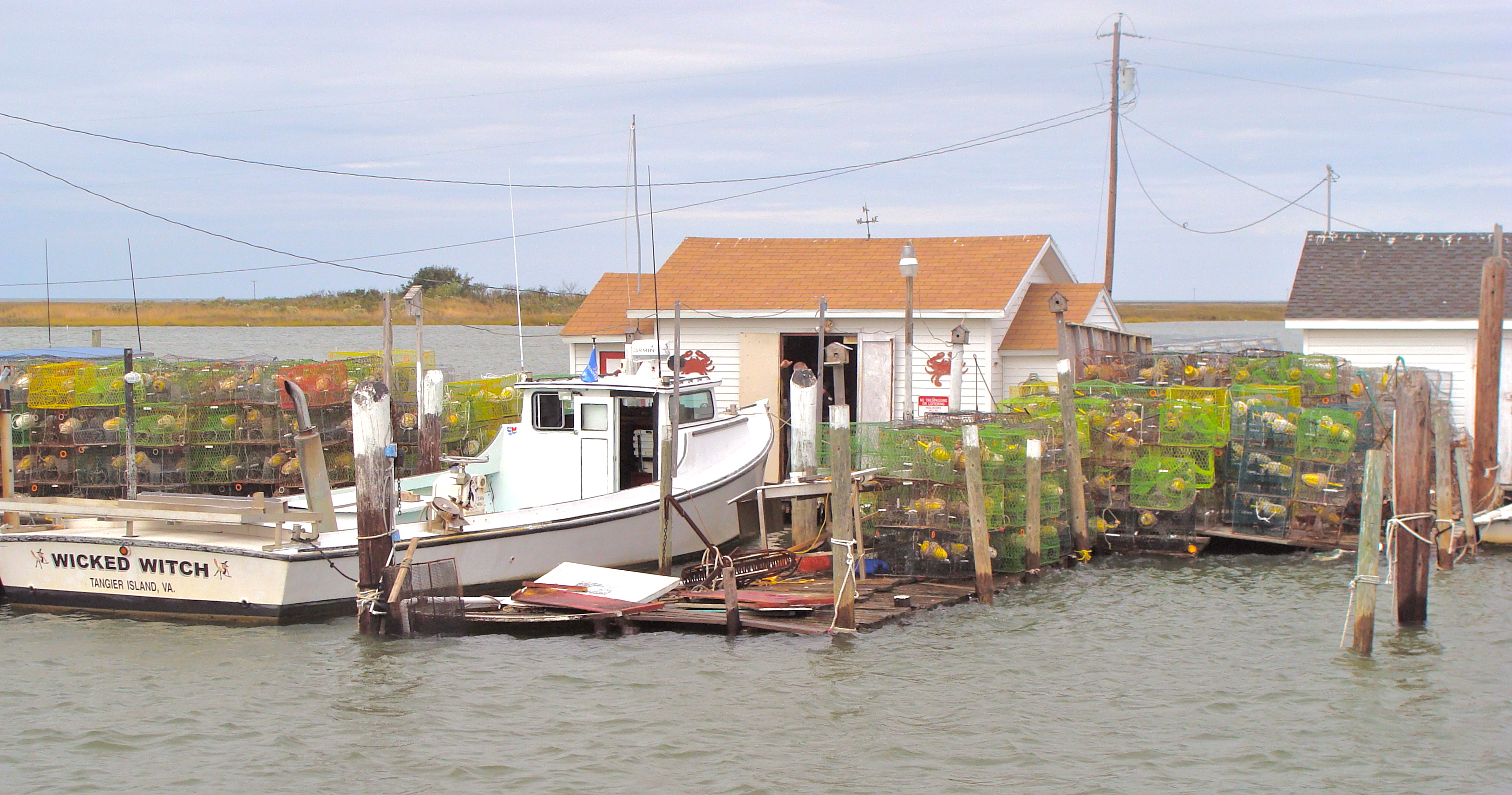
At the marina at Cristfield, a working fishing village on the Western Shore of Maryland, we boarded the ferry for the 75-minute ride to the island. With predictions of stormy seas and given my weak stomach for drastic up and down undulations on the waves, I became somewhat hesitant to step on board. Over an hour on the water seemed like a long ride especially in rough seas, but the process of a journey begins to set my mind apart from where I’ve been to where I’m going. The seas rocked the boat from side to side, but thanks to medication, we made the trip fine. Before reaching the dock, the ferry passed through the crab shacks, traps piled high on their piers.

Water Level brings Change in Plans

On arrival, we began to walk to our motel, The Sunset Inn, when we were offered a ride in the back of a pickup truck. Our driver told us we probably couldn’t traverse the water-covered roads with suitcases, and he was right! The road disappeared under eight inches of water, and tidal waters surrounded the most of the houses. Higher ridges separate the homes from the marshes and tidal canals. Wooden arched bridges connect the two main streets that run parallel the length the island. We read that the island was sinking, and it seemed as if it was sinking as we rode along!

The nice folks who offered us a ride left us off near our motel only a short walk away. We settled in becoming immediately acquainted with seven of the island’s friendly cats. One snuck into our room, and immediately being purring upon being picked up and carried out. We learned from our motel manager that an animal organization fixed all the cats on the island to control the population.

We decided the golf cart transportation would be essential to get around the island, even if it was just three miles by one mile. We returned to the dock area where we could rent a cart. Our motel manager’s husband gave us a ride into town. He proudly said that he was a waterman, born and bred. For all their hard work, watermen receive only $14.99 for a bushel basket of crabs.

Touring the Island

Since the island’s primary business is crabs, we ordered crab cakes for our dinner and were not disappointed. By the time we finished, the tidal waters had receded, and we made our way back to the motel.  The beach was just at the end of our road so we followed the path through the high reeds. A deserted sandy beach stretched before us, but we did not linger as mosquitoes began to hum around us.

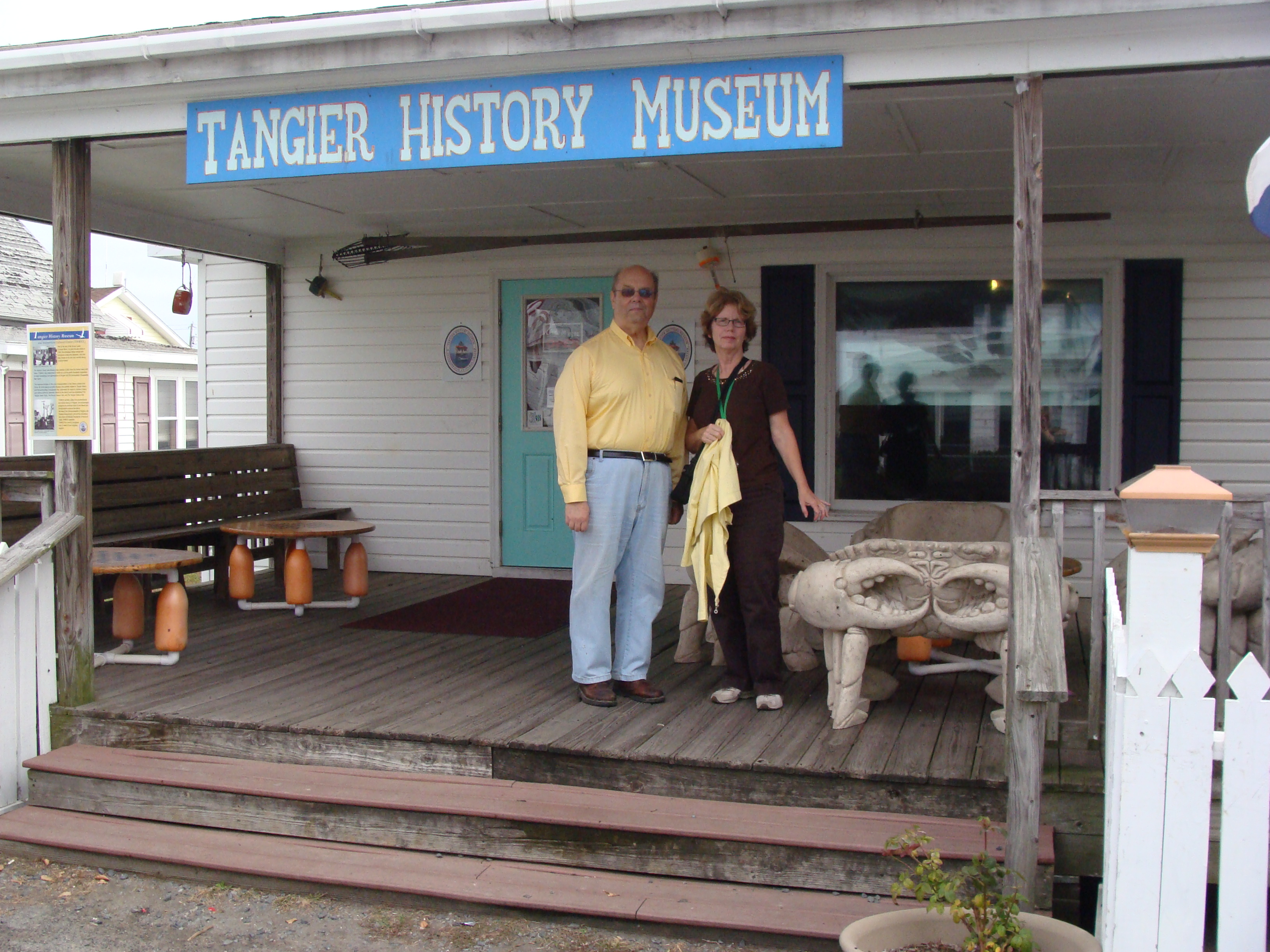
The next morning we set out to explore the island. We rode to the airport area and through the streets of the main village. We paused to watch the snowy egrets fishing in the marshes. We stopped for supper at Hilda Crockett’s Chesapeake House.  A family-style meal, we had plenty to eat with homemade hot bread, corn pudding, crab cakes and oyster fritters, just to name a few of the total nine dishes served. Afterward, we stopped at the Tangier History Museum, viewed the exhibits and saw a short movie.

Richard, Jean and the iconic crab

Full Moon Rising

We were watching the clock for our 4pm departure as we had left our suitcases at the motel on the other side of the island. What we failed to watch was the tide schedule; and the tide was unusually high, like the evening before. We headed down one alleyway after another only to be blocked by rising water. With only little more than an hour before our ferry would be leaving, we unwisely decided just to plow through the rising water.  Of course, our cart stalled. We had no choice but to jump into the water and wade back to the motel to pick up our gear. When we returned to the cart, we piled our luggage on the seats and began to push it back to the depot. Some folks, seeing our predicament, suggested that we leave it and walk back.  One last time, we tried to start the motor when lo and behold, the engine turned over. Quickly we hopped back in the cart and made our way to the ferry in enough time.

Halloween?

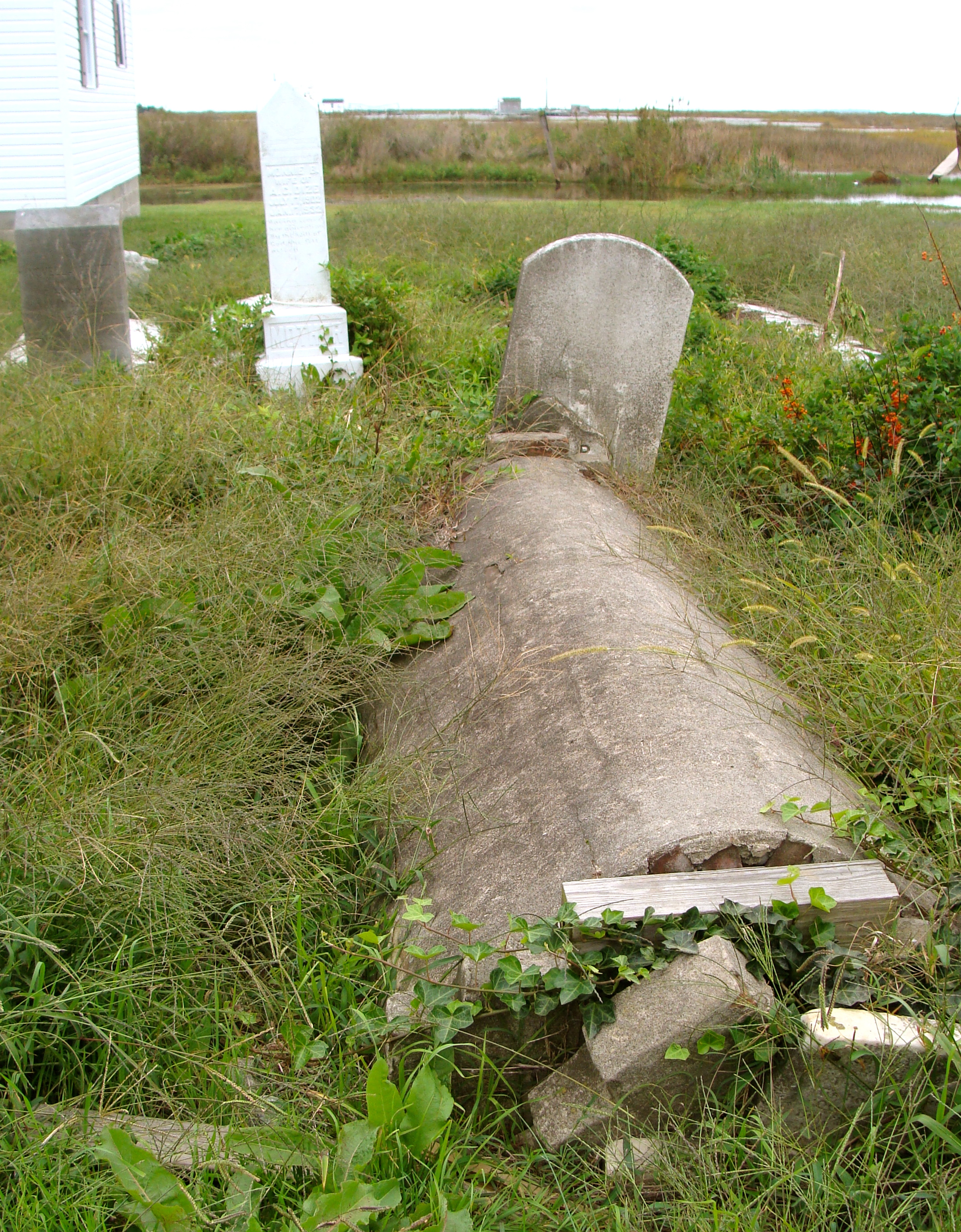
October is the time of year when folks decorate for Halloween and some will include graveyards and other scary displays in their yards.  On Tangier gravestones in the front or back yards are not unusual, and these are real! Several explanations offer reasons for the custom. The island experienced four epidemics, beginning in 1866 with Asian cholera. Because the death rate was so high, bodies had to be buried quickly. The residents were hardest hit in the early 1870’s when tuberculosis, measles, and smallpox epidemics hit the island. Also, centuries ago American and Britain families often buried deceased relatives in their yards and the custom persisted. Several recent graves we observed still had funeral flowers atop the mounds.

Reflecting Tidal Flooding

Returning to the Mainland

We were treated to another history lesson on our voyage from Tangier back to Cristfield when by coincidence we sat across from Dewey Crockett, a native islander who served as mayor, undertaker, medic, teacher, church music director and assistant principal. We learned that residents have to wear many hats in a small community.  The Islanders have resisted changes that have altered the mainland, such as alcohol, lotteries and even a movie deal. Dewey said that because everyone knows each other it is easier to keep an eye on the children, who still find the enjoyment of playing sports or running skiffs across the marshes.

Endangered Culture

The watermen support Tangier Island’s population of 525, but according to Dewey, fewer young people are choosing a career as a waterman. The graduating classes have become smaller, and the State has not replaced retired teachers. Some illegal drugs have worked their way to the island. The tourist industry has helped the economy a bit, but it remains a question whether the island can continue to exist with the dual pressures of modernization and global climate change.

Generally, the social hierarchical structure is fairly flat. The houses are small, and structures, while preserved, are not modernized, with the exception of the community health center. For children, the island would seem like a paradise with the freedom to run through the allies and gravestones and to venture out in the marshes in small boats. The Islanders seem to love their island and their life there. I can feel invigorated by the salt air and stormy skies but almost impossible to capture what these folks experience in their close-knit community. If global climate change destroys this culture, the loss will never be recovered.

Cape May: Retrospective

Finding Cape May

Map

Located on the southernmost tip of New Jersey, a peninsula known as Cape Island. The city of Cape May is the oldest seaside resort in the United States.

1950s to 2011

Song Sparrow Greets Us at the Cape 2011

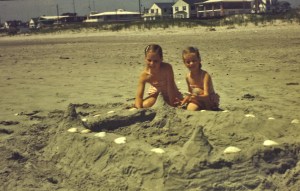
Jersey Shore 1957

When we were growing up in the 1950s, every summer our family vacationed at the shore towns of New Jersey, either Wildwood, Ocean City, Stone Harbor, or Long Beach Island.  Part of our stay would include a trip down to Cape May. Back then the little town was a bit run down, with many of the houses in disrepair. The boardwalk had washed away, and the beach was almost non-existent. Huge boulders lined the sea road, the beach extending to about thirty feet at the most. At high tide, the water reached just about to the rocks. Still, the town had the mystique of a former era, and my favorite place to visit was the building called “the Casino,” a large round wood structure.  Inside imports from around the world lined the shelves. I couldn’t wait to see the little colorful cloth dolls holding baskets and brooms. The store offered a wide choice of souvenirs, and, of course, colorful plastic buckets and shovels. One year we came away with toy boats.

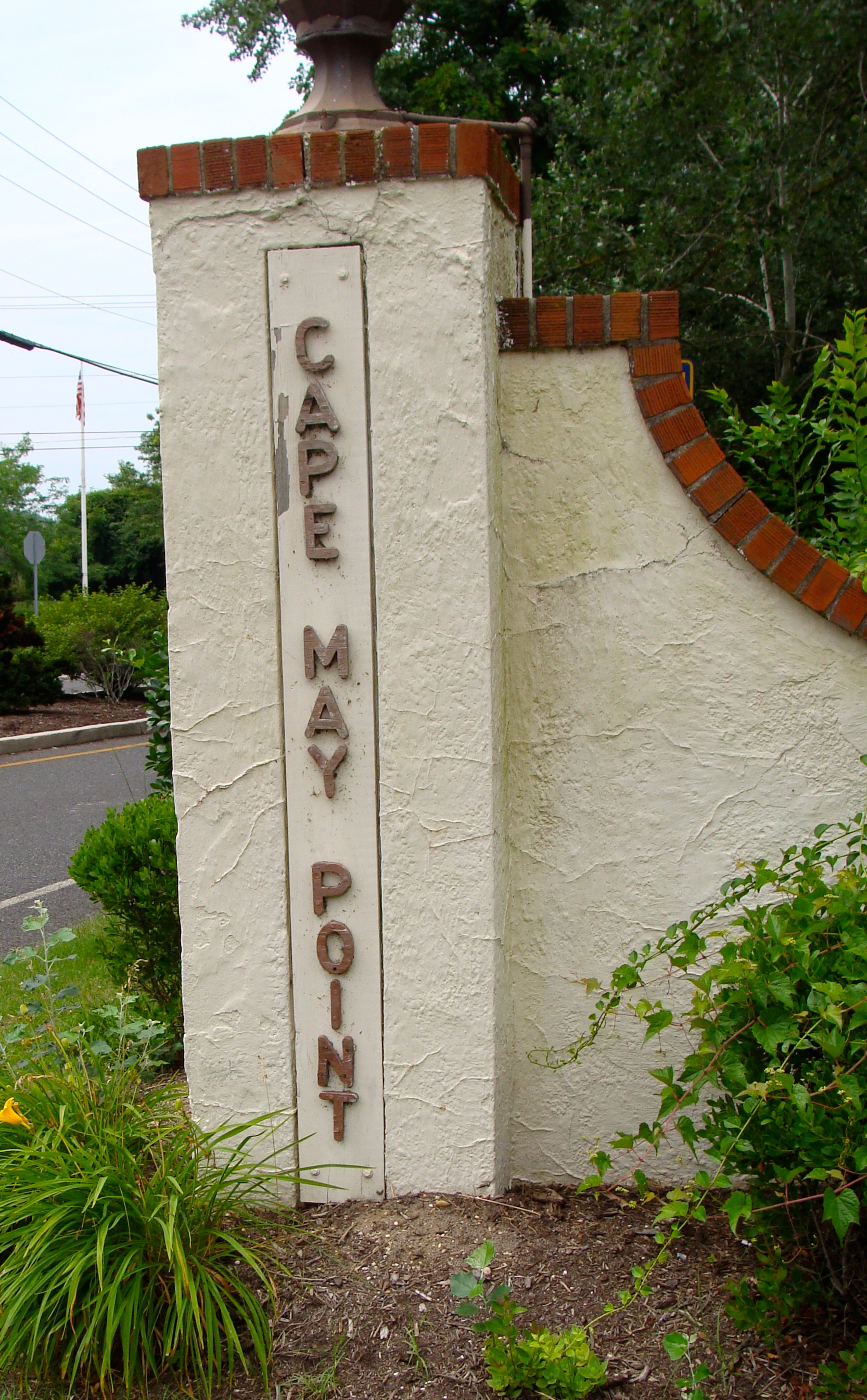
Cape May has three sections: West Cape May, the City, and Cape May Point. We rediscovered the Cape in 1980 when a friend suggested a place to stay on Cape May Point. The Point is a quiet little village with a lighthouse, park, pond, bird observatory, and pristine beaches, in stark contrast to the honky-tonk of the Wildwood boardwalk. The amenities consisted of a post office, above which was a spacious apartment which we rented one summer, and a small general store. We always had plenty to do and took many long walks or bicycled along the pond or to the lighthouse.

We vacationed on the Cape every several years, our families renting places together or nearby. By then, Cape May had been designated as a National Historic Landmark, with only San Francisco with more Victorian houses. We would drive our families into town for shopping or walking along the ocean, stopping to give the children rides at the small arcade.

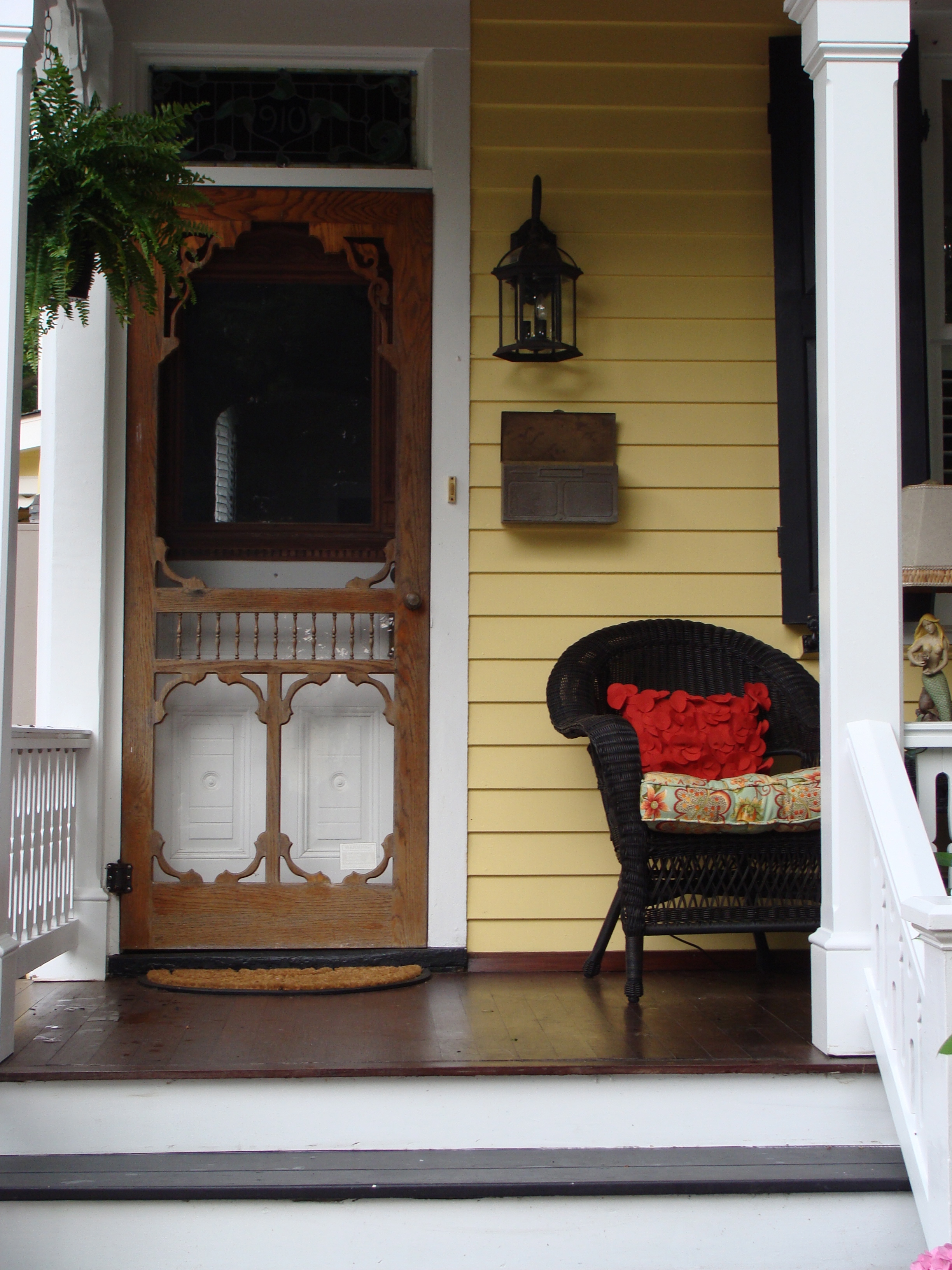
When Jean and I returned to the seaside town, we stayed at Leith Hall. I spent a considerable amount of time trying to decide which one to select out of the of many B&Bs, inns, mansions, and historic hotels, as so many have interesting architecture and character.  I decided on Leith Hall, enticed by their description of salt air breezes, given that Philadelphia was baking in a heat wave. The 4PM tea and cakes were most welcome and thoroughly enjoyed the homemade breakfast on the porch.

We returned to our old haunts, including Sunset Beach and the sunken cement ship, Cape May Point State Park, and the Washington Street Mall. We attended a play at the Physick Estate and took photographs of the restored houses that lined the tree-canopied streets.

Past and Present

Returning to places from the past is like a form of time travel where memories, once faded or forgotten, reappear to intermingle with the images before our eyes. Emotions are neither happy or sad but in some intermediary continuum of peace and reflection.


American Oystercatcher


Tag Cloud