For those unfamiliar, steampunk combines elements of science fiction and fantasy overlaying elements of the Victorian era and industrialization, especially steam power. Steampunk literature features futuristic innovations as Victorians may have envisioned them. Fictional machinery that H. G. Wells or Jules Verne invented for their novels are models for steampunk. The steampunk genre presents a romantic idealization of the 19th century and an escape from modern realities. Steampunk culture values a more formal approach to manners and dress.
So how does the punk fit into this retro-genteel world? Punk loosely references the cyberpunk style with anti-establishment sentiments. Various sub-cultures of punk have evolved since the late 1960s, but it seems the common thread of non-conformity weaves through most of followers’ ideology.
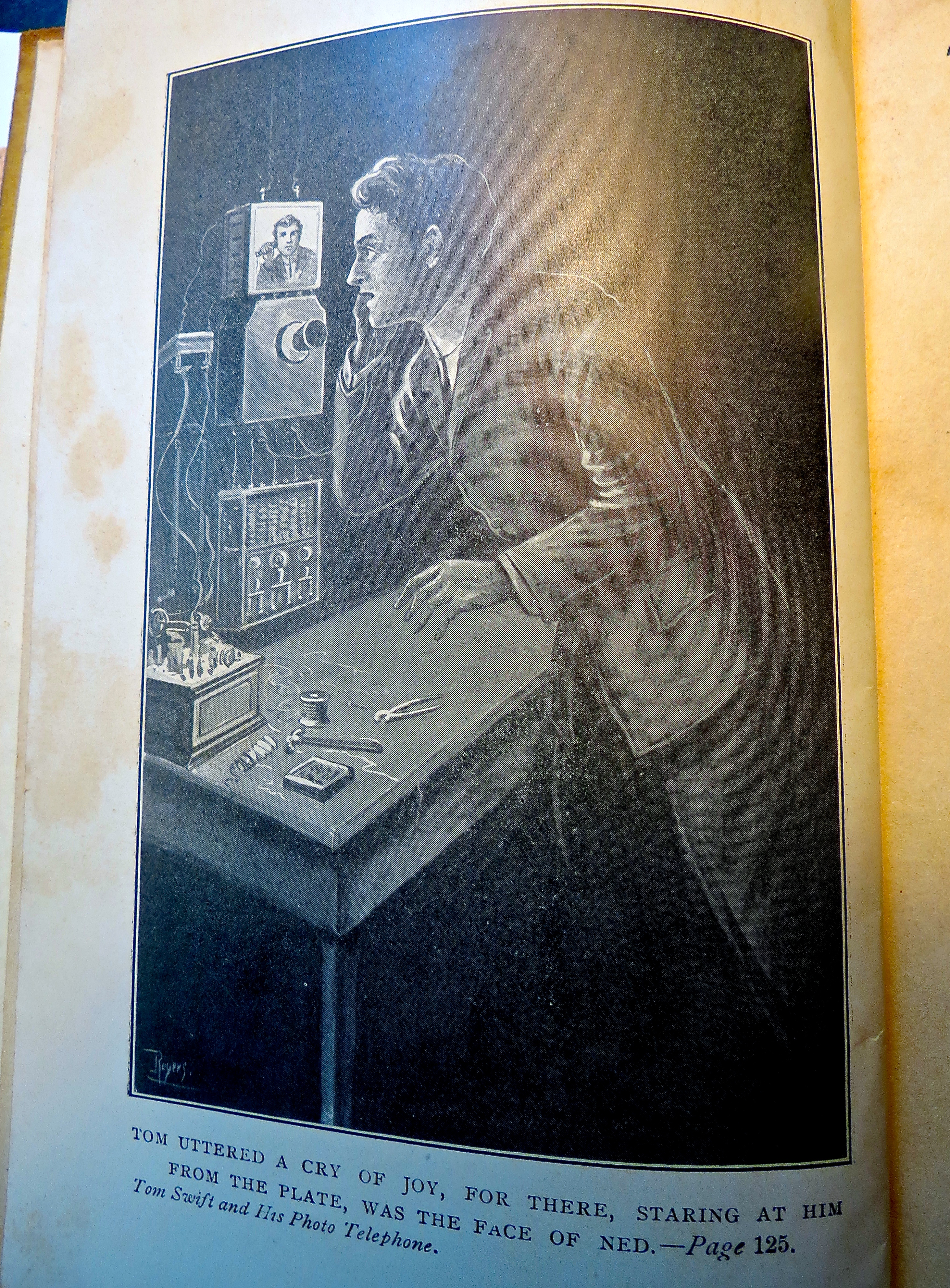
While famous writers often receive all the credit for futuristic insight, other writers deserve credit for their insightful predictions. A friend just happened to show me a well-worn book that was recycled into a depository for redistribution and sale of no longer needed reading materials. The title: Tom Swift and his Photo Telephone by Victor Appleton, who published this novel in 1914. The telephone had been around for 35 years.
This novel was one in a series of science fiction stories, Tom being the main character. Appleton published more than 100 books following the adventures of Tom and his creation of many inventions. Tom is portrayed as a heroic character who uses science and technology to outsmart the “bad guys.”
Chapter 1 begins:
“It can’t be done, Tom! It can’t be done! To transmit pictures over a telephone wire, so that persons cannot only see to whom they are talking, as well as hear them–well, to be frank with you, Tom, I should be sorry to see you waste your time trying to invent such a thing.”
Illustration of Tom’s invention:
Favorite inventions featured in steampunk art and stories are the airships, submarines, flying machines, analogue computers and anything steam-powered. In this novel, part of the plot involves thieves stealing Tom’s airship. Alongside these representations, many gadgets accompany the story lines, such as time-travel weaponry, goggles, industrialized jewelry, and assorted timepieces. Steampunk encourages the imagination toward alternative technologies, frequently incorporating the Victorian aesthetic while thinking about what “punk” might bring to speculative future. Drawing from this novel, another invention can be added to the collection: the photo telephone.
Although Appleton’s novel is rarely included in the lists of science fiction predictions that came true, I think it is time to give this author’s writing in the post-Victorian era credit for providing a glimpse into future technologies.
“To see the earth as it truly is, small and blue and beautiful in that eternal silence where it floats, is to see ourselves a riders on the earth together, brothers on that bright loveliness in the eternal cold—brothers who know now they are truly brothers.”
— Archibald MacLeish, American Poet
It never ceases to amaze me to watch the earth pass below as I sit comfortably in an airplane gazing at the landscape before me.
“The Earth was small, light blue, and so touchingly alone, our home that must be defended like a holy relic.
— Aleksei Leonov, Russian Cosmonaut
Photo locations (approximate):
When the Chinese Lantern Festival came to Norfolk, Virginia, my sister and her family reported back that the display was amazing and not to be missed when it comes to Philadelphia. On opening night, the display was spectacular, illuminating over seven acres of Franklin Square!
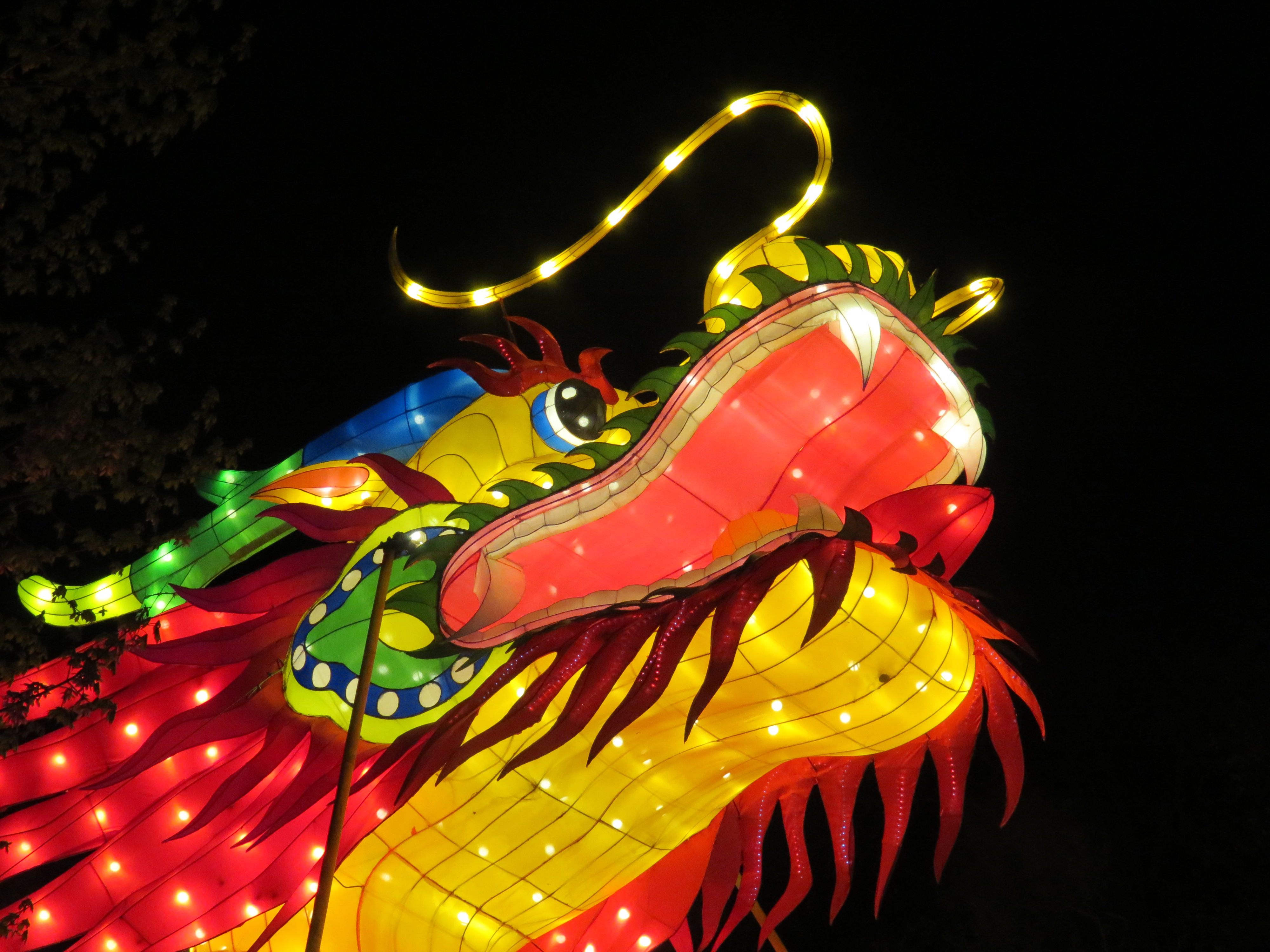
Artists create the lanterns using cloth and heavy wire, creating a mosaic-like effect. In addition to light shining through the cloth, thousands of LCD lights outline some of the designs. Against the night sky, the colors looked brilliant. Wheels whirled along one of the pathways, and a two-hundred foot dragon glowed with yellow and red.
The festival marks the beginning of the Chinese New Year, typically held around the beginning of February but postponed in Philly to April for friendlier weather outcomes.
Not to be missed: a ride on the carousel . . . for all ages! Spinning around while riding the horses, viewing the kaleidoscope of colors, truly a magical moment.
Percussion in the Park
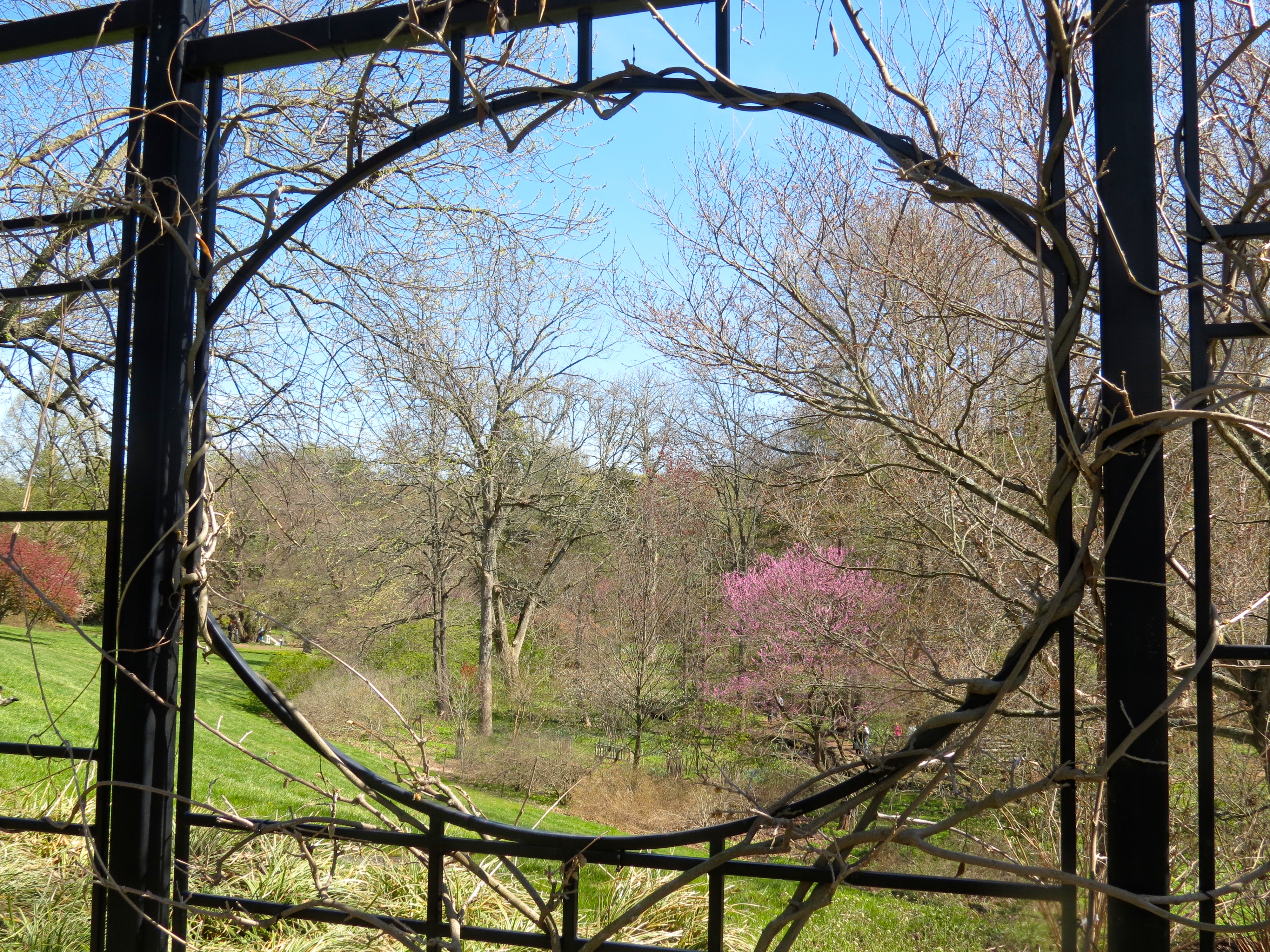
Enchanted by the beautiful gardens of the Morris Arboretum on a early September afternoon a year ago, I returned to visit again, this time on spring day in April. This weekend the arboretum celebrated their annual Japanese Cherry Blossom Festival. As part of the celebration, KyoDaiko, a community-based taiko drumming group, presented a stunning visual and sound performance. I admired their synchronized movements as they beat the drums in unison. According to Wikipedia, taiko drumming goes back to the 6th century; the Japanese used the drum for communication, theatrical performances and religious events.
Yarnbombing!
That’s what they’ve called it when trees, bridges and gazebos are covered with crocheted yarn. Melissa Maddonni Haims is the local fiber artist who wrapped up the limbs and structures, mostly from recycled materials. Well, I think I’ve seen everything now after finding trees adorned in sweaters.
Fish and Fowl
Gurgling streams flowed into peaceful ponds where swans paddled gracefully and ducks splashed around in the water or in one case, take a nap on the nearby wall. In the fernery, carp swam in the shallows of a rock garden.
The arboretum has 92 acres to wander and each vista offers something interesting to study. Stepped into a grotto, passed through the rose garden and explored a woodland path–a warm spring afternoon at the Morris gardens has stayed with me for days.
To Meander: following a winding course: a meandering lane. Proceeding in a convoluted or undirected fashion.
The Philadelphia Photo League sponsored “Meandering with Mike K” street photo walk. Members met at the Good Karma Cafe at 331 S 22 Street to drink coffee before heading out on our late afternoon trek. Below is the street scene along 22nd and Good Karma’s back patio.
Filter Square is located in the area west of Center City, bordered by the Schuylkill River. Mike, who presented commentary and helpful photo suggestions, led us down Rittenhouse Street and Delancey Place, where we admired and photographed the Victorian architecture.
We then paused as we passed through Filter Square, a quaint residential neighborhood park built more than a century ago. Surrounded by mature trees stands the park’s central feature, a Victorian-era fountain surrounded by an iron railing and a ring of white flowers. Children chalked on the sidewalks and neighbors chatted on the benches as we photographed the goat and other animal sculptures.
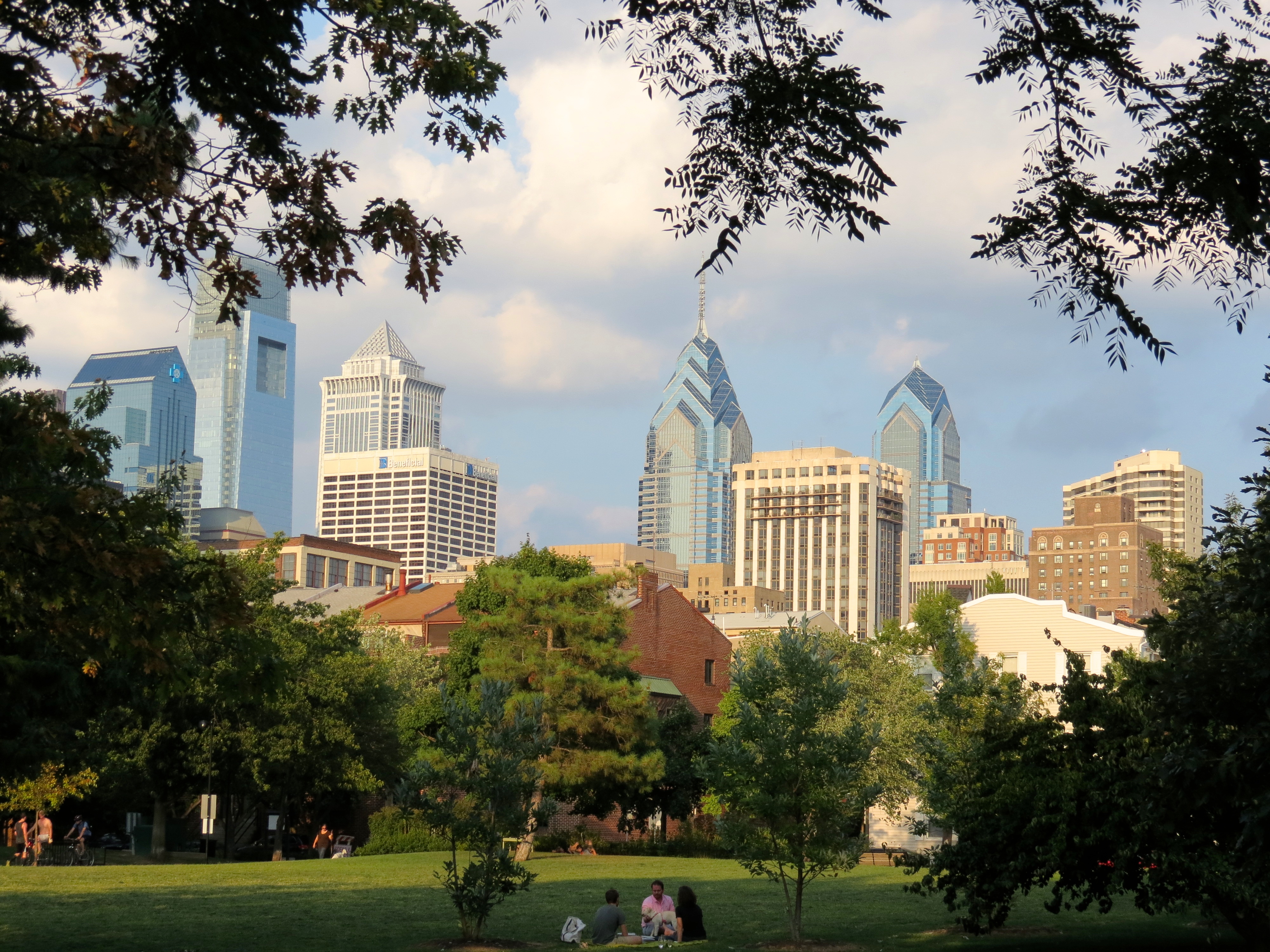
From this neighborhood, we walked several blocks to the Schuylkill River Park, where the skyline of Philadelphia poked above the trees, and as Mike put it to give us the opportunity, “to take the golden hour skyscraper shot.”
We finished our meander on the Schuylkill Banks boardwalk, which I followed back to 30th Street Station to catch my train. What a delight to visit this section of Philly, finding so many places to photograph and enjoy being in this picturesque city.
This quote serves as our inspiration for the Word Press Weekly Photo Challenge:
“The best way to predict the future is to create it.”
– Peter F. Drucker
Participation in civic life is paramount to support a healthy democracy. Whatever issue is important to you, it’s time to get involved to change the future. Elected officials must represent us rather than direct the policy decisions to citizens.