Humble Contributions to the Peoples' History

Travel has sharpened my awareness of the passage of time, whether observing the erosive forces on the Grand Canyon or the sea carving inlets on the coast of Ireland.

Recording family history has also expanded my perceptions of time: how families have lived out their days in cycles of births, marriages, and passings. Sometimes I cannot tell whether I am in their time or my own as these dimensions seem to meld together.

Whether we wake or we sleep,
Whether we carol or weep,
The Sun with his Planets in chime,
Marketh the going of Time.
~Edward Fitzgerald

Music by Enya

Weekly Writing Challenge: Time Machine

Emergence

For Women who have Resolved to Work for the Common Good of Humanity.

Emergence

The world enclosed and darkened inside my head
Not even dreams materialized as I lie in bed
Discord delivered echoing despair
And yet . . .  guided me to your sheltered lair.

I found you, though you were there all along
You entered into my soul as an enchanting song
With leonine magnificence, so noble, so sublime
Intrepid lover of art, beauty, truth and rhyme.

This miracle then cleansed my mind
Reborn to a new life refined.
I laughed and learned to forgive.
My heart opened­–I began to live.

And yet what you are is an illusion in time.
This noble ideal can only exist in my mind.
Never to feel your warmth that a Lover knows
Or touch the fabric of your roughened clothes.

But how to create harmony again from sighs.
To feel the exhilaration of the highs
And experience truth from melodious lows.
Not to be played out as a duet but as a solo.

Embraced by the power of this measure
Hearing music of souls joined together
Triumphs in splendor as shimmering sounds
With knowledge and passion that knows no bounds.

I arise from this dream and rebirth
Resolved to become a heroine on earth.

I follow Facebook pages for Red Emma’s and Sister Teresa Forcades and was so excited to read their recent joint posting:

Just announced!
Teresa Forcades, radical feminist nun, anti-austerity organizer, and advocate for an autonomous Catalonia

speaking at Red Emma’s the very next day. While I was in Barcelona, Spain, I attended an event, Women, Spirituality and Social Change, and met Sister Teresa (see post here), so to have an opportunity to see her again right in our neighborhood of the world, I wasted no time getting train tickets my son John, who writes for The Industrial Worker, and me to travel to Baltimore.

Red Emmas

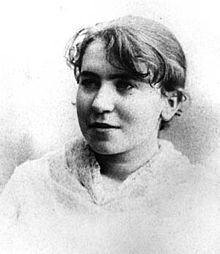
Emma Goldman: Courageous Advocate for Worker Rights

Emma Goldman 1886  *Wikipedia

Emma Goldman 1886 *Wikipedia

Red Emma’s, a worker cooperative started in 2004, supports a bookstore, restaurant and community space and is “dedicated to putting principles of solidarity and sustainability into practice in a democratic workplace.” The namesake of the cooperative, Emma Goldman, a political activist known for her promotion of anarchism, is another woman I admire for her progressive views on women’s rights, prison reform, racial equality and right to organize our workplaces. Anarcho-syndicalism best explains my political philosophy where worker solidarity, direct action and worker self-management form the basis for encouraging workers to free themselves from the hierarchical systems of bosses and managers.

Several years ago, John, along with fellow members of the I.W.W.,  paid a pilgrimage to Emma’s final resting place, Forest Home Cemetery, in Forest Park, a suburb of Chicago. Emma had been deported years before her passing, but officials of the immigration office allowed her burial on U.S. soil. Other activists are buried nearby, so she’s in good company. 

kalwaic-R1-030-13A

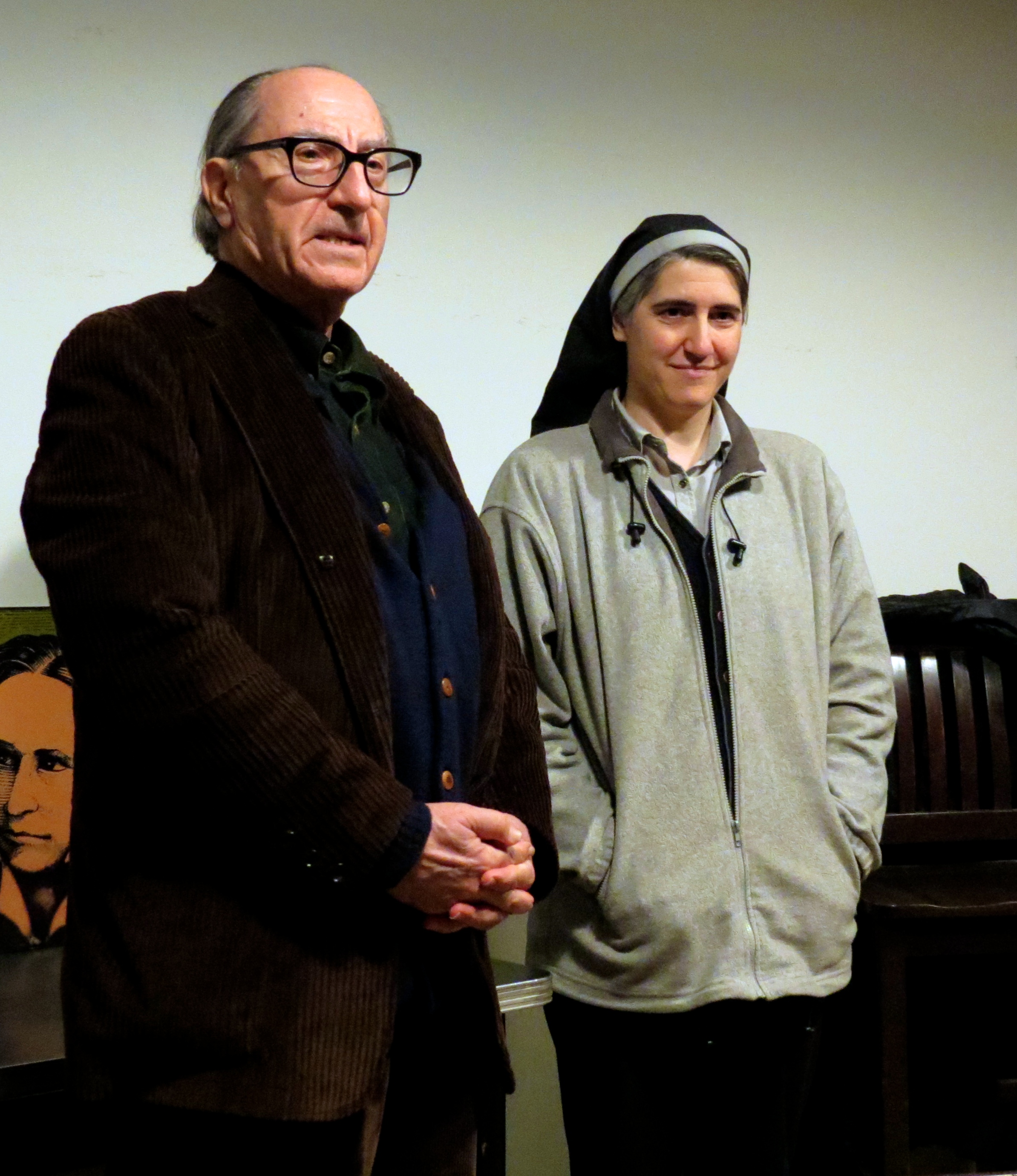
Teresa Forcades: A Crusader against Austerity and Leader of Protest Movements in Spain

Teresa Forcades at Red Emmas

Teresa Forcades launched a political manifesto to counter austerity measures by the Spanish government. The document calls for an independent Catalonia to carry out a more democratic and progressive agenda, including nationalizing banks and energy corporations and advocating for participatory democracy, ecological restructuring, and decent wages and pensions. Any progressive could support the reforms in this remarkable document. Manifesto

The program began when Professor Navarro from Johns Hopkins University introduced Teresa to the gathering. Teresa discussed many of the points in the Manifesto and the “Indignados” movement in Catalonia and Europe.

Introduction: Prof. Navarro

Introduction: Prof. Navarro

Teresa emphasized four principles necessary for success in making social change.

1. Reactivation from below. Change has to be brought about from the bottom up.

2. Avoid centralized leadership and control. People should not look for a savior. They must work together to foster diversity and unity without uniformity.

3. Stress the urgency. A large percentage of the populations lives in poverty (30% in Catalonia) and a significant number are living at the misery line (12% in Catalonia). The misery line represents the threshold of not even enough money to buy food and shelter.

4. Engage in revolution and do it again. The revolution is not over with a few reforms. Citizens must take part in decision-making. The constitution should be an evolving document as changes are needed for social reform.

discussion

Conversation

After the question and answer discussion, I talked with Teresa and introduced John. I invited her to come to Swarthmore College as I know the students would be inspired by her dedication to social justice. I never expected that Teresa would be visiting in our area, so I have great hopes that we will see each other again in the future.

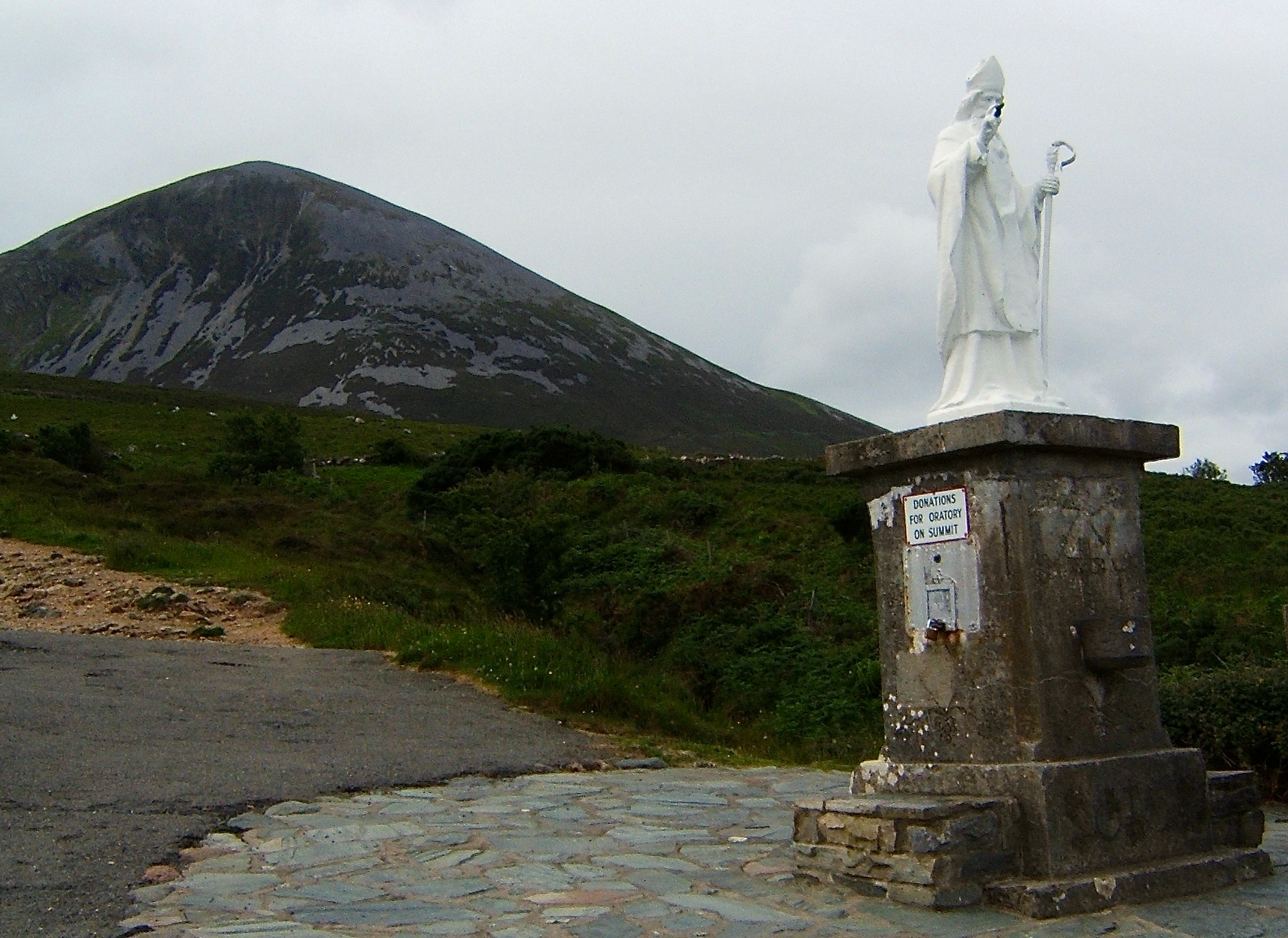
As the view of the Croagh Patrick came into sight, I could hardly believe that we were going to climb on what looked like a very steep, narrow ridge.

Before I could ponder the climb ahead any further, I saw the ghost ship with sails of human skeletons that haunted the base of the mountain. A famine memorial, the iron ship reminded pilgrims of the tragic stories that unfolded during the years that the potato crops failed and so many were left to starve.

While trekking across Ireland’s mountains, I gained an appreciation and understanding of elevations. Elevation was just a number on a map with no context. Yesterday our climb was 1,000, today, 2,700! I also noted that the weather changes drastically at different elevations, even in the summer time. We started the day with dry conditions, but I could see that mist and clouds covered the summit.

Loose stones of different sizes littered the gullied trail, and every step became a challenge to find secure footings. Some of our group turned back with the warning that the trail would become increasingly more difficult and precariously steep. We tightened our hoods and jackets against the wind, and we had to stop to become fully geared up for the rain to come. As I continued upward, I stopped often to catch my breath. The treacherous climb made me question, “Why am I doing this?” I could be sitting warm and comfortable in the coffee shop below. Yet, the spirit of the mountain kept me going–I would stay on the path that perhaps my ancestors once climbed.

The wind and rain became increasingly intense as we headed up the rocky slope. We couldn’t see anything beyond 20 yards as the summit was completely shrouded in clouds. Maneuvering on the rocks became increasingly painful as my boots would slip on the uneven terrain. I concentrated on the trail, searching for secure footing–only the brown rocks before me were important.

A feeling of relief came over me as the faint outline of the little white chapel at the summit came into view, and I stepped up the pace to secure the protection its walls might offer, only to find the building locked tight. Food and rest, however, offered comfort against the relentless rain, and we ate our sandwiches leaning against the chapel built on a foundation that dates back to St. Patrick’s time.

Chapel at C. Patrick

We packed up for our trip down the other side of the mountain. When I turned the corner away from the church, the wind hit me with such force, it almost knocked me over. The rain and wind tore at my coat as I headed down. Craggy outcroppings of rock distracted me from the storm, as again, I focused on my footing. The clouds embraced our group, and my fellow hikers disappeared from sight.

Now I’d heard that Ireland is a magical place, and on this trip a number of coincidences and unusual experiences came our way, and this was one of those times. As I walked in the fog, I heard an Irish flute playing a whistling melody. I stopped and scanned the landscape. Where was the music coming from? Did such a clear melody arise from the rocks­–those crevices of torment serving as apertures for the wind–or was it a leprechaun? With music filtering from the clouds, Irish mythology became reality as the sacred mountain shared its magic with another pilgrim.

St. Patrick

Road Trip begins at Newport News, Virginia

Newport News is one of the cities that makes up the metropolitan region in Southeastern Virginia and the starting place for our trip. We’re skipping the popular vacation spots in the area, such as Williamsburg, Jamestown, and the adventure parks, and instead opting to visit the lesser known regions further north along the Chesapeake Bay.

We’ve visited other small towns in the South,

Berlin, Maryland
Tangier Island, Virginia
Beaufort, North Carolina
Charles City, Virginia

in past journeys and have not been disappointed. Small towns retain the flavor of a bygone era, as visitors experience an authentic working community. Most of the towns have historic main street districts with parks and libraries within easy walking distance of the shopping districts. You might find a gazebo, an old-time movie theater or general store along their business thoroughfares. Restaurants and coffee shops have their own unique personalities, offering dishes with a local flavor. Residents own many of the smaller shops, where you can find one-of-kind objects. Rehabbed buildings and warehouses sometimes house art and craft galleries, and often communities establish an art center near the center of town.

What I’ve Noticed about Main Street, America          

IMG_5990In the smaller towns across America, Main Street is surprisingly similar, with even the name “Main Street” being the same in many communities. Other common names for streets are Second, Third and so on. Often the names of trees serve as street names, such as Oak, Pine or Maple.

The street itself serves as an anchor to the sidewalk and then the buildings, which line up next to each other and on either side of the street. Usually the smaller store fronts are not as wide as they are deep. Sometimes you can find an old railroad station, the tracks and engines now gone, and the building converted into a museum, shop or visitor center.

In the play Our Town, the author, Thornton Wilder, describes in the opening scene what could be almost any town in America in the 1920s:

Well, I’d better show you how our town lies. Up here-is Main Street. Way back there is the railway station; tracks go that way. Polish Town’s across the tracks, and some Canuck families. Over there is the Congregational Church; across the street’s the Presbyterian. Methodist and Unitarian are over there. Baptist is down in the holla’ by the river. Catholic Church is over beyond the tracks. Here’s the Town Hall and Post Office combined; jail’s in the basement. Along here’s a row of stores. Hitching posts and horse blocks in front of them. First automobile’s going to come along in about five years-belonged to Banker Cartwright, our richest citizen . . . lives in the big white house up on the hill. Here’s the grocery store and here’s Mr. Morgan’s drugstore.

Jail at Mathews

Jail at Mathews

Elements of Main Street stand as symbols of American values and a sentimental view on the way of life from the past. Main Street, U.S.A., is Disney’s recreation of small town America. Walt Disney summarized his vision with this nostalgic view,

For those of us who remember the carefree time it recreates, Main Street will bring back happy memories. For younger visitors, it is an adventure in turning back the calendar to the days of their grandfather’s youth.

Dark Side of Main Street

In literature authors have written about small-town America and often criticizing their social and political mores. Sinclair Lewis published a satirical novel, Main Street, in 1921, dismantling the myth of small-town wholesomeness while mocking traditional values.

Main Street was not an inclusive space for African-Americans during the Jim Crow era. The website, The Myths of Main Street, reminded me of the bleak and oppressive atmosphere that anyone of color endured during that time.

Main Street Today

For now, my sister Jean and I are just tourists winding our way through these southern towns. Reading about the history of main street has certainly given me material to think about as we travel. Main streets have made somewhat of a comeback since the 1960s when malls began to take over the commercial enterprise of these towns, while main streets deteriorated and, sometimes, disappeared. Hopefully, these historic downtowns will win out against the larger corporations, which engulf so many of our small businesses. Locally run businesses ensure that community members make the decisions that will influence their lives in their towns.

Yorktown

Our first stop on this road trip was the hamlet of Yorktown, famous for the battle that brought the American Revolutionary War to end when the British commander, Cornwallis, surrendered to George Washington on October 19, 1781. The Yorktown Battlefield Visitor Center is just off of Highway 17. Visitors can drive through the battlefields, watch a film and tour historic houses. We could have spent an entire day there.
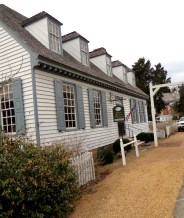
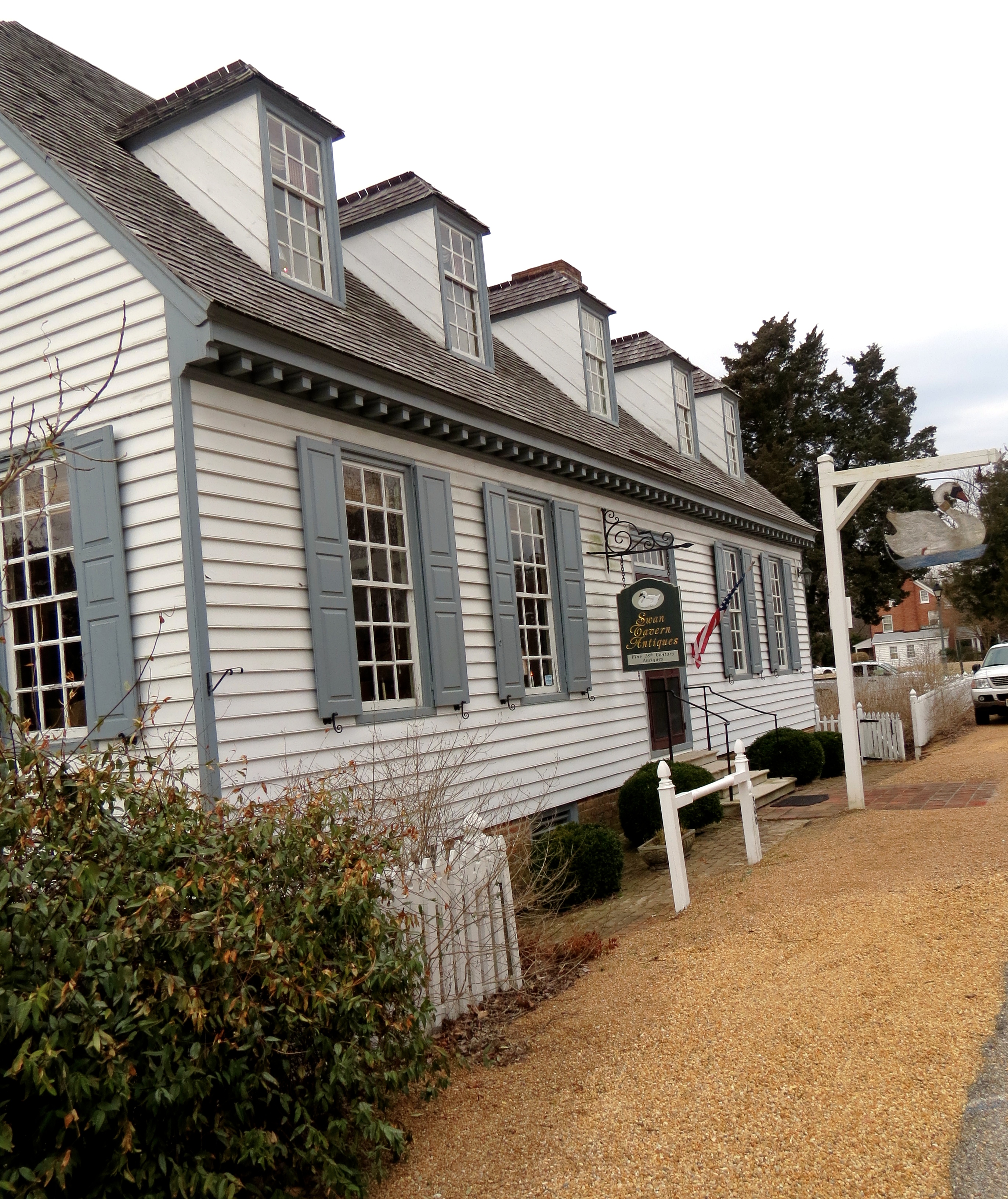
Swan Tavern Antiques

Swan Tavern Antiques

The revolutionary war battles took a toll on Yorktown, leaving all but 70 buildings standing. In 1814 a fire swept through Main Street and the waterfront area. Union forces added to the destruction during the Civil War. Today the population stands at about 200. We wandered down Main Street and into an 18th century building, Swan Tavern Antiques, where ten rooms were decorated with furniture and accessories from that era.

Churches have an important place in small towns, and no better example the Grace Church, which has been used by worshipers for over 300 years. Originally an Anglican church, the building survived the Revolutionary War, Civil War and that 1814 fire. After the walls were rebuilt in 1848, the congregation renamed the church.

Grace Church

Grace Church

We strolled along the Waterfront Landing, which followed the York River. In late April, pirate reenactors, representing seafaring life in the late 17th and 18th centuries, invade Yorktown and set up an encampment. Might be worth returning to sing with the pirates.

Gloucester County

We returned to Route 17, crossing over the George P. Coleman Memorial Bridge toward Gloucester County, which is important for its farm and fishing industries. The county is nicknamed the “Daffodil Capital of the World” and holds a festival in April with parades and shows. Gloucester has a visitor center on Main Street and has a self-guided tour of important buildings.

Mathews County

Mathews Visitor Center

Mathews Visitor Center

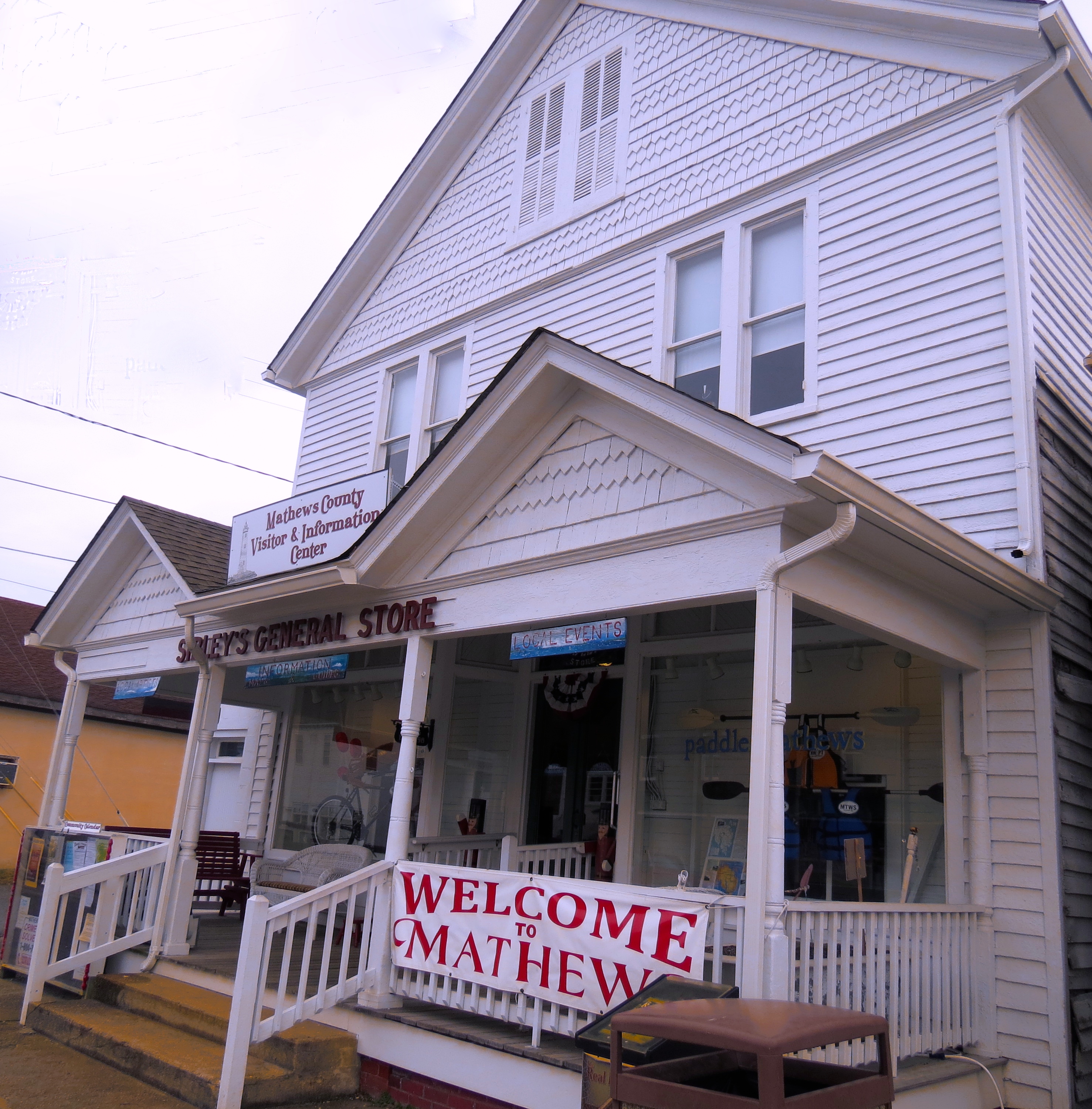
From Gloucester, we drove north on John Clayton Memorial Highway into Mathews County. Intersected by three tidal rivers, the county has over 200 miles of shoreline. Route 14 goes through downtown Mathews, where we found the Mathews County Visitor and Information Center, once Sibley’s General Store, and now selling guide books, maps, and local crafts. A small museum in the back of the store holds historical memorabilia of the county.

Mathews Visitor Center Inside

The Inn at Tabbs Creek

Post Office at Susan, VA

Post Office at Susan, VA

Heading south from Mathews on New Point Comfort Road, we continued down the peninsula, missing our turnoff but finding this example of one of the small post offices that dot the landscape of the area. We missed the turn because we were not expecting that Turpine Lane was a dirt road, which we now observed were indicated with blue signs and not the usual green street signs.

Inn

I selected the Inn at Tabbs Creek as our accommodations for the night because of their ecological sensitivity, excellent breakfast choices and amenities, including bicycles and kayaks. Their description of their freshly brewed organic coffee, eggs and vegetables had me looking forward to breakfast there for days ahead of time. The inn stood at the end of a row of tall cedars that flanked the driveway. After settling into our cozy room, we strolled around the main house, investigating the outbuildings and enjoying the views of the bay.

We returned to Mathews for dinner at Southwind Pizza, which came highly recommend by the locals and lived up to its claim, “casual dining at its best.” Their squash soup was the best we’ve ever tasted. Jean’s scallops were excellent, and I thoroughly enjoyed the Mediterranean platter.

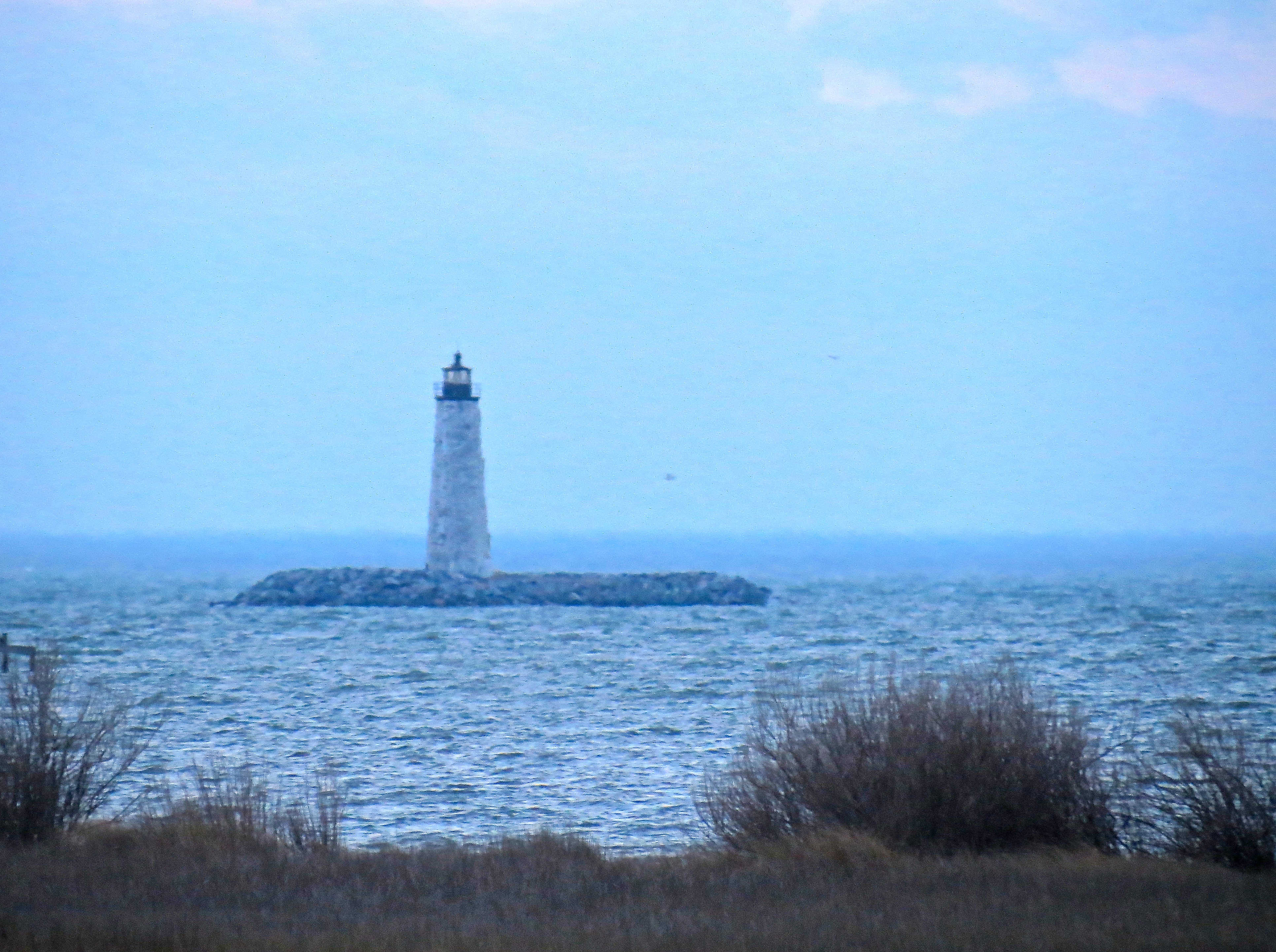
With just a little daylight left we drove down to New Point Comfort Lighthouse, the third oldest on the bay and commissioned by Thomas Jefferson in 1804. A hurricane in the 1930s separated the lighthouse from the mainland. Even from a walkway, which was the only structure in this remote location, the lighthouse was still a good distance away. I took the photograph below with the maximum setting on my zoom lens.
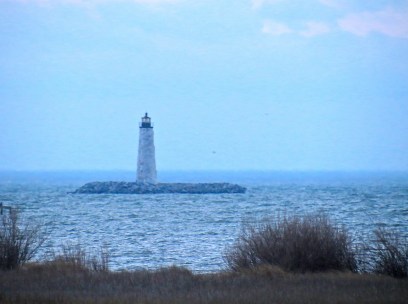
IMG_6018

Back at the inn, the wind howled throughout the night, and we woke up to a 20 degree temperature drop. Bundling up with hats and scarves, we rushed over to the main house for a delicious breakfast: french toast with strawberries casserole and an egg and cheese strata, biscuit, fresh fruit and French-pressed coffee.

After packing up, we drove north to Gwynn’s Island, a small triangle of land on the mouth of the Pianktank River. A marina sat on the other side of the bridge, and we followed the road that ran along the bay, offering wide views of the water. The island was quiet as the summer tourist season was still months away and most of the cottages were empty. We stopped at a beach near the end of the road to take a look around. An abandoned shack faced the bay, and we wondered about the story of this little house. Towering pines in the distance swayed in the wind.

IMG_6045

Shack on Gwynn’s Island

As I was researching the history of the island, I found a newspaper article that recounted a story about an African-American woman’s experience of moving to this community in 2009. She did not stay long because of harassment that both she and her children experienced in their short time there. The Gwynn Island Museum, housed in the former school building, holds the history of the island, including pictures of African-American families who worked on the island in the fishing industries. Between 1910-1920 all the families left the island, most likely because they feared for their safety. Difficult to believe that only several years ago, that a similar history would repeat itself in the land of the free.

The Northern Neck . . .

“a place heaven and earth never agreed better to frame man’s habitation.”
                                                                               Captain John Smith, 1608 

From Mathews, we headed north along Route 3, crossing over the Rappahannock River. Virginia’s rivers, such as the Rappahannock, used to freeze over entirely during winters of the late 1800s and early 1900s. The Chesapeake Bay would also have ice floes that were a hazard to navigation. If global warming has been happening slowly, generations are gone now to tell us what the weather was like a hundred years ago.

This area is well-known for its water views of the Chesapeake Bay, creeks and rivers. Making a left turn at the town of White Stone, we drove only a few miles before arriving in Irvington. A thriving town at the turn of the 20th Century, Irvington served as a port for steamboats. About 600 steamboats worked the waters along the Chesapeake Bay. In the summer of 1917, a fire destroyed many of the buildings, and the Steamboat Era came to an end. The Steamboat Museum houses memories and memorabilia from that time, but it was closed when we arrived.

Kilmarnock

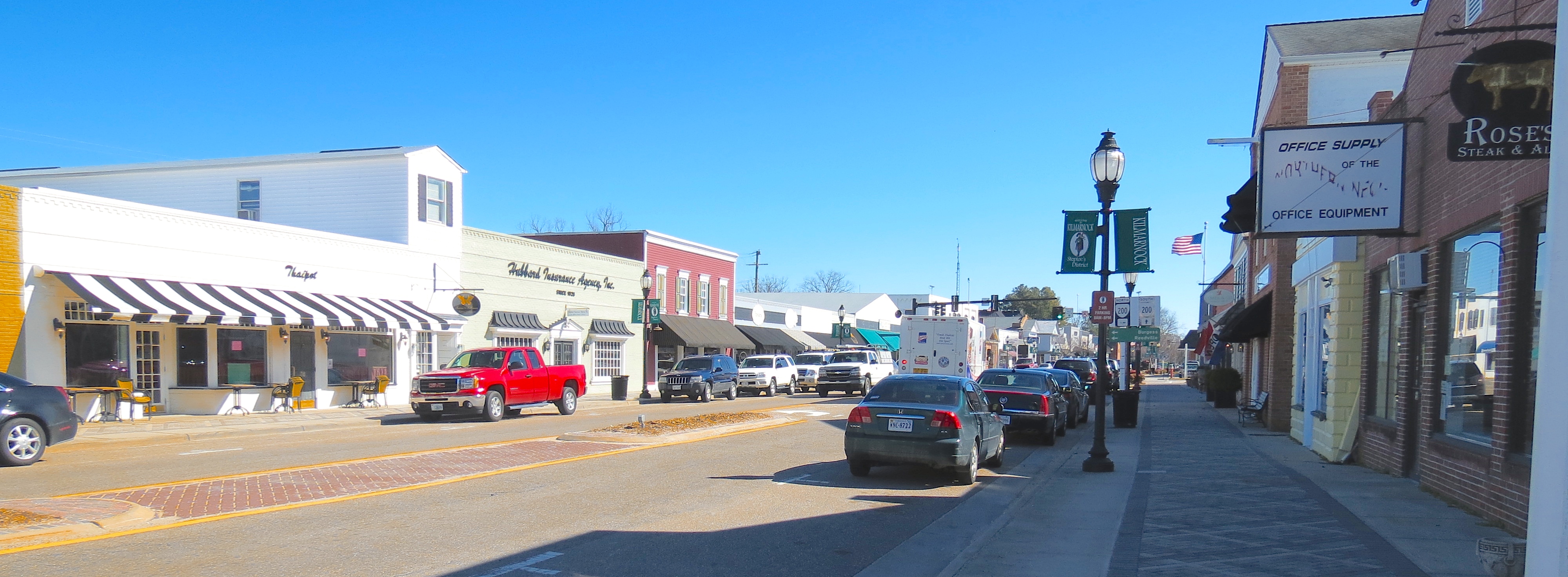
Named for a Scottish town in East Ayrshire, Kilmarnock was once called “The Crossroads.” Towns often sprung up at intersections of transportation routes and grew according to the level of commerce that supported the community.
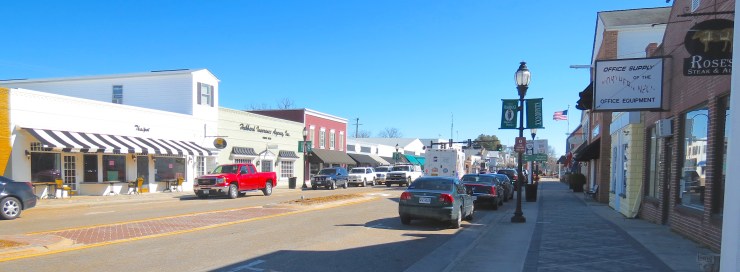
Downtown Kilmarnock

Downtown Kilmarnock

Before exploring the downtown, we stepped into then Kilmarnock Antique Gallery holding 22,000 square feet of antiques and deserving of its honor: voted number one by Pleasant Living Magazine. Most of the structures on Main Street were brick, and housed a variety of boutiques, galleries and restaurants. 

Leaving Main Street

The story of small towns in America is still unfolding as townsfolk adapt to changes, both economic and social. Community members continue to work together to preserve the architecture and ambiance of a former time while struggling with the prejudices that, even to this day, rain on the American parade down Main Street.

main street 3

Philadelphia, 10th and Market Streets

Activists teamed up with retail and fast food workers to campaign for a $15 minimum wage by standing together at a rally on Market Street. I came into Philly to support this initiative because I participated in the Swarthmore College Living Wage and Democracy’s campaign to raise the base wage, and documented that effort here.  That campaign resulted in a wage increase for the lowest-paid employees at the College.

Many corporations that pay poverty wages compensate their CEO’s hundreds of times larger than their workers. For more information, check out this article, “466 Hours of Worker Overtime Equals One Hour of CEO Pay.”

Rally participants broke into groups to distribute red flowers to female workers at four different locations including McDonalds, Starbucks, Burger King and CVS.  Most folks who passed by the demonstration responded positively, and drivers honked their horns in support.

This slideshow requires JavaScript.

Links:

15 Now.org

Activists in Philadelphia Join Nationwide Protest of Low Minimum Wage

On International Women’s Day, Street Actions in Philly for Living Wage


Living Wage Lament

Rich folks have the money,
they also have control
poor folks have no money
we’re even in the hole.

We represent diversity
but we are not you’re cream
cause your diversity comes packaged
in a sales pitch lean and mean.

You keep you billon dollars
safely in the bank
no way in hell can touch it
for us who have no rank.

The future is what you talk ’bout
as if that’s all that matters,
you forget the present d’termines
who’ll remain in tatters.

We try and try to tell you
but you got blinders on.
for you can’t see or hear us
‘fraid you’re sense’s gone.

Those who toil and work
are different kind of folks
and never in a billion years
will you remove our yokes.

So it’s up to us to do it
for we must seek the prize
to get equal pay and benefits
and open people’ s eyes.

The Never-Ending Stream of Snow Storms

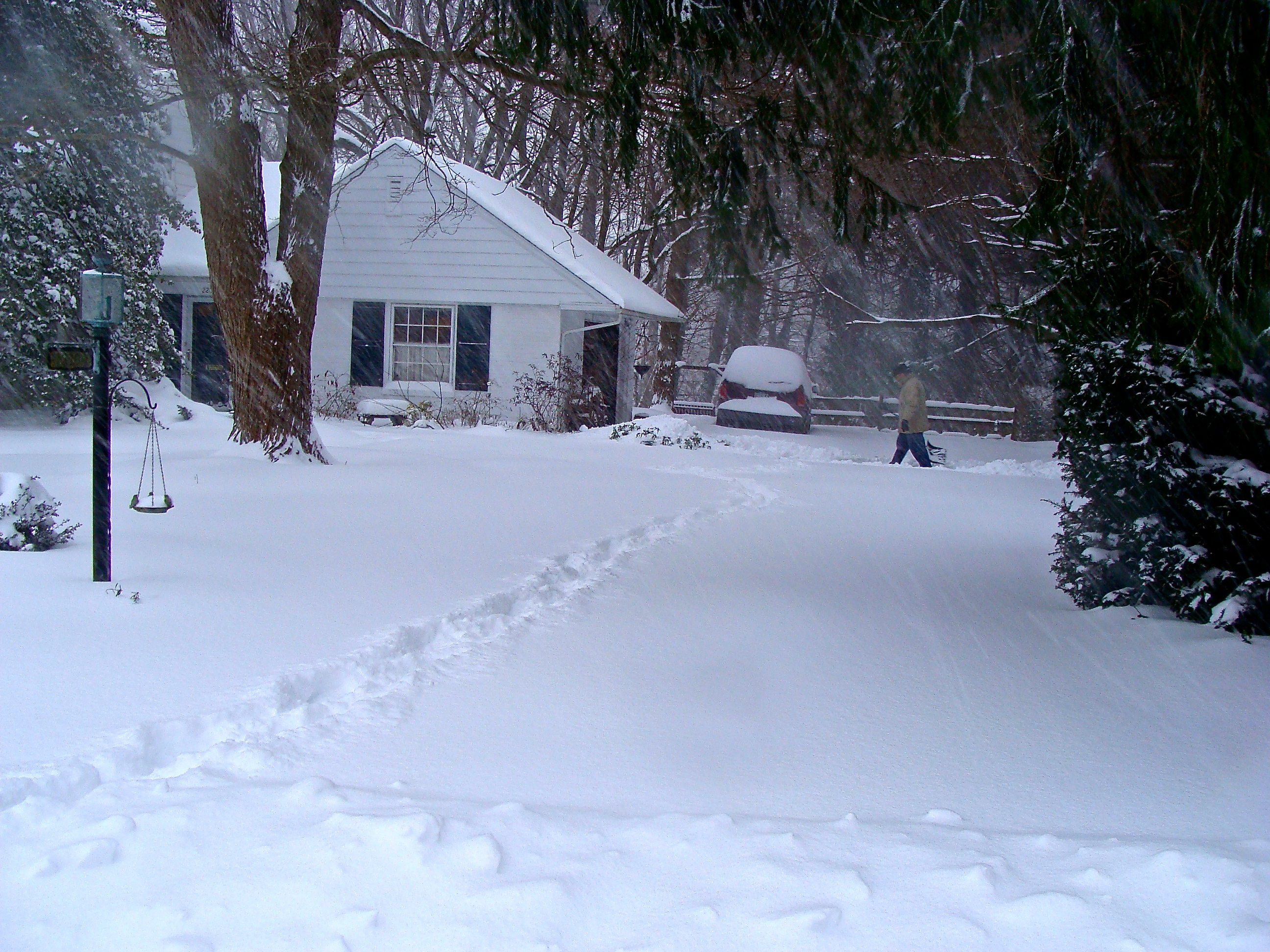
According to The Weather Channel, Philadelphia is experiencing the third snowiest winter ever on record. No surprise to us, however, with another three inches to shovel off the driveway this past week. The total for this season so far: 58.4 inches, all of which had to be removed from our drive and walkway. Because our drive is shaded, the snow freezes making a nice, slick patch of ice to negotiate.

Snowed in Again!

Snowed in Again!

Shoveling Snow: Work Or Exercise? Resisting the Purchase of a Snow Blower

On the upside, I like practical exercise. For me, going the to a gym is tedious, but I welcome the chance to put effort toward yard work, which offers the satisfaction of having something to show for all that effort. This explains my resistance to purchasing a snow blower. Snow blowers, which are noisy and take up room in the garage, have to be maintained and cost money to run. Shoveling seems to be the perfect answer to winter exercise. We abide by all the rules of physical exertion by taking frequent rest periods, drinking plenty of water, using small shovel loads, and pushing the snow rather than lifting it. Our two shovels have good designs, with handgrips with ergonomic placement.

Building a Better Mouse-Trap or in this Case, Snow Shovel

IMG_5826

Then we saw our neighbor across the street using a crazy-looking device for removing snow: a huge wheel attached to a shovel. I liked it immediately as the mechanism fits in with the steampunk genre, which I have written about on the previous post. We watched as our neighbor cleared his entire driveway without having to bend over to lift the snow. He gave us the information on the device, and we lost no time checking the Internet on the invention: the Snow Wovel. Time Magazine claimed it as the best invention for 2006, so it’s been around for a few years. According to their website the Snow Wovel is

recognized by Co-op America and National Green Pages™ for its positive, pollution-free environmental standards and zero carbon footprint in usage. University of Massachusetts independent study confirms the wheeled snow shovel clears snow with a fraction of the effort and safer on the back: “comparable to simply walking.”

output_RG8tGt-2

Our box arrived several days later, and within a couple hours we managed to put together the parts and complete the assembly. The height of the handle can be adjusted to make a more comfortable position. The snow on our drive had turned icy and crunchy, and I thought the shovel might have a difficult time plowing through the hard crust. No need to worry, the machine dug in and lifted the snow away. Since our drive is wide, the wheel allowed us to easily carry the snow off to the side.

Really?

Really?

In November, I had placed the “let it snow” decoration on our front door, hardly suspecting that perhaps I might be tempting the muses with a call for continuing snow throughout the winter. But now we are snow warriors, armed with our Snow Wovel, ready to conquer whatever the the next storm brings, while getting some exercise and doing our part for the environment.

Awhile back I wrote a post on steampunk and the 1987 television program, Beauty and the Beast, which carried many of the steampunk themes. The costumes, setting and the intersection of fantasy with reality connected the program to the steampunk genre, combining science fiction and fantasy, with overlaying elements of the Victorian era and industrialization, especially the influence of steam power.

In this post I add a bit more to the discussion on steampunk with reflections on a graphic novel, pottery and photography.

Steampunk Graphic Novel: Battle of Blood and Ink

Jared Axelrod and Steve Walker have written and illustrated a cleaver graphic novel with a steampunk setting: The Battle of Blood and Ink.  An entire city flies through the sky, which is not an unusual scenario in steampunk literature, where often castles travel through the universe. Ashe, the courageous heroine, sets out on an adventure to discover the secret of how their government officials capture the energy to fly the city. Ashe publishes a newspaper, The Lurcker’s Guide to Amperstam, proving that the pen is mightier than the sword.

Ashe wears an outfit that includes steampunk fashion elements: a corset, bustle and amulet. Steampunk breaks from the Victorian aesthetic allowing creative takeoffs to flourish. Her skirt is short for Victorian standards, and the boots are substantial, appropriate for a high-flying crusading reporter. Ashe is a woman who embarks on a journey into a world unlike anything we’ve ever seen and is dressed for the part.

This photograph recreates Ashe’s steampunk dress and backdrop with a remarkable likeness to the graphics in the book.

Photo Credit: J. R. Blackwell

Ashe and her pilot, speed through the clouds on an airship that models steampunk apparatus, replete with propellers and mechanical engine. Steampunk’s approach to technology combines futurist possibilities with 19th century machines. Flying contraptions have a long history in the pre- and post-Victorian era, representing the possibilities of new adventures through technological innovations, and in this case, with Victorian flourishes etched on the sides.

Steampunk Pottery

Today artists capture the visual aspects of steampunk ideas in pottery and sculpture. These industrial-inspired ceramics can be adorned with gears, keys, chains, pipes, clocks and a variety of industrial antique components. In most of these pieces I used metallic black glaze, which leaves a golden metallic sheen. By adding the elements of steampunk, the pieces become lively and interactive. Displayed on Victorian needlework, the industrial pottery juxtaposes the softness of delicate fabric.

This slideshow requires JavaScript.

Steampunk Images

Steampunk images are easy to find, but capturing them in an artistic view proves to be more challenging. Here are several photographs that capture some aspect of steampunk, whether it is the nuts and bolts on the Eiffel Tower or a battered industrial machine left in the ruins of an old mill.

This slideshow requires JavaScript.

Have you been inspired in some way by the steampunk themes?

Sixth Grade Mayhem

When I was in sixth grade, some of the boys in my class were mean, rough and nasty. One of our former teachers said of our class that they were the worst she had ever taught. The boys were disruptive and opportunistic, seeming to find ways to cause trouble without getting caught. The boys cursed at one another and at the girls. Giving the finger was part of their repertoire but well-hidden from teacher’s eyes.

In past years, I had been injured during rough-housing. In third grade, a boy pushed me off a wall, and I chipped my tooth. A year later, I almost lost my eye when boys were taunting us by lifting our dresses up. I bent down to push my dress down and my head went into a pencil in the boy’s pocket. My Mother always warned me to just stay away from them, which was the strategy I tried to practice through grade school.

175px-WinnieThePooh

Wikipedia

Our sixth grade teacher, Mrs. Boyer, was a great teacher and a sweet person. She seemed to manage the class, often by telling stories of her life or reading to us. She would say, “I’m not sure we have time for Winnie the Pooh today.” The class would immediately go into begging mode, “Please read Winnie the Pooh.” As I looked around the room, I would see even the most hardened boy pleading for a story about the bear.  During story time, the class would settle and the students would fold their arms on their desks, listening intently. I remember asking myself how could a story quiet such restless anger.

When Mrs. Boyer read the stories, I could easily visulize the Hundred Acre Wood, and we’d look at the map on the inside cover of the book as if it were a geography lesson. Pooh was the most endearing character, almost the alter ego of the classroom boys. Pooh was never mean-spirited, and he was always kind to his woodland friends.

“We’ll be friends forever, won’t we, Pooh? asked Piglet. “Even longer,” Pooh answered.

Although the bear supposedly was of “very little brain,” Pooh was hopeful and comforting.

“Rivers know this: there is no hurry. We shall get there someday.”

“Promise me you’ll never forget me because if I thought you would, I’d never leave.”

Of course, school is a place where your self worth is constantly on the line with test taking. In contrast to the academic demands of school, Pooh offers an alternate view of cleverness:

“Rabbit’s clever,” said Pooh thoughtfully.
“Yes,” said Piglet, “Rabbit’s clever.”
“And he has Brain.”
“Yes,” said Piglet, “Rabbit has Brain.”
There was a long silence.
“I suppose,” said Pooh, “that that’s why he never understands anything.”

Good-bye to Elementary School

The next year our elementary school class went off to a large junior high school, and I had little contact with the boys in my class after that. In general I don’t remember that the classroom dynamic in junior high being as hostile as it was back in elementary school. Maybe the boys matured or began concentrating on the grind toward college. I wondered whether in transitioning into junior high, Winnie the Pooh offered emotional support that eventually altered world views, even if slightly.

winnie the pooh

To Write or Not to Write about Fashion?

Two years ago I started writing this post but then stopped, thinking that perhaps no one would be interested in reading about children’s clothes sixty years ago. So I just left this post sitting in the draft box. It wasn’t until I started to read Flora Thompson’s memoir of her life during the 1880s in a small hamlet in Oxfordshire that I began to think again about vintage clothing. In my previous post, I described Lark Rise to Candleford, which the BBC broadcast as a series. An excerpt from Flora’s book tells us about what children wore back then:

. . . but it was difficult to keep decently covered, and that was a pity because they did dearly love what they called ‘anything a bit dressy’. This taste was not encouraged by the garments made by the girls in school from material given by the Rectory people—roomy chemises and wide-legged drawers made of unbleached calico, beautifully sewn, but without an inch of trimming; harsh, but strong flannel petticoats and worsted stockings that would almost stand up with no legs in them—although these were gratefully received and had their merits, for they wore for years and the calico improved with washing. Chapter 1

Inspired by Flora’s descriptions, I returned to compiling pictures and content for this post.

Fashionably Dressed, Yet Unaware 

By looking at the way children dressed, we can discover a few clues about life in the 1950s. When I was a little girl, growing up in a working-class suburb of Philadelphia, I remember my mother dressing my sister and me in matching outfits. I couldn’t find any history about this custom, but I remembered that in the movie, The Sound of Music, Maria dressed the children in matching play clothes. Dressing children alike may be a way of cementing family kinship. My mother fostered a close relationship between my sister and me, and dressing us alike may have been part of that plan. I never minded dressing the same as my sister, but I didn’t know there was an option.

Mom selected all of our clothes, and we wore whatever she purchased for us. With play clothes, we had some degree of flexibility in picking out what we wore for the day, but for school or dress up, Mom was fully in charge. I don’t remember rebelling against her choices because clothes were not that important to me.

In our school and neighborhood, the children were clean and neatly dressed. Because we came from a fairly homogenous community, there seemed to be little emphasis on clothing as fashion statements. No one dressed better than anyone else, as I recall, and we didn’t talk about clothes. I can remember only one exception. In third grade, a girl joined our classroom in the middle of the year, and I noticed she looked disheveled. At first, I thought perhaps that just moving in created a lapse in hair and clothing care, but her appearance never improved. That one example stood out because uniformity in neatness prevailed.

This slideshow requires JavaScript.

Three Basic Outfits. We wore three basic outfits, always starting with white cotton underwear, including an undershirt, with short sleeves for winter and sleeveless for summer.

Play Clothes: A Hodge-Podge but Sometimes Matching. Pants, peddle pushers (pants that ended between the knee and the ankle so material would not get caught in bicycle parts), shorts, shirt or blouse, light canvas sneakers, and socks. In the summer, we would wear rompers, tied with a bow at each shoulder, or one-piece zippered shorts and shirt set. A “skort,” a very short pleated skirt with attached matching bloomers underneath was another option when the weather was warm. This was the age before the t-shirt, which we never wore. In winter, corduroy pants lined in flannel would keep us warm while sledding. As older children, we transitioned from long coats to the more practical “car coat”, which came to just below the waist, square-cut in shape, and usually with an attached hood.

This slideshow requires JavaScript.

School Clothes: Keeping Order with Flouncy Attire. Dress or skirt, slip, socks, and sturdy shoes (white and black saddlebacks) or shoes with straps or laces or Mary Janes, which was a slip-on dress shoe made of black patent leather, usually with a strap that buckled on the side. Girls’ clothes mimicked women’s fashion trends at the time: a full-circle skirt and a cinched waist. Full skirts were always worn with a petticoat or slip. Hemlines remained above the knee, at varying lengths.

Almost every public school in the U.S. required that girls wear dresses or skirts. I didn’t like wearing dresses because keeping modest while on the playground was a continual nuisance. Every girl knew the one rule of wearing a dress: keep it down. Also, there was a rule that your petticoat should not hang below the dress, requiring some effort yanking on straps to make the necessary adjustments. Sometimes I would slip slacks on under my dress, which was strictly against school rules and almost immediately the teacher would ask me to remove them. Girls could change into shorts or pants for gym class.

First day of school

School Girls J and K

Pastels and Plaid

Dress Clothes: Petticoats and Mary Janes. Church, visiting, or special occasions meant a complete outfit including a fancy dress, petticoat, Mary Janes, socks, coat, hat, and sometimes purse and gloves. Crinoline petticoats made the dresses flair out. In the winter, wool coats and matching leggings, usually with side zippers, would keep us warm. Coat collars were sometimes trimmed in velvet. Sunday School always required a fancy dress. Our family was not religious, but my parents must have felt that we should be exposed to some religious training and also dress the part. Easter brought out the best finery, including an Easter bonnet, trimmed with ribbons and silk flowers. When we were older, we wore suits for Easter.

This slideshow requires JavaScript.

Hair Styles

Mom fixed our hair every morning, usually in a ponytail or left down, supported by four colored barrettes. Most nights, Mom would roll our hair in soft curlers before we went to bed. She didn’t like hair too much longer than shoulder length. For some reason, I hated having my hair cut, which resulted in a confrontation with Mom. I still have that vision of Mom coming toward me with the scissors, and no amount of tears would prevent the inevitable chopping off of a couple of inches. I always wanted long braids, but Mom disliked braids.

Girls had all ranges of haircuts from short bobs to long hair down the back. However, we didn’t seem to care about each other’s style. In the early ’60s, we stepped into another time when hairstyles became more important.  My sister went for her first hairdresser appointment when she was in 5th grade and had her hair cut in the famous “page-boy fluff”.

Parenting Styles Have Changed

When I became a parent, I read many texts on parenting techniques, and most of the advice suggested allowing children to select their own clothes, both to purchase and to wear. That was surprising to me given that my own childhood experiences put Mom in charge. I would agree that it is probably best to allow children to make their own choices. Perhaps, however, allowing those choices might direct the child’s concern about outward appearance, which may not be the place that we want children to focus most of their attention.  

Daily Post: New Sensation

Tag Cloud