Humble Contributions to the Peoples' History

Archive for the ‘Nostalgic Memorabilia’ Category

1950s Retrospective on Children’s Fashions: Petticoats and Mary Janes

To Write or Not to Write about Fashion?

Two years ago I started writing this post but then stopped, thinking that perhaps no one would be interested in reading about children’s clothes sixty years ago. So I just left this post sitting in the draft box. It wasn’t until I started to read Flora Thompson’s memoir of her life during the 1880s in a small hamlet in Oxfordshire that I began to think again about vintage clothing. In my previous post, I described Lark Rise to Candleford, which the BBC broadcast as a series. An excerpt from Flora’s book tells us about what children wore back then:

. . . but it was difficult to keep decently covered, and that was a pity because they did dearly love what they called ‘anything a bit dressy’. This taste was not encouraged by the garments made by the girls in school from material given by the Rectory people—roomy chemises and wide-legged drawers made of unbleached calico, beautifully sewn, but without an inch of trimming; harsh, but strong flannel petticoats and worsted stockings that would almost stand up with no legs in them—although these were gratefully received and had their merits, for they wore for years and the calico improved with washing. Chapter 1

Inspired by Flora’s descriptions, I returned to compiling pictures and content for this post.

Fashionably Dressed, Yet Unaware 

By looking at the way children dressed, we can discover a few clues about life in the 1950s. When I was a little girl, growing up in a working-class suburb of Philadelphia, I remember my mother dressing my sister and me in matching outfits. I couldn’t find any history about this custom, but I remembered that in the movie, The Sound of Music, Maria dressed the children in matching play clothes. Dressing children alike may be a way of cementing family kinship. My mother fostered a close relationship between my sister and me, and dressing us alike may have been part of that plan. I never minded dressing the same as my sister, but I didn’t know there was an option.

Mom selected all of our clothes, and we wore whatever she purchased for us. With play clothes, we had some degree of flexibility in picking out what we wore for the day, but for school or dress up, Mom was fully in charge. I don’t remember rebelling against her choices because clothes were not that important to me.

In our school and neighborhood, the children were clean and neatly dressed. Because we came from a fairly homogenous community, there seemed to be little emphasis on clothing as fashion statements. No one dressed better than anyone else, as I recall, and we didn’t talk about clothes. I can remember only one exception. In third grade, a girl joined our classroom in the middle of the year, and I noticed she looked disheveled. At first, I thought perhaps that just moving in created a lapse in hair and clothing care, but her appearance never improved. That one example stood out because uniformity in neatness prevailed.

This slideshow requires JavaScript.

Three Basic Outfits. We wore three basic outfits, always starting with white cotton underwear, including an undershirt, with short sleeves for winter and sleeveless for summer.

Play Clothes: A Hodge-Podge but Sometimes Matching. Pants, peddle pushers (pants that ended between the knee and the ankle so material would not get caught in bicycle parts), shorts, shirt or blouse, light canvas sneakers, and socks. In the summer, we would wear rompers, tied with a bow at each shoulder, or one-piece zippered shorts and shirt set. A “skort,” a very short pleated skirt with attached matching bloomers underneath was another option when the weather was warm. This was the age before the t-shirt, which we never wore. In winter, corduroy pants lined in flannel would keep us warm while sledding. As older children, we transitioned from long coats to the more practical “car coat”, which came to just below the waist, square-cut in shape, and usually with an attached hood.

This slideshow requires JavaScript.

School Clothes: Keeping Order with Flouncy Attire. Dress or skirt, slip, socks, and sturdy shoes (white and black saddlebacks) or shoes with straps or laces or Mary Janes, which was a slip-on dress shoe made of black patent leather, usually with a strap that buckled on the side. Girls’ clothes mimicked women’s fashion trends at the time: a full-circle skirt and a cinched waist. Full skirts were always worn with a petticoat or slip. Hemlines remained above the knee, at varying lengths.

Almost every public school in the U.S. required that girls wear dresses or skirts. I didn’t like wearing dresses because keeping modest while on the playground was a continual nuisance. Every girl knew the one rule of wearing a dress: keep it down. Also, there was a rule that your petticoat should not hang below the dress, requiring some effort yanking on straps to make the necessary adjustments. Sometimes I would slip slacks on under my dress, which was strictly against school rules and almost immediately the teacher would ask me to remove them. Girls could change into shorts or pants for gym class.

First day of school

School Girls J and K

Pastels and Plaid

Dress Clothes: Petticoats and Mary Janes. Church, visiting, or special occasions meant a complete outfit including a fancy dress, petticoat, Mary Janes, socks, coat, hat, and sometimes purse and gloves. Crinoline petticoats made the dresses flair out. In the winter, wool coats and matching leggings, usually with side zippers, would keep us warm. Coat collars were sometimes trimmed in velvet. Sunday School always required a fancy dress. Our family was not religious, but my parents must have felt that we should be exposed to some religious training and also dress the part. Easter brought out the best finery, including an Easter bonnet, trimmed with ribbons and silk flowers. When we were older, we wore suits for Easter.

This slideshow requires JavaScript.

Hair Styles

Mom fixed our hair every morning, usually in a ponytail or left down, supported by four colored barrettes. Most nights, Mom would roll our hair in soft curlers before we went to bed. She didn’t like hair too much longer than shoulder length. For some reason, I hated having my hair cut, which resulted in a confrontation with Mom. I still have that vision of Mom coming toward me with the scissors, and no amount of tears would prevent the inevitable chopping off of a couple of inches. I always wanted long braids, but Mom disliked braids.

Girls had all ranges of haircuts from short bobs to long hair down the back. However, we didn’t seem to care about each other’s style. In the early ’60s, we stepped into another time when hairstyles became more important.  My sister went for her first hairdresser appointment when she was in 5th grade and had her hair cut in the famous “page-boy fluff”.

Parenting Styles Have Changed

When I became a parent, I read many texts on parenting techniques, and most of the advice suggested allowing children to select their own clothes, both to purchase and to wear. That was surprising to me given that my own childhood experiences put Mom in charge. I would agree that it is probably best to allow children to make their own choices. Perhaps, however, allowing those choices might direct the child’s concern about outward appearance, which may not be the place that we want children to focus most of their attention.  

Daily Post: New Sensation

Meddling: Our Weakness or Strength?

Lark Rise to Candleford

My favorite PBS show from the BBC this season is not Downton Abbey, but rather Lark Rise to Candleford, a costume drama set near the end of the 19th century in the Oxfordshire hamlet of Lark Rise and neighboring town of Candleford. The BBC adapted the series from a trilogy of semi-autobiographic novels written by Flora Thompson, published between 1939 and 1943. What sets Lark Rise apart from other costume dramas, where sometimes the characters come across as self-centered and petty, the folks of Lark Rise seem genuine as they struggle to find the right path, even if their best attentions sometimes fall short. The program shows human frailty tenderly as the characters search for answers to their challenges in difficult times.

Because I am a big fan of EastEnders, the popular, gritty British soap opera, I laughed when I read this review of Lark Rise in The Guardian, “A rural Victorian EastEnders with telegram deliveries instead of murders.”  Whereas EastEnders offers an intriguing and somewhat addicting storyline in an unending series of hopelessly agitated characters, unable to find one modicum of mindfulness in response to each other’s failings, Lark Rise characters offer philosophical insights to the latest crisis. Those insights often happen through the humblest character.

Shall We Assist?

In this recent episode, Season 4, Episode 1, the townsfolk accused Dorcas Lane, main character and post mistress, as meddling in everyone’s business, causing untold distress. Dorcas, who consistently affirms that she only has one weakness, whether it is banbury cakes, feather pillows or baths, decides that this weakness of meddling must be addressed, and she vows to no longer interfere in her neighbor’s lives. The problem she almost immediately faces is whether to step into a situation in which she could be genuinely helpful. Standing on the edge of disaster seems cowardly but backing off from her commitment also seems like a half-hearted effort to check her interference. I won’t give away how the rest of the story unfolds, but this theme gave me pause.

What factors do we measure when to step into a situation. Of course, if someone asks us to help, we can without hesitation. What about if someone cannot see their situation objectively, overcome with emotion? After careful thought, can we offer assistance in form of advice, money or help? How do we assess how any of our generous offers might affect outcomes? We might ask ourselves if somehow this offering of advice plays into our own ego. Are we giving advice to sound important or because we feel we have the authority to do so? Are we responding to a dangerous situation that needs immediate attention? It takes courage to speak up in unjust situations where our input may not be welcome.

Offering advice is a difficult negotiation with only a few guidelines. Like Dorcas, best not to make hard and fast rules but rather carefully evaluate the factors in each situation. We may not always get it right, but a thoughtful response might offer folks in our times some comfort and help.

Lark Rise Celtic Tune

Links

Lark Rise to Candleford, E-Book

Lark Rise to Candleford on Youtube

Pinterest Collection of Pictures

9d644af5a34b4df212c9c1003eb38ea7

Christmas Episode
Inclusive of ghosts, as Brits like so much at the holidays!

Living History: Day in the Life of the Soldiers of the Civil War

On a visit to Wilmington  & Western Line, a steam train that runs through the Red Clay Valley in Delaware, I just happened to have the good luck that Civil War living history reenactors were staging a battle and takeover of the train on that day. I recorded the dramatic action of the battle in video in this post: Steam Train Journeys into History: Civil War Skirmish at Red Clay Creek.

CW Cannon L Antique

This video highlights Living History: Day in the Life of the Soldiers of the Civil War, when Company A, 37th Regiment, North Carolina Volunteer Troops, C.S.A., 1st North Carolina Artillery, Battery C, C.S.A., and the Town of Rising Sun, Maryland, hosted the 21st Annual Reenactment.

I strolled by the rows of canvas tents, the Union on one side of the creek and Confederates on the other, as wood crackled in the campfires and coffee brewed in tall metal pots. Reenactors portrayed surgeons, tradesmen, as well as soldiers. Even children dressed up in period clothing. The sound of a blacksmith hammering echoed through the park. I spoke with reenactors, who shared their knowledge on weapons, lanterns, desks and tent contents, everything authentic to the time period.

At midday the gray and blue soldiers faced off in a skirmish. The Union held the high ground while the Confederate soldiers crossed the bridge and positioned their cannon on the field. Soldiers on both sides fired their cannons as thunderous blasts echoed through the landscape, smoke drifting over the hills. As men fell, a field doctor bandaged up the wounded. A crowd of spectators sitting on the hill watched intently as the action unfolded just yards away.

LanternLate in the evening, as music of Kadence spilled into the cool night air, I wandered around the grounds in the light of the campfires and lanterns, softly illuminating the tents. Reflecting on the gentleness of the night and the harshness of the daytime battle, I considered the issues of preserving the Union, regional loyalty, justification for war and the abolition of slavery, which remains the greatest arbitrator in the ethical debate. Has the country evolved into a compassionate and empathetic to the plight of both sides?  I see these reenactments as an opportunity to ponder these issues.


Participants:

Confederate
1st Regiment, Maryland Infantry, Company 1
5th Regiment, Virginia Volunteer Infantry
Union
42nd Regiment, Pennsylvania Volunteer Infantry, Company B
*   *  *   *   *   *   *   *
Square Frame John
Many thanks to John and all the Reenactors.

*   *  *   *   *   *   *   *

Other links to Civil War posts:

Steam Train Journeys into History: Civil War Skirmish at Red Clay Creek

tower

A beautiful Fall day provided the backdrop for a journey into history on the Wilmington  & Western Line, which runs through the Red Clay Valley, a watershed area that includes just over fifty square miles from New Castle County, Delaware, to Chester County, Pennsylvania.  “Candy cane” lamps lined up along the platform of the historic Greenbank Station, painted in traditional cream and burgundy colors. A museum near the water tower displayed a model of an amusement park that brought visitors to the area back at the turn of the 20th Century and featured a collection of antique photographs and books of the railroad’s history.

Climbing the steps to board steam train, felt like stepping back in time. The wooden cars, painted royal blue with gold trim, each has its own unique history.  We sat on the benches of the converted open air coach, built in 1912 in Altoona and once part of the Pennsylvania commuter rail network. The train hissed and creaked as the locomotive chugged out of the station, the plaintive whistle sounding at the first crossing. The Baldwin Locomotive Works of Philadelphia built the steam engine Number 58 in 1907 and in 1998 the engine was restored. The original route through the valley was laid out in the 1870s. We passed rolling hills, farms and woodlands, following the Red Clay Creek. We arrived at a waterfall and picnic grove where the Union solders and their families, dressed in period dress, strolled along the water’s edge.

Railroads played a significant role during the Civil War. The Jones-Imboden Raid against the B&O Railroad represented one of the largest movements of soldiers to a battlefront by way of the railroad. In June of 1861, Union Forces advanced by train from Falls Church, Virginia; Confederates fired artillery at the train near Vienna, making this the first time a train was engaged in warfare in American history.

The drama at Red Clay Creek unfolded as the Rebels, hiding in the woodlands, attacked the train with cannon and rifle fire. The Union forces poured out of the train, holding positions near the tracks.  At the outset the action seemed almost in slow motion because reloading rifles required that they insert each bullet one at time. While the Union held their line for a short time, Confederate reinforcements emerged from the forest, decimating the Union troops attempting to save the train. Passengers, becoming part of the play, fell under the command of the Confederates who boarded the train and occupied the coaches.


In Appreciation:
Confederate 
9th Virginia Cavalry, Company B
37th Regiment, North Carolina Troops, Company A
1st Regiment, North Carolina Artillery, Battery C

Union
2nd Delaware Volunteer Infantry, Company G
71st Pennsylvania Volunteer Infantry Regiment, Company K

Special thanks to John Houck.

Lone Ranger on Television: Reflections on My Childhood

Over a year ago I wrote a blog post, Lone Ranger and Tonto: A Nostalgic View and Modern Critique, in which I relate my childhood experiences of growing up watching westerns on television, and in particular, The Lone Ranger, and how those programs influenced the way children of my era interpreted that violence. In that post, I also wrote how as an adult, my perceptions of the program changed, understanding the issues of Manifest Destiny and the complexities of the relationship between Tonto and the Lone Ranger. This post is a reflection on my experiences on how that show might have influenced the way we played as children.

To us kids, the Lone Ranger and Tonto were heroes, unselfishly searching out the “bad guys” and bringing them to justice during the Old West. It would be only natural that we would want to emulate these two heroes. For girls, it may have been less about guns and more about that there could be someone out there who could look after people who were under the thumb of the bad guy and make things right. The Long Ranger knew how to make a plan and carry it out with the help of his trusted friend, Tonto.

As I mentioned in the earlier post, although girls wore toy guns in holsters, usually as part of a costume, we never aimed our guns at each other or played mock shoot-outs.  For the boys, it was different.

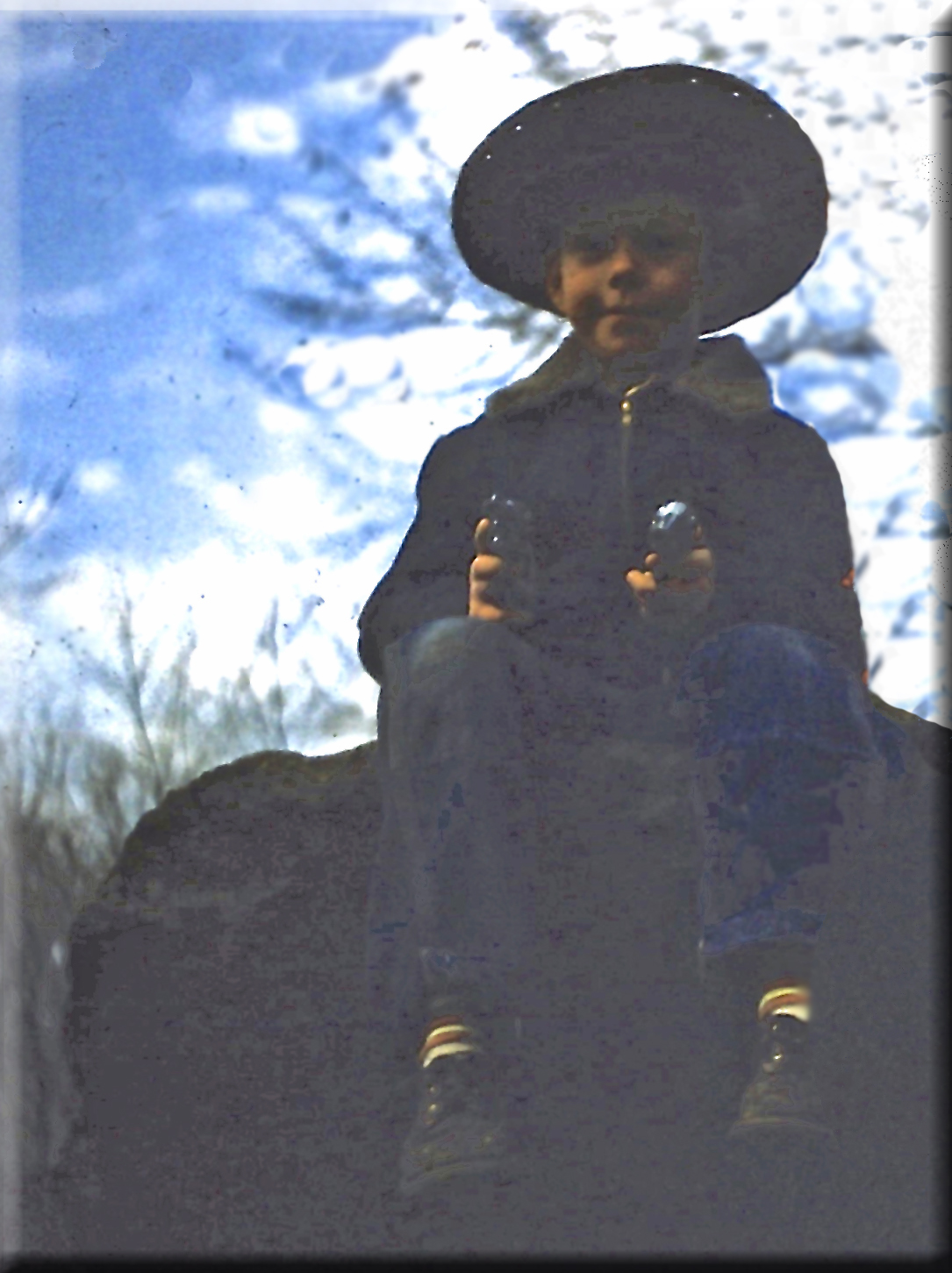
On the Rock with Guns

Photo: Circa 1954

Boys played the games of bad guys versus the good guys, and this play usually involved some degree of aggression, usually in the form of rough housing. If I complained to my mom that the boys were playing too rough, she would say, “Well, it’s time to come in then.” It wasn’t a girl’s place to get involved in fights and tussles. At some level, I thought that boys seemed less civilized than my girl friends because of their aggressive play and coarse language, which sometimes morphed into cursing.  Sometimes they could be outright bullies. If they were playing shoot ‘m up with each other, and if we wandered into the action, we’d be shot!

Occasionally, a story in The  Lone Ranger would include a woman. I remember secretly hoping that maybe the Lone Ranger or Tonto might find a girlfriend, and always somewhat disappointed, when they would ride off into the sunset again without a storyline that included a woman. Even at age 8, I realized something was amiss.

loneranger-guns

Got the guns, but where’s the girl friend?

The stories of the Lone Ranger became implanted in our consciousness, and Tonto and the Lone Ranger survive as mythic folk heroes for a generation of television viewers.  Children could not grasp the idea that the Ranger was a vigilante who had no authority to enforce the law and who used guns to impose his will. Instead what we seem to remember is that the masked man and his partner played respectful characters who courageously stepped into dangerous situations with the unselfish goal to stand with those who faced injustice.  As a young child, I guess I might have thought that any man who was that mannerly and courageous would wind up with a girlfriend . . . eventually.

“I Have a Thing about Trains”

IMG_4296

Growing up in the 1950s, our family always had a train under the Christmas tree. The train belonged to my father when he was a boy, purchased by my grandparents in the 1920s. Lionel #318 0040, manufactured in the years 1924-32, displayed realistic detail, including brass trim. Two sets of cars could be attached to the engine: a freight and a passenger set. The cars’ authenticity, including handles, lights, ornate railings and mock stained glass made them especially fun to play with as we would give our stuffed animals and dolls a ride in the cars. The little engine chugged along the tracks, making a kind of grinding sound, and a large-sized transformer provided the electric, occasionally sparking as we adjusted the switch.

The success of the Lionel Company making model trains for children mimicked the popularity of the railroads in the 1920s when train travel was central to transportation in America. Railroads carrying freight and people crisscrossed the United States. Train-hopping by hobos and migrants became a commonplace method for workers to move to new locations that promised jobs. This was the railroads’ Golden Era, and folks passed on myths and legends associated trains, such as Casey Jones and John Henry.  These folk songs became well-known in American culture, with the Wabash Cannonball one of favorites of country singers.

Now listen to the jingle, and the rumble, and the roar,
As she dashes thro’ the woodland, and speeds along the shore,
See the mighty rushing engine, hear her merry bell ring out,
As they speed along in safety, on  the “Great Rock-Island Route.”

Although rail travel is making somewhat of comeback today, folks think nostalgically about the old steam trains whistling across the landscape. So was our experience visiting the Strasburg Railroad and Museum in Lancaster, Pennsylvania. As we boarded the train, I noticed the striking interior of the car, with polished woodwork and decorative stained glass at the top of the windows.  As we rode along, the cadence of the wheels on the tracks produced a soothing rhythm as we watched the scenery glide by.

Maybe I’m a little sentimental cause I know that things have to change
But I’d still like to go for a train ride cause I’ve got a thing about trains.
Johnny Cash

A Corner in West Mount Airy, Philadelphia

IMG_2295

Greene Street and Carpenter Lane

Taking a writing course offered at the Big Blue Marble Bookstore led me into a community in West Mount Airy at the corners of Greene and Carpenter Lane. Despite the bleak winter afternoon, the community offered a warm atmosphere as the little shops that lined the streets invited me to stop in to visit. In addition to taking a writing course, I had also enrolled in a photography class at an art center in my community, so I had brought my camera along, as our assignment was to look for new shapes and textures as subjects.

IMG_2275With a fondness for restoration, I couldn’t believe my luck stumbling onto the Philadelphia Salvage Company. Suitcases and trunks piled on what looked like an old railroad cart, and metal cans spilled into the sidewalk. But I didn’t linger too long in cold. Upon entering the building, I noticed  a cast iron stove, pumping warm air through the building, as a tea kettle spewed steam from its spout. I warmed my hands and looked around, mesmerized by the array of architectural salvage, from stained glass, plumbing and electrical fixtures, antique doors and windows. In a second life, I could be a picker, as I love all the old stuff in need of a fix-up.

The Salvage Company celebrates a doggie visitor as their “mascot of the day,”  and I understand that a sleepy cat sometimes occupies the front bench.

Tea Pot Frame

I found lots of subjects for my photography assignment.

This slideshow requires JavaScript.

One subject seemed to deserve special attention: a shelf of different sized gears.  The photograph of those gears inspired this blog post, and three months later the photo won first place at the Community Arts Center!

Across the street from the Salvage Company, dogs waited patiently for their owners grabbing a bite to eat at the High Point Cafe. Chilled by the damp air, I stopped in for a cup of coffee. I was not disappointed as the coffee was excellent, in addition to their selection of pastries. The Cafe refers to their corner as a village and “are proud to be part of one.”

IMG_2289

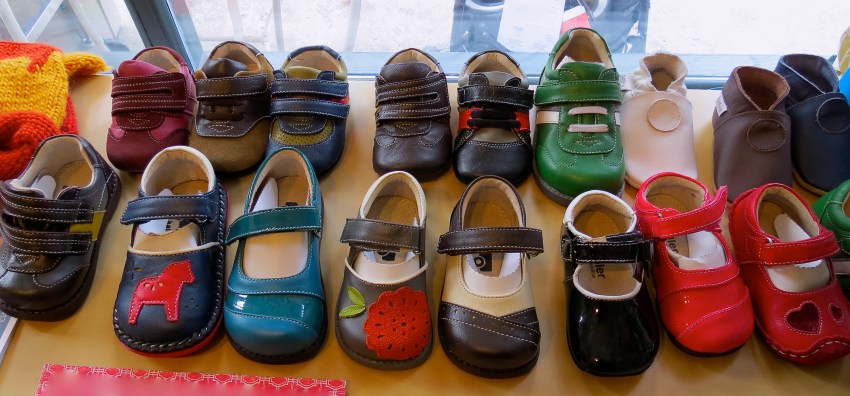
One store down from the Cafe, the Nesting House specializes in selling new and used baby items “with an aim to uphold a mission of social and environmental stewardship.” They sell cloth diapers and used clothing. I found a little pair of shiny dress shoes for my great-niece.

IMG_1943

Crossing over to the corner, I opened the door to the Weavers Way Co-Op, and met with crowds waiting in line to make their purchases. Deli aroma filled the air, and signs advertised hot soup for sale by the cup. According to co-ops website, they sell products that are “local, sustainable, organic, fairly traded and healthful.” It’s a small, two-story compact space, and yet they had annual sales up to $14 million.

IMG_1945

A Huge Assortment of Bulk Items

I picked up some fresh vegetables and loaf of bread and headed to my destination, Big Blue Marble Bookstore. This store reminded me of the book shop restoration I had been part of years ago at Bindlestiff Books in West Philly. An independent book seller, the shop displayed a fantastic collection of children’s books and places for kids to sit and consider what they might buy. Toys and stuffed animals filled every corner. A cozy space, I lingered in the travel section before heading upstairs to my writing course. The store sponsors events including book clubs that can use their community space.

IMG_2171

The progressive leanings of this corner village come from a long history of neighborhood harmony. According to Wikipedia,

The area is recognized by many civil rights groups as one of the first successfully integrated neighborhoods in America. Mount Airy residents organized to resist blockbustingpanic selling, and redlining, especially during the period from the late 1950s to the early 1970s when those practices were prevalent. It continues to be a well-blended neighborhood and was recently cited in Oprah Winfrey’s O magazine for its racial diversity and neighborhood appeal. The community has also been recognized by US News & World Report for racial harmony and balance.

The harmony in their neighborhood stands in contrast to what the big-box stores offer. In this post, Mystique of the Ole Fashioned General Store I compare the general store of years gone by, which served as a community anchor, with the big-box store of today, which, in contrast, offers little neighborhood involvement or esthetic appeal.  According to a study conducted by faculty at Penn State, big-box stores coincide with hate groups. Mount Airy demonstrates that progressive values provide the small-town American atmosphere we long for in this country. It’s as simple as having a welcoming street corner in your neighborhood.

The Bumper Book: Enchanting Stories from Childhood

Bumper BookWhen I was a child, the book I treasured most was The Bumper Book: A Harvest of Stories and Verse. The condition of my book would not command the $350 that this vintage edition is selling for on eBay: the binding is gone, pages are torn and the cover is well-worn. Published in 1946, and given to me for my fourth birthday, these stories, fables and poems were my bedtime companions. “Wynken, Blynken and Nod” by Eugene Field, “Animal Crackers” by Christopher Morley and “The Swing” by Robert Louis Stevenson were some of my favorites. The colorful illustrations, printed on heavy glossy paper, fascinated me, drawing me into the stories because of the sweet depictions of the children in their vintage clothing.

 W, B, and Nod2

Thoughts on Anachronisms

One particular poem featured vignettes of the days of the week, illustrated with a little girl doing chores for each day. Around the turn of the 20th century, women’s chores were assigned a day of the week, as described on the blog, A Hundred Years Ago. When I was a child, I loved play houses, and the settings in these illustrations seemed to take place in child-sized surroundings. I marveled that somewhere children played in these finely crafted miniature homes.

The Week’s Calendar

Monday, Watch the bubbles fly –

Monday

Tuesday, See the wash get dry –
Wednesday, Mend with all our might  –

Wednesday

Thursday, Make things clean and bright –
Friday, Bad for dust and flies  –

Saturday

Saturday, Good for cakes and pies.
Sunday, From all tasks we’re free
After church we have our tea.
–Frances Heilprin

Because the little girl was cleaning and cooking in these picture frames, I wonder about the message that gave me about preparing for the eventual role of running a house. And then I wondered again, was that such an unfortunate model? Regardless of our path in life, we do have to take care of a home, either as a single person or with a partner and children. Of course, the drawings would have been more socially progressive if she had a boy to help out.

In our hierarchy of important jobs, our culture views work inside the home as a lower value. Yet today, with so many demands on our time, managing a home is a difficult responsibility. Cleanliness, orderliness, household finances and meal preparation offer considerable challenges. Work inside the home is the glue that keeps any society held together. This is honorable and necessary work that is best shared by all in the household.

PICT0017 - Version 2

My  laundry circa 1949.

Question: Artistic Greatness

Eulalie Banks, a British/American illustrator, born in 1895 and who lived to be 102 years old, did all the artwork in the book.  In her obituary, Nicholas Tucker wrote,

Eulalie Banks illustrated over 50 children’s books during her long lifetime. Never a great artist, she was always a popular one.

Interesting how the terms never a great artist, fill the second line. Really? I’ve seen many testimonials on the Internet to the Bumper Book, as adults reflect on how the stories and artwork became part of their childhood. Many, like myself, read the stories to their own children. The delightful illustrations offered a window into a rich fantasy world, enhancing the writing of the authors and poets. Conventional interpretations of greatness rarely include the breadth of experiences of children, which would lead to wider interpretations of artistic influence and “greatness”.

More on Antique Books

Children’s Books Online: The Rosetta Project: Largest Collection of illustrated antique books on-line . . . we think.

Literature with Girls as Strong Characters

Strong Girl Character: Middle Grade and Young Adult Novels


Briarhill Road, Springfield: Looking Back

Map

When Springfield was founded in 1686, most of the residents were farmers. In the 20th century, developers bought up most of this farmland, and our little neighborhood was carved out of the land for the growing post-World War II population.
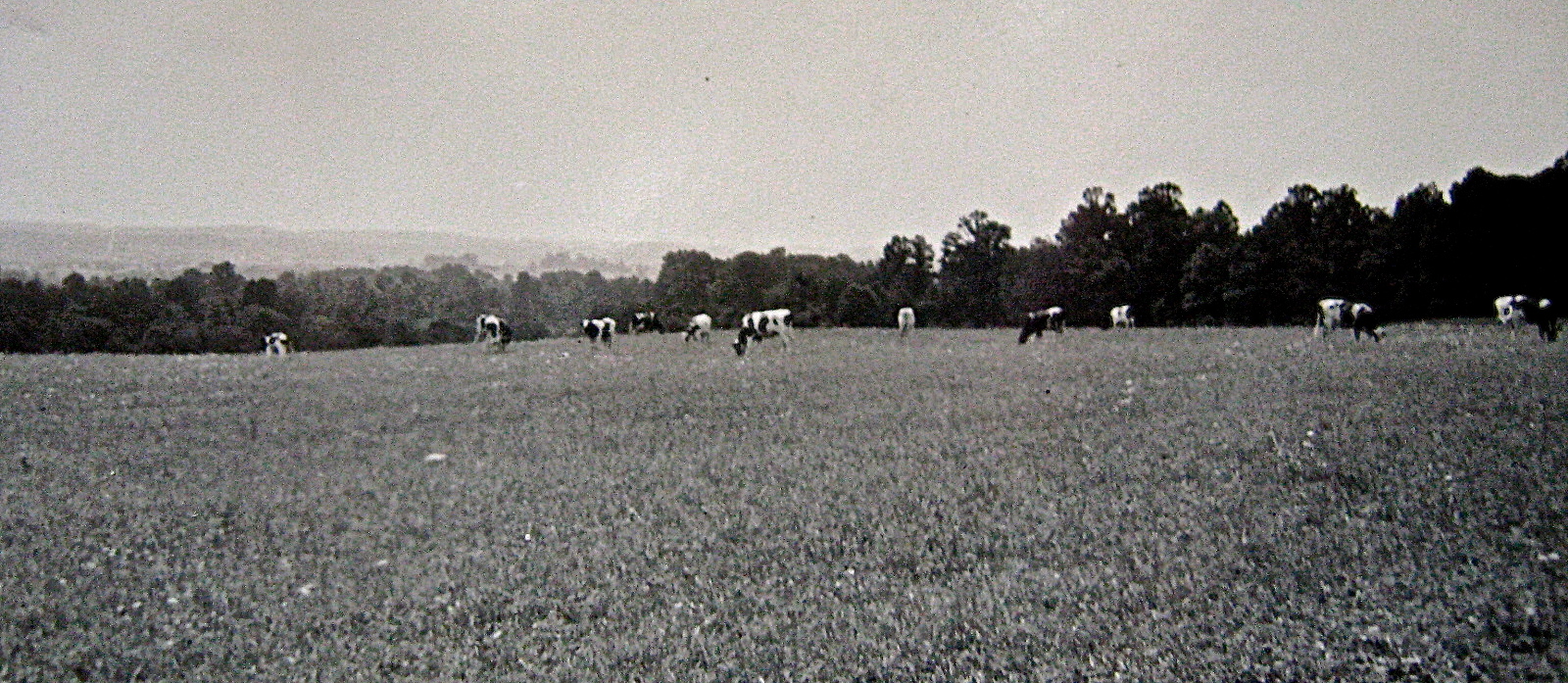
Farming in Springfield c1930 from the Collection of Joan Gripshover

Farming in Springfield c1930 from the Collection of Joan Gripshover

Fall 1950, A Neighborhood Emerges
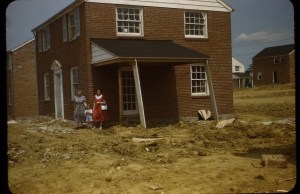
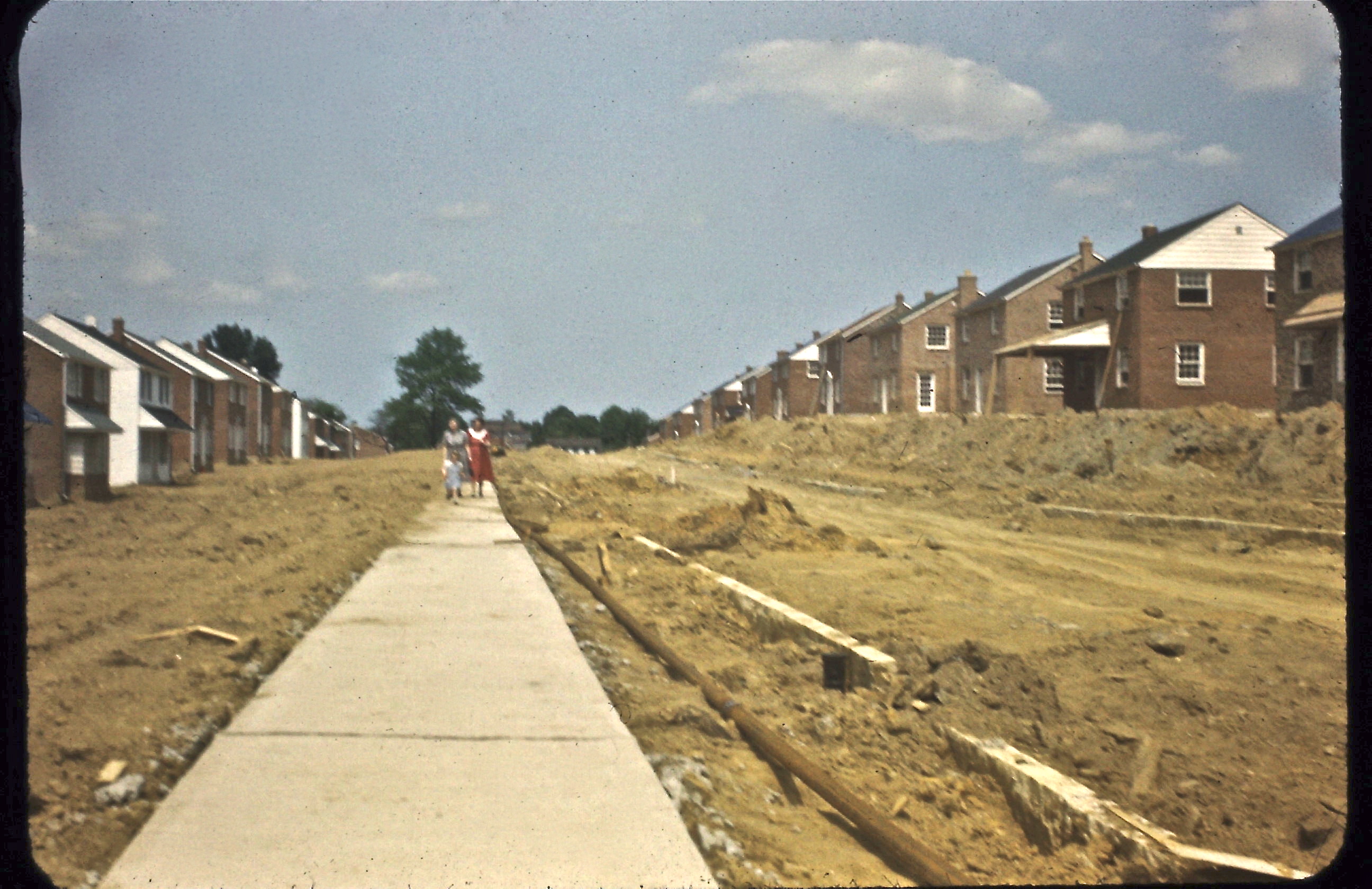
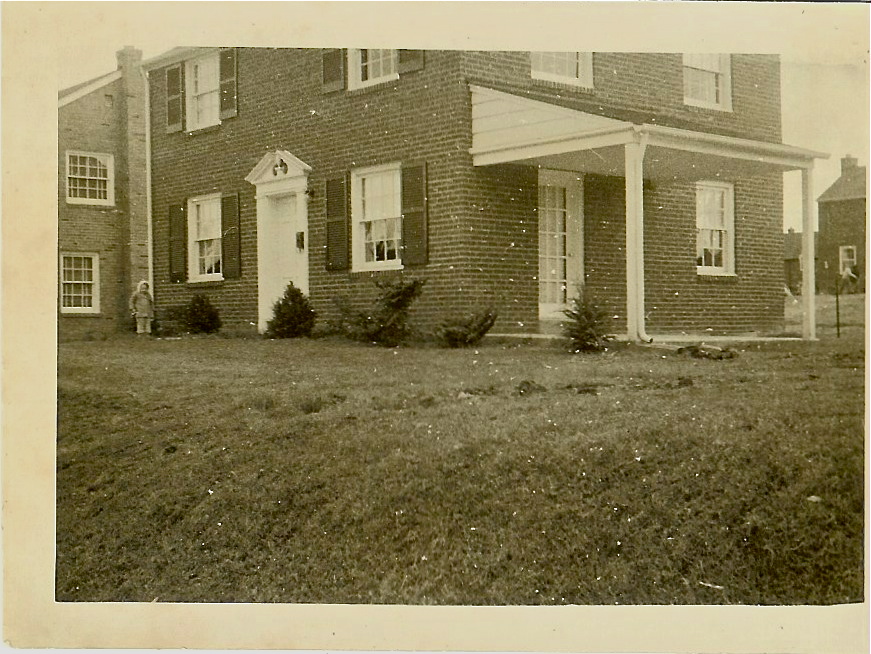
Memories of my childhood began to focus when my parents purchased a house on Briarhill Road, Springfield, Pennsylvania. Most of Springfield had been farmland, but the demands of the baby boom generation changed the landscape as families began to look for housing in suburbia. Woodview Farms, the name given to the three streets in the development (Briarhill, Wheatsheaf, and White Oak) formed a circle with one flat side, the hill at White Oak. The developer flattened the land, leaving only a few older trees here and there. Our home was the fifth one up on the left side, purchased for $11,500. My parents paid an extra $500 for the side porch. About 2 1/2 years old, I’m standing next to Mom, a few months before she delivered my sister in October. Mom, drawing from her Scottish legends, always believed they would have good luck with this home, as a cricket greeted them on the steps.

These houses were typical of the box colonial style that builders relied on for quick production and ease of construction. Local ordinances required that the builder vary the styles, at least slightly. Some houses were painted white, and some had patios or porches on the front or side. The houses on White Oak had garages built into the front. However, many construction-related problems surfaced fairly quickly for the new residents. As a result, the neighborhood established the Woodview Farms Civic Association to address their grievances collectively. Later, the Association served as a social organization, planning 4th of July parades and other celebrations within the community.
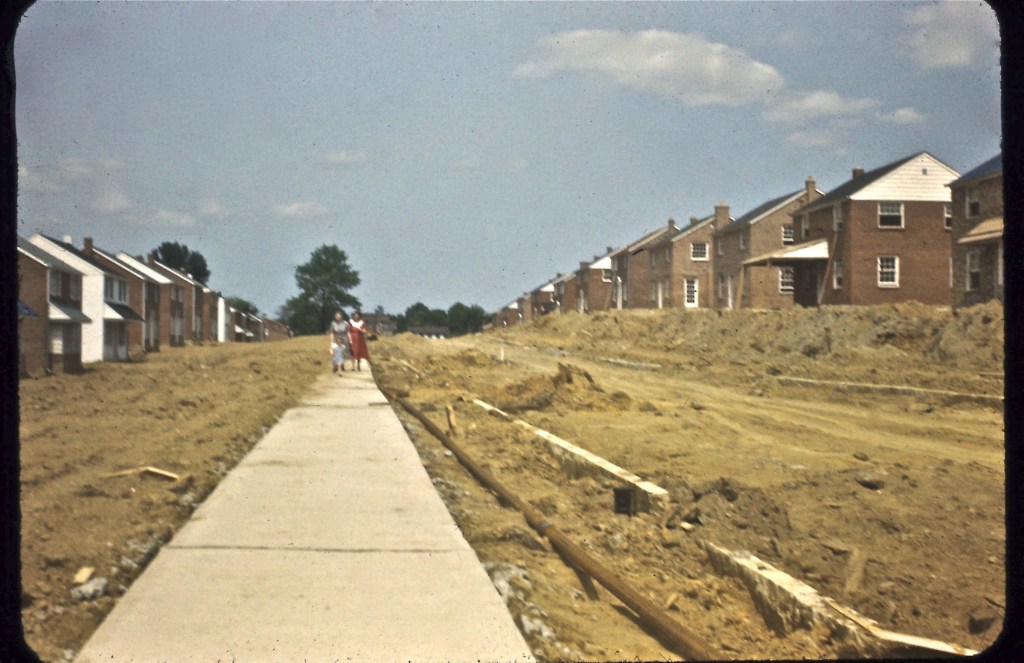
In the picture above, we are walking away from our house, about halfway between White Oak hill and the curve into Wheatsheaf. Woods lined the back of the homes on the left side almost to Woodland Avenue. By the time my sister was born on October 15, 1950, the grass had been planted, along with a few shrubs along the front, included in the sales agreement. Every house had two evergreens on either side of the front door. Note the lack of automobiles on the street. A working-class community in 1950, most families did not own a car.
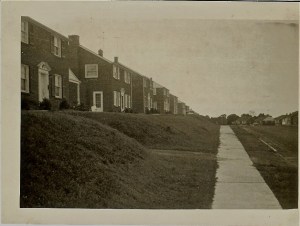
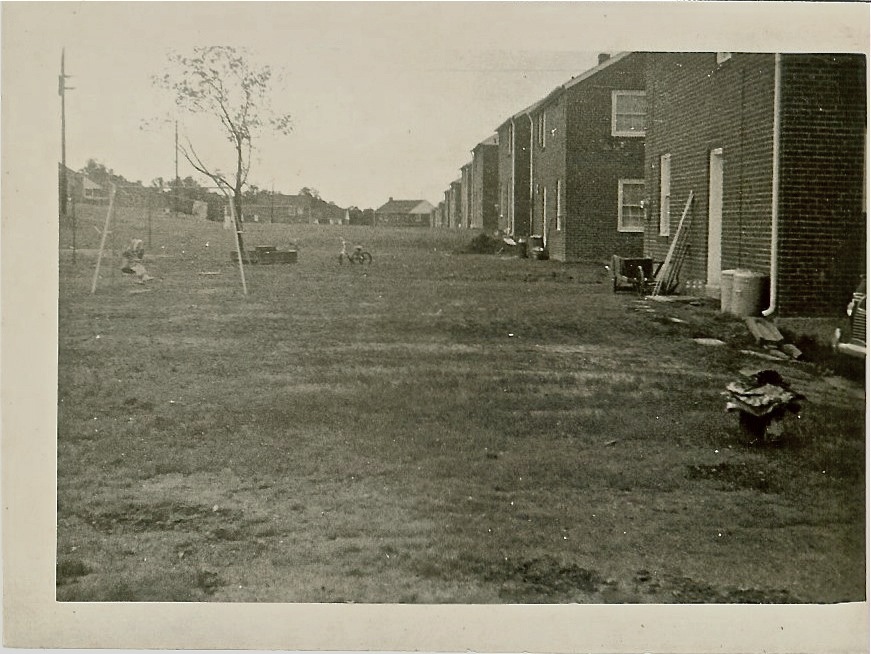
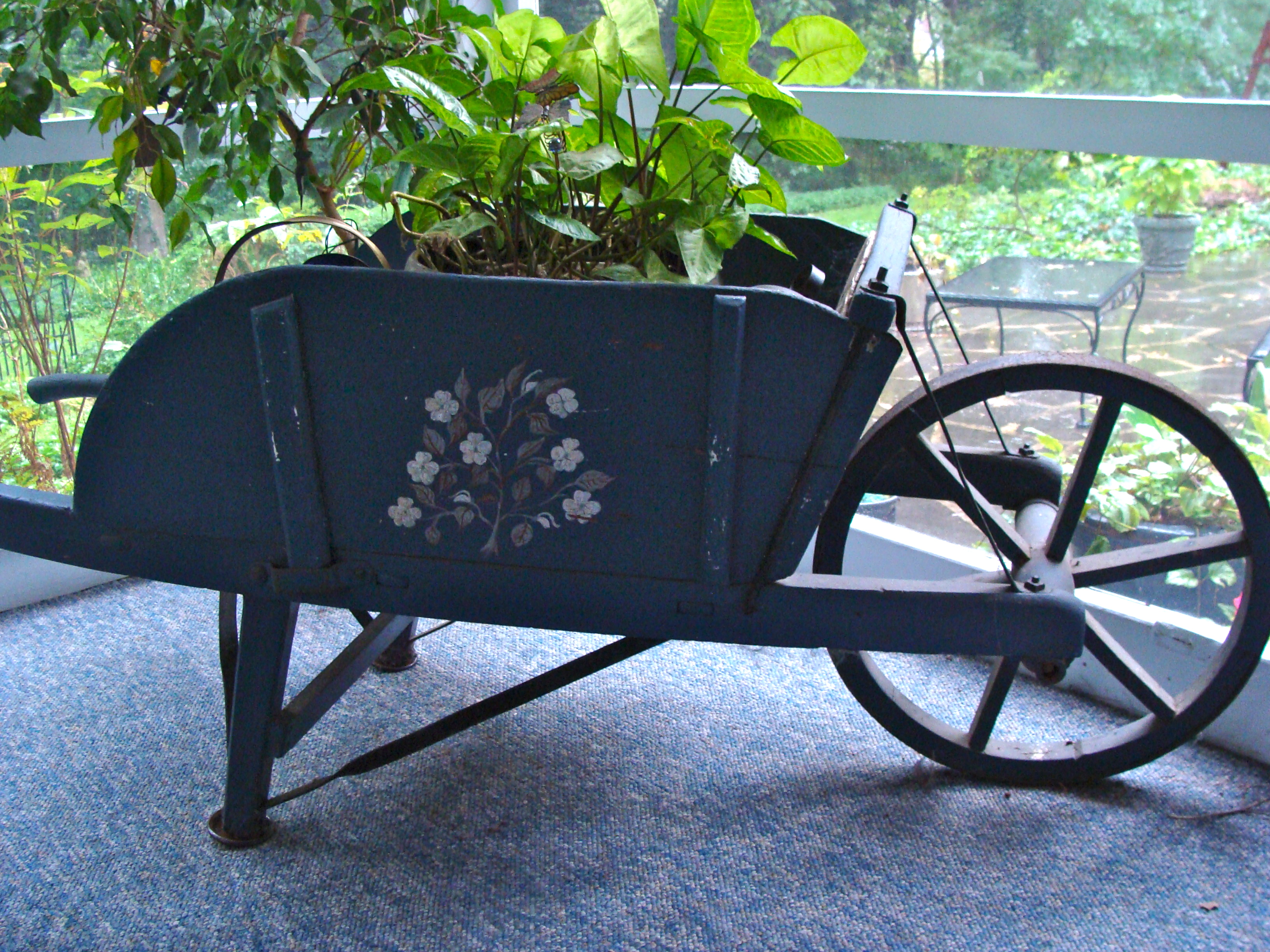
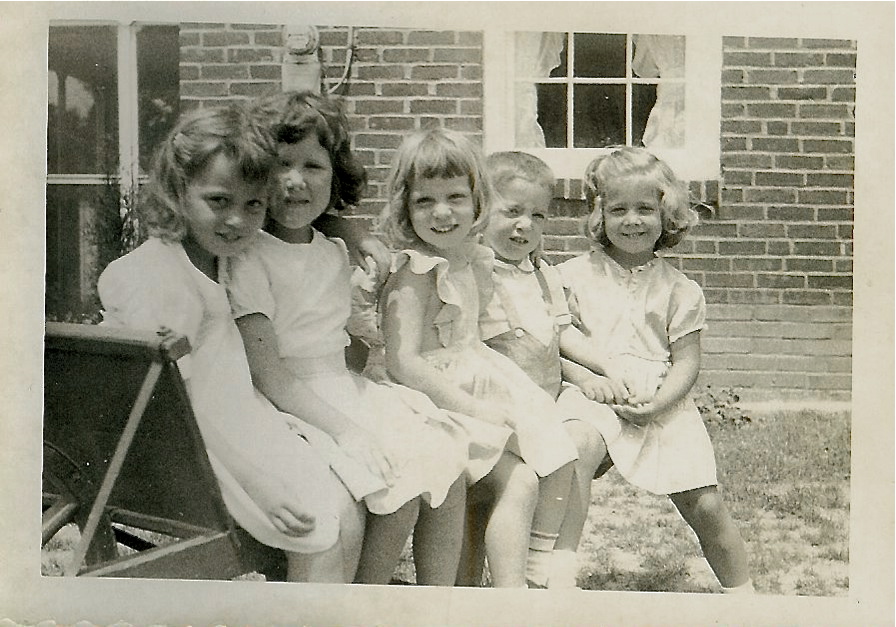
This photograph was taken in our backyard, from which we could view every house in the inner circle. I still have my Dad’s wheelbarrow, which is parked along the back of the house.
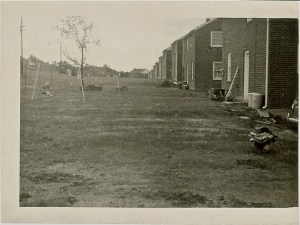
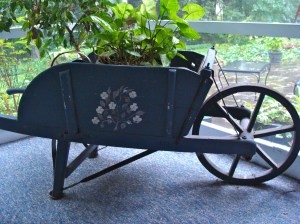
Wheelbarrow 2011

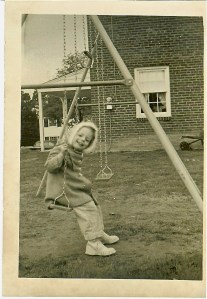
I believe I might have been the first kid on the block with a swing set. The 50s had arrived.
Commerce Corridor on Woodland Avenue

A sidewalk cut through our neighborhood to Woodland Avenue, Route 420, a major roadway to town east and to the airport. At the end of the sidewalk on the left stood the Woodland Inn, a rustic bar that had been in that location for years. Once, I fell off my bike in the parking lot, with the resultant bloody knee and elbow, and the kind bartender gave me a band-aid and a ginger ale. In the late 1950s, developers built a small strip of stores on the field on the left side of the sidewalk. Many businesses, including a toy store, hairdresser, orthodontist offices, and M&M cafe went in and out of those shops.

Trolley Stop Woodland Avenue

Trolley Stop Woodland Avenue 2014

The Red Arrow Line trolley stop was also on Woodland Avenue. Access to public transportation was important so Dad could commute to his workplace at the RCA plant in Camden, New Jersey.

Planted on the other side of Woodland Avenue was another older strip mall. Patler’s Pharmacy and soda shop occupied one corner and was a favorite place to hang out. Inside, a soda station supported a row of swivel seats with green vinyl covers, and we could get the best milkshakes, made the old-fashioned way with milk and ice cream stirred up in one of those mixing machines. As Kathy notes in the comments below, cherry and chocolate sodas were the best-tasting drinks ever. Mr. Patler would stand behind high wooden cabinets supporting bottles of medicine. The pharmacy was still in business in 1979. I went in one day with my son, John, and Mr. Patler was so taken by him, that he gave him a toy clown.
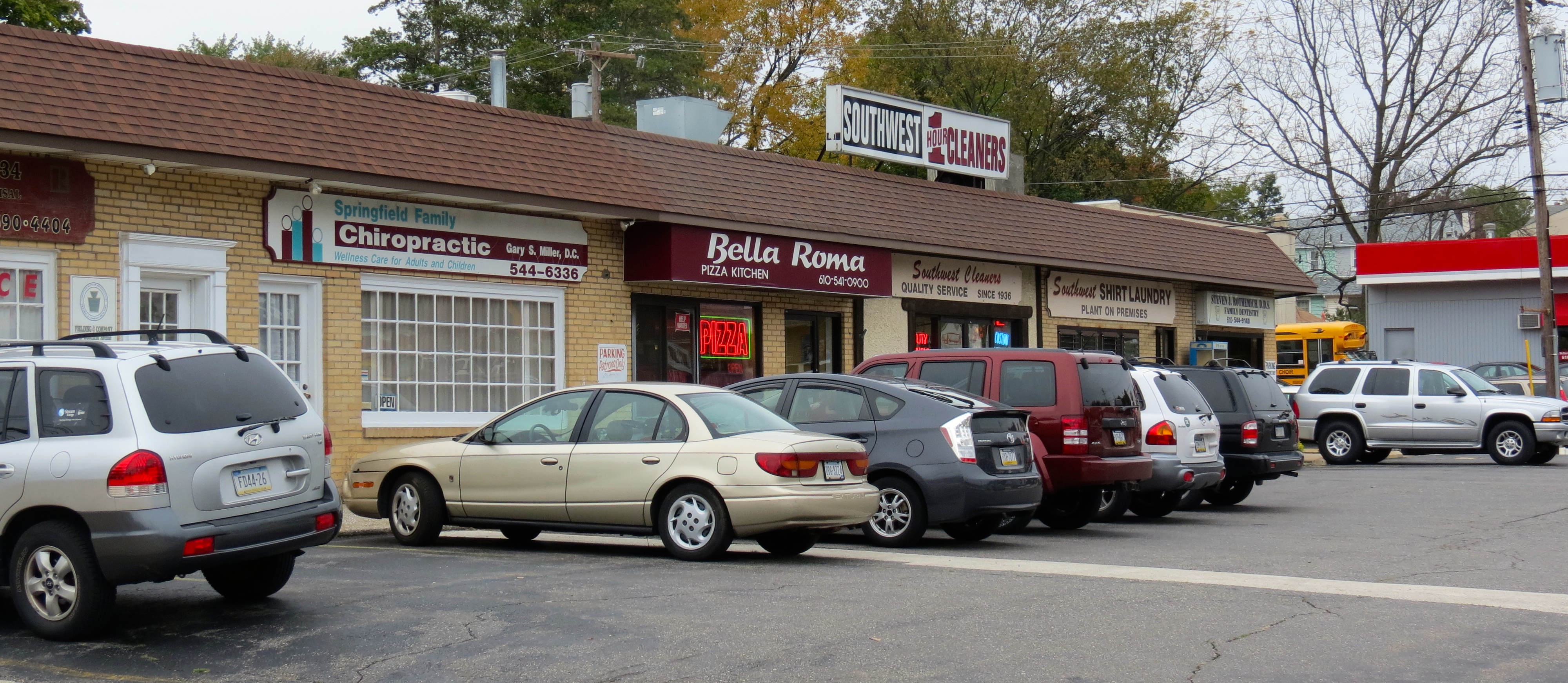
Photograph taken 2014, exterior, much the same, with different stores.

Photograph taken 2014, exterior, much the same, with different stores.

In the middle of the strip, a convenience store sold groceries and cold cuts. Mom often sent me there to buy lunch meats and rolls. However, I was under strict orders not to buy any candy.
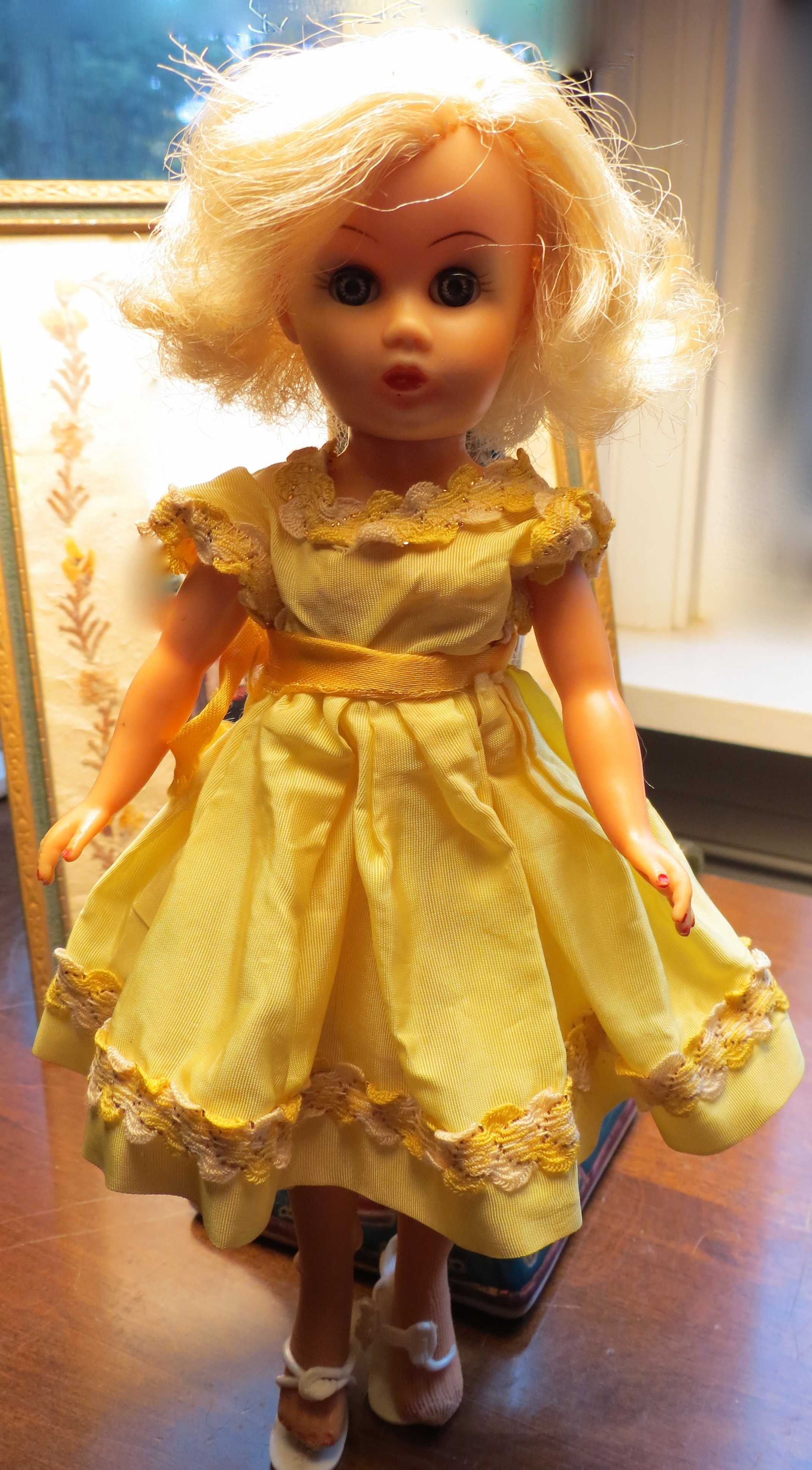
Doll in yellow dressNext door, Carter’s Hardware Store displayed toys and home and garden tools in their window. As both Joan and Kathy remarked in the comments, Mrs. Carter was known for her gift-wrapping skills. We would find any excuse to browse around the store, as Mrs. Carter artfully displayed dolls and their fashions in wooden cases with glass windows. Playing with our dolls, especially the 6-inch Madam Alexander or Ginny dolls, was a favorite pastime. We then collected the high-heel fashion dolls, the precursor to the Barbie dolls that followed later. I specifically remember buying this yellow dress at Carter’s because I debated for so long as to whether to spend the money.

One Year Later, Summer 1951

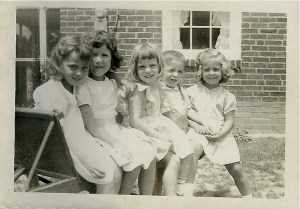
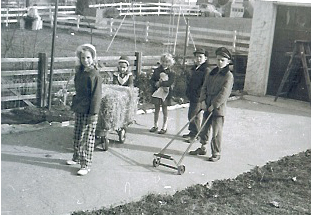
By the time the next year rolled around, neighborhood children had become playmates. I’m sitting center on the wheelbarrow, and Joan, my long-time childhood friend, is sitting on the left. Joan and I are still in contact today. Paul and Mary, the two children on the end, lived next door to us for a few years.

I wonder about girls playing outside while wearing dresses. Maybe it was a Sunday? In the post, 1950s Retrospective on Children’s Fashion: Petticoats and Mary Janes, I reminisce about what we wore back then. In the second photo just behind Paul, a hand lawn mower rests propped against the house. I remember that my Dad had one, too. What was nice about these mowers: was no noise.
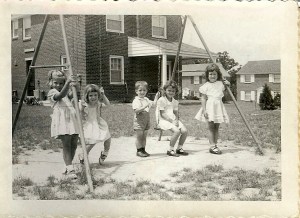
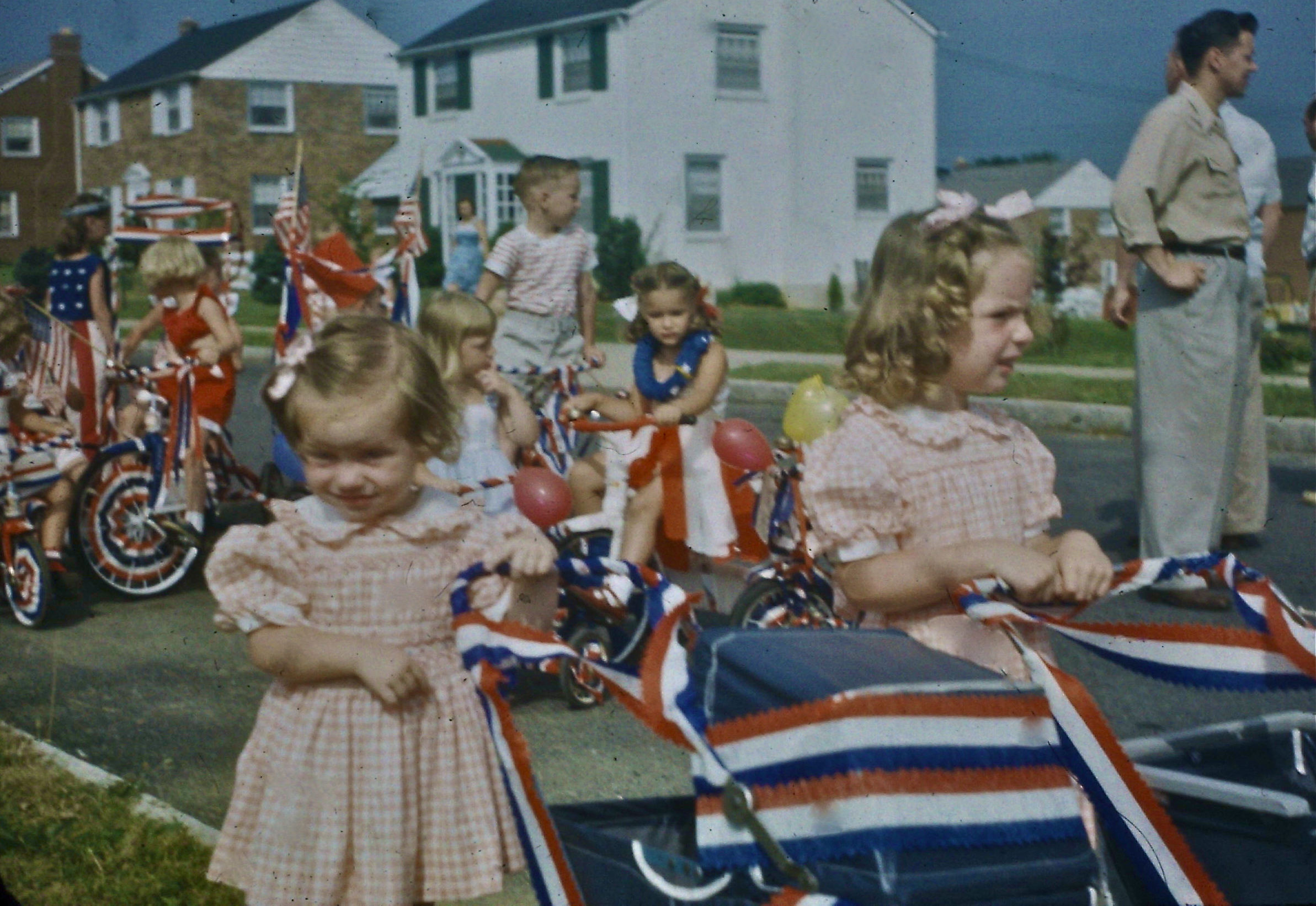
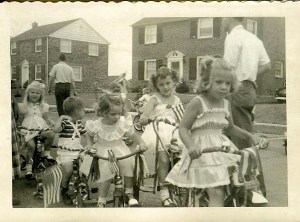
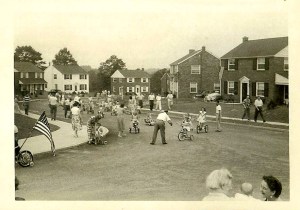
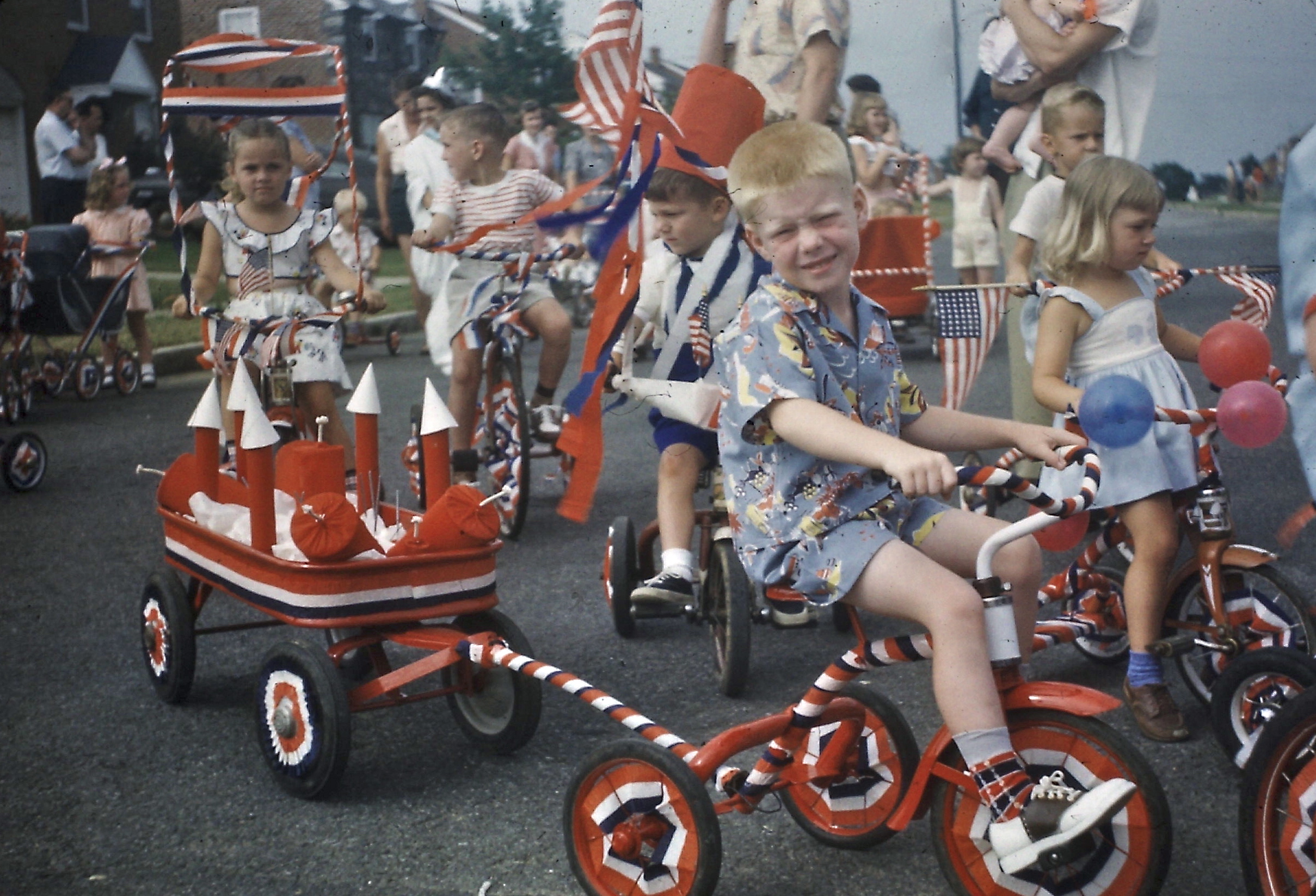
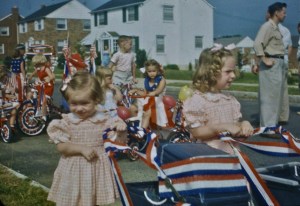
During the summer of 1951, the neighborhood organized its first 4th of July parade for the children, and the tradition continued for at least 50 years. My Dad took these pictures on Wheatsheaf.
1952, The Year of the Fences

Two years into the neighborhood formation, fences sprung up, including the dreaded chain link, the bane of aesthetic sensibilities. Is it true that the smaller the plot of land, the more likely people feel compelled to demarcate their territory with a fence? Our next-door neighbors had added a room off the back of their house. Dad had begun the process of building our garage as the stakes in the ground marked the footprint. In the color picture below, taken a few months later, piled cinder blocks and other construction materials show up in the yard. Our 194? Plymouth sits on the recently poured concrete driveway.
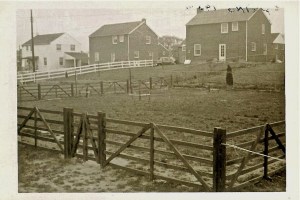
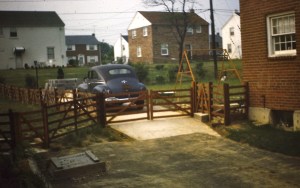
Plymouth had a running board.

The 4th of July parade that summer had the usual decorated bikes and doll buggies, but David, a neighbor from across the street, upped the ante by including a float. The Association was now awarding prizes.
1953 Halloween

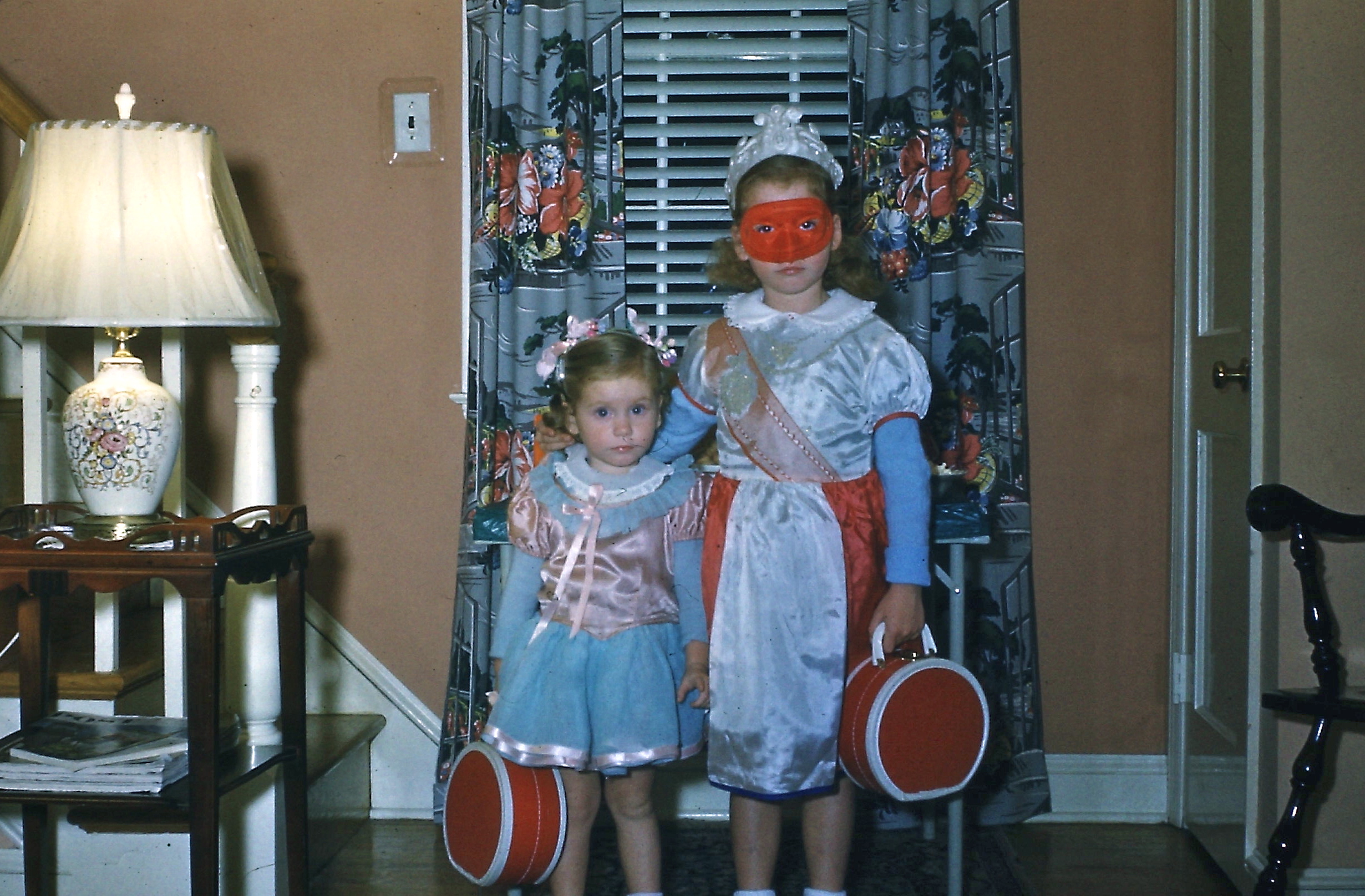
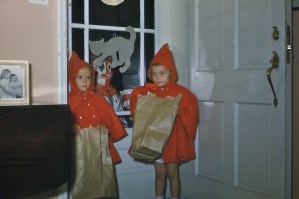
By 1953 Halloween was well-established as a neighborhood tradition. The twins, Carol and Janet from next door, arrive to collect their treat with a few others standing behind the door. Jean and I modeled our store-bought costumes, but I was not very happy because Mom insisted that I wear a sweater.  Everyone knows that a princess does not wear a sweater under her gown under any circumstances! Thus began my compulsion about clothes that don’t match.
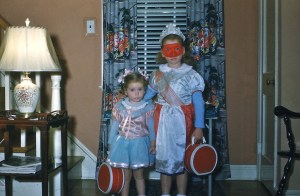
This next picture triggered a memory about wallpaper. Homeowners had a choice of having their walls painted or wallpapered.  The choice of wallpaper was considerably cheaper because the builder did not have to “finish” the walls for painting.  The wallpaper was always a choice Dad would regret as scraping it off was tedious and time-consuming. While on the subject of interiors, the television set appears central to the living room. I’ve written several blog posts on television westerns during that time: Lone Ranger and Tonto: A Nostalgic View and Modern Critique and Lone Ranger on Television: Reflections on My Childhood.

That same year Mom and Dad gave us two bunnies. The neighborhood now included cats, dogs, and other assorted animals. Mom had a goldfish bowl that sat on our kitchen window.  One of our little rabbits lived for twelve years.

1955 Halloween Party

Because my sister’s birthday fell on October 15, we usually had a birthday costume party inviting our neighborhood friends over for a celebration.

4th of July Celebrations on the Block

The Civic Association usually arranged for a portable merry-go-round to be part of the neighborhood’s 4th of July celebration. Although the ride only lasted a few minutes and was certainly a miniaturized version of any other merry-go-round I had ever been on, nevertheless I looked forward to this ride every year.

Backyard

Playing in the backyard. Note the fireplace in the top, left corner.

School Days (Link to Springfield Class of 1965)

Most of the children in the neighborhood attended Central School on Saxer Avenue, and some went to the Catholic school at St. Francis. We walked to school, which was about three blocks away crossing at the light on Woodland Avenue. Built in the 1920s, each classroom opened with oak doors and hallways lined with woodwork trim. Each room had a huge walk-in closet for coats and boots. The cafeteria in the basement served hot lunches and milk in little glass bottles. The township demolished the school in 1978; a sports field occupies the space now. A Facebook page for Central Schools Alums is located here with pictures of the grand stone building. In those days the fire station’s second floor housed the public library across the street from Central School. This site has several pictures of the firehouse as it looked in the 1950s.

Miss. Symon’s First Grade Class, 1952-53

As a result of the housing boom, the district built a new elementary school, Sabold, on Thompson Avenue. Because of the street crossings, we now had to take a bus. The new school had new features such as a sink and bathroom in every classroom, and we each had our own cubby hole. A rack served as a coat depository.

Third Grade Classroom

Third Grade Classroom at Sabold

On Briarhill Road

On the front steps of Sabold School

While attending Sabold, I became fascinated by two of the school’s neighboring properties. One was the Blue Church, the oldest standing church in Springfield and the adjacent graveyard; and the other was the mysterious research building behind the chain link fence, which defined the school’s boundaries. Students were absolutely forbidden to walk through the church property, but I couldn’t resist wandering through the gravestones looking at the names and dates. I also could not stay away from the small woods that followed along the chain link fence beyond the playground. I always loved any woodsy area, poking under rocks and studying the trees. That area served as a refuge from the schoolyard dramas. The mysterious L-shaped building, surrounded by trees, loomed on the other side of a high fence topped with barbed wire. Years later I found out it was indeed some kind of research facility. The building was eventually destroyed and the woods cleared for the shopping center where Gernardi’s now occupies that space. (More to come on the subject.) Ironically, I wound up working across from Papazian Hall at Swarthmore College, which was linked to the building behind Sabold. More information at this link.

Mrs. Boyer's 6th Grade Class/Springfield HS Class of 1965

Mrs. Boyer’s 6th Grade Class Sabold School/Springfield HS Class of 1965

Neighborhood Life 

Not long ago my neighborhood friend, Joan, wrote . . .

I have such sweet memories growing up in Springfield.  Every season had it’s specialty, from bringing May flowers to your special teacher, to the acorns that crunched underfoot walking to Saxer Avenue in the Fall.  And remember those winters when we lost power but played merrily in the snow, sledding down Wheatsheaf and building forts.  Or just simply lying on our front lawns in summertime watching the clouds pass by…where does one begin!

I have written about children’s books and our favorite toys at these two links. If you lived in Delaware County, these Facebook pages, The Golden Mile, Delco 19064, Delco Memories, Delaware County PA History and I Lost my Cookies at Playtown Park display pictures of Springfield and area in earlier times. Video of Playtown Park at the link.

By the late 1950s, more cars began to fill up the driveways and streets. Still, most families did not own two cars as the majority of the moms on the block did not work outside the home. This was still the era where the breadman and milkman delivered to the back door. They drove snub-nosed square trucks with bifold doors. The bread man would carry a huge tray of bakery goods. We always begged Mom to buy the glazed donuts. Milk came in glass bottles, and we had a special little shelf at the back door where mom would leave the empties for pickup. He would also bring to the door eggs, cream, and butter.

During the summertime, the neighborhood received regular visits from the Good Humor truck, ringing its bell in the early evening. Kids would run out to catch the truck. Couldn’t wait for that Orange creamsicle. The DDT sprayer vehicle usually made an appearance in early summer. Mom cautioned us to stay away from the spray, but other neighborhood children would ride their bikes behind the truck and in one case, one boy passed out while following after the cloud of pesticide.

Each household was responsible for burning its own trash, so every home had a fireplace in the back corner of the yard for this purpose. Most of the trash was cardboard and paper. Once I remember Mom telling Dad that she almost caught her coat on fire trying to light the match on a windy day. Each house also had a receptacle built into the ground for garbage. The township established strict regulations on what could be thrown into the pail. Once a week or maybe twice, the long, green garbage truck would come through the neighborhood. African-American men would carry the pail on their shoulders and heave the contents into the open truck, which we tried to avoid because it smelled so bad.

Sledding on White Oak Hill 1955

Sledding on White Oak Hill 1955

Pools: Backyard and Community

Our first “swimming pool” was a metal sandbox, which held about three inches of water. The plastic, blow-up pools became popular, and the kid who could fill their pool with six inches of water or more commanded status. Through the years, these pools morphed into holding one and two feet of water. David’s parents bought such a pool, and we were in awe. In the 1960s a few neighbors installed in-ground cement pools. These were the days before air-conditioners, and summers could be long, dry, and hot.

Pool

Springfield had no shortage of community pools, and many of the children in our neighborhood learned to swim at the Palm Beach Swim Club, which actually dated back to 1928, built on the corner of Baltimore Pike and Woodland Avenue. In addition to the Springfield Swim Club, another pool was located off of Rolling Road. We belonged to Drexelbrook, which had a separate deep-end pool. Only the Springfield Club remains in operation today.

Construction of the Middle School

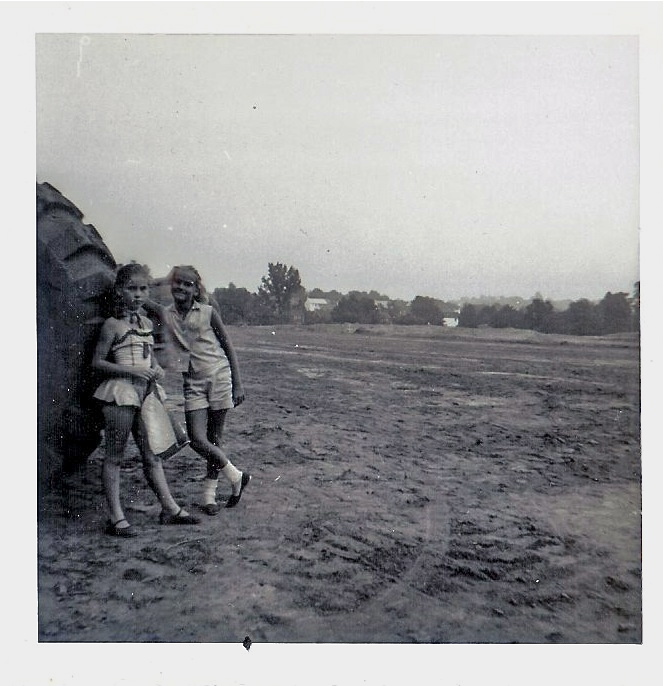
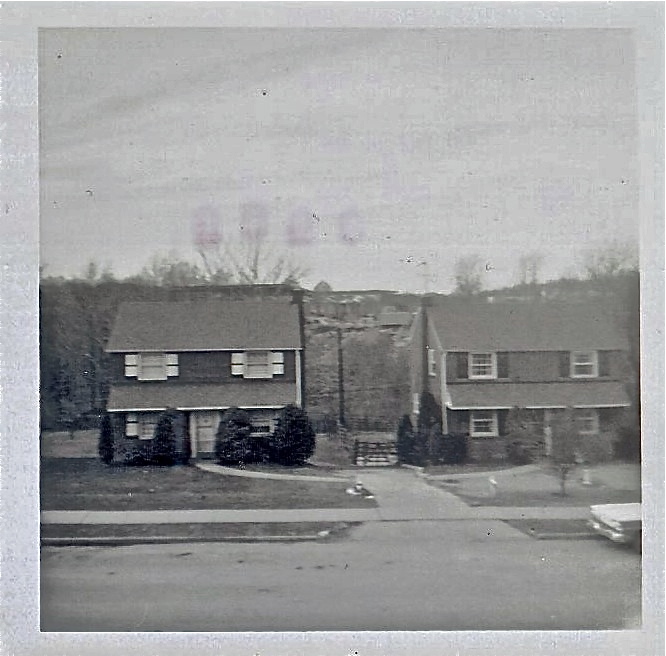
Around 1958, the school district began building the middle school on the plot of land next to our neighborhood. I believe an old tavern on was all that occupied the field. A wooded area lined the field. We were forbidden to venture into those woods, but occasionally we would climb down the neighbor’s embankment and over the trolley line to the path through the forest. If we made it as far as the creek, I considered the venture a success. For me, it wasn’t about being defiant but rather finding the woods so enchanting, drawn to the canopy of trees and the streams. As construction began, my father suggested that I take some pictures before the land transformed into a schoolyard. With my Brownie camera and friends in tow, we walked over to the field. The first picture, taken looking towards Woodland Avenue, shows the field just as the bulldozers began to flatten the land. The tavern still stands to the left, although difficult to see.

In this next picture my sister and our friend and next-door neighbor, Carol, stand by a tire of the land movers. The middle school was eventually named for Carol’s uncle, E. T. Richardson, who was the principal for many years.
Last photograph shows the view of the school construction from our second story window.
4th of July, 1958

Joan, Jean, and I welcomed Alaska as the 49th State during the neighborhood 4th of July parade. Joan was “Miss Arizona” and I was “Miss New Mexico,” the last two states previously admitted to the Union.

The Six Stars

Not long ago, Joan sent me a reminder of our days back on the block . . . a little note I had written to her, and she had saved for 50 years!
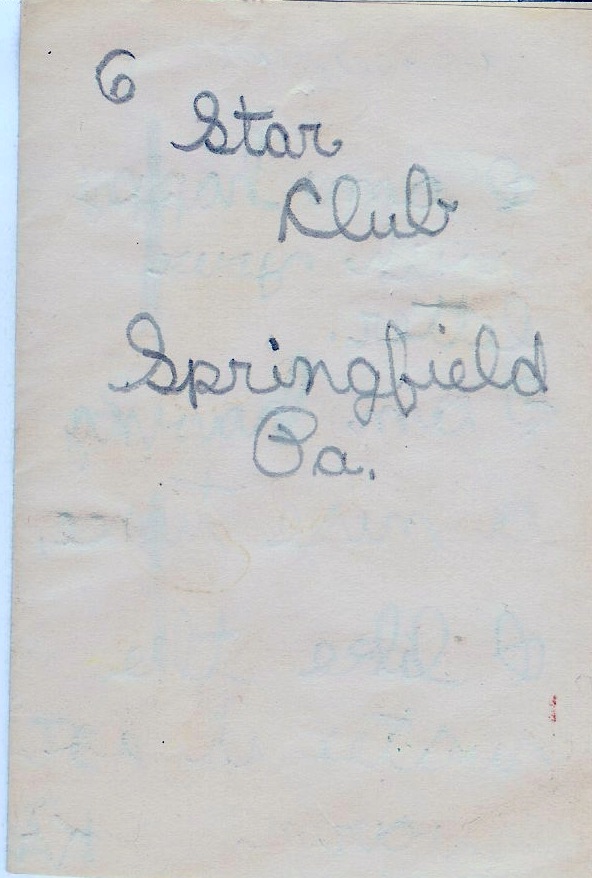
Back then we formed our own kids’ club and named it “The Six Stars.” Some of our more ambitious projects involved putting on plays in our basement or garage. We prided ourselves in having real costumes, scenery, and music. Disney movies served as our inspiration, and the photograph below shows us taking our bows during the curtain call for Sleeping Beauty. We had to bribe David to play the part of the prince and remind him he was not to jive the crown by tilting it to the side. For some reason, I remember I forgot to remove the chandelier during the scenes in the forest. Parents contributed cakes and cookies, served at the end of the performance. My mother didn’t allow us to sell tickets as she felt it unseemly to charge friends and neighbors.

In addition to the plays, we had great fun recreating our own versions of the adult world. We assembled a train car, school, tunnel world, and jungle land. Building little houses out of anything we could find lying around the garage was our favorite project. We were frequently accused of constantly making messes, but these were our artistic creations!

Janet, Jean, Carol, David, me, Joan

During the summer, we sometimes would go off to camp, Jean with the twins to Girl Scout camp, Hidden Falls, and for me, Nik-O-Mahs in the mountains of central Pennsylvania.

Speaking of Stars, Dad gives Astronomy Lessons to Girl Scouts

Thanks to Dorothy’s note in the comments section about my father’s astronomy lessons for our Girl Scout Troop 665, for us to earn our star badge, I remembered that I had a newspaper article from the Philadelphia Bulletin, “Girls Get Own Planetarium.” Dad would set up the planetarium in our living room, and with a homemade pointer, he would name the star in the constellations. Marilyn, in the photograph, lived in our neighborhood, as well as Dorothy, Joan, and Tacy, mentioned in the text. I still have Dad’s telescope, which he assembled, and then built wooden the stand. 

Dad with Girl Scouts

Going back a few years to when we were a Brownie Troop, we had our picture in the paper with a typesetter from the Chester Times. Other girls mentioned from our neighborhood: Linda, and Janice.

Brown Troop with Typesetter

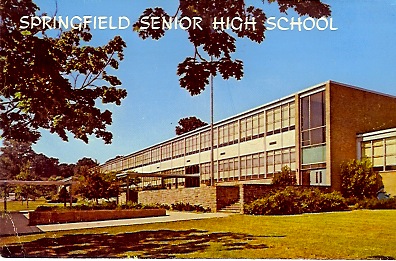
Springfield Junior/Senior High School

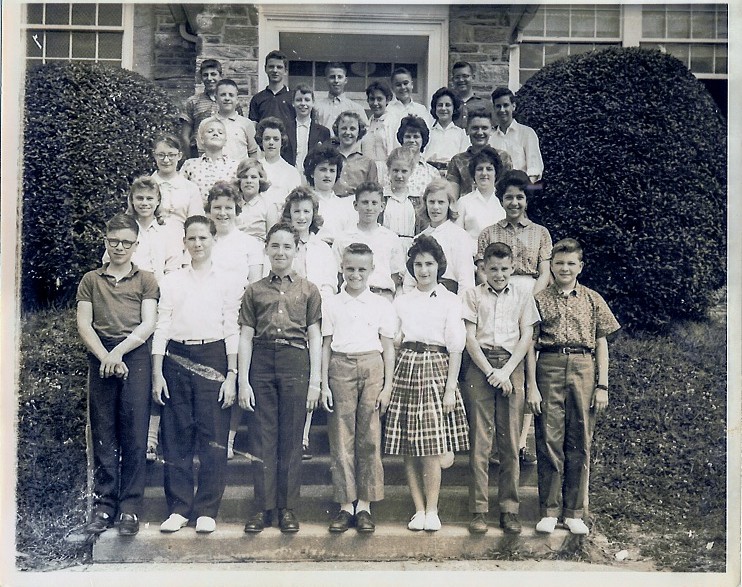
In 8th grade, I joined the marching band, and my schedule was changed to “music section” where classes were organized around orchestra and band classes. Picture taken at the side entrance of the junior high at that time.
Springfield Class 65, Grade 8-7

Springfield Class of 65, Grade 8-7

Fall 1960 Jr. High Band: Saxer Avenue

Bank Saxer Avenue 1960

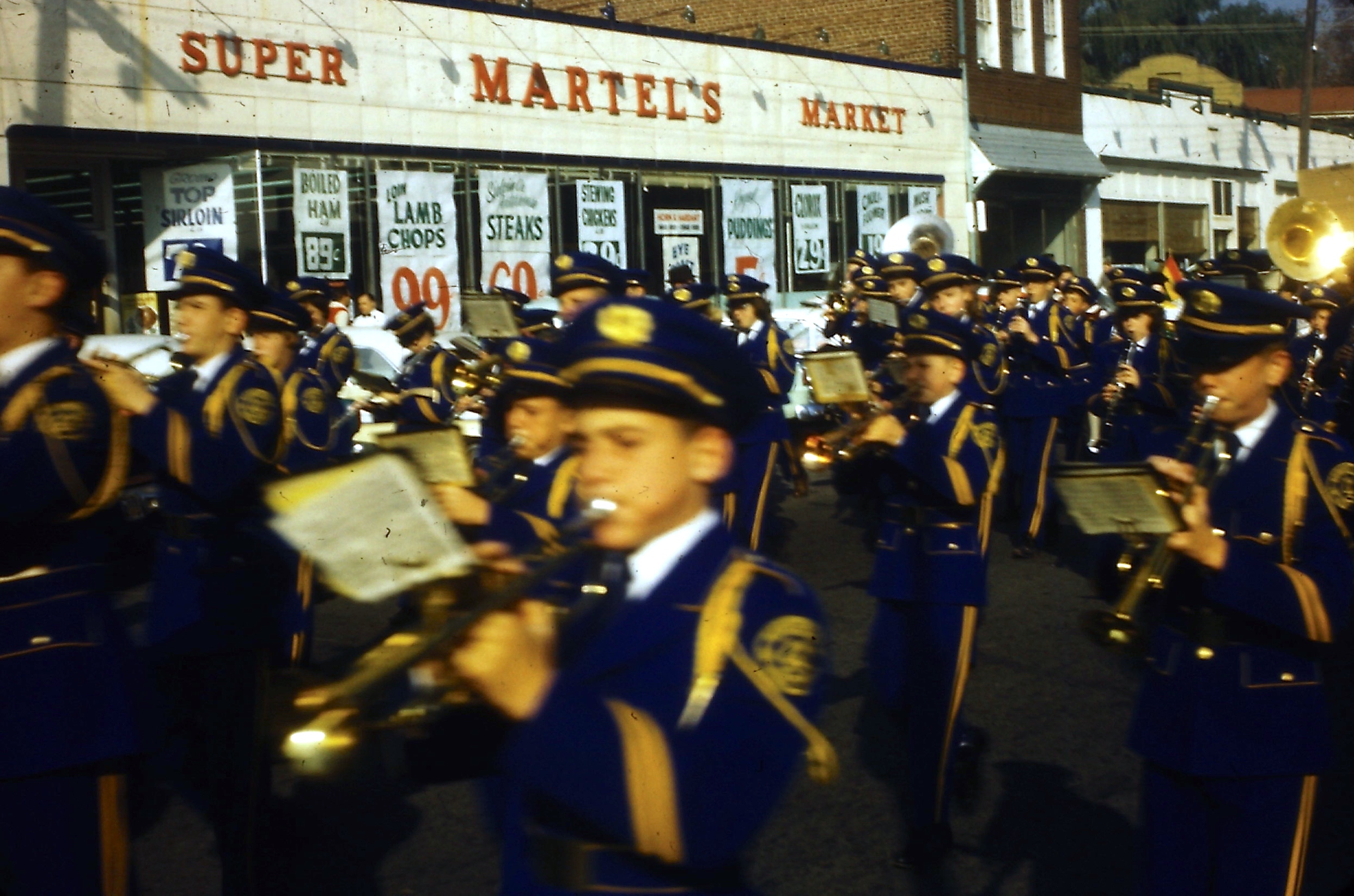
In front of Martel’s Supermarket

Saxer Avenue F1960

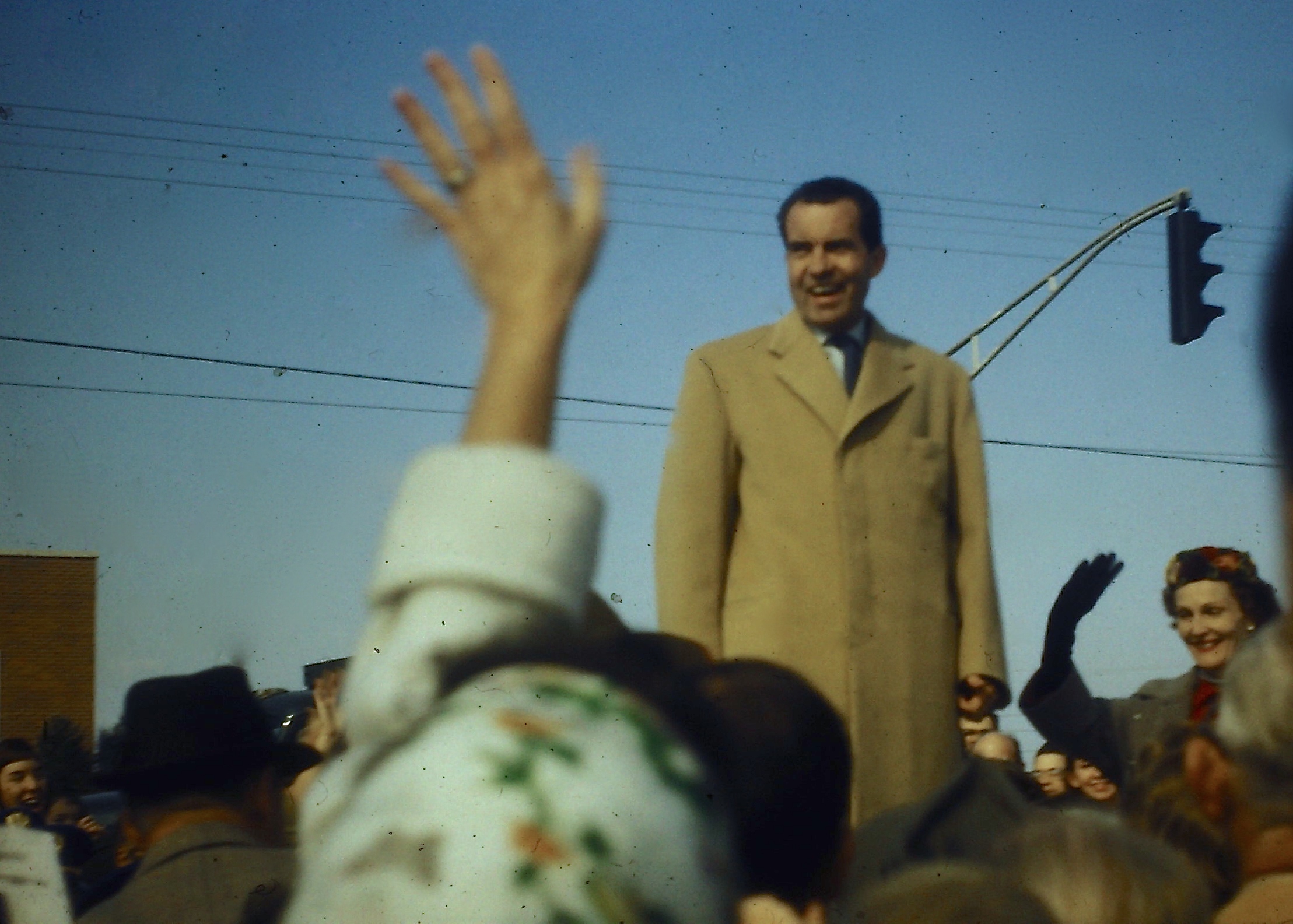
In the Fall of 1960, the Junior High Band was sent to Springfield Shopping Center, where then-candidate for president, Vice-President Richard Nixon, greeted the crowd. When John Kennedy came through Delaware Country, he did not stop in Springfield but rather spoke at the Lawrence Park Shopping Center in Broomall.
Richard Nixon Campaigning in Springfield
Richard Nixon Campaigning in Springfield

Springfield High School

4th of July Parade 1963

1963

To create this flag masterpiece, we stuffed white, blue (and pink, because we couldn’t get red) tissue paper into chicken wire.

Teen Dance Scene 1964

IMG_8382Our neighborhood girlfriends would gather at our house for a ride to the teen mixers at Holy Cross. In the mid-1960s, Holy Cross was the place to be on a Saturday night. Most of the teens who attended the dances came from the working class communities in the adjacent neighborhoods, and most were Catholic, of course. We attended public school, so it was a bit of a leap to attend a dance outside of our school where we wouldn’t know anyone. Some of our friend’s parents didn’t like the idea of their daughters going to a Catholic dance, but somehow we convinced them it would be ok. My sister remembers her shocked reaction when she saw smoking going on around the corner of the church. We were somewhat protected in our quiet neighborhood bubble.

The Church kept a strict dress code. Boys had to wear coats and ties and for girls, skirts or dresses. We would spend all day getting ready: washing our hair in the morning and using those humongous plastic rollers so that our hair would puff rather than curl. We would sit under a hair dryer bonnet for hours. More daring girls would wear heavy eye makeup and challenge the limits on how short their skirts could be. It was a fine line, and the authorities would send you home if you crossed it. Looking back, I believe the dress code established a certain decorum, even if we complained at the time.

We would join long lines outside the gym to pay our 75 cents to get in, passing by the three or four priests that lined up near the entrance. Everybody danced on the crowded floor; we didn’t have to worry about being a wallflower. When dancing, the boys would cut in front of us, nudging each other out of the way. We had bragging rights depending on the number of boys that would cut in. The temperature would rise through the night, but the boys still had to keep their jackets on.

Versions of the Bristol Stomp provided the basic dance steps, and dancers would hit the wooden floor with a collective stomp on the beat. That unison had to be a genre of tribal dancing, and while we danced with a partner, it was really a group dance–and that made it exciting!

The kids in Bristol are sharp as a pistol,
When they do the Bristol Stomp. Whoa-oh.
Really somethin’ when the joint is jumpin’,
Ah-ah-ah, ah. When they do the Bristol Stomp.
–Kal Mann & Dave Appell

After every dance number, we would escape back to our girl pods and share our analysis. “Wow, that was a cute guy you were dancing with.” “He asked for my number!” “Look, he’s wearing a Beatle jacket.” “Did you see that split?” Boys were considered “hot” if could do a split; and if a guy had a Beatle haircut, he racked up more status points. Oh, yes, about those Beatles . . . reminisces of the Fab Four at Yesterday: Beatle Memories & My Letter from Peter Best.

The DJ usually played Doo-Wop music for the slow dances: See the Pyramids Across the Nile, In the Still of the Night, Till Then, You Belong to Me. I remember melting every time the songs played.

1776 Neighborhood Bicentennial Celebration

On June 19, 1976, neighborhood residents held their own American Bicentennial celebration, 1776-1976. Neighbors distributed a booklet, which included the activities for the day, the current officers of the association, and a history of the organization.

Woodview Farms Bicentennial II

Woodview Farms: The Second Generation

Our family had the unusual situation that my parents moved out of their house in 1970, and my sister and I continued to live in the home. Jean eventually left, too, to start her nursing career in Boston. I married and raised two children in the house where I grew up. As an officer in the Civic Association for a few years, I assisted with the Christmas and Easter activities. I was active in local politics, especially in Bob Edgar’s 1974 campaign for Congress.

4th of July 1985

Santa’s Visit to the Neighborhood, 1986

The neighborhood tradition continued with visits from Santa via the Springfield fire truck and company.

Easter Egg Hunt

First Day of School, September 1988
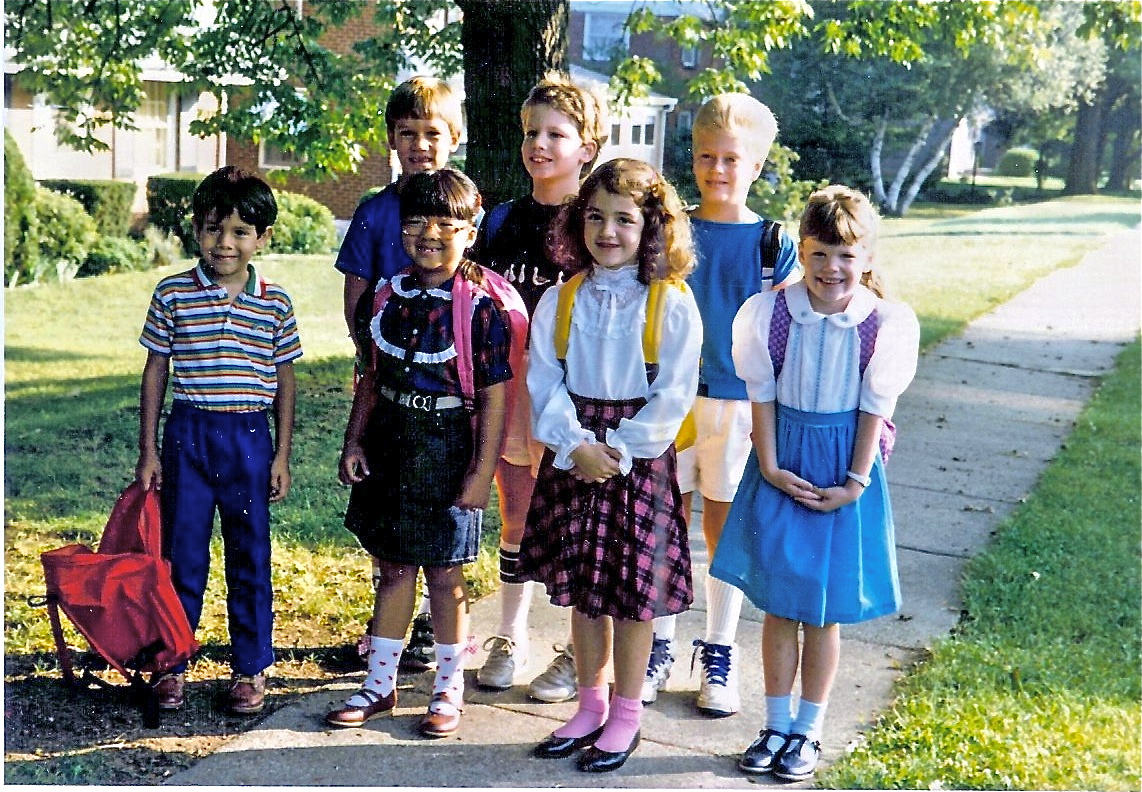
Andy, Heather, BethAnn, MaeC, Jeff, John, Matt

Epilogue

After forty years, I moved away from Briarhill Road. I thought that I might stay in the house until I could turn it over to my children, but several circumstances changed the course of life events, which prevented that outcome. As it turned out, Matt (pictured above) lives in Joan’s house, and his sister, Stacey, and husband, Mark, bought our house. A few of the original residents still live on the block.

I will leave the history of Woodview Farms neighborhood to others to record the third generation, as I say goodbye to my childhood home.
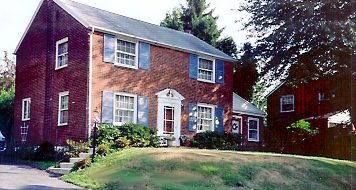
447 BH 1993

447 in 1993

Tag Cloud