Humble Contributions to the Peoples' History

Archive for June, 2012

Edgewood Plantation: Haunts of the Past

A bit of research, a bit of luck . . .

Brought us to the Edgewood Plantation in our search for a bed and breakfast in the area along the James River, which runs through Richmond to the Chesapeake Bay. The Edgewood website richly described the historic house and gardens quoting Country Collections magazine, “Have you ever dreamed of waking up to an antebellum room that would be the envy of Scarlett O’Hara?” A resident ghost, chased by the TV Ghost Hunters, reportedly resides in the upper story. Sounded like a perfect place to stay!

We drove from Petersburg crossing the Benjamin Harrison Memorial Bridge to the John Tyler Memorial Highway (Route 5), a scenic road lined with forests on either side. A bike path parallels the road in several sections. We drove up a circular driveway to the house, an example of Gothic Revival architecture with a fan-style front porch decorated with wicker seating and floral arrangements on the tables.
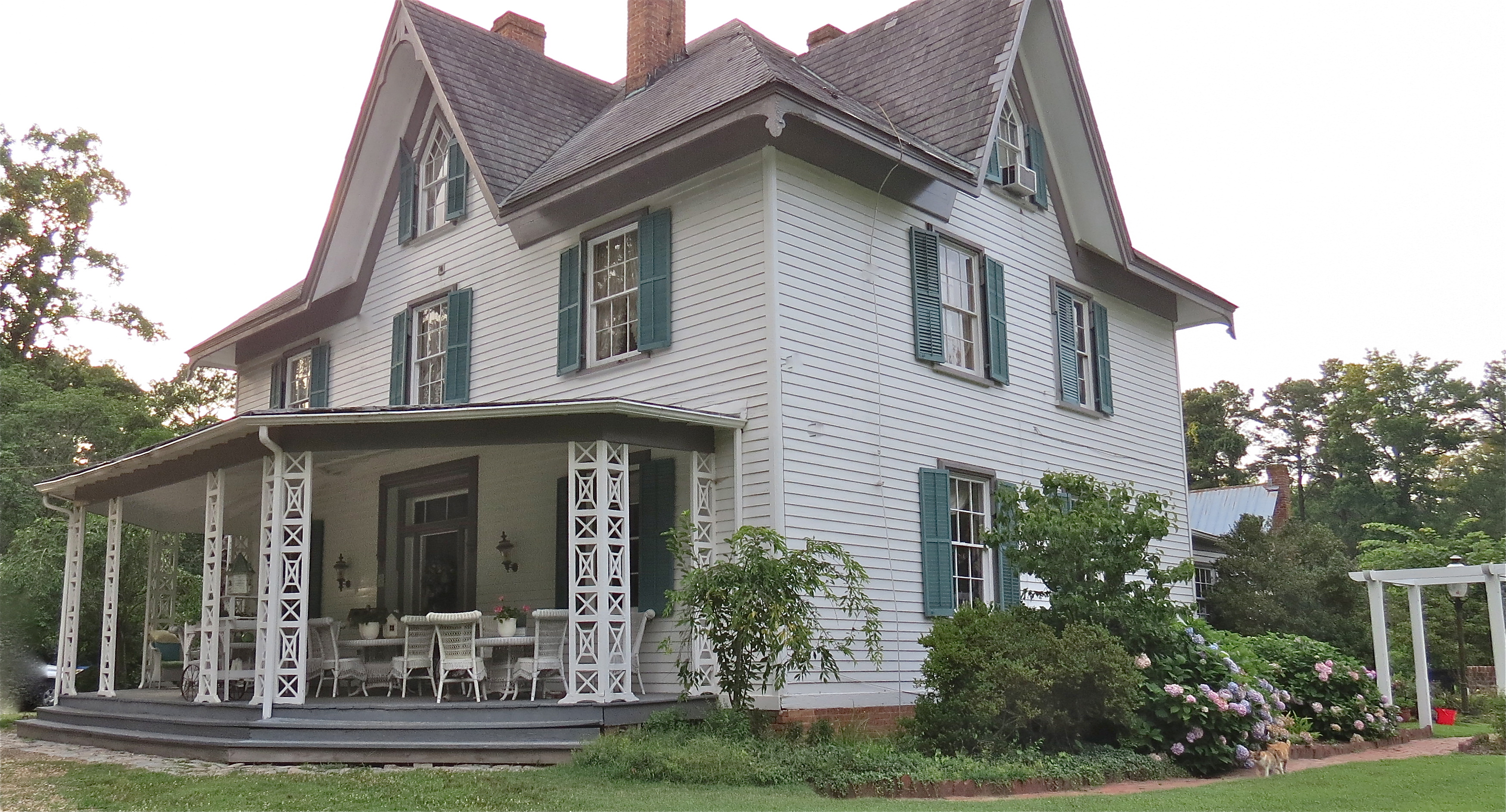
An orange cat greeted us in the parking lot and led the way to the porch steps where we met the proprietor, Dot, who warmly welcomed us, offering a glass of wine as we walked through the gardens.

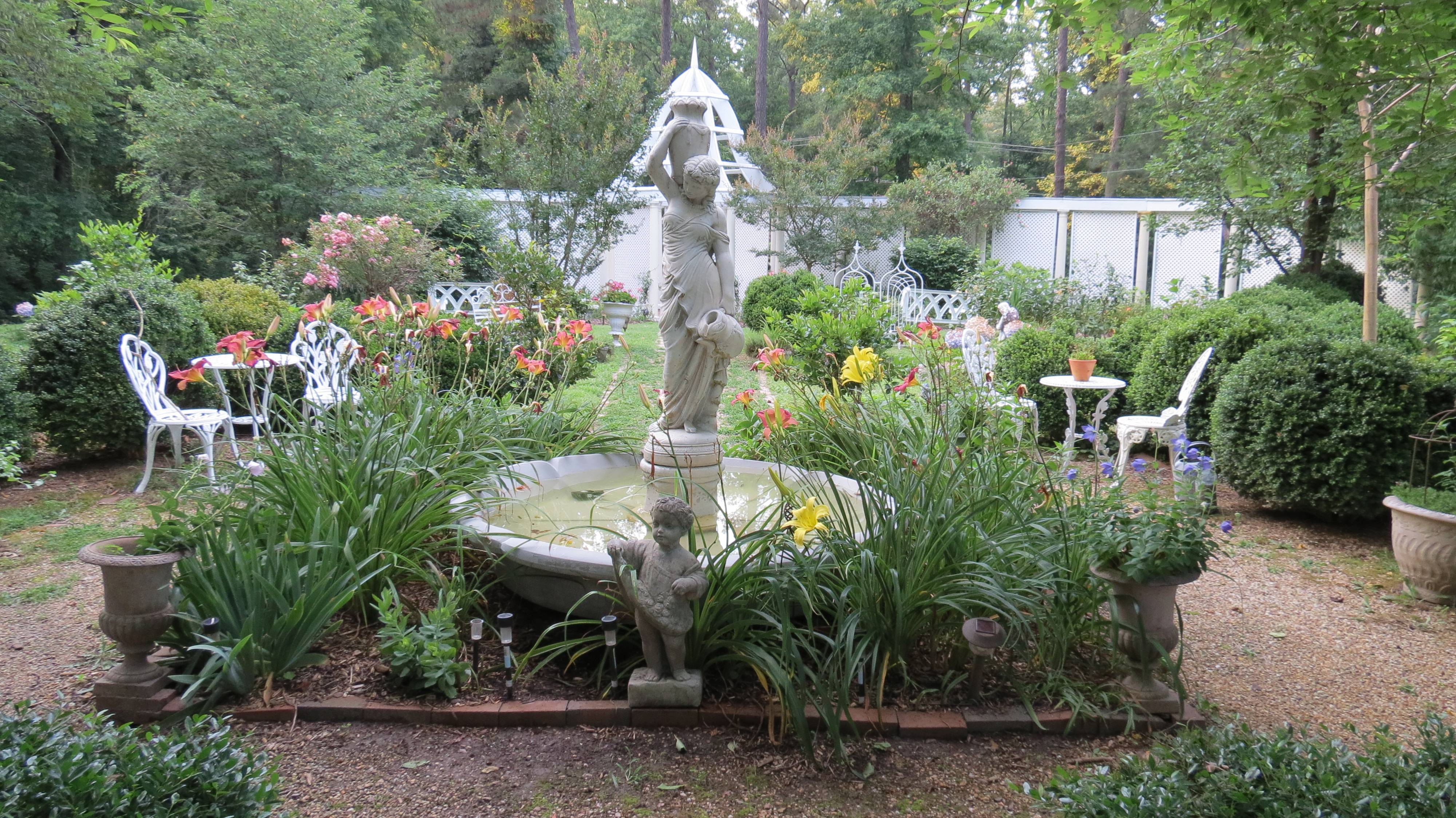
The Edgewood Estate had once been part of the Berkeley Plantation, the home of the ninth President of the United States, William Henry Benjamin Harrison, a signer of the Declaration of Independence. His grandson, Benjamin Harrison, became 23rd President. Harrison built a mill at this site in 1725 so that he could grind wheat and corn rather than having to export the crops elsewhere for processing. Water flowed from a pond down to the mill, creating a waterway, now arched by a white clapboard bridge.
Around 1854, Richard S. Rowland traveled from New Jersey to run the grist mill, moving into the house with his family. Harrison also owned large bake ovens for making sea bread, a food used by the sailors on voyages to England. The mill operated into the 1930s and was known for the excellent meal produced by the burr stones turned by a water wheel.

We explored around the mill peeking through an open door. Inside remnants of the mill remained including chains and hooks still hanging from the cross beams; the famous limestone grinding stones rested on the ground outside.
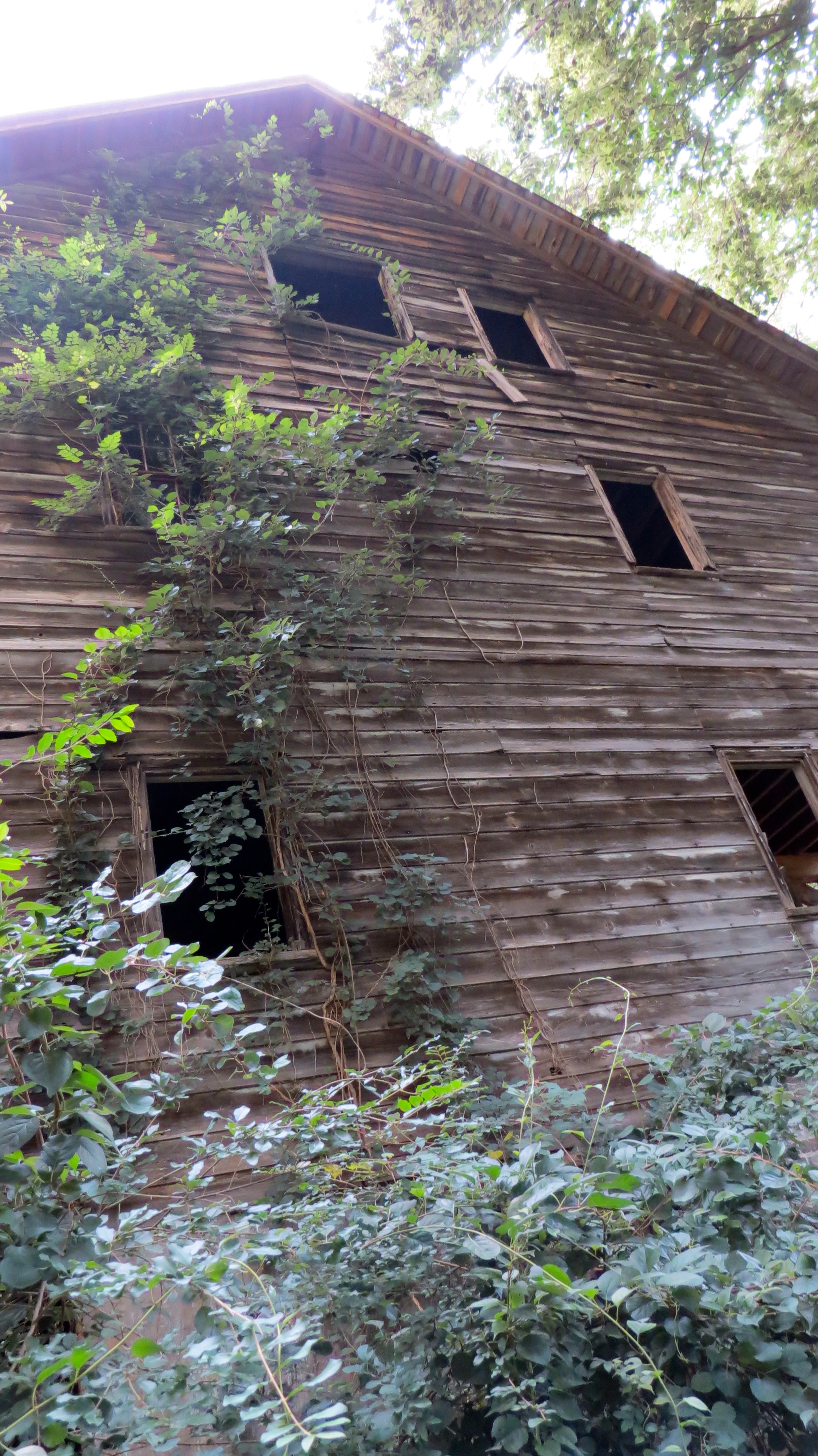
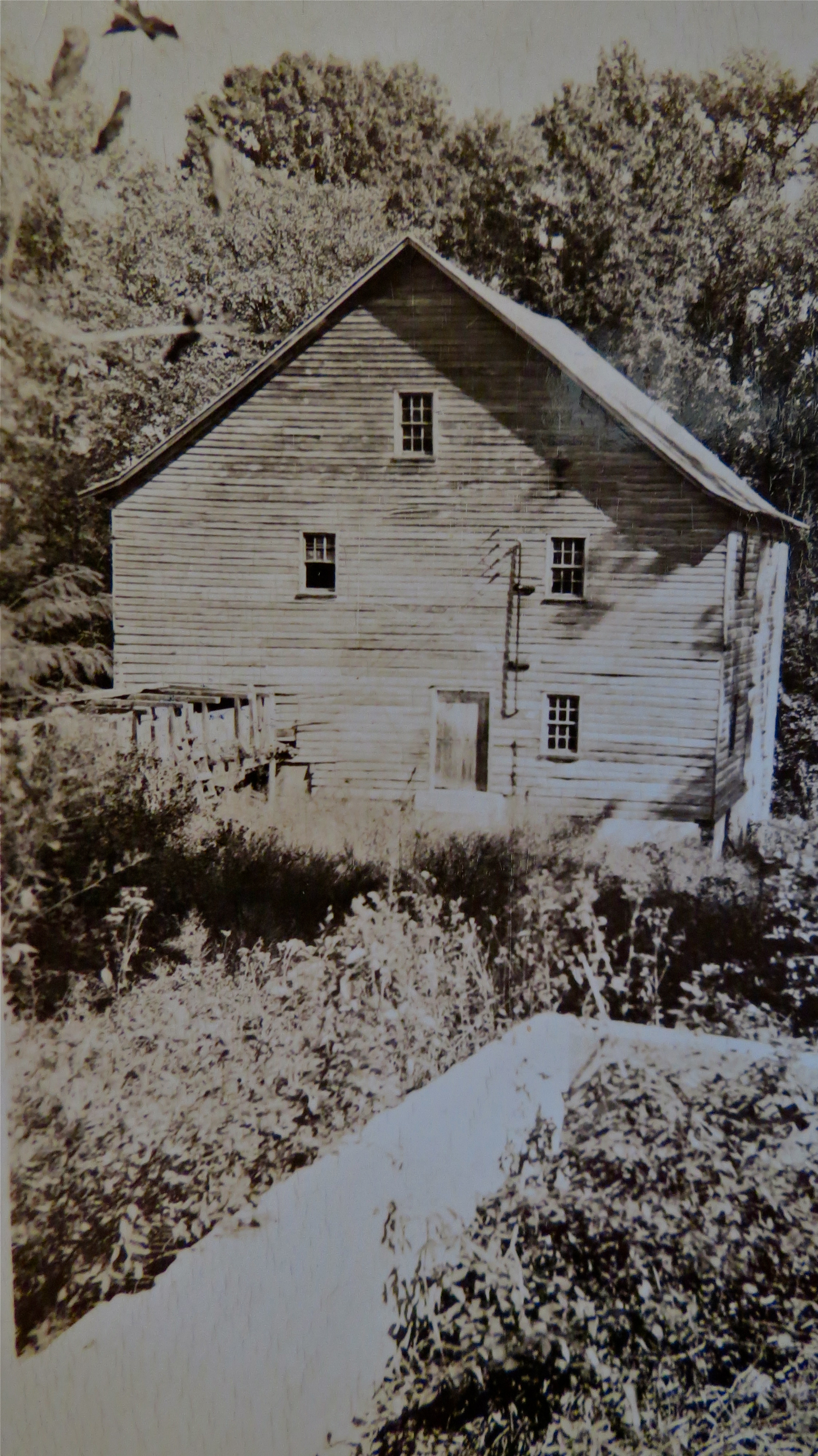
Older view of the mill; photo courtesy of Dot

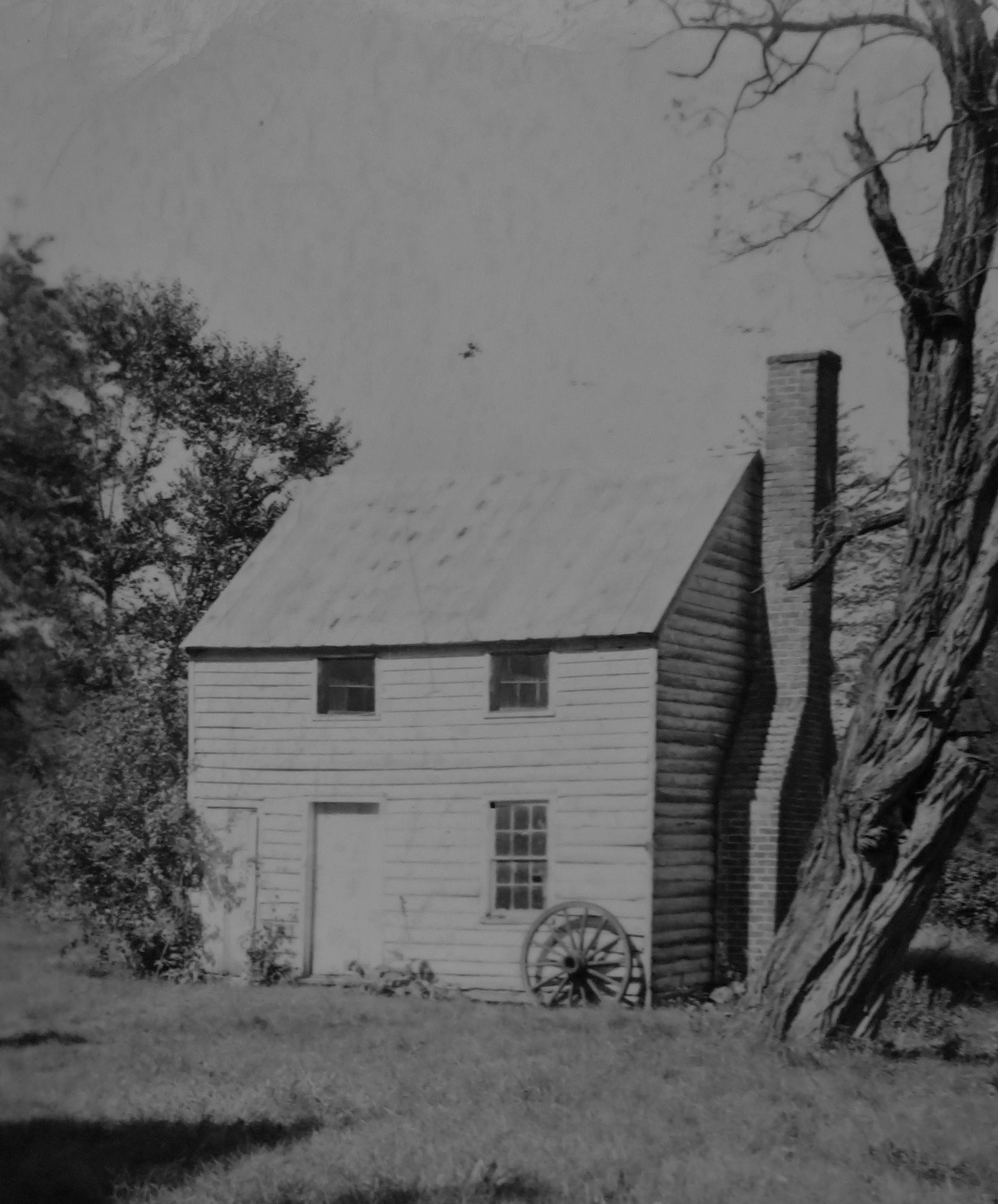
A  building that was once the slave quarters sits in back of the main house. Restored and now used as guest rooms, certainly would not resemble what once the slaves called home. According to the definition on Wikipedia, a plantation would have been supported by slave labor. Any romantic recounting of the period that only includes the view of grand mansions with elaborate furnishings and horse-drawn carriages quickly dissipates at the thought that the system of slavery that imprisoned people to a master. A first-hand account here describes the conditions the slaves endured.

Dot shared with me this photograph of the slave quarters.
Antiques of Every Kind

The rooms in the house provided a backdrop for an eclectic collection of antiques and artifacts. Dot restored the kitchen, taking down a plaster wall that hid the original fireplace.

Original Fireplace in the Kitchen

Other rooms in the home in the slide show:

Ties to the Civil War

During the Civil War the Confederate generals camped at the Berkeley Plantation and relied on their soldiers to climb to the third story of Roland’s house, which they used as a lookout post for union troops. On June 15, 1862, Confederate General J.E.B. Stuart stopped at Edgewood for coffee on his way to Richmond to warn General Robert E. Lee of the Union Army’s strength.  Two weeks later 100,000 Union troops spread over the lands along the James River and camped for six weeks. The owners have found shell casings on the property. The mill ground corn for both the Union and Confederate armies.

Rooming with a Ghost?

Lizzie’s Room was our accommodation for the night. Elizabeth Rowland, daughter of the original owner, carved her name on an upstairs window pane. Legend has it that she died of a broken heart when her lover never returned from the Civil War. Some say Lizzie still waits at the window on the third floor.

Ghosts Come to Life as We Breakfast with the President and Mrs. Lincoln

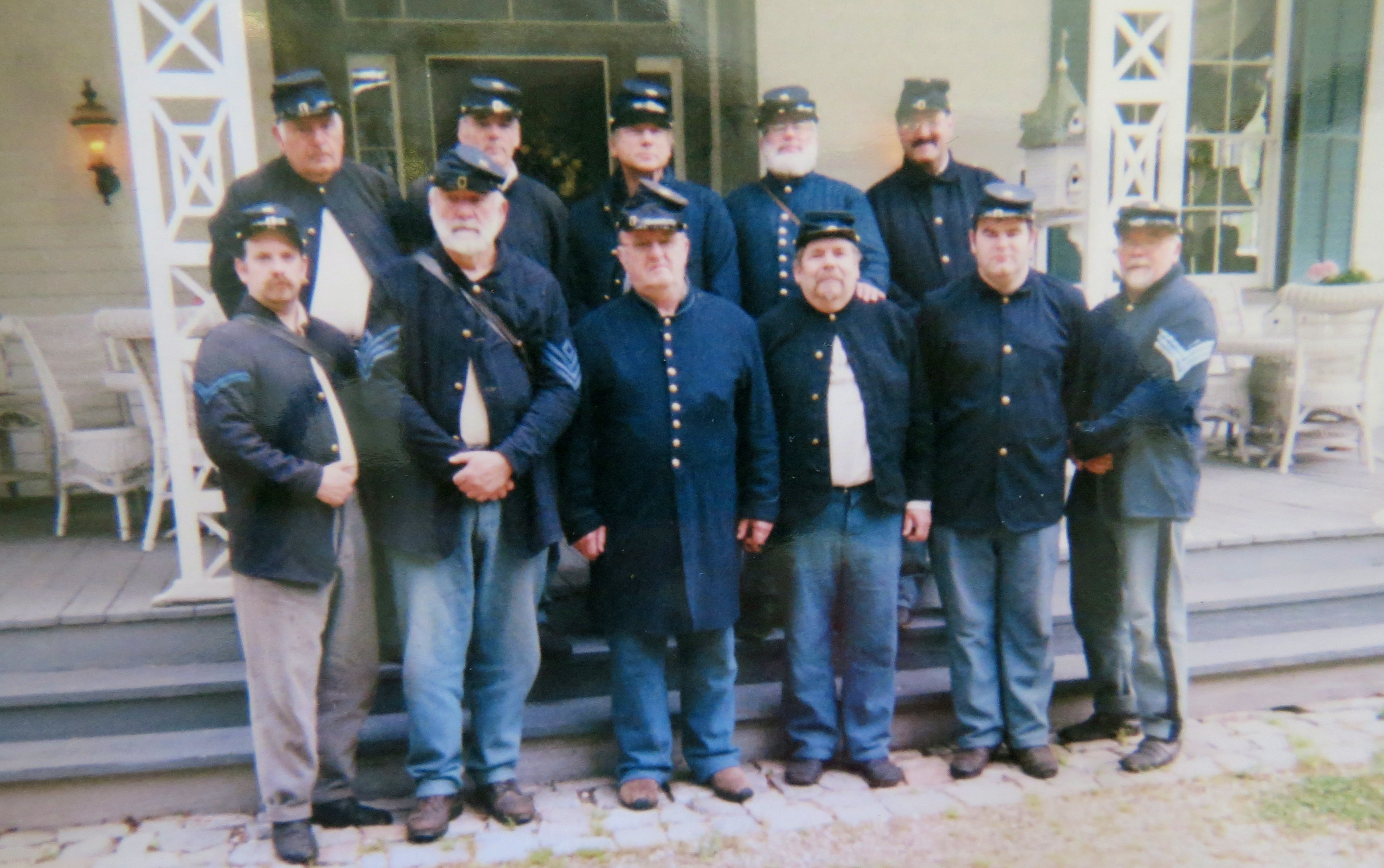
We were fortunate to have breakfast with folks who bring the era of the Civil War to life through reenactments. One of the guests, Gary, portrays a Private 3rd Class in the VT Hemlocks, who are “dedicated to proudly and accurately portraying the common Vermont infantry and artillery soldier during the War of the Rebellion, 1861 – 1865.”
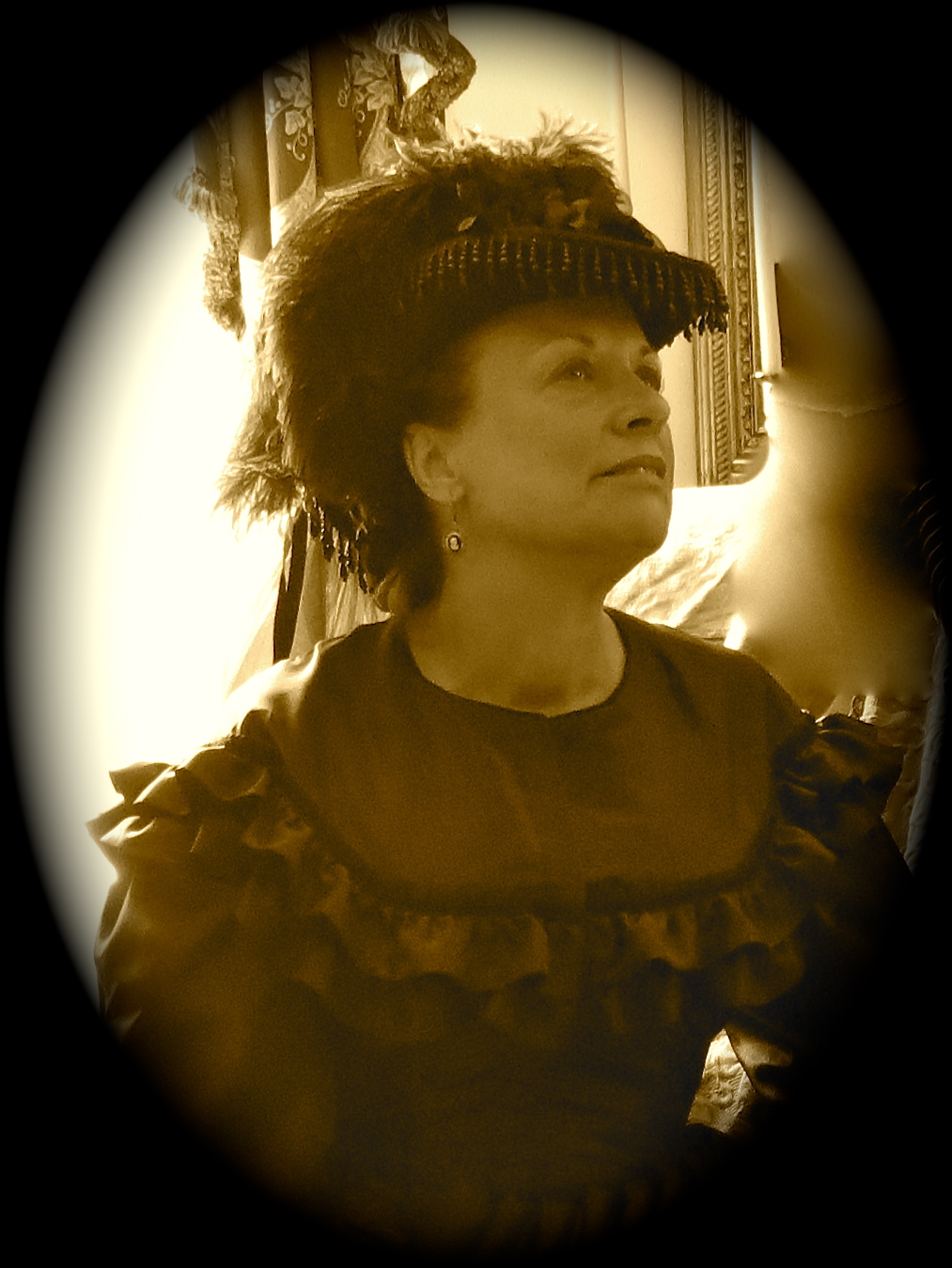
We also had the honor of breakfast with President Lincoln and his wife, Mary Todd Lincoln, a.k.a. Robert and Cheryl. The context of seeing Abe and Mary Lincoln within the Edgewood Plantation house was amazing. As they descended the staircase, we wondered, were we seeing ghosts?

President and Mrs. Lincoln . . .
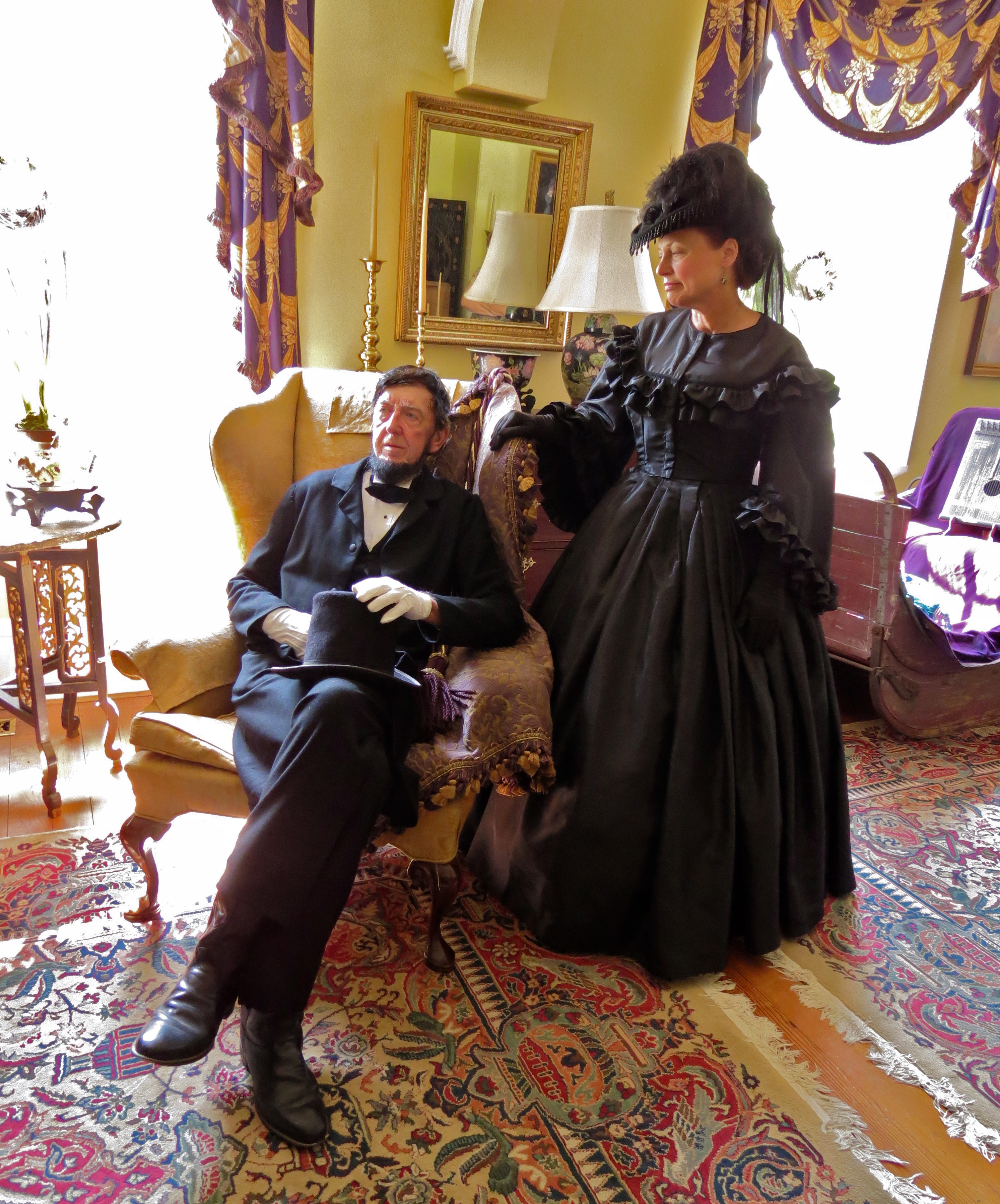
Mrs. Lincoln with our Host, Dot

An evening spent at Edgewood carried us back to another time. These buildings were haunting in of themselves as they served as witnesses to history. Lizzie carved her name in the window, perhaps imaging that the house would hold her permanent legacy. We look forward to another visit to uncover more historical treasures. And maybe a President will join us for tea.

Links

James River Plantations, US Parks Service

Edgewood Plantation

Civil War Links

Discard or Restore?: Bistro Patio Set

Forty Years of Service: Time to Go?

The chairs and table sat on the patio in a state of disrepair for several years until I could no longer ignore that they were falling apart. The seats had deteriorated as water had seeped into the cushions and disintegrated the wood bases.  However, the metal foundations were intact with only a few rust spots. After pricing several similar sets on the Internet, the  decision became obvious: restore. Here’s the breakdown of expenses and effort (other materials on hand):

Plywood for bases: $5.97

Fabric (on sale): $14.95

Spray cans: $11.16

Total: $32.08

Swirls characterized the paisley fabric so decided to emphasize the metal scrollwork on the chairs and tables by painting them white. This step involved more work in masking and repainting by hand and not spray painting the entire set.  Total hours in restoration: 4.5.

Kitty admires new seating

Satisfaction in restoration: priceless.

Rediscovering Train Travel

Plane or Train?

For a journey of 270 miles, which is the best way to travel? I decided not to drive so the other options were plane or train. I checked on the airfares and for nonstop flights–a cost over $1,000! Fares ran about $700 for one stop. I thought time to check with Amtrak fares: a one-way ticket with a discount costs $59.50.

Time is a consideration when planning a trip, and the train would take eight hours compared with one hour on a nonstop flight. Depending on the location of the stopovers, the airplane could take anywhere from four to five hours. Also, I would have to get to the airport an hour before the flight takes off. So now I’m down to just a couple hour difference and a savings of $600!

Blogging on the Train!

It’s been awhile since I’ve traveled by train in the US, and as I sit here typing away, I am really enjoying the trip. I did not know that the train had WiFi so wasted no time sending off a couple emails. The connection is a little slow but certainly not unreasonable for a moving vehicle. A receptacle is built into the wall and right by the tray table. The seat is certainly wide enough and room to keep my backpack at my feet to reach travel accessories. The train moves at a good clip . The views along the way make me think that I’m looking at America’s back yard: junk yards, refineries, abandoned factories, back doors of row homes. Expansive views of  waterways also pass by.

What would seem to be the train’s greatest disadvantage has become its greatest asset. The travel time provides the needed relaxation between two destinations: an opportunity to collect thoughts and enjoy the scenery. I’m thinking I don’t miss traffic congestion and cars jockeying for a place on busy highways.

Journey’s End

I’m almost at my destination. I have to say I’m pleasantly surprised with this trip and can recommend taking the train.

The Wren’s Vanishing Act

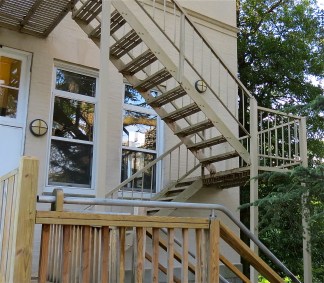
Every morning I hurriedly climb a back staircase to get to the office to begin another day of work. A week ago a small brown bird danced along the hand rail as I came up the steps. The little bird stood her ground. I admired her defiance.

On the second morning, she was back flitting between a nearby tree and the railing. The night before I checked my bird book and identified her as a House Wren, with her turned up tail and warbling tweetie song. I thought she must have a nest somewhere. I looked in the tree and scanned the walls of the building to see if twigs might be sticking out from a light fixture or downspout, but no such signs appeared.

Checking the Internet, I learned that Wrens can build their nests in strange places. A cavity nest builder, their nests turn up in abandoned bee hives, old hats, tin cans or flower pots. I couldn’t see any such cavities in the area.

On the third morning, the Wren appeared again. This time I watched her from the window on the second floor. Surprisingly, the little Houdini just disappeared! I had to get a closer look to discover the magic trick.

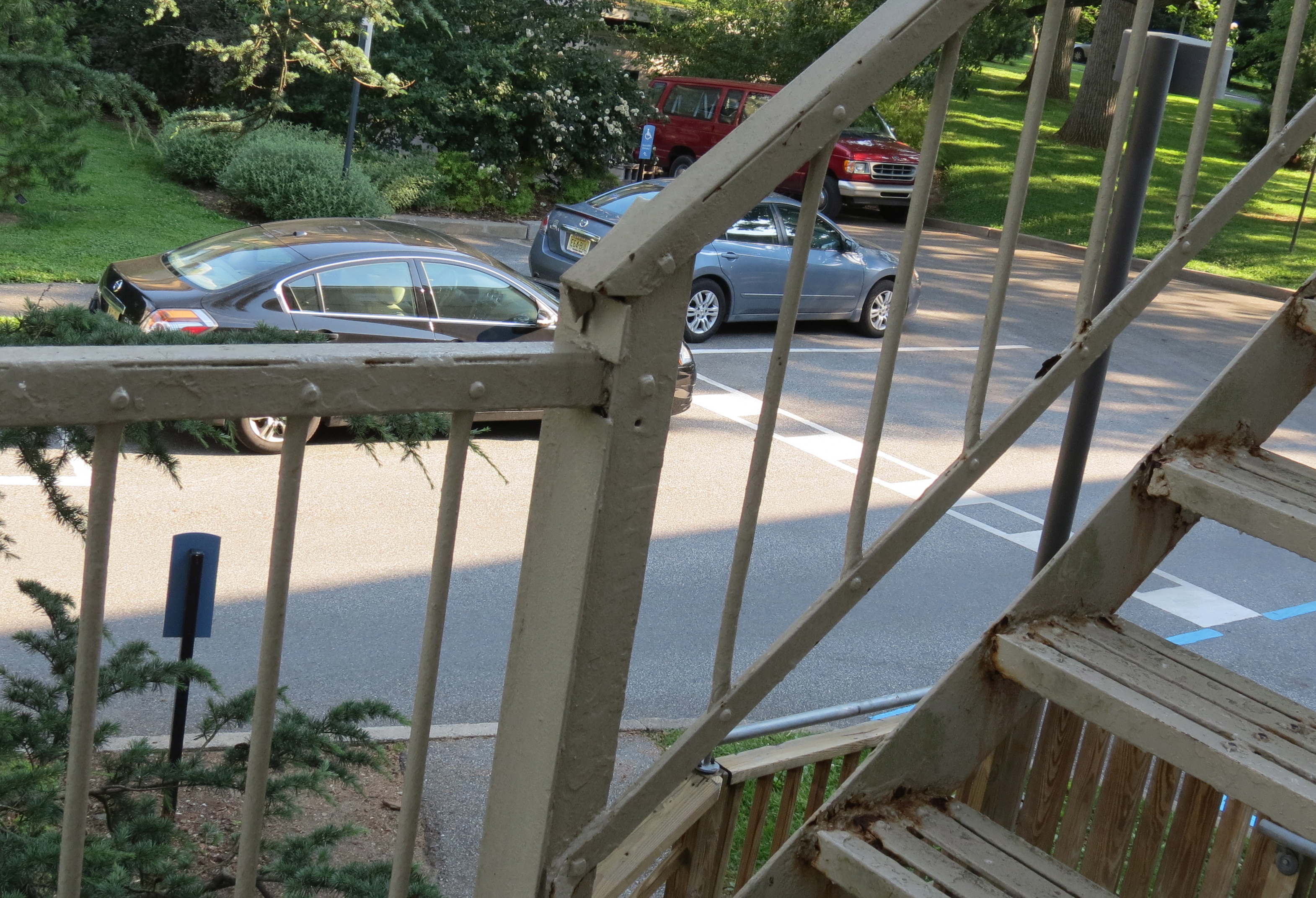
I inspected the railing and found a tiny opening between the pieces of metal. Evidently her brood had already hatched judging from the beak full of breakfast she prepared.

Her magic disappearing act worked well as almost no one noticed her on the stairway–until those babies started squawking, drawing attention to themselves. I guess a loud voice trumps discretion for the young ones.

As I rise and fall on the steps, I think about the deliberate actions of the parent Wren on the railing and the little ones tucked in the metal encasement. I wonder at their place on the staircase, intentions as deliberate as mine heading to the office.

Creating a Faerie Garden (Part 2)

Inspiration from the Isle of Skye

In the previous post, I described the Faerie Glen and Faerie Bridge on the Island of Skye, Scotland, the inspiration for creating my own magical garden. In pottery courses at the Community Arts Center I learned some basic techniques in hand building, carving and throwing on the wheel. My instructor, Bob Deane, had a special interest in making houses, castles and dragons, and guided our classes in the various techniques in constructing these pieces.

Bob created a ceramic house for Tyler Arboretum tree house display.

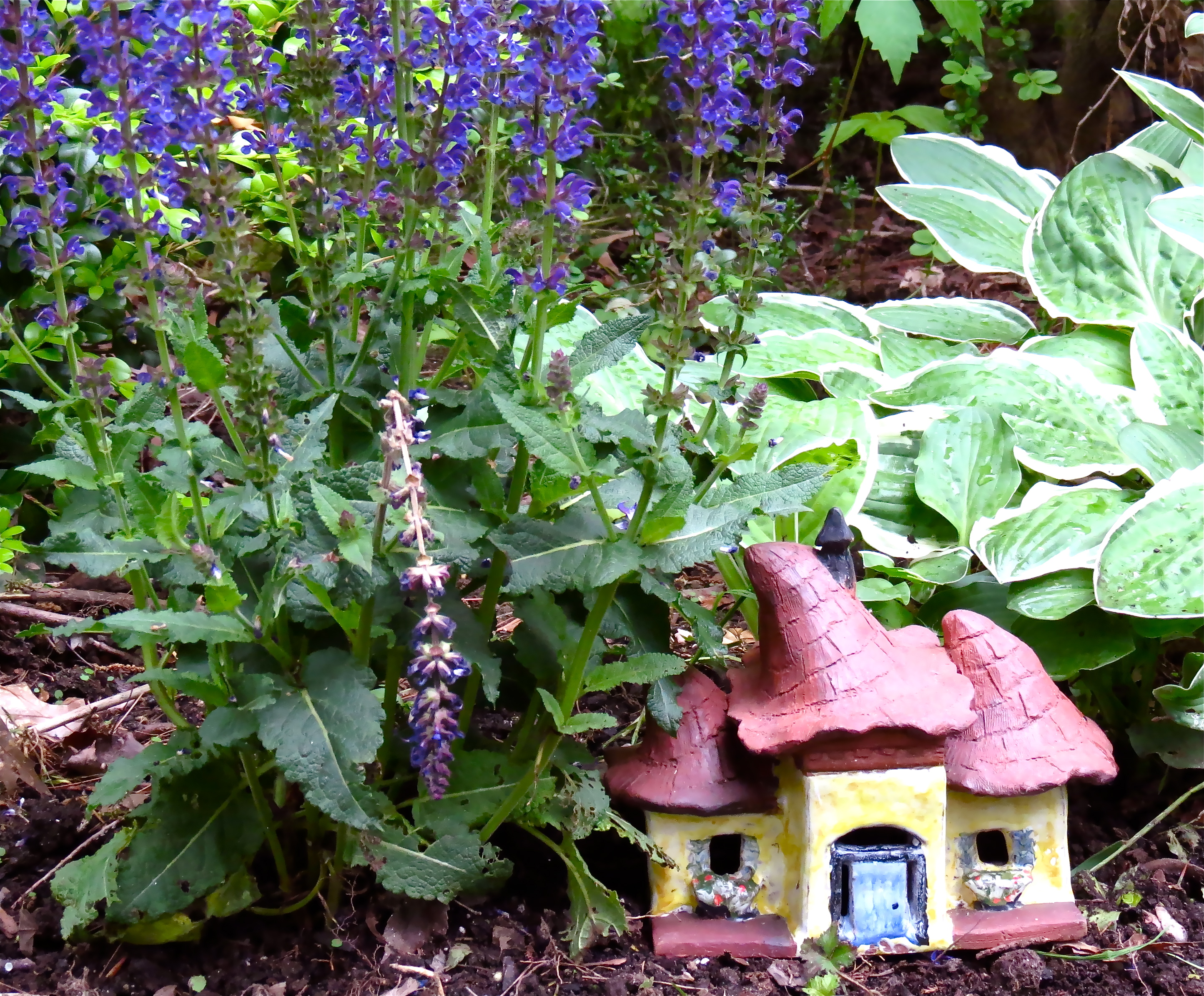
Making little houses completes the first requirement for a faerie garden. I made the first group of houses using white clay processed through an extruder tube. This device quickly produces a perfect cylinder from a clump of clay. I then cut these tubes to various lengths. For some of the roofs I worked with a piece of the cylinder, cut it in half and turned it inside out for a sloping concave shape. I carved different exteriors, such as stone, stucco or wood into the clay using simple tools. Different glazes created the variations in textures and colors.

The extruder tool proved its usefulness again for crafting large cylinders to make a castle. I used carving tools to cut the details for the shingled roof and stone façade. I added a clear glaze on the roof and doors after painting them blue.

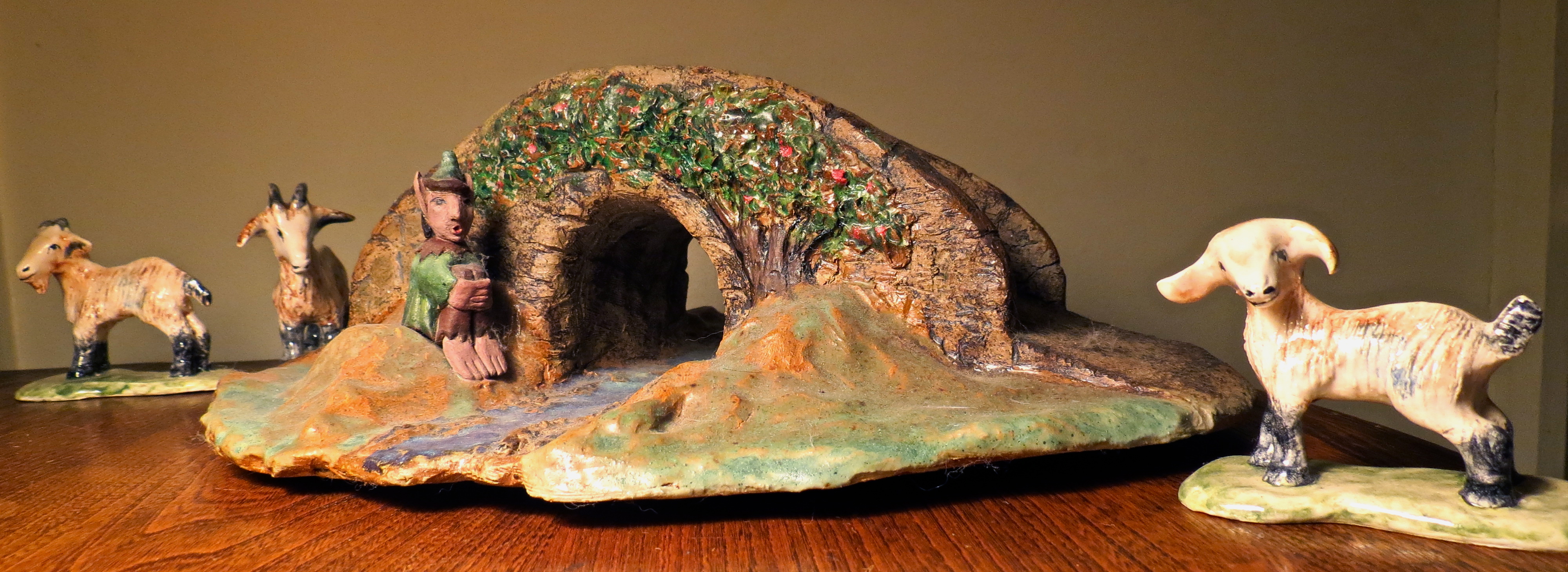
A combination of paint and glazes decorated the bridge. A troll, waits patiently next to the creek.

I used a low-fire clay that would take majolica, a glaze which is left to dry on the clay and then painted with special pigments in a water-color technique.

I arranged the houses in the garden with a meandering stone path connecting the pieces together and added a few accessories: wishing well, fountain, bench, just to name a few.

The mysterious and magical Isle of Skye casts a spell and guides the recreation of a whimsical and winsome garden on a distant shore.

The fairies are dancing — how nimbly they bound!
They flit o’er the grass tops, they touch not the ground;
Their kirtles of green are with diamonds bedight,
All glittering and sparkling beneath the moonlight

                                Carolina Eliza Scott ~ The Fairy Dance

Good luck with your gardens! Send me your link if you have created such a place.

Links:

Anne Valley, Walk through the Fairy Door

A Guide to Finding Fairies: 15 Magical Places in Ireland

Does Scotland Really have Fairies?

Scottish Highland Fairies

An Enchanting Isle off the West Coast of Scotland (Part 1)

The Magic of Faeries: Isle of Skye 

Mae journals on the hillside

Heaven and earth are only three feet apart, but in the thin places that distance is even smaller.  Celtic Saying

Years ago, before I had much travel experience, I journeyed to Scotland, with my teenaged daughter, unsure what such an adventure would bring–especially since we would be traveling without the support of an escorted tour. We ventured across Scotland on the Haggis Bus, a bright yellow mini-bus driven by young Scotsmen, all of whom could tell humorous and fantastic stories of their homeland while negotiating the winding roadways with the confidence and vigor that youth brings.  As we left Edinburgh, the bus followed a narrow highway far into the emerald countryside, passing wee villages lined with stoned walls and whitewashed houses topped with brick chimneys.  The bus rolled along on the “wrong side” –my attention riveted to the road ahead.

Our bus stopped just outside the Isle of  Skye, so we were on our own to navigate the remote sections of the island by rental car. We planned our adventure to include Skye because the descriptions from the Whitewave Outdoor Center offered spectacular views of coastline via kayak.

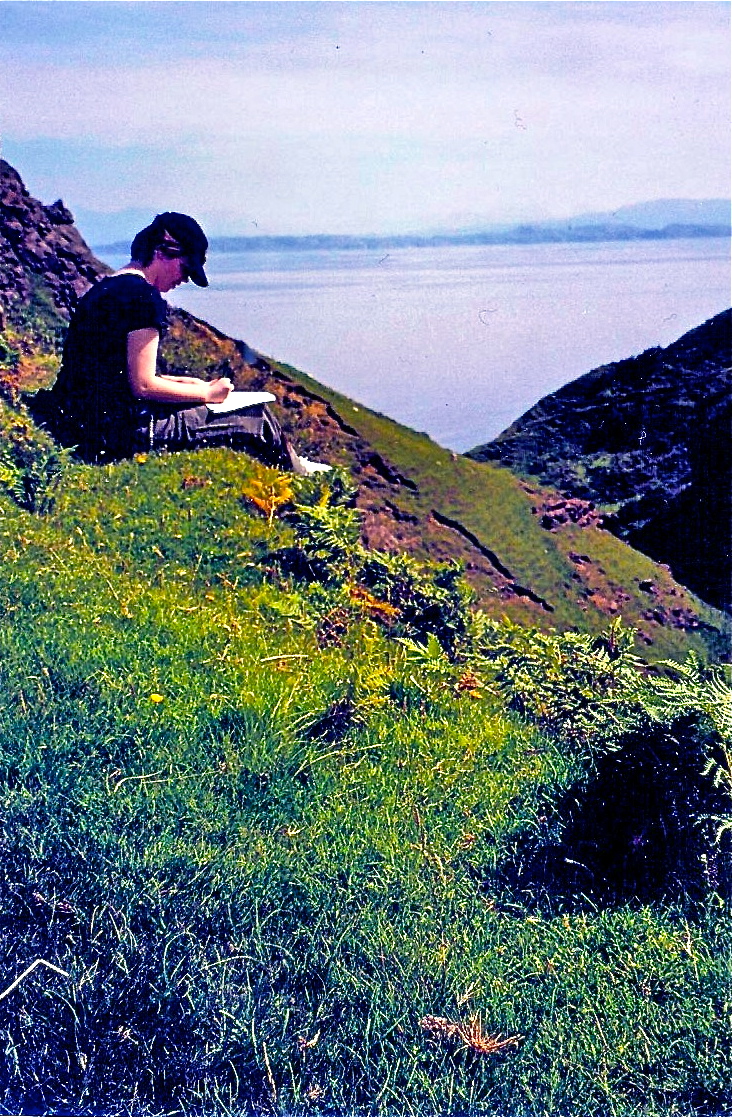
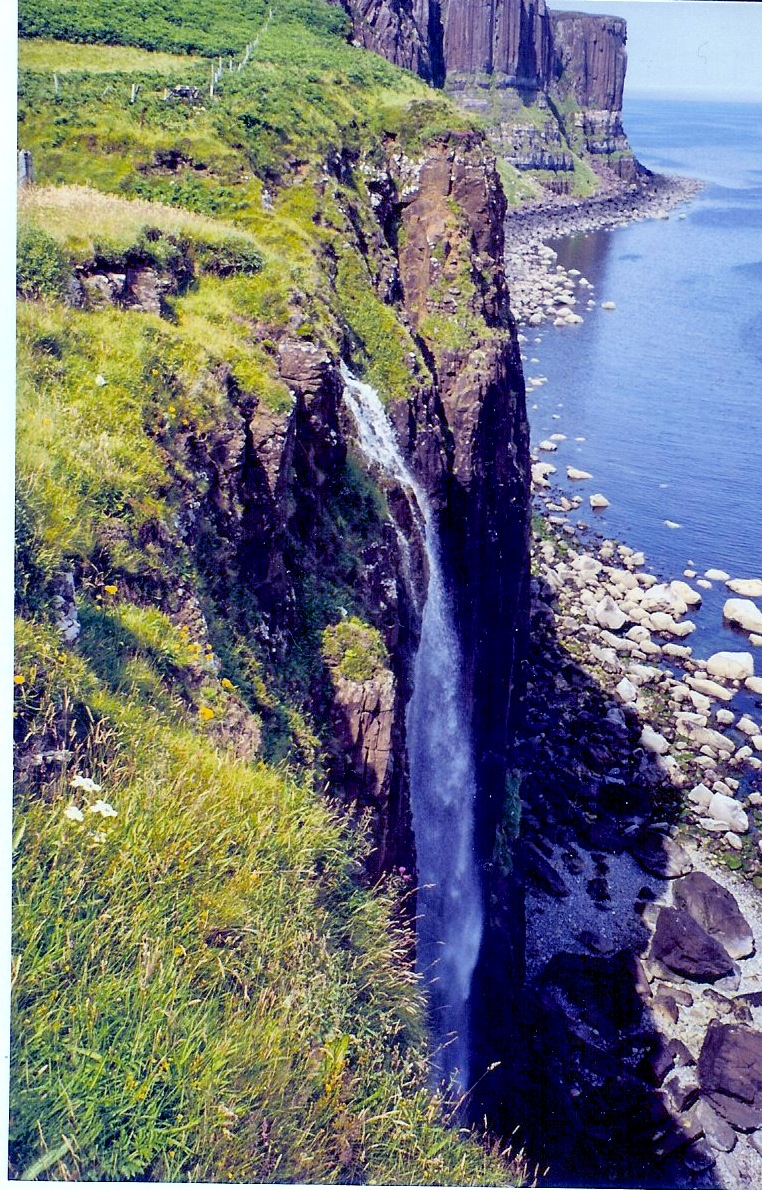
The narrow road ribboned its way along the coastline from Portee to Uig. The ocean stretched against the sky and hills, the wind scattering the clouds across the sea. Villages nestled on inlets, the island’s geological formations creating ragged edges around the island. Drawn into the landscape, we stopped often along the way to take short walks or to sit in green pastures that fell to jagged ridges and rocky shores below us.

Faerie Glen 

Skye, which already had an otherworldly spirit, became even more so upon discovering the Faerie Glen, just east of Uig. We passed through the gate, hidden from the main road, and followed a single-track car path through conical-shaped hillocks. Sheep dotted the landscape, their soft baaing breaking the silence of the hillsides. Further down the way, a narrow stream flowed into a pond where dancing sounds of water trickled through the deep green. Ferns and foxglove covered the lower elevations, and higher up deep ridges encircled the mounds.

We peeked behind rocks and into crevices created by gnarled tree roots. If faeries ever existed, this would be the place.

Bovine observer: we were not alone.

Faerie Bridge 

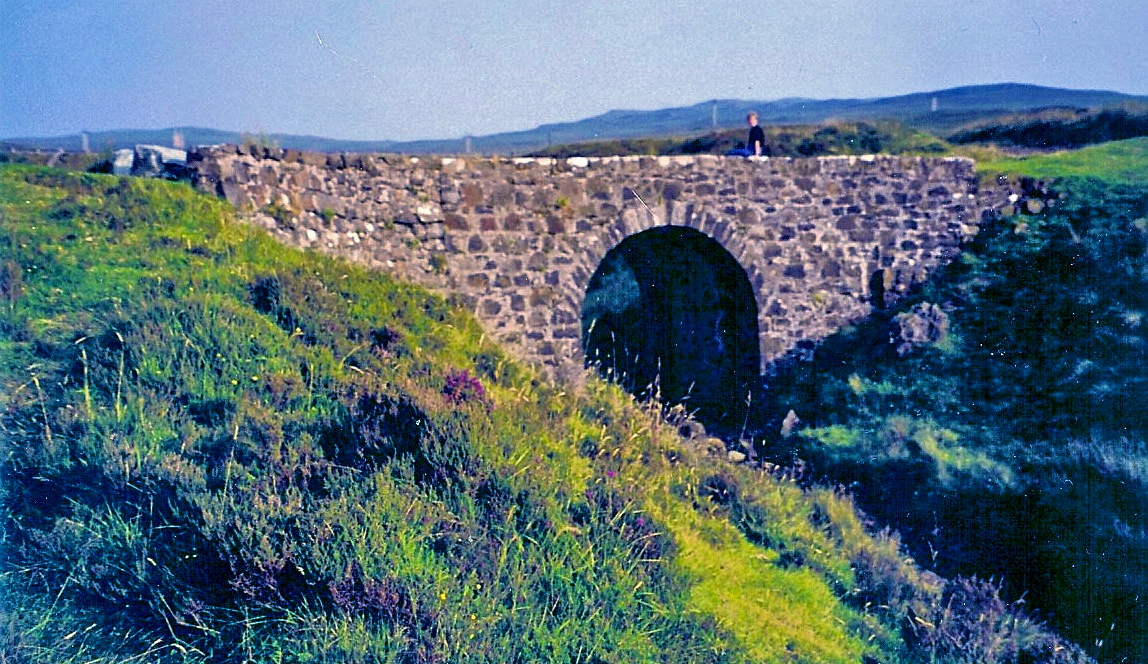
We found the Faerie Bridge traversing a small stream on the road to Dunvegan. We waded through the mounds of colored brush surrounding the stone archway to explore all views of the bridge.

As we leaned on the arch to view the other side, we wondered if we had arrived at a portal to another world, the cool dampness on this side, the warm sunlight on the other. According to legend, the chief of the MacLeod Clan married a faerie, but alas, after twenty years, she had to return to her fairyland. On this bridge the fairy bade farewell to her husband.

In the photograph below a misty light cloud appears left of center. I’m not sure why.

Memories Linger

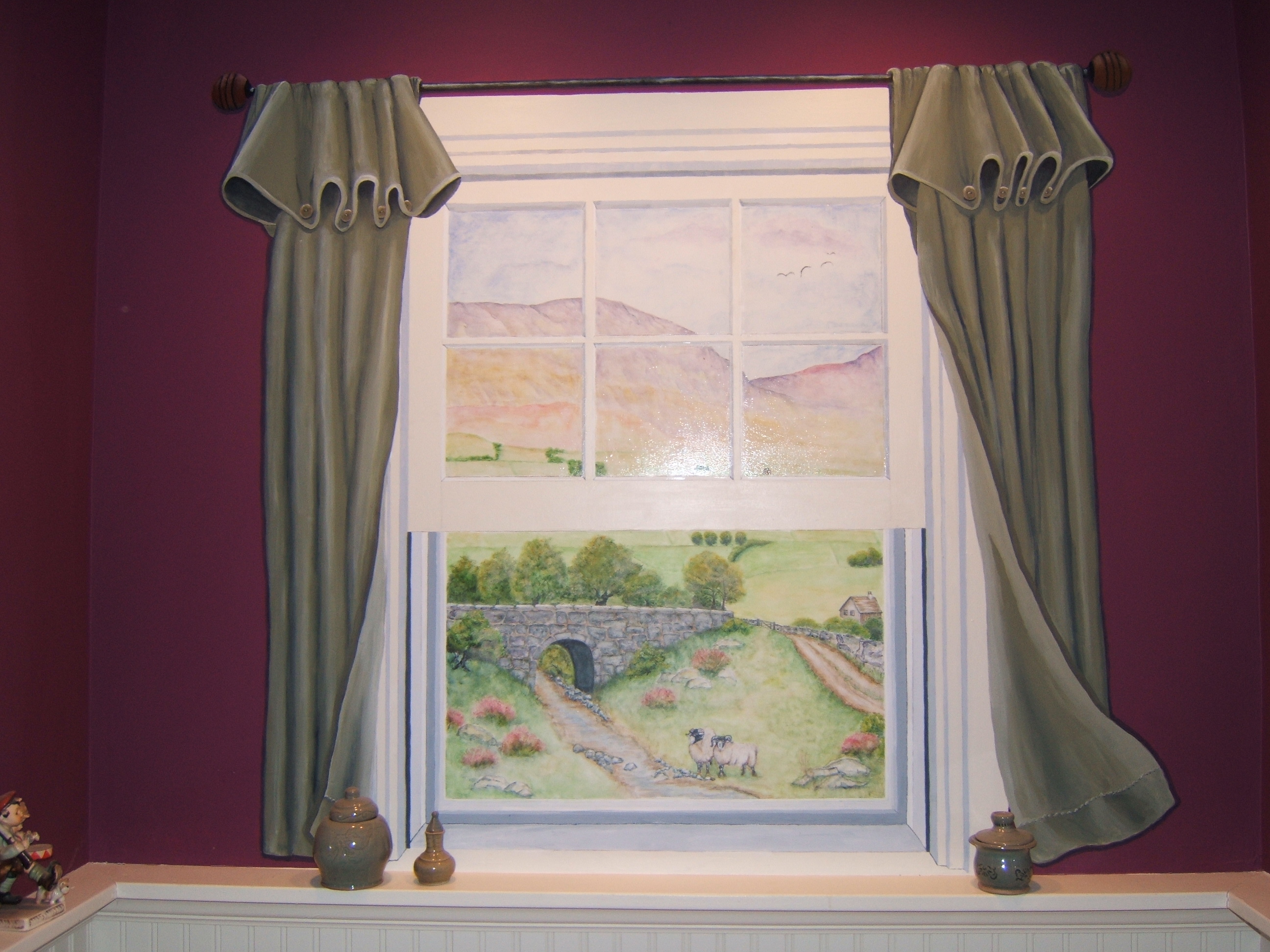
Upon returning home, the magic of Skye stayed with me and inspired a flurry of artistic creations: a mural on a wall, a majolica tile and a wee bridge from clay.

One more project remained: recreating a magical place in the garden. Part II coming next.

Tag Cloud