A Moment in Democracy’s History: Bob Edgar Elected to Congress 1974

When grew up in Springfield, Pennsylvania, in the 195os and 60s, I was very much aware that the Republican machine ran the politics of the town, as well as the county, going back to the Civil War. My parents were Democrats, and I remember my father remarking how a Democrat didn’t have a chance of being elected to any office in the county. As a teenager, I became interested in supporting the Democratic underdogs, and I attended several events for John J. Logue of Swarthmore, who tried to unseat the entrenched Republican congressman in the 7th district. Young and idealistic, I felt betrayed by the democratic process and wondered how the voices of the people could be drowned out by the powerful Delaware County Board of Republican Supervisors, nicknamed the “War Board.”
In 1974 the Republican machine still controlled Delaware County, and the War Board monopolized local politics. The break came when the public became outraged over the Watergate scandal. What fired me up was when President Nixon demanded the resignations of Attorney General Richardson and his deputy William Ruckelshaus. Bob Edgar, a Methodist minister, decided to run for the 7th Congressional seat, and I signed up to join his campaign.
I canvassed with Bob and stood at train stations and malls, handing out flyers. His parents lived a few blocks away, and his Dad and I would walk through the neighborhoods of Springfield talking up the cause. I attended strategy meetings with his dedicated campaign staff and spoke to union representatives. Bob had a platform we could believe in:


I wrote several letters to the local newspapers. The first letter was published in The Evening Bulletin, on June 15, 1974, Saturday Forum: Bulletin Readers Speak Out. The subject was Church and State: Clergy in politics, in favor and against.
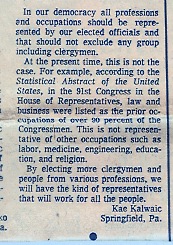
The second letter appeared in the Delaware County Daily Times, on Friday, July 5, 1974.

As election night approached, we were still very much uncertain of the outcome. We faced a voter registration of 3:1 in favor of Republicans. The Republican party ran a new candidate, county district attorney Stephen J. McEwen. The G.O.P. had plenty of monetary resources while Bob’s campaign spent only $3,000 on his primary. Even the Associate Director of the Democratic National Committee stated that “the national party does not rate the chances of winning the 7th district seat as high as other districts.”

Undaunted, the campaign soldiers solicited friends, neighbors, and family members to help Bob’s campaign. We were determined to keep the momentum going. I signed up to distribute campaign literature outside the polls at the old Central School in Springfield on Election Day. After the polls closed, my job was to call in the voting tallies to the Edgar headquarters.

That evening after the voting was complete, I held my breath as they opened the voting machine and read the numbers. Bob had won with a clear majority. I called in the tallies and headed over to the headquarters. We were still waiting for the final results to come in from the other precincts when Stephen McEwen entered the room with his entourage. I could hardly believe Steve was conceding as we expected a long night of vote counting. The joy of the victory spread through the crowd as we shared that moment of celebration with each other.
Bob passed away on April 23, and his contributions to Common Cause, as well as his accomplishments when serving six terms as a progressive congressman, are being remembered in The New York Times, the Nation, and Huffington Post. For me, Bob’s greatest legacy is when he stood with the people of the 7th Congressional District to restore democracy from control of one-party rule.

Thank you, Bob.

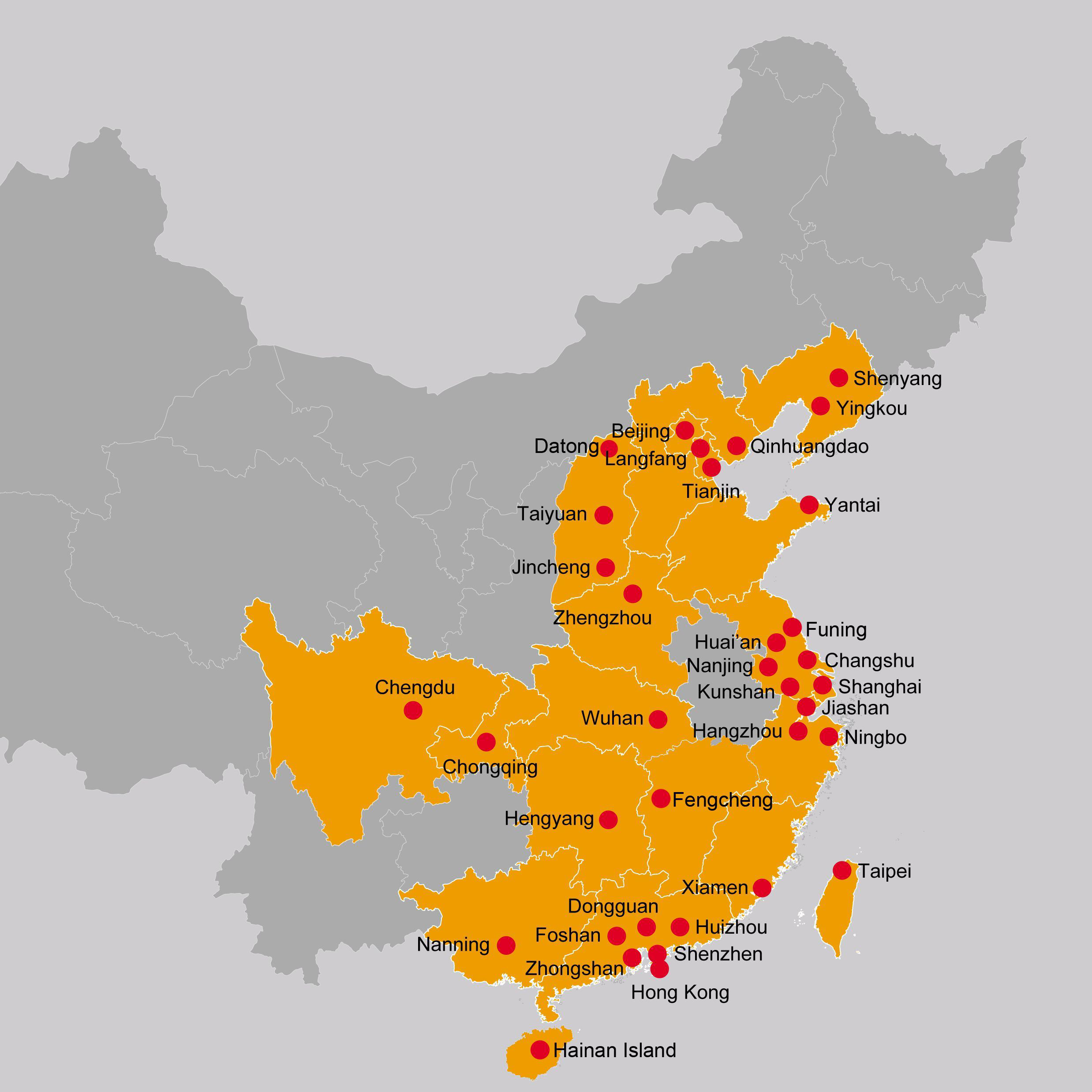
 Unfortunately, conditions in many of these plants operated by Foxconn in China, as well as in other countries, reveal that many workers are subject to exploitive practices. In April 2011 the story broke that seven Chinese workers had committed suicide.


 Psalmboxkey's Blog