Humble Contributions to the Peoples' History

Archive for October, 2012

Little Orphan Annie, the Poem Rewritten for the Political Climate Today

Mary Alice Smith, Riley’s inspiration for the poem. Wikipedia

In an earlier post, I described our family’s celebration of Halloween and how my Mother,  born in Scotland, followed the Celtic Halloween traditions. Our grade school classes also had Halloween celebrations–everyone would dress in costumes and parade around the school grounds, followed by parties in the classrooms. Homeroom mothers would serve cider along with orange and chocolate cupcakes.

One year my Mother came up with the idea that I should dress up as “Little Orphan Annie” – not the comic book character, but from the poem by James Whitcomb Riley. Riley based his poem on a real person, Alice Smith, who became orphaned when her father died in the Civil War. Allie, as she was known, lived with the Riley family, and she would tell stories to the younger children after finishing chores at the end of the day.

For my orphan Annie costume. I wore a dress with an apron and black stockings and carried a dust cloth and broom. I memorized the poem for a classroom presentation; Mom coached me on the proper inflection at the end of each stanza, “and the goblins will get ya if ya don’t watch out!”  Thinking about the poem, I recalled these lines . . .

and cherish them that loves ya, and dry the orphans tears
and help the poor and needy ones that cluster all about,
or the goblins will get ya if ya don’t watch out!!!

I became inspired to rewrite the poem for today’s current political climate, just before the 2012 election.

Over the past few months, I have received forwarded emails, not about a particular political issue or articulated argument advocating one position or another, but rather content focusing on rumors and lies with obvious prejudicial biases. In rewriting the poem, I included the lines above, written over a hundred years ago, as they apply today as well.

The Ghost of Little Orphan Annie on Election Eve

The ghost of orphan Annie has somethin’ strong to say,
Things you might’ve heard before but may have brushed away.
About payin’ those taxes, is that so very bad?
Or are ya worryin’ and fretin’ and makin’ yourself sad?
For all the roads an’ bridges, schools, an’ parks an’ like
Just let them go to dust?  Well, that would be a fright.
If you’ re complainin’ then finishin’ with a shout
The goblins will get ya if ya don’t watch out!

There’s ways to pull together as Americans will do
But a bake sale to cure a kid with cancer, mumps or flu?
Or how about a doctor for the child ill next door?
Or are ya a listenin’ to that politician’s unrelenting roar?
Now payin’ fair share, that’s not a scary scheme.
Those with more wealth could help, or so it would seem.
So let’s all pitch in together, please, don’t be a lout,
Or  the goblins will get ya if ya don’t watch out!!

Are ya balkin’ to give to causes that benefit us all?
Or is money is better spent on merchants at the mall?
With the social security Grandma can live her own
Rather than in your basement without a telephone.
And those that will follow you, fond an’ dear,
Take care of them, please, an’ dry the orphan’s tear
An’ help the poor an’ needy ones that cluster all about,
Or the goblins will get ya if ya don’t watch out!!!

So who are the goblins, do they hide in the night?
They’re just right in front of ya, in plain sight!
They tell ya that science is not on your side.
They tell ya not to worry, take your car for ride.
They point to your working pal as stealing your dough.
When its unregulated Wall Street that’s really the foe.
They make up a story so you’ll hate those abroad,
Those many poor souls, also victims of fraud.
Think: is it your anger what this is all about?
Then the goblins have got ya, ya didn’t watch out!!!!
Halloween Pumpkin Carving at its Best

So why do we head out into the chilled night air to look at pumpkins?

From ghoulies and ghosties
And long-leggedy beasties
And things that go bump in the night
Good Lord, deliver us!
               Scottish Prayer

Halloween has always been my favorite holiday. Growing up, I thought it was everyone’s favorite because our family made the day a special celebration. I attribute that fondness for the holiday to my Mother, who was born in Scotland and brought with her the spirit of Halloween with stories of ghosties and ghoulies. My neighborhood friend, Joan, reminded me that Mom would peel apples for us, taking care to not break the peel. Each of us then tossed the peel behind our backs to see if  ghostie would grant our wish. Halloween originated in Scotland dating back when the ancient Celts celebrated Samhain, marking the end of summer and the beginning of the dark half of the year. The Celts celebrated the day by wearing masks, called “guising” or going into disguise, to scare away evil spirits. Halloween night seemed to be mystical experience–dressing in costumes, wandering about in the cool evening air, and thinking about the specter of strange and otherworldly happenings.

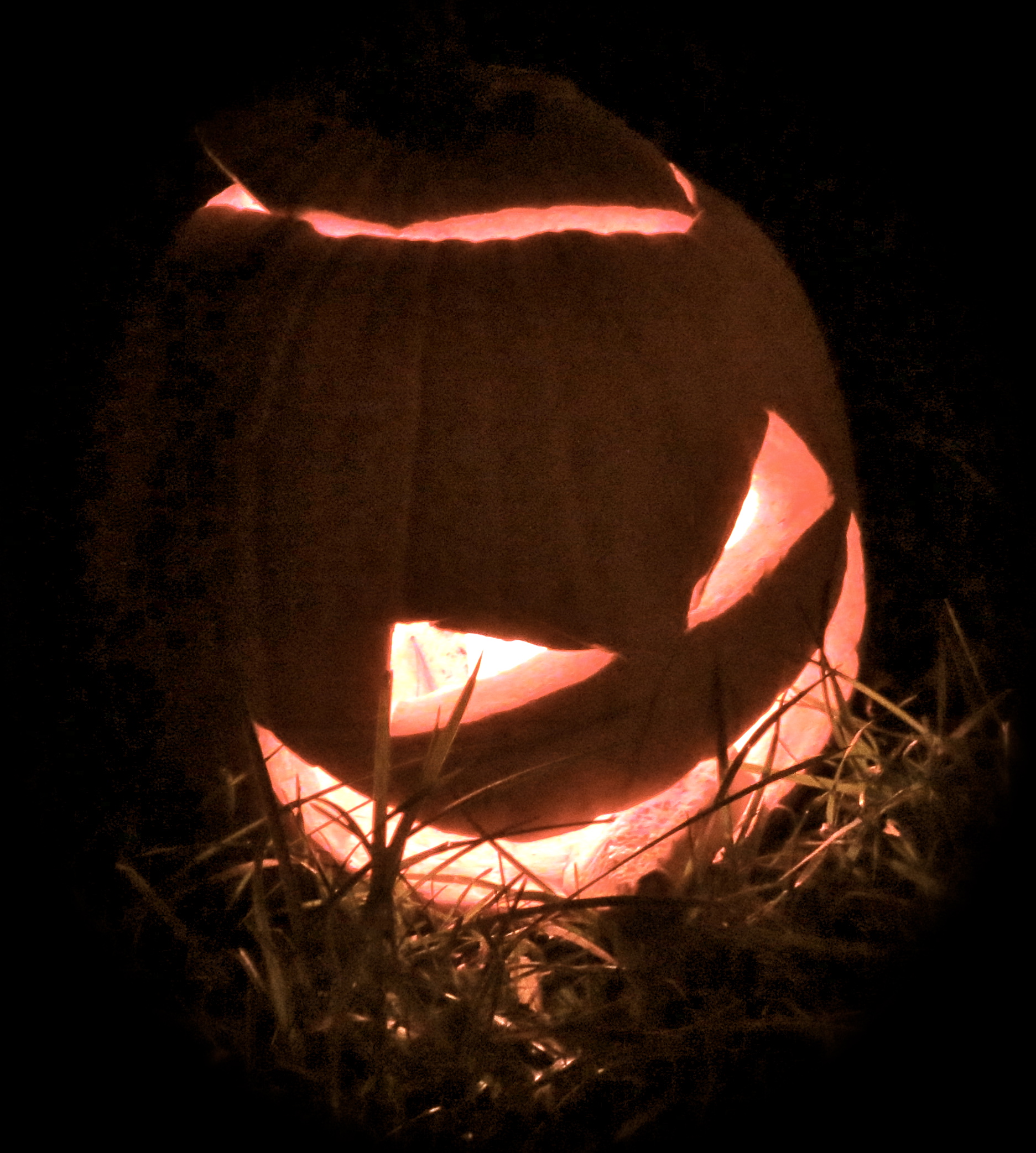
When Fall came around, our family usually headed out to the country to buy gourds, indian corn and pumpkins. We carved our pumpkins into jack ‘o lanterns; the tradition arises from the strange occurrence of light flickering over peat bogs. Originally turnip lanterns provided the Halloween decorations in Ireland and the Scottish Highlands.

Despite all the talk of witches, fairies, ghosts, skeletons, devils and apparition of all sorts I knew that these references were merely whimsical. Mom was firmly planted in reality and folk beliefs were just stories. Mom clearly identified superstitions, including most religious customs, and separated fact from fiction. We had so much fun trick-or-treating around the neighborhood with our friends. Supposedly, the idea was to threaten a trick if we didn’t receive a treat, but that scenario was never part of our tradition.

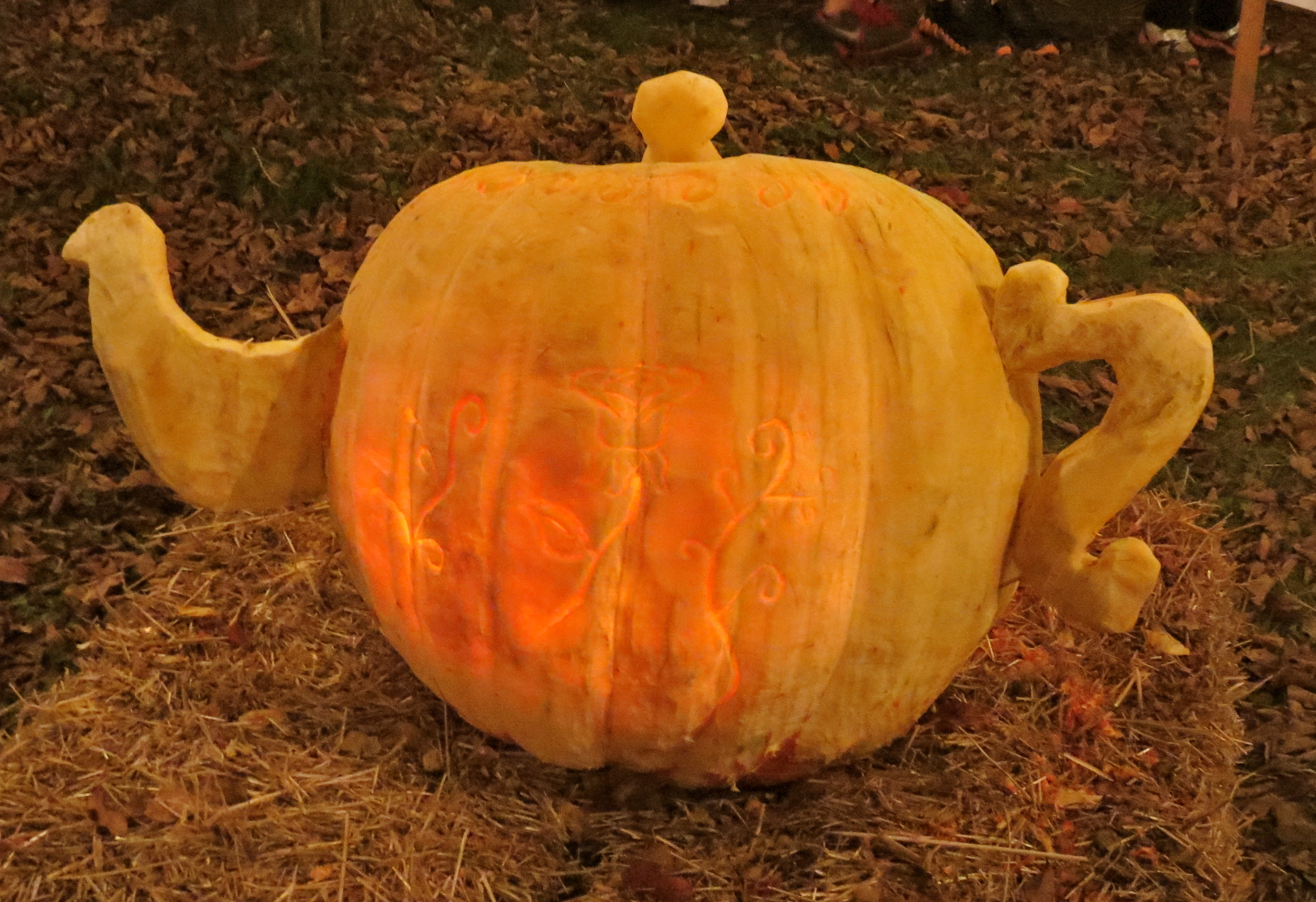
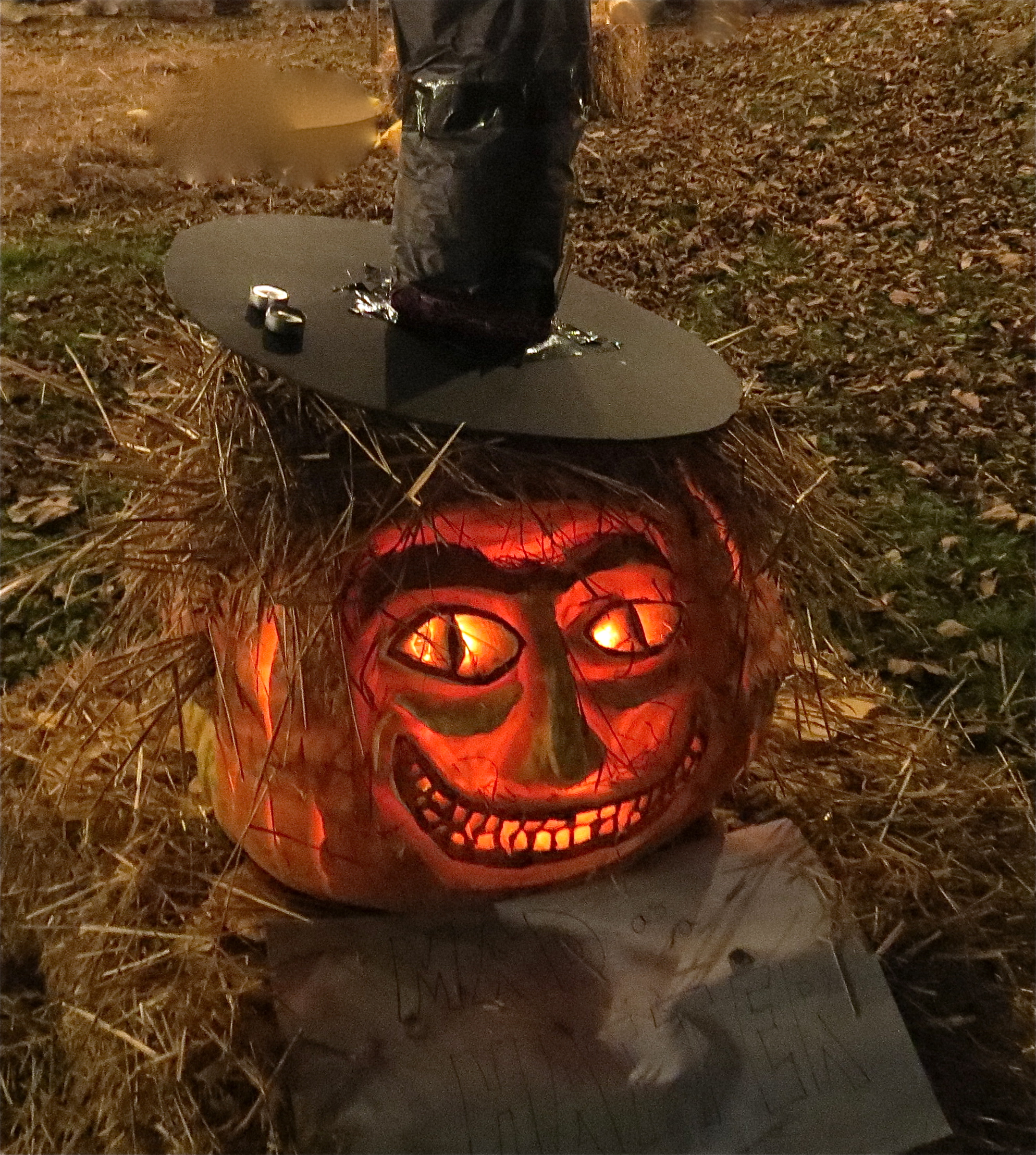
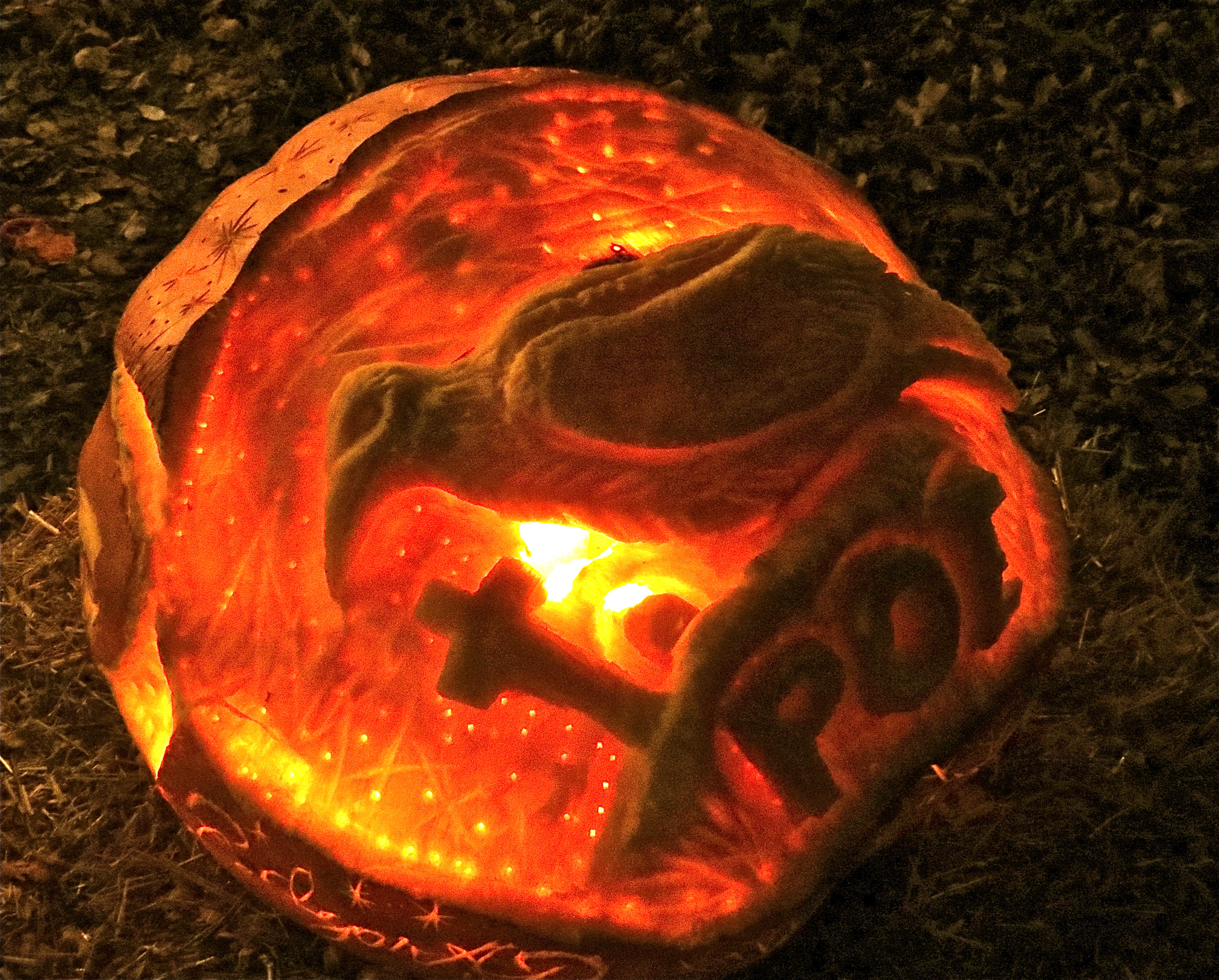
Harvest moons, apples, hayrides, anything to do with the season still resonates with the whimsy of my childhood so it seemed only natural to drive out to Chadds Ford to see the Historical Society’s annual pumpkin carving contest this past weekend. The Great Pumpkin Carve, a Chadds Ford tradition, began in the 1970s and spread from a few porch displays at the Chads Ford Inn to covering the entire lawn. All the pumpkins used in the contest are native grown, some weighing as much as 400 pounds.

What I imagined as a few pumpkins displayed in field turned out to be an explosion of activity. It seemed as if everyone in the county turned out to view the works of the pumpkin artists! Nobody could be disappointed.  Below just a few of the displays . . . .

I’m a little pumpkin, short and stout . . .

Ouch!

An entire story on the surface of a pumpkin . .

Mad hatter, no less

Nevermore

Calling wolf

Friends, cider, pumpkins and enjoying the moonlit night . . . it’s Halloween!

Appreciating the Needlework of our Grandmothers: Part II

Several months ago I wrote a post for International Women’s Day, Appreciating the Needlework of Our Grandmothers, in which I described how I sorted, then displayed, my Grandmother’s needlework and quilts. Her fabric art had been left in an attic trunk; with renewed appreciation, I researched different pieces in the collection.

Kay

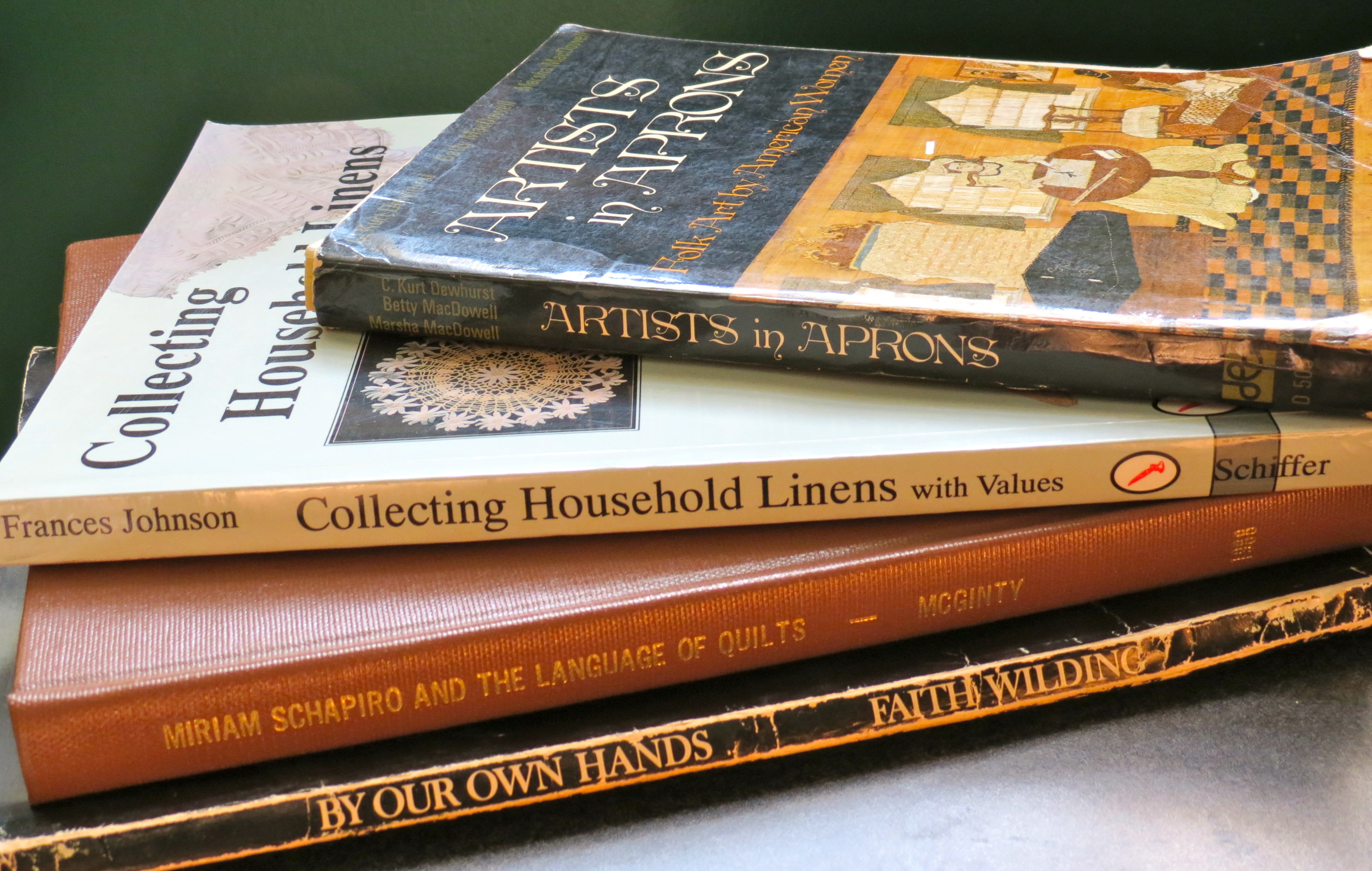
In this post, I’ve included several more photographs of my Grandmother’s quilts and added history on the subject. My friend, Kay McGinty, lent me several books on quilts and needlework. For her graduate work, Kay completed a thesis entitled, “Miriam Schapiro and the Language of Quilts,” which offered an informative study of Shapiro’s artistic creations. Schapiro, a leader in the feminist art movement, used elements of quilting in her creations and brought quilting into the “realm of high art.” Using the quilt as a model, Schapiro incorporated quilting patterns and designs into her collages.

Brooklyn Museum: Anonymous was a Woman

Anonymous was a Woman
Miriam Shapiro
Acrylic and Collage on Paper
Brooklyn Museum

The early 1970s saw a flowering of popularity for quilting as art historians began to appreciate quilts as art. Also contributing to the interest, artists began to focus on American crafts, and the feminist movement brought attention to the culture of women’s lives. Artists began to use elements from the heritage of quilt art that women had been practicing for over two hundred years.

Years ago, my father-in-law asked if I would like to have the sewing machine that belonged to his wife. The veneer top had been terribly warped; I was taking a woodworking course at the time and decided to rebuilt the top on the treadle foot cabinet.

1910 Red Eye Treadle Singer 66

Although women mostly quilted by hand, the sewing machine could also be used. This machine, over a hundred years old, can still handle most heavy-duty sewing. Internet sites include those that support human-powered sewing machines; this page displays treadle and vintage sewing machines.

A uniquely American institution, the quilting bee provided the opportunity for women to work collaboratively on the last steps of quilting, the completion of the top of the quilt. The time spent during a bee became an opportunity to share news, discuss politics and learn new skills. Susan B. Anthony spoke at a quilting bee in her first speech advocating for the right to vote.

My Grandmother created this basket quilt in 1936; the basket pattern was popular in the Depression Era. Reflecting the romanticism of the Colonial Revival, baskets were symbolic of the Colonial period.

My Grandmother used bright pastels and a geometric print on this next quilt, representative of another popular pattern during the Depression. Done by hand, this is a particularly labor-intensive pattern referred to as Grandmother’s Flower Garden. In paging through the book, Artists in Aprons, I came across a photograph of quilters in Detroit, Michigan. My Grandmother lived in Royal Oak, just outside of Detroit, where in 1938 over 18,000 women attended a quilt show at Wayne State University. Today quilting is a $3.6 billion industry.

The debate continues on what is art and what is craft–what seem to be arbitrary designations. A quilt made for exhibition falls into the category of art while authorities designate a quilt made for a bed as craft. Art created for the home or for function cannot be peeled from the realm of artistic creation. To do so would be to discredit the art women create, many times in extreme hardship or because of limited artistic opportunities. Gathering little pieces of cloth, sometimes from rags, women found a way to express artistic form in quilting and to make that art part of  their home. I never knew my Grandmother, but I can feel her creative presence in her quilts.

Quilting Sites of Interest

Why Quilts Matter

The Quiltmaker

Womenfolk: The Art of Quilting

Quilt History: Layer by Layer

Chiekoville

Tag Cloud