Humble Contributions to the Peoples' History

Archive for March, 2012

Solace in the Face of Grief: Three Expressions of Comfort

In addition to experiencing the tragic loss of someone dear to us, grief visits us, as life sometimes overwhelms us with despair. As life events were making me feel that I had lost something, I realized I was experiencing feelings of grief. At first, I dismissed this notion as how could the loss of someone close compare with other tragedies? Nevertheless, I allowed myself to name the feelings as grief and look for comfort.

Years ago I came across a letter entitled Consolatio ad Uxorem  by Plutarch, a Greek who in 6111AD composed a letter of consolation to his wife on the loss of their two year-old daughter. I revisited the letter again to see if I could find comfort from what Plutarch had written so long ago.

With a close reading of his letter, I found three phrases that offered solace and peace.

“. . . something that you believe will make your grief easier to bear, that too you shall have, so it be done without excess or superstition . . . “

Plutach cautions his wife to beware of excess and superstition as the first steps toward reconciliation.  Experiencing grief, my emotions overcome logic and balance. Emotions flood my brain with excesses probably related with the flight or fight response. I find it almost impossible to draw on reason. It seems that these excesses compounded with superstition, which fosters the belief that one cause is linked to another without evidence, encourages illogical and discouraging thoughts to dominate. Thoughts cycle round and round, locked by emotions and driven by assumptions. Aware of this cycle, it is possible to disengaged from thinking in loops.

“any extravagance of distress in you, this will be more grievous to me”

In my feelings of grief, I’m constantly aware that if I allowed myself a selfish response by indulging grief, I would actually hurt people I am close to. This is not meant to say that we can’t let others know how we feel. Of course, we must do this, and loved ones want to offer comfort. Part of our comfort is accepting what others can give us, and sometimes holding back a bit of all that is overwhelming us might be a consideration. A friend of mind wisely once said when I suggested a disastrous possible outcome, “Don’t put that out in the air,” she said. I think what she meant is that some of our irrational thoughts gain momentum and validity, reinforcing what may not be helpful.

“we must not sit idle and shut ourselves in, paying for those pleasures with sorrows many times as great”

We can do nothing about some of the circumstances we find ourselves on this earth, such as living and dying. Sometimes injustices and life events are beyond our control. We can control our responses to these events. Should our grief overpower and destroy all the beautiful moments of life? Would our loved ones want us to suffer endlessly with their memory or difficult life outcomes? Does misfortune outweigh all the kindnesses shown us? How can we now bring some good on this earth by reaching out to others? We should not consider the small good a great evil, nor, because Fortune did not add what we hoped for, be ungrateful for what was given.

* * * * * * 

We experience lovely moments on this earth as we spin around the sun in the vast universe of emptiness. We are precious, for if we were found on a distant solar system, we would be celebrated as miraculous. We live on this planet after fourteen billion years as our universe continually expands at exactly the perfect rate. Supernovas create the elements necessary for life, and like the supernovas, we exist in a flash of time.

Plutarch comforts his wife to resist those manifestations that darken our thoughts leaving us unable to accept soothing influences. That is all we can do and all we must do, for our moments are precious and soon lost to the passage of time.

Enya ~ A Moment Lost

Two excellent links:

Part One, When You’re Grieving

Part Two, Helping a Grieving Friend

Outfitting a Nursery for under $30!

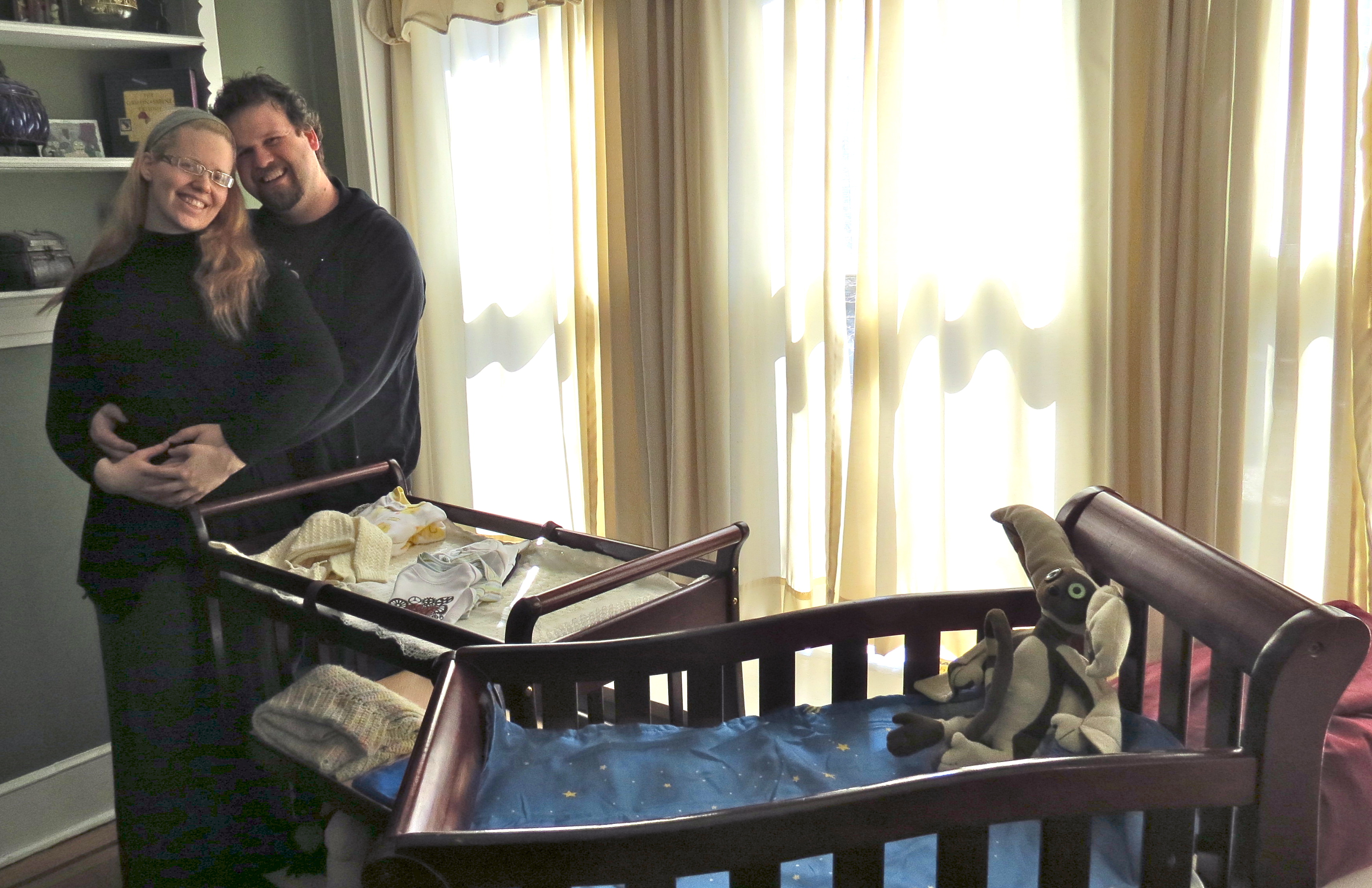
Our first grandchild is due early August so our thoughts turn to assisting our daughter, MaeC, and son-in-law, Jared, in setting up the space for the new arrival. As a yard and thrift sale aficionado, its time to see what treasures are waiting out there. Thrift store shopping requires frequent stops, but it’s possible to hop in and out quickly when focused on what you want. Because baby things are only used for a short time, most people are happy to give away what they can no longer use, so usually there’s a good selection.

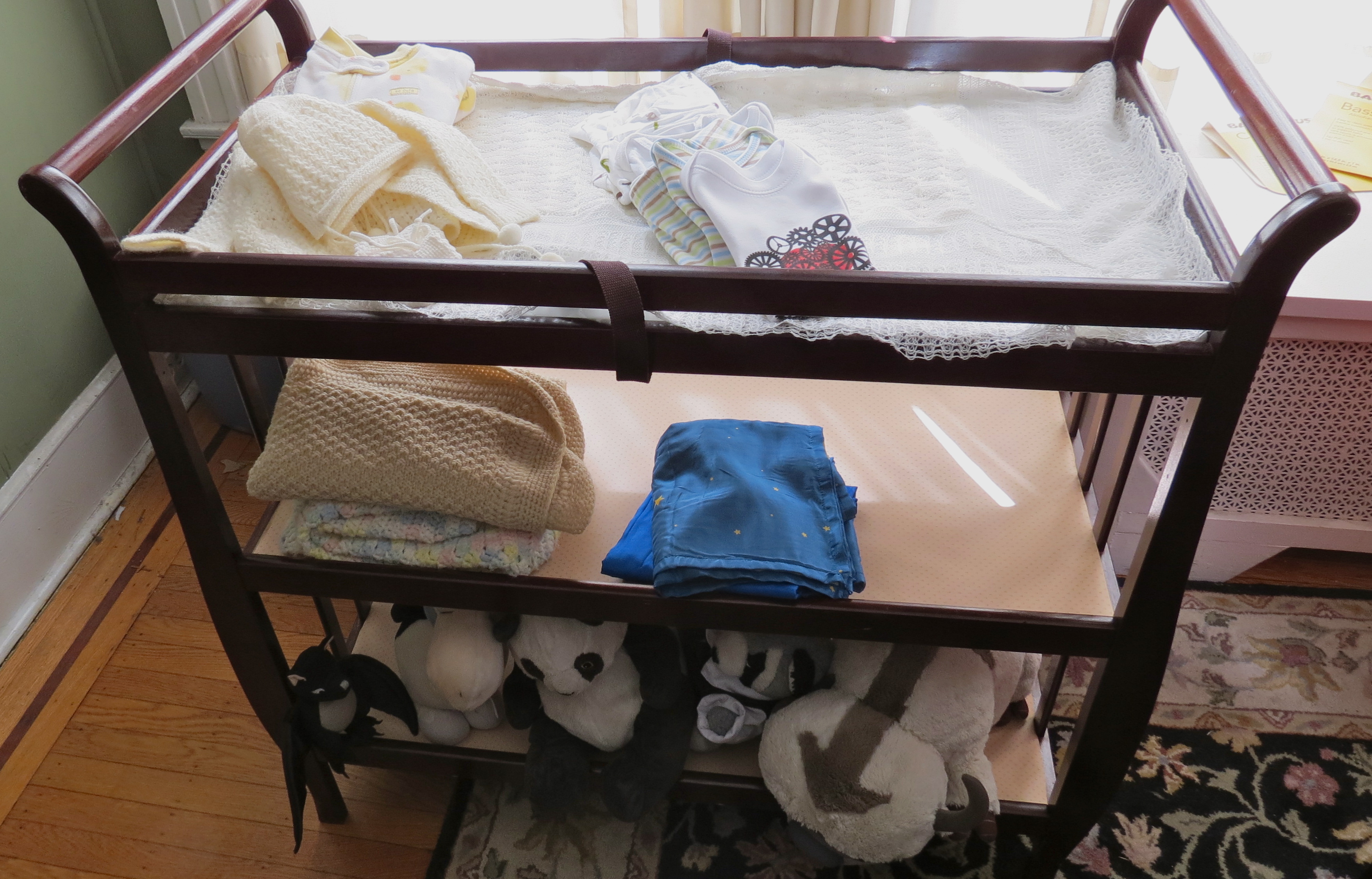
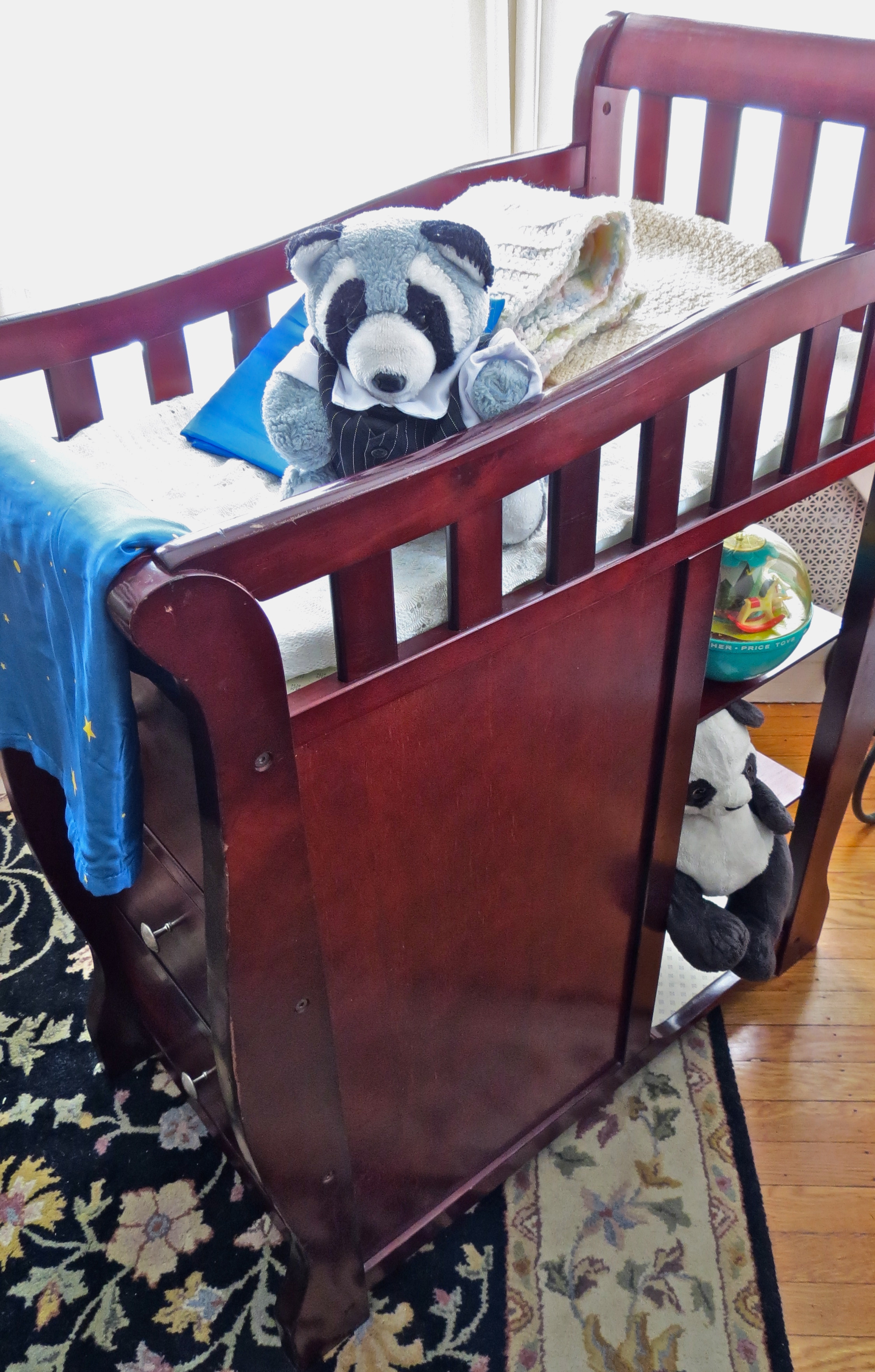
After MaeC and I checked out two thrift stores with no success, our luck changed with our third stop, for right in front of us stood two changing tables, one standard, top platform and two shelves, and a second dressing table with drawers and shelves. The two pieces matched and had a rich cherry finish. However, both were dinged up and needed a good polishing. Knobs had fallen off the drawers. Still, at ten dollars each, we couldn’t pass up the deal.

On our way home from the thrift store, we stopped by a hardware and picked up three knobs. Once at home, we started the restorations, beginning with cleaning the pieces with furniture polish, and using a furniture marker, fixing the places where the finish had worn off. The marker worked especially well with the dark wood. I’ve used these markers on furniture the cats attacked and even deep scratches disappear.

Next, we attached the knobs, which was an easy process of inserting the screw and turning the knob.  For some reason one knobs was still loose, but after adding a washer on the inside of the drawer, that adjustment made the knob fit tightly.

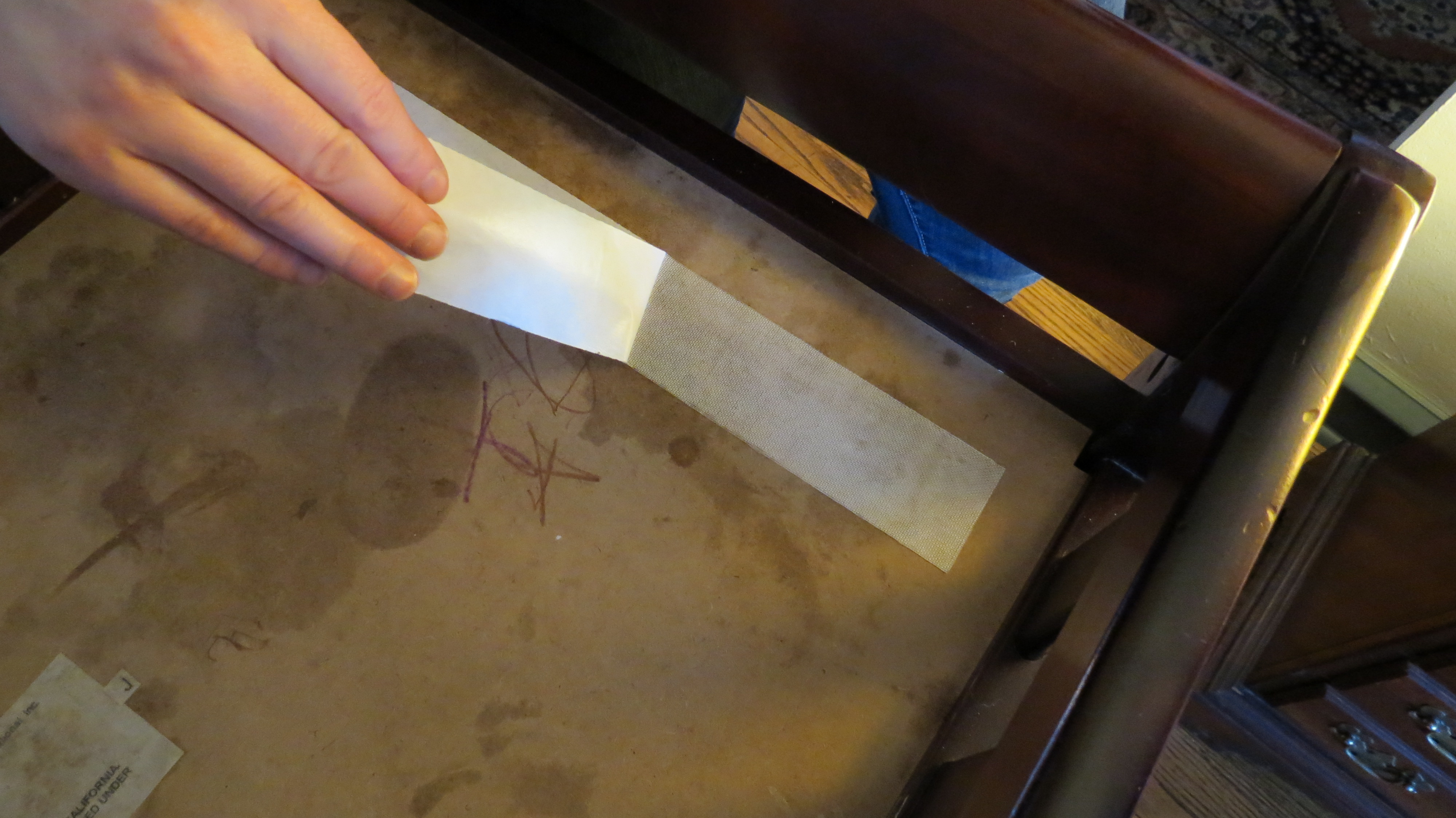
The shelves, spotted and stained, gave the pieces a poor appearance. We had two choices: to paint the shelves or cover them. Since I had saved leftover wallpaper, we decided to cover the shelves.

We went up to the attic to retrieve the rolls, selected two and then began measuring. Double-sided carpet tape worked great for affixing the paper to the shelves.

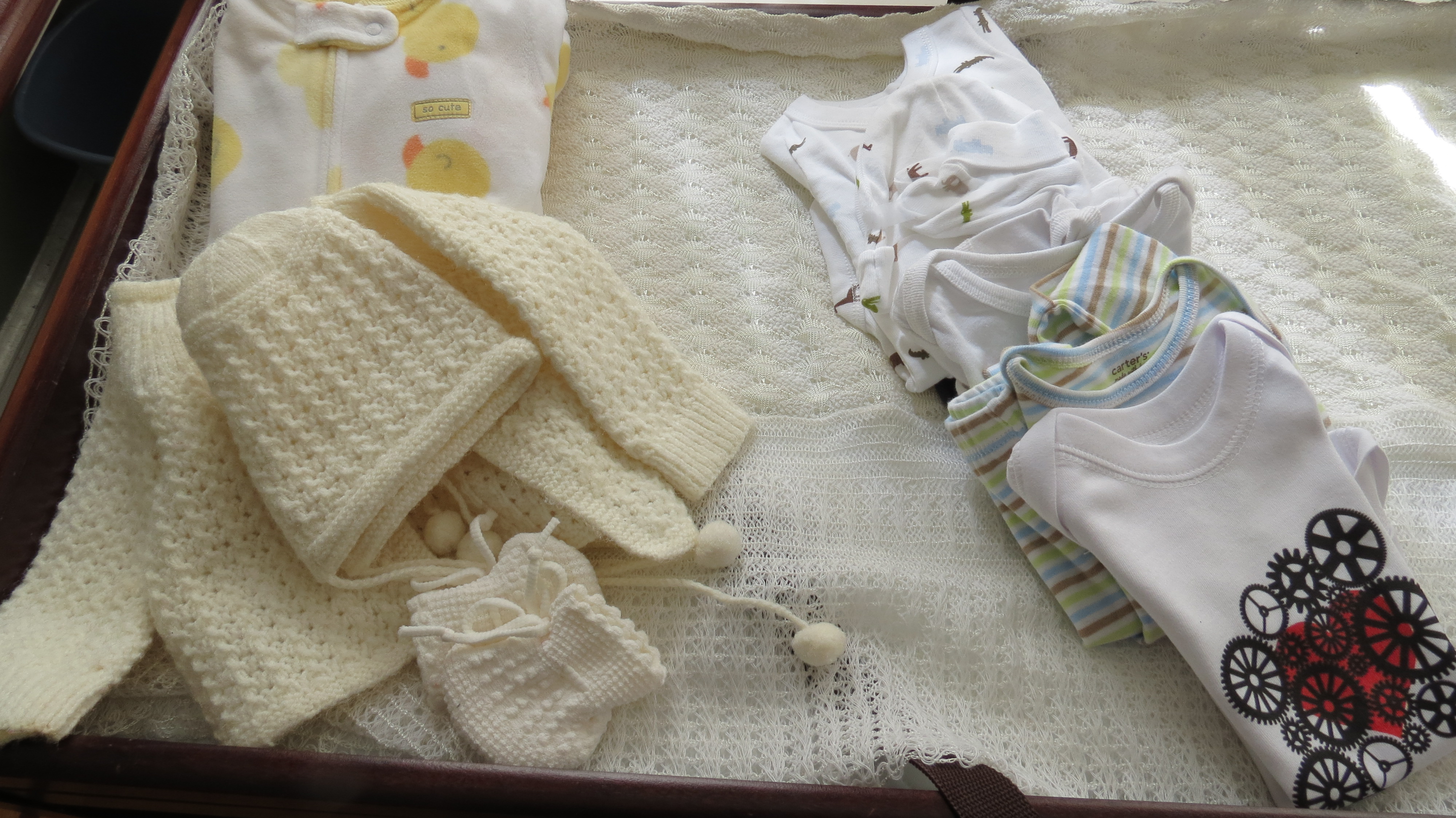
In keeping with our recycle up, I returned to the attic to find the clothes and blankets I had saved from the children’s baby days. After washing them up and air drying, the baby items were ready for storage in the changing table.

Jared’s mother, Gwen, sent along some new baby clothes. A little steampunk shirt rests alongside of the knit hat and sweater MaeC wore on her trip home from the hospital all those years ago. Gwen also sent two handmade blankets and stuffed animals from Jared’s childhood.

MaeC and I had a great time fixing up these pieces and spending time together working on this project. Adding the finishing touches, all we need now is the baby!

Do Movies Influence Children’s Psyhe?

When I was six years old, my mother took the family to see the movie, Lili, released in 1953. My mother purchased the sheet music from the theme and would play the song on the piano, singing along. I remembered liking the song, too, and we’d talk about the movie.

The central plot of the story centers around Lili, a young woman left alone, and finding her place at a carnival. She falls for a magician, who rebuffs her. Thinking that all is lost, Lili contemplates suicide. Paul, the lame puppeteer watching her from afar, draws her into conversation with his puppets. Paul hires Lili as part of his act, and her innocent and sincere interaction with the puppets becomes an instant success. Although Paul falls in love with Lily, he is unable to express that love except through the puppets. After an argument, Lily leaves. As she wanders down a long road, the puppet images come alive in her imagination. Through dance, Lily realizes that Paul is the puppets, and she rushes back to the carnival.

Leslie Caron plays the part of Lily, who I remember as most convincing as the naïve girl finding her way in a harsh world. Her brimmed hat and sweater with the lace collar convey a sweet innocence. The photograph below of my mother taken in 1945 reflects style similarities of the time.

My Mother 1945

The expression of love through the puppets stayed with me long after my mother stopped playing the song. I came to believe that showing kindness, but from behind the scenes, made that moment magical. Elements of reality and fantasy co-mingle and mimic the puppet master and the puppets. Everett Ferguson wrote on the modern perspective of magic, which is a result of a universal sympathy.

The laws governing these connections may be unknown to most of us, may be hidden even from the magician; but it is in virtue or organic, natural, that magic works.

Where this all becomes interesting is understanding the effect of movies on children especially as an intersection to their parent’s reactions to the same film, which supports or negates the child’s experience. The borderlands between reality and fantasy are part of all movie-going experiences. While the movie Lily captured my imagination, I’m somewhat convinced that my mother’s influence played into my remembrances and taking in elements of the film personally.

I’d be interested to know if others connect to films through some aspect of their parent’s reactions. Let me know.

Appreciating the Needlework of our Grandmothers: Rethinking Four Issues

Mae Kerr

In Celebration of International Women’s Day, March 8

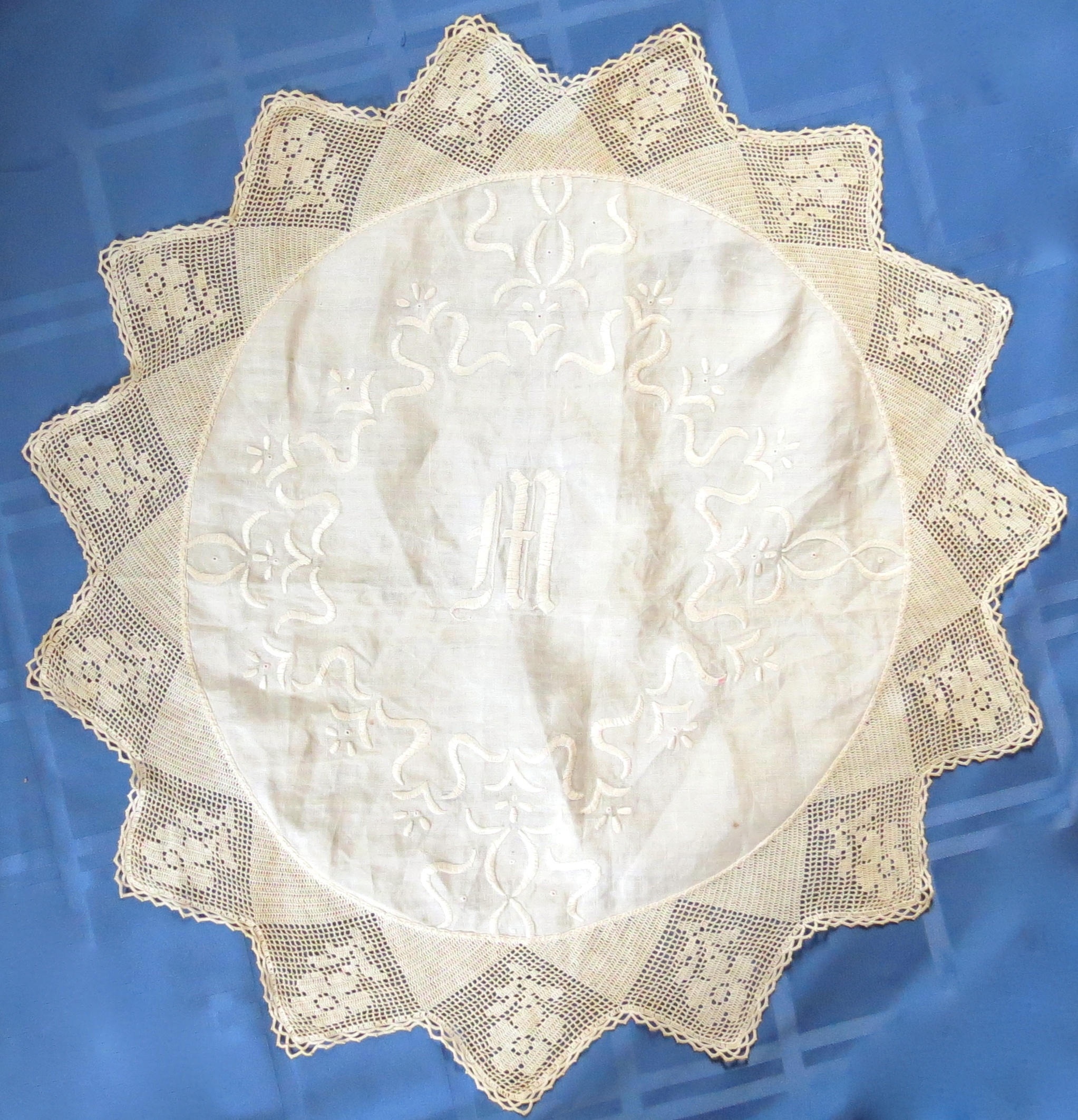
Years ago my Mother gave me my Grandmother’s needlework from the early 1900s. Linen tablecloths, napkins, handmade doilies, place mats, coasters and other assorted pieces remained in a disheveled pile in the attic for years. Occasionally, I would pull out a doily or bureau scarf to use around the house, but with so many pieces to choose, most were left untouched.

I could not find much information on the history of crocheting, needlepoint and embroidery as part of women’s lives around the turn of the 20th Century, although some sites did have information on quilting. Many sites sell patterns and vintage embroideries, but I found little information on women’s specific part in the history of these skills. On the website Crochet Insider, an article states,

In the United States, there is virtually no written history of crochet. Of the few books providing historical treatment of crochet, only one had a portion dedicated to American crochet history. Denise Levoie

To reexamine these pieces of art became my goal. Listed below are five issues that I faced and solutions to those problems.

1.  Overwhelming quantity. I couldn’t figure what to do with so many items, and stains and disrepair characterized many of the pieces. I couldn’t just throw them into the washing machine so I thought it best to leave them until I could figure out the proper washing.

Solution: I sorted the pieces into categories, deciding which pieces could be given away, saved and restored. I planned to make a collage of the needlework for each female member of the family. With everything organized, each piece then became its own unique piece and its value more readily apparent.

Crochet: Pineapple Pattern

2. The question of utilitarian value. How does one find a use for a doily? I can see how they could be used as furniture protectors, but modern glass and plastic glass holders work better. For modern decor, a lace doily just doesn’t fit. Certainly, having a linen tablecloth with a crocheted edge is beautiful, but washing a vintage tablecloth frequently probably is not wise, running the risk of ruining the fabric.

Fan Quilt

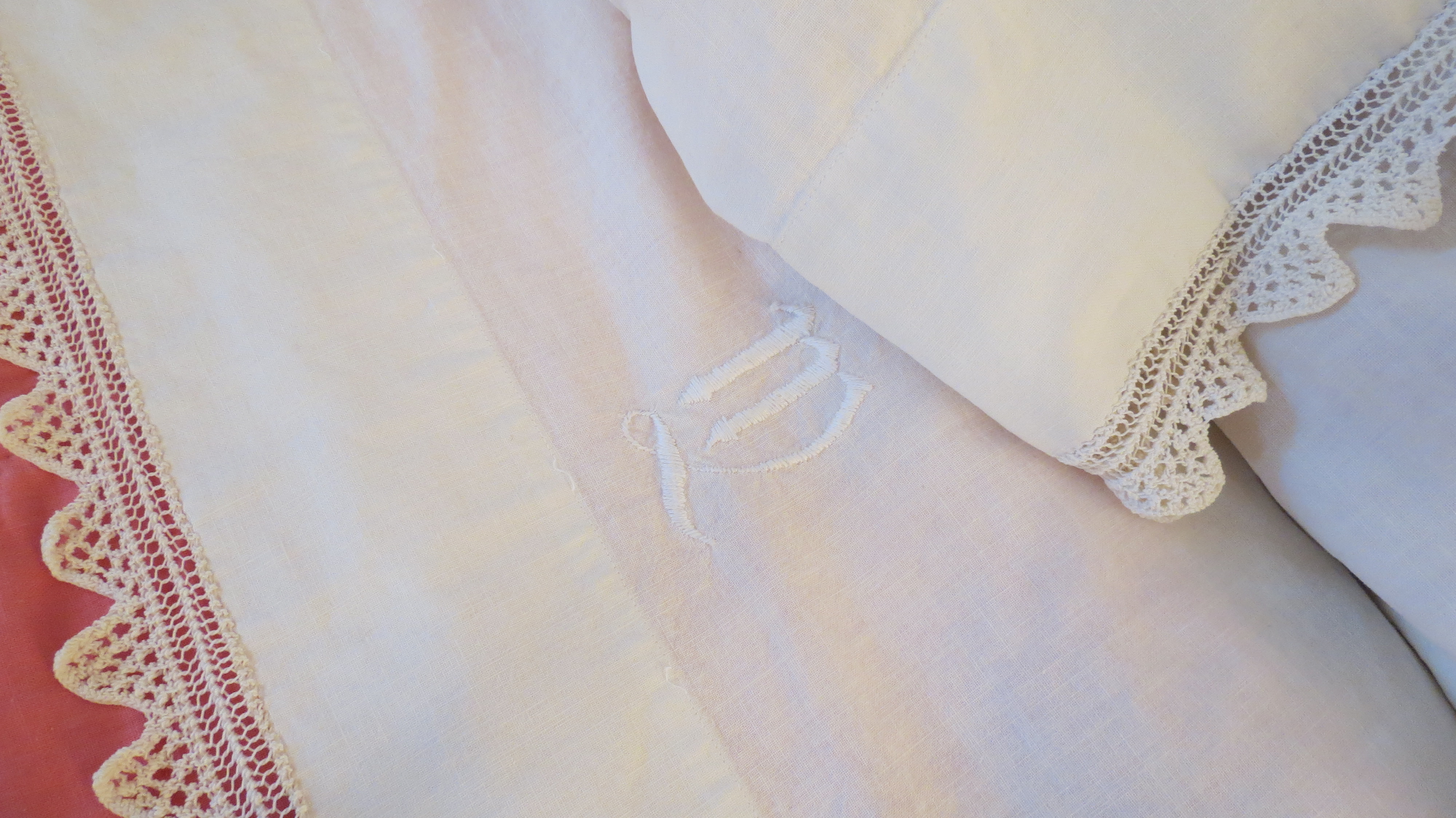
Detail: Crochet on sheets/pillowcase

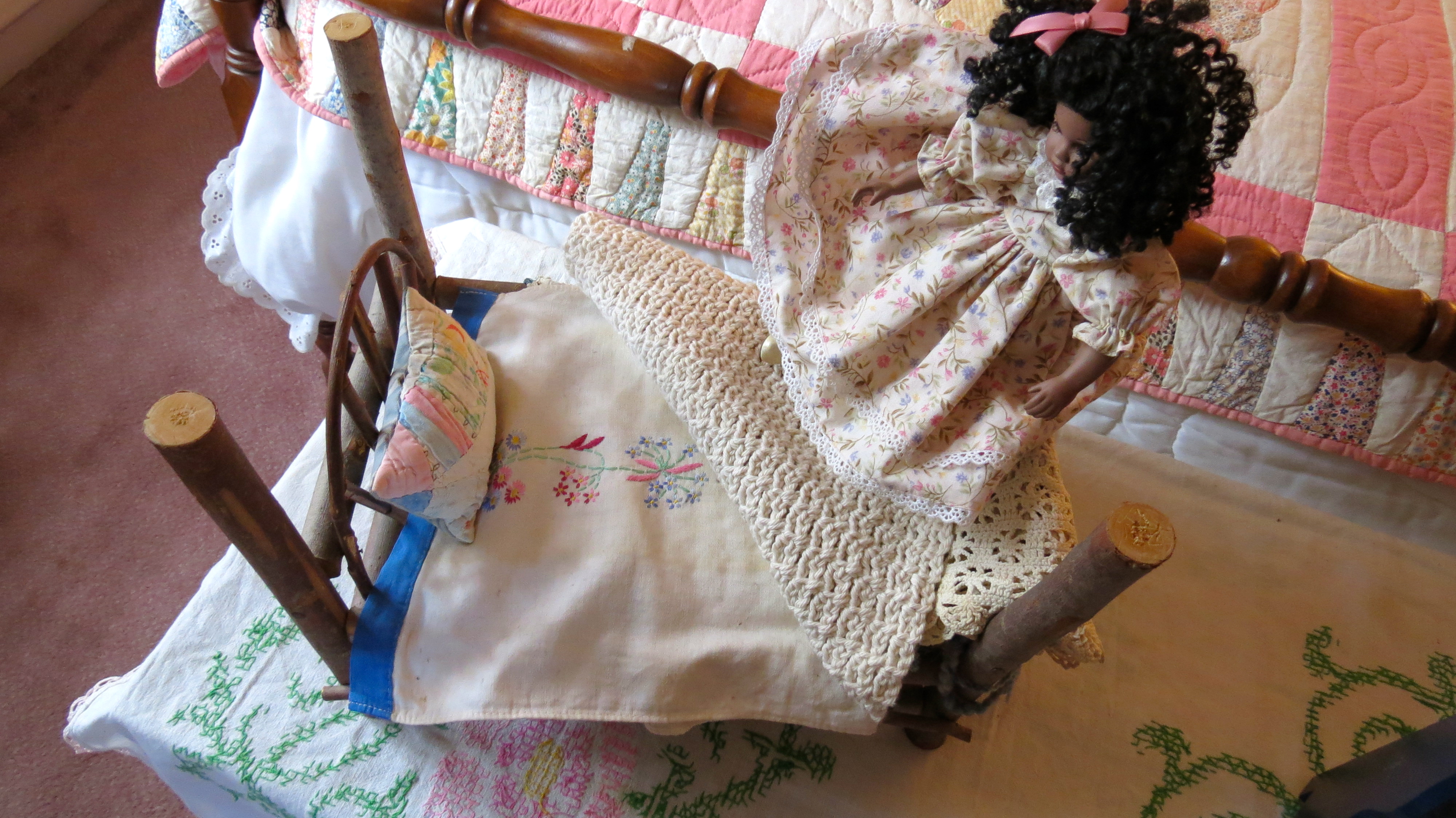
Solution:  I decided to go “shabby chic” with our guest room.  I bought furniture at thrift shops and resurrected some pieces from the attic. The doilies and quilts worked well in the room. I carefully washed the sheets and pillowcases and put them on the bed. I used some of the smaller pieces as blankets in a doll’s bed.

By the 1920s the color of fabrics changed as women began to prefer pastel and light color schemes. I would date the quilt above from that time period. Quilting was transforming from a utilitarian craft to an art form. Art has a greater positive connotation than craft, but is this the result of our culture’s elitist values? Should we reject the art classification, which in some ways diminishes utilitarian value? I could argue that these creations are decorative, and, therefore art, as the practical use has almost completely disappeared due to the delicate nature of the fabric and needlework.

3. Generational distance and missing the oral history. These pieces came from my father’s mother, who had passed away long before I was born. My mother’s mother had no such collection. She came from the tenements of Clyde Bank, Scotland, raising eight children on poverty wages. According to the Internet, women who had some free time were able to work on needlework projects. Although her husband was an auto worker, Mae Kerr did not work outside the home, allowing her time to crochet and quilt.

On a cursory inspection, the pile of linens seemed amorphous . . . sort of lacy stuff, I would call it. Was it lace–crochetted, knitted, or embroidered? Were the threads silk, linen or cotton?

Crochet on Apron

Solution: Research on the Internet provided information on the various needle crafts.  I was able to identify the quilt patterns my Grandmother used. I also spoke with several women who could tell me about the different styles, sewing techniques and fabrics. After some investigation, I now have some familiarity the terminology, such as the various kinds of laces, tatting, needle point and white work, just to name a few.

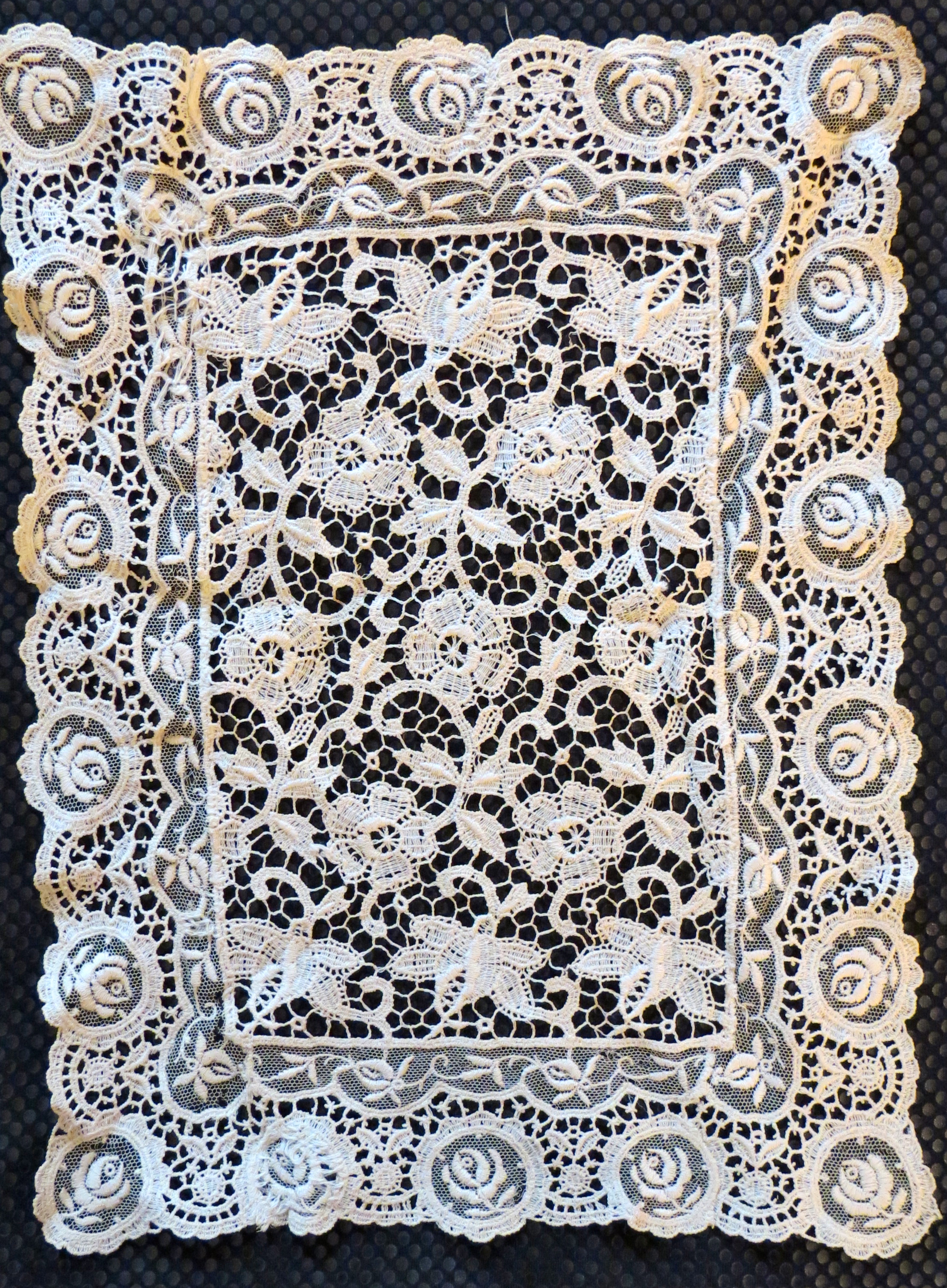
Tatting

4. Lack of appreciation for women’s artistic contributions.  As a student, I studied the great works of art, especially painting and sculpture, but fiber arts, especially as practiced by women, was seriously neglected in the artistic cannon of works. In the mid-1990s I enrolled in an art history course at Swarthmore College with Michael Cothren, and for the first time, read an academic article on the artistic merits of quilts. Museums display quilts in huge frames, which I found somewhat disconcerting as that removed the context of the bed and bedroom from the display. Does anything make a room look more cozy than a quilt on a bed?  The Alliance of American Quilts established their mission “to document, preserve, and share our American quilt heritage by collecting the rich stories that historic and contemporary quilts, and their makers, tell about our nation’s diverse peoples and their communities.”

Solution: Learning more about fabric art assists in understanding this art form. A good article I can recommend is “The Distinction between Art and Craft” by Sally J. Markowitz. Websites I found helpful:

Time ‘n Thyme Again

Accent Linen and Embroidery

How to Clean Vintage Doilies

Lizzie’s Vintage Linens and Threads

Lacis Museum of Lace & Textiles

Detail: Tatting

By sharing my Grandmother’s needlework on the web, I hope that I can contribute, in some small way, to an appreciation of these artistic creations. Women’s International Day stands for decent work for women. With the focus on that goal, we must ensure that women, whether working outside or inside the home, have time to pursue self-expression. Frantic work schedules that press on a women’s free time and low wages that demand that women hold two or three jobs works against the common good, depriving our culture of untapped invention and creativity.

Philadelphia Flower Show: I Can Do That in my Garden, Really?

The Philadelphia Flower Show offers inspirational ideas to gardeners. The beautiful displays and the wares sold in the marketplace offer many possibilities to the gardener who would like to enhance the landscape. My sister and I kidded each other saying, “I can do that!” as we passed by the 25-foot waterfall or the deck with an elaborate display of cascading flowers lining the steps. Is there hope to achieve any degree of innovation from the ideas presented at the show? Below are four inspirations I found useful.

1. Colored blue lights against white orchids

This display could be achieved on a smaller scale. For example, a centerpiece with one orchid and a colored light would work. Several vendors were selling submersible LCD lights at $5 each, which we purchased, with the idea of adding light to a vase.

2. Stream of water

While for most of us adding a stream to our backyard would be an impossible undertaking, what is important is the idea of using a water feature. A small fountain adds the ambiance of running water creating a calming effect, transforming any space.

3. Colored tires

This exhibit deserves a prize for the most creative recycling: painting automobile tires and placing them vertically in the garden.  Shouldn’t be difficult to find a few used tires someplace.

4. Accessories: whimsical and otherwise

With statue and decorative planter in hand we’re all set to accessorize our garden.

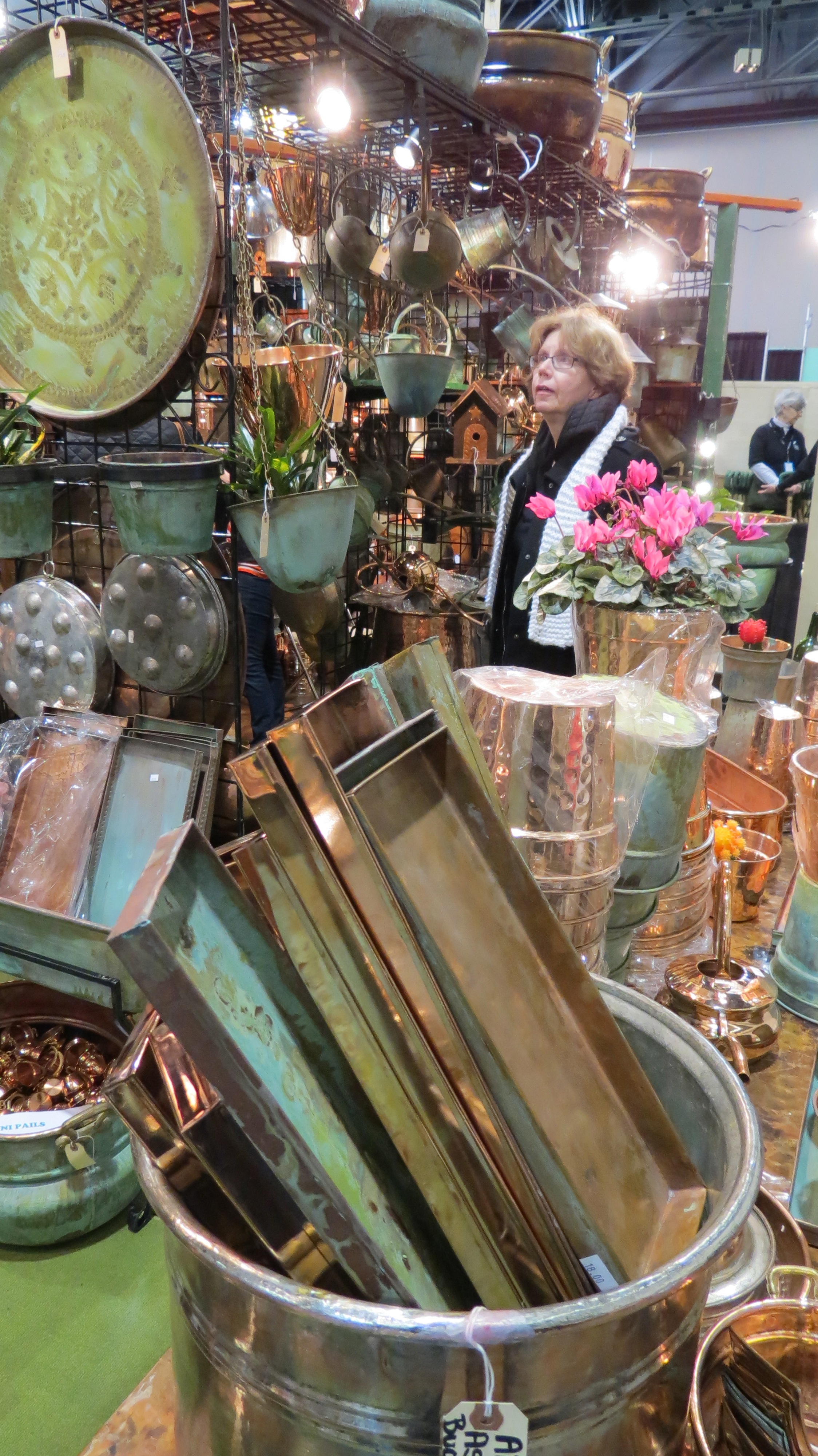
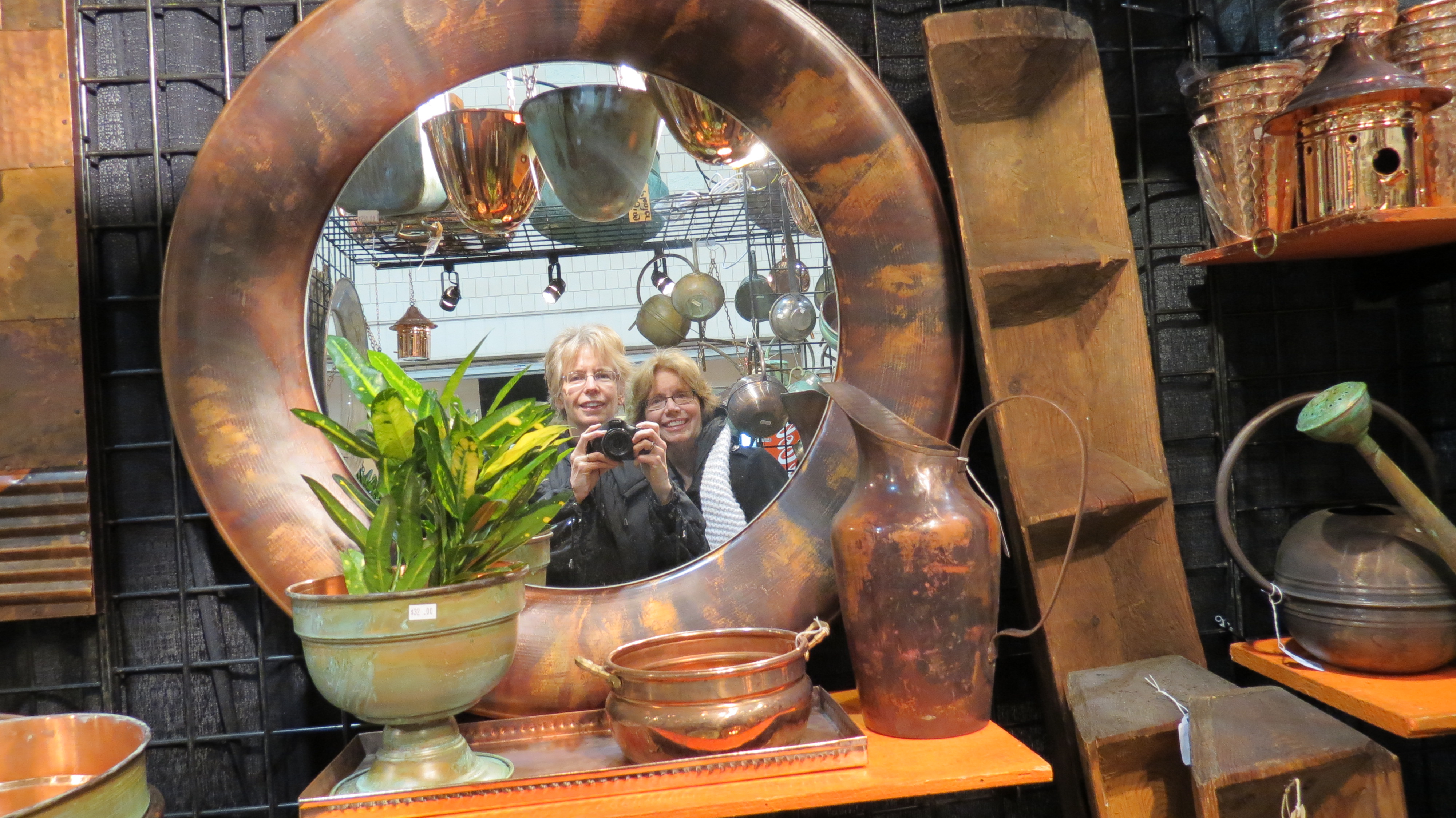
Vendors displayed a wonderland of accessories, everything from planters and watering cans to expensive brass sculptures.

Attend the flower show and you’re sure to come away with ideas that will make gardening fun this spring. Don’t be intimidated by the elaborate and over the top displays, and you’ll be able to take away inspirational ideas for your garden, if only to add a dragon.

Tag Cloud